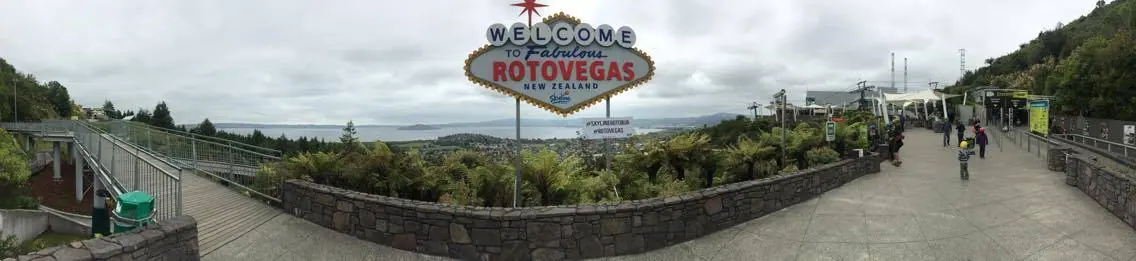
New Zealand rewards travellers who treat their accommodation as part of the itinerary rather than an afterthought — a room on a geothermal field, a lodge above a glacial lake, a motel a two-minute walk from the harbour ferry. This guide maps the country's key stopovers against the sights that justify each one, so you spend less time driving past things and more time standing in front of them.
Auckland: Where to Base Yourself for the Sky Tower and Two Harbours
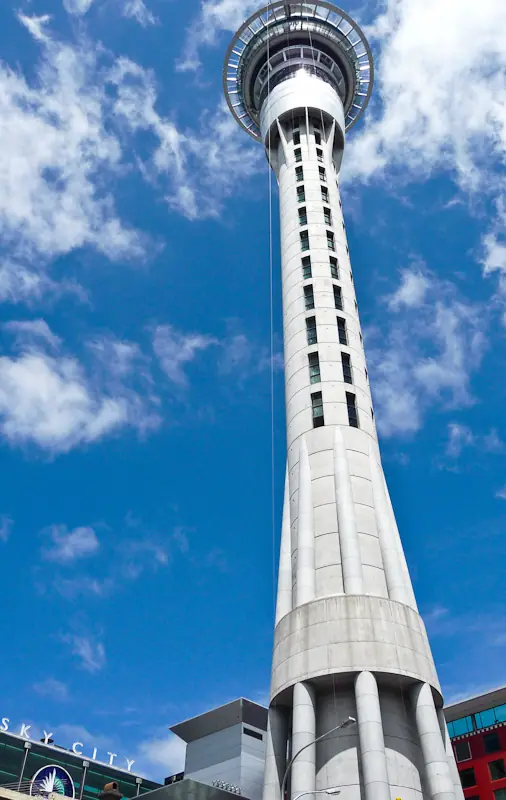
Most journeys begin in Auckland, a city stitched between the Waitematā and Manukau harbours and built over a field of dormant volcanoes. Staying in the downtown waterfront or Britomart area puts you within a short walk of the Sky Tower, the 328-metre observation and dining needle that dominates the skyline, and the Viaduct Harbour, where the restaurant terraces fill on warm evenings. From here you can also walk to the ferry terminal and be on Waiheke Island, among vineyards and olive groves, in about forty minutes.
Inland neighbourhoods change the mood entirely. Parnell and Ponsonby offer boutique guesthouses and converted villas on leafy streets, close to cafés and small galleries, while the Auckland War Memorial Museum sits in the green expanse of the Domain, with Māori and Pacific collections that make an excellent first-day orientation. Climb Maungawhau (Mount Eden) at sunset for a 360-degree view into the crater and across both harbours, or catch the short ferry to Devonport for a slower, village-like alternative to the city centre.
Allow two or three nights here. Traffic between the airport and the centre is genuinely heavy on weekday mornings, so factor in roughly half an hour or more by road, or use the dedicated airport-to-city transport links. If you plan to see Rangitoto Island's black lava fields and Waiheke's wineries in the same trip, add a day rather than trying to compress both into an afternoon.
Rotorua and the Central North Island: Sleeping Among Geysers
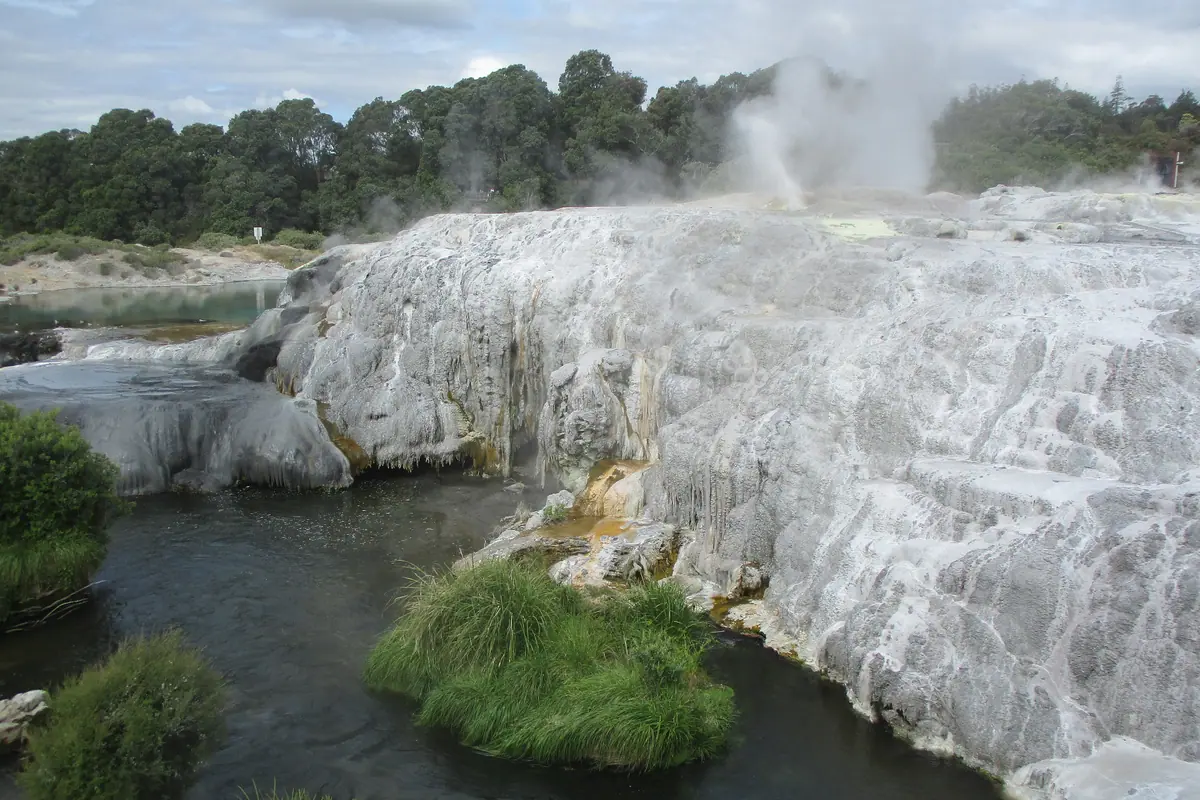
Rotorua announces itself before you see it — a faint sulphur edge in the air, steam curling out of parks and back gardens. This is the heartland of Māori culture and live geothermal activity, and the accommodation reflects it: motels and lodges along Fenton Street and the lakefront sit minutes from Te Puia, where the Pohutu Geyser throws water and steam tens of metres into the air on a rough hourly rhythm. Nearby, the Whakarewarewa redwood forest offers some of the country's best mountain biking, and Wai-O-Tapu Thermal Wonderland, a short drive south, holds the improbably coloured Champagne Pool and the bubbling Artist's Palette.
Rotorua works as a base for a cluster of big-ticket sights. The hobbit village film set at Matamata is under an hour away, the Waitomo glowworm caves — where you drift silently underground beneath thousands of tiny blue-green lights — are roughly two hours west, and the Tongariro Alpine Crossing, a 19.4-kilometre day walk past emerald crater lakes and volcanic ridges, is about two and a half hours south near Mount Ruapehu. Book the Crossing around settled weather, and start early: it takes most walkers six to eight hours.
Further north, the Bay of Islands offers a completely different rhythm, with the Waitangi Treaty Grounds marking the birthplace of the modern nation, Russell's wooden colonial waterfront, and boat trips out to the Hole in the Rock. Northland stays mild even in winter, which makes it a good choice for travellers visiting between June and August when southern regions turn cold.
Wellington: A Walkable Capital of Museums and Cable Cars
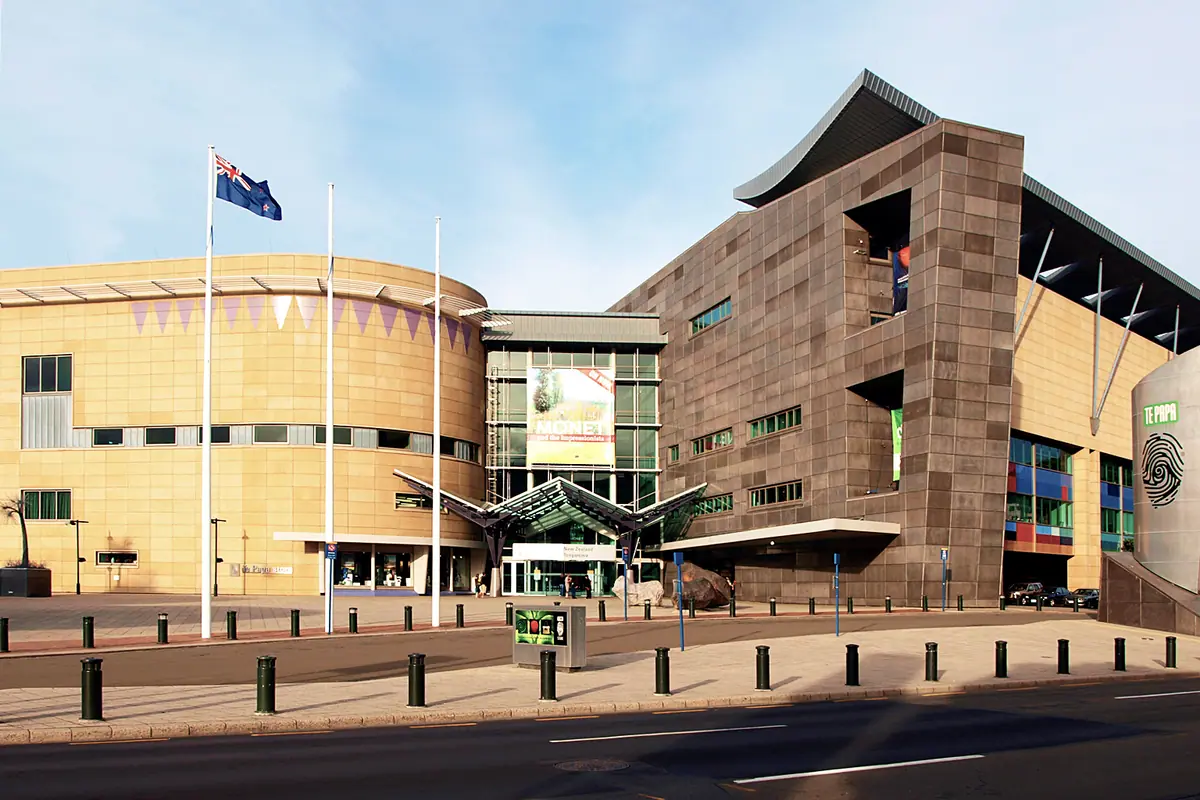
Wellington is compact, windy and unexpectedly rewarding to explore on foot. The national museum, Te Papa Tongarewa, anchors the waterfront with free entry and a genuinely absorbing mix of natural history, art and Māori and Pacific taonga — set aside at least half a day. From Lambton Quay, the historic red cable car climbs through the Botanic Garden to Kelburn, and the lookout on Mount Victoria gives you the classic panorama over the harbour and out toward the Cook Strait.
Cuba Street and the surrounding lanes supply the city's character: buskers, independent record shops, craft beer bars and hole-in-the-wall coffee. Zealandia, a predator-fenced valley sanctuary a short drive from the centre, is a rare chance to walk through regenerating native forest alive with birdsong, including the occasional takahē and kākā.
Choose a hotel near the waterfront or Courtenay Place and you can leave the car parked for the whole stay. Two nights is enough for the museum, the cable car and a good dinner; add another if you intend to take the inter-island ferry across to Picton and the Marlborough Sounds, where the drowned river valleys are best seen from the water.
Queenstown and the Southern Lakes: Adventure Town Basecamps
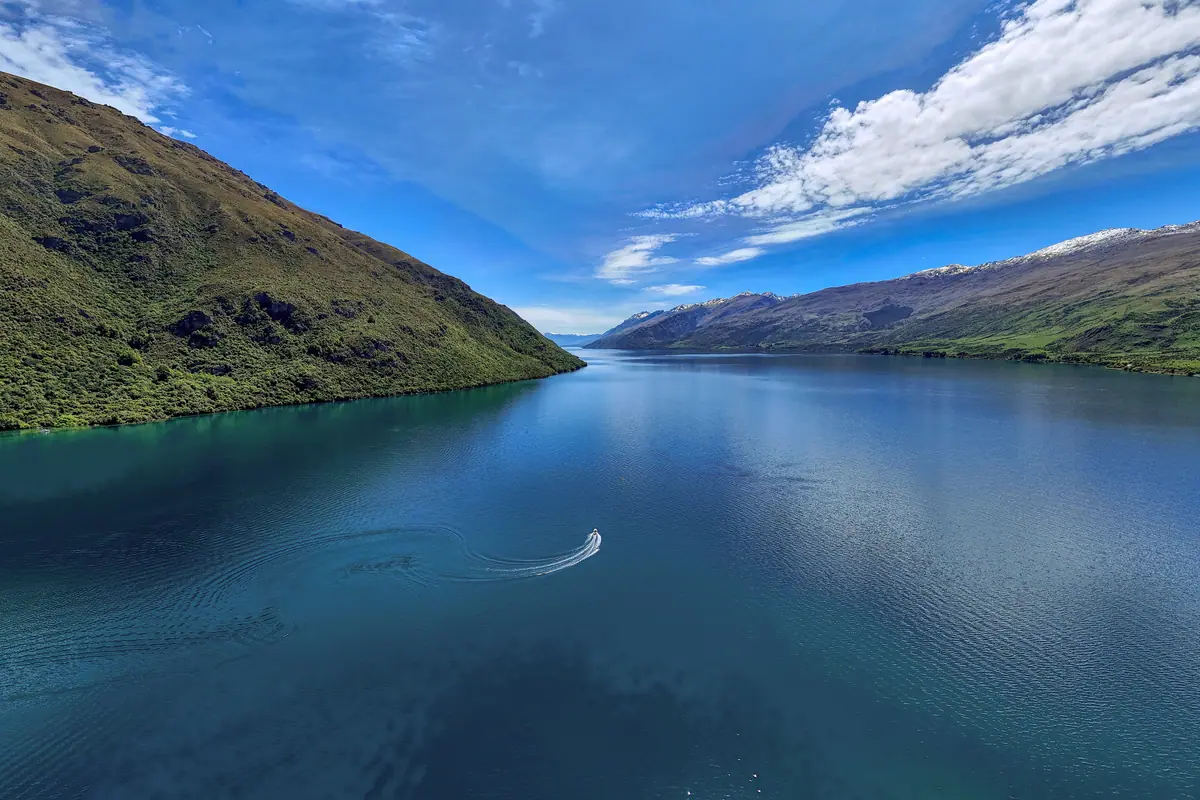
Queenstown sits on the edge of Lake Wakatipu with the Remarkables rising behind it, and the town has built an entire identity around that setting. The Skyline Gondola lifts you to Bob's Peak for the postcard view, the century-old steamship TSS Earnslaw crosses the lake to a high-country farm, and the Kawarau Bridge just outside town remains the original commercial bungee site. Arrowtown, twenty minutes away, preserves a gold-rush main street of tiny wooden shops that is especially beautiful in April, when the poplars turn.
Milford Sound is the region's headline act, but it is not close: the drive from Queenstown takes four to five hours each way, so most visitors either overnight in Te Anau or take a scenic flight. Once there, cruises glide beneath Mitre Peak and past waterfalls that fall hundreds of metres straight into the fiord. Between outings, the Gibbston Valley and Central Otago vineyards produce some of the world's southernmost Pinot Noir, and the road to Glenorchy is one of the finest short drives in the country.
Accommodation ranges from lakeside apartments to boutique lodges in the hills, with prices climbing sharply in July and August, when the ski fields of Coronet Peak and The Remarkables are in season, and again over the December and January summer peak. Staying slightly out of the town centre in Frankton or Arrowtown often buys more space and quieter nights for the same budget.
Christchurch, Dunedin and the Glaciers: The South Island Circuit
Christchurch rebuilt itself creatively after the earthquakes, and the result is a city of surprises — the transitional cathedral made largely of cardboard and timber, the Avon River winding through the Botanic Gardens where you can be punted past the flower beds, and a compact centre that is easy to walk. It is also the departure point for the TranzAlpine train, one of the great rail journeys, crossing the Southern Alps to Greymouth in about four and a half hours through braided rivers and beech forest.
Further south, Dunedin wears its Scottish heritage openly, from the railway station's mosaic floor to Larnach Castle on the ridge above the harbour. The Otago Peninsula is the real draw: royal albatross nest here at the world's only mainland colony, and yellow-eyed penguins come ashore at dusk. Baldwin Street, once billed as the steepest residential street on earth, is a quick, thigh-burning detour.
On the West Coast, Franz Josef and Fox glaciers tumble down toward temperate rainforest, and helicopter hikes onto the ice are the classic experience, weather permitting. Lake Matheson, a short drive from Fox, delivers the famous mirror reflection of Aoraki/Mount Cook on still mornings. Continue east to Lake Tekapo for the Church of the Good Shepherd on the shoreline, then into Aoraki/Mount Cook National Park for the Hooker Valley Track — around three hours return — and night skies so dark the Milky Way reads like a map.
Motels, Lodges and Timing: How to Choose Your New Zealand Stay
New Zealand's accommodation is more varied than many first-timers expect. Luxury lodges in the hills and on the lakeshores deliver fine dining and guided activities; boutique hotels cluster in the city centres; and the local motel — clean, spacious, usually with a kitchenette and parking at the door — remains the quiet hero for families and road-trippers. Holiday parks mix cabins, powered campervan sites and tent pitches, while farmstays and backcountry huts offer something you simply cannot book in a city.
Timing matters more than almost anywhere else. December to February is summer, with long daylight hours and the highest demand; the late-December to mid-January school holiday period is the busiest of the year, so reserve several months ahead. March and April bring settled weather, quieter roads and autumn colour, while October and November are excellent for walking before the crowds arrive. July and August are prime ski months in the south and a good time to be in Northland or the Bay of Islands instead.
Finally, plan around the driving. Traffic runs on the left, and distances on the map flatter the reality — winding roads, one-lane bridges and photo stops add hours. Domestic flights link Auckland, Wellington, Christchurch and Queenstown efficiently, and the Cook Strait ferry connects the two main islands through some genuinely dramatic scenery. Campervans need to be certified self-contained to use many freedom-camping spots, and in peak season it pays to book commercial campgrounds in advance just as you would a hotel.
Frequently asked questions
How far in advance should I book hotels in New Zealand?
For the December-to-February summer period, especially between Christmas and mid-January, book three to six months ahead. Queenstown during ski season in July and August, and lodges in remote areas such as Milford Sound or Aoraki/Mount Cook, also fill early. Outside those windows, a few weeks is usually enough, though weekends in Wellington and Auckland tighten up quickly.
How many days do I need in New Zealand to see the main highlights?
Two weeks is the realistic minimum for a comfortable loop covering Auckland, Rotorua, Wellington, Queenstown and the South Island glaciers or Mount Cook. Three weeks lets you slow down, add the Bay of Islands or Abel Tasman, and stop at places like Lake Tekapo and the Otago Peninsula without spending every day in the car.
Are motels a good choice for travellers in New Zealand?
Yes — they are a national institution rather than a budget compromise. Most offer generous room sizes, kitchenettes, free parking and easy access from the road, which suits families and anyone moving between regions every night. Quality varies, so read recent guest feedback and check whether the property is on a main road before committing.
Do I need to rent a car to see New Zealand's attractions?
For the South Island and the geothermal and volcanic regions of the North Island, yes — public transport rarely reaches places like Franz Josef, Tongariro or the Otago Peninsula. In Auckland and Wellington you can comfortably rely on walking, ferries and local trains. Many travellers combine both: hire a car for the road-trip legs and fly or take the ferry between the main centres.
What should I pack for the changing seasons?
Layers, always. Even in summer, alpine areas like Mount Cook and the Tongariro Crossing can turn cold and wet within an hour, while Northland stays mild year-round. Bring a waterproof shell, sturdy walking shoes, sun protection — the ultraviolet levels are fierce — and warm clothing if you are travelling south between May and September.
Plan it — hotels in New Zealand
Live search, booked directly with trusted providers.
Sort the rest of your trip
Everything for New Zealand, in one place
Transfer in New Zealand
Private driver waiting on arrival — no queues, no surprises.
Book a transfer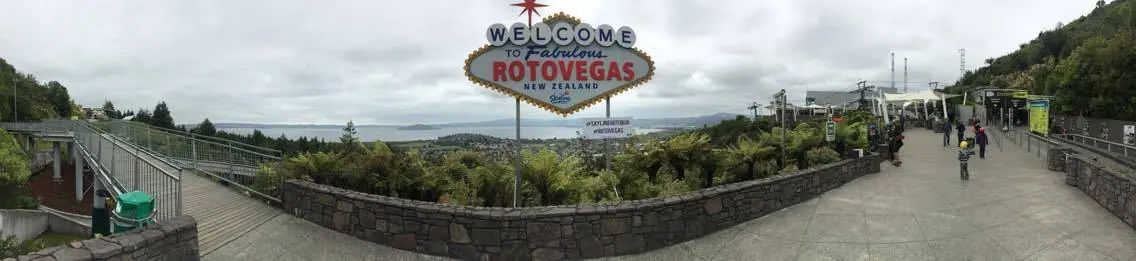
Things to do in New Zealand
Skip-the-line tickets, guided tours and standout experiences.
See experiences
Stay online in New Zealand
Travel eSIM — data the moment you land, no roaming bills.
Get an eSIMMore guides in New Zealand
New Zealand Food, Culture and Local Experiences: A Tour Guide to Aotearoa
The Best Time to Visit New Zealand for Hotels: A Season-by-Season Booking Guide
Best Things to Do in New Zealand: Must-See Landmarks, Hikes and Adventures
The Best Places to Visit in New Zealand: Fiords, Volcanoes and Alpine Peaks