Two islands, more than 1,600 kilometres of length, and a domestic air network that turns a fortnight of highway into seven days of window-seat scenery. This one-week flying itinerary stitches together New Zealand's headline sights — Auckland's volcanic skyline, Rotorua's geysers, Wellington's harbour, Milford Sound's cliffs and the glaciers beneath Aoraki/Mount Cook — with short hops that skip the dull stretches between the good bits.
Why New Zealand Is Made for a Week in the Air
New Zealand looks compact on a map and behaves like a continent on the ground. The distance from the top of the North Island to the bottom of the South Island runs roughly 1,600 kilometres, and driving Auckland to Queenstown means well over 1,500 kilometres of road and two days of solid steering. Domestic flights rewrite that equation: the main centres are 40 minutes to two hours apart, so a morning in Auckland and an afternoon in Wellington is entirely reasonable, and a scenic hop over the Southern Alps replaces a long coach leg with twenty minutes of glaciers and snowfields.
Timing matters more than most first-timers expect. October through April gives the widest flying window, with longer days and fewer weather cancellations. December to February is the warmest and busiest stretch, when Queenstown and the Milford flights fill weeks ahead. Late March and April are arguably the sweet spot: settled autumn weather, clear light, quieter airports and enough daylight for a late-afternoon flight. Winter flying still works between the main cities, but West Coast and alpine routes get scrubbed far more often, and Milford Sound is genuinely wet year-round — a pilot's forecast, not a season, decides that trip.
Two practical rules keep a flying week smooth. First, pack for light aircraft: scenic and regional services often cap checked luggage at around 15 kilograms per person and prefer soft bags that squash into small holds. Second, book flexible fares and fly in the morning where you can. Air over the Southern Alps and through Cook Strait gets bumpier as the day warms, Wellington's wind is legendary enough to delay aircraft, and a slight weather delay in the morning is a cancelled afternoon.
Days 1–2: Auckland, the Hauraki Gulf and Waitomo
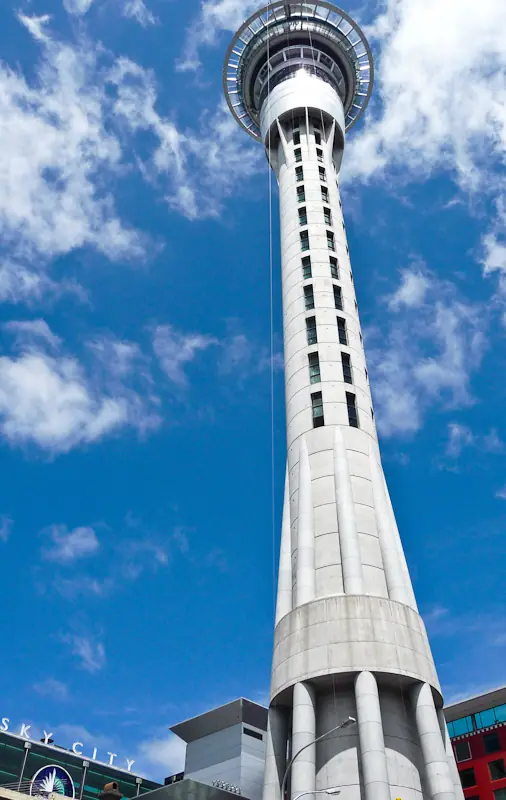
Auckland is built on about fifty volcanic cones, and the easiest way to grasp the scale is to ride the lift up the Sky Tower, still the city's defining landmark at 328 metres, with glass-floor panels and a harbour view that stretches to the Hauraki Gulf. From there, work through the waterfront at Viaduct Harbour, then head to the Auckland War Memorial Museum in the Domain, where Māori and Pacific treasures fill one of the country's finest buildings. A 35-minute ferry reaches Waiheke Island for vineyards and olive groves, while Rangitoto Island, a near-perfect volcanic cone rising straight out of the sea, makes a satisfying half-day climb.
Day two heads south into the Waikato. The Waitomo Glowworm Caves are the classic stop: a silent boat glide beneath a ceiling of thousands of tiny blue-green lights, the larvae of a native fungus gnat that only exists in New Zealand. Tours run about 45 minutes and book out in peak season, so reserve ahead. Nearby, near the village of Matamata, the Hobbiton Movie Set offers a two-hour guided walk through the hobbit holes and gardens left in place after filming — the greenest possible counterpoint to all that limestone.
From there, either fly Auckland to Rotorua in around 40 minutes or drive the three hours, arriving in time for a geothermal evening. Rotorua's sulphur haze hits you before you see the town, and it is worth every whiff.
Day 3: Rotorua, Taupō and the Volcanic Plateau
Rotorua is the North Island's geothermal heart. At Te Puia, the Pōhutu Geyser erupts on a rhythm you can wait for, and the site also holds a kiwi conservation centre and the carving and weaving schools where Māori craft traditions are taught to new generations. A short drive away, Wai-O-Tapu Thermal Wonderland delivers the postcard image everyone wants: the Champagne Pool, an orange-rimmed cauldron of turquoise water, plus the artist's palette of mineral terraces and bubbling mud pools. Between the two, spend an hour walking or biking the redwood forest at Whakarewarewa, where the trees are impossibly tall and the air smells of damp bark.
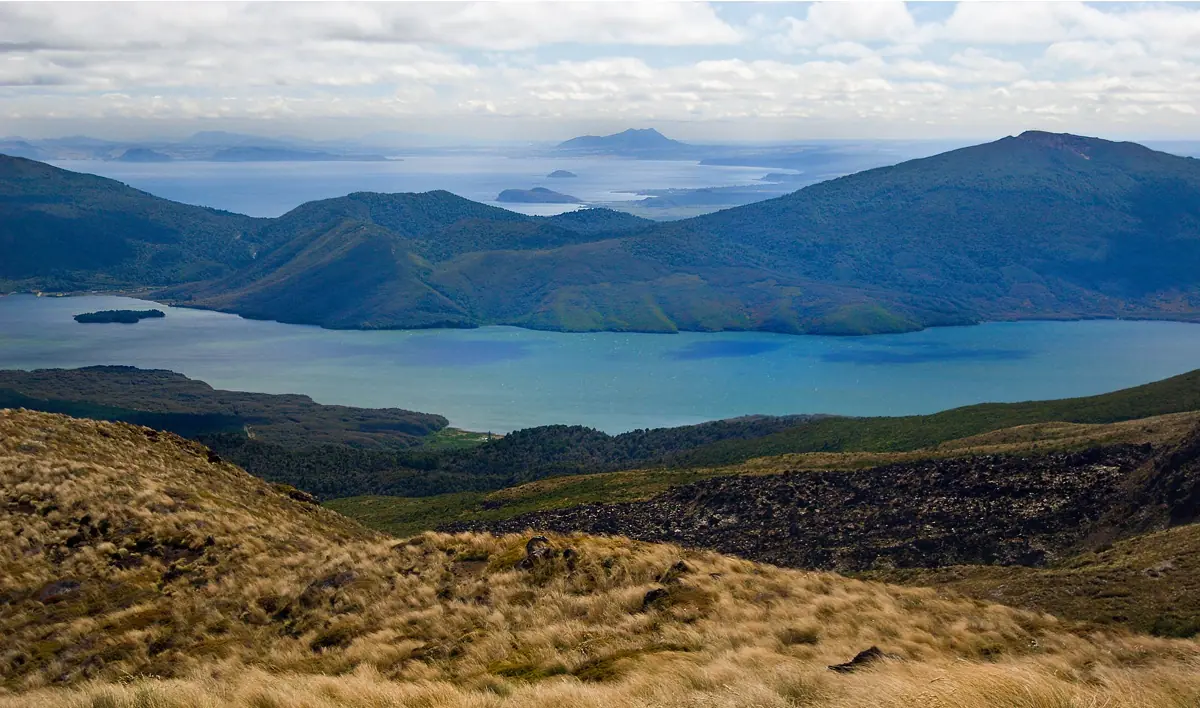
Head south to Lake Taupō, the country's largest lake and itself the crater of a supervolcano, pausing at Huka Falls where the Waikato River squeezes through a channel barely 15 metres wide and turns an impossible shade of blue. Beyond lies Tongariro National Park, a dual-listed World Heritage area and the setting for the Tongariro Alpine Crossing — 19.4 kilometres of volcanic plateau, roughly seven to eight hours of walking, past the steaming Red Crater and the Emerald Lakes with Mount Ngauruhoe looming above. It is New Zealand's best day walk and it demands real weather preparation, as conditions can swing from sunburn to sleet within hours.
If time is tight, a scenic flight from Taupō over the three volcanoes — Ruapehu, Ngauruhoe and Tongariro — gives you the same terrain in 40 minutes with none of the mud.
Day 4: Wellington, the Harbour Capital
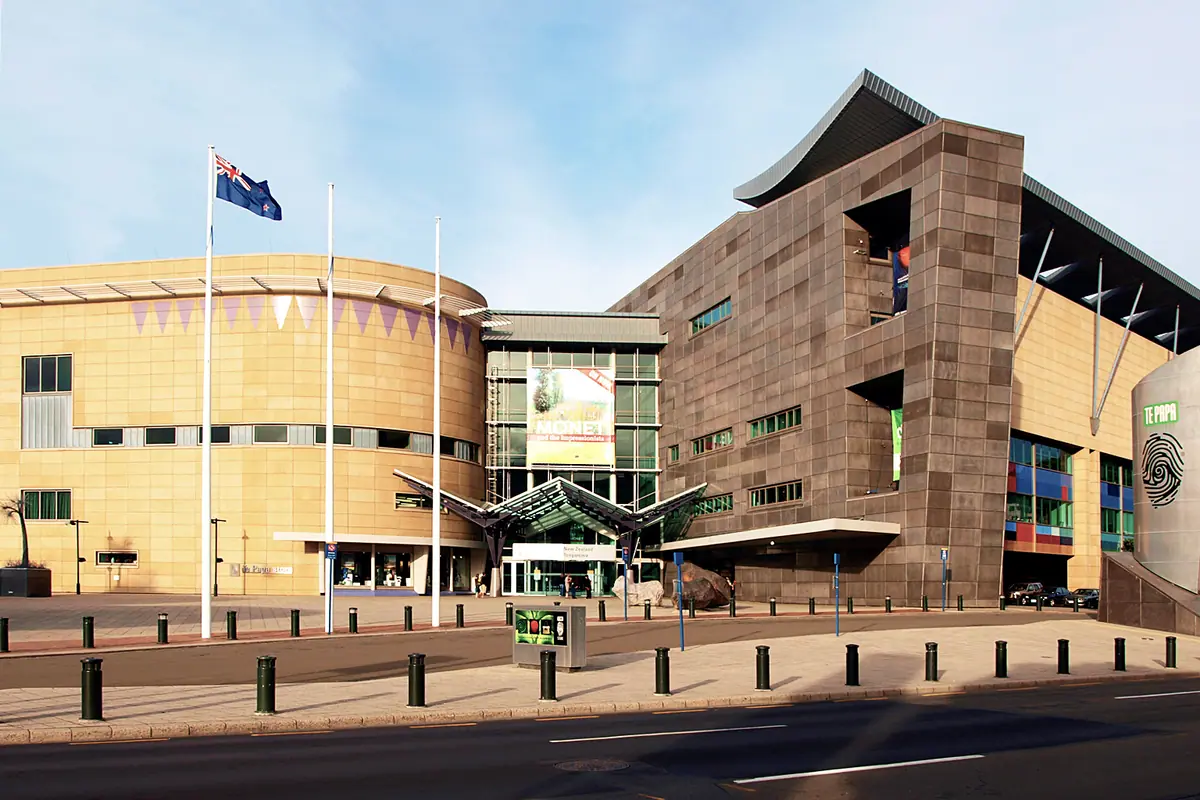
A short hop brings you to Wellington, a city wedged between steep hills and a working harbour. Start at Te Papa Tongarewa, the national museum on the waterfront, where entry is free and the Gallipoli exhibition alone justifies an afternoon; the colossal squid and the earthquake house keep children occupied for hours. Then ride the Wellington Cable Car from Lambton Quay up to Kelburn, walk back down through the Botanic Garden, and climb Mount Victoria for the sunset view over the harbour entrance and the wind-whipped ferries crossing to the South Island.
Cuba Street and the laneways around it are where the city eats and drinks, with a coffee culture that takes itself seriously. For wildlife, Zealandia is the standout: a predator-fenced ecosanctuary in a suburban valley where tūī, kākā and takahē have been reintroduced, and evening tours give a genuine chance of hearing — sometimes seeing — a kiwi in the dark.
One caution on the flight out: Wellington is one of the windiest cities on earth, and its airport earns its reputation. Build a buffer before any onward connection and take the earliest departure you can bear.
Day 5: Queenstown and the Flight Over Milford Sound
The hop across Cook Strait to Queenstown is a highlight in itself. The approach threads between mountains, with Lake Wakatipu and the jagged line of The Remarkables filling the windows; poor weather can divert flights to Christchurch or Invercargill, so keep the day loosely planned. On the ground, the Skyline Gondola lifts you to Bob's Peak for the classic lake panorama, the Ben Lomond track climbs higher for those with three spare hours, and Arrowtown, a restored gold-mining village 20 minutes away, is the prettiest detour in the region. Just outside town, the Kawarau Bridge is where commercial bungy jumping began, and it is still the friendliest place to throw yourself off a ledge.
The centrepiece, though, is Milford Sound. A fixed-wing or helicopter flight from Queenstown crosses Fiordland's rainforest ridges in roughly 40 minutes each way, then drops you into a fjord where Mitre Peak rises almost vertically from black water, Bowen Falls and Stirling Falls tumble off sheer walls, and dolphins and fur seals regularly escort the boats. Most operators include a cruise before the return leg. Flights are weather-dependent and cancellations are common — book a flexible ticket and keep a spare morning if you possibly can, because the road alternative is a four-hour drive each way from Queenstown.
Days 6–7: Glaciers, Aoraki/Mount Cook and Christchurch
From Queenstown you can fly or drive north to the West Coast, where Franz Josef Glacier and Fox Glacier spill down from the Southern Alps almost to the rainforest. Heli-hiking puts you on the ice itself — blue crevasses, ice caves and crampons on the nevé — and a scenic flight over the glaciers and Mount Tasman is a worthy substitute when the cloud sits low. Both glaciers have retreated dramatically over the past century, which makes seeing them now quietly urgent.
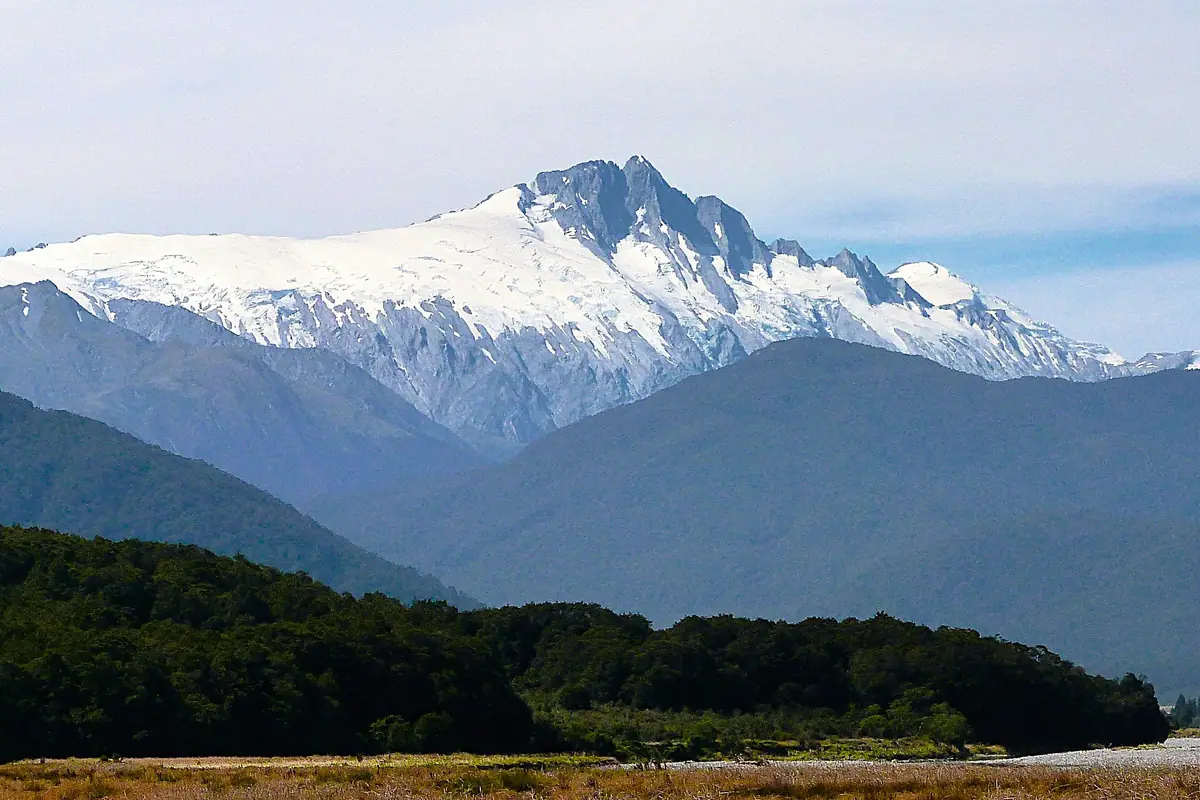
Alternatively, turn east toward Aoraki/Mount Cook, at 3,724 metres the highest peak in the country, and the surrounding national park of turquoise glacial lakes. The Hooker Valley Track is the accessible showpiece: 10 kilometres return, about three hours, across three swing bridges with Mueller Lake and the Hooker Glacier terminus at the far end. Nearby, Lake Tekapo's Church of the Good Shepherd is one of the most photographed buildings in New Zealand, and the surrounding Aoraki Mackenzie International Dark Sky Reserve offers stargazing at Mount John that will ruin every other night sky for you.
Finish in Christchurch, where the Cardboard Cathedral, the riverside Botanic Gardens and the tram loop through the centre show a city rebuilt after the earthquakes. A one-hour flight links Queenstown and Christchurch, and a scenic version of that route tracking over Mount Cook is a fine way to end the week before departing from Christchurch.
Frequently asked questions
How much of New Zealand can I realistically see in one week by flying?
A focused loop of four or five bases: Auckland and Waitomo, Rotorua and the volcanic plateau, Wellington, then across to Queenstown with Milford Sound, finishing via the glaciers or Aoraki/Mount Cook to Christchurch. That means roughly five short domestic flights plus one scenic flight. Trying to add the far north, Abel Tasman and Stewart Island in the same week turns it into an airport tour rather than a holiday.
When is the best time of year for a flying itinerary in New Zealand?
October to April offers the most reliable flying weather and longest daylight. December and February are warmest but busiest, with Milford Sound flights booked out well in advance. Late March and April bring settled autumn conditions, clear light and quieter airports. Winter flights between main centres still run, but West Coast and alpine routes are cancelled far more often.
Are there baggage limits on New Zealand domestic and scenic flights?
Yes. Main domestic routes usually allow one checked bag of around 20 to 23 kilograms, but light aircraft used for scenic and regional services often cap each passenger at about 15 kilograms, sometimes less, and require soft bags rather than hard cases. Weigh your bag before you fly and be ready to leave surplus luggage at your accommodation.
What happens if my Milford Sound flight is cancelled by weather?
It is a real possibility at any time of year, because the fjord sits in a rainforest belt. Reputable operators rebook you onto the next available departure or refund you, so choose a flexible fare and keep a spare morning or afternoon in Queenstown. If you have no slack in your schedule, the drive from Queenstown takes about four hours each way, or you can join a coach-and-cruise day trip instead.
Do I need a rental car if I am flying between cities?
You need wheels at each end rather than for the whole trip. Auckland, Wellington and Christchurch have trains, buses and ferries that cover the main sights, but Rotorua's geothermal parks, the Waitomo caves, the Tongariro trailheads and the Mount Cook and glacier valleys are far easier with a short-term rental or a guided shuttle. Pick up and drop off at each airport and let the flights handle the long distances.
Plan it — flights in New Zealand
Live search, booked directly with trusted providers.
Sort the rest of your trip
Everything for New Zealand, in one place
Stay in New Zealand
Hotels, guesthouses and apartments — compared in one search.
Search hotels
Transfer in New Zealand
Private driver waiting on arrival — no queues, no surprises.
Book a transfer
Travel insurance
Medical cover, delays and lost baggage — sorted before you go.
Get coveredMore guides in New Zealand

Where to Stay in New Zealand: Hotels, Regions and Must-See Attractions

New Zealand Food, Culture and Local Experiences: A Tour Guide to Aotearoa

The Best Time to Visit New Zealand for Hotels: A Season-by-Season Booking Guide
Best Things to Do in New Zealand: Must-See Landmarks, Hikes and Adventures