Mongolia is a country you feel before you understand: wind over grass, the drum of hooves, the smell of mutton and woodsmoke drifting from a ger. With more horses than people and a capital that hums with contrast, it rewards travellers who are willing to cover long, empty distances for the sake of a single view.
Ulaanbaatar: The City Where Every Mongolian Trip Begins
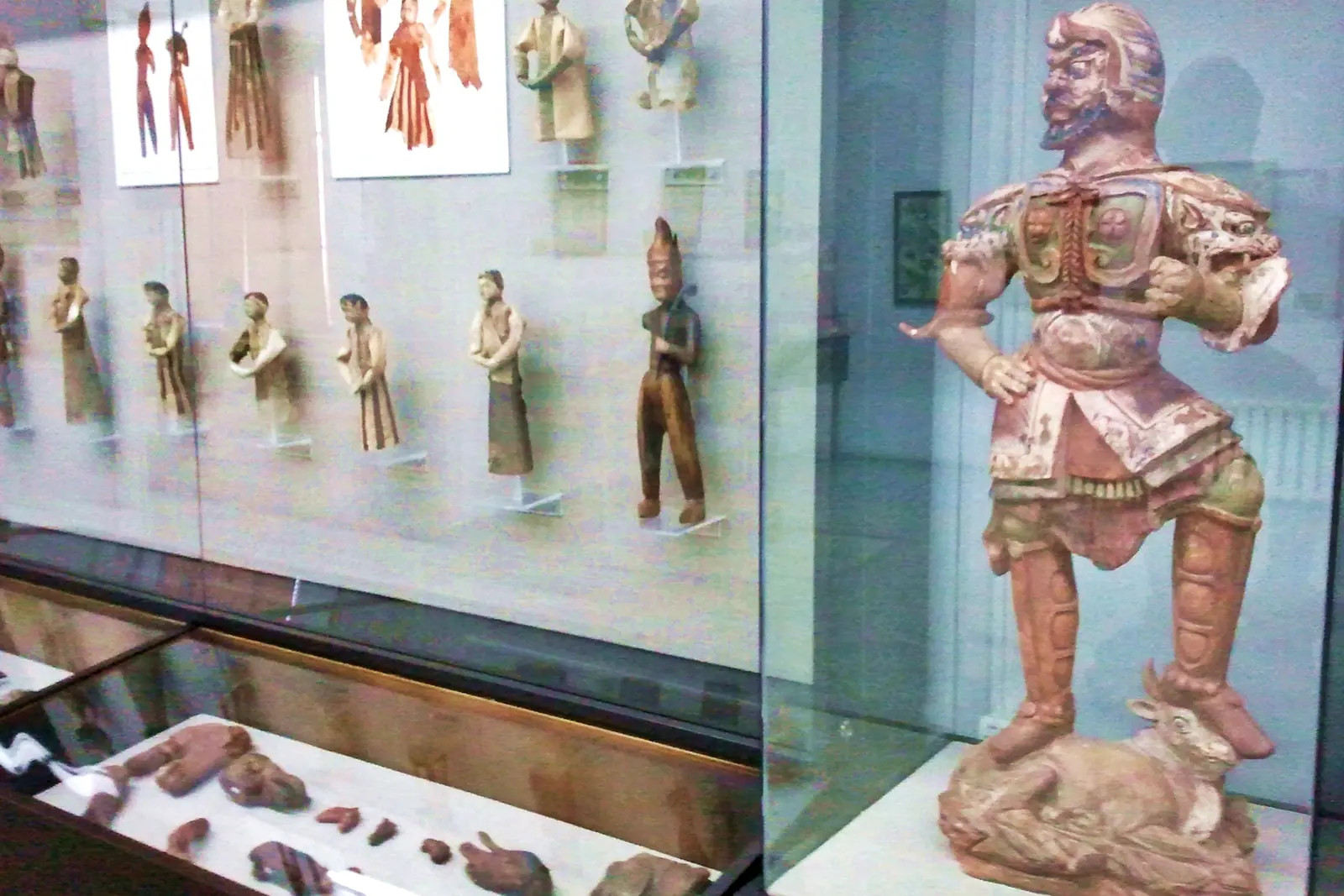
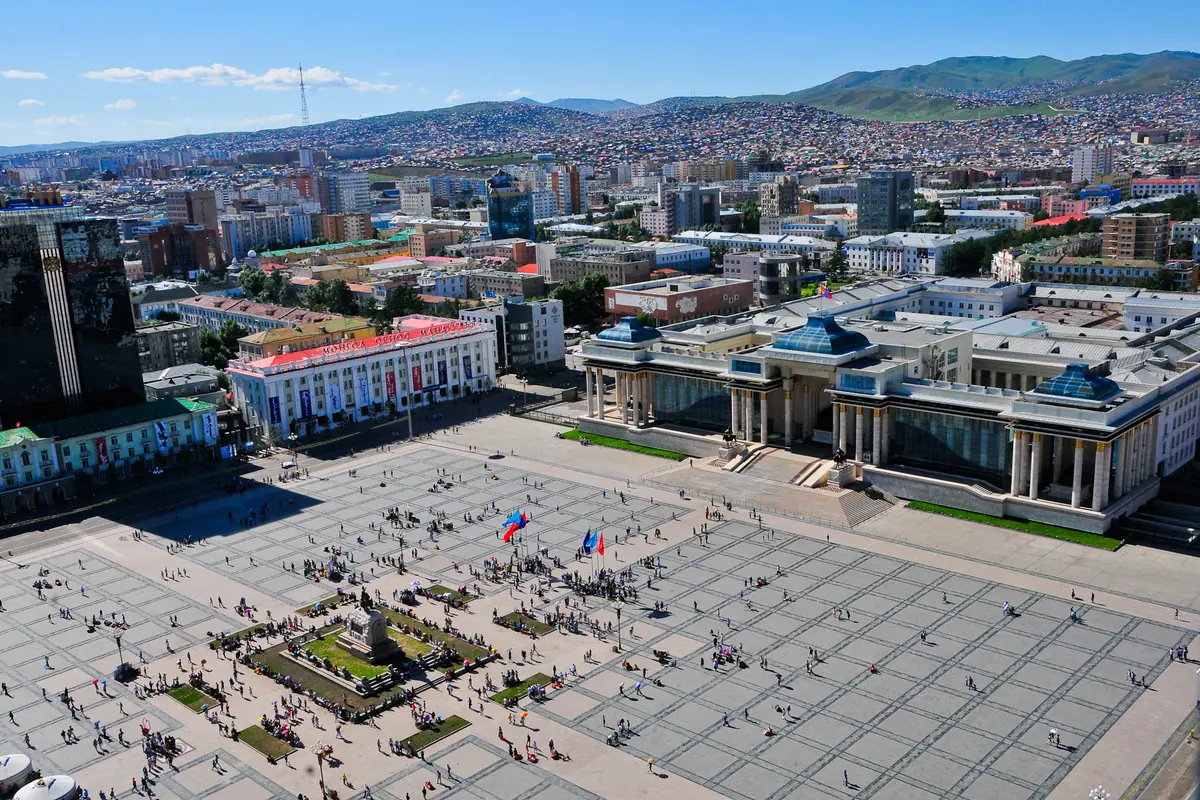
Nearly half the country's population lives in Ulaanbaatar, and almost every journey starts here — so give it two unhurried days rather than treating it as a transit lounge. Begin at Sükhbaatar Square, the city's ceremonial heart, flanked by the colonnaded Government Palace where an enormous seated statue of Chinggis Khaan presides over the plaza. From there it's a short walk to the National Museum of Mongolia, whose galleries run from Bronze Age deer stones through the Xiongnu, the Mongol Empire and the socialist decades — it is the single best primer on the country you are about to cross.
Gandan Monastery is the other essential stop: Mongolia's largest functioning Buddhist monastery, humming with pigeons, prayer wheels and the low drone of morning chanting. The temple hall housing the 26-metre gilded statue of Migjid Janraisig is the highlight, though the sight of elderly worshippers circling the outer walls with their prayer beads is just as memorable. Nearby, the Bogd Khan Palace Museum preserves the winter residence of Mongolia's last religious ruler, complete with ornate thrones, Buddhist sculpture and a rather charming collection of his personal belongings.
Finish with sunset at the Zaisan Memorial, the Soviet-era hilltop monument south of the Tuul River, where a mosaic frieze circles a viewing platform looking out over the whole sprawl. Climbing the steps takes about fifteen minutes. Be warned that Ulaanbaatar's traffic is genuinely punishing between 8am and 7pm, so plan museum visits around it.
Gorkhi-Terelj and the Chinggis Khaan Statue
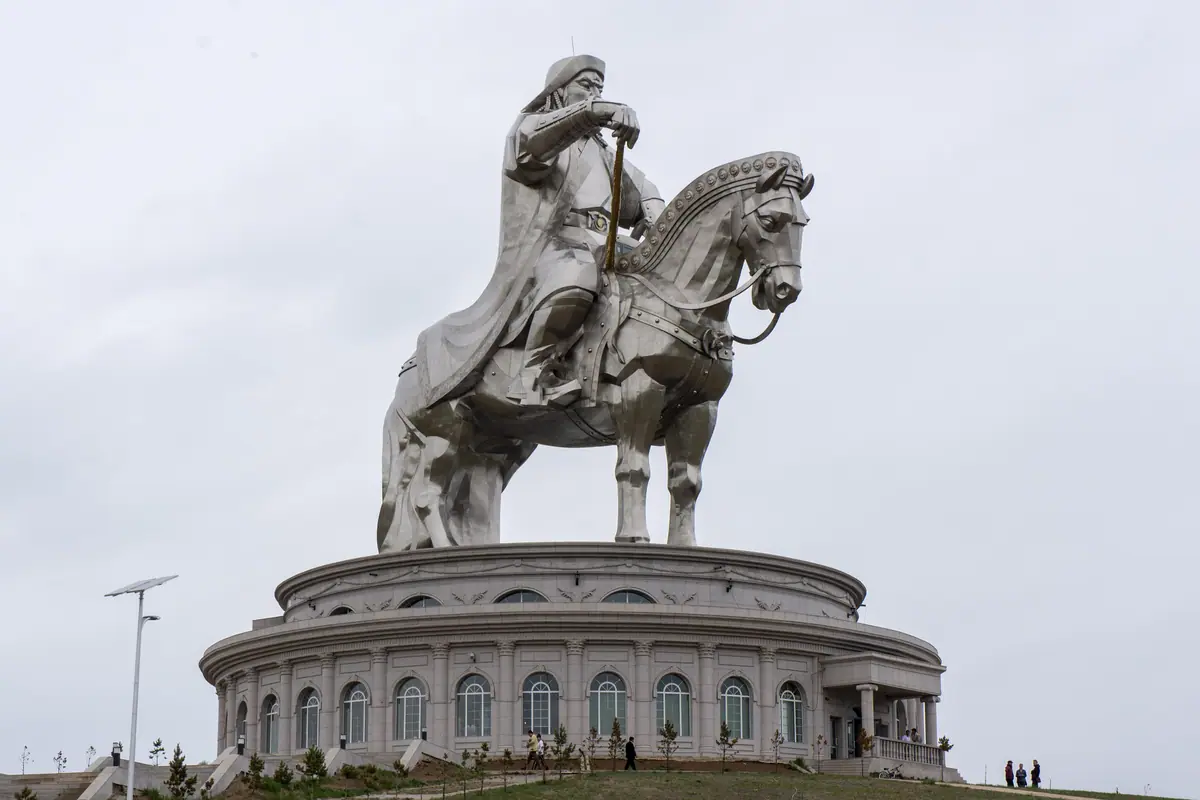
An hour and a half east of the capital, the road splits towards Tsonjin Boldog, where a 40-metre stainless-steel horseman rides toward the horizon: the Chinggis Khaan Equestrian Statue, the largest of its kind anywhere. You can take a lift inside the horse's chest, walk out onto the head for a wind-whipped view, and then wander the neighbouring complex of small museums and souvenir stalls. It is unashamedly monumental, and it works.
Continue a little further and you reach Gorkhi-Terelj National Park, the easiest place to taste real steppe scenery without committing to a week of driving. The signature sight is Turtle Rock, a weathered granite outcrop twenty metres high that genuinely looks like a shell-backed reptile emerging from the grass. Just across the valley, a hillside path climbs to Aryabal Meditation Temple, where a wooden bridge, painted wheels and a quiet courtyard reward about twenty minutes of walking uphill.
Terelj is where most visitors first ride a horse, sleep in a ger and drink airag, so expect company in July and August. Ger camps here range from comfortable lodges with hot showers to bare-bones family operations. Even in midsummer, nights drop close to freezing — pack a fleece and a warm hat regardless of the forecast.
The Gobi Desert: Dunes, Flaming Cliffs and Ice in a Canyon
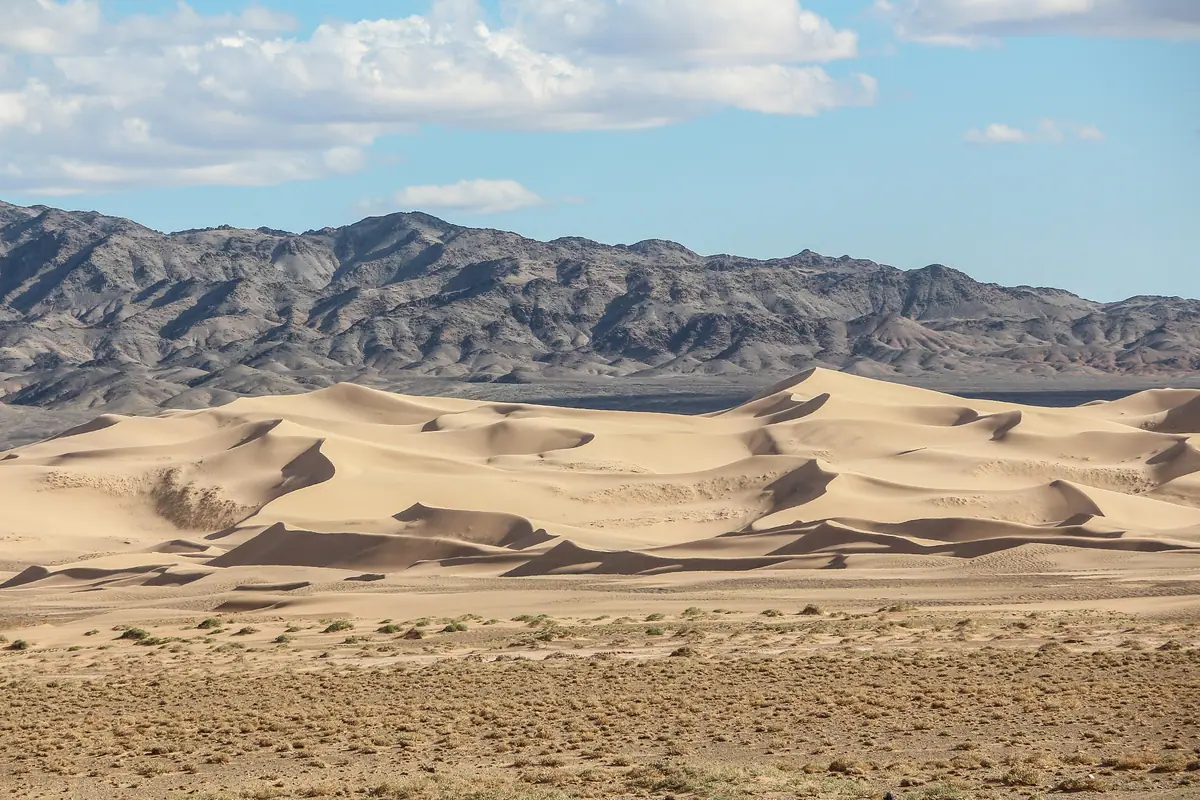
The Gobi is not the empty sand sea of imagination but a vast, varied desert of gravel plains, dry mountains and surprisingly hardy herding families. Its centrepiece is Khongoryn Els, a chain of singing dunes stretching roughly a hundred kilometres along the edge of the Gobi Gurvansaikhan range. Some reach 200 metres high. Climb the crest barefoot an hour before sunset and you may hear the sand hum as it slides — and watch the whole ridge turn from butterscotch to deep orange. Camel herders here still keep Bactrian camels, and a short ride is easy to arrange.
Further north, Bayanzag — the Flaming Cliffs — glows red in late light and is where the first dinosaur eggs were unearthed during a 1920s American expedition, a discovery that reshaped palaeontology. Fossil fragments still litter the ground; look, photograph, but never pocket. To the west, Yolyn Am, the Valley of the Vultures, cuts a narrow, shadowed gorge through the Gurvan Saikhan mountains where a ribbon of ice often survives well into July, and bearded vultures ride the thermals above.
A classic southern loop takes five to seven days from Ulaanbaatar by 4x4, or you can fly to Dalanzadgad and cover the same ground in four. Expect long, dusty, bumpy drives, simple ger camps, and dramatic temperature swings — over 30°C at noon, near freezing after midnight. June to September is the only realistic window; spring brings gales and dust storms.
Karakorum and the Orkhon Valley: Mongolia's Imperial Heartland
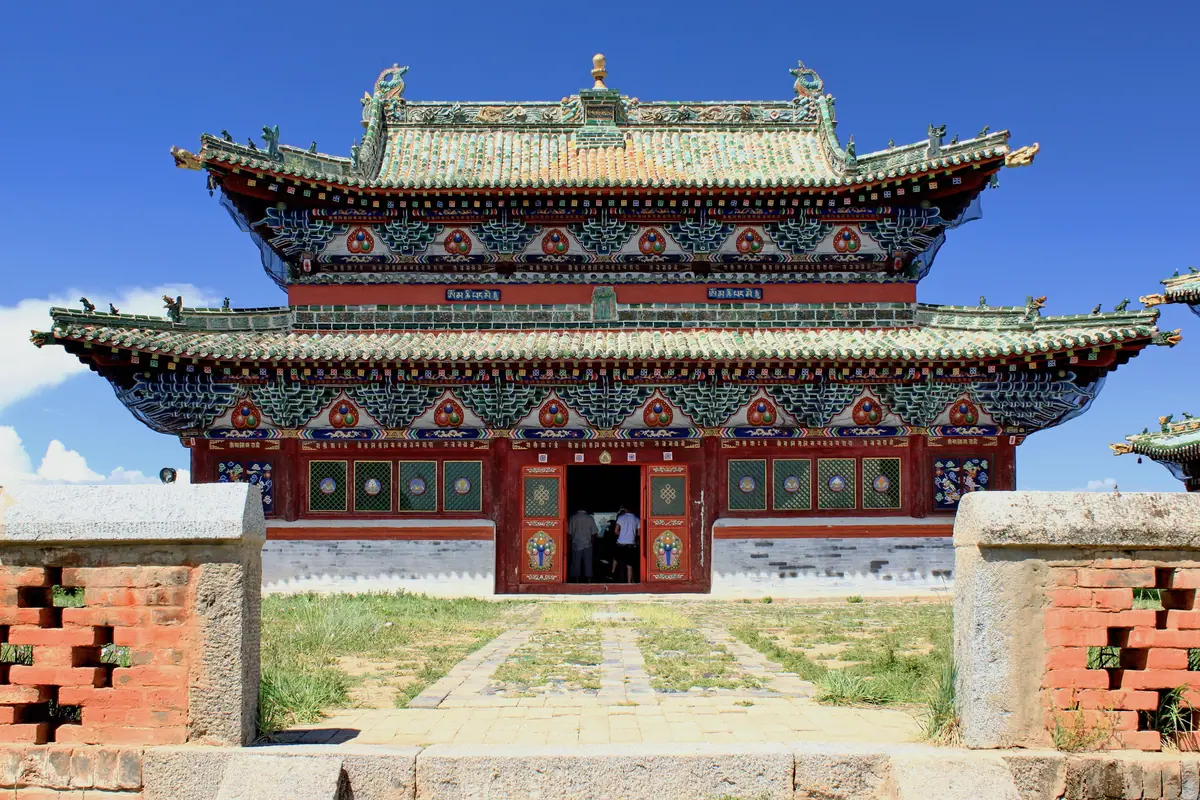
Roughly 360 kilometres west of the capital, in the small town of Kharkhorin, stand the walls of Erdene Zuu — the oldest surviving Buddhist monastery in Mongolia, founded in 1586 on the ruins of the ancient imperial capital. Its whitewashed perimeter is studded with 108 stupas, and inside, three temples hold richly painted deities and labyrinthine collections of religious art. Tibetan-style chanting still drifts from the main hall in the mornings. Walking the site at opening time, before the tour minibuses arrive, is worth the early start.
The surrounding Orkhon Valley is a UNESCO-listed cultural landscape, grazed continuously for two thousand years, and it is beautiful in a way that sneaks up on you: soft green hills, herds drifting across the river plain, and the occasional felt ger with a solar panel on the roof. Climb to Tövkhön Monastery, perched on a forested ridge above the valley, for a view that justifies the walk or horse ride. Further upriver, the Orkhon Waterfall — Ulaan Tsutgalan — pours twenty metres over dark basalt left by an ancient lava flow, at its most powerful after July rains.
Getting here means either a full day's drive each way or a domestic flight to the region followed by a road transfer. Most travellers break the journey at a ger camp near Kharkhorin, then continue by horse trek of three to eight days along the valley — the classic way to see this landscape properly.
Lake Khövsgöl and the Northern Taiga
In the far north, close to the Siberian border, Lake Khövsgöl holds around two percent of the world's fresh water and is often called the Blue Pearl of Mongolia. It is startlingly clear and cold, ringed by larch-covered mountains and meadows of wildflowers in July. Khatgal, at the lake's southern tip, is the base for kayaking, boat trips, hiking to the surrounding peaks and simply swimming — briefly — in summer.
Travelling further north along the western shore brings you to the taiga, home to small communities of reindeer herders who live in canvas tents rather than gers and move with their animals through the forest. Visits are possible only through locally arranged trips, and should be handled with genuine respect: ask before photographing people, buy their crafts, and never treat their camp as a zoo.
Khövsgöl has two distinct personalities. In summer (mid-June to early September), it is a cool green escape where nights still hover near freezing. In March, the lake freezes metres thick and Khatgal hosts an ice festival with sculptures, sled races and horse-drawn sleighs on the frozen surface — an extraordinary, bone-chilling experience. Reaching the lake takes a domestic flight to Mörön plus a three-to-four-hour drive, or a long, rough overland journey.
Naadam and Life Among the Herders
If you can time a trip around 11 to 15 July, you will catch Naadam, Mongolia's national festival and its most spectacular few days. The opening ceremony in Ulaanbaatar fills the national stadium with costumed riders, eagle dancers and throat singing, but the real action is elsewhere: the wrestling competition, where hundreds of bökh in studded boots and embroidered shorts grapple in a slow elimination tournament; the archery ranges, where men and women fire at rows of leather targets; and the long-distance horse races across open steppe, ridden by child jockeys over distances of up to 30 kilometres. Smaller aimag-centre Naadams are friendlier and less crowded.
Beyond the festival, the most memorable thing you can do in Mongolia is stay with a herding family. A night in a ger usually means bowls of salty milk tea, fried bread, boiled mutton and, if you're lucky, airag — fermented mare's milk, mildly alcoholic and faintly sour. Hospitality carries real weight here: accept what you're offered with your right hand, or support the bowl with your left, and step over thresholds rather than on them.
For something more specialised, western Mongolia's Bayan-Ölgii province hosts the Golden Eagle Festival in early October, when Kazakh eagle hunters in fur-trimmed coats ride out to compete in speed and accuracy. Dates shift with the lunar calendar, and accommodation in Ölgii fills fast, so plan months ahead.
Frequently asked questions
When is the best time to visit Mongolia?
Late May to September is the reliable travel window, with June to August warmest and greenest. July brings Naadam and the busiest ger camps; September offers stable weather, thinner crowds and golden steppe light. Winter travel is only for the hardy, though the Khövsgöl ice festival in March is a genuine spectacle.
How long do I need in Mongolia?
Ten days is the practical minimum to combine Ulaanbaatar and Terelj with one bigger trip, such as the Gobi or the Orkhon Valley. Two weeks lets you link the Gobi with the north or the central heartland without spending every second day in a vehicle. Add several days if you want a multi-day horse trek.
Do I need a visa to enter Mongolia?
Many nationalities can enter visa-free for short tourist stays, and others can apply for an electronic visa online. Rules change, and they vary sharply by passport, so check the current requirements well before booking flights — you generally need at least six months' validity on your passport.
How do I get around the country?
Domestic flights connect Ulaanbaatar with Mörön, Dalanzadgad, Ölgii and Kharkhorin-area airstrips, saving days of driving. Elsewhere you'll travel by 4x4 with a driver-guide, often on unpaved tracks. Distances are huge and journeys slow; a 350-kilometre day is a full day. Independent travel is possible but demands real preparation.
Can I stay with nomadic families and what should I know?
Yes — ger stays range from simple family homestays to comfortable tourist camps, usually arranged through local operators. Bring small gifts rather than cash, ask before taking photographs, and accept offered food or drink with your right hand. Facilities are basic, water is limited, and food is heavy on mutton and dairy, so vegetarians should plan ahead.
Plan it — experiences in Mongolia
Live search, booked directly with trusted providers.
Sort the rest of your trip
Everything for Mongolia, in one place
Stay in Mongolia
Hotels, guesthouses and apartments — compared in one search.
Search hotels
Transfer in Mongolia
Private driver waiting on arrival — no queues, no surprises.
Book a transfer
Stay online in Mongolia
Travel eSIM — data the moment you land, no roaming bills.
Get an eSIMMore guides in Mongolia
Where to Stay in Mongolia: Hotels, Ger Camps and Must-See Sights
Mongolia Food, Culture and Local Experiences: A Traveller's Guide
One Week in Mongolia by Plane: The 7-Day Itinerary That Actually Works
Best Places to Visit in Mongolia: Top Sights from the Gobi to Khövsgöl