Mongolia is the size of Western Europe with a population you could fit into a single mid-sized city, which means its greatest sights sit many hundreds of kilometres apart. This seven-day route uses the domestic flight network fanning out from Ulaanbaatar to trade long, punishing drives for short hops between the Gobi Desert, the northern lake country and the capital itself.
Why Flying Is the Only Way to See This Much Mongolia in Seven Days
Mongolia rewards the traveller who accepts one hard truth: distances here are measured in days, not hours. The Gobi's great dunes lie roughly 700 kilometres south of the capital, and the blue expanse of Khuvsgul Lake sits around 900 kilometres to the north. Attempting both in a week by road would mean spending most of it staring at a gravel track. Flying turns those journeys into ninety-minute hops and leaves you with actual time on the ground.
Almost every domestic route begins or ends at Chinggis Khaan International Airport, a modern glass-and-timber terminal outside Ulaanbaatar that replaced the old city airport a few years ago. From here, regional carriers fly south to Dalanzadgad in the Gobi and north to Murun, the gateway to Khuvsgul. Schedules are thin — some routes operate only a few times a week and timings shift with weather and demand — so book your internal legs the moment your international dates are locked, particularly between mid-June and late August when festival travel fills the cabins.
Expect small regional aircraft, an easygoing attitude to hand luggage in theory and a strict weight allowance in practice. Soft duffel bags squeeze into overhead lockers far more gracefully than hard-shell cases, and a light scarf or buff earns its place against the dust. From each airstrip you will be met by the four-wheel-drive and driver-guide who carry you for the rest of that leg — in Mongolia the plane is only ever half the transport story.

Days 1–2: Ulaanbaatar Landmarks and the Steppe at the City's Edge
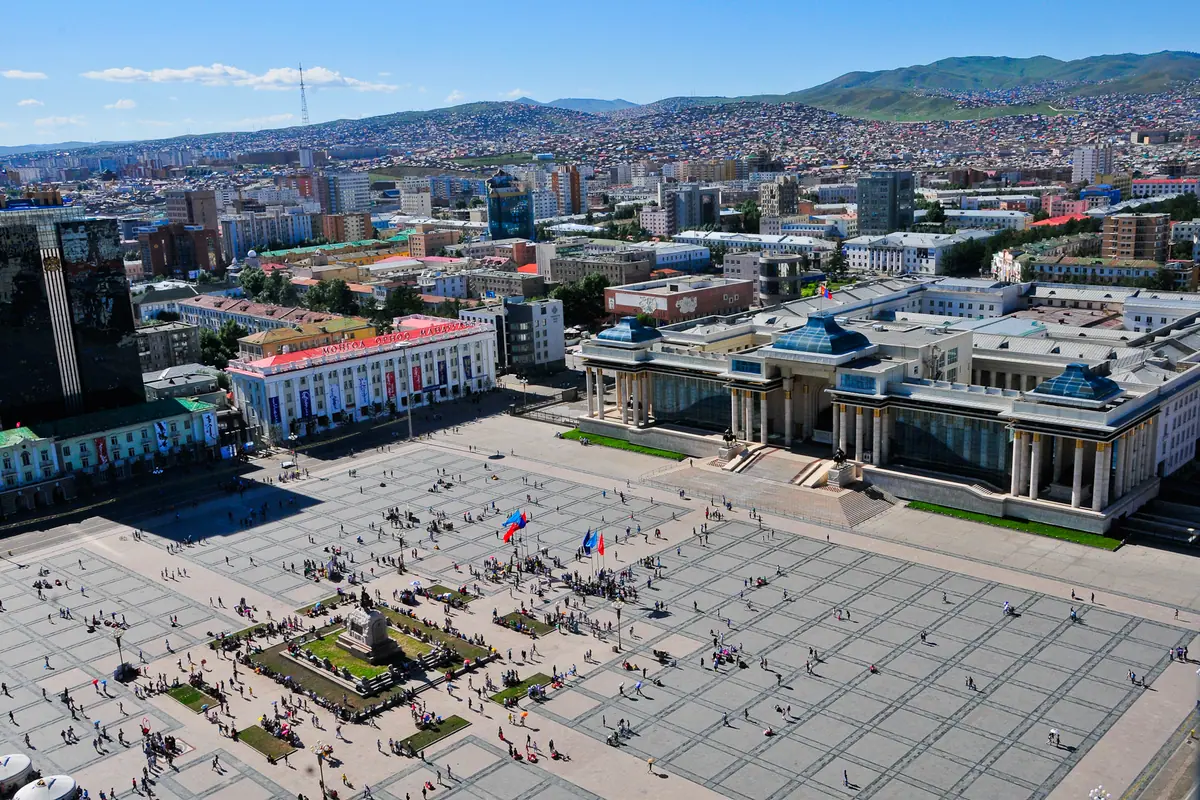
Give the capital two days before you fly anywhere, because it holds the country's finest museums and its most photographed square. Start at Sükhbaatar Square, officially Chinggis Khaan Square, where a vast bronze equestrian statue of the great khan sits before the colonnaded government palace, flanked by seated bronze figures of his successors. Ten minutes' walk away, Gandan Monastery is Mongolia's largest working Buddhist complex, home to the towering gilded Migjid Janraisig statue and a courtyard that fills with the low drone of morning chanting.
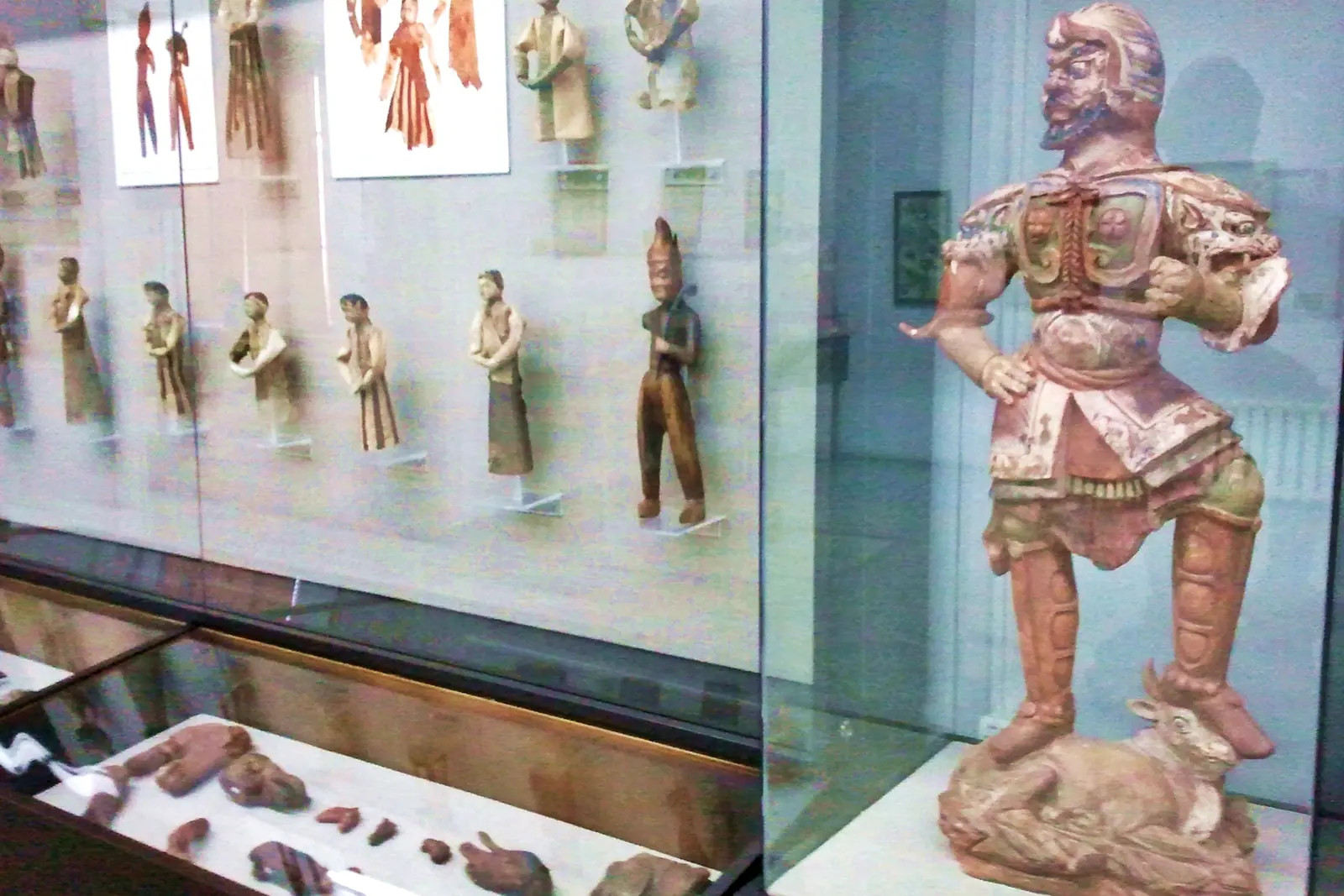
Spend the afternoon at the National Museum of Mongolia, whose chronologically arranged halls carry you from Bronze Age petroglyphs and deer stones through the Mongol Empire to the twentieth-century revolution. Follow it with the Bogd Khan Palace Museum, the winter residence of Mongolia's last theocratic ruler, where temples, thrones and a remarkable collection of ceremonial objects survive in a quiet garden compound. End the day on the hill at the Zaisan Memorial, climbing its mosaic-covered staircase for a panoramic view of the city spilling across the valley floor.
Use your second day for the landscapes just outside town. Gorkhi-Terelj National Park, about an hour east, offers granite formations such as Turtle Rock and easy horse rides through larch and meadow. On the way, stop at the Chinggis Khaan Equestrian Statue at Tsonjin Boldog, a 40-metre stainless-steel colossus you can climb via a lift inside the horse's chest to stand on the head and look out over the steppe. If wildlife matters more than monuments, head west instead to Hustai National Park, where herds of takhi — the only truly wild horses left on earth — graze the hills at dusk.
Day 3: Fly South to Dalanzadgad and Walk Into Yolyn Am
The morning flight to Dalanzadgad crosses a landscape that gradually loses its green, the steppe unrolling into pale, stony desert before the plane drops onto a runway ringed by the Gurvan Saikhan range. Dalanzadgad is the capital of Umnugovi province, a low-rise town of concrete blocks and fringed felt gers, and it is the practical base for everything the northern Gobi has to offer.
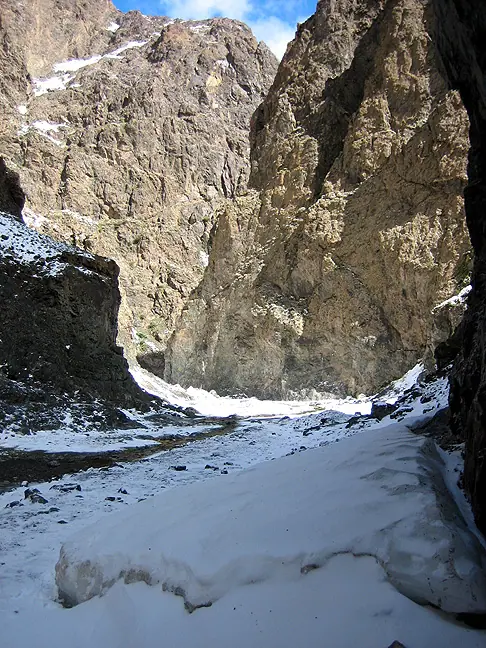
From the airport, drive into Gurvan Saikhan National Park and walk the floor of Yolyn Am, the Valley of the Vultures. The gorge narrows between sheer rock walls until, in early summer, you are treading over a ribbon of ice that survives in the permanent shade well into July — a surreal sight with the desert blazing above. Lammergeiers and Himalayan griffon vultures ride the thermals overhead, and ibex pick their way along the ridgelines if you are quiet and patient. The hike in and out takes two to three hours at an unhurried pace.
That night, sleep in a ger camp on the park's edge. The accommodation is simple but comfortable: felt walls, a stove, shared washing facilities and a sky so dense with stars that people routinely lose an hour sitting outside. Bring a headlamp, a warm mid-layer for the evening and cash in local currency, since card machines are rare once you leave the capital.
Day 4: Khongoryn Els Sand Dunes and the Flaming Cliffs of Bayanzag
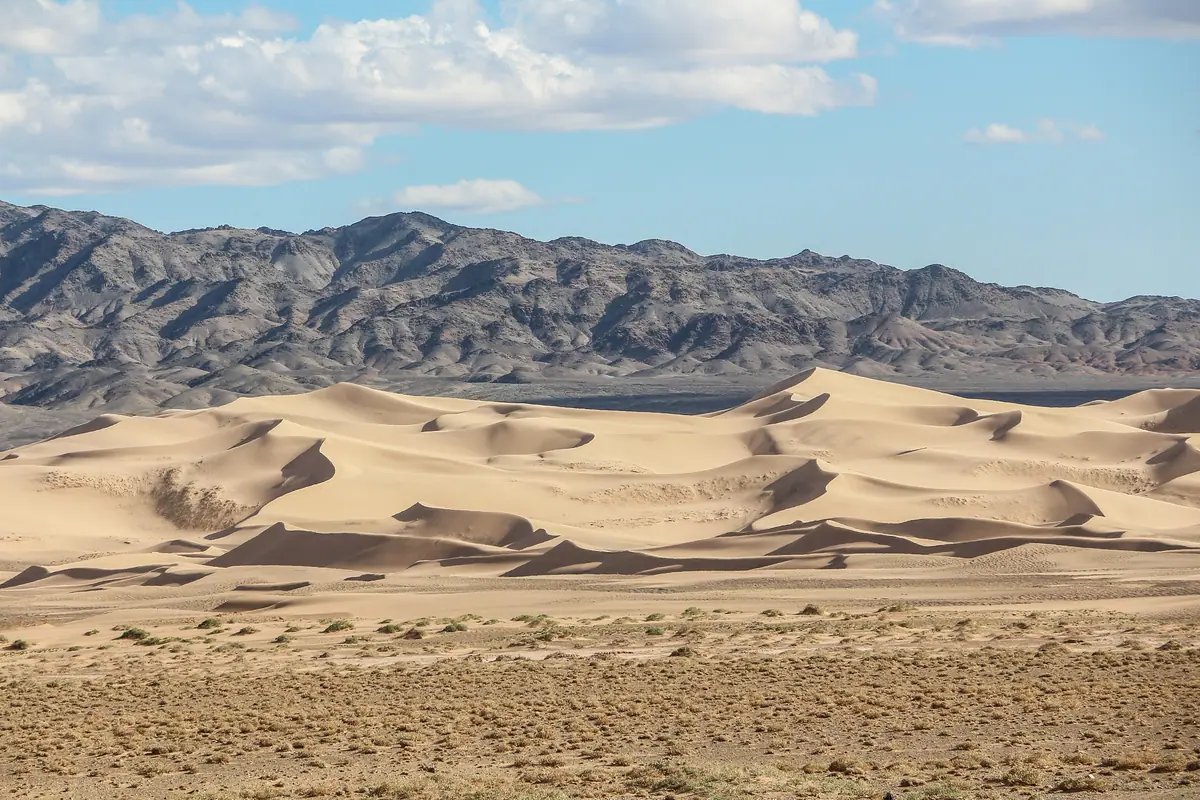
Push further west to Khongoryn Els, a spine of singing dunes that runs for more than a hundred kilometres along the base of the mountains. The sand is fine and pale, and in dry, windy conditions the crests hum audibly as grains slide — hence the name. Climbing the highest ridge takes the better part of an hour in soft sand, but the reward is a horizon of overlapping dune waves with camel herders moving across them and the Gurvan Saikhan peaks turning violet behind.
Stay with a herding family or at a nearby camp, ride a Bactrian camel at golden hour and watch the temperature drop the second the sun disappears. Camel milk tea and dried curd are the customary hospitality, and refusing outright is considered a little impolite — a sip and a smile will do.
On the way back north, detour to Bayanzag, the Flaming Cliffs, where wind and frost have carved glowing red and orange sandstone into buttes and gullies that catch fire at sunset. This is the site famous for the first discovery of dinosaur eggs, and the surrounding badlands still yield fossil fragments to careful eyes. Walk the rim rather than the crumbling slopes, and keep any find exactly where it lies — removing fossils is illegal and heavily penalised. You can fly back to the capital that evening or the following morning, depending on the schedule.
Days 5–6: North to Khuvsgul Lake, Mongolia's Blue Pearl
The hop from the Gobi to the north usually means transiting through Ulaanbaatar, and connections are not always same-day, so plan on an evening in the capital before the flight to Murun. From Murun it is a two- to three-hour drive over a mountain pass to Khatgal, the scruffy little settlement at the southern tip of Khuvsgul Lake. The moment the road crests and that enormous sheet of water appears, the whole trip recalibrates: after the desert, the greenness is almost shocking.
Khuvsgul Nuur holds close to two percent of the world's fresh surface water and is so clear that stones are visible metres down. Days here are spent riding horses along the shoreline, kayaking or taking a small boat to a nearby island, hiking to cliffside viewpoints, and drinking tea with families in the ger camps strung along the western shore. Further north, in the taiga of the Darkhad depression, small communities of reindeer herders still move with their animals through the summer months; visits can be arranged through local operators and are best booked before you arrive.
Nights on the lake are genuinely cold even in July, when daytime temperatures reach the low twenties and drop close to freezing after dark. Pack a proper insulated jacket, and if you are travelling in March, consider timing your trip for the ice festival, when the frozen surface becomes a stage for sled races and traditional games — a completely different, and unforgettable, version of the same place.
Day 7: Return to Ulaanbaatar, Seasons and Practical Groundwork
Fly back to the capital from Murun with a buffer day built in — domestic schedules shuffle more often than anyone would like, and a delayed morning flight should never be the reason you miss an international connection. Use the spare hours for the Gandan Monastery surrounds, the antiques and cashmere shops along the main avenues, and one last plate of khuushuur, the deep-fried mutton pastries that are essentially the national snack.
Timing matters enormously here. June to early September is the sweet spot, with Naadam in mid-July turning Ulaanbaatar into a riot of wrestling, archery and horse racing — spectacular, but book flights and beds months ahead. Late September brings golden larches and thinner crowds, while the long winter is brutally cold, often below minus thirty, and best left to those chasing the Khuvsgul ice festival or the eagle hunters of the far west.
A few practicalities make the difference. Carry a mix of cash and card, because ATMs and card readers thin out dramatically beyond the capital. Bring a power bank, a universal adapter and more memory cards than you think you need. Respect the land: drive only on established tracks, ask before photographing people, walk clockwise around temples and ovoo cairns, and never leave rubbish behind on the steppe. Do that, and a week of flights will hand you three Mongolias — the city, the desert and the lake — instead of just one.
Frequently asked questions
How long are domestic flights within Mongolia?
Most internal hops take between ninety minutes and two hours. Ulaanbaatar to Dalanzadgad in the Gobi is around one and a half hours, and Ulaanbaatar to Murun for Khuvsgul Lake is similar. The real time cost is the drive from each small airport to the actual sights, often two to four hours each way.
Can I visit both the Gobi Desert and Khuvsgul Lake in one week?
Yes, but only by flying and only with tight planning. You will usually transit through Ulaanbaatar between the two regions, and because some routes do not fly daily you may need a night in the capital in between. Booking internal legs early and keeping one buffer day at the end makes the pace manageable rather than frantic.
What is the best time of year for this itinerary?
June through early September offers the most reliable weather, warm days and accessible roads, though July is crowded around the Naadam festival. Late September brings golden larch forests and quieter flights. Winter travel is possible for the Khuvsgul ice festival but requires serious cold-weather gear and flexible scheduling.
What should I pack for a week that includes desert and lake?
Layers are everything: breathable long sleeves and a sun hat for the Gobi, plus a fleece, insulated jacket and warm hat for Khuvsgul, where nights near freezing are normal even in summer. Add a soft duffel bag for strict domestic baggage allowances, a headlamp, a power bank, sunscreen, and cash in local currency.
Do I need a guide and driver once I land?
In practice, yes. Outside the capital there is no public transport to the main natural attractions, mobile coverage is patchy and roads are often unpaved tracks. Most travellers arrange a driver-guide and four-wheel-drive through a local operator for each region, meeting the vehicle at the airstrip.
Sort the rest of your trip
Everything for Mongolia, in one place
Stay in Mongolia
Hotels, guesthouses and apartments — compared in one search.
Search hotels
Transfer in Mongolia
Private driver waiting on arrival — no queues, no surprises.
Book a transfer
Travel insurance
Medical cover, delays and lost baggage — sorted before you go.
Get coveredMore guides in Mongolia
Where to Stay in Mongolia: Hotels, Ger Camps and Must-See Sights
Mongolia Food, Culture and Local Experiences: A Traveller's Guide
Top Things to Do in Mongolia: Landmarks, Steppe and Gobi Adventures
Best Places to Visit in Mongolia: Top Sights from the Gobi to Khövsgöl