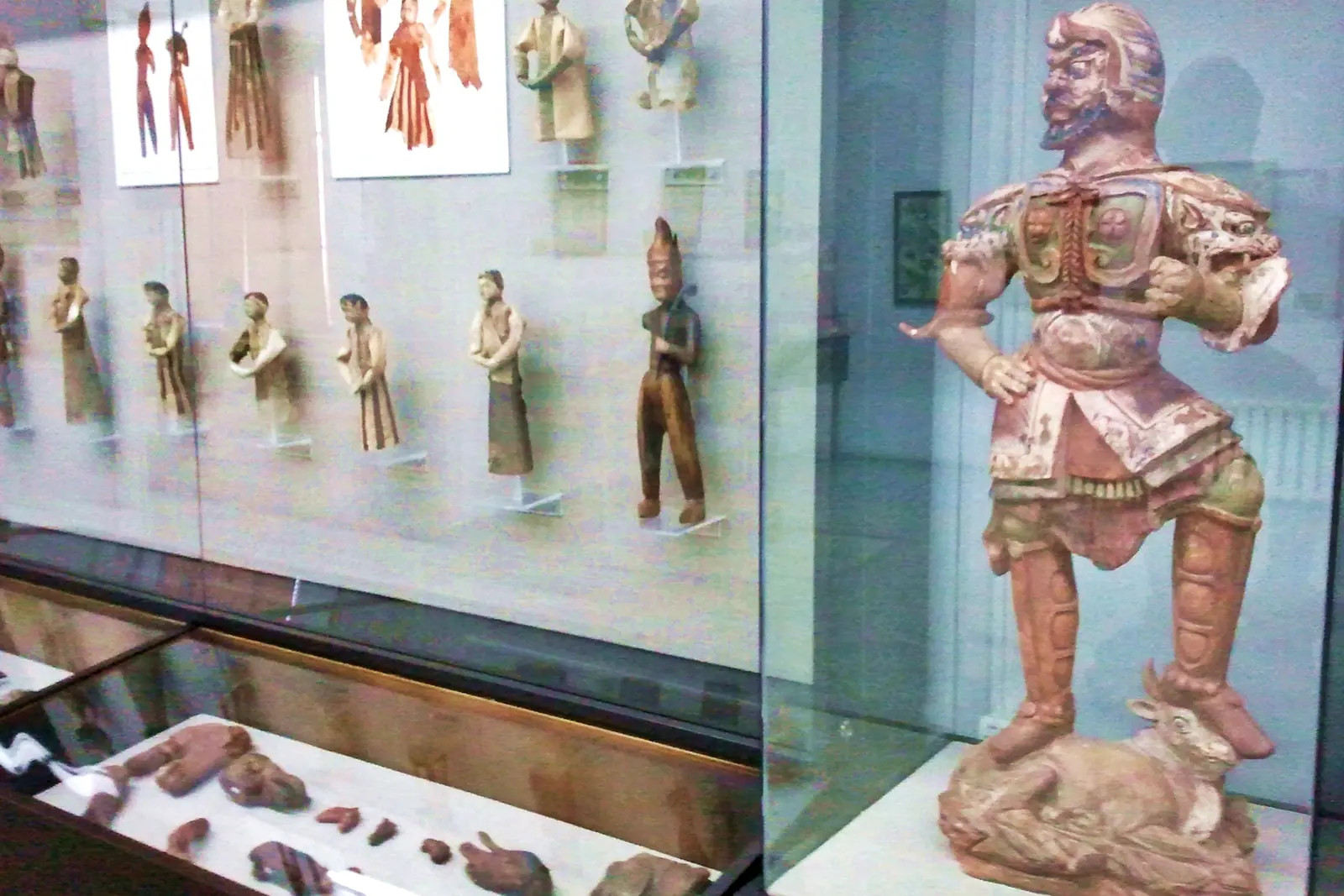
Mongolia is one of the few places on earth where your bed is part of the adventure — a rooftop suite one night, a felt-lined ger with a wood stove the next. This guide maps the country's essential stops, from the capital's wide squares to the Gobi dunes and the northern lake, and explains what kind of lodging you'll actually find at each one.
Ulaanbaatar: The Capital Where Every Route Begins
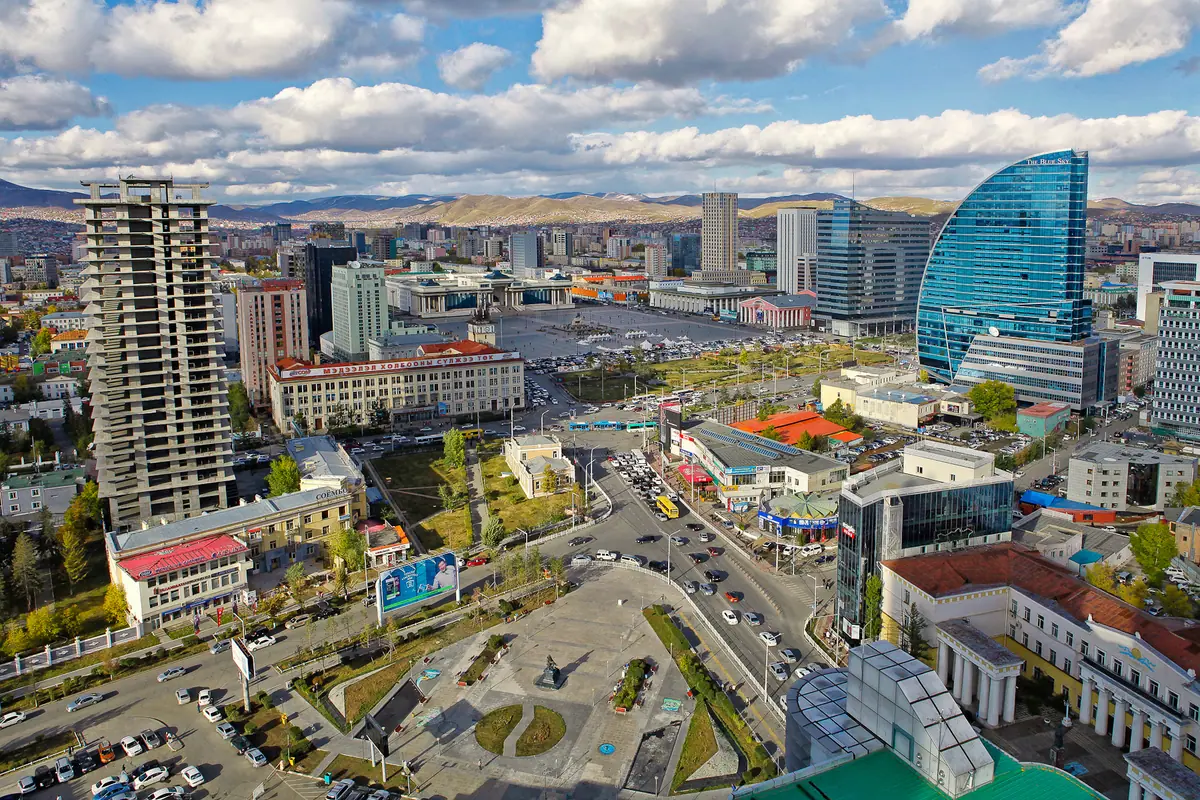
Almost every Mongolia trip starts and ends in Ulaanbaatar, a city of Soviet-era apartment blocks, mirrored office towers and gilded temple roofs stacked along a river valley. The practical geography is simple: international five-star high-rises and business hotels cluster around Chinggis Khaan Square and along Peace Avenue, while quieter boutique guesthouses and family-run places spread into the embassy district and the streets behind Gandantegchinlen Monastery. Base yourself within walking distance of the square and you can reach the National Museum of Mongolia, the colonnaded Government Palace with its enormous seated Genghis Khaan statue, and the pink-walled Choijin Lama Temple Museum on foot in a single afternoon.
Worth a short taxi ride from any central hotel are the Zaisan Memorial, a hillside monument with the best sunset panorama over the whole city, and the Bogd Khan Palace Museum, the winter residence of Mongolia's last theocratic ruler, with its extraordinary collection of Buddhist sculpture and ceremonial regalia. Gandantegchinlen Monastery, the city's living Buddhist heart, opens its courtyards early; arriving around nine in the morning lets you hear the monks chanting before the tour groups arrive.
Timing matters here more than in most capitals. June to August is peak season, with warm days, sudden afternoon downpours and hotel rates at their highest. Naadam, the great wrestling, archery and horse-racing festival, falls on 11–15 July and fills every room in the city, so book weeks or months ahead. Late autumn and winter bring very cheap city rooms and a genuinely different trip — deep cold, clear skies, ice festivals — but you will be dressing for minus thirty. The city sits at about 1,350 metres, so take the first day gently.

Ger Camps and Countryside Lodges: Sleeping Under Open Sky
For many travellers the defining night of a Mongolia trip is spent in a ger — the round, felt-covered tent that remains home for a large part of the rural population. Tourist ger camps are the comfortable middle ground: each party gets its own furnished ger with proper beds and a stove, with shared bathhouses, a dining ger and often a bar on site. The closest good ones lie in Gorkhi-Terelj National Park, roughly an hour and a half east of the capital, where granite valleys and rivers make an easy first taste of the steppe without a long drive.
Terelj's showpiece is the Chinggis Khaan Equestrian Statue, a vast stainless-steel figure on a hilltop that you can climb inside and walk out onto the horse's head. Nearby, a short walk and a climb lead to the Aryabal Meditation Temple, tucked into a rocky slope. Slightly further out, Hustai National Park protects the reintroduced takhi, the world's only truly wild horse, and several camps inside the buffer zone let you watch them at dawn from your own doorway.
What to expect varies more than the photos suggest. Bedding is usually provided, but there may be no lock on the door, no power sockets inside the ger, and a stove that burns out in the small hours — bring a headlamp and warm layers even in July. Most camps operate from mid-May to late September and shut completely when the snows come. Because many sit on unsealed tracks, a driver-guide or a 4x4 is the realistic way to reach them, and cash in local currency saves a lot of awkwardness.
The Gobi: Desert Camps Near the Singing Dunes and Flaming Cliffs
Southern Mongolia's Gobi is not one flat emptiness but a chain of escarpments, gravel plains and sand seas, best explored from the provincial town of Dalanzadgad, reachable by a short domestic flight or a long day's drive from the capital. The classic circuit runs through Gobi Gurvansaikhan National Park, whose highlight is Yolyn Am, Vulture Valley — a narrow gorge where thick ice can survive into midsummer, reached by an easy two-to-three-kilometre walk between sheer rock walls.
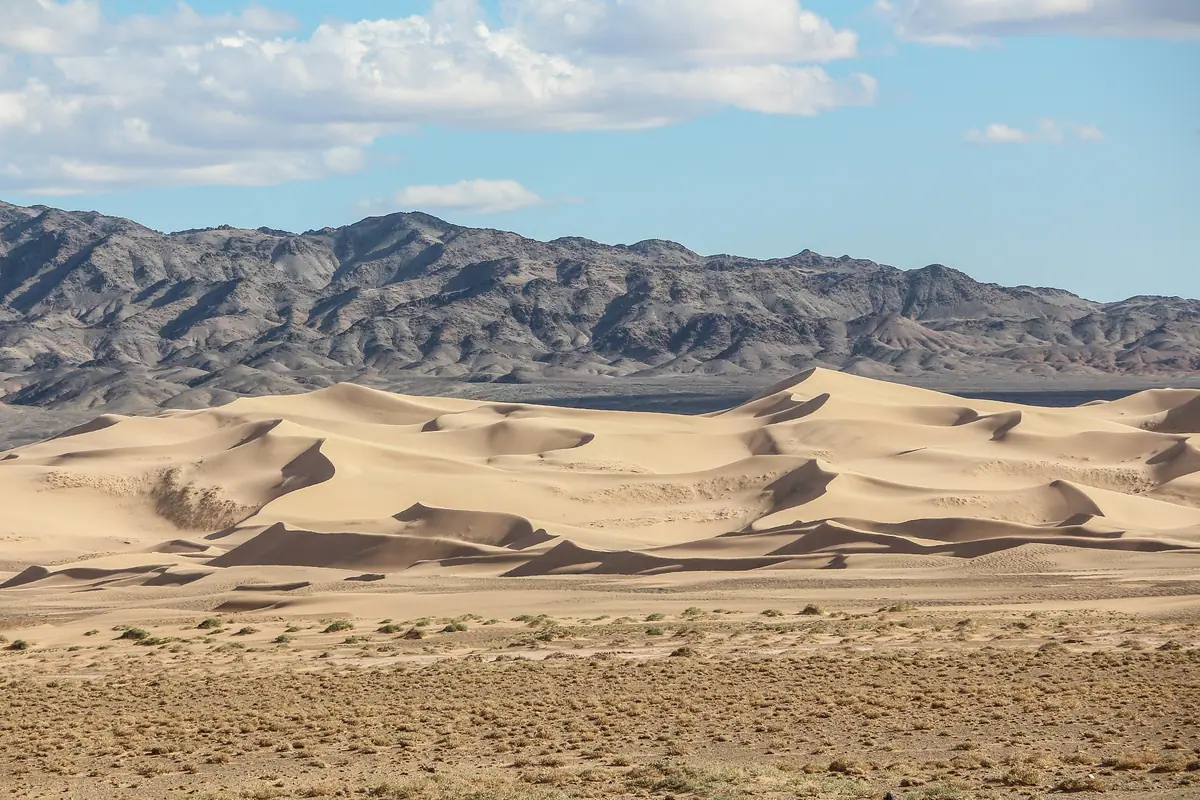
Further west, Khongoryn Els is the sight most people carry home: a wall of sand more than a hundred metres high that hums underfoot when the surface slides, with camel herders' families camped at its base. A couple of hours north lies Bayanzag, the Flaming Cliffs, where the crimson rock glows at sunset and the first dinosaur eggs were unearthed. Both have small clusters of ger camps within sight of the main attraction, which is the real luxury here — watching dawn or dusk without a long drive back in the dark.
Lodging across the Gobi splits into three tiers: simple tourist camps with gers and shared facilities near the dunes and cliffs; basic hotels and guesthouses in Dalanzadgad, useful for an early flight; and family stays in a herder's spare ger, arranged through a local guide. The season runs from May to early October, with June and September the most comfortable. Expect enormous day-to-night temperature swings, spring dust storms, scarce water and long transfers between sights, so plan on a 4x4 and a driver who knows the tracks.
Karakorum and the Orkhon Valley: The Imperial Heartland
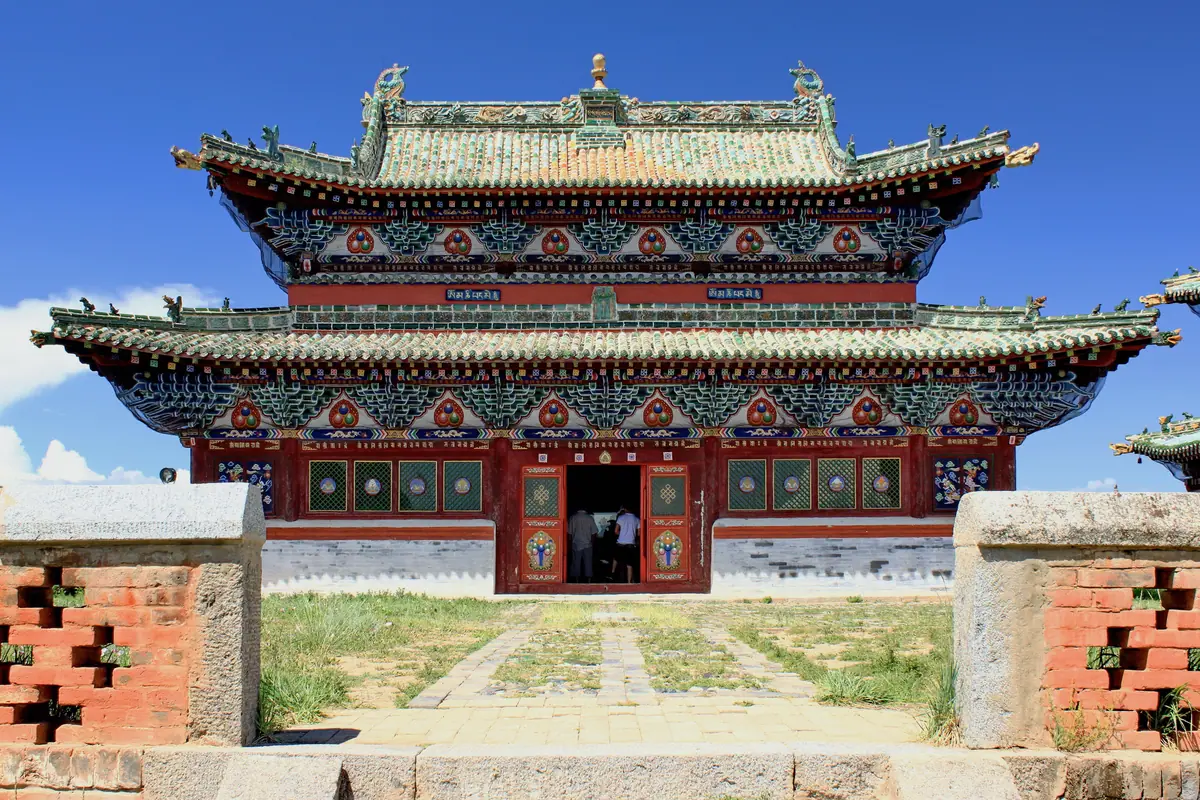
Roughly a day's drive west of Ulaanbaatar, the small town of Kharkhorin sits on the site of the thirteenth-century imperial capital. Its centrepiece is Erdene Zuu, Mongolia's oldest surviving Buddhist monastery, encircled by a wall of 108 white stupas and guarded by the famous phallic stones that once marked the town's edges. Allow two or three hours for the temple halls, the surrounding museum and the plain where the old city once stood.
South of town, the Orkhon Valley opens into a UNESCO-listed landscape of river bends, volcanic remnants and summer pastures. Here you find the Orkhon Waterfall, a twenty-metre drop that thunders after rain, and the Tsenkher hot springs, where several ger camps are built directly around steaming mineral pools — one of the few places in the country where you can soak outdoors after a day in the saddle. The ruined Uyghur city of Khar Balgas lies further north along the same route.
Accommodation suits most budgets: small hotels and guesthouses with hot showers in Kharkhorin itself, riverside ger camps in the Orkhon Valley, and hot-spring camps where the pools are the main attraction. Because this area sits squarely on the overland route between the capital and northern Mongolia, it makes an ideal two-night stop rather than a rushed day trip. Bring a towel, and don't count on card payments outside the larger hotels.
The North: Lake Khövsgöl and the Taiga Edge
In the far north, close to the Siberian border, Lake Khövsgöl stretches for more than 130 kilometres — a cold, deep, startlingly blue body of water that Mongolians call the Blue Pearl. The southern gateway is the village of Khatgal, an hour or so from the provincial town of Murun, which has its own small airport. Ger camps line the southern and eastern shores, some right at the waterline, others set back among larch forest where the hills roll down to the lake.
The northernmost shores and the taiga beyond are the territory of reindeer herding families, reached from the village of Tsagaannuur by horse or rugged vehicle. Staying a night or two in their camps is one of Mongolia's most distinctive experiences — simple, cold and unforgettable — though it requires a guide, patience and a tolerance for improvisation. Days fill with horse treks along the shore, boat trips and hikes to viewpoints above the water.
This is a short, intense season: mid-June to early September, with the lake at its most inviting in July, when it is briefly warm enough for the brave to swim. Nights stay cold even in high summer, and roads north of Murun are mostly rough tracks, so a 4x4 is essential. In early March the frozen lake hosts an ice festival that draws visitors to Khatgal for horse sleds, ice sculptures and skating on metre-thick ice.
Practicalities: Seasons, Booking and Getting Between Beds
Think of Mongolia's travel year in three blocks. June to August is warm, green and busy, with Naadam in mid-July and the best conditions for the Gobi and the northern lake. May and September are quieter and cheaper, with crisp light and fewer visitors, though some ger camps are still shuttered at either end. Winter is for the committed: minus-twenty days, empty steppe, cheap city hotels, dog-sledding and the Khövsgöl ice festival — a completely different country from the one summer visitors see.
City hotels, especially the larger ones in Ulaanbaatar, can be reserved online well in advance. Ger camps are a different game: many take bookings only by email, phone or through a local operator, often with a deposit, and the best ones near the dunes, the Orkhon Valley and Lake Khövsgöl fill up in peak weeks. Domestic flights link the capital with Dalanzadgad, Murun, Khovd, Choibalsan and Ölgii, which can save days of driving, but the most rewarding journeys are the overland ones stitched together by a driver-guide.
Pack for three seasons in one bag: layers, a windproof shell, a sun hat, sunscreen, a headlamp, a power bank, toiletries you can use with limited water, and cash in tögrög, since ATMs thin out fast beyond the capital. On etiquette, accept the bowl of milk tea you'll be offered, step over rather than on a ger's threshold, and walk clockwise around an ovoo, the stone cairns that mark passes and sacred spots. Trekking routes in the far west near the Altai Tavan Bogd peaks climb above 3,000 metres, so allow time to acclimatise if that's your plan. Most Western and many Asian passport holders currently enter visa-free for up to thirty days, but rules change — verify the requirements for your nationality before you book.
Frequently asked questions
When is the best time to stay in a ger camp in Mongolia?
Most ger camps open from mid-May to late September, with late June, July and August the most reliable for warm weather across the Gobi, the Orkhon Valley and Lake Khövsgöl. September brings golden light and fewer people but colder nights, and some camps close by the end of the month.
Do I need to book Ulaanbaatar hotels in advance?
Yes, especially around Naadam on 11–15 July, when the city fills completely, and during major trade events. Outside those dates you can often find a room at short notice, but reserving the first and last nights of a long overland trip removes a lot of stress.
Can I stay with a nomadic family instead of a tourist ger camp?
It's possible but should always be arranged through a local guide or operator who knows the family and can agree terms in advance. A family stay is much more basic than a tourist camp, with no set facilities, and small gifts or payment for food and fodder are customary.
How do I travel between hotels and ger camps?
Distances are vast, so most travellers use a driver-guide with a 4x4, either on a private itinerary or a small group tour. Domestic flights to Dalanzadgad, Murun and western towns cut out long drives, but you still need road transport at each end to reach the camps themselves.
What should I pack for a night in a ger?
A headlamp, warm base layers, a warm hat, and a power bank, since many gers have no sockets. Camps usually supply bedding, but a silk liner is a nice extra, and cash in tögrög is essential because card payments are rare outside the capital's larger hotels.
Sort the rest of your trip
Everything for Mongolia, in one place
Transfer in Mongolia
Private driver waiting on arrival — no queues, no surprises.
Book a transfer
Things to do in Mongolia
Skip-the-line tickets, guided tours and standout experiences.
See experiences
Stay online in Mongolia
Travel eSIM — data the moment you land, no roaming bills.
Get an eSIMMore guides in Mongolia
Mongolia Food, Culture and Local Experiences: A Traveller's Guide
One Week in Mongolia by Plane: The 7-Day Itinerary That Actually Works
Top Things to Do in Mongolia: Landmarks, Steppe and Gobi Adventures
Best Places to Visit in Mongolia: Top Sights from the Gobi to Khövsgöl