Jordan packs more icons into a week than most countries manage in a month: a rose-pink city carved straight into a canyon wall, a desert so otherworldly it doubles for Mars, and the lowest, saltiest lake on the planet. This is a country where you can float in the morning, climb Roman steps at lunch and watch Bedouin tea steam under the stars by nightfall.
Petra: Walking Through the Siq to the Treasury
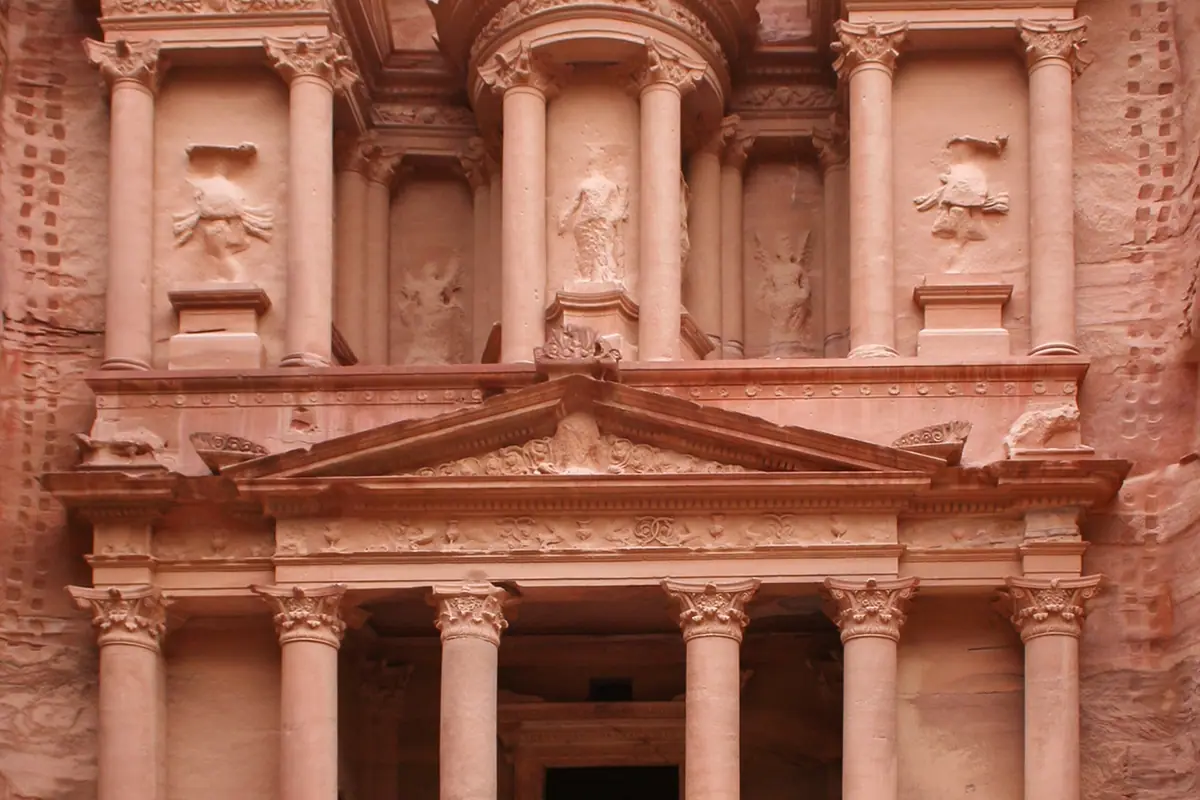
Nothing quite prepares you for the moment the canyon walls part. You enter Petra through the Siq, a 1.2-kilometre slot gorge whose sandstone sides rise up to 80 metres overhead, narrowing until the light thins to a ribbon. Then the passage opens and there it is: Al-Khazneh, the Treasury, a 39-metre Nabataean façade carved directly into the cliff face around two thousand years ago, its Corinthian columns and urn-topped pediment still razor-sharp. Push past the first crowds and the city keeps unfolding — the Street of Facades, the Royal Tombs, a Roman-style theatre hewn from rock, and the temple of Qasr al-Bint at the valley's far end.
Budget a full day as an absolute minimum, and two if you can spare them, because the best of Petra sits beyond the Treasury. The Monastery, or Ad-Deir, is reached by roughly 800 rock-cut steps — about 45 minutes to an hour of steady climbing — and rewards you with a vast, quiet façade, a cave café and a view across to the mountains that separate Jordan from Israel. Arriving at opening time, usually around 6am, buys you cooler air, softer light and an almost empty Siq. Sturdy shoes are non-negotiable, and three litres of water per person is a sensible baseline.
On selected evenings — typically Monday, Wednesday and Thursday — Petra by Night lights the Siq and the Treasury plaza with hundreds of candles and Bedouin music. Spring (March to May) and autumn (September to November) are the sweet spots weather-wise; July and August can push past 40 degrees Celsius, while winter occasionally brings rain and even snow to the highlands nearby. Petra is a UNESCO World Heritage Site and one of the New Seven Wonders of the World, so pair it with Little Petra, a smaller, free-lying Nabataean settlement 10 minutes away that most visitors skip entirely.
Wadi Rum: Jeep Tracks, Rock Bridges and Bedouin Camps
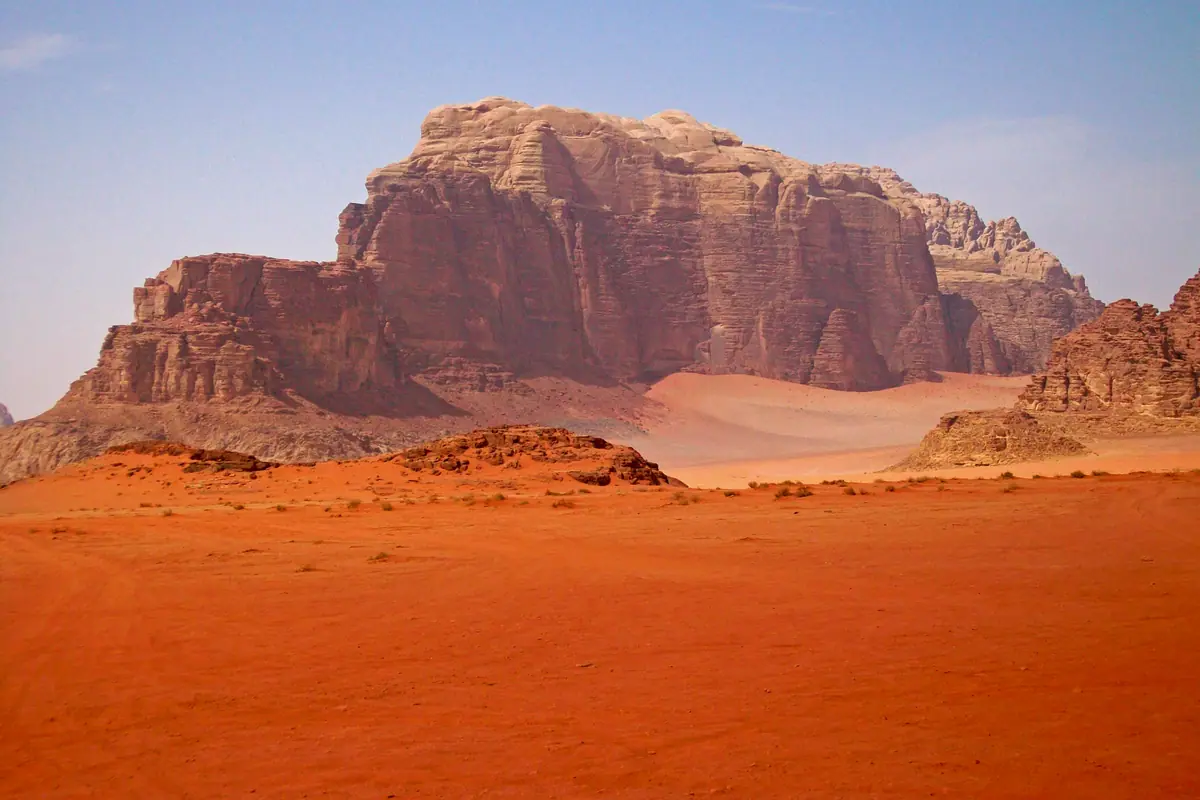
South of Petra, the landscape changes completely. Wadi Rum is a protected desert reserve of towering granite cliffs, red sand valleys and wind-carved arches that genuinely looks like another planet — which is why so many science-fiction films have been shot here. A guided jeep tour is the classic way in, running two to four hours or a full day, stopping at Khazali Canyon with its Nabataean petroglyphs, the spring named after Lawrence of Arabia, the Burdah rock bridge and the smaller, easily climbed Um Frouth arch. Local Bedouin guides drive the routes and know exactly when to time each viewpoint for the best light.
Staying overnight is the real highlight. Accommodation ranges from traditional goat-hair tents and simple camps to bubble domes with transparent ceilings, and the stargazing out here is exceptional — there is effectively zero light pollution. Hot-air balloon flights lift off at dawn over the valleys, and camel treks offer a slower, quieter alternative to the jeep. Days are hot and dry all year, so pack a hat and a light scarf both for sun and for the sand that finds its way into everything. Spring and autumn are the most comfortable seasons; summer means starting activities at first light and resting through the middle of the day, while winter nights regularly drop close to freezing, so bring layers even if daytime temperatures feel mild.
Wadi Rum sits about 90 minutes to two hours by road from Petra and four hours from Amman. It is a Bedouin-populated reserve, so booking through locally run camps and guides keeps money in the community that protects the landscape. Arrange accommodation well ahead for April, May, October and November, when the good camps fill up weeks in advance.
Jerash, Ajloun and Umm Qais: Roman Cities and Hilltop Castles
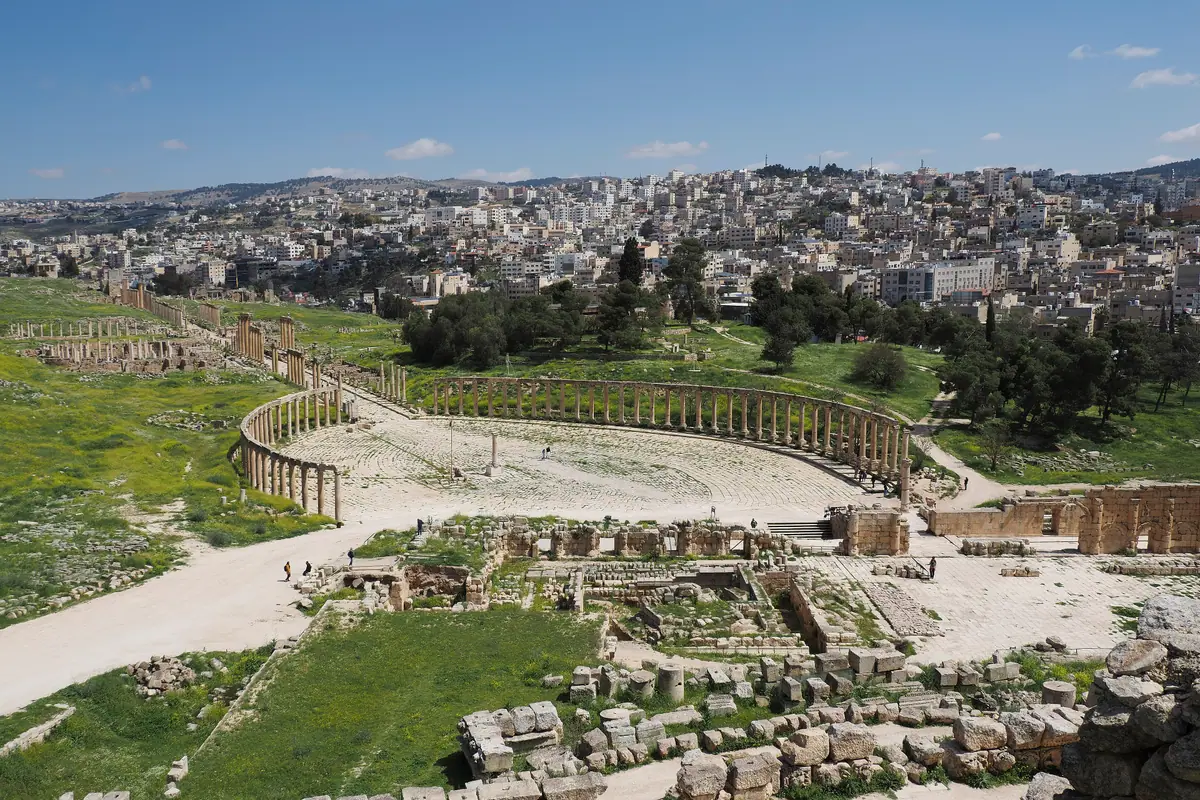
North of Amman, Jordan holds some of the best-preserved Roman provincial architecture anywhere outside Italy. Jerash, about 50 kilometres from the capital, was a thriving Decapolis city, and its ruins sprawl across a hillside in extraordinary condition: Hadrian's Arch, a hippodrome built for chariot racing, the Oval Plaza ringed by 56 Ionic columns, the long colonnaded Cardo Maximus, two theatres and the hilltop Temple of Artemis. Set aside two to three hours at least, come in the morning for cooler air and better photography, and check whether your visit coincides with the summer cultural festival that stages concerts among the columns.
Combine Jerash with Ajloun, a 12th-century Ayyubid castle built by a general under Saladin to control the trade and pilgrimage routes below. Its towers and arrow slits climb in layers, and the roof offers sweeping views over the Jordan Valley and the pine-covered hills around it. Further north, Umm Qais — ancient Gadara — is a darker, moodier site built from black basalt, perched on a ridge where you can look across to the Sea of Galilee, the Golan Heights and, on a clear day, Mount Hermon. Its theatre and colonnaded streets are largely empty, which makes it a striking contrast to busier Jerash.
A comfortable loop is Amman to Jerash to Ajloun, with a night in the north, then Umm Qais on the way back. All three sites involve uneven stone paving and very little shade, so morning starts, sun protection and grippy footwear make the difference between a pleasant half-day and a grumble.
Amman: Citadel Hill, a Roman Theatre and Downtown Food Streets
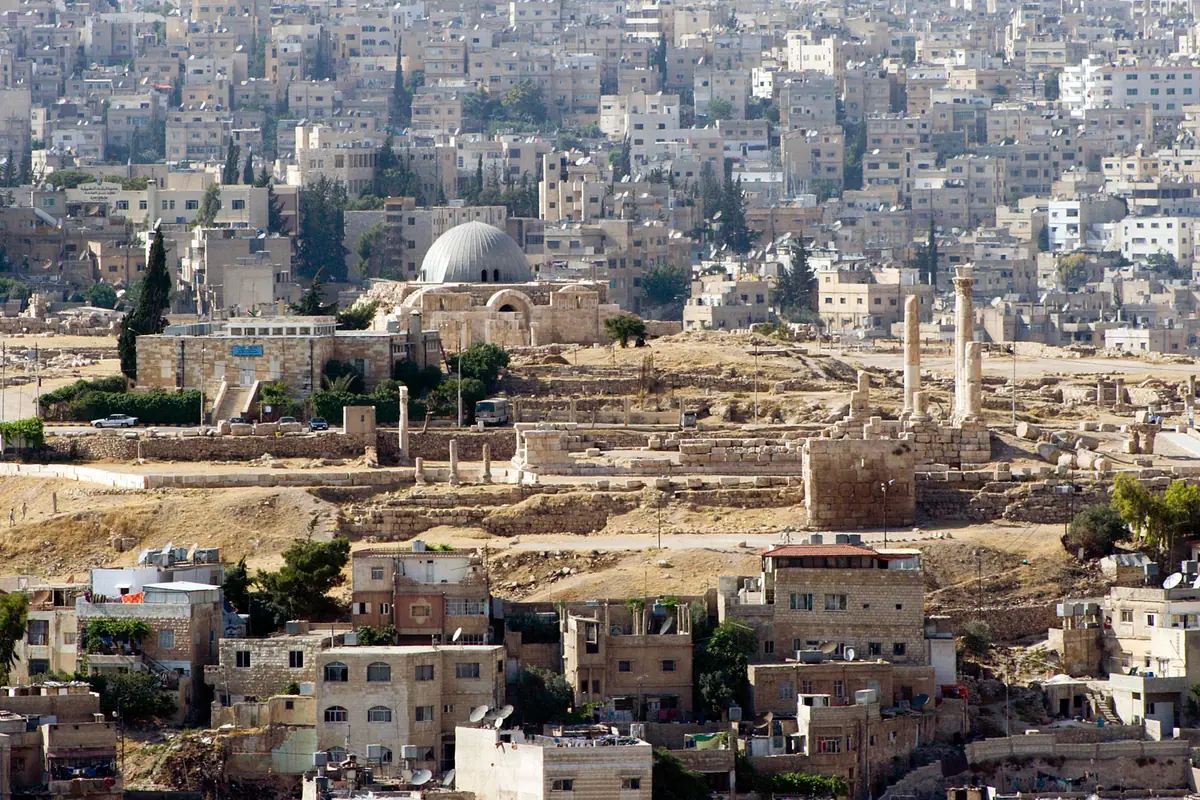
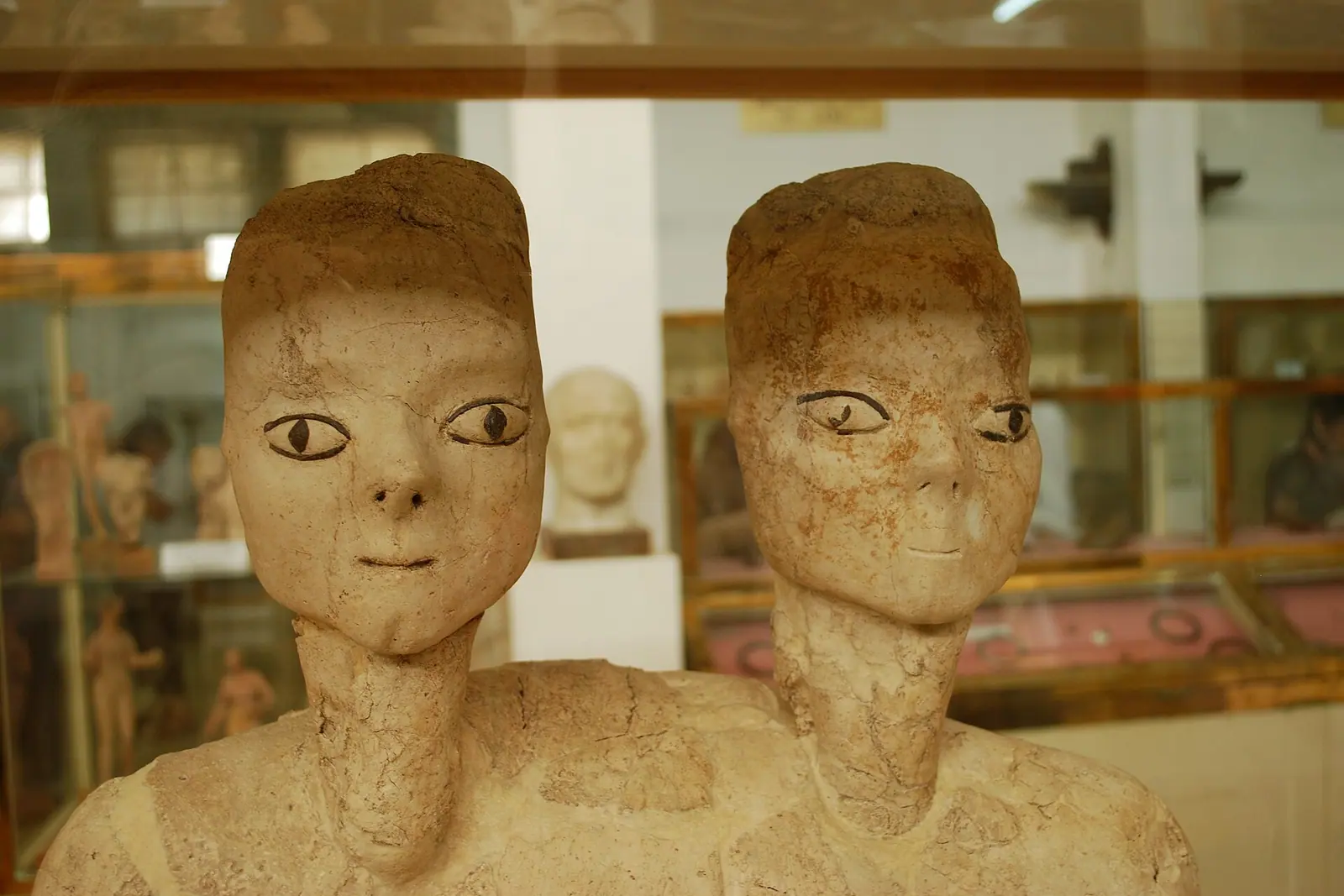
Jordan's capital is often treated as a transit hub, which is a mistake. Start at the Citadel, or Jabal al-Qal'a, the hilltop that has been occupied for thousands of years and now holds the towering columns of a Roman Temple of Hercules, an Umayyad palace complex and a small archaeological museum displaying some of the oldest human statues ever found. It takes about two hours, and the view over Amman's uniform honey-coloured stone buildings is best in late afternoon as the call to prayer rolls across the valleys.
Below the Citadel, downtown's Roman Theatre is cut into the hillside and once seated around 6,000 people; two smaller museums sit inside its wings. From there, walk the steep lanes toward the Hashemite Plaza, the gold souk and the spice shops, then eat your way through the centre — falafel sandwiches, hummus with warm bread, and a plate of hot, syrup-soaked kunafa from a busy sweets shop. For a different side of the city, head to Rainbow Street and the Jabal Al-Weibdeh neighbourhood, where bookshops, galleries, coffee roasters and rooftop bars occupy old villas. The Jordan Museum rounds out a day with excellent context on the region's history.
Give Amman one full day, two if you want to include the museums properly. The city is hilly and traffic-heavy, so plan districts rather than zig-zagging — Citadel and downtown together, Rainbow Street and Weibdeh together — or use ride-hailing apps, which are cheap and widely available.
The Dead Sea, Bethany Beyond the Jordan, Madaba and Mount Nebo
The Dead Sea is the lowest point of land on Earth, roughly 400 metres below sea level, and it behaves nothing like a normal lake. The water is so dense with salt and minerals that you float whether you intend to or not, and the black mud along the shoreline is slathered on by visitors convinced of its restorative powers. Keep sessions short — 20 to 30 minutes is plenty — avoid getting water anywhere near your eyes, don't shave the day before, and rinse off with fresh water afterwards. Mornings and late afternoons are the most comfortable, and the Sweimeh area has beach resorts offering day access with pools and showers.
Inland from the Dead Sea, two stops add serious depth to a Jordan itinerary. Bethany Beyond the Jordan, known locally as Al-Maghtas, is a UNESCO-listed baptism site on the banks of the Jordan River with excavated churches, pools and pilgrim paths. Further south, Madaba's St George's Church holds a 6th-century mosaic map of the Holy Land laid out across the floor, an astonishing piece of cartography in coloured stone, while the town itself is full of mosaic workshops. Nearby Mount Nebo is traditionally where Moses looked out over the Promised Land; the view stretches across the Jordan Valley, and the basilica on the summit preserves beautiful mosaic floors.
This corridor sits along the King's Highway, the historic north–south route that also passes the Crusader castle at Kerak, the canyon of Wadi Mujib — where the Siq Trail canyoning route runs roughly April to October — and the Dana Biosphere Reserve, Jordan's largest nature reserve, with trails ranging from an hour to a full day. Driving the King's Highway rather than the faster Desert Highway turns a transfer into one of the best days of the trip.
Aqaba and the Red Sea: Diving, Forts and Winter Sun
Jordan's southern tip is a different country again: a hot, relaxed Red Sea resort town with coral reefs close to shore. Aqaba's marine park is a serious diving and snorkelling destination, with sites including the Japanese Garden's coral pinnacles and the deliberately sunk Cedar Pride wreck. Water temperatures stay swimmable all year — typically in the low-to-mid twenties Celsius — which makes Aqaba the obvious base for winter sun while Amman and Petra are chilly. Visibility is usually best in spring and autumn, and there are dive centres and glass-bottom boat operators along the waterfront for every comfort level.
Above the water, the Mamluk-era Aqaba Fort, later rebuilt by the Ottomans, anchors the old town and still carries the marks of a First World War shelling. The corniche fills with families and seafood restaurants in the evenings, and the duty-free status makes the city a shopping stop for locals. Because Wadi Rum is only about an hour away, many travellers base themselves here for two or three nights and run a desert day trip or overnight camp from the coast.
Aqaba is roughly four hours by road from Amman, or a short domestic flight, and hiring a car for the southern leg — Amman, the Dead Sea, Petra, Wadi Rum, Aqaba — is the most flexible way to see Jordan. If you are relying on public coaches, services link the main hubs but run on fixed timetables, so plan transfers around them rather than the other way around.
Frequently asked questions
How many days do I need in Jordan?
Five to seven days covers the essentials comfortably: two nights in Petra, one in Wadi Rum, one or two around Amman and the north, and one at the Dead Sea. Four days is doable but rushed — you would be choosing between Jerash and the Dead Sea rather than seeing both. Add a couple of nights in Aqaba if you want Red Sea diving or a warm-weather winter escape.
When is the best time to visit Jordan?
March to May and September to November offer the most reliable weather across the whole country — warm days, cool nights and comfortable hiking in Petra and Wadi Rum. July and August are punishingly hot in the desert and at the Dead Sea, though Petra is manageable if you start at dawn. December to February is cold and sometimes wet in Amman and Petra, with occasional snow, but Aqaba and the Red Sea coast stay mild enough for swimming.
Should I buy the Jordan Pass?
The national Jordan Pass bundles the visa fee with entry to Petra and dozens of other sites, including Jerash, Wadi Rum, the Citadel and Kerak Castle. It usually pays for itself on the Petra entry alone, provided you buy it before arriving and stay at least three nights. Note that Petra by Night is a separate ticket and Petra itself requires two full days if you want to see the Monastery without rushing.
What is the best way to get around Jordan?
Hiring a car gives you the most freedom, especially for the King's Highway route through Madaba, Mount Nebo, Kerak and Dana. Private drivers are a popular alternative and cost far less than you might expect if split between two or three people. Public coaches connect Amman with Petra, Aqaba and the Dead Sea on fixed schedules, but they rarely stop at the scenic sites in between.
What should I wear and are there any etiquette tips?
Dress modestly, particularly in rural areas and at religious sites such as Bethany Beyond the Jordan — shoulders and knees covered, and a scarf is useful for women at mosques and churches. Light layers work best: desert days are hot, nights are cold, and Petra involves a lot of walking over uneven stone. During Ramadan, some restaurants close in daylight hours, and it is polite to avoid eating or drinking openly in the street.
Plan it — experiences in Jordan
Live search, booked directly with trusted providers.
Sort the rest of your trip
Everything for Jordan, in one place
Stay in Jordan
Hotels, guesthouses and apartments — compared in one search.
Search hotels
Transfer in Jordan
Private driver waiting on arrival — no queues, no surprises.
Book a transfer
Stay online in Jordan
Travel eSIM — data the moment you land, no roaming bills.
Get an eSIMMore guides in Jordan
One Week in Jordan: The Ideal 7-Day Itinerary from Amman to the Red Sea
Best Time to Visit Jordan: Seasons, Weather and Where to Stay
Touring Jordan: A Food, Culture and Local Experiences Guide
Where to Stay in Jordan: Hotels by City and the Must-See Sights Nearby