Jordan is a country that changes personality with the calendar: the same sandstone canyon that bakes in July can be bitterly cold at dawn in January, and the same desert camp that feels magical under October stars can feel bleak in a February wind. Choosing your window carefully is the difference between a trip you tolerate and one you talk about for years.
Jordan's Year in Four Acts: Why Timing Decides Everything
Jordan sits at the hinge between the Levant and the Arabian Peninsula, so it does not behave like one country weather-wise. The Jordan Valley and the Red Sea coast at Aqaba swelter while Amman, perched high on its hills, can be crisp and damp in the very same week. Petra and Wadi Rum lie in between — high enough for cold nights, dry enough for fierce daytime sun. Understanding that split is the single most useful thing you can do before booking anything, because the 'best' month depends entirely on whether you are chasing Petra's carved facades, the dunes of Wadi Rum, the salt shore of the Dead Sea or the reefs around Aqaba.
In broad strokes, Jordan offers two golden windows: March to May and September to November. Across most of the country those weeks bring daytime temperatures in the comfortable low-to-mid twenties, cool evenings, clear skies and mercifully manageable walking conditions. Winter, from December to February, is mild along the Dead Sea and in Aqaba but genuinely cold and wet in Amman, Petra and the desert, where snow occasionally dusts the high ground. Summer, June to August, is punishing inland: the Siq at Petra turns into a heat trap by mid-morning, and Wadi Rum's sand radiates stored heat long after sunset.
That seasonal swing also decides which hotels are worth their rate. In the spring and autumn peaks, rooms in Wadi Musa at Petra's gate, the desert camps of Wadi Rum and the Dead Sea resort strip fill quickly, and the shoulder weeks around Easter and the Eid holidays are the first to sell out. In winter the value shifts to Aqaba and the Dead Sea, while canvas desert camps lose much of their appeal — thin walls, cold nights and early sunsets. Pick the season first, then the property, and Jordan rewards you handsomely.
Spring, March to May: The Green Window
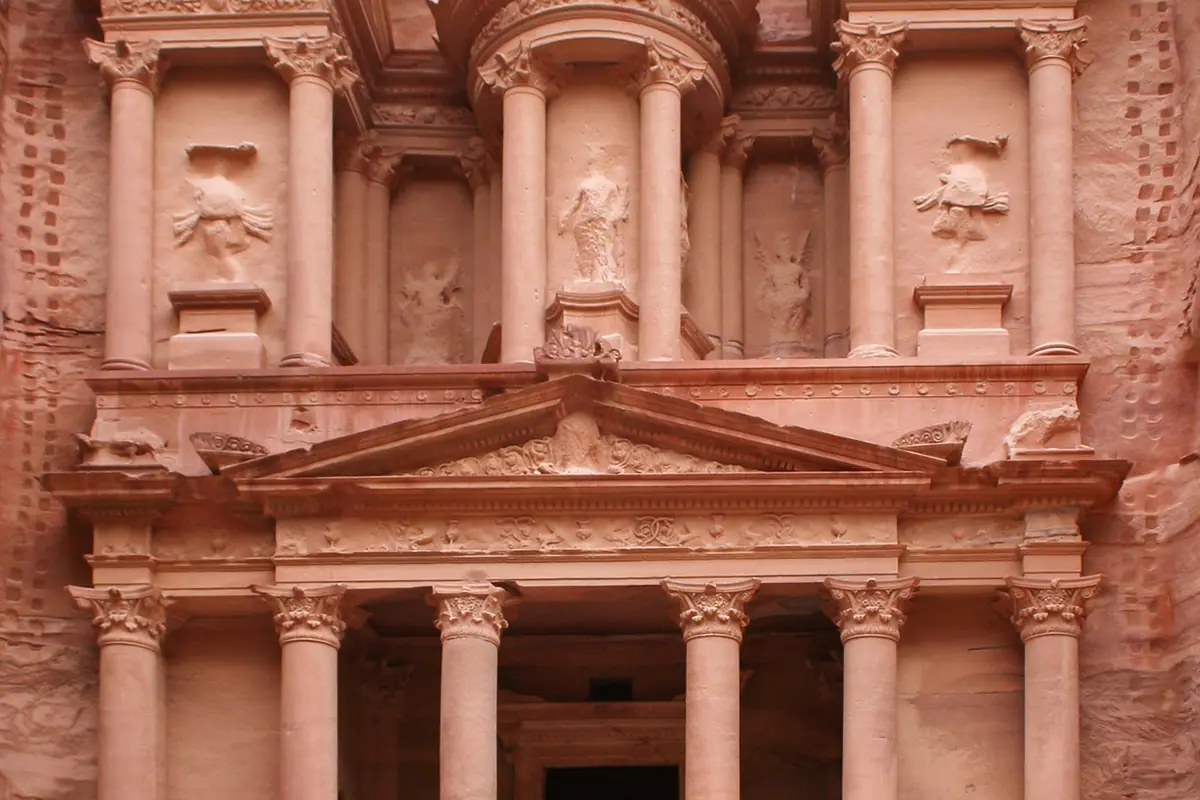
Spring is the answer most travellers arrive at, and for good reason. The hills of the Jordan Valley turn green, wildflowers and poppies appear along the roads, and the desert is at its most forgiving. Petra is at its best now: you can walk the Siq in the cool of the morning, stand in front of the Treasury, and still have the energy to climb the long staircase to the Monastery in the afternoon. Budget two full days in Wadi Musa if you can — one for the main trail and the Treasury, another for the High Place of Sacrifice, the Royal Tombs and Little Petra a short drive north.
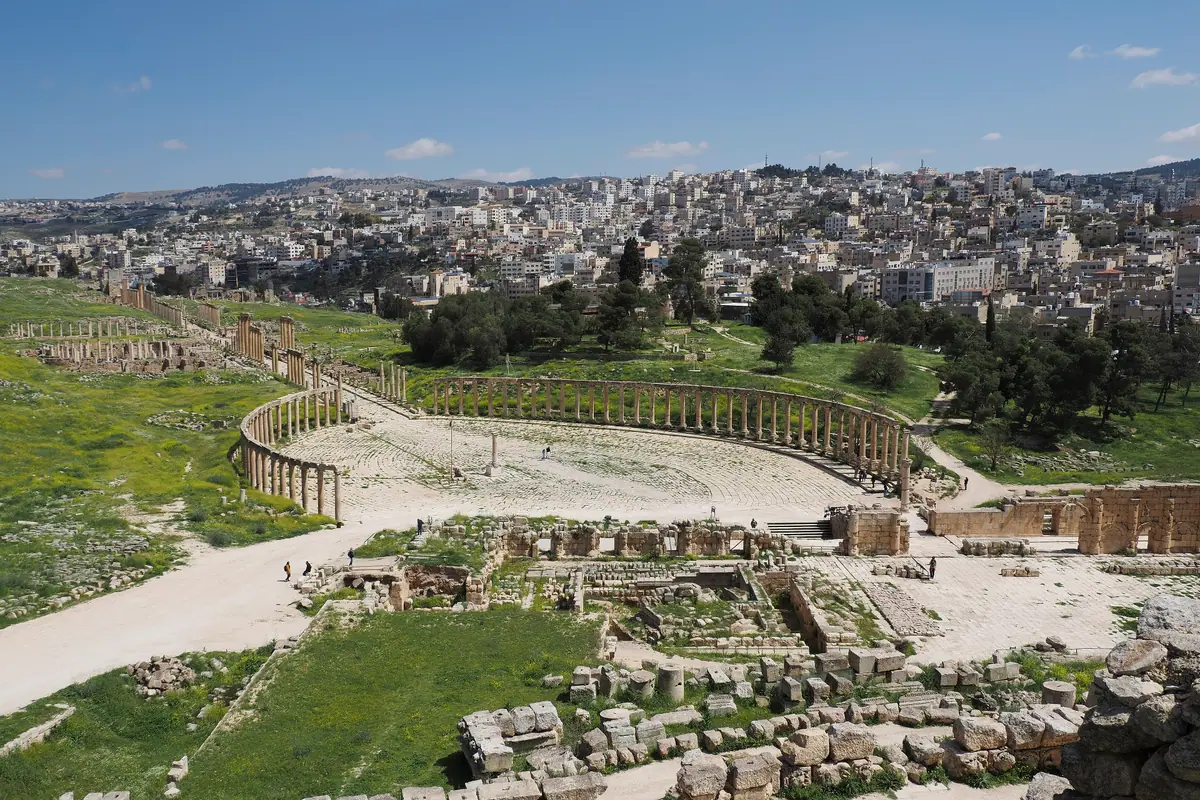
Further north, spring suits the Roman city of Jerash, where colonnaded streets and two theatres sit in open sun with little shade, and hilltop Ajloun Castle, surrounded by olive groves and woodland. It is also the season for the Dana Biosphere Reserve, for the gorge trail through Wadi Mujib, and for the mosaic-rich town of Madaba and Mount Nebo, where the view over the Jordan Valley is clearest before the summer haze builds.
Spring is peak season, so plan accommodation early. In Wadi Musa, guesthouses with rooftop terraces and early breakfasts are worth the small premium for beating the tour groups to the gate. In Amman, look in Jabal Amman and Jabal al-Weibdeh for characterful small hotels within walking distance of the Roman Theatre and the Citadel. Expect busy sites, full restaurants and the best weather of the year — a fair trade.
Autumn, September to November: Desert and Dead Sea Sweet Spot
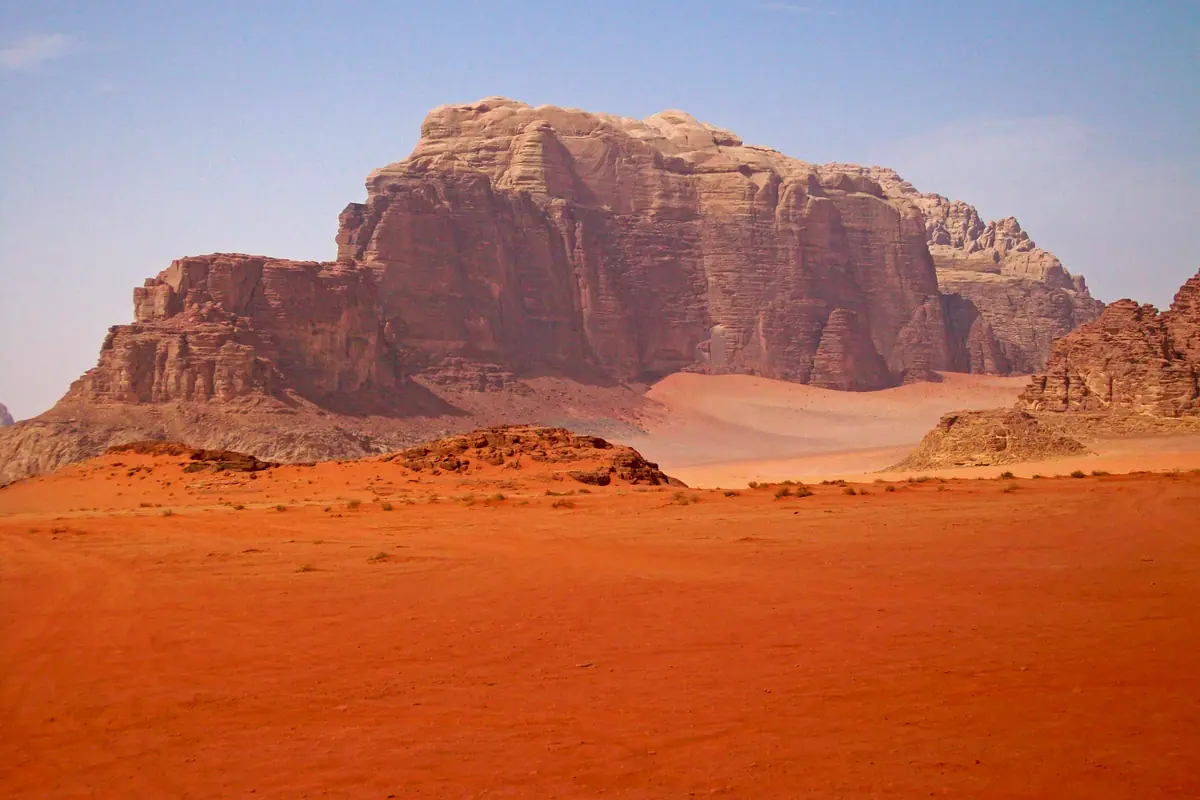
The heat finally breaks around mid-September, and October into November is arguably the finest stretch for Wadi Rum and the Dead Sea. Days in the desert settle into the mid-twenties, nights are cool rather than freezing, and the low autumn light turns the sandstone cliffs a deep rust red. This is the time for jeep tours past Lawrence's Spring and the Khazali Canyon inscriptions, camel treks at golden hour, and scrambling up to the Burdah Rock Bridge for the panorama. Book a camp with a proper insulated tent rather than a bare canvas one — the temperature drop after dark still surprises people.
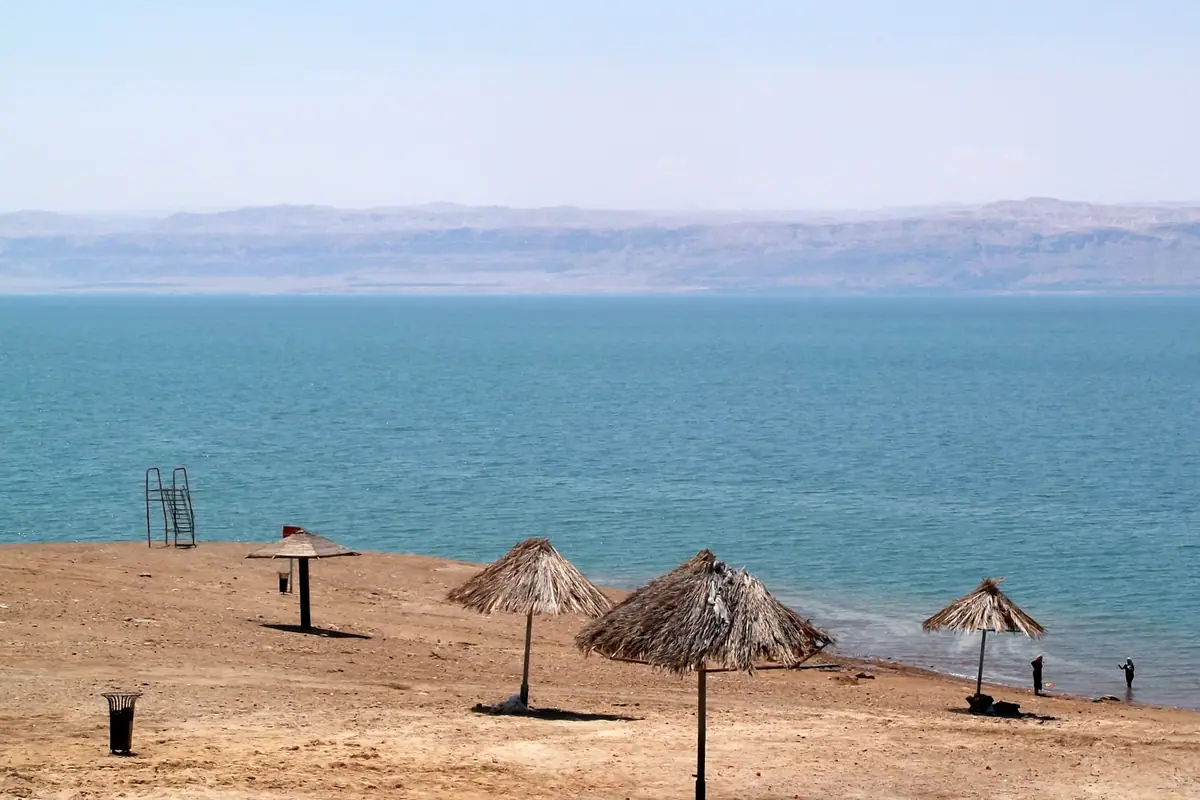
The Dead Sea is at its most pleasant in autumn too: the water is warm enough for a long float, the mud is easy to spread, and the light across to the Judaean hills is soft. Aqaba on the Red Sea remains excellent, with clear water for diving and snorkelling and warm evenings for the beach. October is also the tail end of the gorge season in Wadi Mujib, which typically shuts once the winter rains make flash floods a risk.
Hotel-wise, autumn behaves like spring but with slightly calmer crowds until late October. Dead Sea resorts with private beaches and sunset-facing rooms justify their rates now, and Aqaba's seafront properties are comfortable without the summer crush. If you want Petra, Wadi Rum, the Dead Sea and Aqaba in one trip, this is the window to build it around.
Summer and Winter: What Each Extreme Is Actually Good For
Summer in Jordan is not a write-off, it is a scheduling problem. Start Petra at first light, when the gate opens, and you can reach the Treasury before the sun clears the canyon walls; retreat to your hotel through the middle of the day and return for the late afternoon. In Amman, visit the Citadel and the Roman Theatre in the early morning or after five, then eat late in the buzzing streets of Jabal al-Weibdeh. Aqaba is the summer refuge, with warm, glassy water and resorts built around pools and shade. The north, including Umm Qais and Ajloun, sits higher and cooler than the desert, making it a sensible July detour.
Winter flips the map. Amman turns chilly and rainy, Petra can see snow on the high ridges, and Wadi Rum nights are genuinely cold — bring thermals and a hat, and check that your hotel has reliable heating rather than assuming it. In exchange you get empty trails, low light on the rock, and the cheapest rates of the year. The Dead Sea and Aqaba stay mild and often sunny, which makes them the obvious winter bases: float in the brine in the morning, then drive south for Red Sea warmth.
Winter is also the season for the Azraq wetlands and for birdlife along the Jordan Valley, and for lingering in the hot springs of the Jordan Valley. Just temper expectations on daylight — sunset comes early, so plan fewer sites per day and give yourself time to enjoy them.
Where to Stay, by Season and Region
In Amman, the choice is between downtown character and modern comfort. Jabal Amman and Jabal al-Weibdeh put you near cafés, galleries and the Roman Theatre, and are lovely in spring and autumn when you can walk in the evenings; Abdoun and Sweifieh offer larger, more polished hotels with reliable heating and air conditioning, which matters in the July heat and the January chill. Ask specifically about heating if you are travelling in winter — it is not universal.
At Petra, everything hinges on distance from the visitor centre. Properties in Wadi Musa within a five-minute walk let you be first through the gate in any season, which is transformative in summer. In Wadi Rum, compare camp styles honestly: domed and bubble tents hold heat better than traditional goat-hair tents, and all of them are far more appealing in October or April than in December. If you are visiting in winter, consider a single night in the desert and put the rest of your budget into a warm hotel.
For the Dead Sea, the resort strip along the eastern shore works best from November to April, when the air is pleasant and the water inviting. Aqaba is the year-round option, with beach resorts that make sense in February as much as in August. Wherever you stay, book the shoulder weeks early — the days either side of national and religious holidays are when the good rooms vanish first.
Timing Around Ramadan, Holidays and Practical Details
Jordan's calendar adds a second layer to the seasons. Ramadan moves roughly eleven days earlier each year, and during it, opening hours shift, some smaller restaurants close by day, and the atmosphere becomes quieter until sunset — after which the iftar and evening streets are wonderfully lively. Larger hotels continue to serve visitors normally, and travelling during Ramadan is entirely manageable; just plan fewer late-afternoon activities and be flexible about lunch. The two Eid holidays that follow bring a wave of domestic travel to Aqaba and the Dead Sea, so secure accommodation well ahead if your dates overlap.
On the ground, a few habits make any season easier. Fridays are quiet for shopping but sites remain open, and a single multi-site visitor pass can simplify entry to Petra, Jerash and other major attractions. Petra deserves at least a full day, comfortably two; Wadi Rum needs one night minimum to feel like anything more than a photo stop; Jerash takes half a day; the Dead Sea is a half-day experience best paired with Madaba and Mount Nebo.
A classic ten-day route — Amman, Jerash and Ajloun, Madaba and Mount Nebo, the Dead Sea, Petra, Wadi Rum and Aqaba — works best scheduled between late March and mid-May or late September and mid-November. Pack layers whatever the month: a light jacket for desert evenings, a sun hat and high-factor sunscreen for the middle of the day, and shoes with grip for Petra's worn, polished stone. Get that combination right and Jordan delivers in almost any season.
Frequently asked questions
What is the best month to visit Jordan?
Late March to mid-May and late September to mid-November offer the most reliable weather: warm, clear days in the low-to-mid twenties, cool evenings and comfortable walking conditions at Petra, Jerash and Wadi Rum. October and April are the standout months if you want to combine desert, Dead Sea and Red Sea in one trip.
Is summer too hot to visit Petra and Wadi Rum?
It is hot, but manageable with early starts. Enter Petra at opening time, when the Siq is still shaded, rest through the middle of the day and return in the late afternoon. In Wadi Rum, keep activities to early morning and evening, and choose a camp with good insulation and shade rather than one exposed to full sun.
When should I visit the Dead Sea and Aqaba?
The Dead Sea is most enjoyable from November to April, when the air is mild and the water warm enough for a long float. Aqaba works year-round thanks to the Red Sea's moderating effect, with warm water and sunny days even in midwinter, though summer there is very hot inland from the shore.
How far ahead should I book hotels in Jordan?
For spring and autumn travel, especially around Easter and the Eid holidays, book three to six months ahead for Petra's Wadi Musa, Wadi Rum camps and Dead Sea resorts. Winter and midsummer are easier, but Aqaba fills fast during school breaks and local holidays.
What should I pack for Jordan's seasons?
Layers are essential in every season. Even in summer, desert nights at Wadi Rum turn cool, while Petra's stone reflects heat by day. Bring a sun hat, sunscreen, sturdy grippy shoes for Petra's polished paths, a warm midlayer for winter and a light waterproof jacket for Amman between December and February.
Sort the rest of your trip
Everything for Jordan, in one place
Transfer in Jordan
Private driver waiting on arrival — no queues, no surprises.
Book a transfer
Things to do in Jordan
Skip-the-line tickets, guided tours and standout experiences.
See experiences
Stay online in Jordan
Travel eSIM — data the moment you land, no roaming bills.
Get an eSIMMore guides in Jordan
One Week in Jordan: The Ideal 7-Day Itinerary from Amman to the Red Sea
Top Things to Do in Jordan: Petra, Wadi Rum, the Dead Sea and Beyond
Touring Jordan: A Food, Culture and Local Experiences Guide
Where to Stay in Jordan: Hotels by City and the Must-See Sights Nearby