Jordan packs an absurd amount of drama into a country you can cross in a day: a rose-red city carved from sandstone cliffs, a desert so still you can hear your own pulse, Roman streets still paved with chariot ruts, and a salt lake where you simply cannot sink. This is a guide to where to go, what to actually do there, and when each place is at its best.
Petra: Walking the Rose-Red City at Dawn
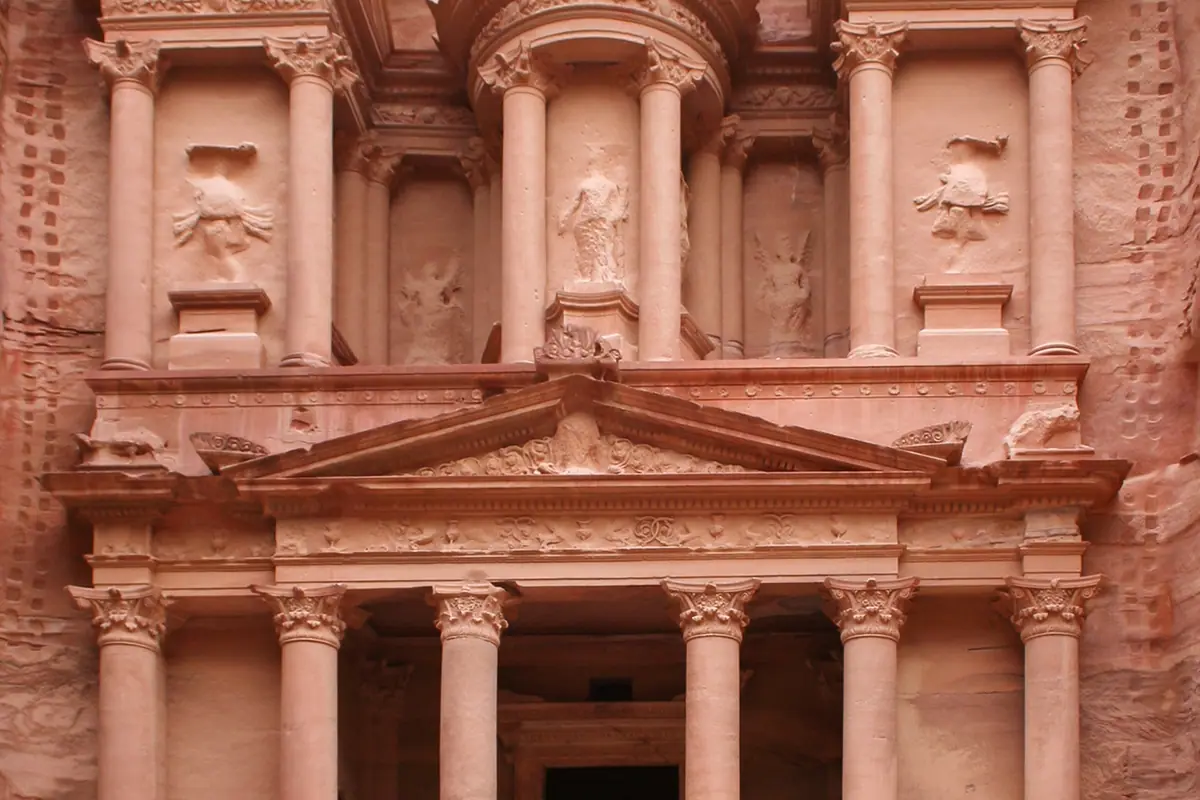
Jordan's headline act, and one of the world's great archaeological landscapes, is best met on foot and early. You enter through the Siq, a 1.2-kilometre slot canyon of twisting sandstone, where the walls narrow to a few paces and the light falls in ribbons. Then it ends, and there it is: Al-Khazneh, the Treasury, its Hellenistic facade glowing pink as the sun edges over the cliffs. Arrive at opening time in high season and you can have the Treasury almost to yourself for twenty minutes before the first groups arrive.
Beyond the Treasury the site sprawls far further than most visitors expect: the Street of Facades, the Roman-style Theatre cut into the hillside, the Royal Tombs, the colonnaded street and Qasr al-Bint. The climbs repay the effort. Roughly 800 steps lead up to Ad-Deir, the Monastery, a facade even larger than the Treasury, and about two hours round trip including pauses for mint tea at the top. The High Place of Sacrifice offers a panorama over the whole valley, while a separate trail climbs to the Treasury viewpoint above the Siq.
Plan for at least two full days, three if you are travelling with a camera and a slow heart. Petra by Night, when the Siq and Treasury are lit by hundreds of candles on selected evenings, is atmospheric even if it is busy. Base yourself in Wadi Musa and do not skip Little Petra, roughly ten kilometres north, where a smaller canyon hides painted Nabataean ceilings and far fewer people. Spring and autumn days are perfect; midsummer is punishing, and winter can bring cold wind and rare flash floods that close trails.
Wadi Rum: Jeep Tracks, Rock Bridges and Desert Nights
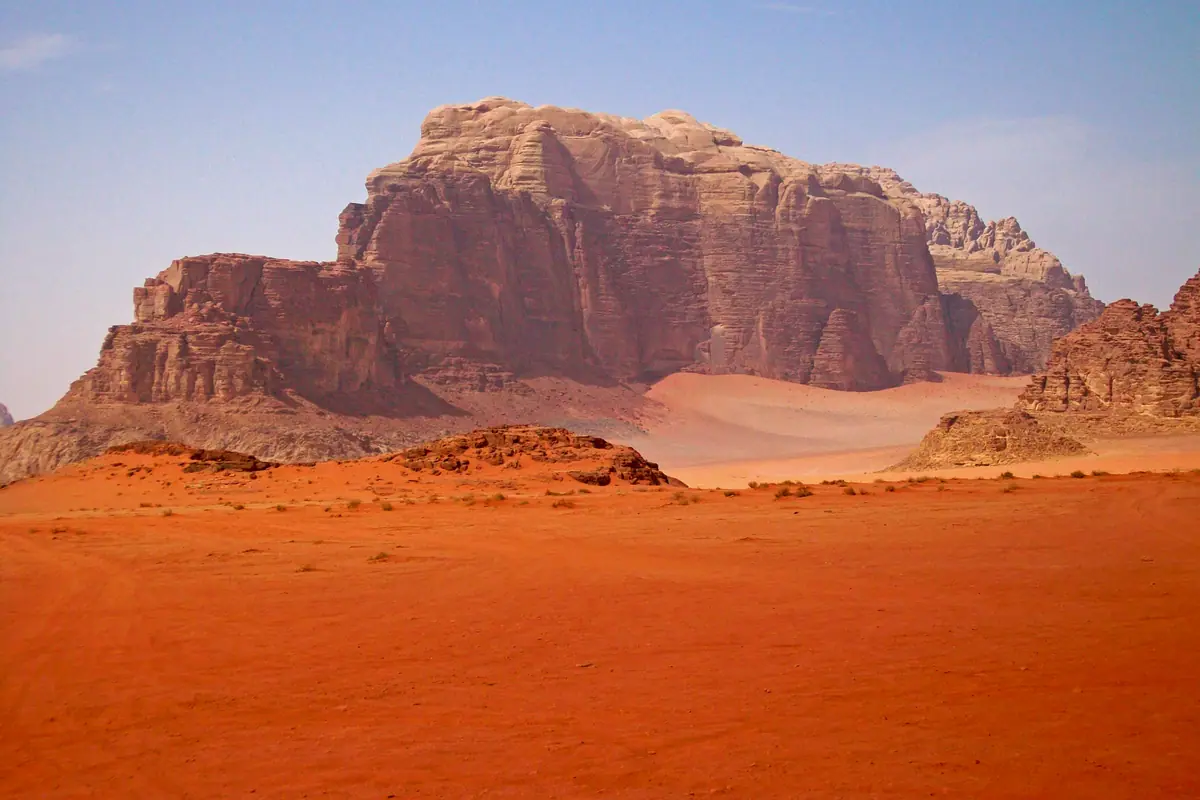
Wadi Rum is not empty desert — it is a protected wilderness of granite massifs and sandstone cliffs rising out of red sand, and the best way to see it is from the back of a 4x4 with a Bedouin driver who knows which tracks the wind has not yet erased. Trips run from two or three hours to a full day and beyond: Lawrence's Spring, the Khazali Canyon with its Thamudic inscriptions, the Anfaishiyya carvings, and Al-Burdah, a natural rock bridge that the sure-footed can scramble across. Um Fruth bridge offers an easier, equally photogenic climb.
Activities stack up quickly. Camel treks move at the pace the landscape deserves, rock climbing routes range from beginner to serious, and sunrise hot-air balloon flights lift you over the dunes and the Seven Pillars of Wisdom formation. Nights are the real prize. Bedouin camps run from simple goat-hair tents with shared bathrooms to glass-roofed dome tents where you fall asleep watching the Milky Way; dinner is often zarb, meat and vegetables buried in a sand oven. Some of the darkest skies in the region make stargazing genuinely memorable.
Wadi Rum sits about an hour from Aqaba and three and a half to four hours from Amman. March to May and September to November are the sweet spots; July and August can push past 40°C by midday, and December to February nights frequently drop near freezing, so pack layers regardless. Two nights is the minimum worth the journey — one to see it, one to slow down. Book desert camps well ahead during spring and autumn, when the good ones fill up weeks in advance.
The Dead Sea, Madaba and Mount Nebo: Mosaics, Springs and Floating
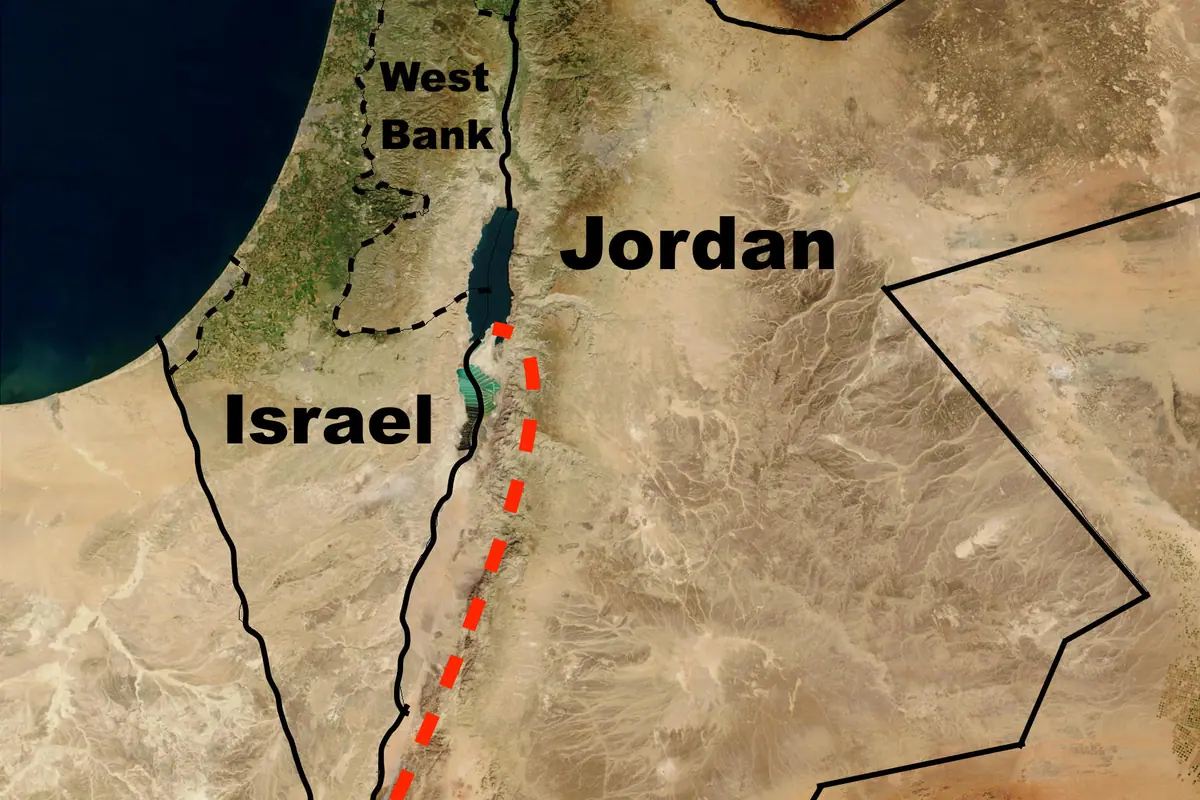
More than 400 metres below sea level, the Dead Sea is a strange and wonderful experience: water so dense with salt that floating is not an activity but a default state. Wade in slowly, keep your head up, do not splash, and skip shaving the day before — the sting is real. Fifteen to twenty minutes is plenty. Slather on the dark mineral mud, let it dry in the sun, rinse, and repeat. Sunrise and late afternoon light on the water, with the Judaean hills dissolving into haze opposite, is the image most people carry home.
Inland from the shore, Madaba is a town built on mosaics. The Church of St George holds a sixth-century mosaic map of the Holy Land, laid out in coloured stone across the floor, and the nearby archaeological park gathers more pavements and artefacts from the same era. A short drive away, Mount Nebo is traditionally the vantage point from which Moses looked across the Promised Land; on clear days the view runs over the Jordan Valley towards Jericho. Nearby, Bethany Beyond the Jordan marks the baptism site on the river itself, with remains of churches and pools.
The Dead Sea's eastern shore is lined with hotel beaches and a few simpler public access points, and the area works beautifully as a loop from Amman, little more than an hour away. Add the Wadi Mujib Siq Trail, a canyoning route through a slot canyon to a waterfall that generally opens between April and October, and the warm Ma'in Hot Springs tumbling down beside the road. The Dead Sea is at its kindest from November to March, when mild air makes floating pleasant rather than endurance; in summer, go at dawn.
Jerash, Ajloun and Umm Qais: The Northern Roman Trail
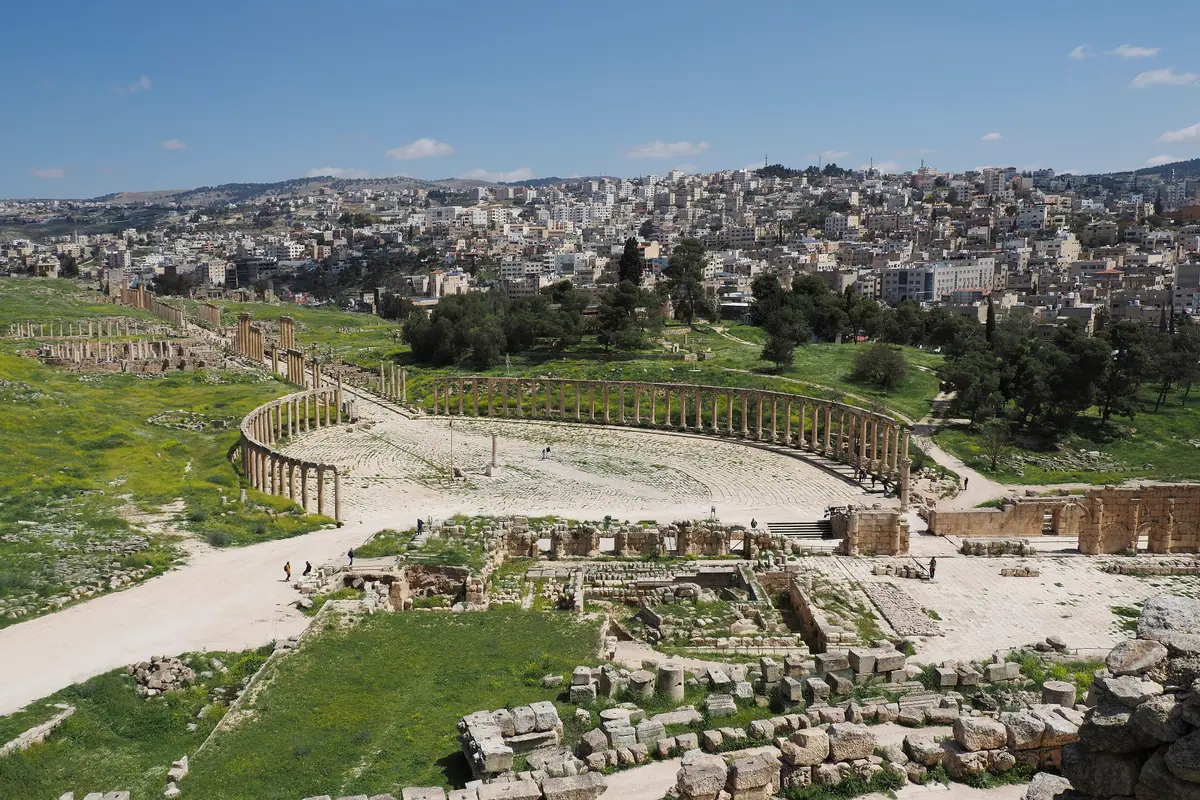
Jerash is the reason many travellers come north, and it delivers: a Roman provincial city so complete that you can walk its main street and still see the ruts cut by chariot wheels. You enter past Hadrian's Arch and the Hippodrome, then the ground opens into the Oval Plaza, a colonnade curving around a paved square. From there the Cardo Maximus runs straight as a rule, flanked by columns, past the Nymphaeum and the Temple of Artemis, with the South Theatre — whose acoustics still work beautifully — cut into the hillside. Allow two to three hours, and go in the morning for softer light.
The north is best done as a pair or trio of sites. Ajloun Castle, a twelfth-century fortress raised by the Ayyubids, sits on a hilltop with towers you can climb and views that stretch over forested hills to the Jordan Valley. Further north, Umm Qais — ancient Gadara — is a moodier place of black basalt ruins, a Roman theatre and a colonnaded street overlooking the Yarmouk gorge. Pella, down in the Jordan Valley, adds deep layers of Bronze Age and Roman occupation for those with an appetite for archaeology.
All three are within roughly an hour to ninety minutes of Amman, so a single long day covers Jerash and Ajloun comfortably, with Umm Qais as a fuller second day. Spring turns the hills green and fills them with wildflowers; summer brings the Jerash Festival, when music and dance take over the ruins. If you are heading south afterwards, take the King's Highway rather than the fast desert road: it threads through Karak and Shobak, two more crusader-era castles, before dropping towards Petra.
Amman: Citadel Heights, a Roman Theatre and Rainbow Street
Start at the Citadel on Jabal al-Qal'a, the hill that has been occupied for millennia. The columns of the Temple of Hercules stand against the sky, the Umayyad Palace complex spreads behind them, and a small Byzantine basilica and archaeological museum round out the site. The view over Amman's pale, stacked hills is the best free introduction to the city, especially at sunset. Down below, the Roman Theatre — cut into the hillside and seating around 6,000 — still feels like a place where a crowd could gather, with the smaller Odeon and the Nymphaeum a short stroll away.
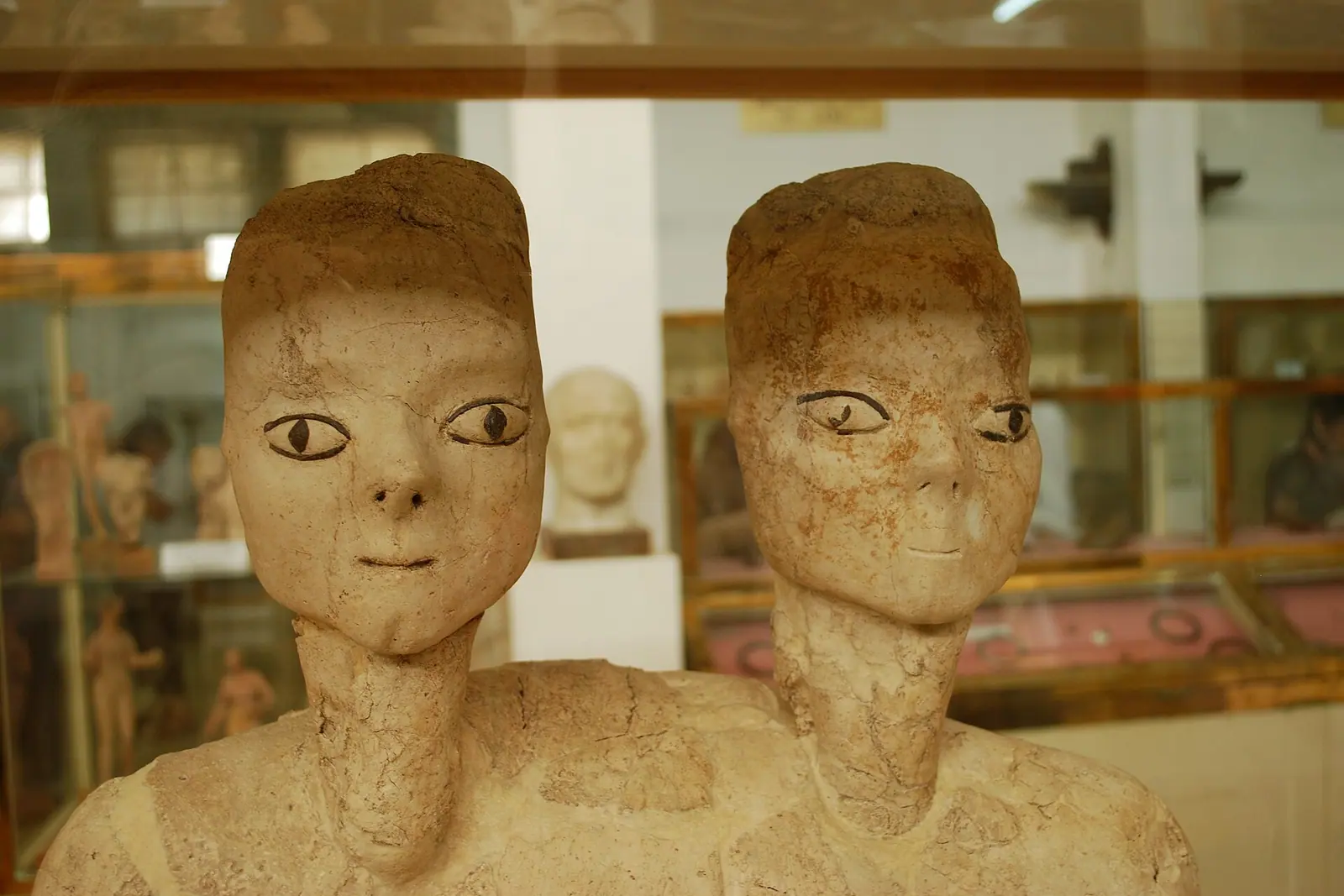
Downtown Amman is where the city eats. The gold souq and spice stalls fill the streets below the theatre, and falafel counters that have been frying the same recipe for generations sit beside knafeh shops where the cheese stretches in ribbons. Jabal Amman's Rainbow Street and the neighbouring hillside of Jabal al-Weibdeh hold the cafes, galleries and bookshops, while the blue-domed King Abdullah I Mosque is one of the few in the country open to non-Muslim visitors. The national museum in Ras al-Ayn holds the Copper Scroll and the remarkable plaster statues of Ain Ghazal.
Amman is also the base for the eastern desert castles. Quseir Amra is the star, an eighth-century hunting lodge whose bathhouse walls are covered in frescoes of hunters, dancers and zodiac figures. Qasr al-Kharrana, Qasr al-Hallabat and the black basalt Qasr al-Azraq line the road towards the Azraq wetlands, where migrating birds pause in spring. It is a long half-day of driving across stony, beautiful nothing — the kind of trip that makes Jordan's emptiness feel like the point.
Aqaba and the South: Red Sea Reefs, Canyons and the Dana Reserve
Jordan's sliver of Red Sea coast is a different country altogether. Aqaba is warm enough to swim year-round, with winter water hovering around 21°C, and the reefs just offshore are in good health: the Aqaba Marine Park protects a strip of coral where the Japanese Garden and the deliberately sunk Cedar Pride freighter give snorkellers and divers plenty to look at without a long boat ride. Ashore, the Mamluk-era Aqaba Fort and the excavated ruins of ancient Ayla sit a short walk from a corniche that fills with families after dark.
South and inland, the Dana Biosphere Reserve is Jordan's largest nature reserve, a stack of terraces and cliffs dropping from highland villages to desert, home to ibex, foxes and hundreds of bird species. Trails run from an easy hour to demanding full-day descents, and overnighting in the old stone village of Dana or the eco-lodge further down is a highlight for walkers. Nearby Wadi Ghuweir and Wadi Bin Hammad offer more canyon walking, while the King's Highway between Amman and Petra passes Karak and Shobak castles on the way.
Logistics are gentle here: Aqaba to Wadi Rum is about an hour, and Aqaba to Amman takes three and a half to four hours on the fast desert highway — considerably longer, and far more interesting, if you take the King's Highway with stops. The best months for hiking anywhere in Jordan are March to May and September to November, when days are warm and nights cool. For canyons and long trails, go with a local guide, carry more water than you think you need, and check conditions after rain.
Frequently asked questions
What is the best time of year to visit Jordan?
March to May and September to November are ideal. Days are warm rather than scorching, desert nights are comfortable, and spring brings wildflowers to the northern hills. July and August are brutally hot in Petra, Wadi Rum and the Jordan Valley, though Aqaba and the Dead Sea remain workable if you start early. December to February is cold in Amman and Petra, with occasional rain and near-freezing desert nights, but it is the most pleasant season for floating in the Dead Sea.
How many days do you need in Jordan?
Seven to ten days lets you see the essentials without rushing: two nights in Amman, two in Wadi Musa for Petra, one or two in Wadi Rum, one at the Dead Sea, and a couple along the coast in Aqaba or walking in the Dana reserve. If you only have five days, concentrate on Amman, Petra and Wadi Rum and accept that you will be moving most mornings.
Is Jordan safe and easy for independent travellers?
Jordan is generally considered one of the safest countries in the region for visitors, with a strong tourist police presence at major sites and a well-established travel infrastructure. Independent travel is straightforward: roads are good, intercity coaches connect Amman, Petra and Aqaba, and ride-hailing works in the capital. Dress modestly outside resort areas, particularly in towns and villages, and be mindful of reduced hours during Ramadan.
Do I need a visa to enter Jordan?
Many nationalities can obtain a visa on arrival at Queen Alia International Airport and at major land crossings, while some are required to apply in advance. A combined national sightseeing pass, bought online before you travel, usually includes entry to Petra, Jerash, Wadi Rum and other sites and can also cover the visa fee. Rules change, so confirm your own nationality's requirements before booking flights.
What should I pack for Jordan?
Sun protection is non-negotiable: high-factor sunscreen, a hat, sunglasses and a refillable water bottle. Bring layers for desert nights, which get cold even in spring and autumn, sturdy closed shoes for Petra's steps and Wadi Rum's rock, and water shoes if you plan to canyon in Wadi Mujib. Modest clothing — shoulders and knees covered — makes life easier away from hotel beaches, and a light scarf is useful at religious sites and against dust.
Plan it — experiences in Jordan
Live search, booked directly with trusted providers.
Sort the rest of your trip
Everything for Jordan, in one place
Stay in Jordan
Hotels, guesthouses and apartments — compared in one search.
Search hotels
Transfer in Jordan
Private driver waiting on arrival — no queues, no surprises.
Book a transfer
Stay online in Jordan
Travel eSIM — data the moment you land, no roaming bills.
Get an eSIMMore guides in Jordan
One Week in Jordan: The Ideal 7-Day Itinerary from Amman to the Red Sea
Top Things to Do in Jordan: Petra, Wadi Rum, the Dead Sea and Beyond
Best Time to Visit Jordan: Seasons, Weather and Where to Stay
Touring Jordan: A Food, Culture and Local Experiences Guide