Jordan compresses an entire region's worth of history into a country you can drive across in a day, yet its real pull is at the table — a shared platter of mansaf, a glass of sage-scented tea poured beside a rock bridge in the desert. This guide is for travellers who want the food, the rituals and the human encounters, not just the checklist of ruins.
Eating Your Way Through Jordan: Mansaf, Maqluba and the Shared Table
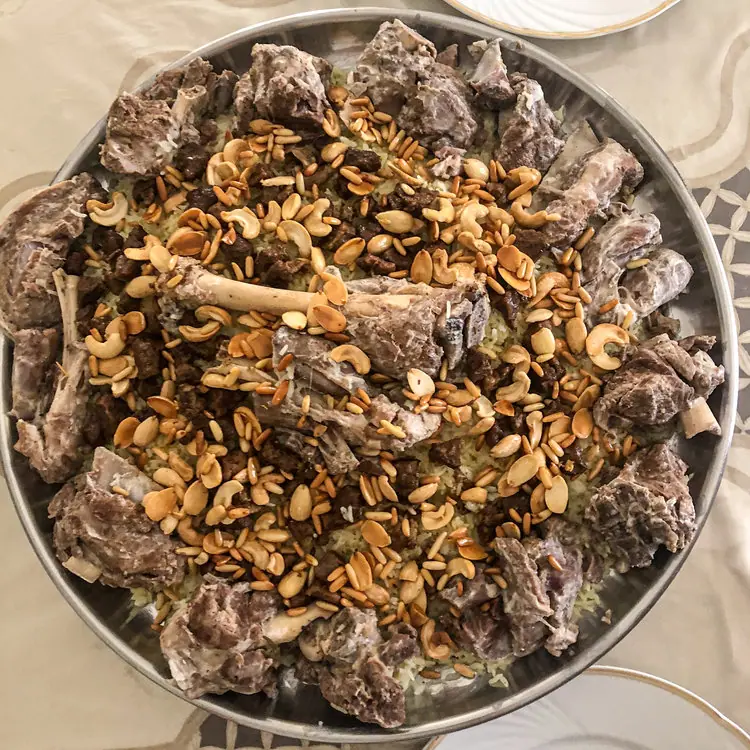
Start with mansaf, the dish that carries the country's sense of honour. Lamb is simmered in jameed — a hard, salted dried yoghurt that is rehydrated into a tangy sauce — then piled over rice and thin shrak bread, with toasted almonds and pine nuts scattered on top. It arrives on one enormous platter and is eaten with the right hand, each person pulling from the section in front of them. You will be told to eat more than you can, and refusing too firmly is its own kind of rudeness. Mansaf is restaurant food, but its true home is a wedding, a graduation or the arrival of a guest worth honouring.
Then there is maqluba, literally 'upside down': rice layered with fried aubergine, cauliflower and chicken, the whole pot flipped at the table with a theatrical thud so the layers hold. Around it comes the mezze spread — hummus, mutabbal, fattoush, stuffed vine leaves, bowls of olives and pickles. Jordanian breakfast is a small masterpiece: fuul (stewed fava beans) with olive oil and cumin, freshly fried falafel, labneh, za'atar and taboon bread baked in a domed clay oven, eaten quickly before the day's heat. Olive oil from the northern hills around Ajloun and Salt is a point of local pride, and you will taste the difference.
Save room for knafeh, the evening ritual. A layer of soft white cheese is topped with crisp semolina or fine shredded pastry, baked, then drenched in sugar syrup scented with orange blossom and sprinkled with crushed pistachio. In downtown Amman the queues form after sunset, and the sweets shops pull metre-long trays from the oven in a continuous rhythm. Other sweets worth chasing are muhalabia (a cool milk pudding), ma'amoul filled with dates or walnuts, and the ice cream pounded by hand with a wooden mallet in the old markets.
Amman: Citadel Views, Downtown Falafel and Rainbow Street Evenings
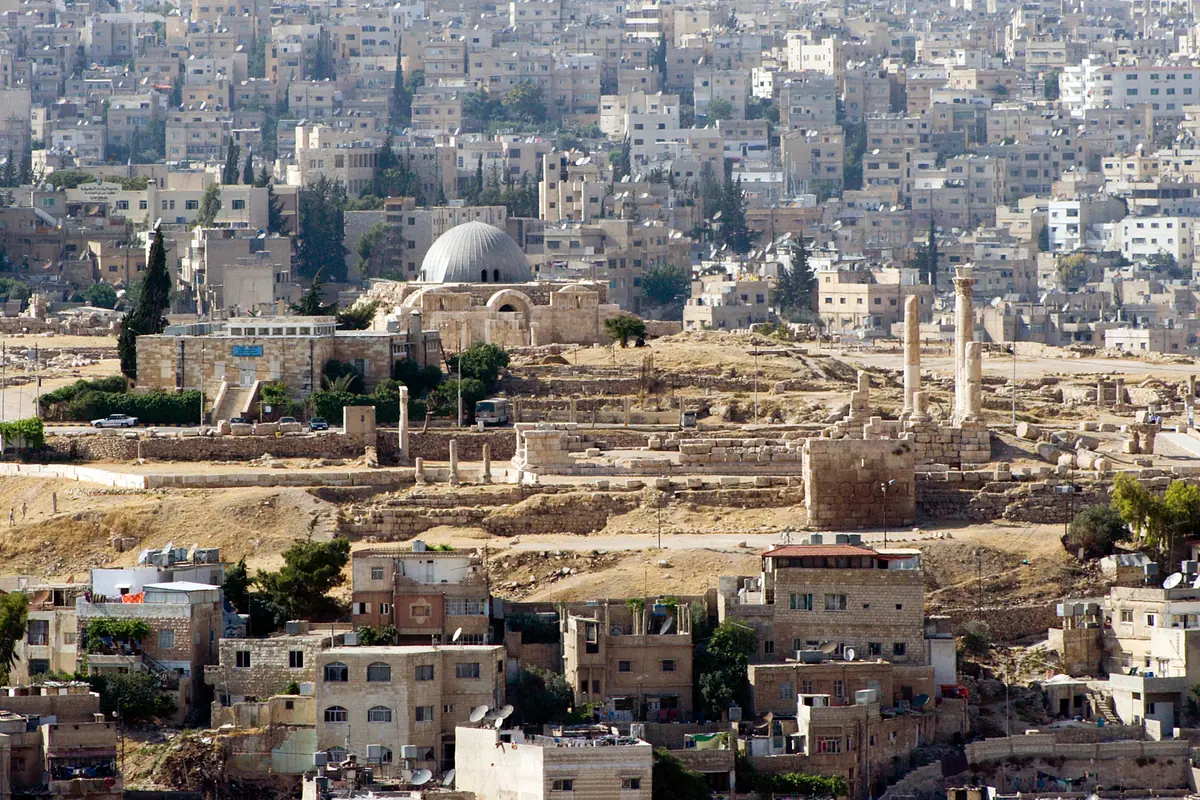
Amman rewards a slow first day. Head up to the Citadel on Jabal al-Qal'a, where the pillars of the Temple of Hercules stand against the sky, the Umayyad Palace's domed audience hall has been partly rebuilt, and a small Byzantine church and archaeological museum fill in the layers. From the ridge you look straight down into the Roman Theatre, a 6,000-seat amphitheatre cut into the hillside and still used for performances — one of the best-preserved in the region. Give the Citadel two or three hours, and come near closing for golden light over the city's white stone.
Down the hill, the old downtown — Al-Balad — is where Amman actually eats. Gold shops and spice stalls line the streets, a handful of falafel institutions have been frying the same recipe for decades, and juice stands press pomegranate and sugarcane while you wait. Walk up to Rainbow Street in Jabal Amman for cafés, galleries and an evening promenade, or spend the afternoon in Jabal al-Weibdeh, the neighbourhood that quietly holds the city's bookshops, art spaces and best coffee.
Use Amman as your base for at least two nights. The Roman city of Jerash is an hour north and the Dead Sea about forty-five minutes west, so you can day-trip without repacking. Fridays move at a slower pace, with families out late and many shops shut until afternoon, while Ramadan rearranges everything: daytime restaurants are quiet, then the streets fill after iftar and stay alive until well past midnight.
Petra: The Siq, Al-Khazneh and Bedouin Hospitality in the Rose-Red City
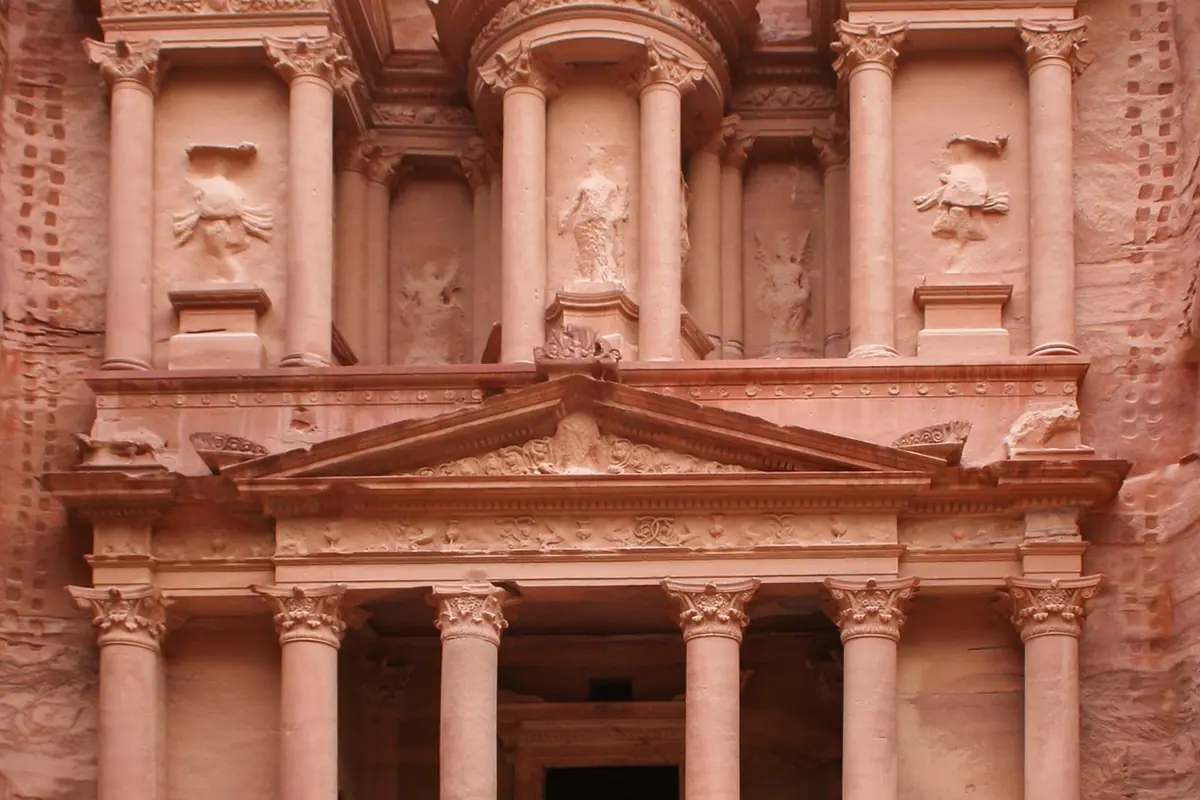
Nothing prepares you for the walk in. The Siq is a 1.2-kilometre slot canyon, never more than a few metres wide, with water-carved channels and weathered votive niches along its walls, and the light turns the sandstone from grey to apricot as you go. Then it opens and there is Al-Khazneh, the Treasury, 40 metres of carved facade standing in full sun. Beyond it the site keeps unfolding: the Street of Facades, the Roman-style theatre, the Royal Tombs, and Qasr al-Bint at the valley floor.
Most visitors underestimate the scale. Petra covers several square kilometres and involves real walking — eight to fifteen kilometres a day, with staircases and exposed paths. The climb to Ad-Deir, the Monastery, is roughly 800 steps and takes 45 minutes to an hour each way, and the view over the ridges from the top is the reward. Buy a two-day ticket if you can: one day for the highlights, a second for the quieter trails up to the High Place of Sacrifice or the tomb of Aaron on Jabal Haroun.
Come evening, Petra by Night runs on selected nights, with hundreds of candles lining the Siq and Bedouin music in front of the Treasury. Nearby Little Petra (Al-Beidha) is free, almost empty, and sits beside one of the oldest known Neolithic settlements in the region. Around the site, families from the local Bedouin community sell tea, silver jewellery, hand-blown sand bottles and woven rugs; buying directly and sitting for a glass of tea is the most genuine cultural exchange you'll have in Wadi Musa, the town at the gate.
Wadi Rum: Zarb Dinners and Nights Under the Desert Stars
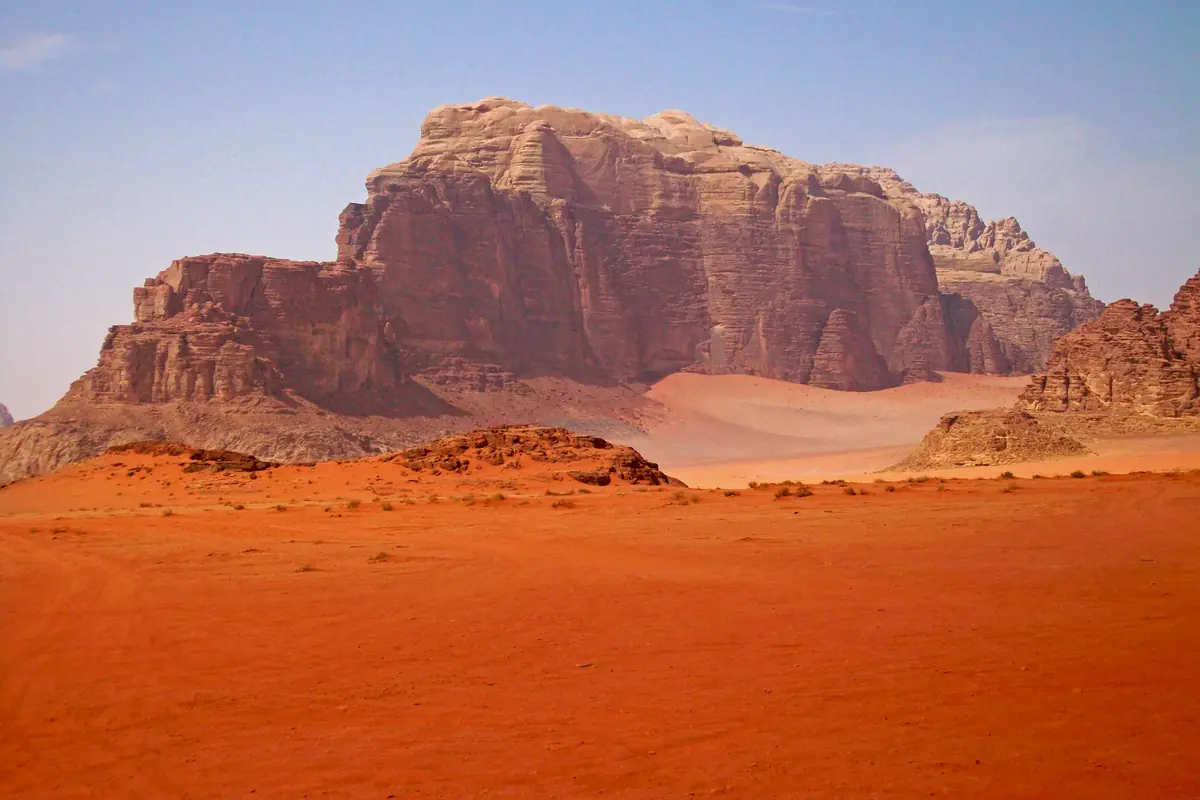
Wadi Rum is not sand dunes but a protected wilderness of sandstone massifs and granite mountains rising out of red gravel plains. Jeep tours run from two hours to a full day and hit the set pieces: the narrow canyon of Khazali with its petroglyphs and inscriptions, the Burdah rock bridge, the smaller Um Fruth bridge you can actually climb, the red sand dune at Al-Hasany, and Ain Abu Aineh, the spring known as Lawrence's Spring. Camel treks, scrambling routes and multi-day hikes into the quieter massifs are all arranged through local Bedouin guides.
Dinner in the desert is usually zarb: meat, chicken and vegetables lowered into a pit of hot coals and sand, sealed and left for two or three hours until the whole thing comes out smoky and falling apart, served with rice and flatbread on a rug under the cliffs. Afterwards there is sweet tea with sage, cardamom coffee poured from a long-spouted brass pot, an oud, and often a line of men linking arms for the dabkeh. Then the guide kills the generator and the Milky Way appears with unsettling clarity.
Practicalities matter here. Spring and autumn are ideal; summer afternoons can pass 40°C, and winter nights drop near or below freezing, so pack a proper layer. Camps range from simple shared tents to insulated domes with bathrooms, but all of them are remote — bring cash, a headlamp and a power bank. Ask before photographing people, keep to established tracks, and take every piece of rubbish back out with you.
The Northern Loop: Jerash, Ajloun, Umm Qais and the Mosaics of Madaba
Jerash is the Roman city that keeps on giving: pass under Hadrian's Arch, stand in the vast Oval Plaza ringed by columns, then walk the colonnaded Cardo Maximus past the Temple of Artemis and two theatres, with the hippodrome at the edge of town. Unlike many Roman sites, the streets are still paved and grooved by chariot wheels. Give it a half day, and hire one of the local guides at the entrance — they read the site far better than any plaque.
North of Jerash, Ajloun Castle is a 12th-century Ayyubid fortress built to watch the trade routes, with seven towers and slit windows framing views across the Jordan Valley. Further north still, Umm Qais sits on the black basalt ruins of ancient Gadara, looking over the Sea of Galilee and the Golan Heights. This is also Jordan's food-basket country: olive oil pressed in autumn, fresh labneh and white cheese, honey, figs and pomegranates in season, and roadside stalls where farmers sell whatever was picked that morning.
South of Amman, Madaba holds St George's Church, whose floor carries a 6th-century mosaic map of the Holy Land with Jerusalem at its centre — remarkable for its detail and for surviving at all. Mosaic workshops around town still cut and set tesserae by hand, and pieces are sold directly by the artisans. Combine Madaba with Mount Nebo, the ridge where Moses is said to have looked out over the Promised Land, and then the baptism site at Bethany Beyond the Jordan on the way down to the Dead Sea.
Dead Sea, Aqaba and How to Plan It All: Seasons, Etiquette and Timing
The Dead Sea is the easy finale: float without effort at roughly 430 metres below sea level, paint yourself with the mineral mud, then rinse off. Do not shave the day before, keep the water out of your eyes and mouth, and limit soaking to about twenty minutes — the salt is genuinely painful on broken skin. Sunset from the eastern shore is the moment to stay for. Inland, the Wadi Mujib gorge trail, open roughly April to October depending on water levels, is a wet, rope-assisted scramble through a slot canyon that feels like a reward for the heat.
Down south, Aqaba opens onto the Red Sea with coral reefs close enough to snorkel from the shore, dive sites for every level, glass-bottom boats and excellent seafood — sayadieh, grilled hammour and shrimp straight off the boats. The duty-free port gives the city a looser, beach-resort feel after a week of ruins, and Wadi Rum is barely an hour away, which makes Aqaba a logical end point. If you have time, add the Dana Biosphere Reserve between Petra and Amman: terraced slopes, ibex on the cliffs and eco-lodges where you can hike down through four bio-geographical zones in a single day.
On timing: March to May and September to November are the sweet spots, with mild days, wildflowers in the north in spring, and comfortable desert nights. Summer is punishing in Amman, the Jordan Valley and the Dead Sea, so shift sightseeing to early morning; winter brings rain, cold wind at Petra and occasional snow in Amman, though Wadi Rum stays beautifully clear. Build in seven to ten days: two in Amman, a day each for Jerash and the northern sites, two for Petra, one for Wadi Rum and one for the Dead Sea or Aqaba. Dress modestly in towns and cover shoulders and knees at religious sites, ask before photographing people, and tip a dinar or two for guides, drivers and hotel staff. A single national pass covering your visa fee and entry to most major sites saves both money and queueing.
Frequently asked questions
How many days do you need to tour Jordan properly?
Seven to ten days is the honest answer. A comfortable outline is two nights in Amman, a day trip to Jerash and the northern castles, two days in Petra, one night in Wadi Rum, and a final stop at the Dead Sea or Aqaba. Anything shorter means spending most of your time in a car and skipping the meals and conversations that make the trip memorable.
When is the best time to visit Jordan?
March to May and September to November. Spring brings mild days and wildflowers across the northern hills; autumn gives warm, stable weather for Petra and Wadi Rum. July and August are brutally hot in the Jordan Valley, the Dead Sea and Aqaba, while winter can mean rain, cold winds at Petra and nights near freezing in the desert.
What should I wear and how should I behave?
Loose, modest clothing that covers shoulders and knees works almost everywhere, with a light scarf useful for mosques, churches and dusty desert afternoons. Swimwear is fine at Dead Sea resorts and in Aqaba. Always ask before photographing people, avoid photographing police or military sites, and expect Friday to be a slow, family-focused day with many shops closed until afternoon.
Can I tour Jordan independently or should I hire a guide?
Both work well. Renting a car is straightforward on the main highways, and intercity coaches link Amman, Petra, Aqaba and the Dead Sea. That said, local guides add real depth at Jerash, Petra and Wadi Rum, where Bedouin guides take you to canyons and viewpoints no self-drive itinerary will find, and the money stays in the community.
What food should I not leave Jordan without trying?
Mansaf first — lamb in jameed with rice and shrak bread. Then maqluba flipped at the table, a proper Jordanian breakfast of fuul, falafel and labneh with taboon bread, knafeh from a downtown sweets shop in the evening, and zarb, the pit-roasted dinner you'll eat in a Wadi Rum camp under the stars.
Sort the rest of your trip
Everything for Jordan, in one place
Stay in Jordan
Hotels, guesthouses and apartments — compared in one search.
Search hotels
Transfer in Jordan
Private driver waiting on arrival — no queues, no surprises.
Book a transfer
Stay online in Jordan
Travel eSIM — data the moment you land, no roaming bills.
Get an eSIMMore guides in Jordan
One Week in Jordan: The Ideal 7-Day Itinerary from Amman to the Red Sea
Top Things to Do in Jordan: Petra, Wadi Rum, the Dead Sea and Beyond
Best Time to Visit Jordan: Seasons, Weather and Where to Stay
Where to Stay in Jordan: Hotels by City and the Must-See Sights Nearby