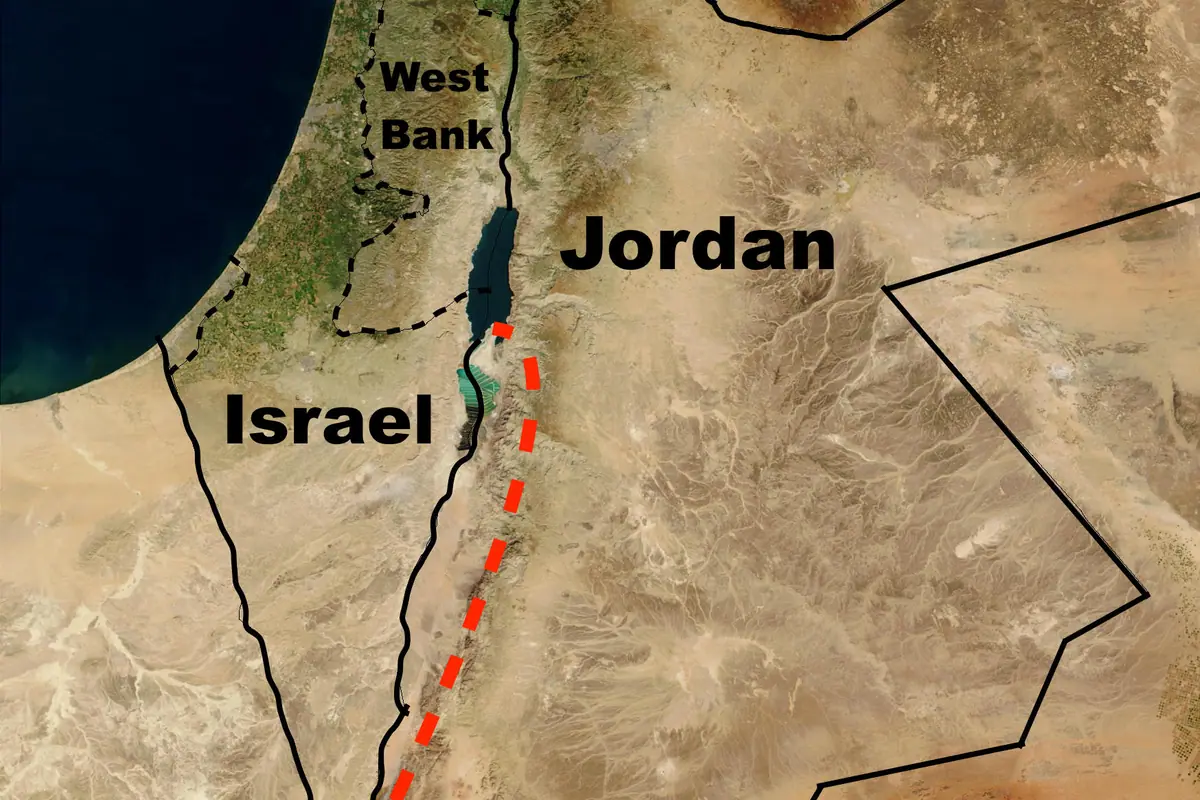
Jordan packs an improbable amount into a country you can cross in a day: Roman colonnades, a rose-red city carved from sandstone, a desert that glows at sunset and a salt lake so dense you float without trying. This seven-day route runs north to south, so you finish with your feet in the Red Sea and a camera roll full of places you'll struggle to describe to anyone at home.
Days 1–2: Amman — Citadel, Roman Theatre and the Hills of Jabal Amman
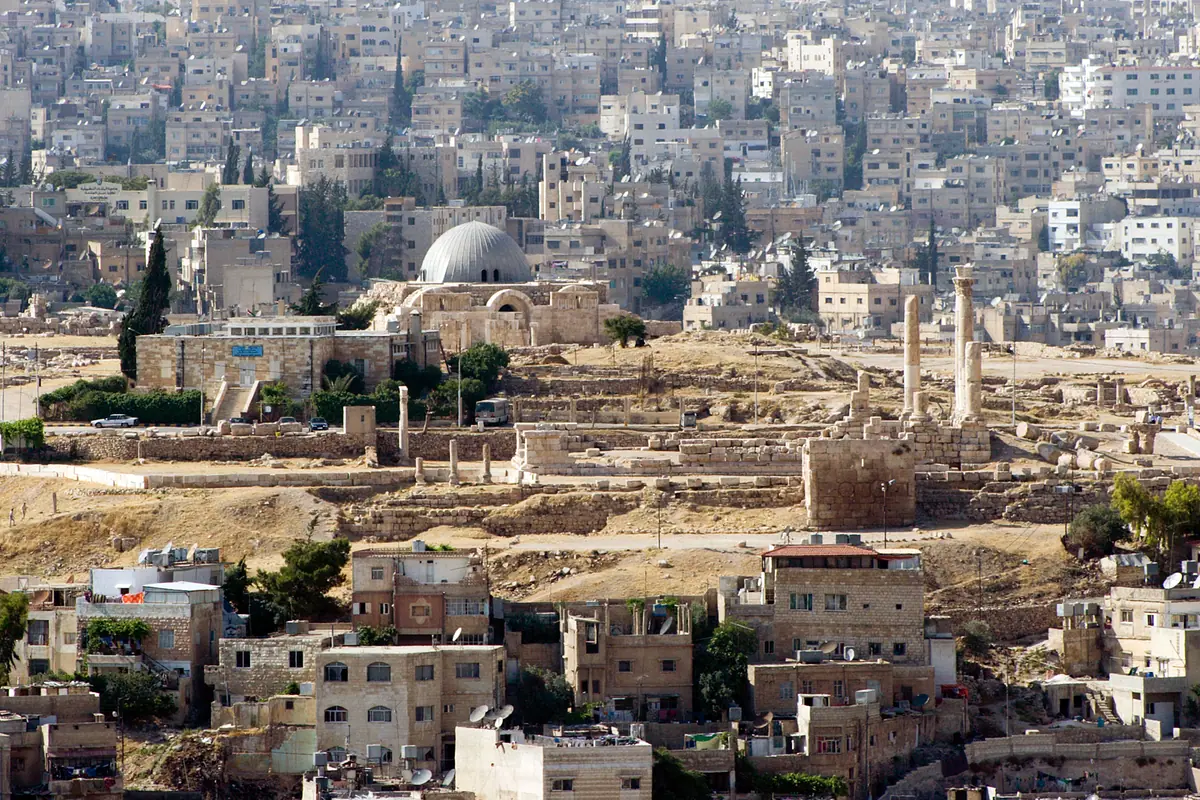
Most international flights land at Queen Alia International Airport, roughly 35 kilometres south of the capital, so give yourself a relaxed first evening in Amman rather than pushing straight out of the city. Amman is built across a series of steep hills, and the best introduction is the Citadel on Jabal al-Qala'a, where the pillars of the Temple of Hercules stand against the skyline beside an Umayyad palace complex and a small Byzantine basilica. From the ridge you can see the whole bowl of downtown, including the Roman Theatre below, a 6,000-seat hillside auditorium still used for performances, with the smaller Odeon and the Nymphaeum fountain a short walk away.
Spend your second morning wandering the downtown streets around the Grand Husseini Mosque and the gold souq, then climb to Rainbow Street in Jabal Amman for coffee, galleries and rooftop views. Jabal al-Weibdeh, a few minutes away, has the city's most interesting independent cafés and bookshops. Eat locally: knafeh for breakfast, falafel sandwiches for lunch, and a shared platter of mansaf — lamb cooked in fermented dried yoghurt and served over rice — for dinner. Friday mornings are exceptionally quiet, with many shops shut until early afternoon.
Two nights in Amman is the right balance. If you have a spare half-day, the Jordan Museum gives context on Nabataean, Roman and Islamic history before you see the sites themselves, and the King Abdullah I Mosque is worth a quick look for its blue mosaic dome. Sort out a rental car here if you're driving, or plan on taxis and ride-hailing for the city and intercity buses for the longer legs.
Day 3: Jerash, Ajloun Castle and the Green North
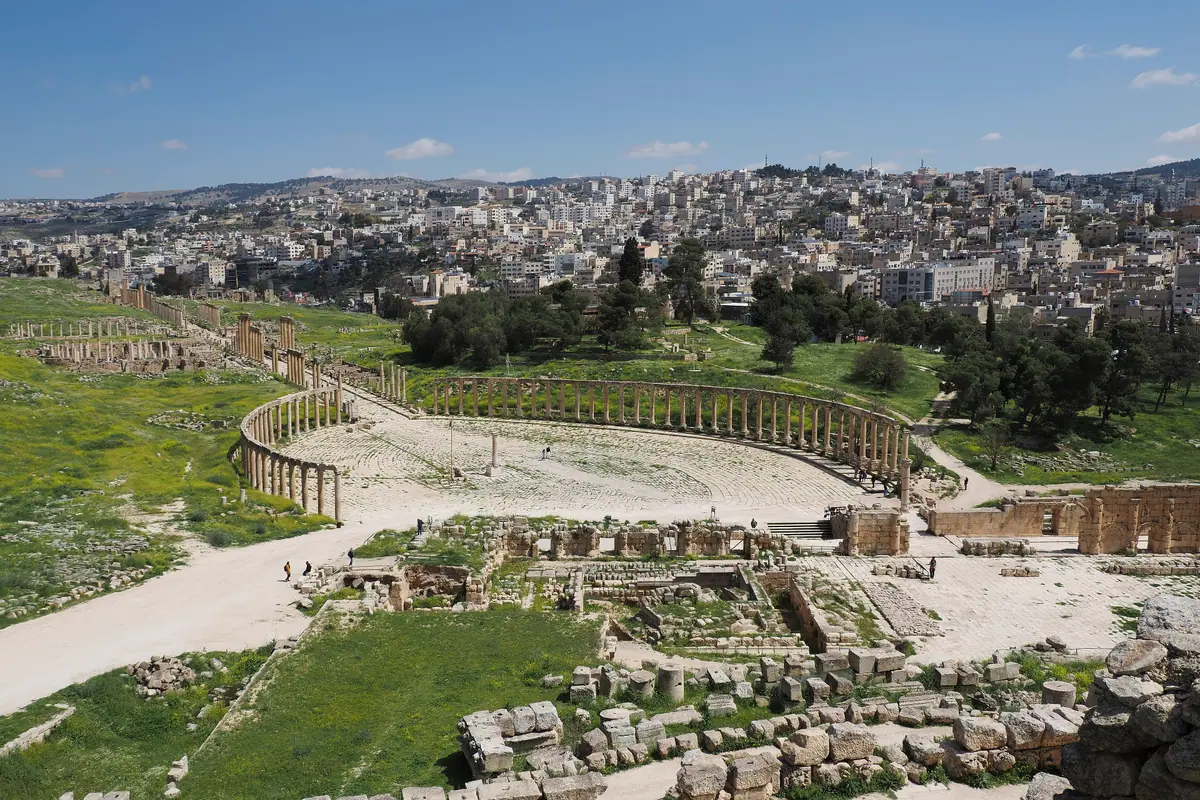
Head north early — Jerash is about 50 kilometres from Amman and one of the best-preserved Roman provincial cities anywhere. Walk in through Hadrian's Arch, then emerge onto the Oval Plaza, a 90-metre-wide colonnade that curves around a central column and remains one of the most photogenic squares in the ancient world. From there the Cardo Maximus stretches north, rutted by chariot wheels, flanked by the Temple of Artemis, the South Theatre and a hippodrome where you can sometimes catch a re-enacted chariot race. Allow three to four hours, and go on a weekday morning to have the colonnades largely to yourself.
Continue to Ajloun Castle, a 12th-century Ayyubid fortress built to watch the trade and pilgrimage routes toward the Jordan Valley. Its arrow-slit corridors and spiral staircases are wonderfully intact, and the roof gives you a wide view over pine-covered hills that look nothing like the desert most visitors expect. In spring, these northern slopes are thick with wildflowers and the weather is close to perfect.
If you have the time and energy, push on to Umm Qais in the far north-west, where the ruins of the Roman city of Gadara sit on a plateau with views across the Yarmouk Valley, the Sea of Galilee and the Golan Heights. Otherwise, return to Amman for the night or overnight in Jerash town to save driving.
Day 4: Madaba Mosaics, Mount Nebo and the Dead Sea
Drive south on the King's Highway to Madaba, a town famous for its Byzantine floor mosaics. The centrepiece is the 6th-century mosaic map of the Holy Land inside St George's Church, a remarkable cartographic artwork laid out in coloured stone across the floor. The nearby Archaeological Park and the Church of St John the Baptist add more mosaics and a bell tower climb with views over the town's rooftops.
Twenty minutes further is Mount Nebo, where tradition holds that Moses looked out over the Promised Land he would never enter. The Moses Memorial Church shelters superb mosaics, and on a clear day the view sweeps down the Jordan Valley to the Dead Sea and, faintly, to Jericho on the far side. Combine it with Bethany Beyond the Jordan, the excavated baptism site on the river's east bank, a UNESCO-listed archaeological area with churches, pools and pilgrim steps.
Finish the day at the Dead Sea, the lowest point on land at roughly 430 metres below sea level. Floating is genuinely strange — you bob like a cork and cannot sink — and the mineral mud is slathered on by everyone within minutes. Keep it to 20–30 minutes in the water, avoid shaving beforehand, keep the brine out of your eyes and rinse off in a freshwater shower afterwards. The eastern shore has the easiest access, with a handful of resort beaches and public access points.
Day 5: Petra — Through the Siq to Al-Khazneh and the Monastery
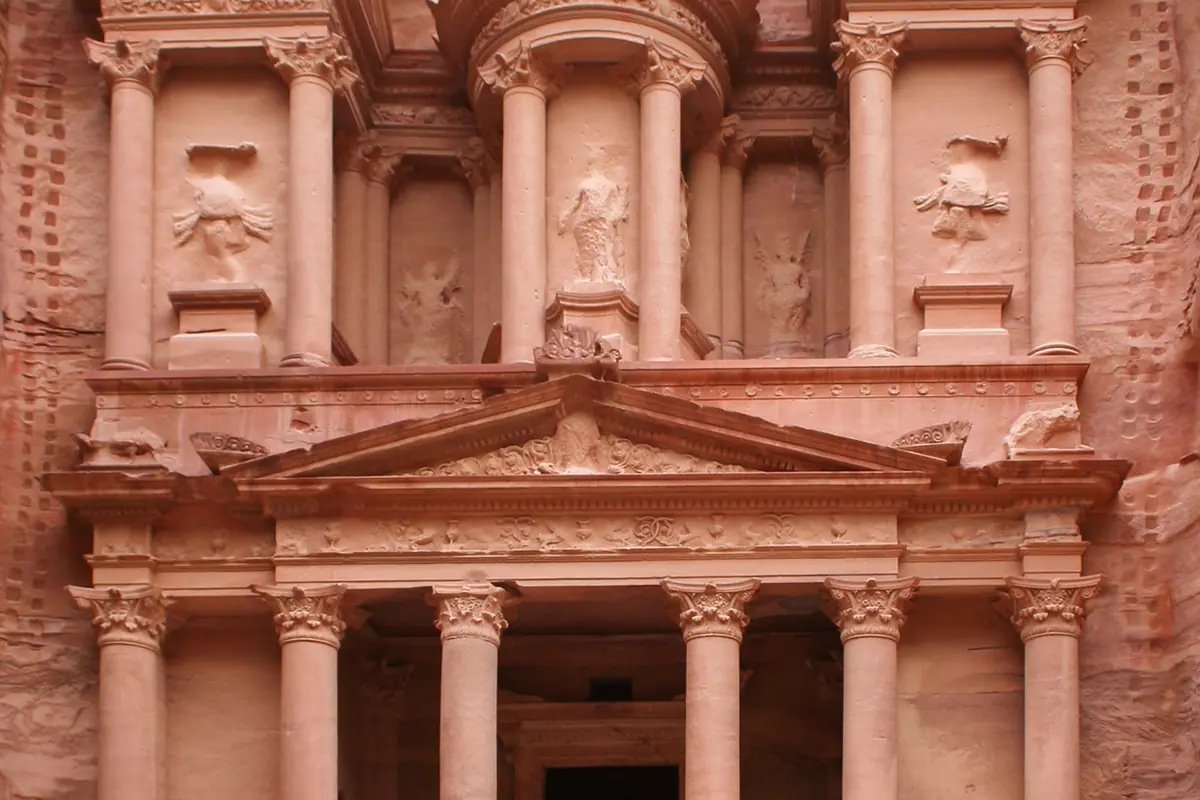
Petra deserves a full day at minimum, and two if you can manage it. Arrive at the visitor centre for opening, walk the 1.2-kilometre Siq — a narrow gorge with walls up to 80 metres high, water channels cut into the rock and the faint smell of incense from stalls along the way — and then watch the slot of light widen onto Al-Khazneh, the Treasury. No photograph prepares you for the scale of that carved facade, and it is worth lingering before the crowds arrive mid-morning.
Beyond the Treasury, the site opens into a vast basin: the Street of Facades, the Roman-style Theatre cut into the hillside, the Royal Tombs, and Qasr al-Bint, Petra's main temple. The hardest and best reward is the climb of roughly 800 rock-cut steps to Ad-Deir, the Monastery, a facade even larger than the Treasury, with a café at the top serving sweet tea. If you have a second day, take the Al-Khubtha trail for the classic view down onto the Treasury from above, or hike to the High Place of Sacrifice.
On Monday, Wednesday and Thursday evenings, Petra by Night lights the Siq and the Treasury plaza with hundreds of candles and Bedouin music — atmospheric, though it is a separate ticket from daytime entry. A short drive away, Little Petra (Siq al-Barid) is a smaller, quieter Nabataean settlement with painted ceilings and almost no queues. The official Jordan Pass covers entry to Petra and most major sites here, and also waives the visa fee for many nationalities if purchased before arrival.
Day 6: Wadi Rum — Jeep Tracks, Rock Bridges and Desert Camps
Wadi Rum is a protected desert of sandstone massifs and red dunes, about 90 minutes south of Petra, and it is best experienced overnight rather than as a day trip. Local Bedouin guides run 4x4 tours that thread between the landmarks: Lawrence's Spring, the ancient Thamudic and Nabataean inscriptions of Khazali Canyon, the natural arch of Burdah Rock Bridge and the smaller Um Fruth Bridge that most people scramble up for a photo. Sunset from a dune near the Mushroom Rock formations is the moment everyone remembers.
Accommodation ranges from simple goat-hair tents to glass-roofed bubble domes, and dinner is usually zarb — meat and vegetables cooked in a sealed pit under the sand. Nights here are astonishingly dark, so bring a head torch but turn it off for the stars. Desert nights are cold from November through February and even in summer the temperature drops sharply after dark, so pack a fleece regardless of the daytime heat.
Add a dawn hot-air balloon flight over the valleys if the budget allows, or a camel trek along the quieter wadis. If you're short on time, a jeep tour plus one night in camp is enough to see the main highlights, but two nights lets you get deeper into the quieter southern reaches.
Day 7: Aqaba, the Red Sea and the Journey Home
An hour's drive brings you to Aqaba, Jordan's only coastal city, where the pace slows immediately. The coral reefs just offshore are surprisingly healthy and easy to reach — snorkelling and diving sites include the Japanese Garden, with its coral pinnacles, and the deliberately sunk Cedar Pride shipwreck, now encrusted with marine life. Glass-bottom boats and dive schools line the waterfront for anyone without gear or certification.
On land, walk the Mamluk-era Aqaba Fort and the beachfront promenade, and look up at the giant flagpole on the waterfront, one of the tallest in the world. The Ayla district has a lagoon and marina area for an easy afternoon, and the seafood is the best in the country. If sun and salt water are the goal, plan to spend your final full day between the beach and the reef.
From Aqaba you can fly out directly from King Hussein International Airport, or drive back to Amman in about three and a half hours via the Desert Highway. Either way, keep the final morning unhurried — this is the leg where a late-night departure and a Red Sea sunset work unusually well together.
Frequently asked questions
What is the best time of year for this Jordan itinerary?
March to May and September to November are ideal, with warm days and cool evenings. Spring brings wildflowers to the north around Ajloun and Jerash, but also occasional rain. June to August is very hot at Petra, Wadi Rum and the Dead Sea, so start hikes at dawn and rest at midday. December to February is cold in Amman and the desert, though Petra and the Dead Sea remain comfortable in the middle of the day.
How many days do you really need in Petra?
One long day covers the Siq, the Treasury, the Street of Facades, the Theatre and the Monastery if you start at opening time and don't mind the steps. Two days is far better: it lets you add the Al-Khubtha trail above the Treasury, the High Place of Sacrifice, Little Petra and the Petra Museum without rushing. Many travellers stay two nights in Wadi Musa, the town at the site entrance.
Do I need to rent a car in Jordan?
A car gives you the most freedom, especially for the King's Highway between Madaba, Karak and Petra, where the scenery is half the point. Roads are generally good and distances are short — no leg of this itinerary exceeds four hours. If you'd rather not drive, intercity buses and organised day tours connect Amman, Petra, Wadi Rum and Aqaba, and taxis or ride-hailing work well inside cities.
Should I buy the official Jordan Pass?
For most visitors, yes. The national tourist pass bundles entry to Petra, Jerash, Wadi Rum and dozens of other sites, and includes the visa fee waiver for many nationalities when bought online before arrival. It only makes sense if you plan to spend at least three days seeing the major sights, and it must be purchased before you reach the border or airport.
What should I pack and wear in Jordan?
Pack light, breathable layers for the desert, a warm fleece for Wadi Rum nights, sturdy walking shoes for Petra's steps and sandals for the Dead Sea. Dress modestly in towns and at religious sites — shoulders and knees covered, and a scarf for women visiting mosques. Bring high-factor sunscreen, a refillable water bottle, a hat, and water shoes or old trainers if you plan to wade at Bethany Beyond the Jordan.
Sort the rest of your trip
Everything for Jordan, in one place
Stay in Jordan
Hotels, guesthouses and apartments — compared in one search.
Search hotels
Transfer in Jordan
Private driver waiting on arrival — no queues, no surprises.
Book a transfer
Travel insurance
Medical cover, delays and lost baggage — sorted before you go.
Get coveredMore guides in Jordan
Top Things to Do in Jordan: Petra, Wadi Rum, the Dead Sea and Beyond
Best Time to Visit Jordan: Seasons, Weather and Where to Stay
Touring Jordan: A Food, Culture and Local Experiences Guide
Where to Stay in Jordan: Hotels by City and the Must-See Sights Nearby