Ghana moves to a rhythm you feel before you can name it — palm wine and highlife in Accra's backstreets, coastline castles that hold centuries in their walls, and savannah dawns where elephants cross the track ahead of you. It is one of West Africa's easiest introductions and one of its most rewarding, whether you have ten days or a month.
Accra: Independence Square, Jamestown and the Pulse of the Capital
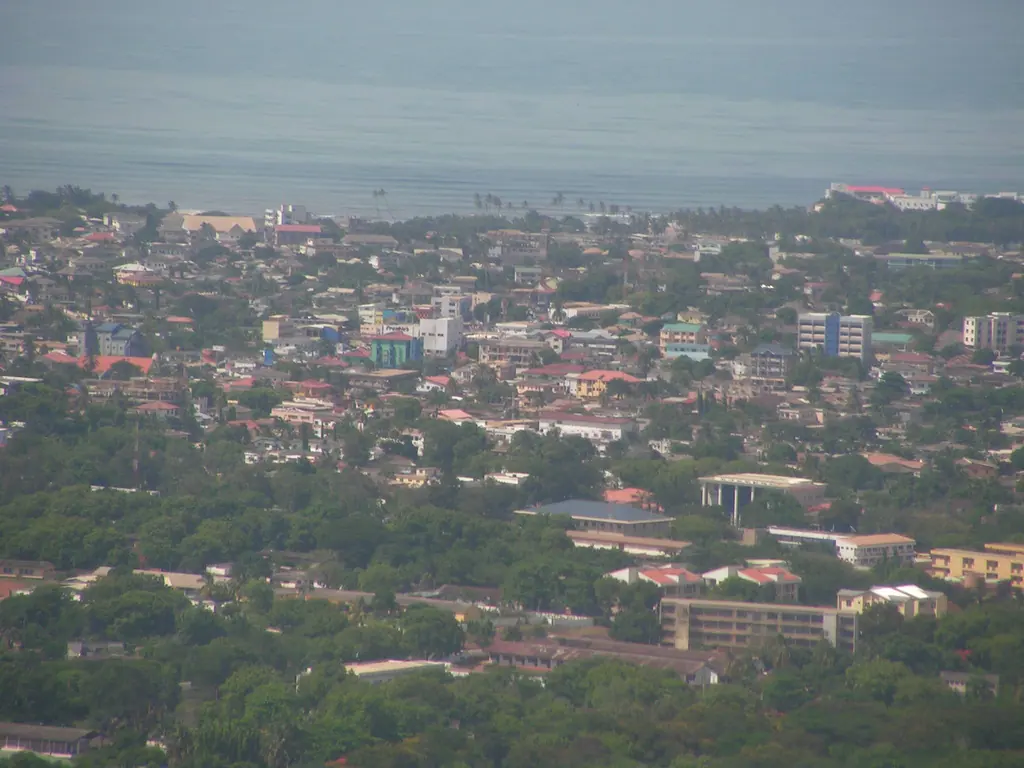
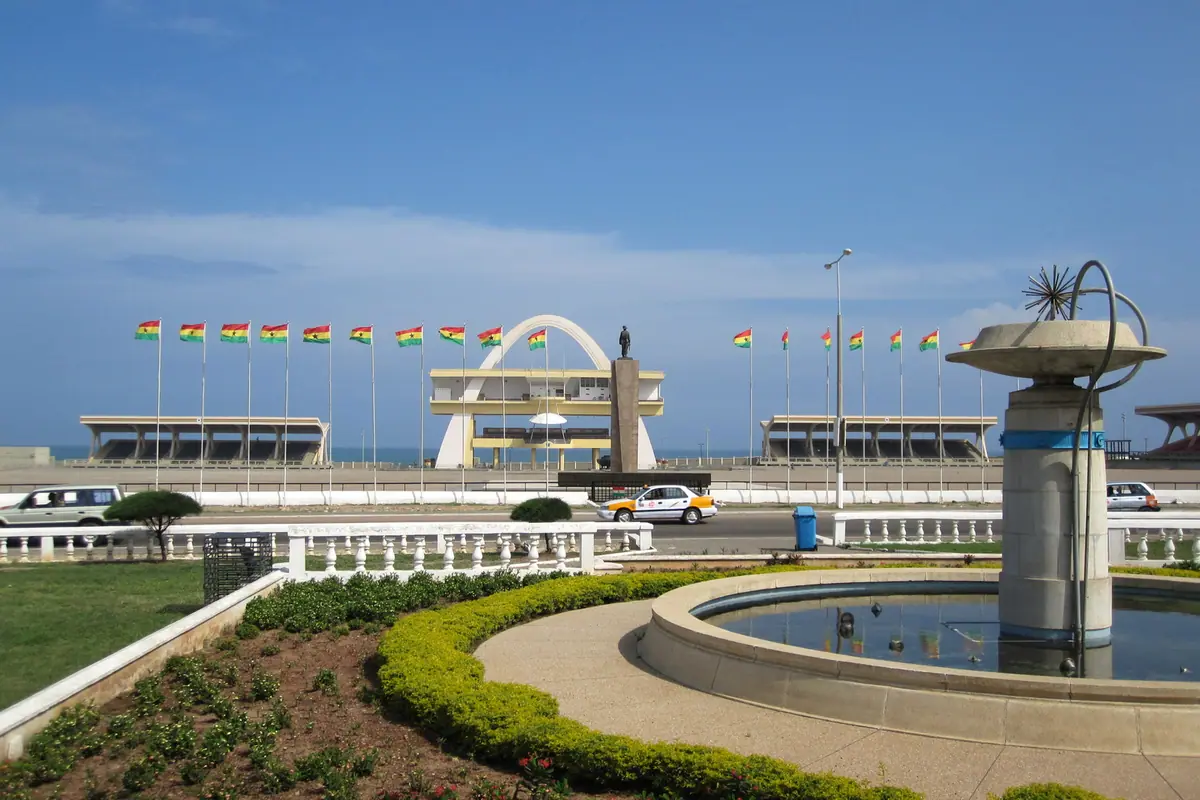
Most journeys start in Accra, and the city rewards a slow first day. Begin at Independence Square, where the Black Star Gate and Independence Arch face the Atlantic and the Eternal Flame of African Liberation burns at the edge of the parade ground. A short drive away, the Kwame Nkrumah Memorial Park and Mausoleum stands on the old polo grounds where independence was declared on 6 March 1957; the marble tomb, the museum of personal effects and the fountains make it Ghana's most affecting civic monument. Set aside half a day for both.
Then head west to Jamestown, the old British and Ga quarter, where the white lighthouse rises above a cliff of rusting warehouses, James Fort and Ussher Fort watch the surf, and local boxing gyms spill onto the street. The waterfront here hosts a large street-art gathering each August, when painted murals cover whole buildings. Inland, Makola Market is the city's commercial heart — a dense, glorious maze of women traders, wax-print cloth, yams, plantain and hardware. Go on a weekday morning, keep bags zipped, and bargain with good humour.
Come evening, Osu's Oxford Street strip fills with grills and chop bars: waakye with shito, jollof, kelewele and grilled tilapia with banku. On weekends, Labadi Beach draws drummers, horse handlers and crowds, with a small entry charge at the gate. For context before you travel on, the National Museum of Ghana on Barnes Road explains Ashanti goldweights, royal regalia and the archaeology of the coast in under two hours, and the W.E.B. Du Bois Memorial Centre in Cantonments is a quiet stop for anyone interested in pan-African history.
Cape Coast and Elmina: Castles, Canopy Walks and the Door of No Return
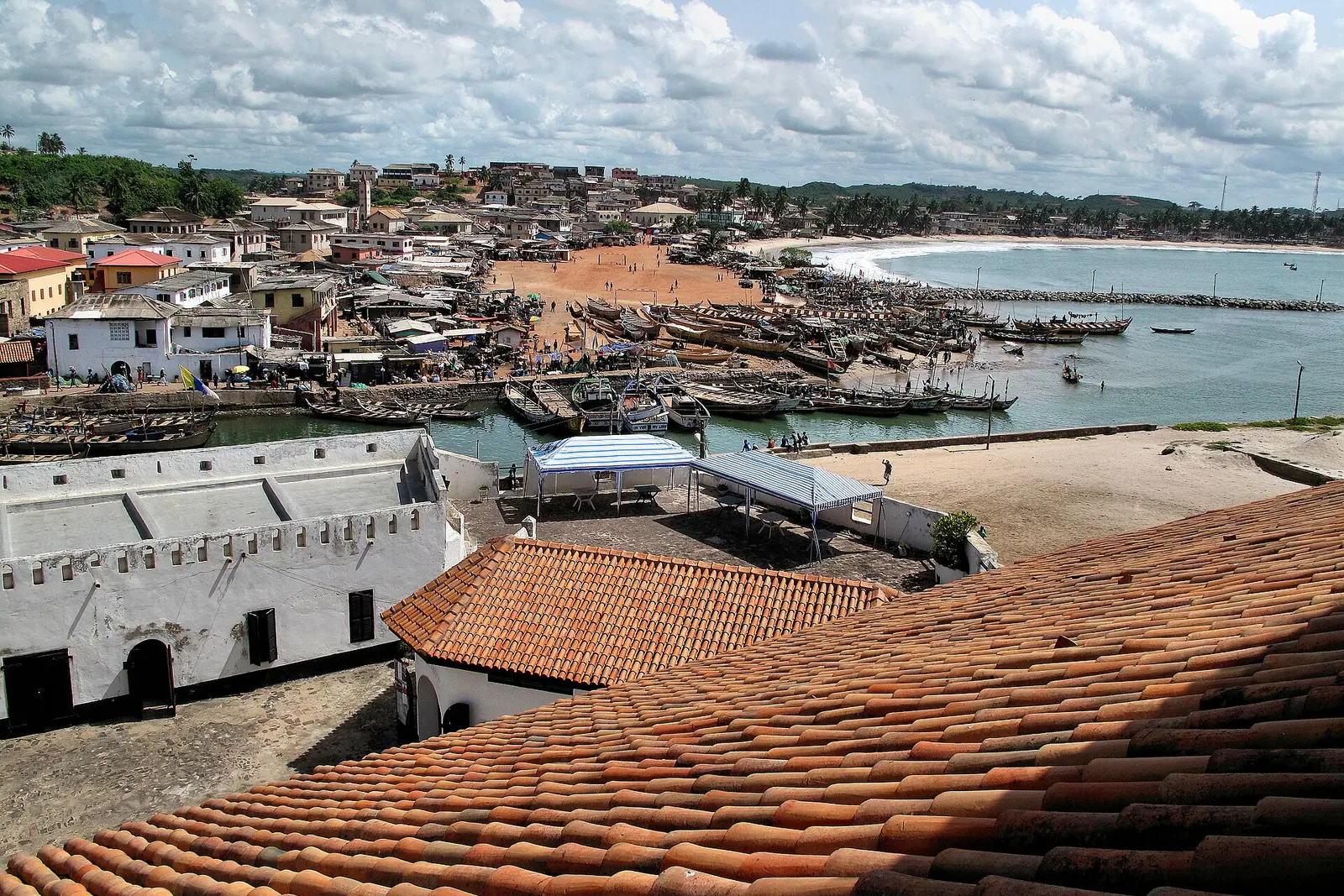
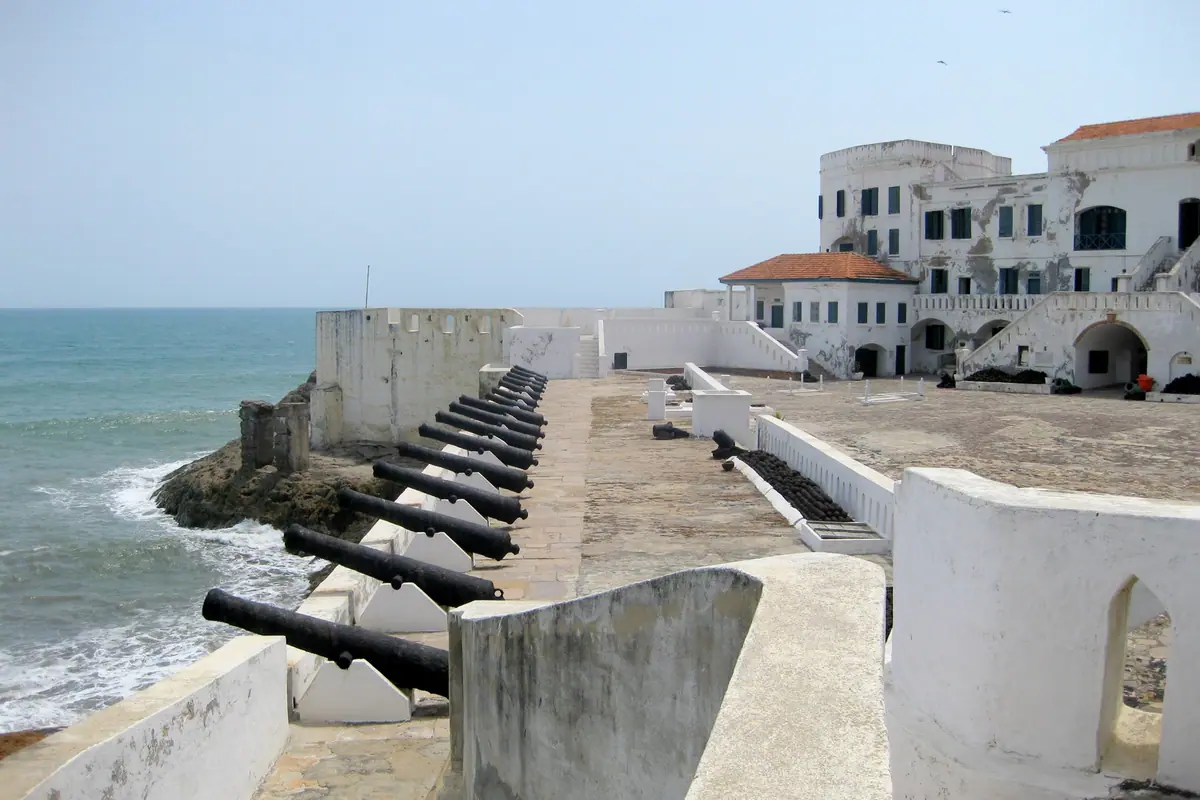
The stretch of coast west of Accra is the emotional centre of any Ghana trip. Cape Coast Castle, a vast whitewashed fortress above the fishing harbour, runs guided tours of roughly an hour that lead you through the dungeons, the cannon-lined ramparts and the governor's quarters built directly above the male slave hold, ending at the Door of No Return. Elmina Castle, founded by the Portuguese in 1482 as São Jorge da Mina, is the oldest European building still standing in sub-Saharan Africa, with a Dutch cemetery and Fort St Jago on the ridge behind it. Do one in the morning and one the next day rather than rushing both; the drive from Accra takes about three hours.
Inland from Cape Coast, Kakum National Park protects a pocket of rainforest best known for its canopy walkway — seven rope-and-plank bridges strung about 40 metres above the forest floor along a 350-metre loop. Arrive at opening time for birds, butterflies and the best chance of monkeys, and hire a guide for the optional night walk, when owls and bushbabies take over.
Nearby, the Assin Manso Slave River marks the spot where captives were bathed and rested before the final march to the coast, and a little further along the road the crocodiles at Hans Cottage Botel sun themselves on the bank. Base yourself in Elmina or Cape Coast town, add a morning at Brenu Akyinim beach, and check the calendar: Elmina's Bakatue festival falls on the first Tuesday of July, Cape Coast's Fetu Afahye on the first Saturday of September.
The Volta Region: Wli Waterfalls, Afadjato and a Monkey Forest
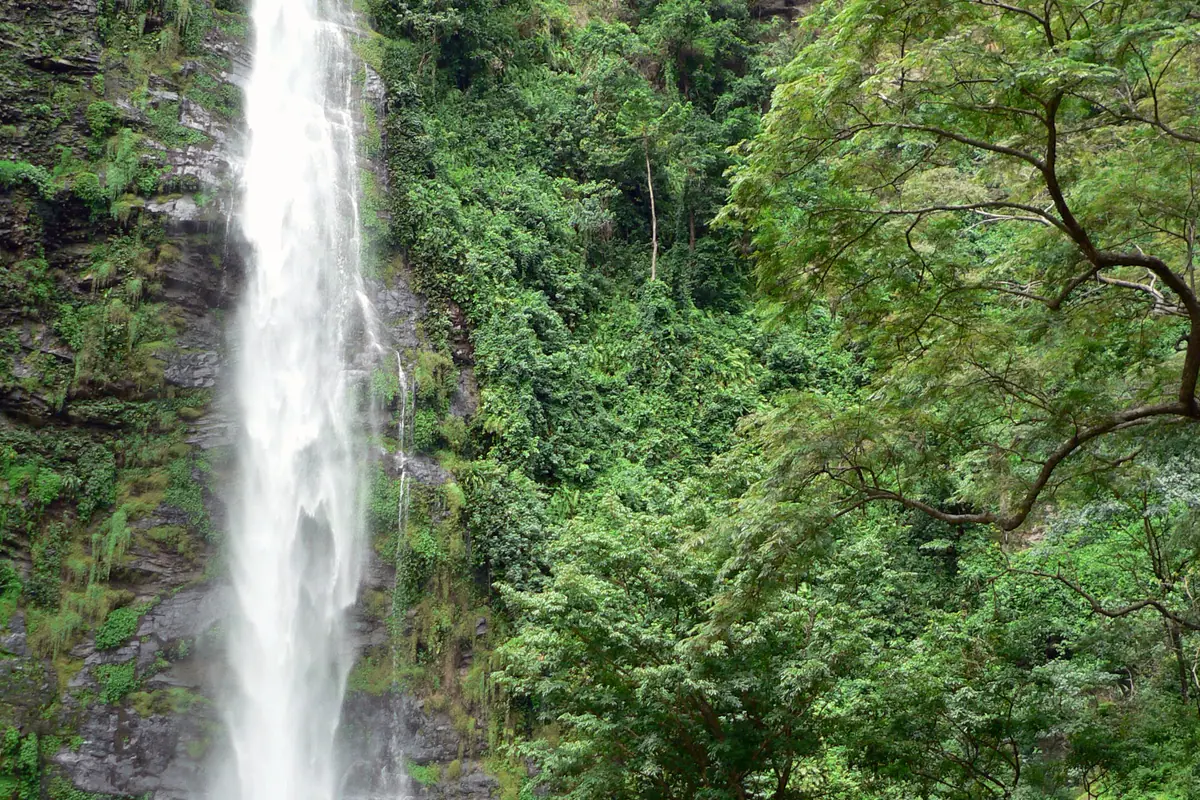
Ghana's greenest corner rises toward the Togo border, and Wli — the Agumatsa waterfalls — is its flagship. The lower falls are an easy 25-minute walk from the village through butterfly-heavy forest; the upper falls add another 45 to 60 minutes of steep, root-tangled climbing with a guide. Flow is heaviest from June to August, when the spray soaks everyone within twenty metres. Bring grippy shoes, water and a dry bag.
For peak-baggers, Mount Afadja (Afadjato) is Ghana's highest point at 885 metres, a steep one-to-two-hour climb best started by 6.30am before the heat builds. Just down the road, the Tafi Atome Monkey Sanctuary protects a troop of mona monkeys so habituated to visitors that they will take banana from your hand; early morning and late afternoon are the liveliest times. Above the ridge village of Amedzofe, the old German mission station on Mount Gemi offers the region's finest panorama, with Lake Volta glinting on clear days.
Lake Volta itself is the world's largest man-made reservoir by surface area, and boat trips from the Akosombo or Kpando jetties drift past drowned forest and island communities. Weavers at Tafi Abuife still work narrow-strip kente looms, and the lakeside markets at Kpando are worth a wander. Base in Hohoe or Ho and give the Volta two to three days.
Mole National Park and the Northern Savannah
Mole National Park is Ghana's biggest and best wildlife reserve, some 4,840 square kilometres of rolling savannah where elephants, buffalo, kob, waterbuck, roan antelope and warthogs share the bush with more than 300 bird species. The signature experience is a walking safari with an armed ranger at dawn or in the late afternoon — two to three hours of tracking on foot, often finishing within metres of a herd. Vehicle safaris run too, and the lodge on the escarpment overlooks a watering hole where the animals come to you.
The dry season from November to April is the time to go: vegetation thins, visibility improves and the roads north of Tamale are at their most passable. The last stretch of road is rough, so allow four to five hours from Tamale, and bring cash, as card machines are unreliable.
On the route north, break the journey at Kintampo Waterfalls, where steps descend to a pool you can swim in, and at the Boabeng-Fiema Monkey Sanctuary, unusual for its monkey cemetery and the two species of monkeys the village protects. Further north again, near Bolgatanga, Sirigu is known for its boldly painted houses and coiled basketry, and the Tongo Hills hide rock formations and shrines. Between December and February the Harmattan wind blows down from the Sahara, dusting the sky and cooling the early mornings.
Larabanga, the Ancient Mosque at the Edge of the Park
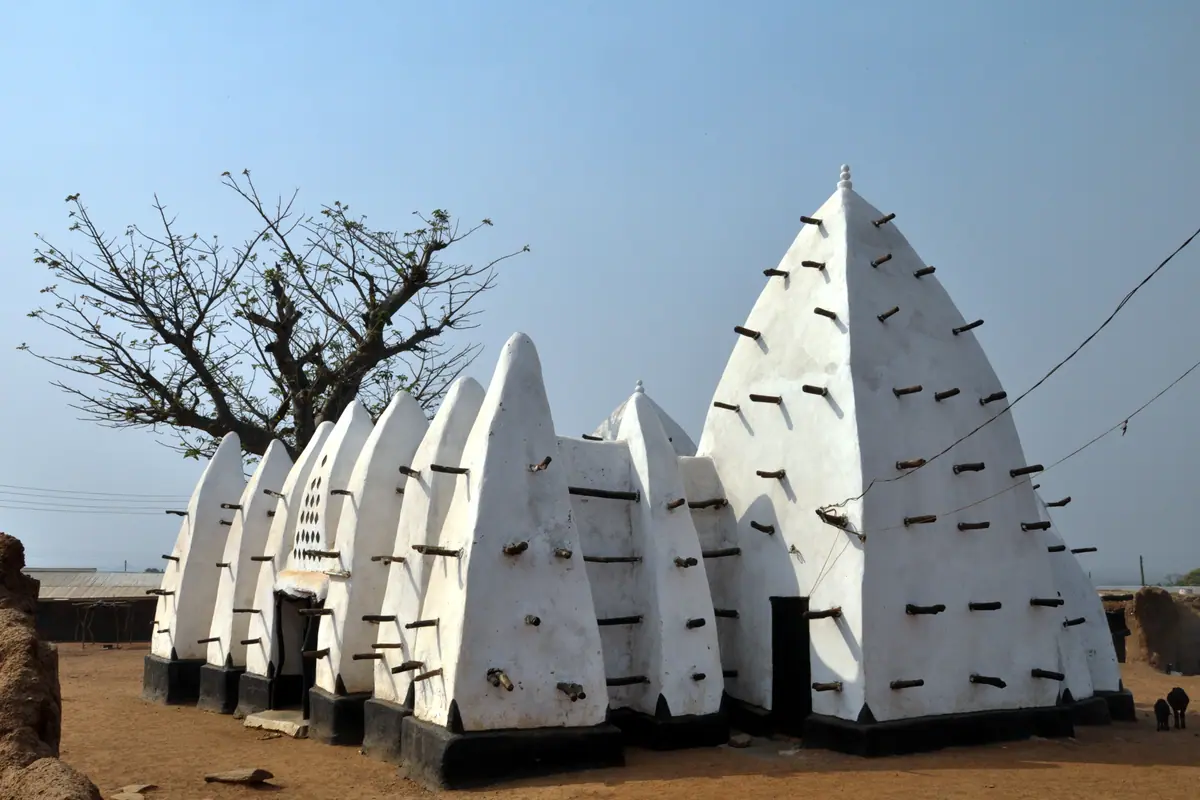
Twenty minutes from Mole's gate, Larabanga Mosque is one of the oldest mosques in West Africa, a Sudanese-style structure of mud, reeds and timber buttresses that has been repaired by hand for centuries. Women should bring a head covering and wear a wrapper — these are often lent at the entrance — and photography inside is restricted. Local guides explain the wooden pegs used for annual replastering and the legends attached to the site.
A few minutes away, the Larabanga Mystic Stone is the subject of a much-loved origin story, and the nearby Mognori eco-village offers canoe trips on the Mole River, shea butter pressing and drumming lessons that put a little money directly into the community's hands.
If you are continuing to the far north, the sacred crocodile ponds at Paga, where the animals are famously docile, and the remains of the old slave camp nearby make a sobering final stop before the Burkina Faso border.
Kumasi and the Ashanti Heartland: Palaces, Kente and a Crater Lake
Kumasi is the seat of the Asantehene and the cultural capital of the Ashanti region. The Manhyia Palace Museum, in the former royal residence, holds the drums, swords, gold ornaments and ceremonial umbrellas of the Ashanti court; on Akwasidae, which falls every 42 days on a Sunday, the palace hosts a durbar of chiefs in full regalia that is one of the great spectacles of West Africa. Check the dates before you book anything else.
Just outside town, craft villages reward a half-day loop: Bonwire, where kente is woven on narrow strip looms and lengths are sold directly by the weavers; Ntonso, where adinkra cloth is stamped with calabash-carved symbols in thick black dye; Ahwiaa for woodcarving; Pankrono for pottery. Each is 20 to 30 minutes from the city. Inside Kumasi, Kejetia Market sprawls over thousands of stalls and is far easier to enjoy with a local guide, while the Kumasi Fort and Military Museum fills in the colonial and Ashanti-war history.
An hour southeast, Lake Bosomtwe fills a meteorite crater roughly eight kilometres across and is sacred to the Ashanti — fishing is traditionally done from plank boards and swimming is reserved in some spots for men. Villages such as Abono and Obo have simple guesthouses, and dawn over the water, with mist on the rim, is worth the early start. The Bobiri Forest Reserve and its butterfly sanctuary and the quieter Owabi Wildlife Sanctuary suit birders.
Beaches, Festivals and the Rhythm of the Year
Ghana's coastline has options for every mood. Busua, near Takoradi, is the surf town, with boards to rent, beach bars and easy water. Nearby Dixcove holds Fort Metal Cross, and Cape Three Points, the country's southernmost tip, has a lighthouse and rainforest that runs down to the sand. East of Accra, Ada Foah sits at the Volta estuary, where boat trips thread the mangroves and turtles nest between November and January. Kokrobite draws weekend drummers, and the Shai Hills Resource Reserve an hour from the capital combines baboon troops, caves and open grassland. Be careful with currents — several beaches have strong undertows.
The festival calendar is the best reason to time a trip deliberately. Homowo, the Ga harvest festival, fills Accra in August. Winneba's Aboakyer, a deer-hunting rite on the first Saturday of May, is spectacular and crowded. Elmina's Bakatue opens the fishing season on the first Tuesday of July, while Cape Coast's Fetu Afahye closes the season in September, and Ada's Asafotufiami and Akropong's Odwira fill out the autumn. Bead markets at Odumase Krobo and Koforidua are worth building a day around.
For weather, the dry season from November to March is the sweet spot for Mole, the coast and general travelling, though the Harmattan haze thickens in December and February. The heaviest rains arrive from March to June, with a lighter wet spell in September and October; waterfalls are at their fullest in June and July. Two weeks comfortably covers Accra, Cape Coast, the Volta and Kumasi with two nights at Mole; ten days means dropping one region. Within cities, app-based rides and shared taxis work well; between regions, intercity coaches, minibus tro-tros for short hops and domestic flights to Kumasi, Tamale and Takoradi save days. English is widely spoken, a yellow fever certificate is required for entry, and cash still rules in markets and small towns.
Frequently asked questions
What is the best time of year to visit Ghana?
November to March is the most comfortable window, with dry roads, clear skies and the best wildlife viewing at Mole National Park. The Harmattan wind from December to February brings dust haze and cooler mornings in the north. If waterfalls matter most, aim for June or July, when Wli and Kintampo are thundering, and accept afternoon downpours.
How many days do I need in Ghana?
Ten days lets you cover Accra, Cape Coast and Elmina, the Volta Region and Kumasi at a reasonable pace. Two weeks adds two or three nights at Mole National Park and a stretch of coast at Busua or Ada Foah. Anything shorter than a week means picking one region and travelling slowly.
Can I visit Cape Coast Castle as a day trip from Accra?
It is possible — the drive is around three hours each way — but it makes for a rushed, exhausting day. Staying one night in Cape Coast or Elmina lets you tour both castles properly, add Kakum's canopy walkway and the Assin Manso Slave River, and catch the fishing harbour at dawn.
Is Ghana safe for travellers?
Ghana is one of West Africa's most stable and welcoming destinations, with a long record of peaceful elections and low violent crime against visitors. Petty theft happens in busy markets, so keep phones and wallets secure, avoid walking unlit beaches at night, and try to complete long road journeys in daylight.
What vaccinations and practicalities do I need for Ghana?
A yellow fever vaccination certificate is required for entry, and malaria prophylaxis is strongly recommended year-round. English is the official language, the currency is the cedi, and mobile money is widely accepted, though markets and small towns still run on cash. Most nationalities need a visa arranged in advance or on arrival.
Plan it — experiences in Ghana
Live search, booked directly with trusted providers.
Sort the rest of your trip
Everything for Ghana, in one place

More guides in Ghana
One Week in Ghana: A Flight-Based Itinerary Through Accra, Mole, Kumasi and the Cape Coast
Best Time to Visit Ghana: Seasons, Festivals and When to Book Your Hotel
Hotels in Ghana: Where to Stay for Accra, Cape Coast, Kumasi, Mole and the Volta
Best Places to Visit in Ghana: Castles, Canopies and Savannah