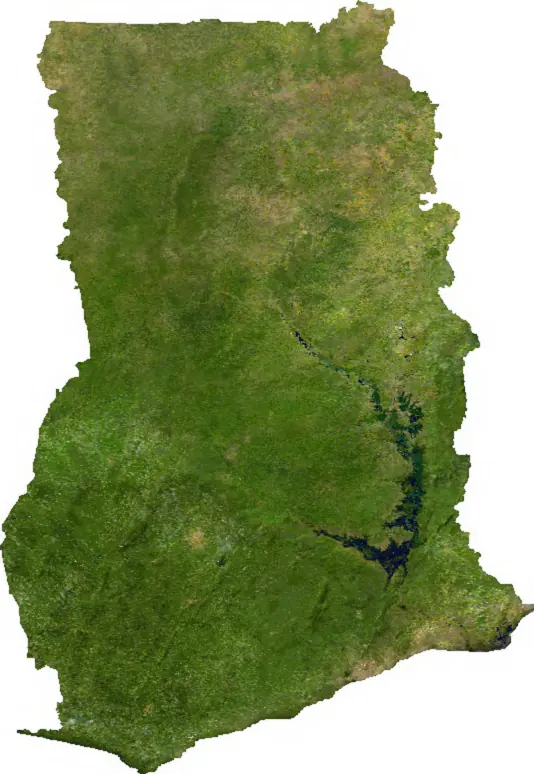
Ghana is bigger than it looks on the map, and the trick to seeing it well in seven days is knowing when to fly and when to sit back and watch the savannah roll past the window. This loop threads the country's headline sights — slave-trade castles on the Atlantic, elephants in the northern grasslands, the gold-and-kente heartland of the Ashanti, and waterfalls tumbling off the Togo hills — using short domestic hops from Accra as your spine.
Day 1: Land at Kotoka International Airport and Meet Accra
Almost every trip begins at Kotoka International Airport, Ghana's main gateway, sitting a few kilometres northeast of downtown Accra. Terminal 3 is bright and efficient, and formalities are usually quick; what takes time is the drive into the city, which can run anywhere from 30 minutes to well over an hour depending on the legendary Accra traffic. Base yourself in Osu, Cantonments or the Airport Residential Area, change some cash into cedis, and remember that English is the official language, so getting oriented is unusually easy for West Africa. Mobile money is used everywhere, but carry small notes for markets and tips.
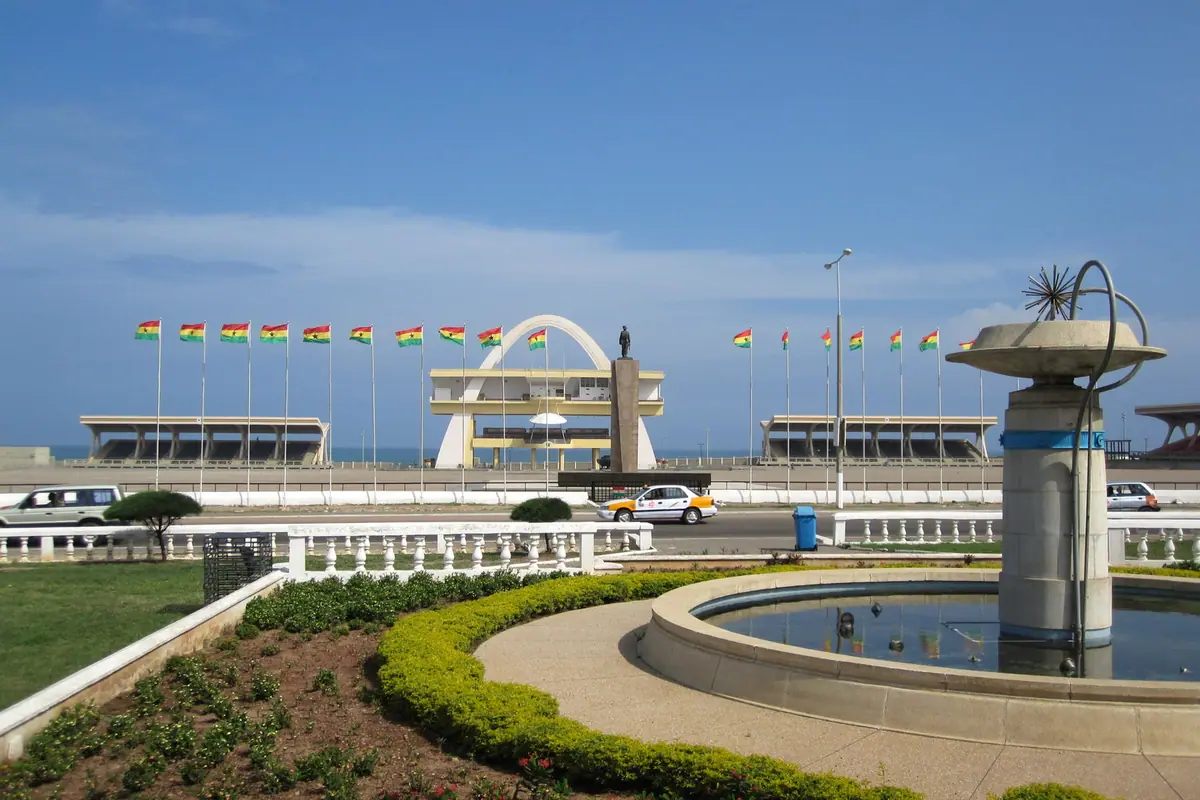
Spend the afternoon easing into the city's history. Independence Square and its towering Black Star Gate open onto the Gulf of Guinea, with the Kwame Nkrumah Memorial Park just inland, where Ghana's first president is buried beside a small museum. From there, drift west into Jamestown, the old colonial port quarter, and climb to the lighthouse above Ussher Fort for a view over the fishing canoes and rusting warehouses that give the district its gritty charm.
Finish with dinner along Osu's Oxford Street or a beach shack at Labadi, and get an early night. You fly north in the morning, and northern Ghana runs on a slower, hotter clock.
Days 2–3: Fly North to Tamale, Mole National Park and Larabanga Mosque
The morning flight from Accra to Tamale takes roughly an hour, replacing a road journey that eats up the best part of a day. Tamale is the bustling capital of the north, a predominantly Muslim city of smock weavers, sprawling markets and a food culture built on rice, groundnut soup and grilled guinea fowl. It is worth an hour or two of wandering before you push on towards Mole National Park, about four to five hours by road on an improving but still slow highway. Most visitors arrange a vehicle and driver in Tamale rather than attempting the drive themselves.
Mole is Ghana's largest and best-known wildlife reserve: rolling woodland savannah where elephants, kob antelope, warthogs, bushbuck and troops of baboons gather around the watering holes near the escarpment. The classic experience is a walking safari with an armed ranger, setting out in the cool early morning and again in the late afternoon, when the light turns the grass to copper. Because visibility depends on thin vegetation, the dry season from December to April is by far the best window; the animals concentrate near water and the bush is low.
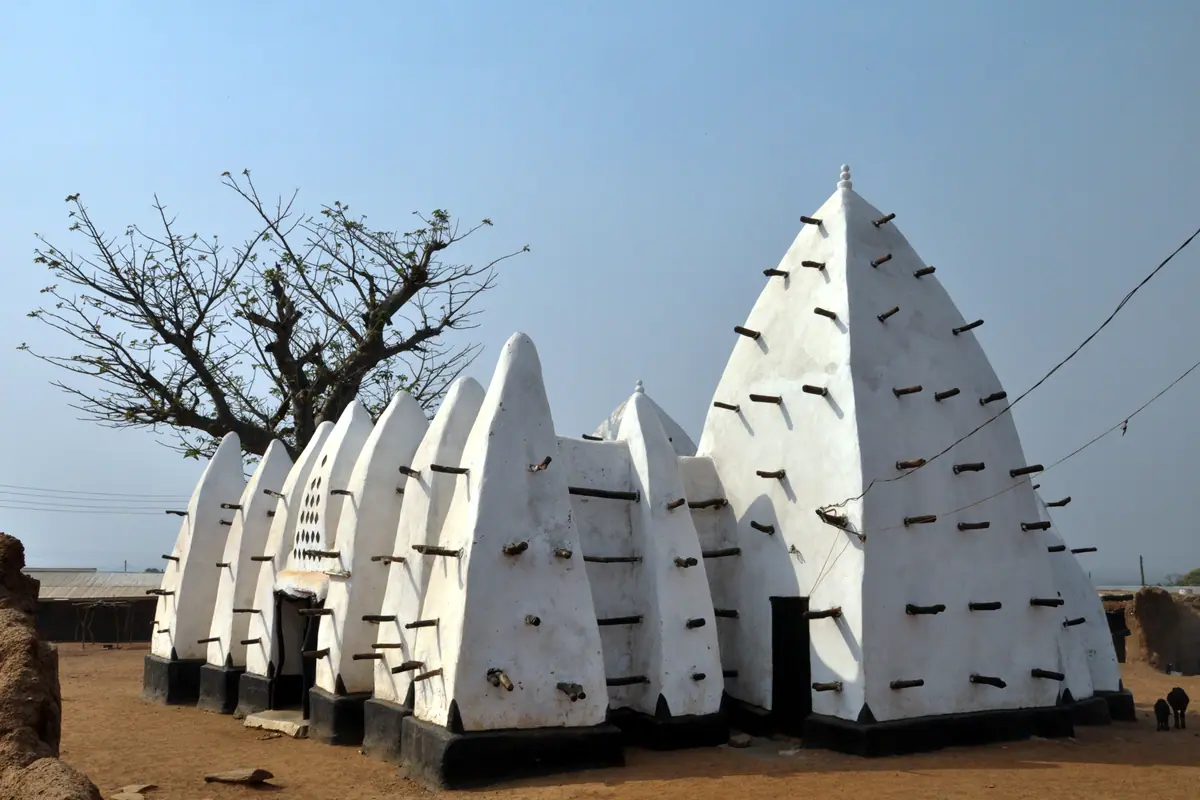
On your second northern morning, detour to Larabanga Mosque, a whitewashed, Sudanese-style mud-and-stick building that locals date to the 15th century and call the West African Mecca. Non-Muslim visitors view it from outside with a local guide who explains the annual plastering ritual that keeps it standing. Then retrace your route to Tamale for an evening flight back to Accra — seats are limited on these northern routes, so book well ahead if your dates fall in December or around public holidays.
Day 4: A Short Hop to Kumasi and the Ashanti Royal Heartland
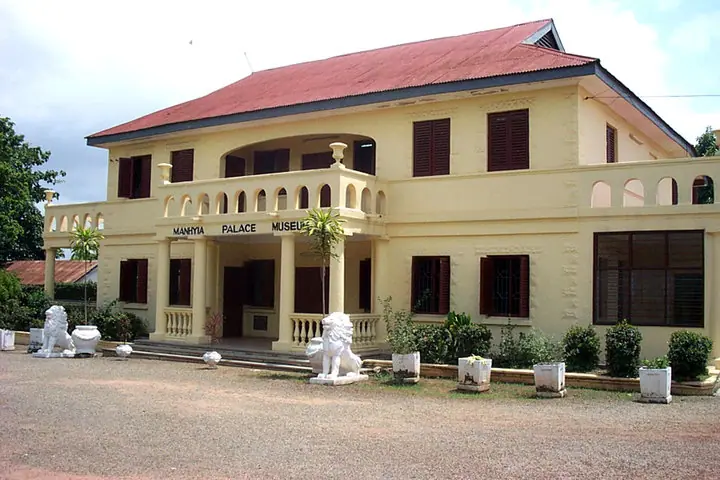
A 45-minute flight carries you from Accra into Kumasi, the capital of the Ashanti Region and the seat of the Asantehene, king of the Ashanti people. The pace here is different from the coast: this is forest country, humid and green, with a proud royal history and some of the finest craft traditions in Africa. The single essential stop is Manhyia Palace Museum, the former royal residence, whose exhibits cover the golden stool, the wars against British colonisation and the elaborate regalia of the Ashanti court. Guides bring the dynastic rivalries vividly to life.
Then dive into Kejetia Market, one of the largest single market complexes in West Africa, a compressed universe of fabric, yams, metalware, herbal medicine and noise. Nearby stands the old Prempeh II Jubilee Museum and the National Cultural Centre, where you can see a traditional Adinkra and kente workshop in miniature before visiting the real thing.
If time allows, hire a car for the craft villages: Bonwire, where kente cloth is woven on narrow looms; Ntonso, where adinkra symbols are stamped onto cloth with calabash dies and tree-bark dye; and Ahwiaa, known for its woodcarvers. Twenty-five kilometres south, Lake Bosomtwe fills a meteorite crater and makes a peaceful late-afternoon stop. Overnight in Kumasi, ready for the drive to the coast.
Day 5: Cape Coast Castle, Elmina Castle and the Atlantic Slave Route
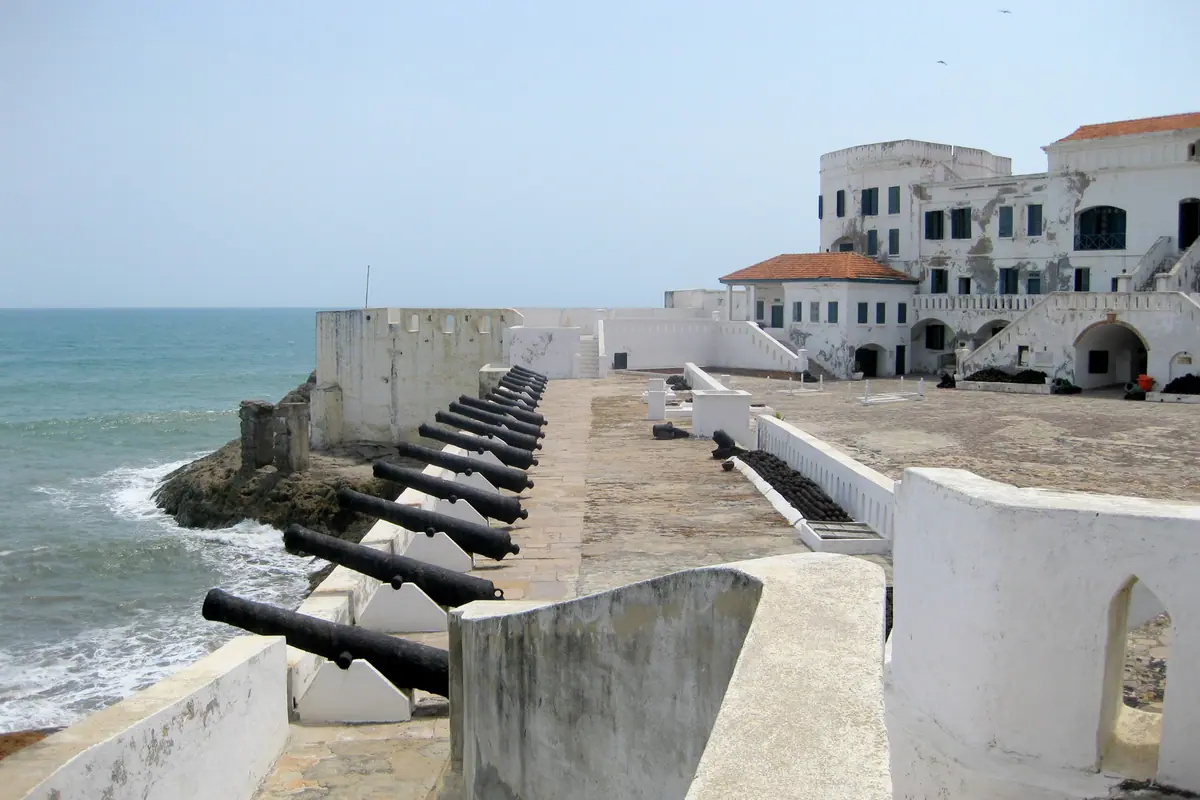
Kumasi to Cape Coast takes about five hours by road, or you can fly back through Accra and drive three hours west — the road route is more direct and lets you watch the transition from forest to coastal plain. Check in around midday and spend the afternoon at Cape Coast Castle, a UNESCO World Heritage Site and one of the most affecting places in Africa. Guided tours last about an hour and lead you through the dungeons, the cannon-lined ramparts and finally to the Door of No Return, the point from which enslaved people were loaded onto ships for the Americas.
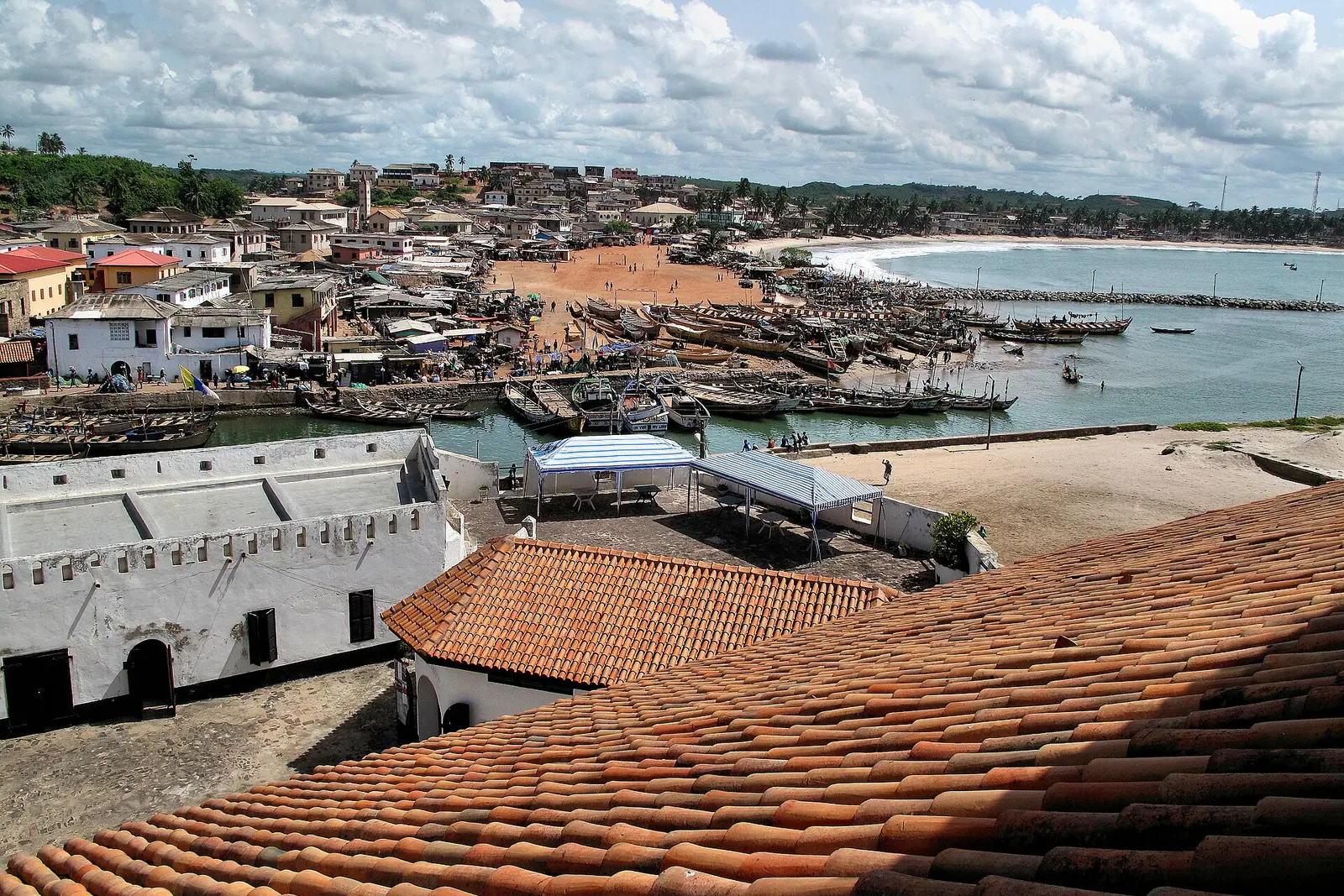
Sixteen kilometres west, Elmina Castle is older still, founded by the Portuguese in 1482 as São Jorge da Mina and counted among the earliest European buildings in sub-Saharan Africa. Its whitewashed courtyard, church-turned-auction-floor and separate women's dungeon are quietly devastating, and the view from Fort St. Jago on the hill above takes in the whole sweep of the harbour and the fishing fleet.
Both castles sit inside working towns, so plan your visits around the heat and the crowds. I suggest Cape Coast Castle in the mid-afternoon and Elmina in the late afternoon, with sunset from Fort St. Jago. Stay overnight in Cape Coast or Elmina; the guesthouses in Elmina's old town have far more atmosphere than the coastal resorts.
Day 6: Dawn on the Kakum Canopy Walk, Then Back to Accra
Start early for Kakum National Park, half an hour north of Cape Coast, and be at the gate as it opens. The famous canopy walkway is a series of seven rope-and-plank bridges suspended up to 40 metres above the rainforest floor, strung between giant trees and usually completed in 45 minutes to an hour; a longer guided forest walk takes a further two hours if you have the appetite. Morning is when the mist hangs in the canopy, the birds are loudest and the walkway is coolest — by noon the metal and heat make it far less pleasant.
From Kakum, drive back east to Accra in about three hours. Use the afternoon for the city sights you skipped on arrival: the dense, vivid aisles of Makola Market, the British-built Jamestown Lighthouse, the W.E.B. Du Bois Memorial Centre and the palm-fringed stretch of Labadi Beach. If you want to buy something worth carrying home, the galleries around La and Osu showcase contemporary Ghanaian painting, sculpture and beadwork.
Get a proper dinner in Osu and an early night. Day seven is the longest drive of the trip, and you want to be fresh for it.
Day 7: The Volta Region, Wli Waterfalls and a Farewell to Ghana
The Volta Region east of Accra is green, hilly and culturally distinct, closer to Togo in language and landscape than to the coast. A day trip means leaving Accra early — roughly four hours to Hohoe — so many travellers overnight in Ho or Hohoe instead. The reward is Wli (Agumatsa) Waterfalls, the tallest in Ghana, reached by an easy two-hour round-trip hike through butterfly-heavy forest to a lower and upper cascade that thunders after the rains.
Nearby, Mount Afadjato rises to 885 metres as Ghana's highest peak, an hour or two of steady climbing rewarded with views across the border hills. Combine it with the Tafi Atome Monkey Sanctuary, where habituated mona monkeys flit through the community forest, and, on the way home, the Akosombo Dam viewpoint above Lake Volta, one of the largest man-made reservoirs on earth.
Build in buffer time for your international departure: the return drive from Hohoe to Accra's airport takes four to five hours, and Ghanaian traffic is not sentimental about flight times. If your flight leaves in the evening, aim to be back in the city by mid-afternoon; if it leaves at dawn, sleep near the airport instead and trade the waterfalls for a final morning at Labadi Beach. Either way, the loop — north to the elephants, inland to Kumasi, west to the castles, east to the Volta — leaves you with a country, not just a holiday.
Frequently asked questions
Do I really need to fly within Ghana, or can I drive the whole itinerary?
Flying is what makes this week work. Accra to Tamale is around an hour in the air versus a tiring ten-plus hours by road, and Accra to Kumasi takes about 45 minutes instead of four to five hours. Domestic routes radiate from Accra, so most hops begin and end at Kotoka. The coastal legs — Kumasi to Cape Coast, Cape Coast to Accra — are better done by road, where driving times run three to five hours.
When is the best time of year for this trip?
The dry season from November to March is ideal, especially for Mole National Park, where low grass and shrinking waterholes concentrate elephants and antelope near the viewing points. Be aware that the harmattan, a dusty wind from the Sahara, often blurs the sky between December and February. The rainy seasons fall roughly from April to June and September to October, when roads get muddier and waterfalls run fullest.
How far ahead should I book domestic flights?
Book several weeks ahead, and earlier for December, Easter and public holidays, when Ghanaian families travel home and the small aircraft fill up quickly. Expect modest baggage allowances on the turboprop services, usually around 15 to 20 kilograms, and arrive at the airport at least an hour and a half before departure. If a northern flight is cancelled, the fallback is a long road transfer, so keep one flexible day in your plan.
How much time do Cape Coast Castle, Elmina Castle and Kakum need?
Allow about an hour to 90 minutes for a guided tour of each castle, plus travel time between them, and another two to three hours at Kakum if you do the canopy walkway and a short forest trail. Most people split it across an afternoon and the following morning, overnighting in Cape Coast or Elmina rather than trying to rush back to Accra the same day.
Is Ghana easy and safe for a first-time visitor?
English is the official language, so communication is straightforward, and Ghanaians are famously welcoming to visitors. Use registered drivers or hotel-arranged cars rather than hailing strangers, keep valuables out of sight in crowded markets, and carry cash plus mobile money for small purchases. A yellow fever vaccination certificate is required for entry, and antimalarial precautions and routine vaccinations should be discussed with a travel clinic well before departure.
Sort the rest of your trip
Everything for Ghana, in one place

More guides in Ghana
Best Time to Visit Ghana: Seasons, Festivals and When to Book Your Hotel
Hotels in Ghana: Where to Stay for Accra, Cape Coast, Kumasi, Mole and the Volta
Best Places to Visit in Ghana: Castles, Canopies and Savannah
Best Things to Do in Ghana: Landmarks and Must-See Sights