Estonia folds a Hanseatic medieval skyline, boggy wilderness and more than 2,000 islands into a country you can drive across in five hours. Most visitors start and finish in Tallinn's cobbled Old Town — but the real reward comes when you keep going: university courtyards in Tartu, windmills on Saaremaa, and boardwalks floating over spring-flooded marshes.
Tallinn's Old Town: Towers, Cobbles and Rooftop Views
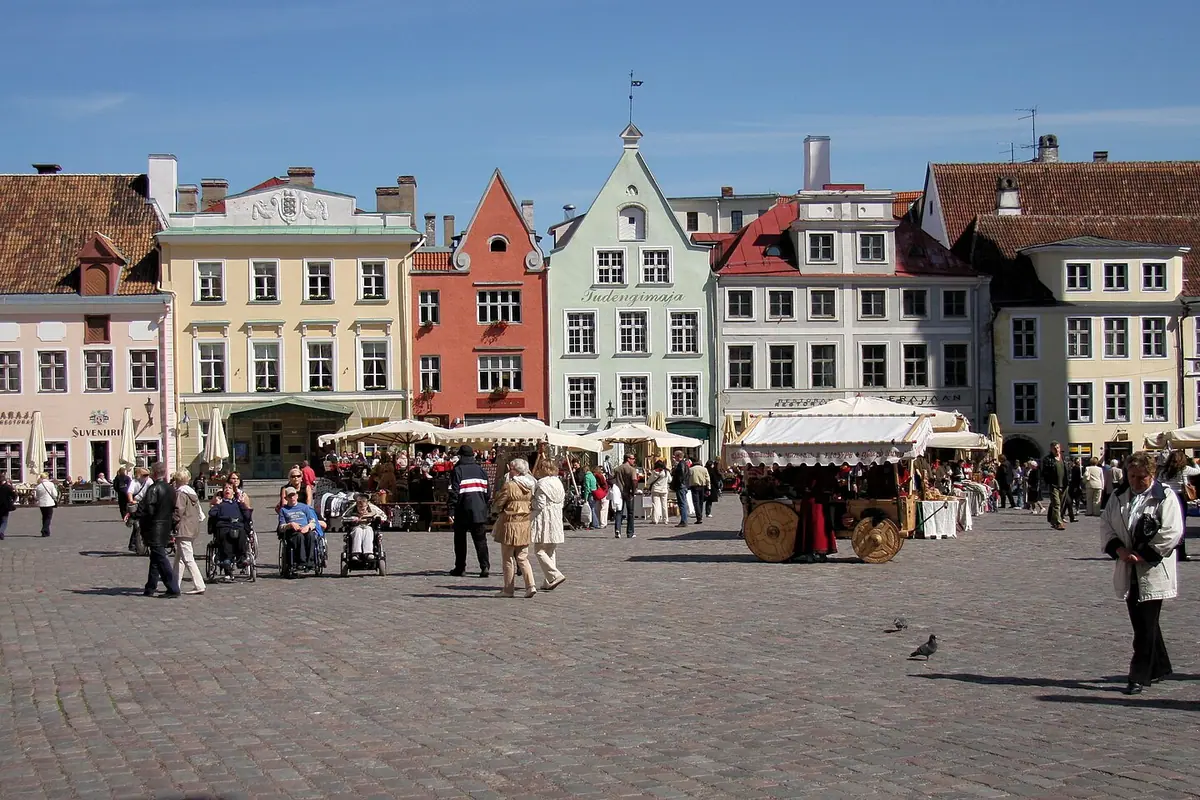
Tallinn's walled Old Town is the reason most trips to Estonia begin here, and it earns the fuss. Enter through the Viru Gate, follow Viru Street between medieval merchant houses, and you arrive at Town Hall Square (Raekoja plats), dominated by a Gothic town hall that has stood since the early 15th century. The little pharmacy on its corner has been serving customers for so long that locals treat it as a landmark in its own right. In summer the square fills with café tables and outdoor stages; in December the same space becomes a Christmas market ringed by wooden stalls and fairy lights.
The compactness is the joy of it. Climb the tower of St Olaf's Church for a vertiginous look over red rooftops, or take the easier route to the Kohtuotsa and Patkuli viewing platforms on Toompea hill, where the postcard panorama of spires opens up. Up on Toompea you also pass the onion domes of Alexander Nevsky Cathedral, the pink walls of Toompea Castle with its Pikk Hermann tower, and the Danish King's Garden. Below, Kiek in de Kök is a stout cannon tower with a museum and old bastion tunnels running beneath the earthen slopes.
Budget two to three hours for a first wander and a full day if you want the towers, tunnels and museums. The streets are cobbled and uneven, so bring shoes you can actually walk in. Come early morning or after dinner in June and July, when daylight stretches past 11pm and the day-trippers have gone. Everything inside the walls is walkable; trams and buses connect it to the newer city if your feet give out.
Beyond the Walls: Kadriorg, Kumu and the Seaplane Harbour
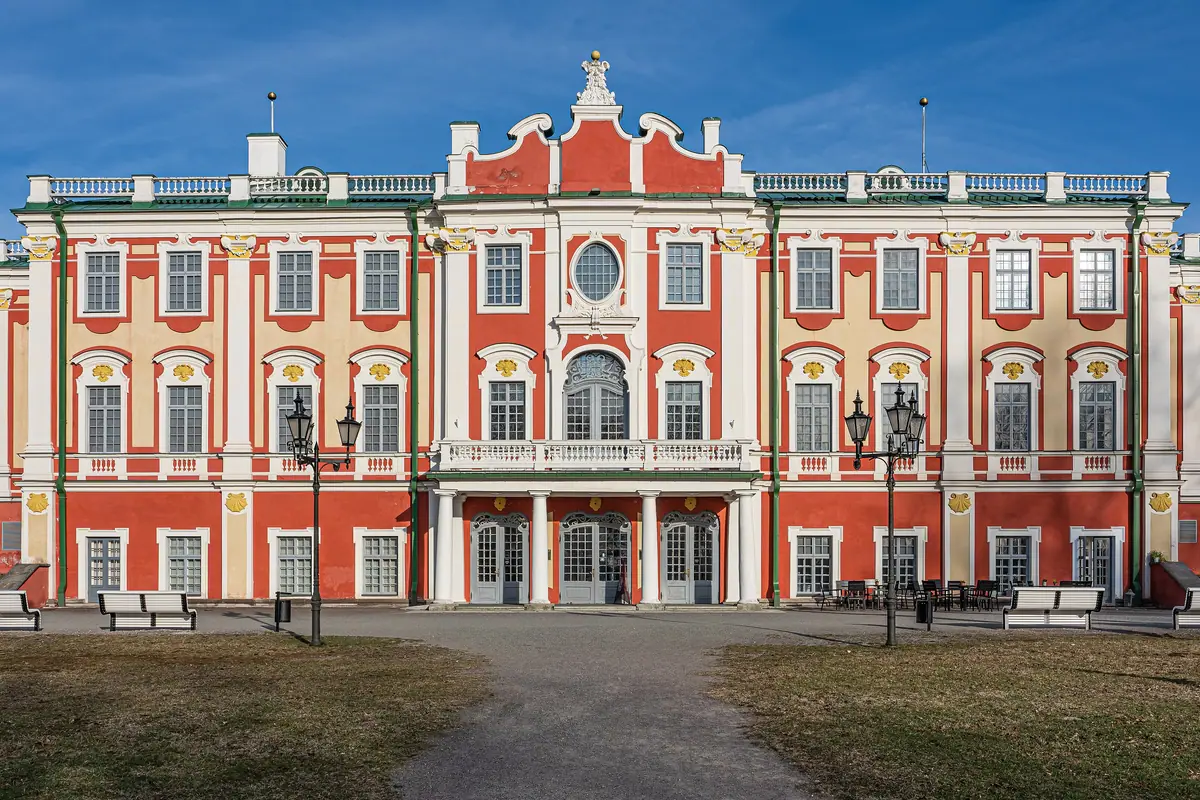
A short tram ride east of the centre, Kadriorg Palace was built as a baroque summer residence for Peter the Great and now holds a foreign art collection, surrounded by formal gardens, a swan pond and long tree-lined avenues. Just uphill stands Kumu, Estonia's flagship art museum — a swooping modern building that traces Estonian art from the 18th century to the present, including the Soviet-era works that make the country's story click. Allow half a day for the pair, more if the weather is good enough for a picnic in the park.
West of the Old Town lies Kalamaja, a district of wooden houses that has become Tallinn's creative engine. Telliskivi Creative City occupies a former industrial complex of brick sheds, now filled with studios, street art, small design shops and a weekend flea market, with the busy Balti Jaam market hall next door for smoked fish, berries and rye bread. On the waterfront, the Seaplane Harbour museum hangs a genuine submarine, the Lembit, from the ceiling of a vast concrete hangar built for seaplanes — one of the most engaging maritime museums in the region.
If you want altitude, the Tallinn TV Tower offers a glass-floored viewing platform far above the treetops, with the whole coast laid out below. Families often pair it with the Estonian Open Air Museum at Rocca al Mare, where farmhouses, windmills and chapels have been reassembled from every corner of the country. You cannot do all of this in one day without rushing; pick two and do them properly.
Tartu and the East: Student Squares and Border Fortresses
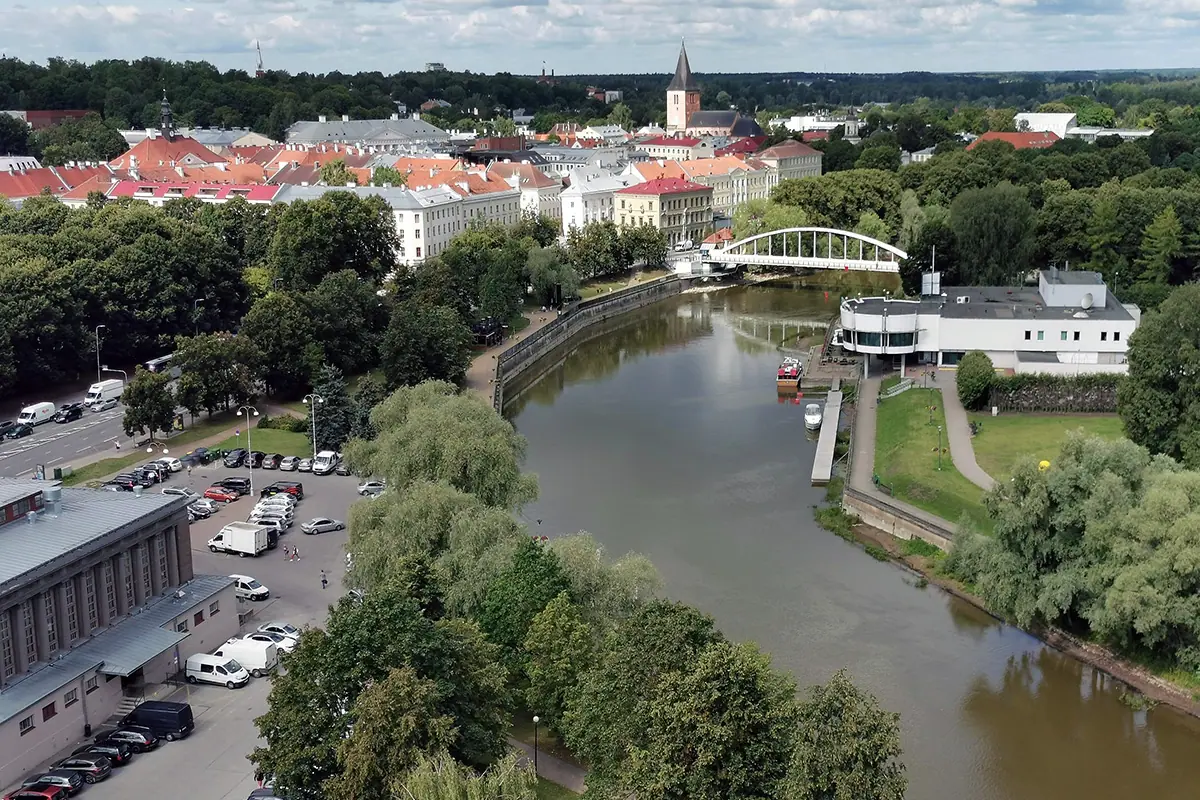
Estonia's second city, Tartu, sits about two to two and a half hours from Tallinn by bus or train, and feels entirely different: younger, quieter, and shaped by its university, founded in 1632. Start at Town Hall Square, where the bronze Kissing Students fountain is the default meeting point, then walk up Toome Hill past the red-brick ruins of the medieval cathedral, now home to a university museum, and the old observatory. The streets are laced with student cafés, bookshops and the wooden villas of the Supilinn district, which translates roughly as Soup Town.
The Estonian National Museum, known locally as ERM, is the other unmissable stop — a long glass building on a former airfield that tells the story of Finno-Ugric cultures, rural life and 20th-century occupation with real emotional weight. The hands-on science centre nearby keeps children happy for hours. Give Tartu a full day, or two nights if you want to catch its student theatre and bar scene.
Further east the mood hardens into borderland history. In Narva, the square towers of Hermann Castle stare across the river at a matching fortress on the Russian bank, a dramatic and slightly melancholy sight. Rakvere has a rebuilt castle on a hill with a knowingly theatrical medieval theme, while Viljandi's hilltop ruins host a big folk music festival each July. Push south into the rolling hills around Otepää and you reach Estonia's winter capital, with cross-country ski trails, pine forest and the shores of Lake Pühajärv.
Saaremaa, Hiiumaa and Pärnu: Islands and the Summer Coast
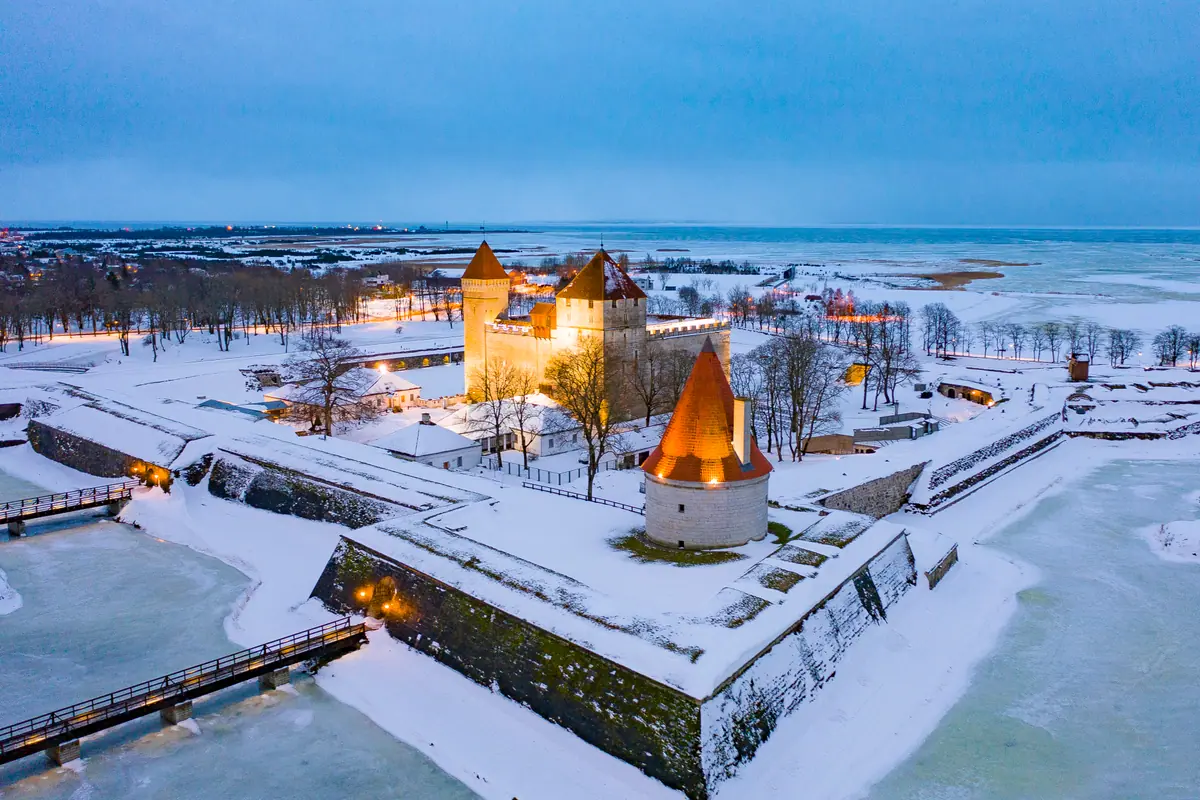
Saaremaa, Estonia's largest island, is reached by ferry and then a causeway from neighbouring Muhu, a route that instantly slows the pace. Its centrepiece is Kuressaare Castle, a beautifully preserved medieval bishop's fortress surrounded by a moat, with a museum inside and a parkland outside. Elsewhere on the island: the Kaali meteorite crater field, where a small lake sits in an impact bowl thousands of years old; the Sorve lighthouse at the southern tip; and the cluster of traditional windmills at Angla. Muhu itself is worth a detour for thatched roofs and quiet lanes.
Hiiumaa, further north, is emptier and wilder, with juniper meadows, long sandbars and the Kõpu lighthouse, a squat stone tower that ranks among the longest continuously operating lighthouses anywhere. Ferries run from the mainland to both island groups and carry cars; in July and August the popular crossings fill up, so reserve ahead and arrive early. Without a car you can still reach the main towns by bus and ferry, but you will miss the beaches and lighthouses.
Back on the mainland, Pärnu is Estonia's summer capital: a long sandy beach, a graceful promenade, wooden villas, spa hotels and the mud baths the town has been famous for since the 19th century. The water is warmest in July, when it can reach a pleasant swimming temperature, and the streets fill with festival crowds. Haapsalu, up the west coast, is a gentler alternative — a bishop's castle, a seaside promenade and a reputation for lace-making and quiet.
Lahemaa, Soomaa and Estonia's Wild Edges
Lahemaa National Park, roughly an hour east of Tallinn, is the easiest taste of Estonian wilderness. The Viru Bog trail follows a wooden boardwalk over rust-coloured pools and stunted pines, with a viewing tower at the halfway point — a three-to-four-kilometre loop that is flat, well marked and magical in early morning mist. Around it are the grand Baltic-German estates of Palmse, Sagadi and Vihula, plus the fishing village of Altja and Käsmu, a tiny captains' village with a boulder-strewn shore.
Soomaa National Park, in the southwest, is famous for its so-called fifth season, when melting snow floods the meadows and people paddle canoes between the tops of submerged trees. In winter, guided walks in giant bog shoes take you across frozen marshes; in autumn, the trails turn amber and the picking is good for cranberries and mushrooms. Jägala waterfall, the widest in Estonia, thunders most impressively in spring, and Keila-Joa makes an easy half-day trip from the capital.
For something wilder still, the forests of Alutaguse in the northeast support brown bear, lynx and wolves, and guided evening watches give a realistic chance of sightings in late summer. Lake Peipus and the Setomaa region in the southeast feel like a separate country, with a distinct language, singing tradition and onion-domed churches. Be aware that many trailheads and rural sights are only practical with your own car.
When to Go: White Nights, Song Festivals and Snow
June to August is peak season and deservedly so. Days are long — around the summer solstice it barely gets dark — and Midsummer, or Jaanipäev, is marked with bonfires and all-night parties on 23 and 24 June. Every five years the Song Festival fills the enormous song bowl in Tallinn with tens of thousands of singers, a spectacle with roots in the independence movement; if your trip coincides with it, plan accommodation months ahead. May and September are quieter, cheaper and still pleasantly mild.
December brings a genuinely storybook Christmas market to Town Hall Square, snow-dusted rooftops and glögg, though daylight is short and grey. January and February are the coldest months, with proper snow inland; that is when Otepää and the Haanja hills become cross-country skiing country, and the bogs freeze hard enough to walk on. In some cold winters an official ice road links the mainland to Hiiumaa — only drive it when it is formally open.
Practicalities are easy. Distances are short, buses and trains reliably link Tallinn, Tartu and Pärnu, and card payments work almost everywhere, even at rural stalls. Rent a car for the islands and national parks, where public transport thins out fast. Tipping is not expected, tap water is drinkable, and English is widely spoken by anyone under 50. Pack layers, a rain jacket and insect repellent for the bog trails in July.
Frequently asked questions
How many days do you need in Estonia?
Four to five days is enough for Tallinn's Old Town, a day trip to Lahemaa or Tartu, and a night on Saaremaa. With a week you can add Pärnu, Hiiumaa and the southern hills around Otepää without feeling rushed. Two days is workable only if you stay in Tallinn.
When is the best time to visit Estonia?
Late May to early September offers warm weather and long daylight, with June's white nights being the highlight. December is magical for the Tallinn Christmas market, while February suits anyone wanting snow, cross-country skiing and frozen bogs.
Can you explore Tallinn Old Town on foot?
Yes — the whole walled Old Town is walkable in 20 minutes end to end, though cobbles and hill climbs on Toompea slow you down. Trams, buses and rideshare services connect it to Kalamaja, Kadriorg and the harbour.
Do you need a car to see Estonia outside Tallinn?
For Tartu, Pärnu, Narva and Viljandi, buses and trains are frequent and comfortable. For Saaremaa, Hiiumaa, Soomaa and the smaller Lahemaa manors, a rental car makes a huge difference — ferries take vehicles but should be reserved in July and August.
What should a first-time visitor not miss in Estonia?
Beyond Tallinn's Town Hall Square and Toompea viewpoints, prioritise Kadriorg Palace and Kumu, the Viru Bog boardwalk in Lahemaa, Kuressaare Castle on Saaremaa, and the Estonian National Museum in Tartu. Those five cover medieval, artistic, natural and cultural Estonia in one trip.
Plan it — experiences in Estonia
Live search, booked directly with trusted providers.
Sort the rest of your trip
Everything for Estonia, in one place
Stay in Estonia
Hotels, guesthouses and apartments — compared in one search.
Search hotels
Transfer in Estonia
Private driver waiting on arrival — no queues, no surprises.
Book a transfer
Stay online in Estonia
Travel eSIM — data the moment you land, no roaming bills.
Get an eSIMMore guides in Estonia
Best Places to Visit in Estonia: Medieval Towns, Bogs and Baltic Islands
Estonia Food, Culture and Local Experiences: Tallinn, Bogs, Islands and Smoke Saunas
Best Time to Visit Estonia for Hotels: A Season-by-Season Guide
Hotels in Estonia: Where to Stay in Tallinn, Pärnu and the Islands