Estonia packs medieval walls, drowned bogs, a university town of red brick and a Baltic island of windmills into a country you can cross in five hours. This week-long route lands you in Tallinn, spirals out through the forested north coast and Tartu, then hops by air to Saaremaa for a finale of moats and meteor craters.
Day 1: Landing in Tallinn and Wandering Straight Into the Old Town
Tallinn's airport sits barely four kilometres from the city centre, which makes the first hour of any Estonian trip unusually painless. A tram, a local bus or a short taxi ride puts you at the edge of the Old Town in fifteen minutes, and within another five you are walking on cobbles under merchants' houses that have stood since the Hanseatic boom. Check in, drop your bag, and resist the urge to nap — late-afternoon light on the limestone is the best introduction you will get.
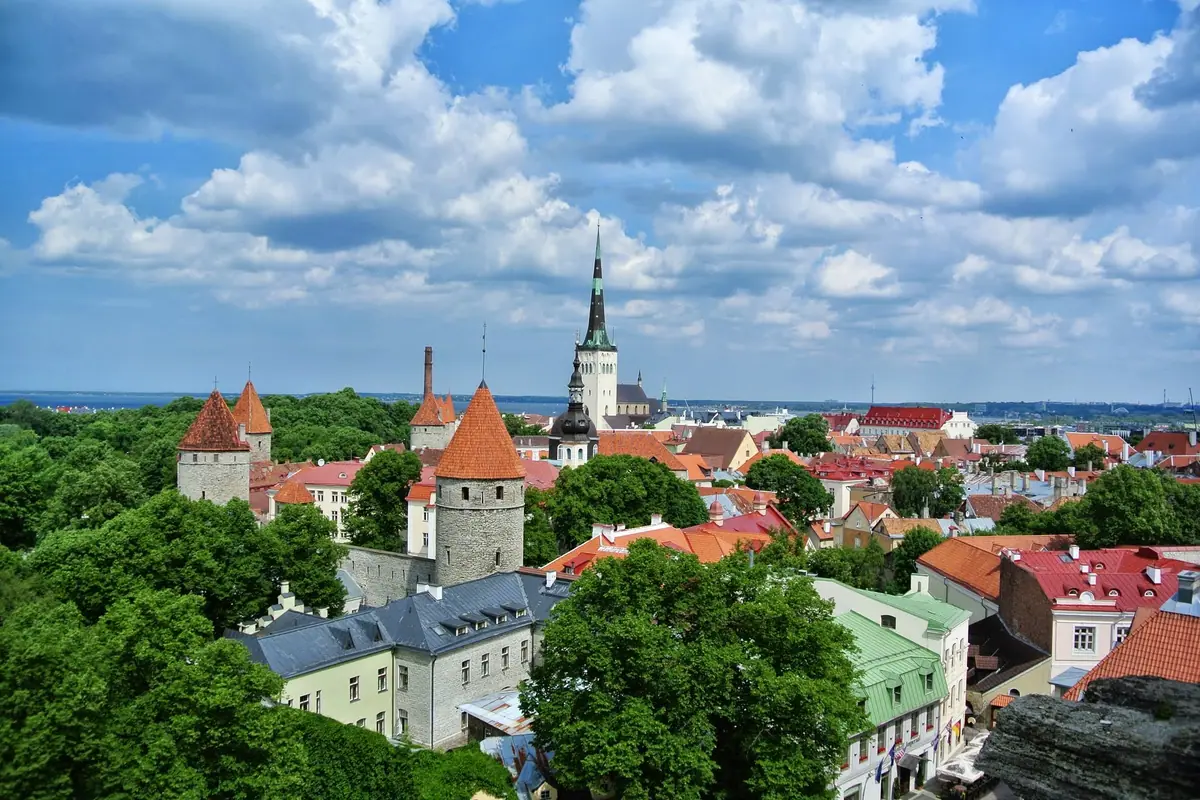
Start at Raekoja plats, the Town Hall Square, where the 15th-century Gothic town hall still presides over a plaza that has been the city's living room for 600 years. On its corner sits the Town Hall Pharmacy, a tiny apothecary that has supposedly been trading continuously since 1422 and now sells everything from aspirin to marzipan. From there, follow the lanes south toward St Olaf's Church, whose slender green spire once made it the tallest building in the world; the climb up its tower is steep, windy and worth every step for the roofs below.
Eat your first dinner somewhere in the Old Town's cellar restaurants — dark rye bread, smoked sprats, black pudding in winter, elk sausage if you are curious — then walk the walls at dusk when tour groups thin out and the floodlights come on.
Days 2–3: Toompea Hill, the City Walls and Tallinn's Creative Edge
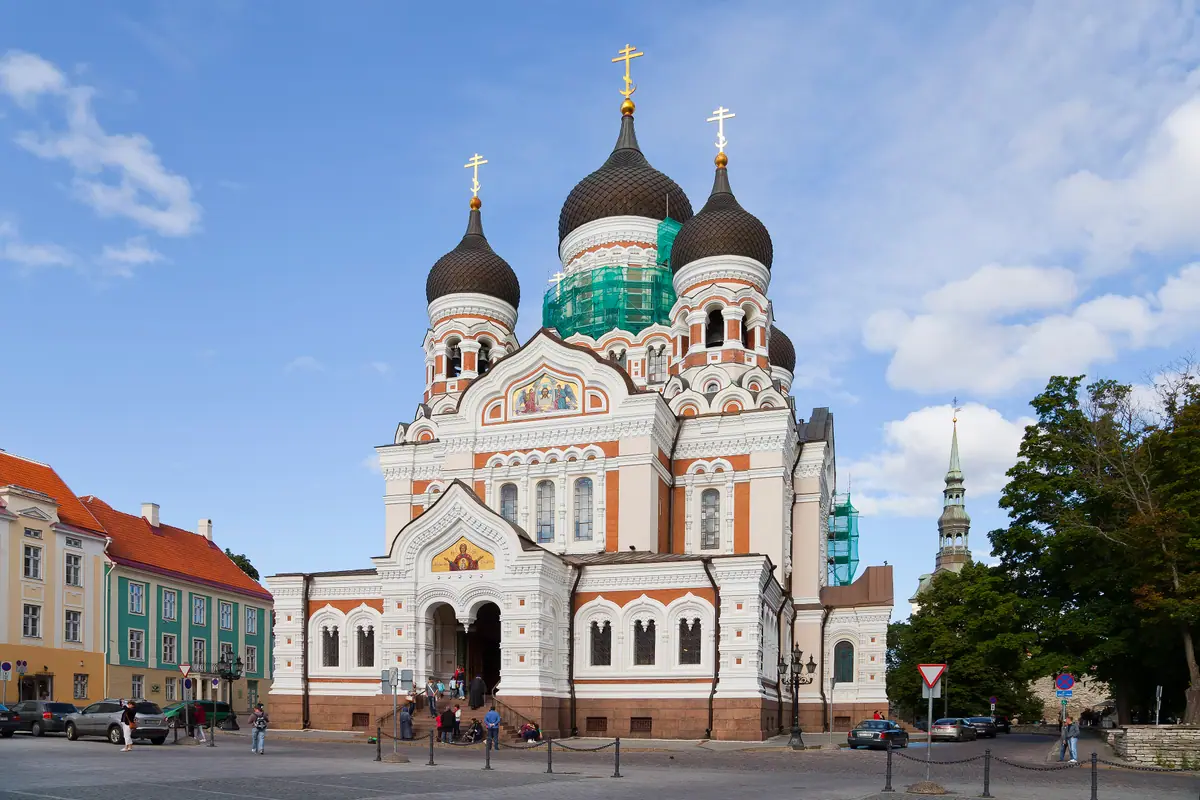
Give Tallinn two full days, because the postcard core is only half of it. Begin on Toompea Hill, the limestone outcrop that has been Estonia's seat of power since Danish crusaders built a fortress here in 1219. Toompea Castle now houses the national parliament, its baroque facade fronting a corner tower, Pikk Hermann, that flies the blue-black-white flag at sunrise. A few steps away, the onion-domed Alexander Nevsky Cathedral marks the tsarist era, while the Lutheran Dome Church opposite holds centuries of Baltic German coats of arms carved into the walls.
Walk the rim of the hill for the two best free views in the country: the Kohtuotsa and Patkuli platforms, where red roofs, gulls and ferry wakes spread out below. Then descend through the Danish King's Garden, push through Viru Gate and lose yourself in the medieval street grid — St Catherine's Passage, the old city wall with its surviving towers, and the Kiek in de Kök bastion, whose underground passages tunnel through the earthworks.
For contrast, spend the second afternoon east of the centre. Kadriorg Palace, built for Peter the Great, sits in a formal baroque garden, and the Kumu Art Museum next door is the country's sharpest introduction to Estonian art across two centuries. Loop back west through Kalamaja's wooden houses, the Balti Jaam market and Telliskivi, a former rail-yard turned street-art and food-truck quarter, and finish at the Seaplane Harbour, a vast concrete seaplane hangar where the maritime museum displays the submarine Lembit and you can walk out onto a floating pier over the bay.
Day 4: Bogs, Manors and a Captain's Village in Lahemaa
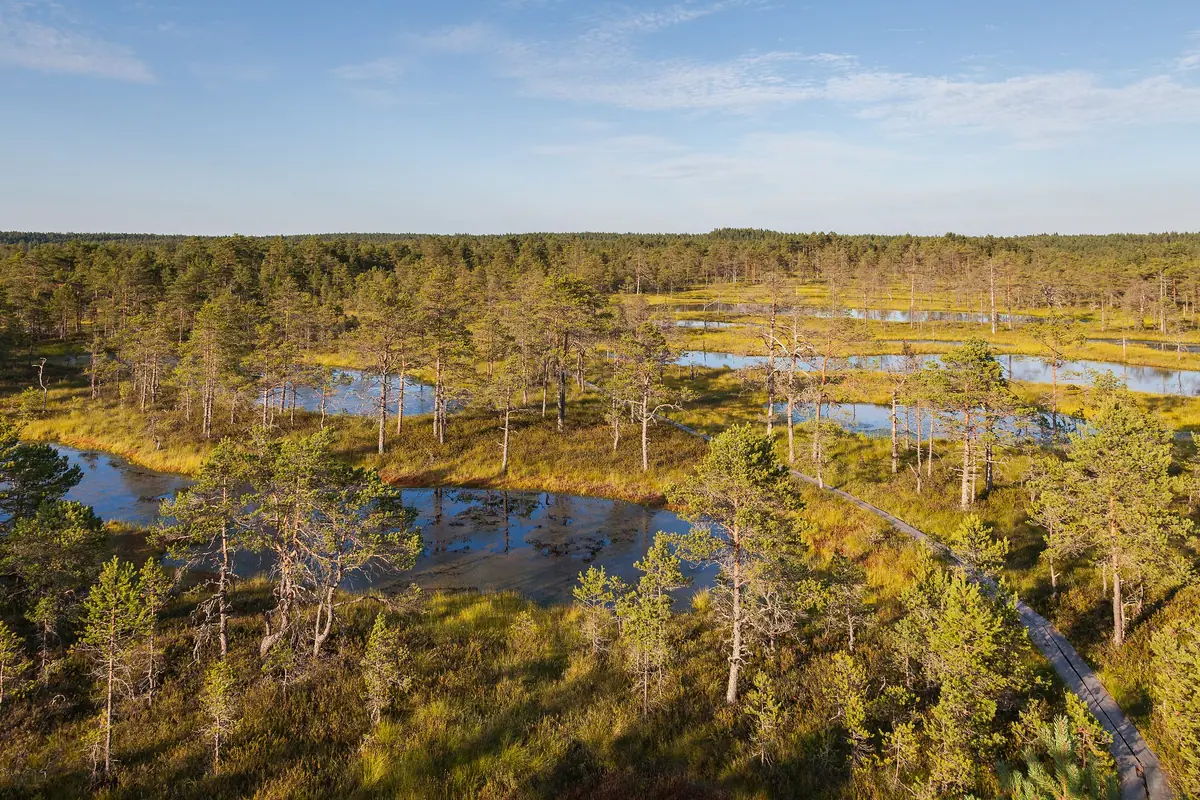
Roughly an hour east of Tallinn, Lahemaa became the Soviet Union's first national park in 1971 and remains Estonia's finest day trip. Hire a car or join a small guided group; public transport reaches the villages but not the trails. The centrepiece is Viru Bog, where a wooden boardwalk floats for three and a half kilometres over water the colour of strong tea — peat-stained, mirror-still, studded with stunted pines and, in late summer, cloudberries and wild cranberries.
Beyond the bog, Lahemaa is a necklace of Baltic German estates and fishing hamlets. Palmse Manor is the grandest, a restored baroque pile with ornamental ponds and a brandy distillery in the outbuildings; Sagadi Manor nearby is smaller and more intimate. On the coast, Käsmu is known as the Captain's Village, its lanes lined with the houses of 19th-century sea captains and a tiny maritime museum in a former pilot station, while Altja preserves a row of thatched net sheds right on the shore.
If you would rather head west instead, Haapsalu offers a bishop's castle with a moat and a promenade of wooden villas, plus the Estonian Railway Museum in its station. Either way, be back in Tallinn by evening — the drive is easy and the summer light lasts until nearly midnight in June and July.
Days 5–6: Tartu, the Student Capital on the Emajõgi
A comfortable train ride of a little over two hours takes you south to Tartu, Estonia's second city and its undisputed intellectual heart. The University of Tartu, founded in 1632, still dominates the centre: its main building, its botanical garden and Toomemägi, the wooded hill above town, are all part of the fabric. Climb Toome Hill for the roofless shell of Tartu Cathedral, now a museum, and the views down over the Emajõgi River.
The city's standout attraction, though, is the Estonian National Museum, a kilometre-long glass-and-concrete runway built on a former airfield at Raadi. Its permanent exhibition traces Finno-Ugric life, Soviet occupation and the singing revolution with unusual honesty, and it deserves at least three hours. Back in the centre, find the Kissing Students fountain on Town Hall Square, the terracotta figures of St John's Church, and the bohemian wooden district of Supilinn across the river; the science centre is a reliable rainy-day rescue if you are travelling with children.
Use the second day for a side trip. Otepää, an hour south, is Estonia's winter sports base and, in summer, a rolling landscape of lakes and hilltop views from the Otepää recreation area. In the far southeast, Setomaa offers a distinct Orthodox culture, onion-domed churches and a cuisine all its own. Alternatively, simply stay put and enjoy Tartu's café culture — it is a small city that rewards slowness.
Day 7: A Short Hop to Saaremaa's Castles and Craters
Estonia's domestic network makes island-hopping genuinely easy: a flight from Tallinn to the small airfield at Kuressaare takes well under an hour, and there are also bus-and-ferry routes via Virtsu and the causeway across Muhu. Either way, Saaremaa rewards the effort with a pace that feels a century slower than the mainland.
The must-see is Kuressaare Castle, a squat, moat-ringed episcopal fortress regarded as one of the best-preserved medieval castles in the Baltic, complete with a dry moat you can walk around and a museum inside. From there, drive west to the Kaali crater field, where a meteorite punched a cluster of bowls into the limestone around 3,500 years ago, leaving a lake in the largest one and a ring of legends around it. On the way, detour to Angla to see four traditional wooden windmills standing on a ridge, and to the Sorve lighthouse at the island's southern tip, where the land simply stops.
If flying to an island sounds excessive, swap this day for Pärnu, Estonia's summer capital, two hours by bus from Tallinn. Its long, shallow, sandy beach, timber villas and riverside promenade are exactly what July and August in the Baltics should feel like. Return to Tallinn the same evening for a final sauna and a farewell plate of herring.
Seasons, Transport and the Practical Threads
Estonia's best months for this route are late May to early September, when the days run long and the bogs, beaches and islands are all accessible. June brings the famous white nights, when the sun barely sets and outdoor cafés stay busy past eleven; July and August are warmest but busiest, especially in Tallinn's Old Town and on Saaremaa. Autumn turns Lahemaa gold and fills the forests with mushrooms, while winter transforms the Old Town into a lantern-lit scene around the Christmas market on Raekoja plats — just pack for real cold, because temperatures can drop well below freezing and daylight shrinks to six hours.
Getting around is straightforward without a car for the Tallinn–Tartu–Pärnu triangle: trains and coaches are frequent, punctual and cheap, and Tallinn's own trams, buses and trolleybuses cover the sightseeing core. A car, however, unlocks the best of the countryside — Lahemaa's manor roads, Saaremaa's crater fields, Otepää's hills — and rental pickups are available at the airport and in central Tallinn. Book accommodation early for Midsummer in late June, when Estonians head en masse to their summer houses and rural guesthouses fill up.
Finally, build in slack. Estonian distances look tiny on a map, but gravel roads, ferry queues and long, bright evenings have a way of stretching a day. Two nights in Tallinn, one in Lahemaa if you can manage it, two in Tartu and one on Saaremaa is a rhythm that lets you actually see the country rather than just photograph it.
Frequently asked questions
Can you fly between cities inside Estonia?
Yes. The main domestic link is between Tallinn and Kuressaare on Saaremaa, a flight of well under an hour that saves a long bus-and-ferry journey. It is worth booking ahead in summer, when seats on island routes sell out.
How many days do you need in Tallinn?
Two full days is the sweet spot: one for Toompea Hill, the walls and the Old Town lanes, and one for Kadriorg, Kumu, Kalamaja and the Seaplane Harbour. Add a third if you want a day trip to Lahemaa or Haapsalu.
Do I need a car in Estonia?
Not for Tallinn, Tartu or Pärnu, which are well connected by train and coach. You do want one for Lahemaa National Park, Saaremaa's rural sights and Otepää, where public transport is sparse and trails are far from the villages.
What is the best time of year for this itinerary?
Late May through early September offers the longest days and full access to bogs, beaches and islands. June brings white nights; July and August are warmest but busiest. Winter works well for Tallinn's Christmas market, but expect short days and serious cold.
Is one week enough to see Estonia properly?
It is enough for a concentrated first taste: Tallinn's medieval core, one national park, Tartu's museums and either Saaremaa or Pärnu. If you want to add Setomaa, Hiiumaa or a longer stay in the bogs, stretch it to ten days.
Sort the rest of your trip
Everything for Estonia, in one place
Stay in Estonia
Hotels, guesthouses and apartments — compared in one search.
Search hotels
Transfer in Estonia
Private driver waiting on arrival — no queues, no surprises.
Book a transfer
Travel insurance
Medical cover, delays and lost baggage — sorted before you go.
Get coveredMore guides in Estonia
Top Things to Do in Estonia: Medieval Tallinn, Baltic Islands and Bogs
Best Places to Visit in Estonia: Medieval Towns, Bogs and Baltic Islands
Estonia Food, Culture and Local Experiences: Tallinn, Bogs, Islands and Smoke Saunas
Best Time to Visit Estonia for Hotels: A Season-by-Season Guide