Estonia packs medieval walls, spa towns, bog trails and island castles into a country you can cross in half a day. Where you sleep shapes the trip here: a merchant's house inside Tallinn's old town walls, a mud-bath spa on the Pärnu seafront, or a Baltic-German manor wrapped in parkland. This guide matches each stay to the sights worth walking to.
Tallinn: Sleep Inside the Medieval Walls
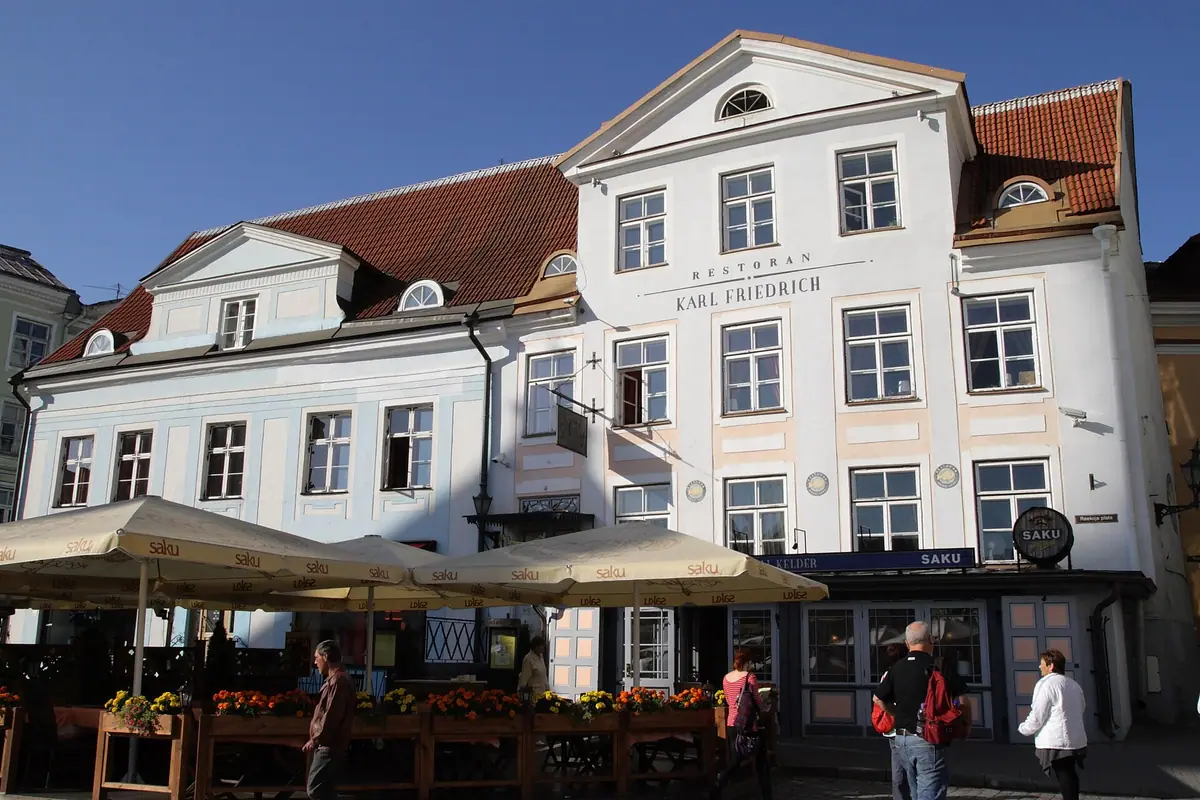
The capital does cobblestones better than almost anywhere on the Baltic, and the most atmospheric first hotel is inside the old town walls. Step from a converted merchant's house onto Raekoja Plats, the town hall square where the 15th-century town hall still anchors a lattice of alleys. Climb Toompea hill for Toompea Castle, the pink baroque parliament, and the onion-domed Alexander Nevsky Cathedral crowding the lane opposite.
Outside the gates, the mood shifts. Telliskivi Creative City fills a former railway complex with studios, street art and food halls, while neighbouring Kalamaja is all pastel wooden houses. The Rotermann Quarter, between the old town and the port, hides sharp design hotels with rooftop saunas — handy if you arrive by ferry from Helsinki or Stockholm.
A few practical notes: old town rooms are often small, ceilings low and staircases steep, and many buildings have no lift, so ask before booking a top-floor room. Climb St Olaf's Church tower for the classic rooftop view, walk a stretch of the Town Wall and Kiek in de Kök. Trams run east to Kadriorg Palace and the KUMU art museum.
Spa Towns and Seaside Stays: Pärnu and Haapsalu
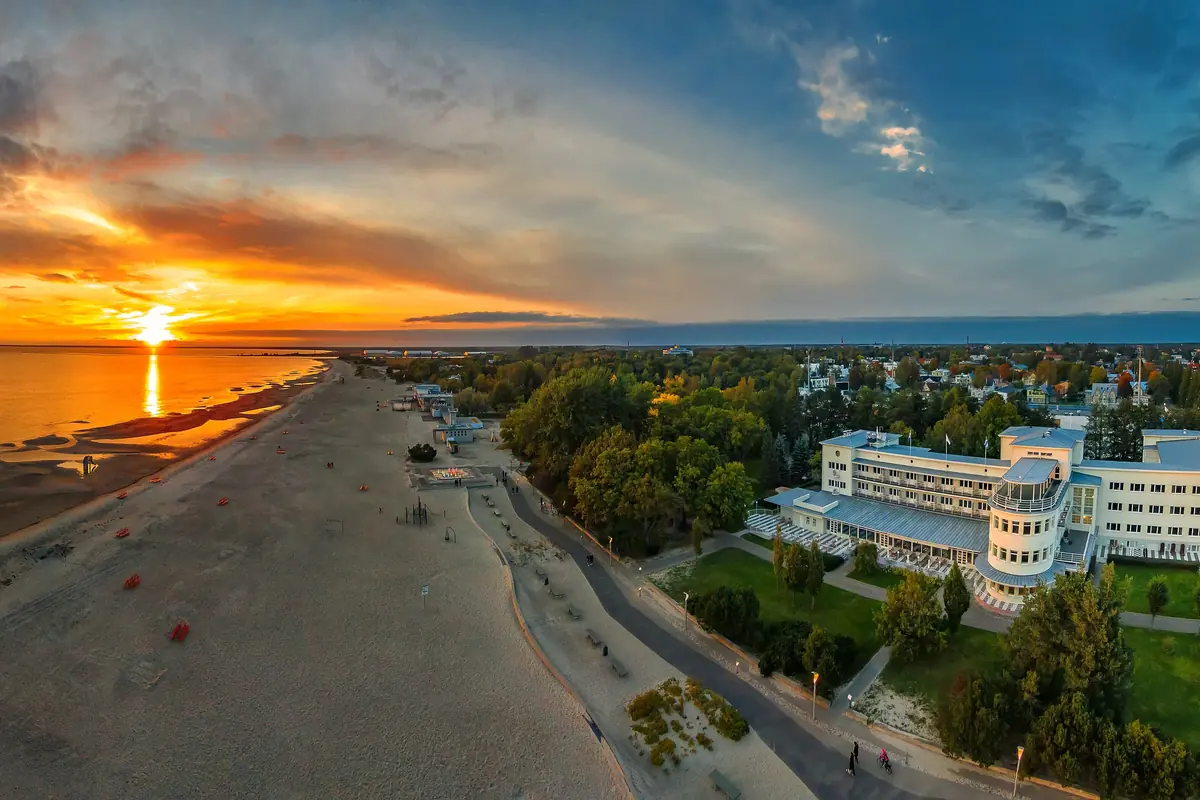
Pärnu is Estonia's summer capital, and its hotels lean heavily on the town's long bathing tradition. Curative mud has been used here since the early 19th century, and most seafront spa hotels keep a pool, sauna complex and treatment rooms under one roof — ideal in the shoulder months when the Baltic is bracing but the indoor pools are warm. Between treatments, walk the promenade, the Tallinn Gate, the Red Tower and the leafy Vallikäär park.
Two hours north-west, Haapsalu is quieter and slightly old-fashioned in the best way. The ruined episcopal castle with its moat and the extraordinarily long railway station platform are the two sights everyone photographs, and the shallow bay warms up faster than almost anywhere on the coast. Mud therapy is a local speciality, and the wooden villas along the seafront make a gentle base for a couple of nights.
Both towns are compact enough to park once and walk everywhere. Late June to August is peak season, so book sea-view rooms two to three months ahead; May and September bring lower rates, empty beaches and surprisingly mild weather.
Manor Hotels and Forest Lodges: Lahemaa, Soomaa and Otepää
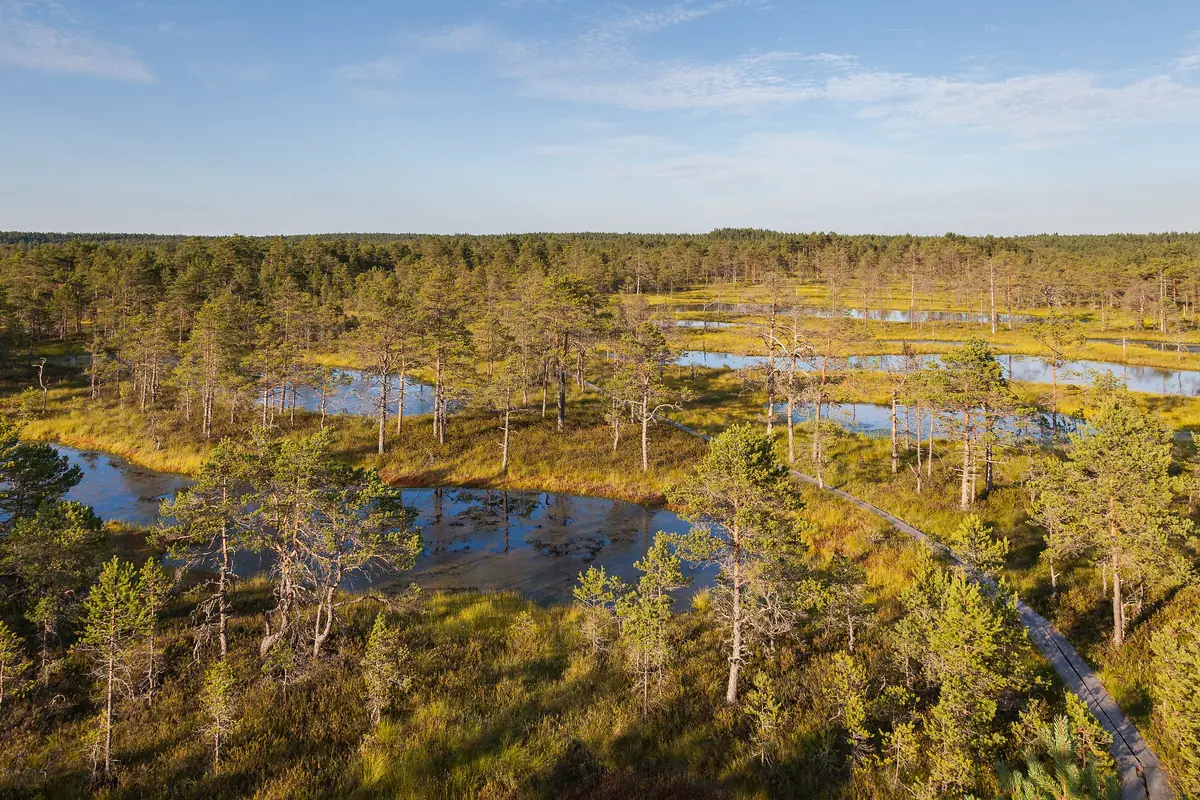
An hour east of Tallinn, Lahemaa National Park is Estonia's oldest national park and its finest collection of manor houses. Palmse, Sagadi and Vihula are grand Baltic-German estates with colonnaded fronts, landscaped parks and outbuildings now used as hotels and restaurants. Many rooms come with high ceilings, old tile stoves and a sauna in a separate wing. Around them lie the fishing village of Altja and the boardwalk across Viru bog.
Inland, the manor format repeats itself all over the country, from the lakeside estates near Otepää to smaller farmhouse guesthouses in Setomaa. South-west, Soomaa National Park has a genuine oddity: a fifth season, when spring meltwater floods meadows and roads, and canoes replace cars. Winter travellers head to Otepää for cross-country skiing and to Suur Munamägi, the highest point in the Baltic states.
Staying in a manor usually means breakfast included, quiet evenings and a car to reach the nearest town. Almost all have a sauna, and some offer the smoke-sauna ritual — hours of slow heat, birch whisks and cold plunges — which is best booked directly when you reserve your room.
Island Escapes: Saaremaa, Hiiumaa and Muhu
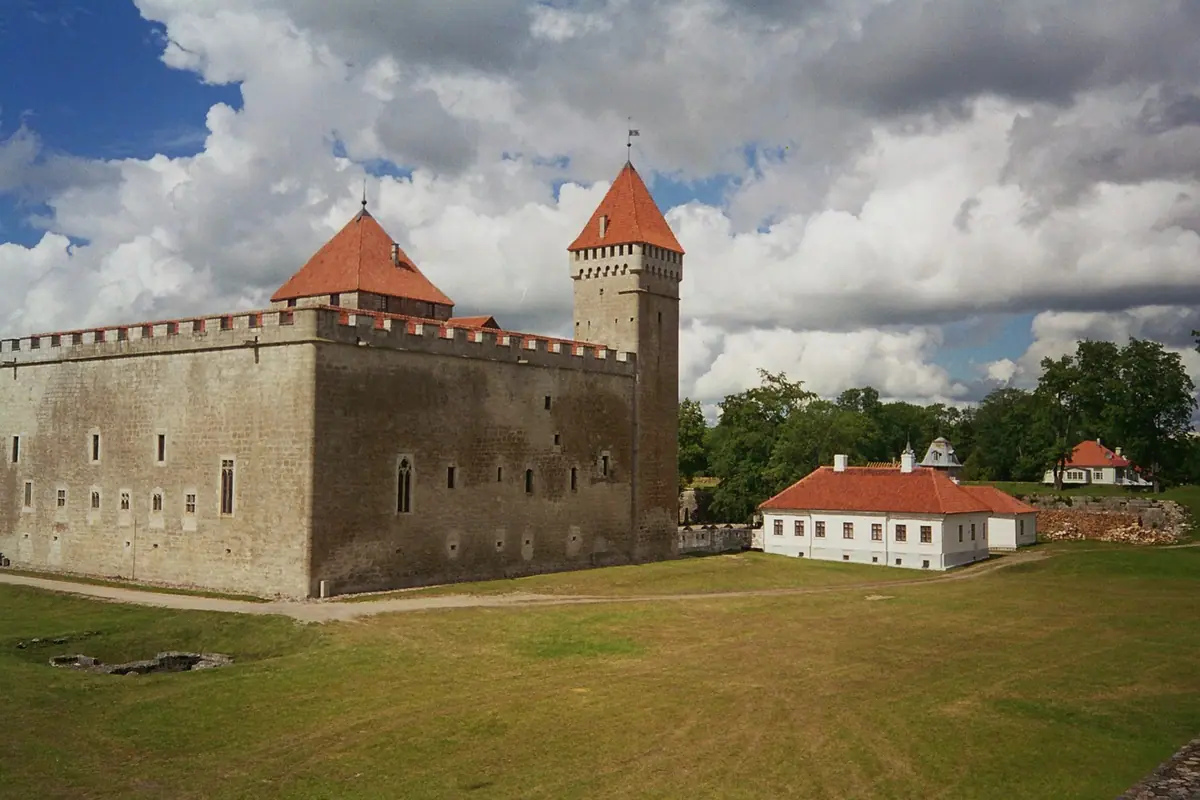
Estonia's islands feel a world away despite being an easy ferry hop from the mainland. Saaremaa is the largest, reached via a causeway through Muhu, and its capital Kuressaare is built around one of the best-preserved bishop's castles in northern Europe, complete with a water-filled moat and a park that doubles as a picnic spot. Elsewhere on the island, find the Kaali meteorite crater, the windmills at Angla, and quiet spa hotels in Kuressaare and on the coast.
Muhu itself is worth a night for thatched-roof villages and empty beaches. Further north, Hiiumaa is slower still: the Kõpu lighthouse has been lit for centuries, the Kärdla crater hides under farmland, and forests outnumber people. Guesthouses here are small, family-run and often insist on a two-night minimum in July.
Ferries run from Virtsu to Muhu and from Rohuküla to Hiiumaa, with cars welcome; buses connect Tallinn to Kuressaare and Kärdla year-round. Bring cash for tiny village shops, and expect distances to feel longer than they look on a map.
Tartu and Narva: University Squares and Border Castles
Tartu, Estonia's second city, is a university town and a natural second stop after Tallinn. Its Raekoja Plats is famous for the Kissing Students fountain, and the university founded in 1632 dominates the hill known as Toomemägi, where the ruined Tartu Cathedral now houses a library wing. Hotels cluster within a few minutes' walk of the square, mostly in restored townhouses or above cafés.
Across the river, the Estonian National Museum sits on the old Raadi airfield, one of the country's boldest modern buildings, while the science centre and the wooden Supilinn district fill out a day or two. Trains from Tallinn take around two and a quarter hours, which makes Tartu an easy car-free choice.
Far east, Narva is a different story: a largely rebuilt baroque town facing Russia across a river, with Hermann Castle on one bank and the Ivangorod fortress on the other. It rewards a night's stay rather than a day trip, and hotels here are inexpensive. On the way south, Viljandi's hilltop castle ruins and its summer folk festival are worth a detour.
When to Go, Getting Around and Booking Smart
June to August is the golden window: long white nights, outdoor festivals and everything open, including island ferries and manor restaurants. Midsummer, on 23 and 24 June, empties cities for country celebrations — book far ahead, as do the Song Festival years and December, when Raekoja Plats hosts one of Europe's prettiest Christmas markets. Winter is cold, snowy and cheap, with spa and sauna stays at their most appealing in Otepää and Pärnu.
Getting around is straightforward: Tallinn's airport is a short tram ride from the centre, trains reach Tartu and several regional towns, and buses go almost everywhere else, including the islands. Ferries link Tallinn with Helsinki and Stockholm, which is why port-side hotels fill up on summer weekends. A car is genuinely useful for Lahemaa, Soomaa, the manors and rural islands.
Book directly with small guesthouses and manors where possible — many hold back rooms and offer better cancellation terms than large portals. Expect mid-range doubles in Tallinn to sit well above rural prices in July; off-season rates in Tartu, Narva and the islands can be a third lower. English is widely spoken, especially by younger Estonians.
Practical Notes for Your Estonia Hotel Base
Most Estonian hotels are small, so amenities vary: air conditioning is rare in old buildings, lifts are rarer still, and breakfast is often a generous buffet of rye bread, porridge, herring and local cheese. Saunas are standard in spa hotels and manor stays and can usually be reserved by the hour. Pack layers and a waterproof shell whatever the month, and bring comfortable shoes for cobblestones.
A sensible itinerary is three nights in Tallinn, two in Tartu or Pärnu, and two on Saaremaa or in Lahemaa. That covers the medieval core, a spa town and a national park without a single long drive. If you have a week and a car, add Haapsalu and Hiiumaa for the quietest nights of the trip.
Frequently asked questions
Which Estonian city is best for a first hotel stay?
Tallinn, without question. Base yourself in or beside the old town for two to three nights, then move on to Pärnu for the seaside and spa, or Tartu for a university-town atmosphere. Staying outside the walls in Kalamaja or the Rotermann Quarter often means bigger rooms, easier parking and lower summer rates, with the old town still a short walk away.
Do hotels in Estonia have saunas?
Many do, and it is one of the pleasures of staying here. Spa hotels in Pärnu and Kuressaare have full sauna complexes with pools, manor hotels usually have a wood-fired sauna in a separate building, and some rural guesthouses offer the traditional smoke sauna. Reserve your slot when you book, especially at weekends.
What is the best time of year to visit Estonia?
June to August brings the best weather, long daylight, festivals and fully open islands, but also the highest prices. Late May and September offer mild weather and much quieter streets. December is magical for the Tallinn Christmas market and spa breaks, while January and February suit winter sports in Otepää and bargain hotel rates.
Do I need a car to explore Estonia?
Not for Tallinn, Tartu, Pärnu or Narva, which are all reachable by train or bus and walkable once you arrive. A car makes a real difference for Lahemaa National Park, the manor houses, Soomaa and the quieter corners of Saaremaa and Hiiumaa, where buses are infrequent and some sights sit far from any stop.
When should I book hotels in Estonia?
For July and August, and for Midsummer in late June, book two to three months ahead — island and old town rooms sell out first. Christmas market weekends in December also fill quickly. Outside those peaks, a few weeks' notice is usually plenty, and small guesthouses often release their best rates only a month or two in advance.
Sort the rest of your trip
Everything for Estonia, in one place
Transfer in Estonia
Private driver waiting on arrival — no queues, no surprises.
Book a transfer
Things to do in Estonia
Skip-the-line tickets, guided tours and standout experiences.
See experiences
Stay online in Estonia
Travel eSIM — data the moment you land, no roaming bills.
Get an eSIMMore guides in Estonia
Top Things to Do in Estonia: Medieval Tallinn, Baltic Islands and Bogs
Best Places to Visit in Estonia: Medieval Towns, Bogs and Baltic Islands
Estonia Food, Culture and Local Experiences: Tallinn, Bogs, Islands and Smoke Saunas
Best Time to Visit Estonia for Hotels: A Season-by-Season Guide