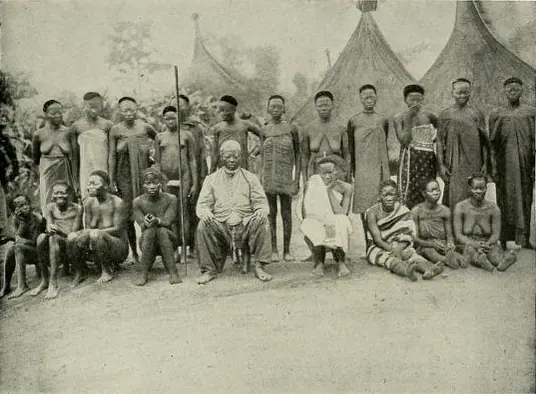
The Central African Republic is one of the last places on the continent where travel still feels genuinely exploratory: a landlocked sweep of rainforest, savanna and slow brown rivers where forest elephants gather in mineral clearings and waterfalls thunder for an audience of almost nobody. It is also a country where tourism infrastructure is thin and security is a real, shifting concern — which is exactly why the places worth seeing here feel so untouched. This guide covers the landmarks and experiences that matter most, from Bangui's riverfront to the clearings of the far southwest.
Bangui: The River Capital and Its Landmarks
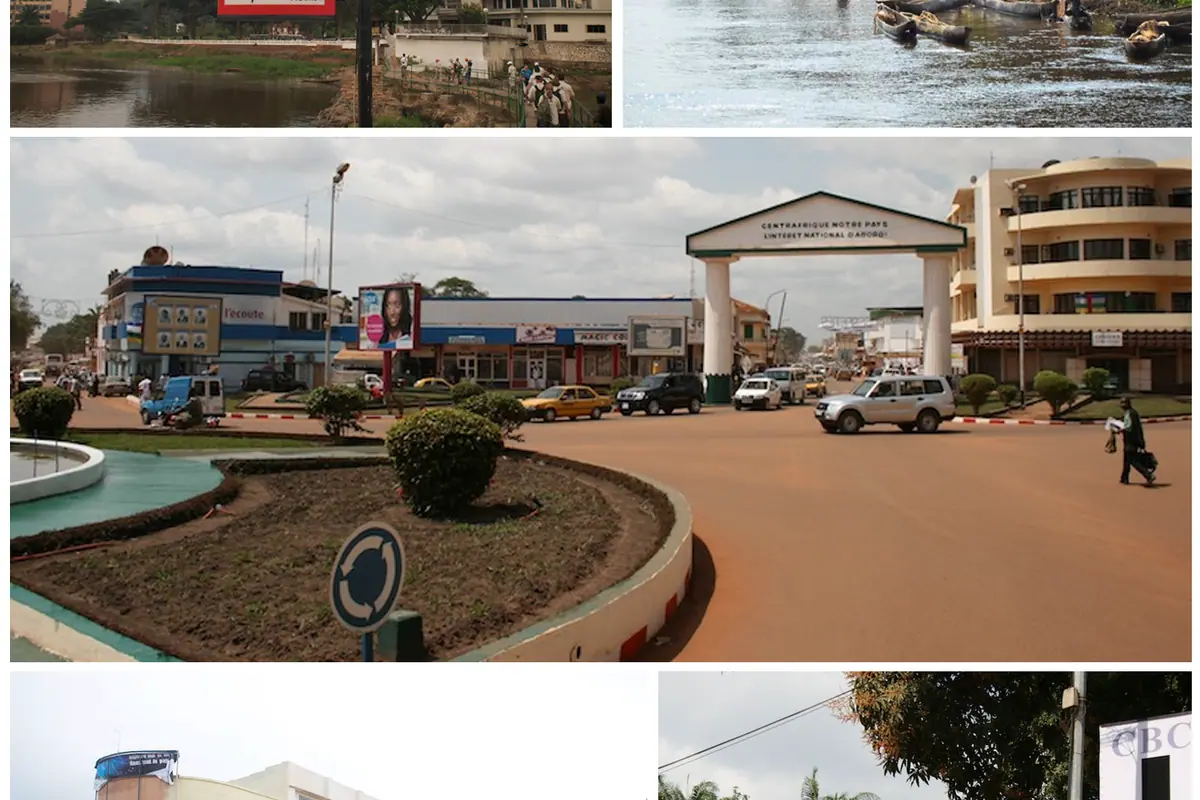
Bangui sits on the southern edge of the country, where the Oubangui River widens into a broad, slow border with the Democratic Republic of the Congo. The city unfolds across low hills of rusted roofs, mango trees and market noise, with the river as its spine: dugout pirogues, sand barges and small ferries cross all day, and the far bank is another country entirely. For a first-time visitor the rhythm to aim for is slow — a morning of landmarks, a long lunch, then the riverfront at sunset, when the light turns the water copper.
The most recognisable building in the country is the Cathédrale Notre-Dame de l'Immaculée Conception, a brick landmark whose towers were raised on the site of an older colonial fort; step inside for cool air and stained glass. A short walk away, the Boganda National Museum — named for the leader who steered the country toward independence — holds a compact but worthwhile collection of masks, drums, harps, hunting equipment and ethnographic objects from across the country's many ethnic groups. Opening hours are erratic, so go in the morning and be patient.
Then there is the Marché Central, where smoked river fish, cassava leaves, groundnuts, wax-print cloth and carved stools are stacked in tight aisles, and the PK5 quarter, the city's predominantly Muslim neighbourhood, with its own market and some of the best grilled meat in town. Add the wide open space of the Place de la République, a look at the colonial-era government buildings along the water, and a walk down to the rapids south of the centre. Two or three days is plenty for Bangui — the city is a base as much as a destination.
The Chutes de Boali and the Lobaye Forest
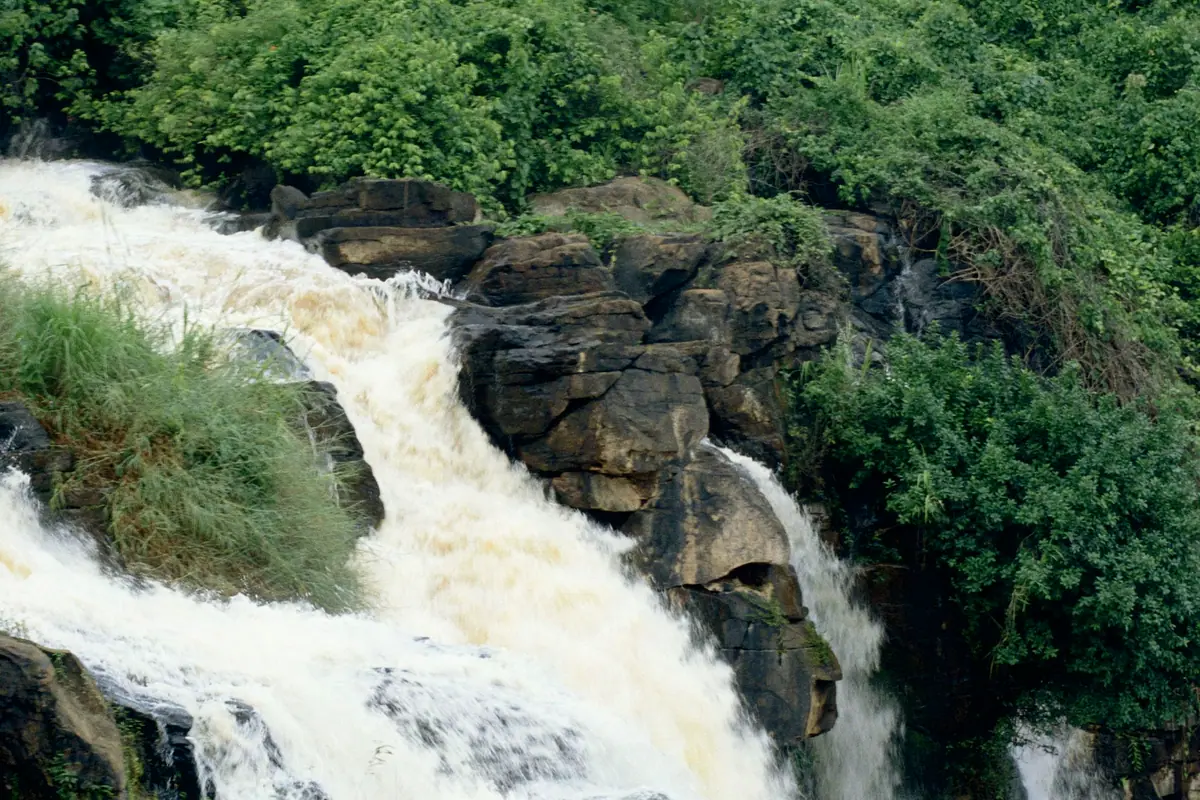
About 100 km northwest of the capital, the Mbali River pours over the Chutes de Boali, a broad curtain of water that drops into a fern-lined gorge. It is the country's single most famous natural landmark and an easy day trip from Bangui — roughly two hours by road, depending on the state of the track. A small hydroelectric dam sits upstream, and the town of Boali grew up around it. The falls are at their most thunderous at the end of the rainy season, from about September to November, when the river is full; in the dry months the flow softens and the paths down to the viewpoints and pools become far easier underfoot.
Facilities are basic: a couple of simple guesthouses, a picnic clearing and not much else, so bring water, food and cash, and expect to pay a small local fee at the entrance. Weekends draw families from the capital, while midweek you may have the gorge to yourself. Wear shoes with grip — the spray keeps the rocks slick — and allow half a day at the falls before heading back, or continue west for a night in the forest belt.
Southwest of Bangui, Lobaye prefecture is coffee and cocoa country: rolling green farmland around the town of Mbaïki, dotted with Aka forest communities who have lived in these woods for generations. Visits should be arranged through a local guide who agrees terms with the villages involved. What you get in return is a walk through the forest with expert trackers, a lesson in medicinal plants and honey gathering, polyphonic singing after dark, and a slow glide by dugout canoe on the Lobaye River. Handled respectfully, it is a rare chance to encounter a forest culture on its own terms rather than as a performance.
Dzanga-Sangha: Dzanga Bai, Bai Hokou and the Sangha River
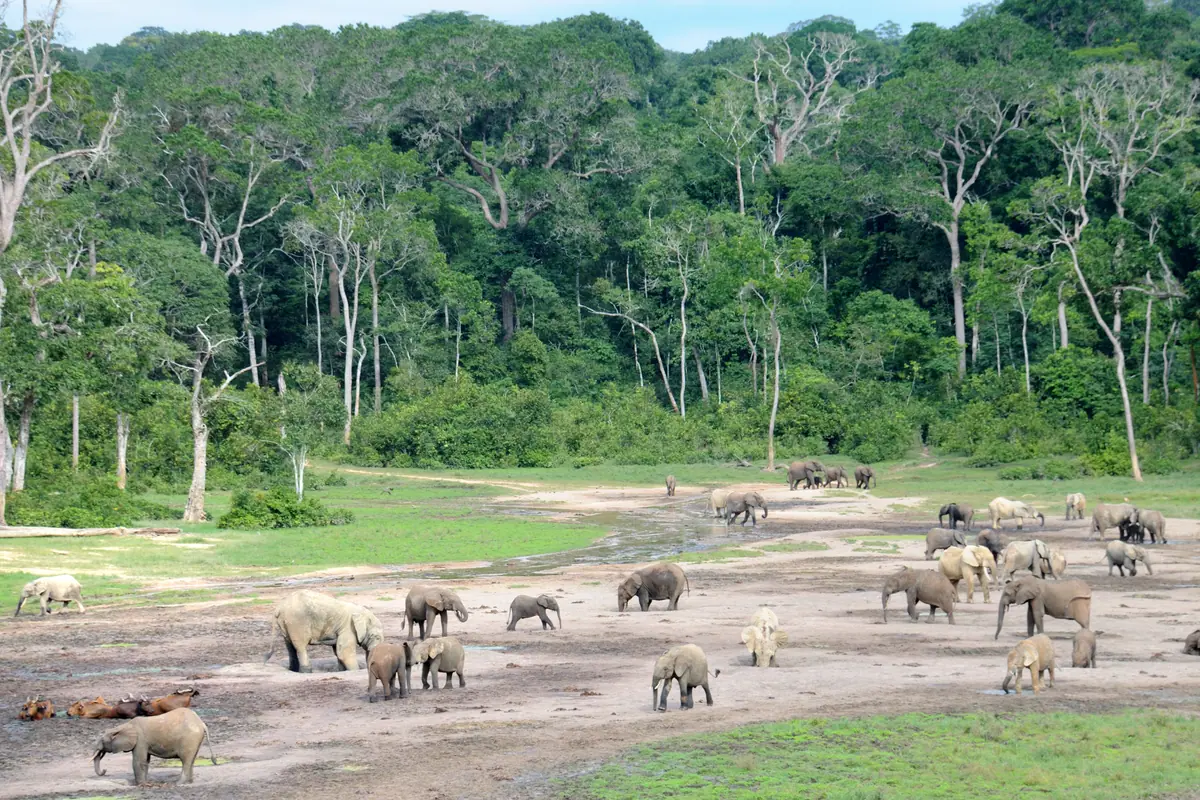
Tucked into the far southwestern corner of the country near the small town of Bayanga, the Dzanga-Sangha protected area is the Central African Republic's greatest wildlife destination and part of a cross-border rainforest with World Heritage status. Getting there is an expedition in itself: most visitors arrive on a light charter flight to the Bayanga airstrip, while others make a long, rough overland journey in from Cameroon. The reward is one of the densest concentrations of forest wildlife left anywhere in Africa, wrapped in cathedral-high trees and near-permanent humidity.
The centrepiece is Dzanga Bai, a sunlit clearing of mineral-rich water and sand that forest elephants visit in numbers seen almost nowhere else. On a good morning, dozens — occasionally well over a hundred — file out of the trees to drink and dig for salts, alongside bongo, buffalo, sitatunga and red river hogs, with hornbills and turacos overhead. Access is on foot with a guide, often watching from a raised platform at the edge of the clearing. The dry months from December to February deliver the clearest sightings and the firmest trails.
Nearby, Bai Hokou is where habituated western lowland gorillas are tracked: small groups, early starts, and two to four hours of quiet walking through vine tangles before you spend an hour with a family going about its day. The same forest offers tracking of agile mangabeys, walks with Aka trackers who read the undergrowth like a ledger, and pirogue trips on the Sangha River past giant hardwoods. Allow three to five nights; anything less and you are gambling with the weather, the roads and the animals' moods.
Bouar and the Western Megaliths
The west is a forest-savanna mosaic of coffee farms, timber towns and red-earth roads, and it holds one of the country's most intriguing archaeological landscapes. Around the crossroads town of Bouar, hundreds of sites are scattered with tazunu — monuments built from blocks of laterite, some standing several metres high, arranged in circles, lines and clusters. They are thought to be tied to funerary and ceremonial practices going back well over a thousand years, and their exact purpose is still argued over by the people who study them.
Seeing them properly means hiring a guide in Bouar who knows which clusters are reachable and which have been swallowed by vegetation or damaged by road building. There is no visitor centre, no ticket office and almost no signage: you arrive, you walk, and you have the stones to yourself. Bouar is a long day's drive from Bangui on the main western highway and has modest guesthouses, so most travellers break the journey. Pair the megaliths with the western towns of Berbérati and Carnot, both rough-edged and friendly, and with the logging routes that run south toward Nola. December to February is by far the most sensible season, before the rains turn the laterite to grease.
The Northern Savannas: Ndélé, Manovo-Gounda St Floris and Bamingui-Bangoran
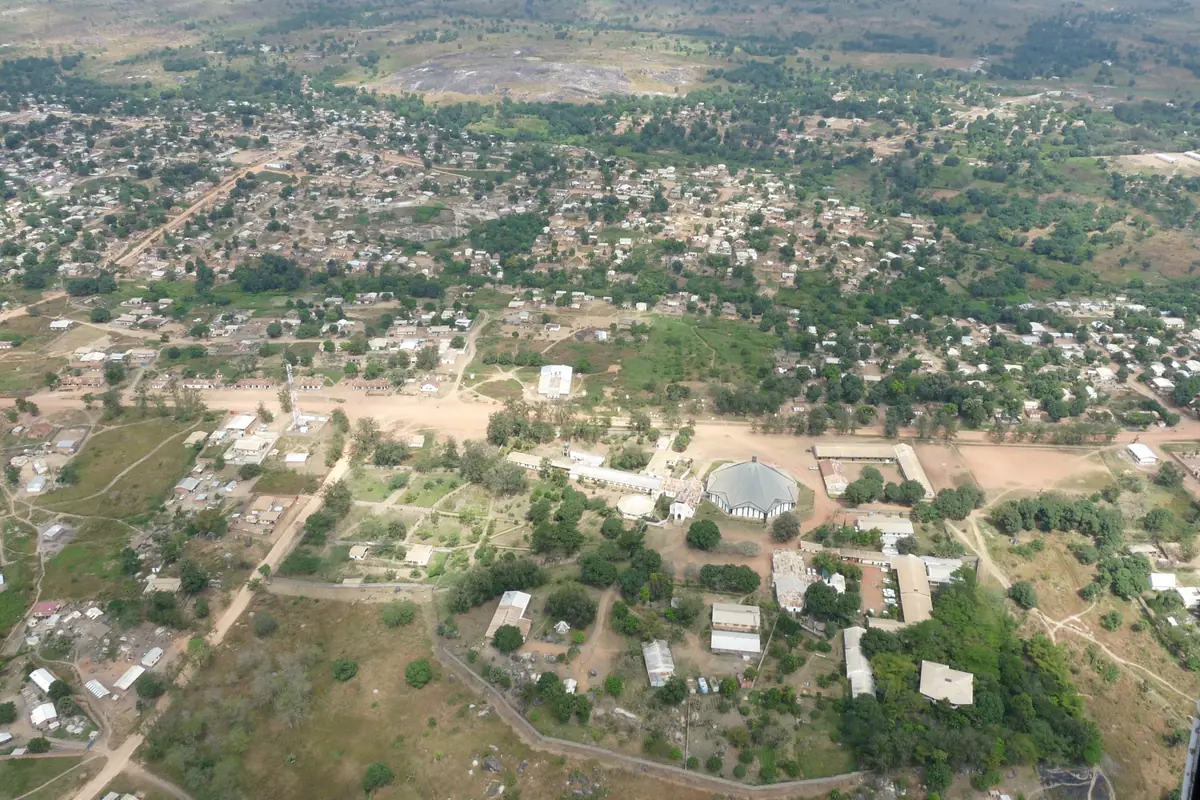
The north is a different country: dry-season savanna, sandstone massifs and floodplains that once carried enormous herds. Manovo-Gounda St Floris National Park, up near the Chadian border, was granted World Heritage status in the 1980s and later placed on the in-danger list after decades of poaching and lawlessness stripped it of much of its wildlife. Its neighbour, Bamingui-Bangoran National Park, protects similar country along the Bamingui River. In theory these are the country's great safari landscapes; in practice they are effectively closed to ordinary tourism because of insecurity, and any visit demands arrangements far beyond a normal traveller's reach.
One northern landmark is more tangible than the parks, even if it is not much easier to reach: Ndélé, a historic town whose palace of the Sultan of Dar al-Kuti is among the country's most important pieces of architecture. Built in the nineteenth century from mud brick, with a decorated facade and a maze of interior courtyards, it belonged to the sultanate that grew rich on ivory and the slave trade before colonial conquest. The town also has a busy market and one of the oldest mosques in the region. It sits in a fragile security environment, so go only with current local advice and a trusted guide.
Further east, the Chinko reserve covers a vast sweep of savanna and forest and is the focus of long-term conservation work rather than tourism. The honest summary for the north and east is that they are places for the future, not for a first trip.
When to Go, Getting Around and Staying Safe
The driest and most comfortable months are December to February, when nights are cool, roads are at their best and wildlife concentrates around water — the prime window for Dzanga Bai and for any long overland travel. From May to October the rains arrive: torrential afternoon storms, swollen rivers and roads that can turn to soup, though the waterfalls are at their most spectacular and the forest at its greenest. The north is drier year-round than the forested southwest, and July often brings a short, useful dry spell in the south.
Bangui's airport is the main gateway, served by a small number of regional and long-haul carriers. Most nationalities need a visa arranged in advance, and a yellow fever vaccination certificate is required on arrival. Do not assume you can simply drive: many roads are unpaved and in poor condition, so independent travellers usually hire a 4x4 with a driver, and long internal hops are often made by light charter aircraft. Pirogues are the practical transport on the Oubangui and Sangha rivers. The currency is the Central African CFA franc, cash is essential outside the capital, French and Sango are the working languages, and mobile coverage is patchy at best.
Safety is the deciding factor in any trip here and should not be glossed over. Much of the country — particularly the north, the east and parts of the west — is affected by armed groups, roadblocks and banditry, and many governments advise against all travel or all but essential travel. Tourism infrastructure is minimal, medical facilities are limited, and conditions can change quickly. If you go, go with a reputable local operator, fly where you can instead of driving long distances, keep plans flexible, avoid travelling after dark, and check the current situation before you commit.
Frequently asked questions
What is the single must-see landmark in the Central African Republic?
For scenery it is the Chutes de Boali, a wide waterfall about 100 km northwest of Bangui and the country's most famous natural sight. For wildlife it is Dzanga Bai in the Dzanga-Sangha protected area, where forest elephants gather in extraordinary numbers. In the capital, the Cathédrale Notre-Dame de l'Immaculée Conception and the Boganda National Museum are the landmarks most visitors seek out.
Is it safe to travel in the Central African Republic?
Much of the country is not, and many governments advise against all travel or all but essential travel because of armed groups, roadblocks and banditry, especially in the north, east and parts of the west. The realistic options are the capital, the Boali and Lobaye areas near it, and the far southwestern rainforest, all with a reputable local operator. Check current conditions before booking, avoid long road journeys where a flight is possible, and never travel after dark.
How do you reach Dzanga-Sangha and how long should you stay?
Most visitors fly by light charter to the airstrip at Bayanga, the gateway town, or travel overland from Cameroon via Nola — a long, rough journey that is best done in the dry season. Plan on three to five nights to allow for gorilla tracking at Bai Hokou, a dawn visit to Dzanga Bai, walks with Aka trackers and a pirogue trip on the Sangha River. Everything should be arranged in advance through a local operator, including permits and guides.
What is the best time of year to visit?
December to February is the driest, coolest and most practical window, with the best road conditions and the best wildlife viewing at Dzanga Bai. September to November is when the Chutes de Boali run at full power. The main rainy season runs from May to October, bringing mud, delayed flights and spectacular green landscapes, while the northern savannas are drier than the forested south for most of the year.
Do I need a visa and vaccinations?
Most nationalities need a visa obtained in advance from an embassy or consulate, and a yellow fever vaccination certificate is required on arrival. Malaria prophylaxis is strongly recommended, along with routine vaccinations, and travel insurance that includes medical evacuation is essential given the limited health facilities outside Bangui. Carry cash in Central African CFA francs, since card payments are rare and ATMs are scarce.
Plan it — experiences in Central African Republic
Live search, booked directly with trusted providers.
Sort the rest of your trip
Everything for Central African Republic, in one place
Stay in Central African Republic
Hotels, guesthouses and apartments — compared in one search.
Search hotels
Transfer in Central African Republic
Private driver waiting on arrival — no queues, no surprises.
Book a transfer
Stay online in Central African Republic
Travel eSIM — data the moment you land, no roaming bills.
Get an eSIMMore guides in Central African Republic
Hotels in the Central African Republic: Where to Stay and What to See
Central African Republic in One Week: A Fly-In Itinerary from Bangui to Dzanga-Sangha
Best Places to Visit in the Central African Republic: Forest Elephants, Falls and Forgotten Forests