Landlocked at the very heart of Africa, the Central African Republic is a country of two rivers and two worlds: the Congo Basin rainforest of the southwest and the wooded savanna that rolls north towards the Sahel. It is not an easy place to travel, and that is precisely why the spots that remain reachable feel so extraordinary — a forest clearing where elephants gather in the half-light, a cathedral above the Oubangui, and waterfalls that almost no outsider has ever seen. This is a guide to the places genuinely worth the effort, with honest notes on seasons, access and what to expect.
A Land of Two Rivers and Two Forests
The Central African Republic is roughly the size of France and Spain combined, yet it holds barely a scattering of paved roads. Its southern border is drawn by the Oubangui River, which slides past the capital and separates the country from the Democratic Republic of the Congo; the Sangha River forms the southwestern edge, slipping through rainforest so dense it still hides uncontacted wildlife and unmapped clearings. Between these two waterways, the land lifts gently from rainforest into gallery forest, then into wooded savanna, and finally into dry Sahelian scrub in the far northeast.
That north–south gradient is what makes the country unusual. Within a single trip you can track lowland gorillas in dripping forest, watch elephants gather at a mineral clearing, and stand on a granite outcrop above a cathedral, all in a nation where tourists are still so rare that a visitor is an event. Travel here is slow and unpredictable: distances that look trivial on a map can take a full day, and the rainy months can close roads entirely.
Plan on at least ten days to two weeks to see more than one region, and accept that a single-region trip — most commonly the southwest — is often the wiser choice. French is the official language and Sango the lingua franca; English is uncommon outside the capital. Bring cash in Central African francs, because card acceptance is rare and ATMs that work with foreign cards are rarer still.
Dzanga-Sangha: Dzanga Bai and the Gorillas of Bai Hokou
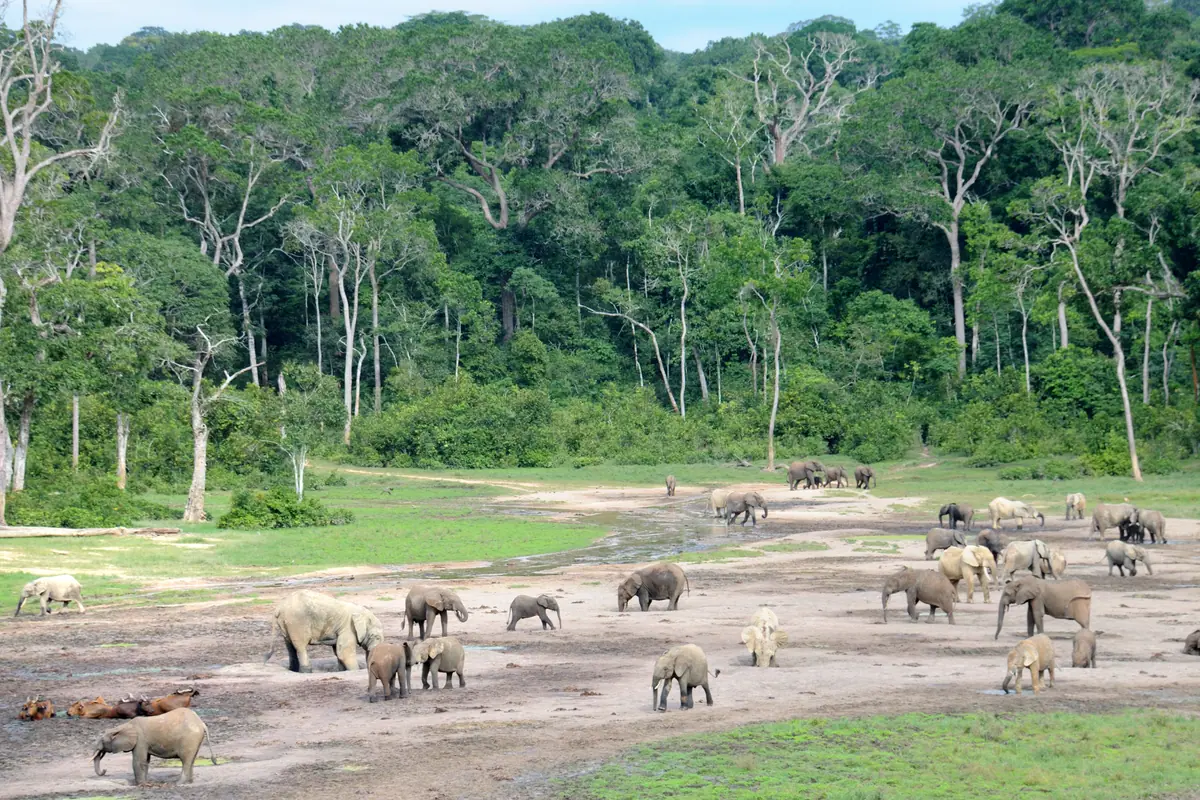
This is the Central African Republic's flagship destination and the reason many travellers endure the journey at all. In the far southwest, where the country meets Cameroon and the Republic of the Congo, the Dzanga-Sangha Special Reserve and the adjoining Dzanga-Ndoki National Park protect a block of Congo Basin rainforest that forms part of a tri-national protected landscape. The centre of it all is Dzanga Bai, a vast natural clearing in the forest where minerals well up through the soil and forest elephants come to drink, dig and socialise. From a raised platform on the edge of the bai you can watch them arrive out of the green in near silence — sometimes in ones and twos, sometimes in a slow procession of dozens, calves tucked between the legs of their mothers.
A second, very different experience waits at Bai Hokou, where a family of western lowland gorillas has been habituated to human presence. Trekking here means setting out early with trackers who follow yesterday's nest sites, cutting through vines and wading across streams until the forest suddenly opens and the silverback is sitting a few metres away, entirely unbothered. Sightings are never guaranteed, and the walk can take anywhere from one hour to five, so a reasonable level of fitness and sturdy boots matter more than any piece of gear.
The standard base for the area is the small settlement of Bayanga, reached either by a light aircraft hop from the capital or by a long, punishing road journey via Berbérati and Nola. December to February is the driest and most comfortable window, with firmer roads and easier trails; the wetter months bring lusher forest and fewer visitors but also leeches, mud and the risk of a washout. Allow three to four nights minimum — two for the bai, one for the gorillas, and a spare day for the forest walks and the Sangha River itself, where you can drift past sandbanks and listen for hornbills.
Bangui: Cathedrals, Markets and the Oubangui Waterfront
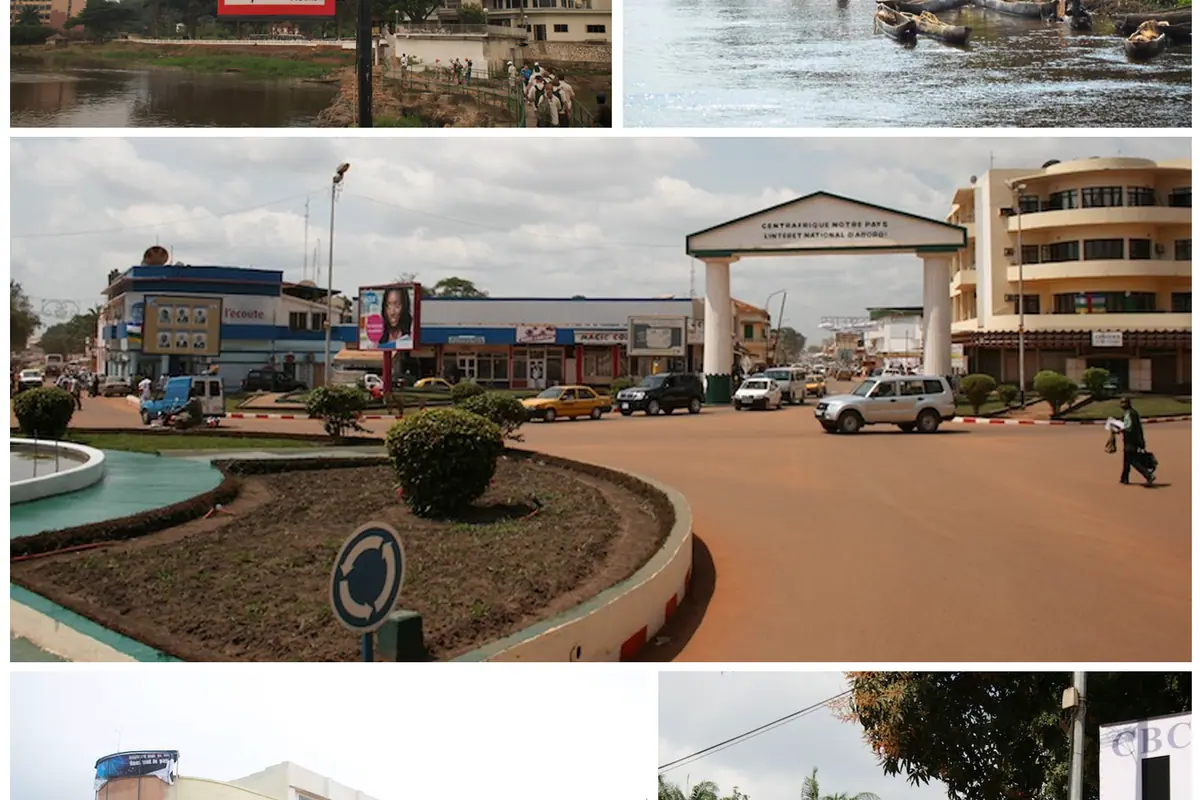
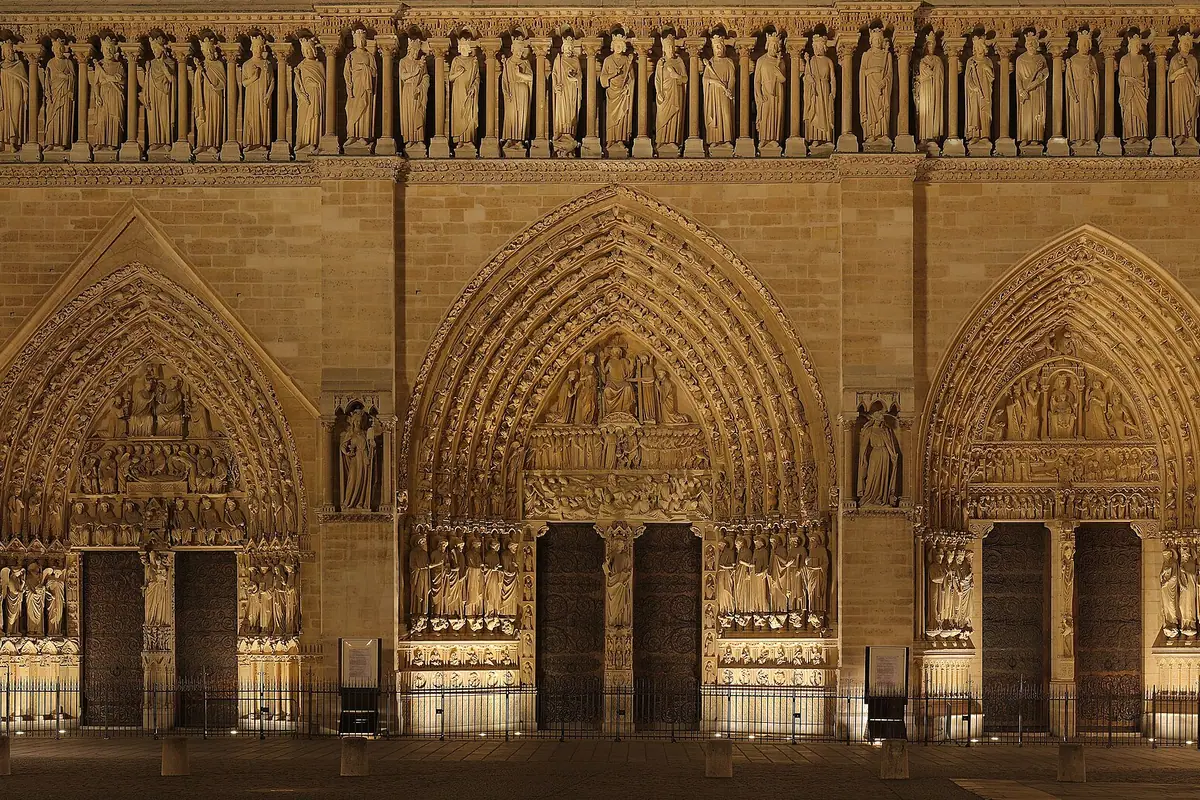
Almost every journey into the country begins in Bangui, a river port founded as a colonial post in the late nineteenth century and still the only real city. Its landmark is the Cathédrale Notre-Dame de l'Immaculée Conception, a red-brick building with twin towers that dominates the skyline above the river and remains the spiritual anchor of the capital. A short walk away, the Barthélemy Boganda National Museum holds a modest but fascinating collection of masks, musical instruments, woven cloth and hunting implements from across the country's many ethnic groups — the best single introduction to Central African material culture you will find anywhere.
The Marché Central is the city's loudest, most colourful place, a maze of stalls selling smoked fish from the Oubangui, palm oil, cassava, bright printed fabric and second-hand clothing. Nearby, Avenue des Martyrs and the Place de la République give a sense of the capital's broad, tree-lined bones, though the Presidential Palace and government buildings are off-limits to casual photography and should be admired from a distance or not at all.
The real pleasure of Bangui, though, is the river. Walk or drive to the Oubangui waterfront in the late afternoon, when fishermen pole their pirogues back against the current and the far bank — the Democratic Republic of the Congo — turns gold in the low sun. Half a day is enough for the cathedral, the museum and the market; give yourself one full day in the city before heading out, and treat it as an acclimatisation stop rather than the main event.
Chutes de Boali and the Lobaye Rainforest
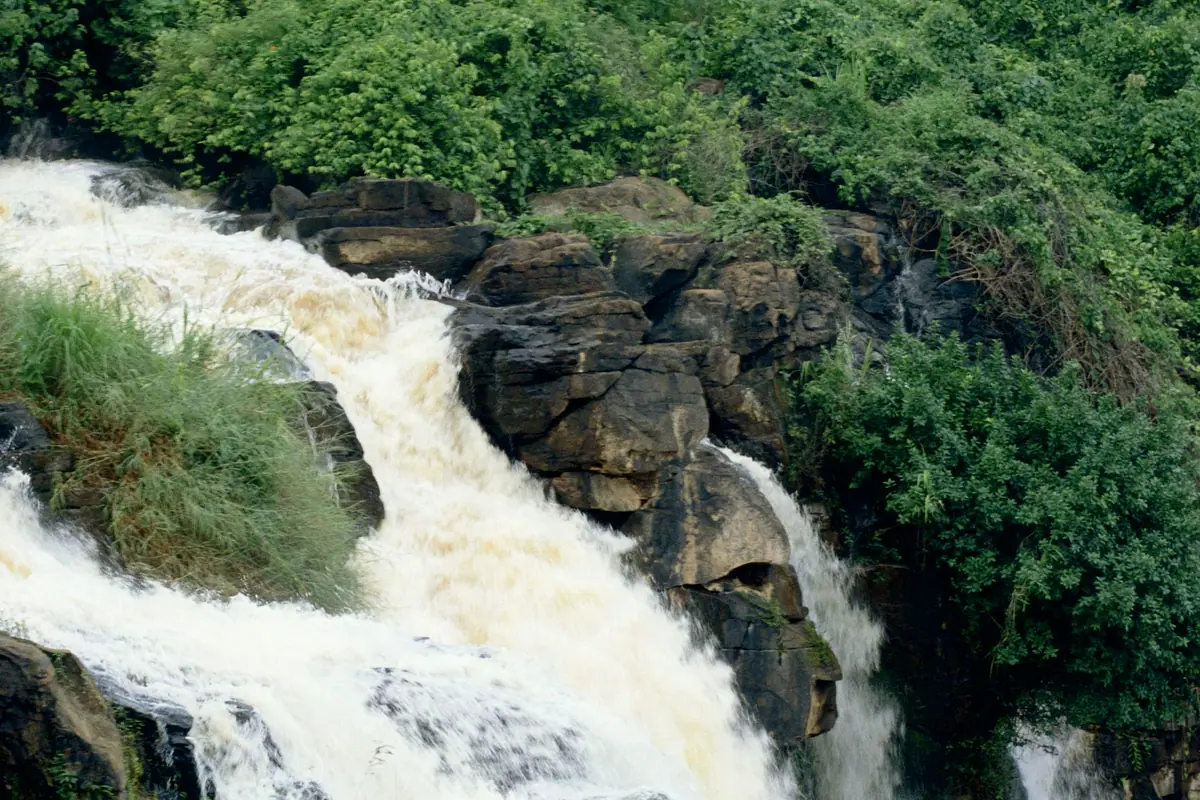
About two hours' drive northwest of the capital, the Chutes de Boali are the country's most accessible natural spectacle: a wide curtain of water dropping roughly fifty metres over a rocky lip, split into two main falls by a central outcrop, with spray hanging in the air and a permanent rainbow on sunny afternoons. A small hydroelectric station sits alongside, and the viewing paths let you get close enough to feel the ground shake. It is an easy day trip from Bangui, though staying overnight nearby turns it into something better — the falls at dawn, before anyone else arrives, are worth the extra night.
Push further west and south into Lobaye prefecture and the landscape changes to thick, humid rainforest and palm-oil country. The town of Mbaïki is the gateway, and the surrounding villages are home to Aka communities whose knowledge of the forest — medicinal plants, honey gathering, tracking — is genuinely extraordinary. Visits should be arranged through locally run community tourism initiatives rather than turned up on unannounced, and any interaction should be on the community's terms, with fair payment agreed in advance.
Finish at Zinga, where the Lobaye River meets the Oubangui in a broad confluence of sandbanks and slow water. It is a peaceful, unhurried place to swim, watch river traffic and eat grilled fish, and it makes a natural full loop with Boali before returning to the capital.
Bouar's Megaliths and the Western Highlands
In the far west, near the town of Bouar, hundreds of carved stone monuments stand in the grass — the Tazunu megaliths, upright pillars and shaped blocks arranged in groups, some of them marking what appear to be ancient burial sites. Their origins are still debated and they remain one of the least-visited archaeological landscapes in Africa, which is exactly what makes standing among them so strange and memorable. The monuments are scattered over a wide area, so a local guide is essential both to find the best clusters and to explain what is known about them.
Bouar itself is a busy, workaday trading town on the Cameroon border road, with a lively market and a cool, highland climate that comes as a relief after the humidity of the south. It makes a comfortable base for exploring the surrounding granite country, and the nearby uplands around Mount Ngaoui, the country's highest point at just over 1,400 metres, offer walking through open wooded hills where you are far more likely to meet a farmer than another traveller.
Continue south to Berbérati, the country's timber town, set in rolling green country of coffee smallholdings and logging tracks, and on to Nola at the edge of the rainforest. The route from Bangui through Bouar, Berbérati and Nola is the classic overland corridor to Dzanga-Sangha — best attempted in the dry months from December to February, when the laterite roads hold firm.
The Wild Northeast: Manovo-Gounda St Floris, Bamingui-Bangoran and Ndélé
The northern savannas hold the country's greatest wildernesses and its most complicated ones. Manovo-Gounda St Floris National Park, a vast sweep of grassland, woodland and floodplain along the Chad border, was inscribed as a World Heritage site for its wildlife — elephants, buffalo, antelope and a rich bird fauna — and has spent decades on the danger list because of poaching and unrest. Bamingui-Bangoran National Park lies further south and east, and the remote Chinko reserve occupies a huge, little-studied block of savanna and forest in the far east. These are extraordinary ecosystems, but they are not leisure destinations.
The historic town of Ndélé, once the seat of a powerful nineteenth-century sultanate, retains the earth-walled fortifications and old quarter that made it a regional capital of trade and Islam. It is a genuinely evocative place, and the surrounding Bamingui-Bangoran landscape of termite mounds, baobabs and seasonal rivers is classic African savanna. Reaching it, however, means days of rough driving in a region with minimal services and significant security concerns.
Be clear-eyed about this: most governments advise against all travel to large parts of the north and east, including the national parks and the border zones with Chad and Sudan. These landscapes are described here because they are remarkable, not because they are advisable. If your aim is to see Central African wildlife, put your energy into Dzanga-Sangha; if your aim is to see this country at all, go with an experienced local operator, keep your plans flexible, and check current conditions before you commit.
Frequently asked questions
When is the best time to visit the Central African Republic?
The dry season from roughly November to March is the most comfortable and practical window, and December to February is the sweet spot. Roads in the southwest and west hold firm, forest trails at Dzanga-Sangha are drier and the evenings are cooler. From around May to October the rains make laterite roads treacherous and can cut off rural areas entirely, though travel in the far southwest is possible for much of the year with patience.
Is the Central African Republic safe for tourists?
Much of the country, particularly the north, east and border regions, is subject to serious security problems, and most governments advise against all travel to those areas. The capital Bangui and the southwestern wildlife zone around Dzanga-Sangha have historically been the most visited parts, but conditions fluctuate. Anyone considering a trip should check current advisories, travel only with a well-established local operator, keep plans flexible and avoid overland travel after dark.
How do you get to Dzanga-Sangha and Dzanga Bai?
Almost all journeys start with an international flight into Bangui. From there you either take a light aircraft to the airstrip near Bayanga, which takes a couple of hours, or make the long overland run via Bouar, Berbérati and Nola, which can take two or more days in the dry season and considerably longer in the wet. Permits and park fees are arranged through the operators who run the forest camps, so the practical route is to book a package that includes transport, guides and accommodation.
How much time do you need in the Central African Republic?
For a single-region wildlife trip, allow four to five days on the ground in Dzanga-Sangha plus a day in Bangui on each side, which means around ten days door to door. If you want to combine the capital, Boali Falls, the Lobaye forest and the west, budget two to three weeks. Overland travel is slow and delays are normal, so build in slack rather than scheduling tightly.
What should not be missed on a first trip?
The clear-cut highlights are Dzanga Bai, where forest elephants gather at the mineral clearing, and Bai Hokou for gorilla tracking. In and around the capital, see the Cathédrale Notre-Dame de l'Immaculée Conception, the Barthélemy Boganda National Museum and the Marché Central, then take the day trip to the Chutes de Boali. If time and conditions allow, the Tazunu megaliths near Bouar and the riverside at Zinga round out a genuinely distinctive itinerary.
Plan it — experiences in Central African Republic
Live search, booked directly with trusted providers.
Sort the rest of your trip
Everything for Central African Republic, in one place
Stay in Central African Republic
Hotels, guesthouses and apartments — compared in one search.
Search hotels
Transfer in Central African Republic
Private driver waiting on arrival — no queues, no surprises.
Book a transfer
Stay online in Central African Republic
Travel eSIM — data the moment you land, no roaming bills.
Get an eSIM