The Central African Republic is one of the least-visited places on earth, a country where the Oubangui River slides past the capital at dusk, elephants gather by the hundred in a forest clearing, and dinner is a shared bowl of peanut-braised meat eaten with your right hand. It rewards patience, curiosity and a willingness to travel on local terms rather than on a polished tourist circuit.
Bangui: River Light, Boganda Museum and the Pulse of the Capital
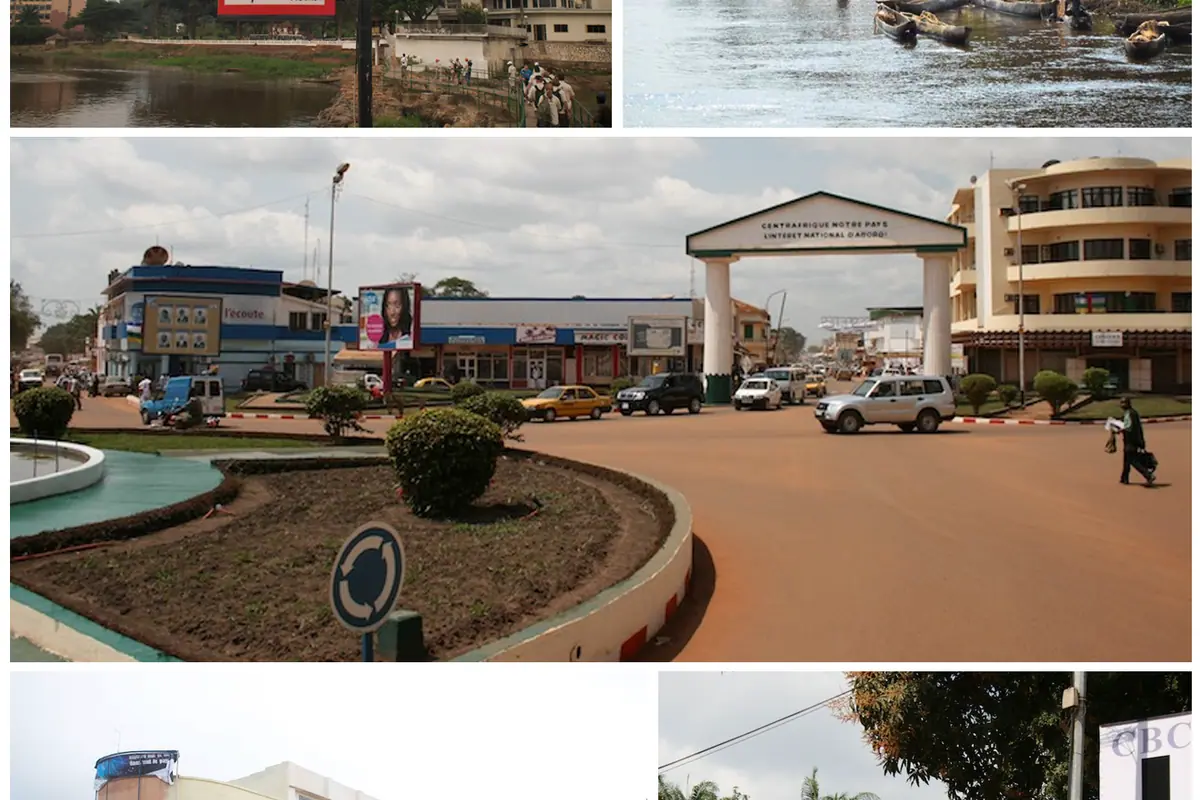
Most journeys begin in Bangui, a low-rise capital curled around the western bank of the Oubangui River, which separates the country from the Democratic Republic of the Congo. The river is the city's spine and its social life: in the late afternoon, pirogues drift downstream, fishermen set nets from dugout canoes, and families gather at the water's edge to watch the sun drop behind the far bank. The Cathédrale Notre-Dame de l'Immaculée Conception, with its weathered twin towers and red-brick façade, stands as one of the city's most recognisable landmarks, and the nearby colonial-era grid around Place de la République still holds the unhurried rhythm of a provincial town.
The Barthélemy Boganda National Museum is small but genuinely worth an hour, with ethnological collections that explain the country's ethnic mosaic — Gbaya, Banda, Yakoma, Sara and others — through masks, musical instruments, raffia textiles and hunting tools. From there, wander east into PK5, the capital's commercial heart, where traders whose families came from Chad, Sudan and Nigeria sell fabric, spices, amulets and hardware across a maze of stalls. Allow half a day for the centre; a full day if you add the riverbank fish grills at dusk.
Bangui is not a city of monuments so much as of encounters. Shared taxis and motorcycle taxis stitch it together, church choirs rehearse in the evenings, and every conversation is an invitation to slow down. Learn two words of Sango — "balaô" for hello and "bara" for thank you — and doors open faster than any guidebook can manage.
Chutes de Boali and the Megaliths of Bouar: Sacred Landscapes Beyond the Capital
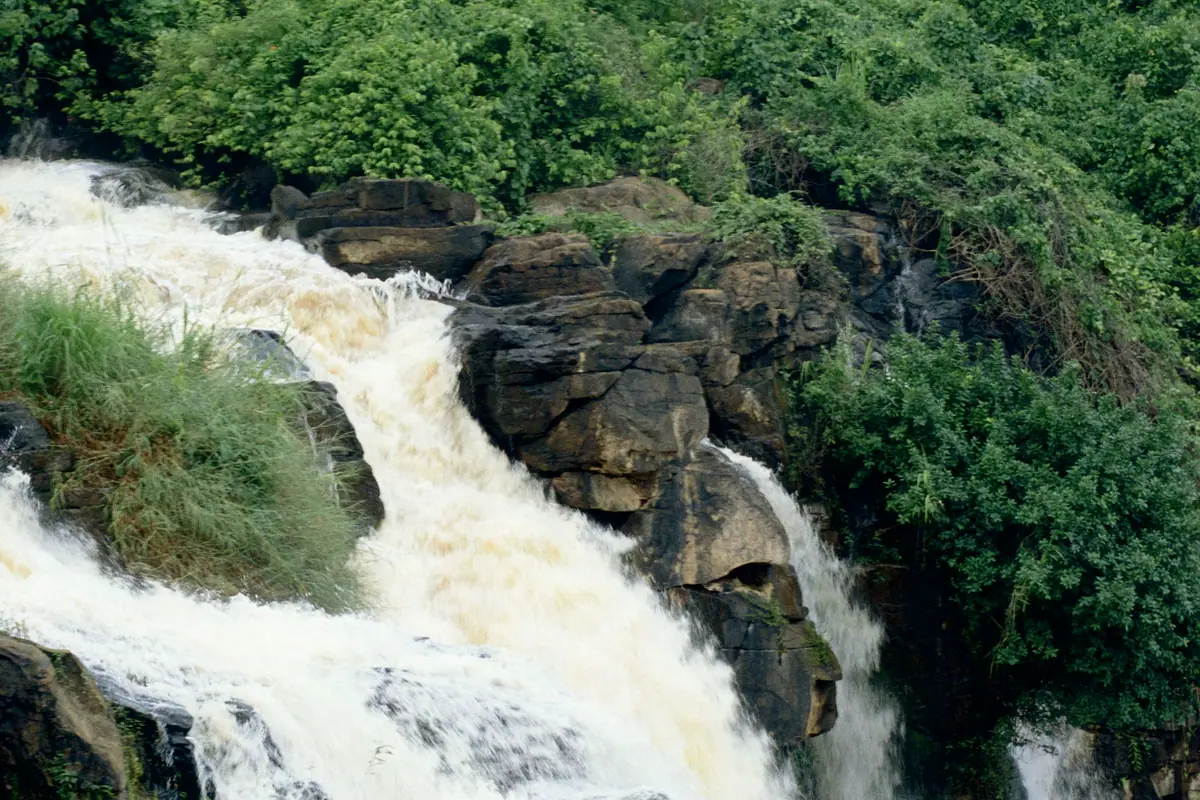
About two hours north-west of Bangui, the Chutes de Boali thunders over a broad ledge of rock on the Mbali River, throwing spray across the surrounding forest. The falls are the country's most famous natural landmark and are best seen at the tail end of the rains, roughly October to November, when the volume is at its peak and the vegetation is still saturated green. A footpath leads down to viewpoints beside the cascade, and the site's proximity to the capital makes it the easiest genuinely spectacular day trip in the country. Bring sturdy shoes — the rocks are slick — and a change of clothes, because the mist soaks everything within twenty metres.
Further west, near the town of Bouar in Nana-Mambéré prefecture, the so-called tata of Bouar are among the most enigmatic archaeological sites in Africa: hundreds of shaped laterite pillars arranged in circles, some standing more than two metres tall, scattered across the savannah in clusters that suggest ceremonial or funerary use dating back well over a thousand years. They sit on the tentative list for World Heritage recognition, and walking between them — usually alone, with only grass and sky around you — is a reminder of how deep this land's history runs beneath its present troubles.
Travellers heading towards Cameroon often pass the Chutes de Lancrenon in the far west, a series of rapids and cascades set in gallery forest near the border. Neither Boali nor Bouar has much in the way of visitor infrastructure, so plan on a long day from Bangui with a private vehicle, or overnight in a simple local guesthouse and take the road slowly.
Dzanga-Sangha: Dzanga Bai, Gorillas and Aka Forest Culture
The south-western corner of the country, around the village of Bayanga, holds what many consider the richest wildlife experience in Central Africa. The Dzanga-Sangha Special Reserve and the adjoining Dzanga-Ndoki National Park form part of a tri-national protected forest, recognised as a World Heritage site, where the Congo Basin still functions as it always has. Reaching Bayanga usually means a long road journey in the dry season or a slow, beautiful passage up the Sangha River by motorised pirogue, with hornbills overhead and fishermen's camps on the banks.
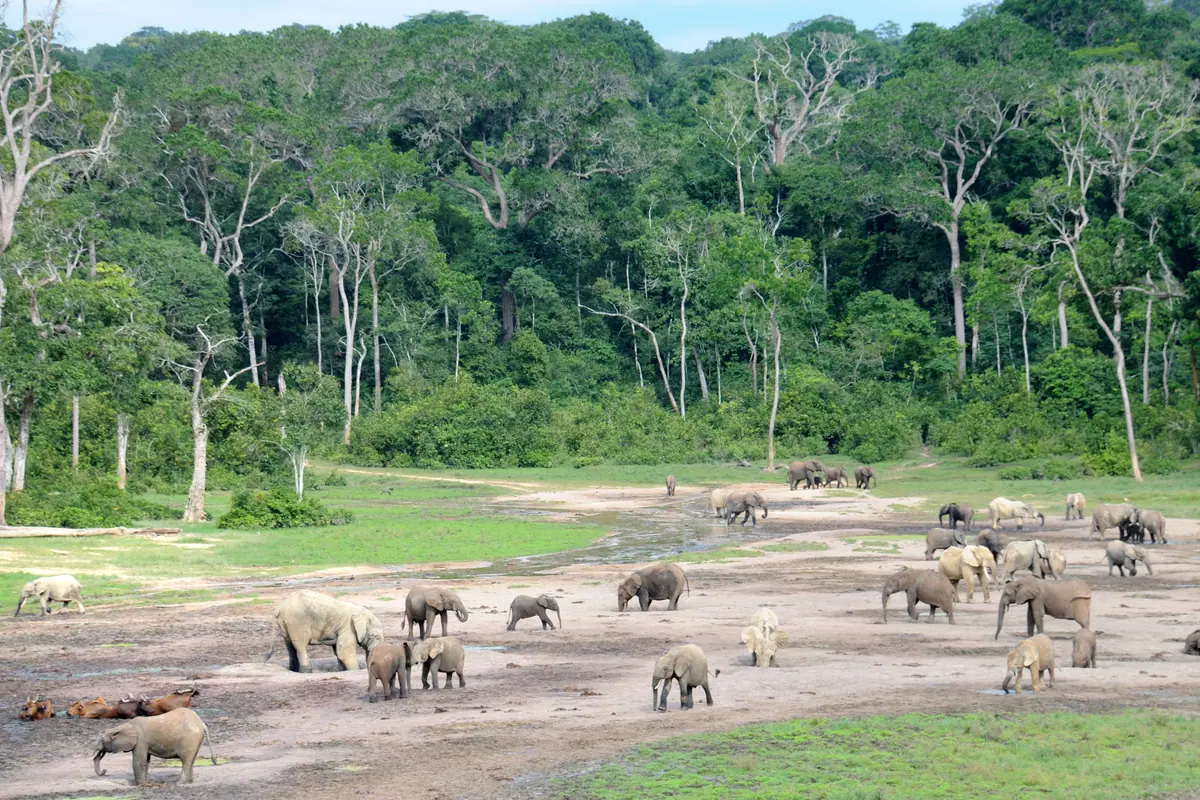
The centrepiece is Dzanga Bai, a mineral-rich clearing in the forest known locally as the "village of elephants". From a wooden observation platform at the edge of the clearing, reached after a two- to three-hour walk, you can watch dozens — sometimes more than a hundred — forest elephants digging for salt with their tusks, alongside bongo antelope, sitatunga, red river hogs and buffalo. It is one of the very few places on earth where such numbers can be seen at once. Nearby, at Bai Hokou, habituated western lowland gorillas can be tracked on foot with local guides, and a canopy platform offers a view from forty metres up into the crowns of the trees. December to February is the driest and most comfortable window; trails turn to deep mud in the long rains.
The forest is also home to BaAka communities, whose knowledge of medicinal plants, honey gathering and net hunting is extraordinary. Community-run cultural visits — polyphonic singing, net-hunting demonstrations, plant walks — exist precisely because the income stays local, so choose arrangements that pay the community directly and ask before photographing anyone.
What to Eat: Kanda ti Nya, Grilled Capitaine and Peanut Sauces
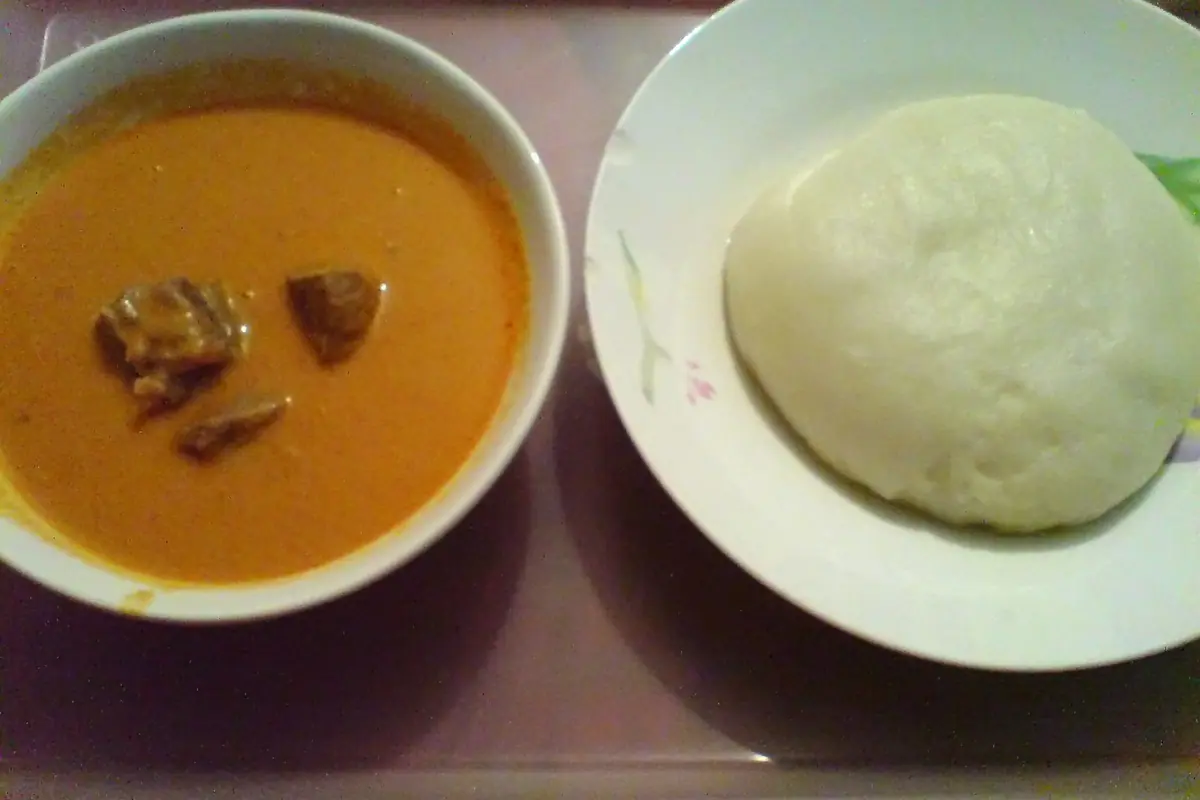
Central African cooking is built on cassava, plantain, groundnuts and palm oil, and it is far better than its low international profile suggests. The dish most often named as the national favourite is kanda ti nya — meatballs of minced beef simmered in a thick, glossy peanut sauce with tomato, onion and chilli, served over rice or alongside gozo, a stiff, dense cassava dough eaten by pinching off a piece and dipping it into the sauce. Foutou, a pounded mixture of cassava and plantain, plays a similar role, and both are eaten with the right hand from a communal bowl.
Cassava leaves appear everywhere, pounded and slow-cooked with palm oil, peanuts and sometimes smoked fish to make saka-saka, a dark, rich stew that tastes far more complex than its ingredients imply. River fish is the other pillar of the diet: capitaine, or Nile perch, is grilled whole over charcoal and dressed with lime, onion and hot pepper, and smaller fish are wrapped in banana leaves and steamed with tomato and herbs. Along the Oubangui and in the markets of Bangui, these grills appear at dusk and cost very little.
Fruit is abundant and cheap — mangoes, papaya, pineapple, guava and avocado in their seasons — and the Lobaye region around Mbaïki and Boda still produces coffee and cocoa from smallholder plots, so seek out locally roasted beans rather than imported ones. Palm wine tapped from raffia palms is sold in jerry cans at roadside stalls and drunk fresh, when it is sweet and lightly effervescent; after a day it turns sharp and vinegary. Fried dough balls, roasted maize and skewers of grilled meat are the standard street snacks, and a shared bottle of locally brewed lager at a riverside bar is the default way to end an evening.
Markets, Music and Everyday Life: Sango, Storytelling and Crafts
Sango, the country's lingua franca, is what makes travel here feel less like an expedition and more like a long conversation. It borrows freely from French and from the languages of the Gbaya, Banda and Ngbandi peoples, and a few phrases carry you a long way in markets and bus stations. Proverbs and riddles are a living art — older men and women still settle arguments by quoting them — and evenings in villages often end with stories told by firelight, with the audience expected to respond.
Music is everywhere: guitar-driven bands in Bangui's bars, brass and drum ensembles for funerals and weddings, and extraordinary church choirs whose harmonies rival anything you'll hear in a concert hall. In the capital, informal performances and dance troupes can sometimes be arranged through guesthouses; out in Lobaye and Sangha, dance is part of ceremony rather than spectacle, and you should follow your hosts' lead on when it's appropriate to watch and when to step back.
For crafts, head to the market districts: raffia mats and baskets, carved stools and masks, beadwork, soapstone animals and hand-woven cloth. Prices are negotiable in the friendly, drawn-out way common across the region, and it's normal to chat for several minutes before discussing money. Ask permission before photographing people or their stalls — a refusal costs nothing, and a small purchase usually goes further than a tip.
When to Go, How to Get Around and Travelling Respectfully
The dry season, roughly December to March, is the most practical time to visit: roads to Boali and Bouar are passable, forest trails in Dzanga-Sangha are firm, and the humidity eases. The long rains from May to October bring lush landscapes and dramatic water at the falls but also washed-out laterite roads, while the short dry spell around February is often the sweet spot for wildlife viewing. Note that the far north — including Manovo-Gounda St. Floris National Park and Bamingui-Bangoran — is not realistically visitable at present, and the country's security situation means large areas remain off-limits to outsiders.
Almost all visitors arrive by air into Bangui, with onward travel to Bayanga by road in the dry season or by river. Overland entry from Cameroon via Bouar or from the Congo is possible in principle but slow and unpredictable. There are no meaningful ATMs outside the capital, so carry enough cash, and check your government's current travel advisory and your embassy's registration service before booking anything. Yellow fever vaccination is required, antimalarials are essential, and comprehensive medical evacuation cover is not optional here.
Travel with an established local operator who employs Central African guides and trackers, keep your itinerary flexible, and treat every delay as part of the experience rather than a failure of planning. Ten days to two weeks is a realistic minimum for Bangui, Boali, the western megaliths and a Dzanga-Sangha extension. Above all, remember that you are a guest in a country that has been through a great deal: humility, patience and a genuine interest in people will carry you further than any itinerary.
Frequently asked questions
Is it safe to travel in the Central African Republic?
Large parts of the country, particularly the north and east, are not safe for visitors and remain effectively off-limits. The areas most commonly visited — Bangui, the Boali and Bouar region in the west, and the Dzanga-Sangha forest in the south-west — are travelled by a small number of organised groups, usually with local guides and in the dry season. Check your government's current travel advisory, register with your embassy, and do not attempt independent travel outside well-established routes.
What is the best time of year to visit?
December to March, the main dry season, offers the most passable roads, firmer forest trails and more comfortable temperatures. The heaviest rains fall from July to October, when laterite roads become difficult and some forest tracks are impassable. Boali Falls is at its most dramatic late in the rainy season, around October and November.
What should I eat and drink in the Central African Republic?
Look for kanda ti nya (peanut-braised meatballs) with gozo or foutou, saka-saka made from pounded cassava leaves with palm oil and peanuts, and whole grilled capitaine river fish dressed with lime and chilli. Tropical fruit is excellent and cheap, local Lobaye coffee and cocoa are worth seeking out, and fresh palm wine is best drunk the day it is tapped. Stick to bottled or boiled water.
Can I see forest elephants and gorillas?
Yes, in the Dzanga-Sangha reserve in the south-west. Dzanga Bai, a mineral clearing reached on foot from Bayanga, can attract more than a hundred forest elephants at once, along with bongo, sitatunga and buffalo. Habituated western lowland gorillas are tracked at Bai Hokou, where there is also a canopy platform. Tracking permits and guides are arranged locally, and numbers are limited.
What language is spoken, and do I need a visa?
French is the official language and Sango is the everyday lingua franca spoken almost everywhere; a few phrases of Sango are warmly received. Most nationalities need a visa arranged in advance through the nearest diplomatic mission, and proof of yellow fever vaccination is required on arrival. Carry cash, as card payments are largely unusable outside a handful of places in Bangui.
Plan it — tours in Central African Republic
Live search, booked directly with trusted providers.
Sort the rest of your trip
Everything for Central African Republic, in one place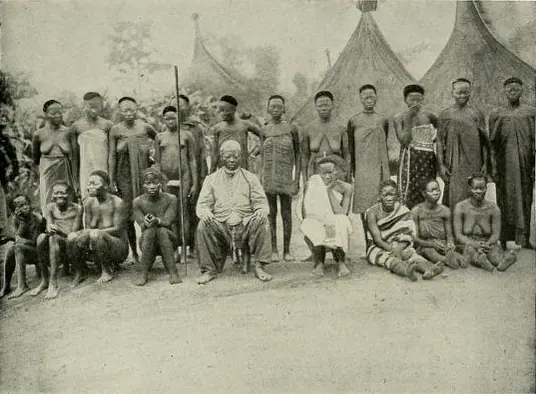
Stay in Central African Republic
Hotels, guesthouses and apartments — compared in one search.
Search hotels
Transfer in Central African Republic
Private driver waiting on arrival — no queues, no surprises.
Book a transfer
Stay online in Central African Republic
Travel eSIM — data the moment you land, no roaming bills.
Get an eSIM