Flying into the Central African Republic feels like dropping into the green heart of the continent: a vast country wrapped in rainforest and savanna, with a single international gateway at Bangui and a handful of rough airstrips beyond it. This seven-day route leans on those flights — one international arrival, one charter hop south-west to the Sangha rainforest, and the return — because the roads are slow, the distances enormous and the rewards extraordinary. Expect river sunsets, a waterfall two hours from the capital, and a forest clearing where elephants gather by the dozen in the mud.
Day 1 — Landing at M'Poko and Finding Your Feet in Bangui
Almost every trip begins on the tarmac at Bangui M'Poko International Airport, a compact terminal where the heat arrives before the aircraft steps do. There are no nonstop long-haul flights from Europe or North America, so arrivals usually connect through Addis Ababa, Casablanca, Nairobi or Douala, finishing with a regional hop of one to three hours. The paperwork is slow and thorough: you need a visa arranged before you fly, a yellow fever certificate, and patience at the immigration desk. Change some money on arrival or in town — the currency is the Central African franc, and cards are close to useless outside a few city hotels.
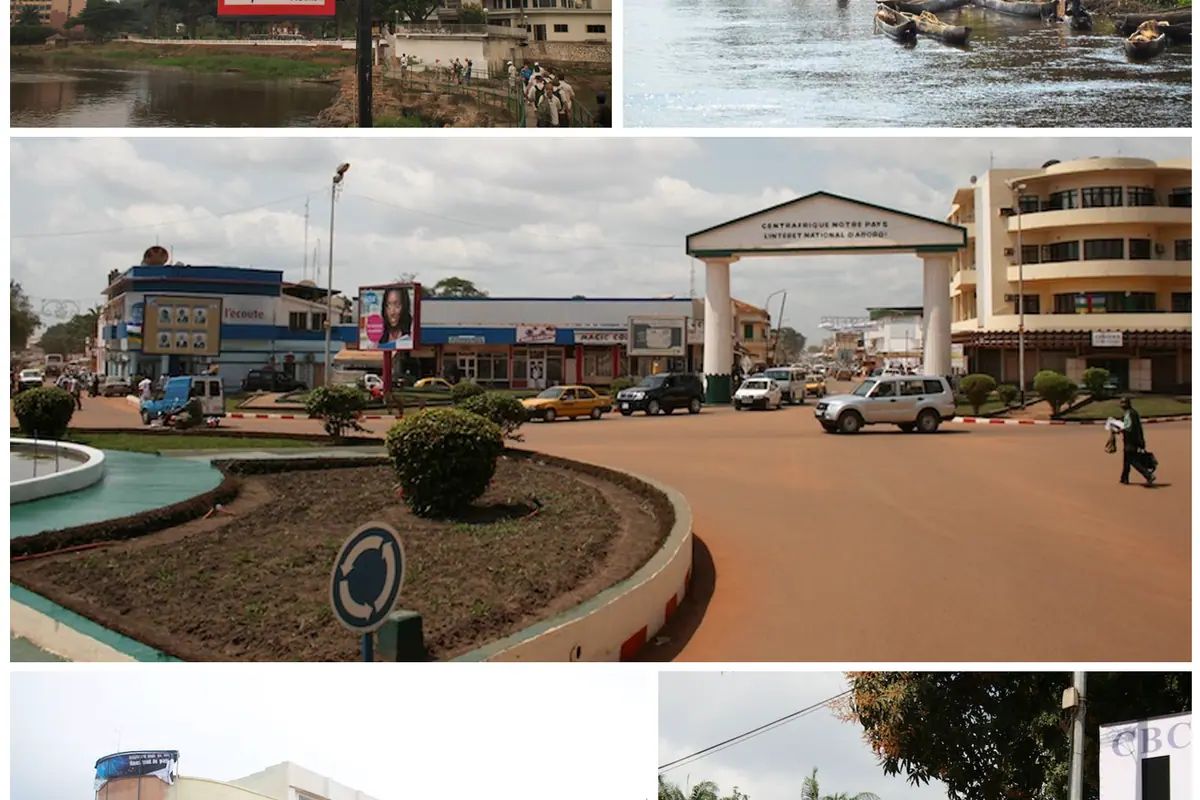
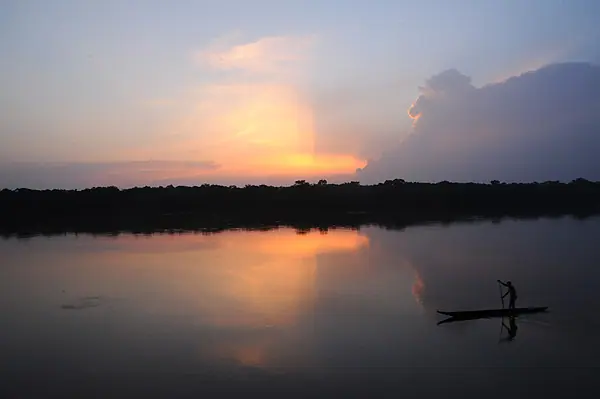
Bangui sprawls along the western bank of the Oubangui River, which separates the country from the Democratic Republic of the Congo. Mango trees shade the avenues, motorbikes swarm the roundabouts, and cathedral bells carry across the rooftops. Before dark, walk to the riverfront near the rapids: wooden pirogues slide past sandbanks, fishermen haul nets from the shallows, and the sun drops behind the far bank in a haze of orange. Sleep early — this is a city best travelled by day.
Two practical rules for the week ahead. First, check your government's current travel advice before booking anything: much of the country outside the capital and the south-western rainforest corridor is off-limits to visitors. Second, arrange everything through a reputable local operator — airport transfers, permits and a fixer who knows which roads are quiet. Independent wandering sounds romantic here; it is not sensible.
Day 2 — Bangui's Landmarks: Cathedral, Museum and Market
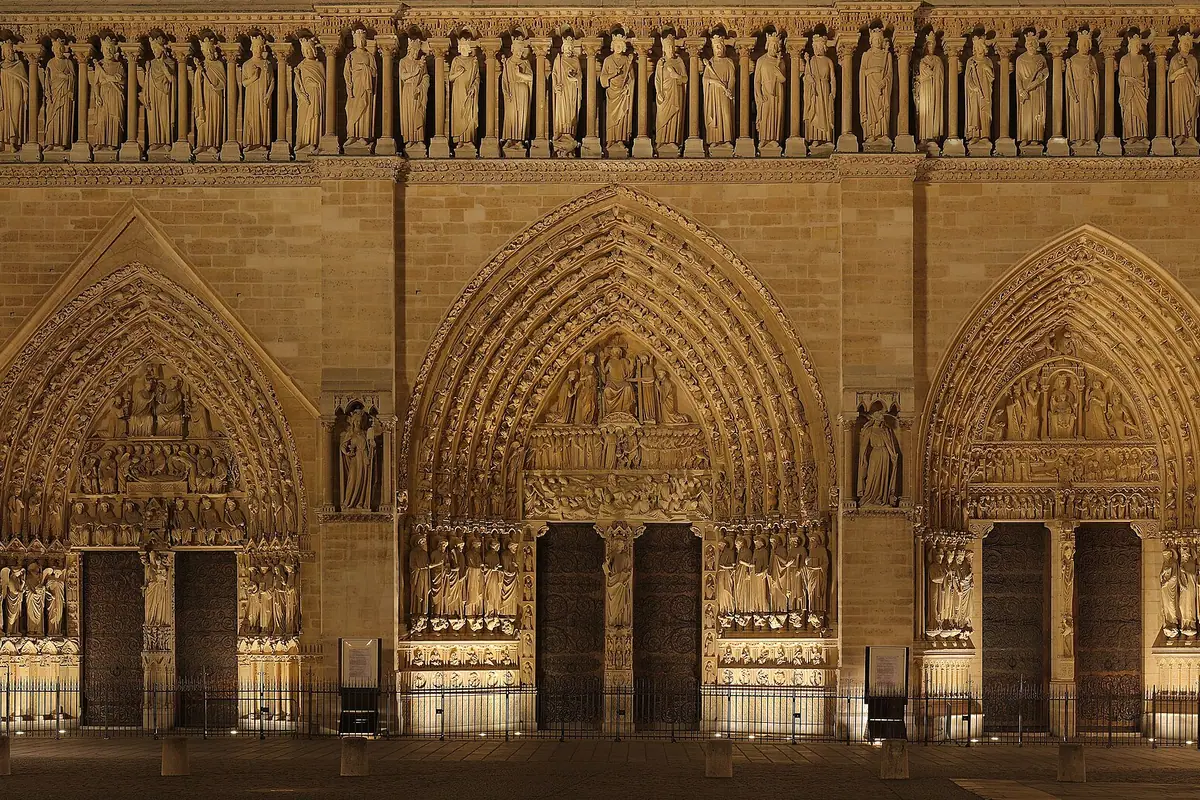
Start at the Cathédrale Notre-Dame, a brick-and-buttress landmark from the 1930s whose interior stays blessedly cool at mid-morning. A few blocks away, the Musée National Barthélemy Boganda holds the country's ethnographic heart: carved masks, harps and drums, hunting tools, and photographs of the colonial era and the brief, improbable imperial chapter that followed independence. It is small, slightly dusty and worth a careful hour. From there, push into the Marché Central, where pyramids of cassava, groundnuts and smoked river fish are stacked beside stalls of printed cloth and second-hand shoes.
In the afternoon, hire a pirogue and a boatman for a couple of hours on the Oubangui. You drift past fishing camps built on stilts, women washing clothes on the stones, and the low skyline of Zongo on the opposite bank in the neighbouring republic. Herons and kingfishers work the edges of the sandbars, and every bend opens onto another stretch of slow brown water. Keep the boat trip to daylight hours and agree the fare and duration before you cast off.
Back on land, drink a beer or a sweet green tea as the light goes, then eat grilled capitaine — river fish — with fried plantain, which is Bangui's signature dinner and a very good one. If you have energy left, the neighbourhood known as PK5 is the city's commercial thrum, best visited with your hotel's driver and never after dark.
Day 3 — Boali Falls and the Ruins at Berengo
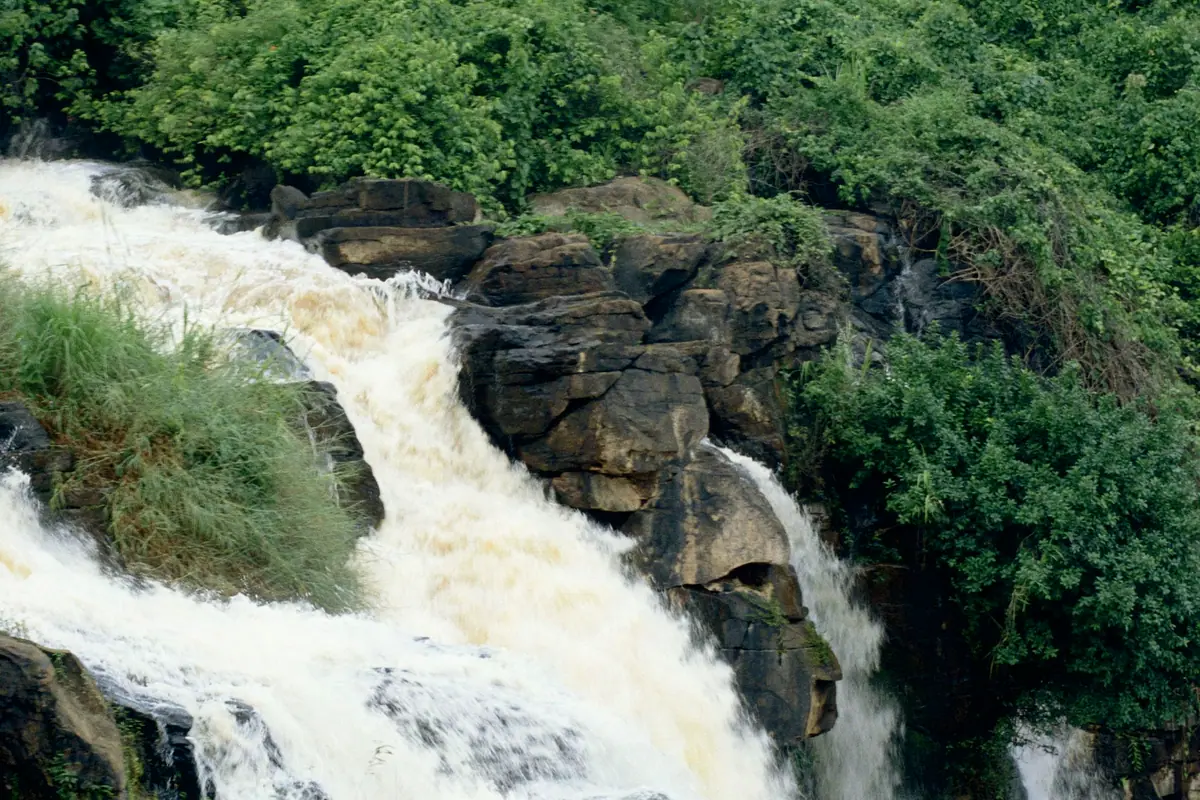
The Chutes de Boali are the easiest great sight in the country: roughly 95 kilometres north-west of the capital, about two hours on a paved road that rolls through cassava fields, mango groves and villages of mud-brick houses under tin roofs. The river tips over a broad ledge in a curtain of white water around fifty metres high, with a colonial-era hydroelectric station humming beside it. From about June to October the volume is thunderous; in the dry season the flow splits into separate chutes and you can walk closer to the rock lips. Take a picnic, a local guide and plenty of water.
On the way back, ask your guide about Berengo, the abandoned palace complex where the country's self-styled emperor built a marble fantasy of colonnades and grand staircases before the project died with his regime. Access is never guaranteed and permission is essential, but the empty halls, overgrown avenues and bat-hung rafters make it one of the most haunting places in Central Africa. The forest is quietly taking the rest.
You are back in Bangui by evening. Repack tonight into a soft bag: light aircraft are the next step, and hard-shell suitcases rarely fit in the hold.
Day 4 — The Charter Flight South-West to Bayanga
Domestic flying here is not a scheduled affair. There is no dependable internal airline network; instead small operators run air taxis and charters, usually arranged by the forest camps themselves and shared between a handful of passengers. Your destination is the airstrip at Bayanga, on the edge of the Dzanga-Sangha Special Reserve in the far south-west — part of a transboundary rainforest that spills across the borders into Cameroon and the Republic of the Congo. The flight takes around an hour over an unbroken green canopy. The alternative is a two-day, 500-kilometre drive via Berbérati on roads that punish both vehicles and spines.
Bayanga is a village of wooden houses on the Sangha River, a wide, slow tributary of the Congo. The forest around it is one of the last strongholds of the forest elephant, and it also shelters western lowland gorillas, chimpanzees, bongo antelope, sitatunga and red river hogs, along with an exceptional bird list. Settle into your camp, eat early, and take a short late-afternoon pirogue ride: the river at dusk, with hornbills crossing overhead and the cicadas starting up, is the perfect overture to the days ahead.
Days 5 and 6 — Dzanga Bai and the Gorillas of Bai Hokou
Day five begins before dawn: a bumpy drive, then a walk through vine-tangled forest to a wooden observation platform above Dzanga Bai, a mineral-rich clearing that local people call the village of elephants. The bai is a vast muddy amphitheatre, and the animals arrive in a steady procession — family groups of forest elephants, sometimes dozens at once, wading to the pools to dig for salt-laden water with their trunks. Along the forest edge you may pick out bongo, sitatunga, forest buffalo and red river hogs. Sit still for three or four hours; the point is not to tick off species but to watch the slow choreography of the clearing.
Day six belongs to the gorillas. At Bai Hokou, trackers have habituated a group of western lowland gorillas, and only a limited number of visitors may walk in each day. The trek can take anything from forty minutes to three hours depending on where the group has nested overnight, and the encounter itself is strictly timed — an hour at most, at a respectful distance, with masks and hushed voices. Permits and park fees must be booked months in advance, and numbers are genuinely capped, so sort this out before you commit to international flights.
Day 7 — Baka Forest Culture, a Dawn Pirogue and the Flight Back
Before you leave, spend a morning with the Baka, the forest people who have lived in this landscape for millennia. Properly arranged visits — through a guide who agrees a fair community fee in advance — might include a walk to see medicinal plants and honey trees, a demonstration of net hunting, and the extraordinary polyphonic singing that has carried Baka music far beyond the rainforest. Go as a guest, not a spectator: ask before photographing anyone, buy carvings or baskets directly, and let your guide handle the etiquette.
If your charter leaves later in the day, take one last pirogue up the Sangha at first light, when mist sits on the water and the fishing camps are waking. Then it is back to the airstrip for the one-hour hop to Bangui.
Build in a buffer. Small aircraft in this region are at the mercy of weather, fuel and passenger numbers, and one cancelled flight can cost you an international connection — give yourself a spare day in the capital. Keep the dry season, roughly December to March, in mind when booking: the rains from May to October turn tracks to soup and can ground light planes. Take malaria prophylaxis, drink bottled water, carry clean, untorn euro or dollar notes to change, and expect a week that is logistically demanding and unforgettable in equal measure.
Frequently asked questions
Are there direct flights to Bangui?
No. Long-haul travellers connect through regional hubs such as Addis Ababa, Casablanca, Nairobi or Douala, then finish with a short flight into Bangui M'Poko International Airport. Arrive with a pre-arranged visa, a yellow fever certificate and cash for the airport, and allow an hour or more for immigration formalities.
Can I fly from Bangui to Dzanga-Sangha?
Yes, but only by charter. Small air-taxi operators fly from Bangui to the Bayanga airstrip in around an hour, and seats are usually booked through the forest camps and shared between passengers. Luggage must be soft and light — keep to roughly 12 to 15 kilograms — and departure times shift with weather and demand.
Is the Central African Republic safe for visitors?
Most governments advise against travel across much of the country, with exceptions for the capital and, with an organised operator, the south-western rainforest corridor. Armed groups, roadblocks and periodic unrest affect many regions, including the north-eastern national parks, which are effectively closed. Travel with a reputable local operator, avoid long independent road journeys, steer clear of political gatherings and check current travel advice before committing.
What is the best time of year to visit?
December to March is the dry season, with firmer forest trails, easier trekking and excellent wildlife viewing at Dzanga Bai. The rains from May to October make Boali Falls spectacular and the rainforest lush, but tracks flood and light aircraft are more likely to be delayed. April and November are the gentler shoulder months.
What should I pack, and what money will I need?
Light cotton clothing, long sleeves and trousers for forest walks, sturdy boots, a head torch, insect repellent and a rain shell. The currency is the Central African franc; bring euros or US dollars in clean, unmarked notes to change in Bangui, since cards are accepted almost nowhere outside a few city hotels. Malaria prophylaxis and a yellow fever vaccination are essential.
Plan it — flights in Central African Republic
Live search, booked directly with trusted providers.
Sort the rest of your trip
Everything for Central African Republic, in one place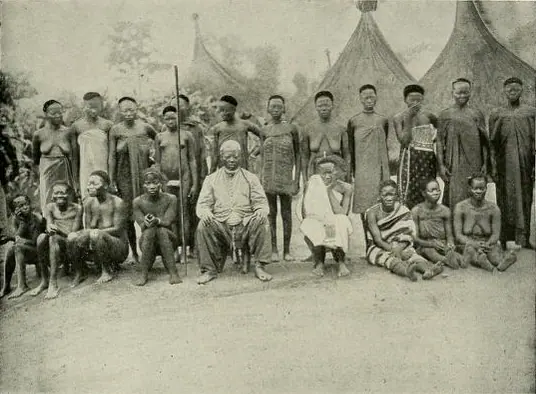
Stay in Central African Republic
Hotels, guesthouses and apartments — compared in one search.
Search hotels
Transfer in Central African Republic
Private driver waiting on arrival — no queues, no surprises.
Book a transfer
Travel insurance
Medical cover, delays and lost baggage — sorted before you go.
Get covered