Bulgaria packs an improbable amount into a small country: gilded cathedral domes, a clifftop medieval fortress, Roman theatres still hosting opera, and a coastline of whitewashed headlands. It is a place where a morning in a frescoed monastery can end with a swim in the Black Sea — and where the mountains stay snow-capped well into spring.
Sofia: Gold-Domed Landmarks and Roman Foundations
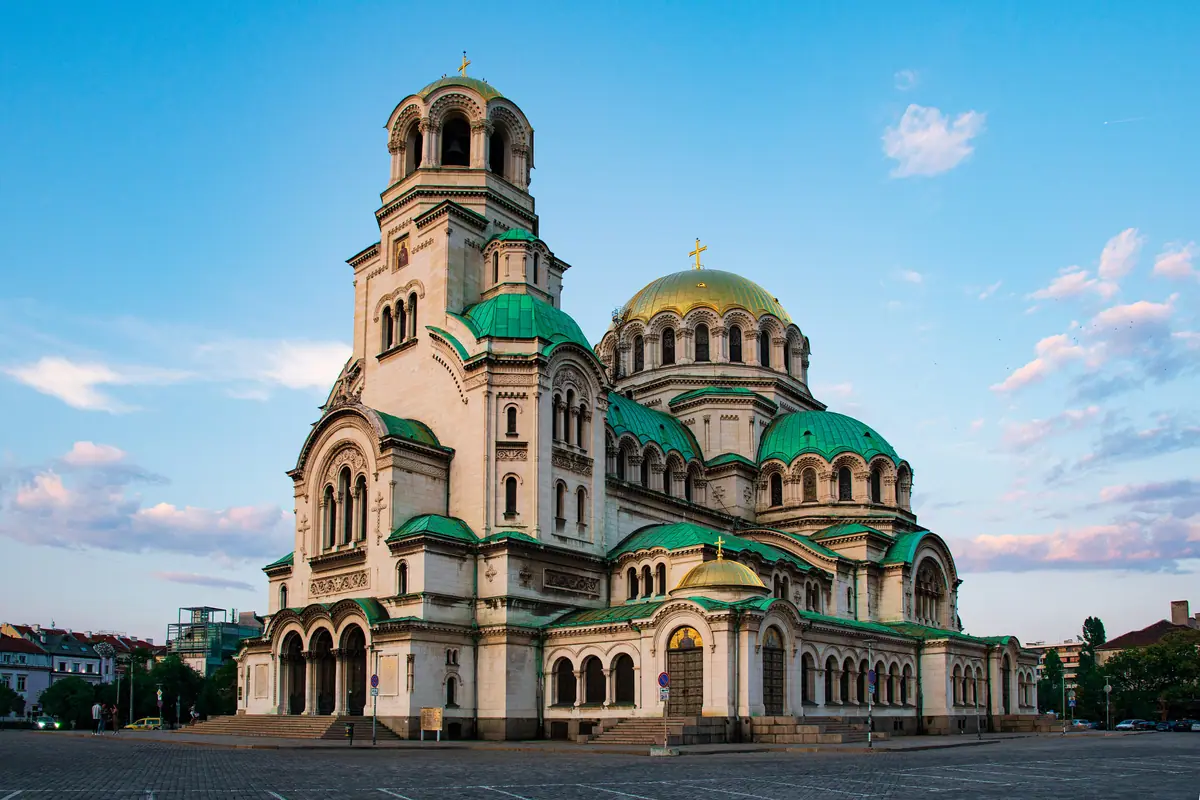
Most journeys start in Sofia, a capital that wears its history in layers rather than museums. The city's defining silhouette is the Alexander Nevsky Cathedral, a vast neo-Byzantine church with emerald and gold domes that catch the light from almost every street in the centre. Step inside for dim, candlelit galleries, then descend to the crypt, where a remarkable collection of Orthodox icons is displayed. A short walk away, the ruins of ancient Serdica sit half-sunken beside the presidency and the mosque, with Roman paving stones and foundations open to the street.
Pedestrianised Vitosha Boulevard is Sofia's promenade, lined with cafés and buskers, and it points the eye toward the dark green wall of Vitosha Mountain rising at the city's edge. You can ride a cable car up to the alpine zone and, from mid-summer, walk the ridge to Cherni Vrah, the summit overlooking the whole plain. For a quieter dose of heritage, the Boyana Church on the city's southern outskirts holds medieval frescoes so vivid they are considered among the finest in the Orthodox world; the nearby National History Museum fills in the rest of the story, from Thracian gold to Cold War relics. Two or three days is enough to see Sofia well, but it rewards a slower pace.
Rila Monastery and the Seven Rila Lakes
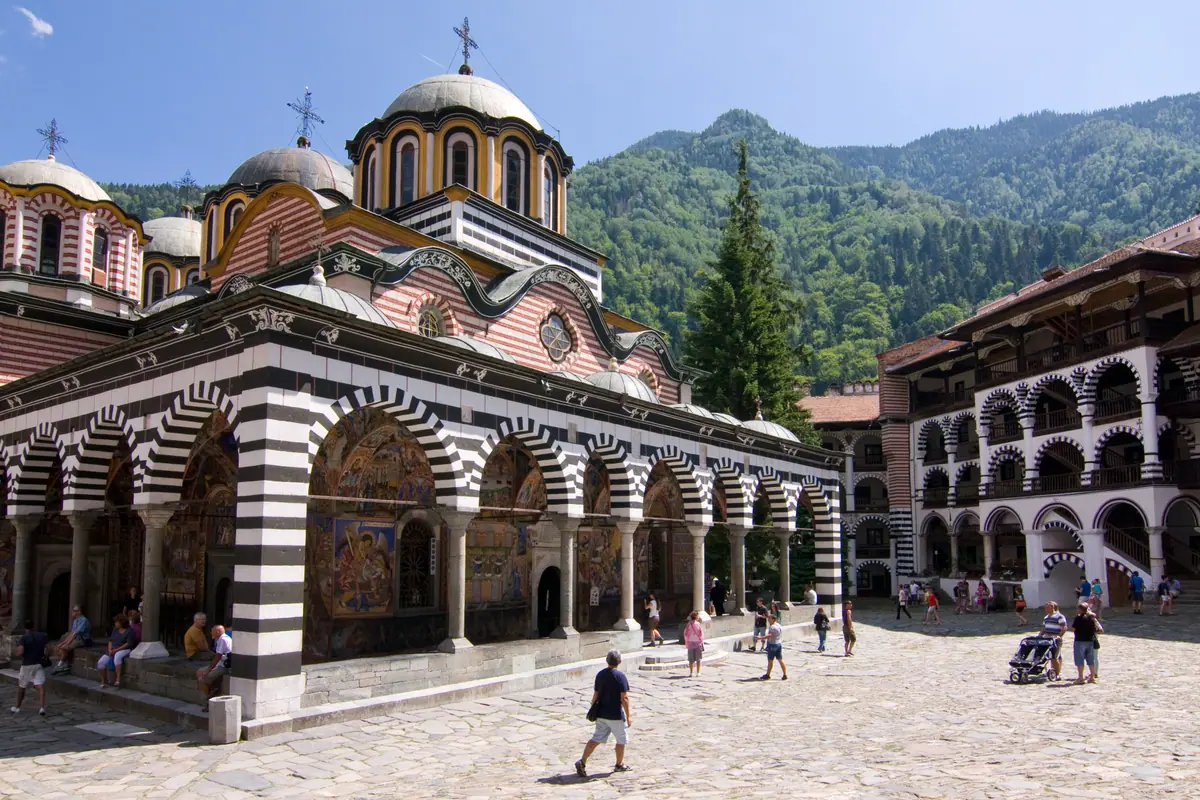
About two hours south of Sofia, Rila Monastery appears suddenly in a wooded valley — a fortress of striped arches, wooden balconies and black-and-white frescoes that cover every inch of the outer church wall. Founded in the tenth century by the hermit Ivan of Rila, it became the spiritual heart of the country and remains an active monastic community. Arrive early, before the tour coaches, and the courtyards are almost silent apart from the murmur of the fountain and the tapping of pilgrims' footsteps. The monastery museum holds a carved wooden cross worked with such microscopic detail that its maker is said to have lost his sight completing it.
Above the monastery, in the same massif, lie the Seven Rila Lakes — a chain of glacial pools strung across a high plateau, each with its own name and colour. A chairlift from the village of Panichishte cuts out the steepest climb, and from the top station a circular trail of roughly five to seven hours links all seven lakes; fit walkers can continue toward Musala, at 2,925 metres the highest peak on the Balkan Peninsula. Snow lingers into June on the upper slopes, so the best window is July to early October, when the paths are clear and the water is a startling blue-green. Bring layers regardless — mountain weather turns fast, and afternoon thunderstorms are a summer ritual.
Plovdiv: A Roman Theatre in a Cobbled Old Town
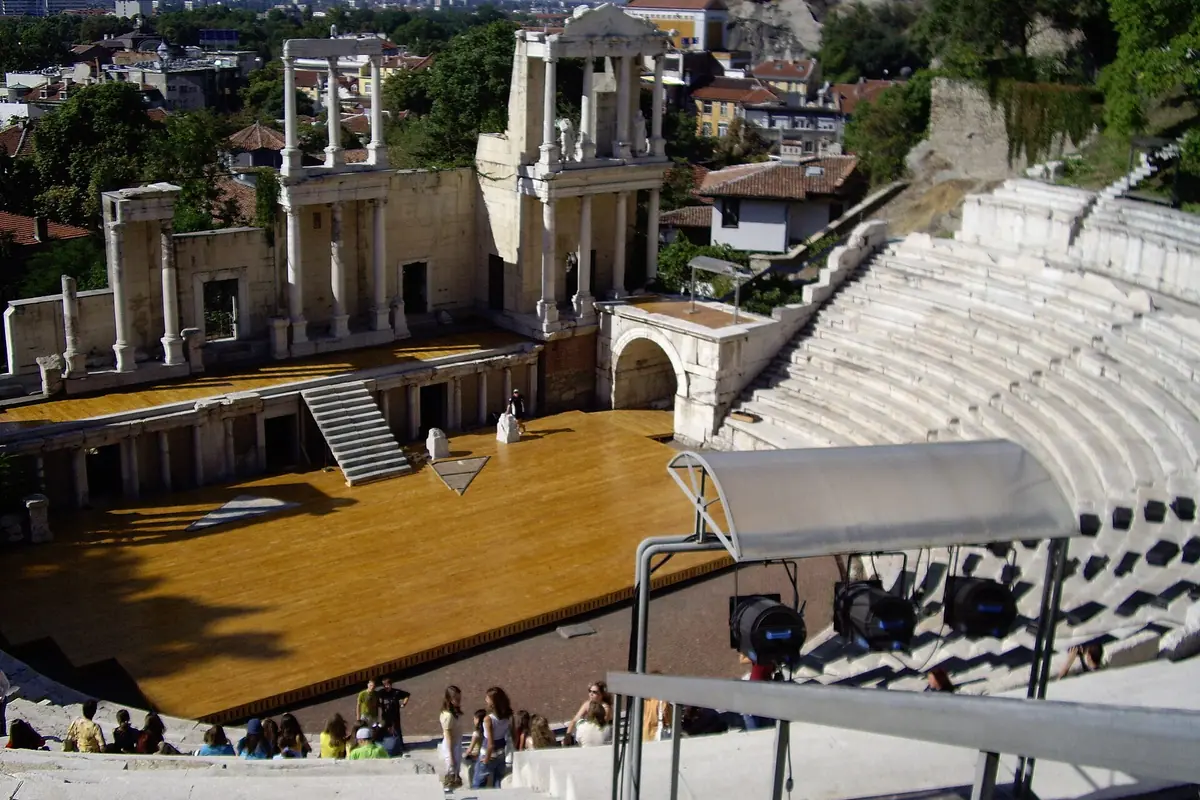
Plovdiv is often described as one of Europe's oldest continuously inhabited cities, and it wears that age lightly. Its centrepiece is the Roman Amphitheatre, cut into the hillside in the second century and still used for summer opera and concerts — on a warm evening, watching a performance against the columns and the city lights below is one of Bulgaria's great travel moments. The Roman Stadium, a long slice of ancient track, lies exposed beneath the main pedestrian shopping street, where locals walk over it without a second glance.
Climb into the Old Town for the National Revival houses, with their overhanging eaves and painted ceilings, and the Ethnographic Museum packed with textiles and copperware. Below, the Kapana district — a grid of once-derelict workshops turned into wine bars, galleries and coffee roasters — is where the city's creative energy lives, especially after dark. Add a half-day trip to Bachkovo Monastery, the country's second-largest, or the clifftop ruins of Asen's Fortress in the Rhodope foothills. Plovdiv is easily reached by train or bus from Sofia in two to three hours and deserves at least two nights.
Veliko Tarnovo, Tsarevets Fortress and the Shipka Pass
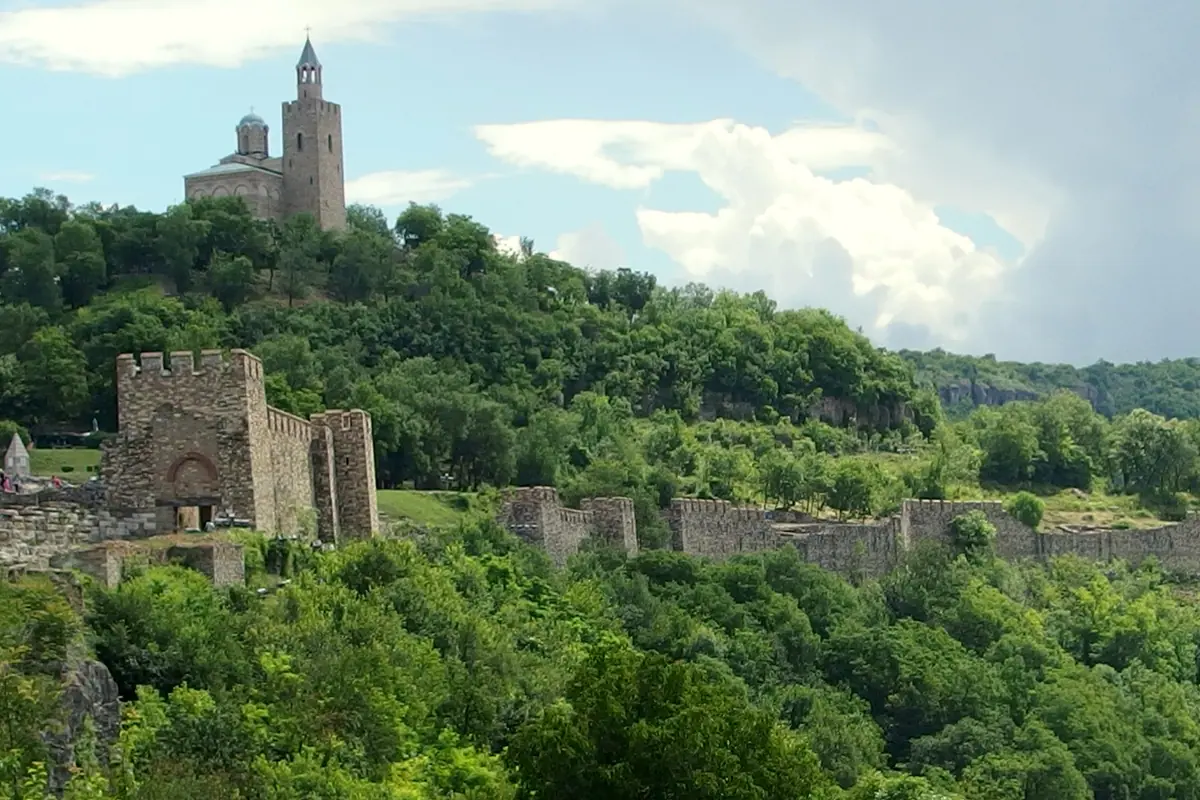
North of the Balkan Mountains, Veliko Tarnovo tumbles down a gorge of the Yantra River, once the capital of the medieval Bulgarian Empire. The must-see is Tsarevets Fortress, a walled citadel on a hill above the town, crowned by the restored Patriarchal Cathedral with its stark, modern frescoes. Climb the ramparts at dusk and you can watch the nightly sound-and-light show, when the whole hill is lit in shifting colours and the story of the empire is told across the sky. Below, Samovodska Charshia keeps the old craft street alive with potters, silversmiths and sweet shops.
The surrounding region is thick with history. The Shipka Pass, a twisting mountain road, leads to the Shipka Memorial Church, its domes and gilded interior built to honour the dead of the 1877–78 war, and to the surreal, abandoned Buzludzha monument, a flying-saucer of concrete on a bare ridge — admired from outside, as the interior is unstable. Near Gabarovo, hmm, near Gabrovo, the Etar open-air museum reassembles traditional workshops, watermills and houses into a working village. Allow a full day for the fortress and the town, and another for the mountain circuit by car.
The Black Sea Coast: Nessebar, Sozopol and Cape Kaliakra
Bulgaria's coastline runs for hundreds of kilometres, and its two jewels are ancient towns linked to the sea by narrow causeways. Nessebar, near Sunny Beach, is a maze of wooden houses on a rocky peninsula, so dense with medieval churches that you can count a dozen within a few minutes' walk. Sozopol, further south, is quieter and more bohemian, with a fishing harbour, clifftop lanes and long sandy beaches within reach. Both are best explored early in the morning before the day-trippers arrive.
Further north, Varna mixes a grand Sea Garden park, Roman baths in the city centre and the rock-cut Aladzha Monastery hidden in the forest nearby. At the coast's northern tip, Cape Kaliakra's red cliffs drop sheer into the sea, with cormorants wheeling below and a narrow path leading out to the headland. The season is short and intense: mid-June to mid-September, with the warmest water in late July and August. Outside those months the resorts shut down, but the old towns become peaceful and the prices gentler — a good trade for travellers who come for architecture rather than sunbathing.
Rock Formations, Caves and the Wild Edges of Bulgaria
Away from the cities, Bulgaria turns strange and cinematic. The Belogradchik Rocks in the northwest are a forest of sandstone towers and human-shaped pillars, with a fortress wedged into the gaps between them; sunset from the upper ramparts is worth the drive. Nearby, the Prohodna Cave is famous for two eye-shaped openings in its ceiling — nicknamed the Eyes of God — that flood the cavern with light. Further east, the Devetashka Cave opens like a cathedral mouth in the cliffs, and the Krushuna waterfalls cascade over mossy limestone steps in a green gorge.
In the Rhodope Mountains, the Trigrad Gorge squeezes the road between 250-metre cliffs, and a narrow-gauge railway still rattles through the valleys on a slow, spectacular route from Septemvri to Dobrinishte. The Rose Valley around Kazanlak blooms for a few weeks in late May and early June, when the harvest is celebrated with festivals, and the region's Thracian tombs — including the painted Kazanlak Tomb — reveal a civilisation that predates Rome. For winter, Bansko, Borovets and Pamporovo offer skiing from December to March, with Bansko's long season and lively old town making it the most popular base. In summer, the same mountains become hiking country in Pirin National Park, where glacial lakes and pine forests fill weeks of walking.
Frequently asked questions
What is the best time of year to visit Bulgaria?
May, June, September and October are ideal for cities, monasteries and mountain hiking — warm but not scorching, with long daylight. July and August suit the Black Sea coast and high-altitude walks, though coastal resorts are crowded and prices peak. December to March is ski season in Bansko, Borovets and Pamporovo, and also a good time for spa towns and museum-heavy city breaks.
How many days do you need to see the highlights?
A week covers Sofia, Rila Monastery and Plovdiv comfortably. Ten days to two weeks lets you add Veliko Tarnovo, the Rose Valley and a stretch of the Black Sea coast without rushing. If you want both mountains and coast, plan two weeks and travel by car or bus, since rail connections between some regions are slow.
How do you get around Bulgaria?
Intercity buses are frequent, cheap and usually faster than trains between major towns, while the rail network is best for scenic routes such as the narrow-gauge line through the Rhodopes. Renting a car opens up the Belogradchik Rocks, the caves near Karlukovo and the quieter Black Sea headlands, which are awkward without your own transport. Within cities, taxis and ride-hailing apps are inexpensive; agree on the meter or use an app to avoid overcharging.
Is Bulgaria a good destination for hiking and outdoor activity?
Yes — it is one of Europe's most underrated hiking countries. The Seven Rila Lakes, Pirin National Park and the Rhodope Mountains offer well-marked trails from June to October, with mountain huts along the way. Winter brings skiing and snowshoeing, and the caves, gorges and rock formations in the north are excellent for day walks and photography year-round.
What should first-time visitors know before they go?
The currency is the lev, and cards are widely accepted in cities but not in small village shops, so keep some cash. Cyrillic signage is everywhere — learning the alphabet makes travel much easier. Tipping around ten per cent is customary, tap water is generally drinkable, and while Bulgaria is a safe country, use normal caution in busy resort areas and around nightlife districts.
Plan it — experiences in Bulgaria
Live search, booked directly with trusted providers.
Sort the rest of your trip
Everything for Bulgaria, in one place
Stay in Bulgaria
Hotels, guesthouses and apartments — compared in one search.
Search hotels
Transfer in Bulgaria
Private driver waiting on arrival — no queues, no surprises.
Book a transfer
Stay online in Bulgaria
Travel eSIM — data the moment you land, no roaming bills.
Get an eSIMMore guides in Bulgaria
Hotels in Bulgaria: Where to Stay and What to See
Bulgaria in One Week: A 7-Day Itinerary from Sofia
Best Places to Visit in Bulgaria: Ancient Towns, High Mountains and the Black Sea
Bulgaria Tours: Food, Culture and Local Experiences Worth Building a Trip Around
