Bulgaria packs an improbable amount into seven days: gold-domed cathedrals, a Roman theatre that still stages opera, a monastery folded into a mountain valley, and a stranded flying-saucer monument on a windswept ridge. This loop starts and ends at Sofia's airport, so you can land, drive a rough circle through the country's greatest hits, and still make your flight home.
Day 1: Land in Sofia and Meet Its Landmark Sights
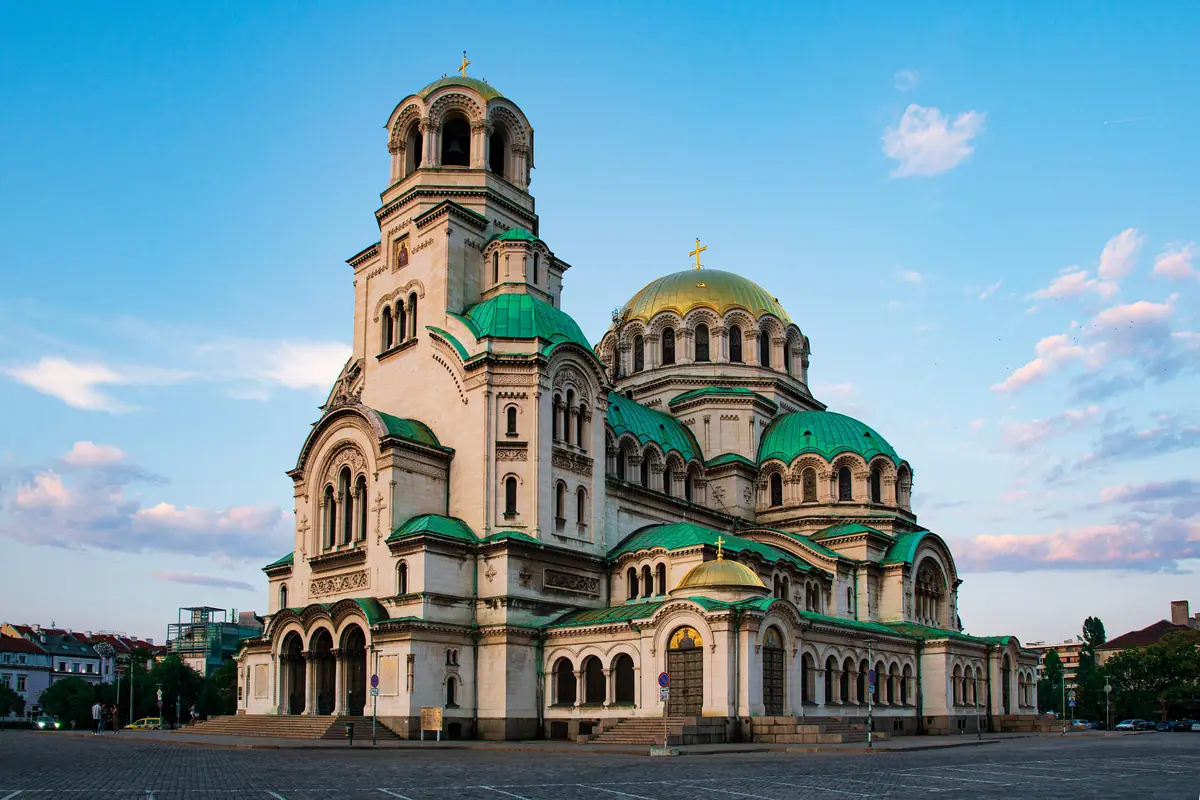
Most long-haul and European arrivals touch down at Sofia Airport, about 10 kilometres east of the centre, where the metro runs straight into the city in roughly 20 minutes and taxis line up outside both terminals. Drop your bags and walk straight into the postcard view: the Alexander Nevsky Cathedral, its copper domes turned green and its gilded ones blinding in afternoon light, sitting at the top of a square that also holds the flea market of antique icons and Soviet medals spilling across the pavement.
From there the city unfolds in layers. Follow the yellow cobbles of Vitosha Boulevard, Sofia's pedestrian spine, past the excavated Roman ruins of Serdica that sit half a metre below street level, and duck behind the presidency to find the Church of St George, a 4th-century red-brick rotunda ringed by medieval frescoes. The National Archaeological Museum, housed in a former mosque, and the National Palace of Culture's fountains at dusk round off an easy first day that keeps you awake until local bedtime.
If you have energy left, climb to the Borisova Gradina park or take a short taxi ride to the National History Museum in the Boyana district, where Thracian gold and medieval armour fill a vast former state residence. Book a room in the streets around ulitsa Graf Ignatiev or the reclaimed industrial quarter near the old mineral baths, where converted townhouses now hold small design hotels.
Day 2: Rila Monastery and the Boyana Church Frescoes
Head south early, pausing on the edge of Sofia at the Boyana Church, a tiny UNESCO-listed chapel whose 1259 frescoes are startlingly human — saints with real faces, painted more than a century before the Italian Renaissance got going. Entry is timed and brief, so it costs you half an hour, then it's a two-hour drive down the Struma valley into the Rila Mountains.
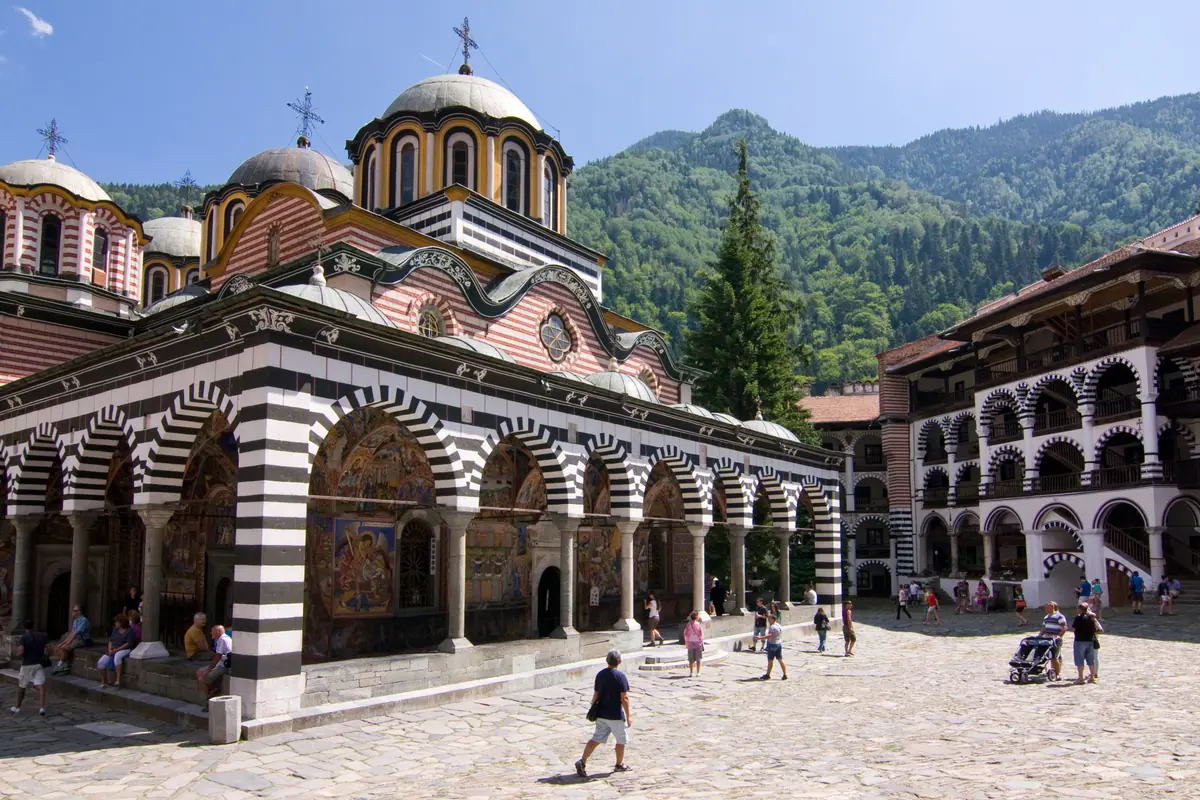
Rila Monastery is the country's spiritual heart and its most photographed building: a striped arcade of black-and-white arches wrapped around a courtyard, a 23-metre defensive tower from 1335, and the interior of the main church covered in 1840s murals so vivid they look freshly painted. Founded in the 10th century by the hermit Ivan of Rila, it has survived fires, Ottoman raids and communist-era restyling, and monks still live and chant here. Dress modestly, cover shoulders and knees, and don't photograph inside the church.
For a stronger dose of mountain, continue to the Seven Rila Lakes and ride the open chairlift from Panichishte up to around 2,100 metres, then walk the five-hour circuit past all seven glacial tarns. The lakes only clear of snow from late June, so if you're travelling in spring, budget the day for the monastery alone and enjoy a lunch of grilled trout and shopska salad in the village below.
Days 3–4: Plovdiv, the Ancient Theatre and Kapana
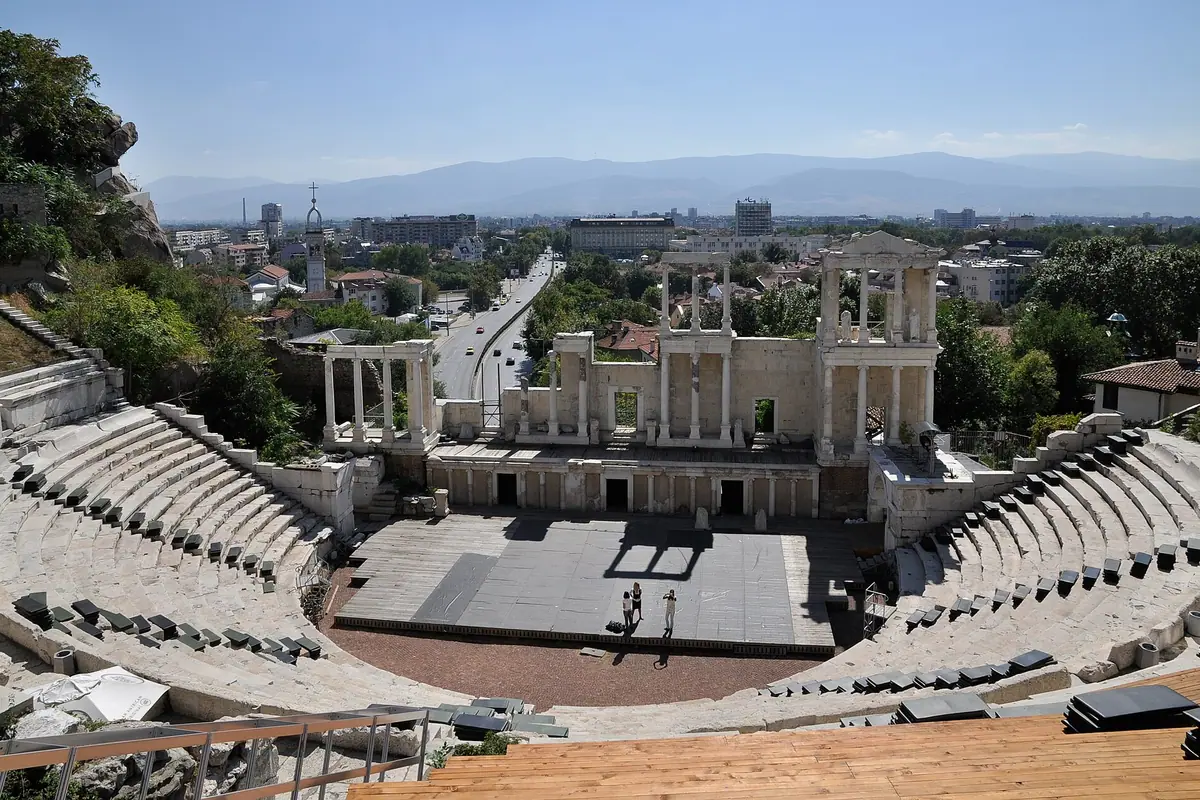
Plovdiv claims to be Europe's oldest continuously inhabited city, and it wears its 8,000 years lightly. The showpiece is the Ancient Theatre of Philippopolis, a 2nd-century Roman arena carved into the hillside of Trimontium that still hosts opera and rock concerts under the stars on summer nights. Just below, the Roman Stadium pokes out of a pedestrian shopping street, its tiers visible through a glass well in the pavement.
Give the Old Town half a day: the National Revival houses of the Balabanov and Hindliyan families, all painted ceilings and cushioned divans, tumble down the cobbles towards the Dzhumaya Mosque and the Ottoman clock tower. Then spend an afternoon in Kapana, the former craftsmen's quarter, now a grid of murals, third-wave coffee bars and tiny galleries where the city's students gather after dark.
On your second day, drive 30 minutes south to Bachkovo Monastery, second only to Rila in size, with a refectory whose 17th-century murals include a wonderfully grumpy portrait of its founders. Ten minutes further on, Asen's Fortress perches on a gorge above the Chepelare river, guarding a 12th-century church with frescoes that reward the steep climb. Trains and buses link Plovdiv to Sofia in under two hours, so it works as a base even without a car.
Day 5: Veliko Tarnovo and Tsarevets Fortress
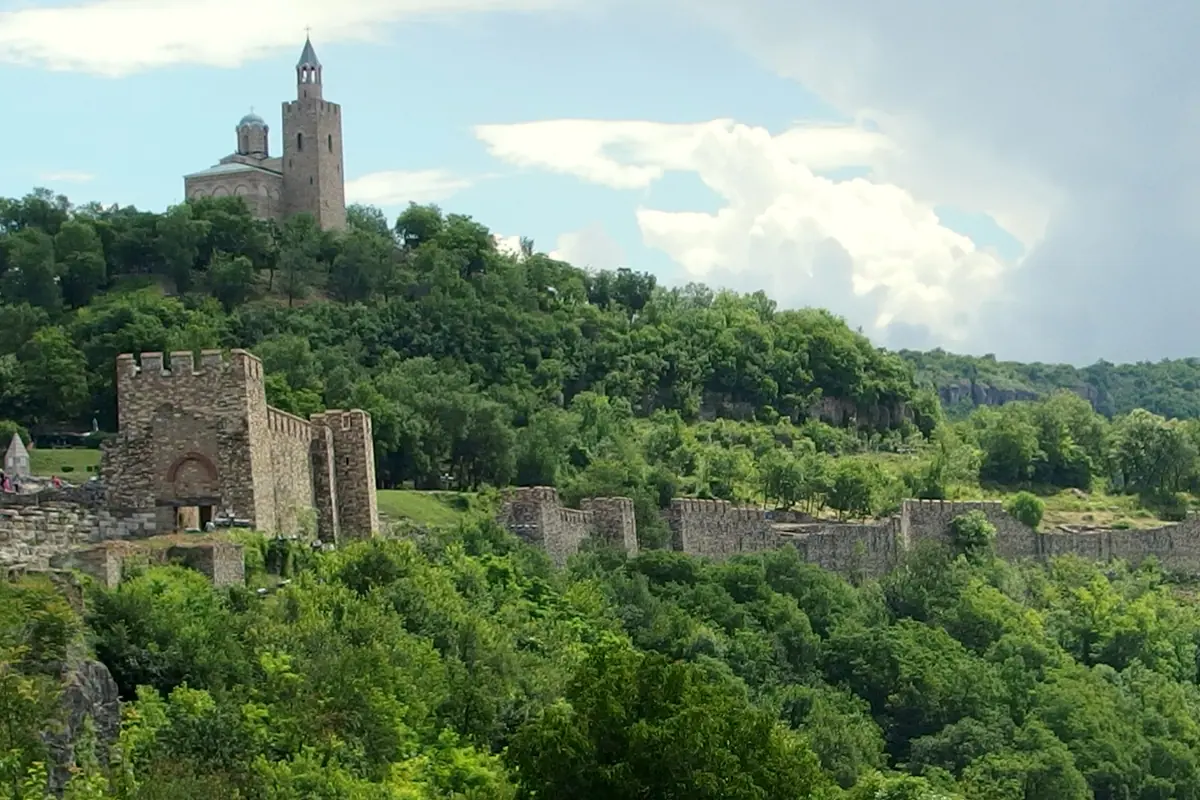
Drive or ride north through the Balkan range to Veliko Tarnovo, capital of the Second Bulgarian Empire, a city of houses stacked like books up the sides of a river gorge. The centrepiece is Tsarevets Fortress, a walled hilltop citadel where the Patriarchal Cathedral of the Ascension has been repainted in stark, modern murals, and Baldwin's Tower marks the spot where a Latin emperor is said to have met his end. Come back after dark in summer for the sound-and-light show, when the whole hill is floodlit and bells ring out across the valley.
Wander down ulitsa Gurko, where Ottoman-era houses lean out over the street on timber braces, and browse Samovodska Charshia, a craft street of potters, coppersmiths and sweet shops selling rose jam and pumpkin paste. Below, the Asen's Monument — four bronze horsemen rearing over the river — is the city's favourite meeting point and the best spot for a sunset photograph.
Sleep nearby in the village of Arbanasi, a hillside of fortified merchant houses and stone churches, including the Nativity of Christ church, whose walls are layered with frescoes so dense they need a guided torch to read. Guesthouses here serve home-made rakia and slow-cooked lamb, and the stars are astonishing after the city lights drop away.
Day 6: Shipka Pass, Buzludzha and the Rose Valley
Loop back towards Sofia via the Shipka Pass, where a memorial to the 1877 battles stands on the ridge and the Shipka Memorial Church, with its gold domes and Russian-style towers, sits in the valley below. Higher up, reached by a winding road from either Shipka or Kazanlak, looms Buzludzha — the abandoned concrete saucer of a communist monument, mosaic murals crumbling, sitting alone at 1,441 metres on a grassy peak. Access inside is restricted and sometimes fenced, so treat the exterior as the reward; the walk around it is bleak, brilliant and unforgettable.
Drop down into the Rose Valley around Kazanlak, the heart of the country's rose-oil industry. The Thracian Tomb of Kazanlak, a UNESCO-listed beehive vault from the 4th century BC, is viewed through a replica next door because the originals are too fragile for visitors, and it is worth the small detour for the delicate chariot-and-horse frescoes alone.
Time your trip for the first weekend of June and you'll catch Kazanlak's rose festival, when pickers in traditional dress fill the fields at dawn and the town turns out for parades. Outside that window, the Museum of the Rose fills in the story of how a flower became a national industry. From Kazanlak it's about three hours back to Sofia.
Day 7: Belogradchik, Vitosha or the Black Sea — Then Wheels Up
Your last day depends on your flight time. If you're leaving late, drive northwest to the Belogradchik Rocks, a two-and-a-half-hour run from Sofia, where sandstone towers the colour of rust rise 200 metres above a Roman-and-Ottoman fortress built into the natural gaps. Combine it with a stop at the Magura Cave, whose prehistoric paintings depict animals, people and what may be a solar calendar.
Staying close to the city instead? Ride the gondola from the Simeonovo district up Vitosha Mountain, walk to Cherni Vrah at 2,290 metres in four to five hours, and look down on the capital you've spent the week circling. In summer, an alternative ending is to fly the 50-minute hop to Varna, wander the Sea Garden and the Roman Thermae, then catch the bus south to Nessebar, the UNESCO peninsula where more than 40 medieval churches crowd a rock joined to the mainland by a narrow causeway.
Wherever you finish, build in buffer time. Allow two hours at Sofia Airport for an international departure, check whether your flight leaves from Terminal 2, and refuel your rental car before the drop-off zone — city filling stations are cheaper than the airport ones. Shoulder months from May to June and September to early October give the mildest weather, thinnest crowds and easiest driving; July and August are hot and busy on the coast.
Frequently asked questions
How many days do you really need for this Bulgaria itinerary?
Seven days covers Sofia, Rila Monastery, Plovdiv, Veliko Tarnovo and the Rose Valley comfortably if you have a car. Add three or four more days if you want the Black Sea coast around Varna and Nessebar.
What is the best time of year to visit Bulgaria?
May, June, September and early October offer mild weather, open mountain trails and fewer crowds. July and August suit beach lovers but are hot inland, while the Seven Rila Lakes are usually snow-free only from late June.
Should I fly into Sofia, Varna or Burgas?
Sofia suits a round-the-country loop and has the widest choice of routes. Varna and Burgas are the summer options for the coast, and a short internal hop between Sofia and Varna can save a long day of driving.
Do I need to rent a car in Bulgaria?
Not strictly — trains and buses connect Sofia, Plovdiv and Veliko Tarnovo well. But Rila Monastery, the Seven Rila Lakes, Belogradchik and Buzludzha are far easier with your own wheels, and rural roads are quiet outside the coast.
Is Buzludzha open to visitors?
The interior is unstable and entry is restricted, sometimes with fencing and occasional guided access. The exterior and the ridge walk are freely accessible and are the main reason most travellers make the trip.
Sort the rest of your trip
Everything for Bulgaria, in one place
Stay in Bulgaria
Hotels, guesthouses and apartments — compared in one search.
Search hotels
Transfer in Bulgaria
Private driver waiting on arrival — no queues, no surprises.
Book a transfer
Travel insurance
Medical cover, delays and lost baggage — sorted before you go.
Get coveredMore guides in Bulgaria
Hotels in Bulgaria: Where to Stay and What to See
Best Places to Visit in Bulgaria: Ancient Towns, High Mountains and the Black Sea
Bulgaria Tours: Food, Culture and Local Experiences Worth Building a Trip Around
Top Things to Do in Bulgaria: Landmarks, Mountains and the Black Sea Coast
