Bulgaria is a country that rewards curiosity more than checklists: gold-domed cathedrals sitting on top of Roman streets, a rose valley that scents the air for a fortnight each spring, and mountain villages where the bagpipes still sound like weather coming in. Come for the headline sights, stay for the breakfast banitsa, the fire-dancing rituals and the slow, generous tavern meals that stretch long past midnight.
Sofia: Roman Ruins, Gold Domes and a Very Honest Breakfast
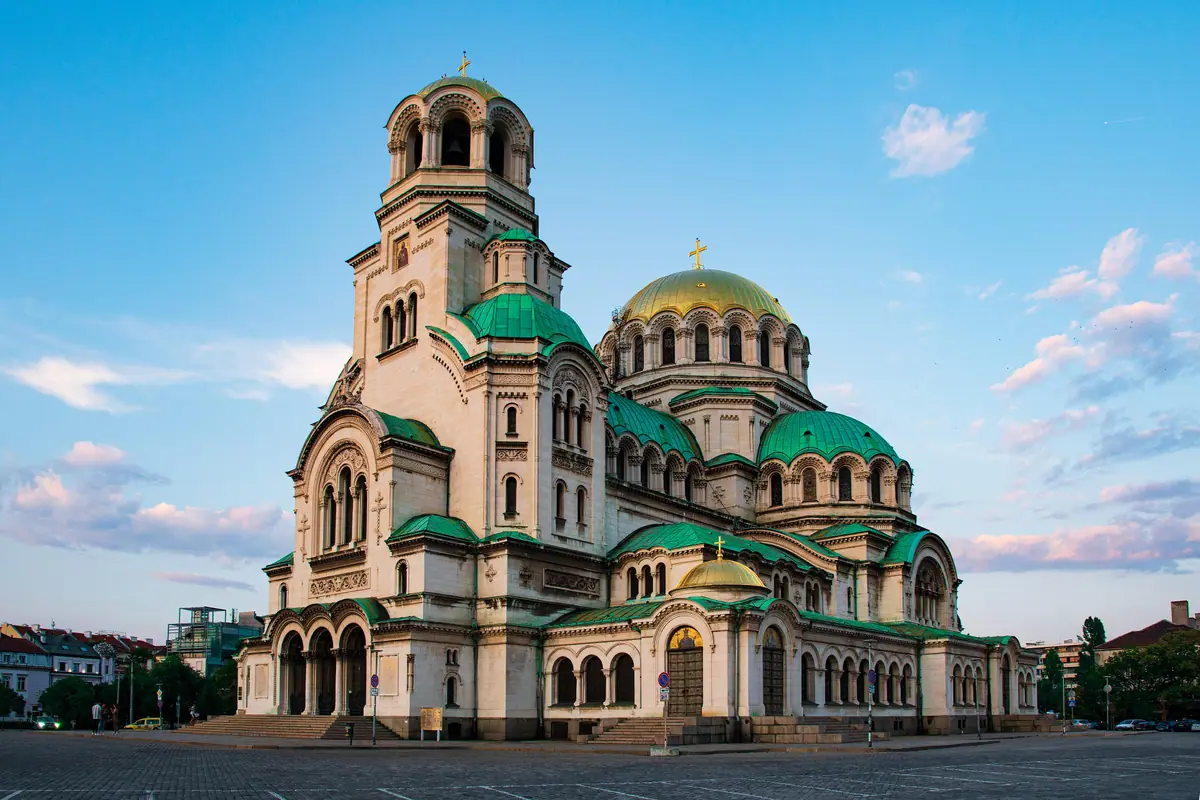
Almost every journey through Bulgaria starts in Sofia, and the city quietly hands you three civilisations before lunch. The Alexander Nevsky Cathedral dominates the skyline with its green and gold domes, and its crypt hides one of the finest collections of Orthodox icons anywhere in the Balkans. A few minutes' walk away, the ruins of Roman Serdica lie exposed beside the presidential building and beneath the main boulevard, while the small red-brick Rotunda of St George sits in a courtyard where a Roman bathhouse once stood. From there, the wide pedestrian sweep of Vitosha Boulevard leads downhill past cafes and buskers toward the Central Market Hall, where stalls stack white brined cheese, cured meats, jars of pepper relish and rose-scented cosmetics — an ideal first stop to understand what Bulgarians actually eat.
At the foot of Vitosha Mountain, the tiny Boyana Church holds frescoes painted in the 13th century that are considered masterpieces of medieval European art, and it takes only a short taxi ride to reach. Nearby, the National History Museum fills in the deep background, from Thracian gold to communist-era monuments. If you want a mountain in your afternoon, a cable car climbs from the city's edge toward the Aleko area, where marked trails run through birch and pine. Breakfast is its own ritual: a flaky slice of banitsa wrapped in paper, eaten standing up, with a cold glass of ayran or a small cup of boza.
Two full days give Sofia its due — one for the centre and its museums, one for Boyana, Vitosha and a lazy evening in a neighbourhood mehana, the traditional tavern where shopska salad, grilled kebapche and a carafe of rakia arrive in that order. Late-night stomach soup, sour and garlicky, is a local institution for good reason.
Plovdiv: Roman Stone and the Kapana Quarter
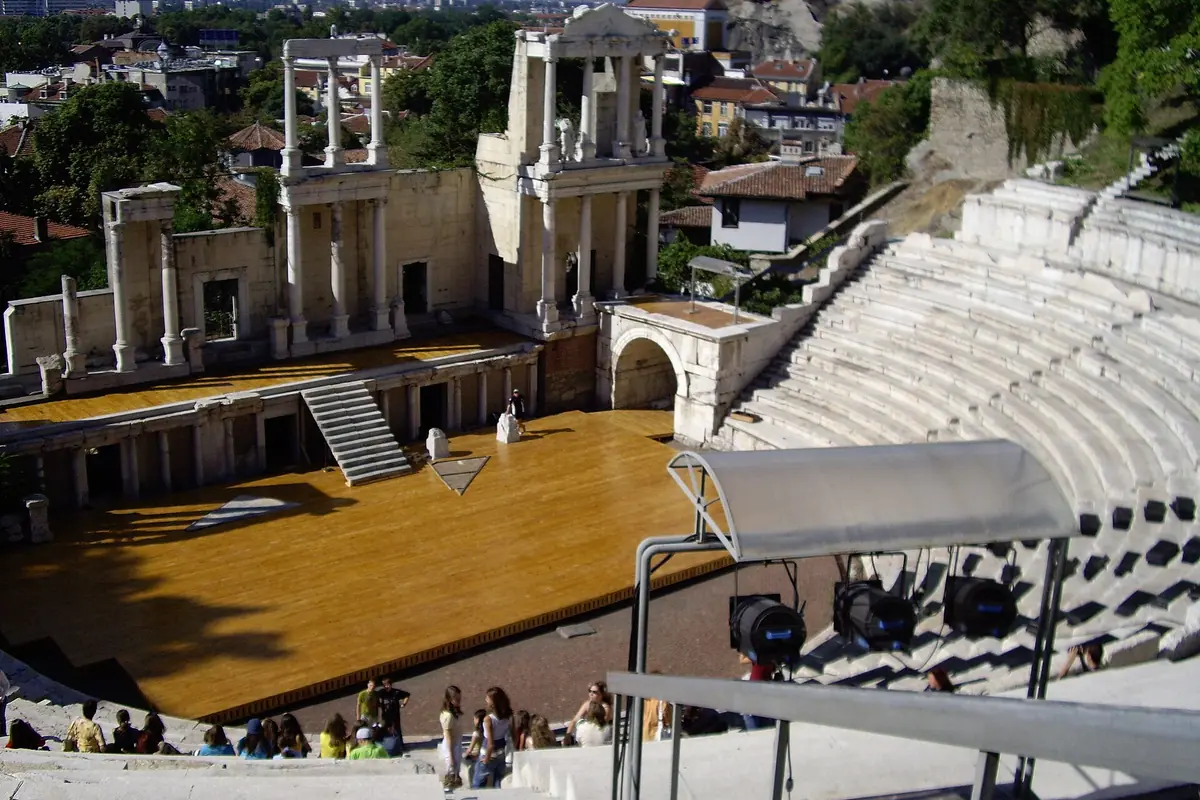
Plovdiv wears its age casually. A second-century Roman amphitheatre leans against the hillside of the Old Town, still used for opera and theatre on summer evenings, and above it the cobbled lanes climb past Hisar Kapia, a medieval gate built over Roman foundations, to the Ethnographic Museum and the house museums of wealthy 19th-century merchants. From Nebet Tepe, the rocky crest where the ancient settlement began, the whole city spreads out in a patchwork of red roofs, minarets and socialist-era blocks — a view that explains why this has been a crossroads for eight thousand years.
Down the hill, Kapana is the city's living room: a warren of narrow pedestrian streets filled with small galleries, coffee roasters, wine bars and tiny kitchens serving modern riffs on Bulgarian classics. The Djumaya Mosque and the long pedestrian main street anchor the flat grid, and there is street art almost everywhere you look. This is a city for wandering without a plan, stopping when something smells good.
Give Plovdiv two nights and use it as a base. The Bachkovo Monastery, with its 17th-century refectory frescoes, is a short drive south, and Asen's Fortress perches above a gorge on the same route. The narrow-gauge railway that climbs from Septemvri into the Rhodope Mountains is one of the great slow train rides in the region: wooden benches, sharp curves, villages that appear out of the pine forest. Wine lovers should point themselves toward the Thracian valley, where melnik and mavrud grapes grow in serious quantities.
Rila, Pirin and the High Country
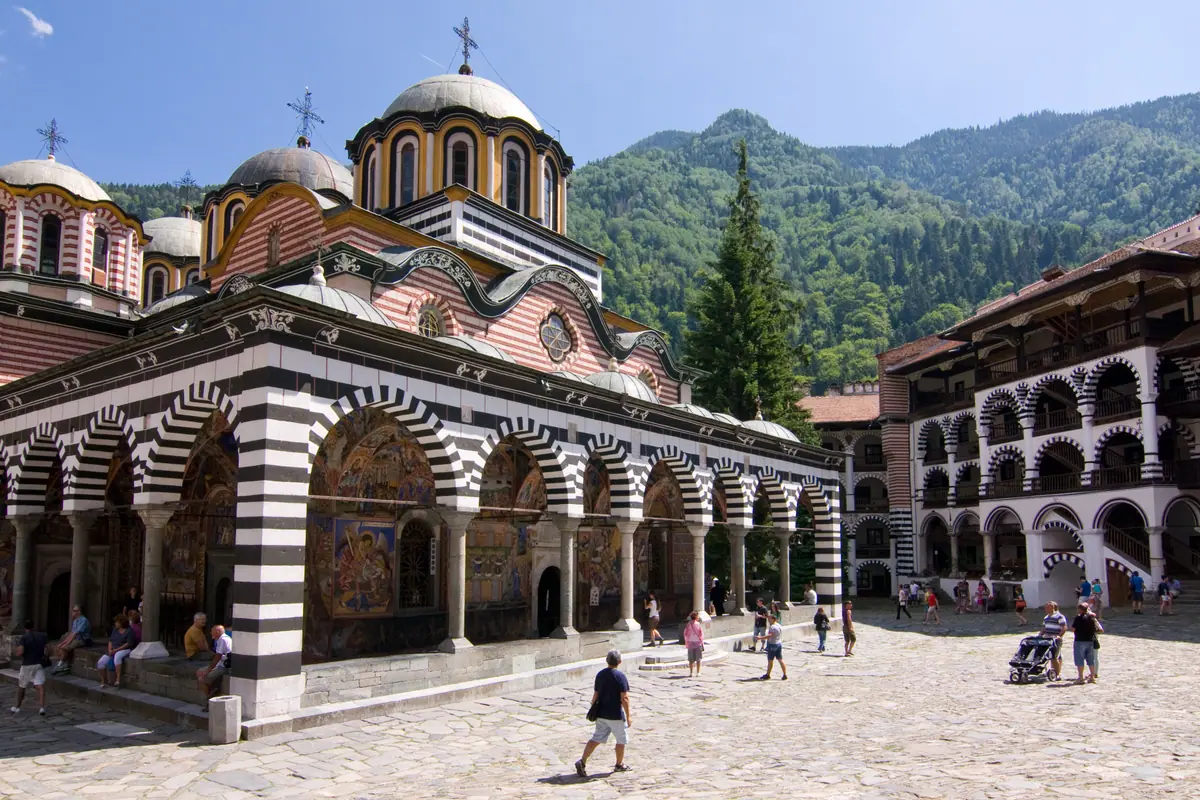
Rila Monastery is the image most people carry home: candy-striped arcades, a courtyard ringed with frescoes, and mountains rising behind it. Founded in the 10th century by the hermit Ivan of Rila and rebuilt in the 19th, it remains a working monastery where monks still keep bees and bake bread. The museum holds intricate carved crosses and religious treasures, and the surrounding forests are prime walking country. On the way south, the sand pyramids of Stob are an easy, strange detour — natural earth towers that look deliberately sculpted.
Higher up, the Seven Rila Lakes sit in a glacial bowl reached by chairlift from Panichishte or by a long hike from the valley below. Each lake has a name — the Tear, the Eye, the Kidney — and each sits at a different altitude, so you climb from meadow into bare rock. Late June through October is the realistic window; snow lingers into early summer, and afternoon storms arrive fast. Mountain huts offer simple beds and enormous pans of food to hikers who arrive on foot.
Bansko, at the foot of the Pirin range, is the winter anchor, with ski runs open roughly December to March and a stone-and-wood old quarter that stays atmospheric year-round. In summer the same town becomes a trailhead for the Pirin lakes and peaks, and further south the tiny town of Melnik bakes in the sun among natural sand pyramids, pouring robust red wine from cellars cut into the hillside.
The Black Sea Coast: Nessebar, Sozopol and Slow Summer Evenings
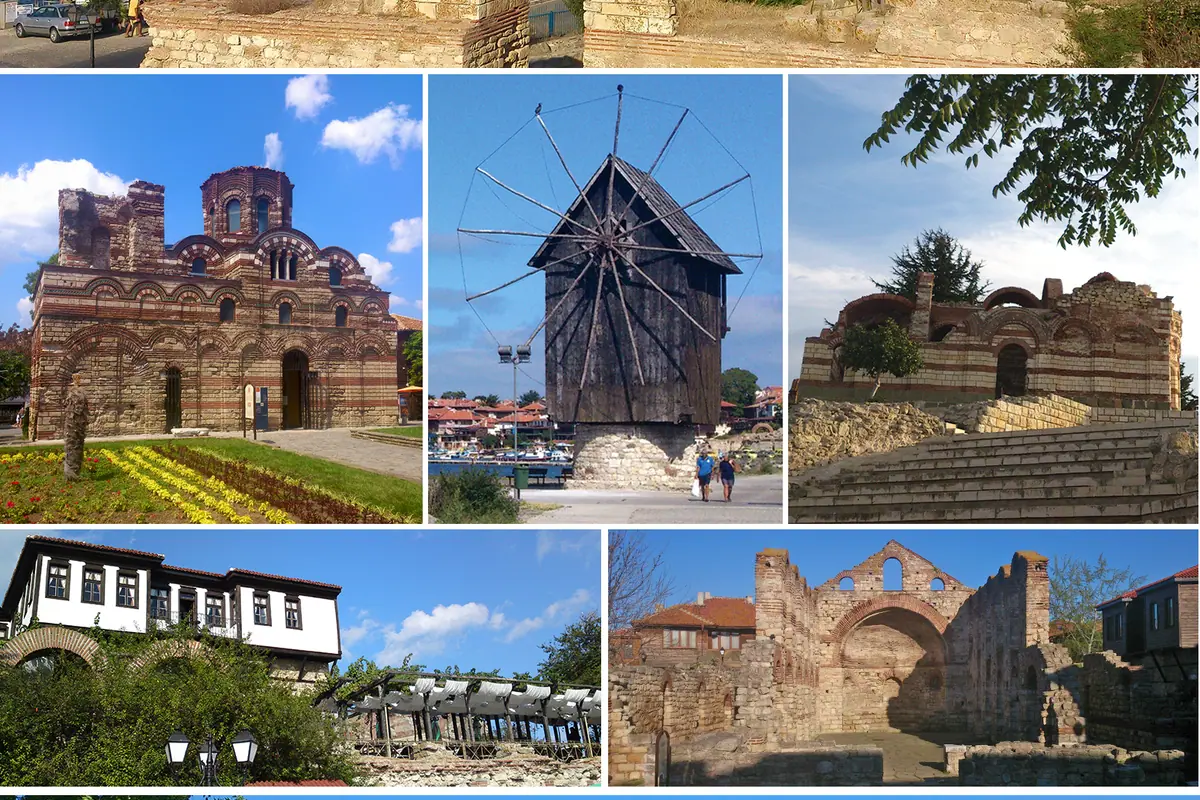
Nessebar is the coast's showpiece and a UNESCO-listed site: a rocky peninsula joined to the mainland by a narrow isthmus, where more than a dozen medieval churches stand in various states of beautiful ruin, along with timber-framed houses that lean over the lanes. Walk it early in the morning before the tour groups arrive, then swim from the beaches on either side. Sozopol, further south, has a similar charm with a touch more artistic temperament — galleries, wooden balconies, and the Apollonia festival of arts filling the squares in late summer.
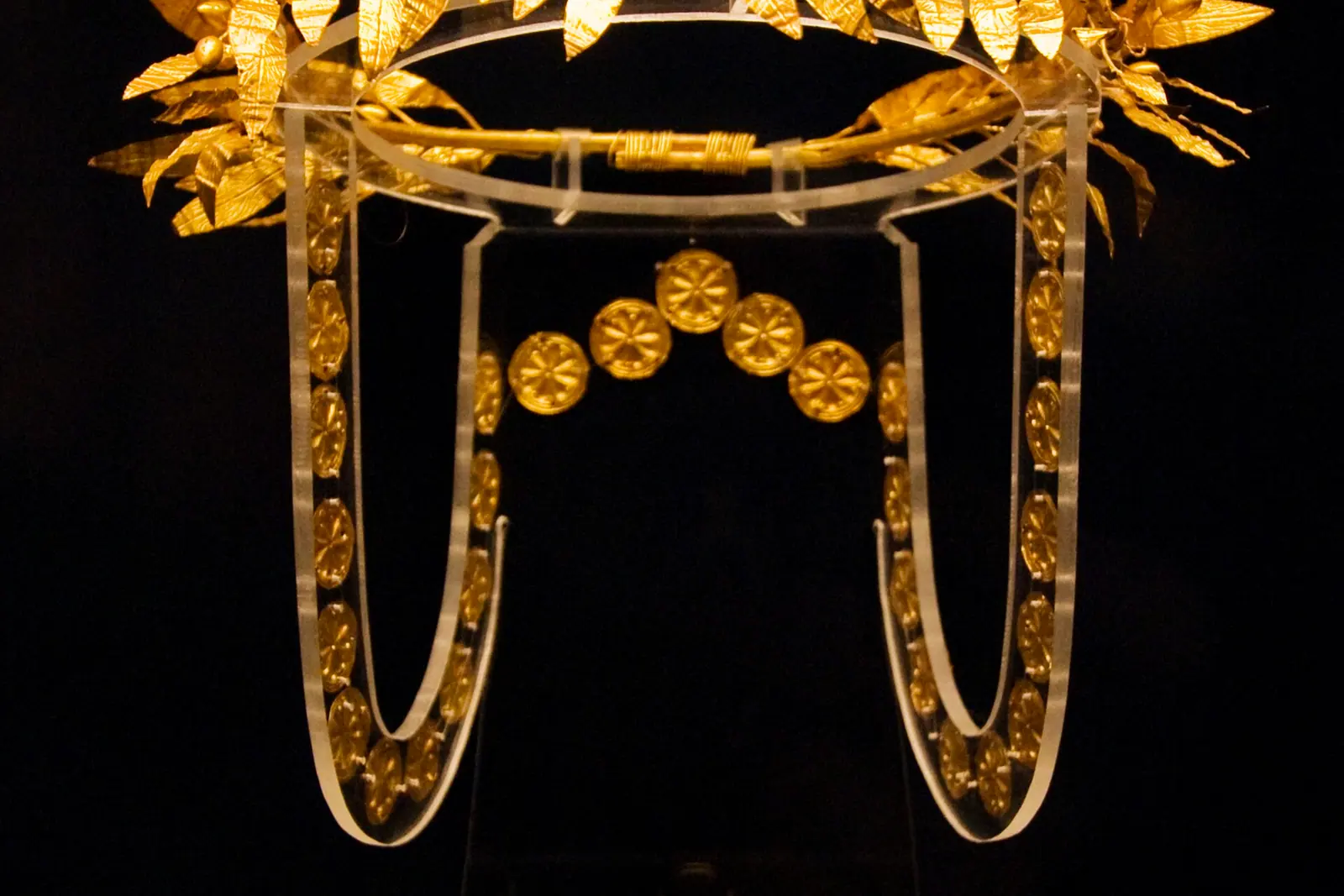
Varna, the biggest coastal city, is worth a day even if you skip the beach clubs. Its Roman thermal baths are among the largest surviving in Europe, the Sea Garden park runs for miles along the cliffs, and the archaeological museum displays gold ornaments from a fifth-millennium BC necropolis — the oldest worked gold ever found. North of the city, the botanical garden at Balchik and the clifftop ruins at Cape Kaliakra make an easy loop.
Swimming season runs from mid-June to mid-September, with August water at its warmest and the resorts at their loudest. May, early June and September give you quiet beaches and lower heat. Eat what the sea gives: mussels, sea snails, tiny fried sprats, and a tangy fish soup that varies from village to village.
Veliko Tarnovo, Craft Villages and the Northwest
Veliko Tarnovo tumbles down a gorge of the Yantra River, and above it the Tsarevets fortress recalls the days when this was the capital of a medieval empire. Walk the ramparts, climb to the restored Patriarch's church, and come back at night for the sound-and-light show that lights the hill in shifting colours. Below the fortress, Samovodska Charshia is a street of workshops where you can watch potters, coppersmiths and confectioners at work, and the nearby village of Arbanasi hides 17th-century merchant houses and small churches covered floor to ceiling in frescoes.
Craft traditions thread across the country if you know where to look. Etar, an open-air ethnographic museum near Gabrovo, keeps water-powered mills and crafts alive in a working village setting. Tryavna is known for its woodcarvers, Koprivshtitsa for its painted National Revival houses and the great folklore gatherings that fill its meadows in festival years, Chiprovtsi for handwoven carpets, and Troyan for dark pottery. In the Rhodope village of Shiroka Laka, a school still teaches the gaida, the goatskin bagpipe whose drone defines the mountain sound.
The northwest is Bulgaria's most underrated corner: the Belogradchik Rocks, a sandstone maze of towers and human-shaped forms with a fortress wedged between them; the Madara Rider, a relief of a horseman carved into a cliff face more than a thousand years ago; the vast entrance of Devetashka Cave, and the Krushuna waterfalls tumbling through green limestone terraces. Base yourself somewhere small and drive — this is the part of the country where the roads empty out and the rewards multiply.
Festivals, Rituals and the Bulgarian Table
Bulgaria's calendar is thick with ritual. On 1 March, strangers tie red-and-white martenitsa threads to each other's wrists and wear them until they see a stork or a blossoming tree. Vineyards are pruned and blessed in mid-February for Trifon Zarezan, the wine-grower's day. Through winter and early spring, kukeri — costumed figures with bells and shaggy hides — roam villages to scare off evil, with the biggest gatherings in late January. The first weekend of June brings the Rose Festival to Kazanlak, when the valley is picked at dawn and the streets fill with parades. On 3 June, in a handful of Strandzha villages, barefoot nestinari still dance on glowing embers.
The food is plain-spoken and generous. Shopska salad — chopped tomatoes, cucumber, peppers and grated white cheese — opens almost every meal, and tarator, a cold soup of yogurt, cucumber, dill and walnut, is the summer antidote to heat. Banitsa appears at breakfast and midnight alike; sirene, the salty brined cheese, turns up in pastry, salad and omelettes; lyutenitsa, a slow-cooked pepper and tomato relish, is spread on bread with pride. Grilled kebapche and kyufte, clay-pot gyuvech, stuffed peppers, bean soup and Rhodope-style cheverme roasted over a fire cover the main courses. Yogurt is a point of national identity, and the local bacterial culture that makes it has a following well beyond the country's borders.
To drink, expect rakia before the food arrives, mastika or boza if you'd rather not, and wines from Melnik, the Thracian valley and the Black Sea hills. A few small courtesies go a long way: a nod means no and a shake means yes, toasts come with nazdrave and eye contact, and hosts genuinely take it as a compliment when you eat more than you intended. Carry some cash in the local currency for village shops, markets and small wineries, since cards are not universal once you leave the cities. Most signs are in Cyrillic, so learning the alphabet — twenty minutes of effort — will pay for itself by the second day.
Frequently asked questions
What is the best time of year for a tour of Bulgaria?
May, June, September and early October are the sweet spots: mild temperatures, open mountain trails and manageable crowds. July and August are best for the Black Sea coast, when the water is warmest, but inland cities get hot. December to March is ski season in Bansko, Borovets and Pamporovo, and also the season for kukeri festivals in the villages.
How many days do I need to see the main highlights?
Ten days is a comfortable loop: two in Sofia, two in Plovdiv with a day trip to Bachkovo or the Rhodope narrow-gauge railway, two around Rila Monastery and the Seven Rila Lakes or Bansko, one to two in Veliko Tarnovo, and two on the coast at Nessebar or Sozopol. A week works if you cut either the coast or the mountains.
Do I need to speak Bulgarian to get around?
English is common in Sofia, Plovdiv, Varna and resort areas, and among younger people everywhere. Outside the cities, a few phrases in Bulgarian go a long way, and it helps to remember that nodding means no and shaking the head means yes. Signs and menus are in Cyrillic, so learning the alphabet is genuinely useful.
Is it easy to travel between towns and villages?
Intercity buses are frequent, cheap and usually faster than trains on the main routes, while the narrow-gauge line from Septemvri to Dobrinishte is worth taking for the scenery alone. Sofia has a clean, simple metro. For monasteries, craft villages and the northwest rock formations, a rented car gives you far more freedom than public transport.
What food should I not leave without trying?
Start with banitsa and ayran for breakfast, shopska salad and tarator at lunch, and kebapche, kyufte or gyuvech in the evening, always with lyutenitsa on the table. Add sirene in every form, a bowl of cold yogurt, Melnik red wine, and a small glass of rakia before the meal. In coastal towns, order the mussels, sea snails and fried sprats.
Sort the rest of your trip
Everything for Bulgaria, in one place
Stay in Bulgaria
Hotels, guesthouses and apartments — compared in one search.
Search hotels
Transfer in Bulgaria
Private driver waiting on arrival — no queues, no surprises.
Book a transfer
Stay online in Bulgaria
Travel eSIM — data the moment you land, no roaming bills.
Get an eSIMMore guides in Bulgaria
Hotels in Bulgaria: Where to Stay and What to See
Bulgaria in One Week: A 7-Day Itinerary from Sofia
Best Places to Visit in Bulgaria: Ancient Towns, High Mountains and the Black Sea
Top Things to Do in Bulgaria: Landmarks, Mountains and the Black Sea Coast
