Belgium packs an improbable amount into a country you can cross by train in under three hours: gilded medieval squares, a canal city that looks carved from a storybook, an altarpiece that changed painting forever, and beer served in its own dedicated glass. The trick is knowing which landmarks deserve your morning and which are worth the detour into the hills.
Brussels: Grand-Place, Art Nouveau and the Atomium
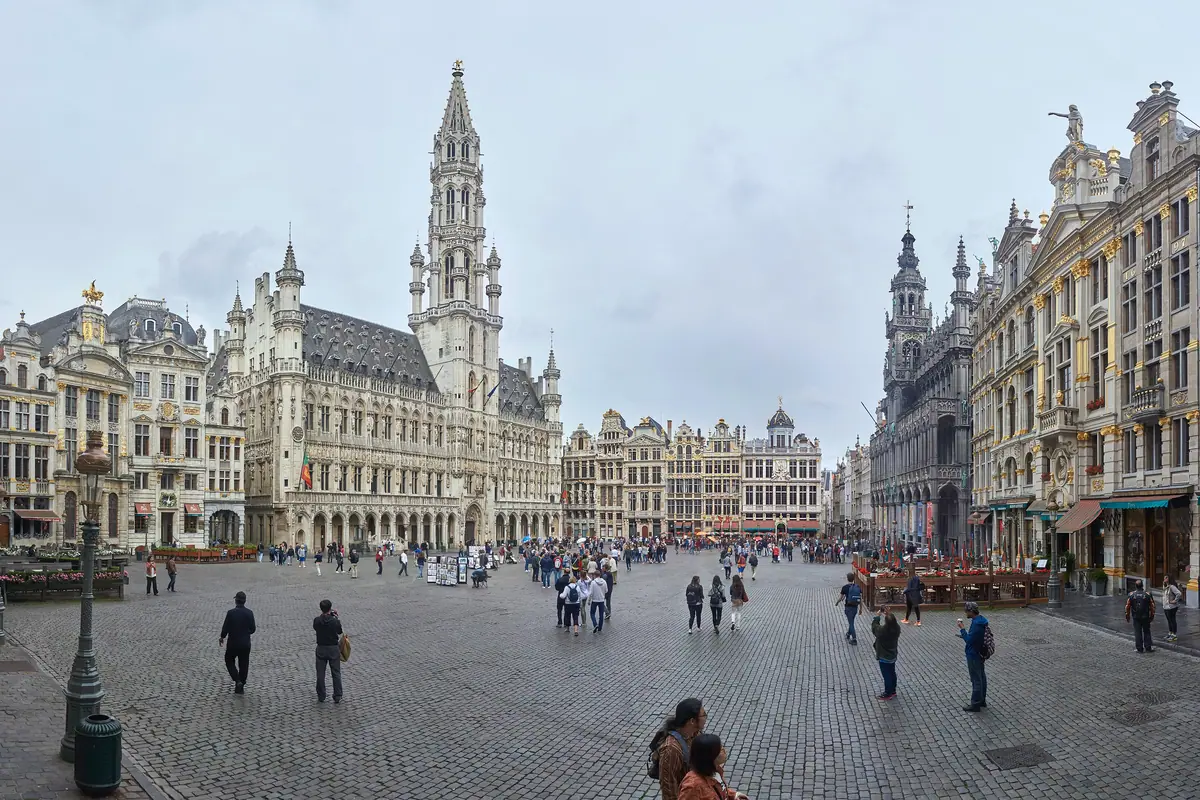
Start where the city has always gathered. The Grand-Place is a cobbled theatre of guild houses with gilded façades, dominated by the needle-spired Town Hall and the King's House opposite, which holds the city museum. Come at dusk in summer when the stonework glows amber, or in mid-August of even-numbered years when volunteers lay a vast flower carpet across the square. Wander five minutes south into the Marollen district, where the daily flea market on the Place du Jeu de Balle spills out among comic-strip murals painted on gable walls.
Above the city centre, the Mont des Arts links the Royal Museums of Fine Arts — home to Bruegel, Rubens and the world-class Magritte collection — with the glass-lift Musical Instruments Museum and the 1847 Galeries Royales Saint-Hubert, one of Europe's earliest covered shopping arcades. Art Nouveau pilgrims should head to the Horta district, where Victor Horta's whiplash-curve townhouses are preserved as a museum. And yes, the tiny bronze Manneken Pis really is that small; the nearby fountain of his sister Jeanneke is a quieter photo stop.
Give the northern edge of town half a day for the Atomium, the nine-sphere aluminium structure built for the 1958 World's Fair and now paired with a design museum inside. The adjoining park holds Mini-Europe and the Centenary Palaces. Two full days is a fair minimum for Brussels, three if you want to add a day trip.
Bruges: Canals, Bells and a Medieval Skyline
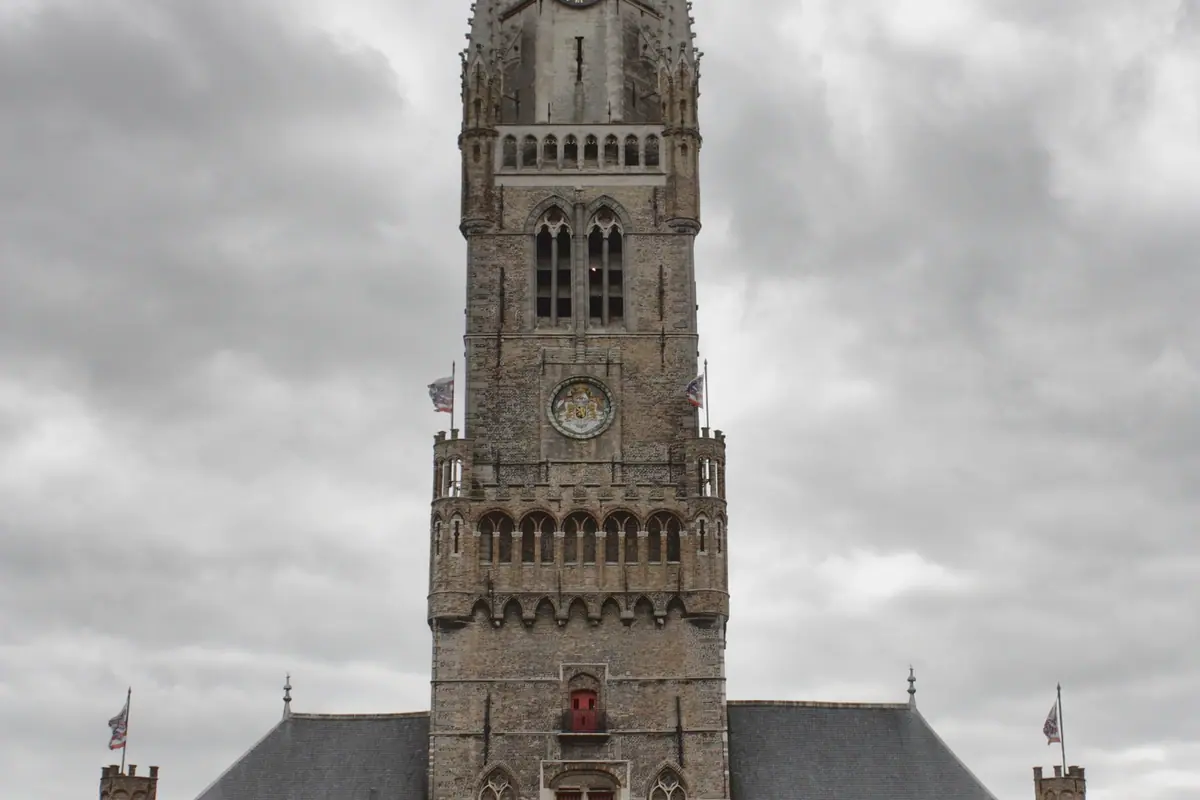
Bruges is the postcard, and it earns it. The Markt opens beneath the 83-metre Belfry, whose 366 steps and 47-bell carillon are worth the climb for the rooftop view. Just off the square, the Basilica of the Holy Blood guards a venerated relic in a chapel with a painted Romanesque lower level, while the Church of Our Lady holds a white marble Madonna by Michelangelo — one of the few sculptures of his to leave Italy in his lifetime.
The real pleasure, though, is the water. Canal boats run 30-minute loops from several jetties near the Burg and the Rozenhoedkaai, the quay that every photographer converges on at sunset. Walk instead to the Minnewater, the so-called Lake of Love, where swans drift under the old city gate, then loop back through the quiet Sint-Anna quarter and the windmills on the eastern ramparts. The Groeningemuseum assembles the Flemish Primitives in miniature, including works by Jan van Eyck and Hans Memling, and the nearby Sint-Janshospitaal shows Memling's shrine of St Ursula.
Timing matters. Cruise-ship and coach crowds peak between 11am and 4pm, so plan your canal ride at opening time or after 5pm. Spring and autumn bring softer light and thinner queues; late November to early January adds Christmas stalls and glühwein on the Markt. One full day covers the highlights, two if you want museums without rushing.
Ghent and Antwerp: Where Flanders Keeps Its Masterpieces
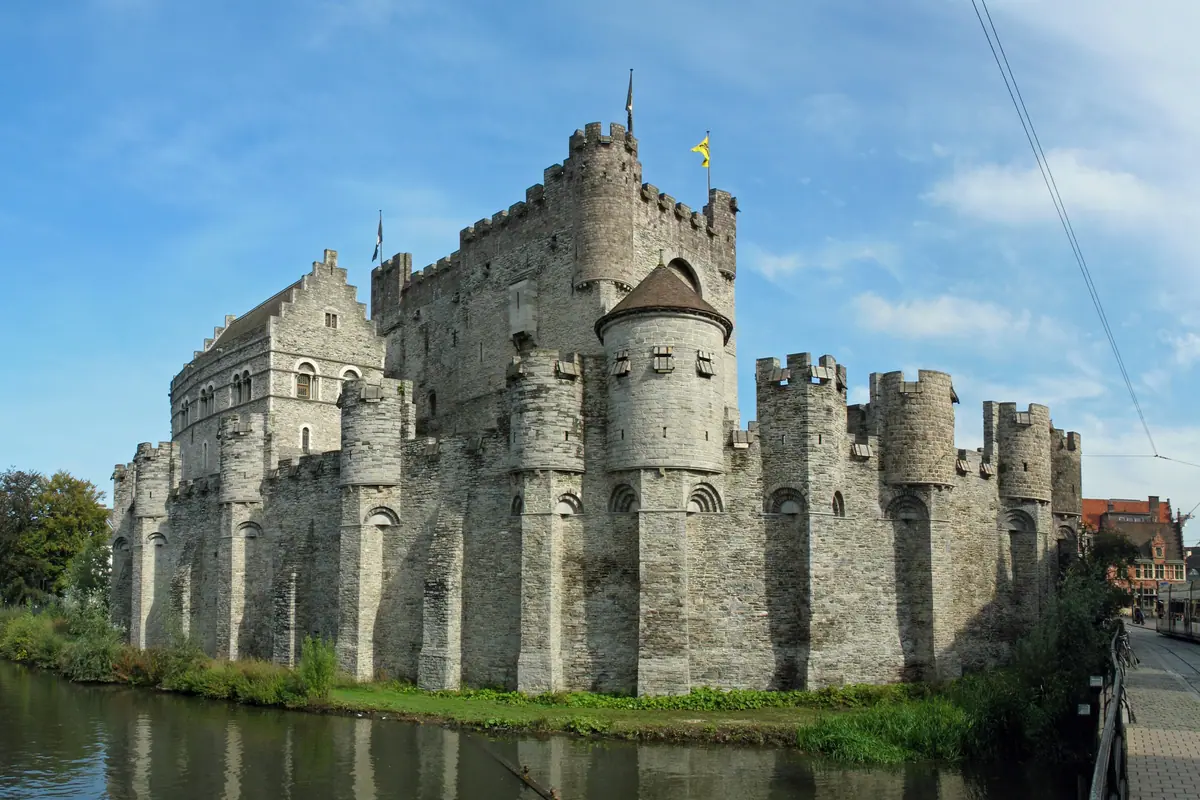
Ghent wears its history more casually than Bruges, and it is all the better for it. In St Bavo's Cathedral you can stand in front of the Ghent Altarpiece, the Van Eyck brothers' multi-panelled Adoration of the Mystic Lamb, restored to startling detail and displayed in a dedicated visitor centre with timed entry. A few streets away, the moated Gravensteen castle rises from the middle of the city, and the medieval quays of the Graslei and Korenlei form the prettiest stretch of waterfront in Belgium, best seen from a café table on a summer evening.
Antwerp answers with sheer scale. The Cathedral of Our Lady is the tallest Gothic church in the Low Countries, and inside hang four Rubens altarpieces painted for the very space they occupy. His former home and studio, the Rubens House, is a short walk away. The UNESCO-listed Plantin-Moretus Museum preserves a 16th-century printing works almost intact, while the Museum aan de Stroom stacks its collections in a red sandstone tower with a free rooftop panorama over the port.
Two small pleasures bookend the city: Antwerp Central Station, routinely voted among the world's most beautiful railway stations for its tiered stone concourse, and the diamond quarter beside it. Both Ghent and Antwerp sit 30 to 50 minutes from Brussels by train, so each works as an easy day trip — Ghent in a day, Antwerp in a full day plus an evening.
Ypres, the Menin Gate and the Battlefields of Flanders
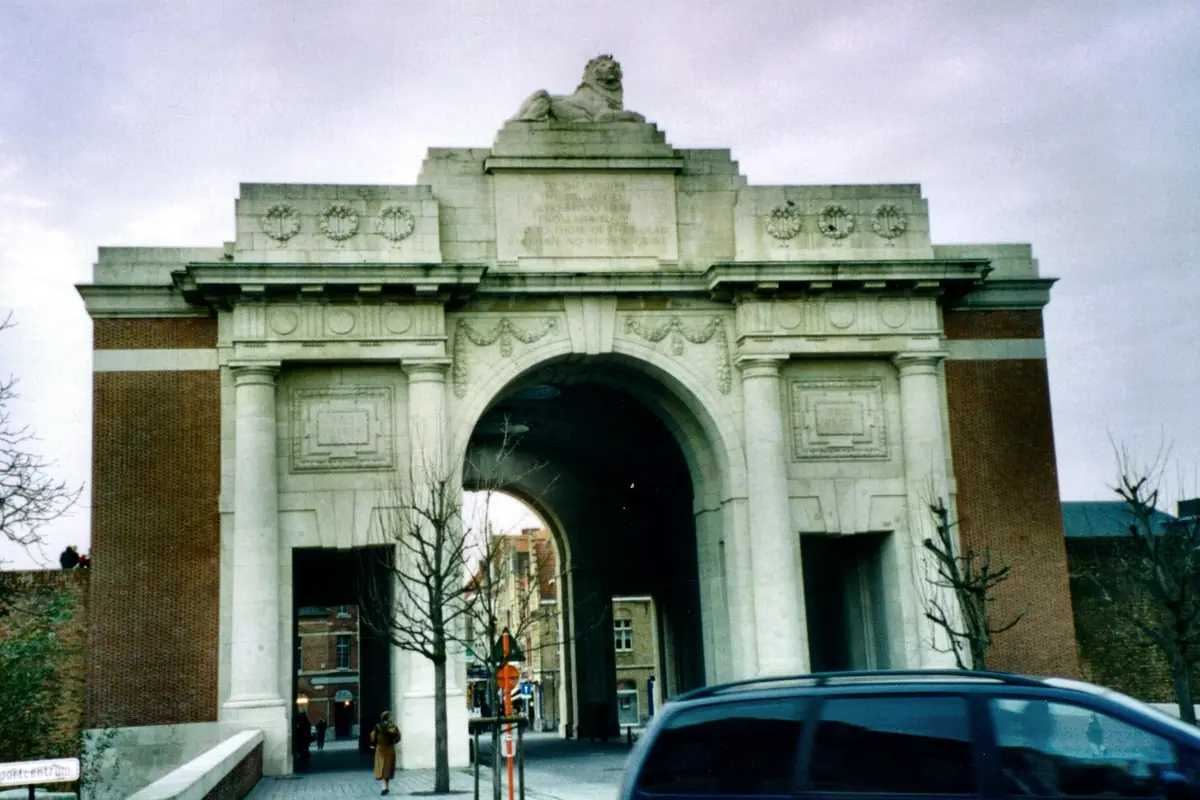
The flat fields west of Brussels carry the weight of the First World War, and the towns have turned remembrance into something affecting rather than grim. In Ypres, the Cloth Halls — rebuilt stone by stone after their destruction — house the In Flanders Fields Museum, which follows individual soldiers' stories through interactive displays. Every evening at 8pm, traffic stops beneath the Menin Gate as buglers sound the Last Post, a ritual observed since 1928 and interrupted only during the Second World War.
Beyond the ramparts, a short drive or cycle takes you to Tyne Cot Cemetery near Passendale, the largest Commonwealth war cemetery in the world, its headstones curving across a former battlefield. Nearby are the preserved trenches and craters at Sanctuary Wood and Hill 62, plus the vast mine crater at Spanbroekmolen. Cycling is the ideal way to link these sites: the landscape is flat, signposted and dotted with farmstead cafés.
Further south, Waterloo marks a different conflict. The Lion's Mound, the domed memorial panorama and the Hougoumont farm bring Napoleon's final defeat to life, and each June costumed re-enactors restage the battle on the original fields. Both areas are comfortable day trips from Brussels — Ypres takes around an hour and 45 minutes by train with a change, Waterloo about 30 minutes.
The Ardennes and the Meuse: Castles, Caves and Forest Trails
Southern Belgium turns mountainous, and the Meuse river carves a route through it. Dinant is the classic stop: a bulbous collegiate church of Notre-Dame pressed against the cliff, a citadel reached by cable car or 408 steps, and a bridge lined with colourful saxophones honouring Adolphe Sax, who was born here. Continue upstream to Namur, where the vast citadel sprawls across the confluence of the Sambre and Meuse and hosts summer festivals in its dry moats.
Deeper in the Ardennes, Durbuy claims the title of the smallest town in Belgium, a knot of stone lanes beneath a rock outcrop, and La Roche-en-Ardenne pairs castle ruins with kayak launches on the Ourthe. Bouillon, on a loop of the Semois, keeps the medieval fortress of Godfrey of Bouillon, while Han-sur-Lesse offers a train ride into an enormous cave system with an underground river. In the far east, the Hautes Fagnes moorland holds the country's highest point at Signal de Botrange, 694 metres of peat bog and boardwalk.
This is four-season country. Late September and October bring the finest foliage; summer is for kayaking and cycling; winter can deliver genuine snow on the High Fens. Base yourself in Dinant, Durbuy or La Roche for two or three nights rather than attempting it as a day trip from Brussels — the drives alone eat the day.
Belgian Tables: Beer, Chocolate, Waffles and Seasonal Spectacles
Belgian beer is a culture, not a drink, and it is recognised as intangible heritage. Expect Trappist ales brewed in monasteries, tart lambic and geuze fermented by wild airborne yeast around Brussels and the Pajottenland, wheat beers, fruit beers and strong dark ales — each served in its own shape of glass, because the vessel genuinely changes the aroma. Order a small tasting flight rather than a single litre; the strong ones creep up. Pair them with carbonnade flamande, a beef stew braised in beer, or waterzooi, the creamy Ghent chicken stew.
The food is unpretentious and regional. Brussels waffles are crisp and rectangular, Liège waffles dense and sugar-pearled; fries are thick-cut and, by local consensus, served with mayonnaise. Mussels arrive by the kilo in season from September to April, and pralines — the filled chocolate shell — are a Belgian invention you will find in small family workshops as well as famous shopfronts. In Ghent and Antwerp, look for the tiered trays of speculoos biscuits in old bakeries.
Time your trip to the calendar and you get the country at its best. The Carnival of Binche, with its ostrich-feather Gilles dancers, erupts on Shrove Tuesday in February or March. The Hallerbos forest turns violet with bluebells for roughly two weeks in mid-April to early May, and it is reachable by bus from Brussels. Christmas markets run from late November to early January, the largest in Liège and the prettiest in Bruges. And for the coast, a tram trundles 67 kilometres from De Panne to Knokke-Heist past dunes, seafood shacks and the art-filled streets of Ostend. May, June and September remain the sweet spots for weather and crowds alike.
Frequently asked questions
How many days do you need in Belgium?
Four to seven days is ideal. Two nights in Brussels covers the Grand-Place, museums and Atomium; one or two in Bruges; a day each for Ghent and Antwerp; and two or three nights in the Ardennes if you want castles and forest walks. Distances are short, so you can chain cities by train without losing much time.
When is the best time to visit Belgium?
May, June and September offer the best balance of mild weather, long evenings and thinner crowds. Mid-April to early May is the window for the Hallerbos bluebells, February or March for the Carnival of Binche, and late November to early January for Christmas markets. July and August are warmest but busiest in Bruges and on the coast.
Should I base myself in Brussels or Bruges?
Brussels is the practical base: it has the widest choice of accommodation and direct trains to Bruges, Ghent, Antwerp, Ypres and the Ardennes. Bruges suits travellers who want to wake up inside a medieval city and have the canals to themselves before the day-trippers arrive. Staying in Ghent is a good middle option with cheaper rooms and two cities within half an hour.
Do I need to book Belgian attractions in advance?
Yes for the headline sights. The Ghent Altarpiece visitor centre, the Magritte collection, the Rubens House and Bruges' Belfry all use timed or limited entry, and summer slots sell out days ahead. Canal boat tours in Bruges and the Last Post ceremony at the Menin Gate are free or turn-up, but arrive 30 minutes early for a good spot under the gate.
Is Belgium easy to explore without a car?
Very. The rail network is dense and frequent, with Brussels to Ghent in about 35 minutes and Brussels to Antwerp in under an hour. Cities are compact and walkable, with trams and buses for the outskirts. A car only becomes useful in the Ardennes, where villages and cave entrances are spread out — though the region also has decent regional rail and cycle routes.
Plan it — experiences in Belgium
Live search, booked directly with trusted providers.
Sort the rest of your trip
Everything for Belgium, in one place
Stay in Belgium
Hotels, guesthouses and apartments — compared in one search.
Search hotels
Transfer in Belgium
Private driver waiting on arrival — no queues, no surprises.
Book a transfer
Stay online in Belgium
Travel eSIM — data the moment you land, no roaming bills.
Get an eSIMMore guides in Belgium
Best Time to Visit Belgium for Hotels: A Season-by-Season Booking Guide
One Week in Belgium: The Perfect 7-Day Itinerary from Brussels
Where to Stay in Belgium: Best Areas, Hotels and Must-See Attractions in Brussels, Bruges, Ghent and Beyond
Belgium Food, Culture and Local Experiences: A Tour Beyond the Postcard