Belgium is small enough to cross in a morning and dense enough to keep you busy for a month, which makes a single week both generous and tantalising. Land at Brussels Airport, ride twenty minutes into the capital, and you are already standing on one of Europe's great medieval squares. From there, the country unfolds by train: canal cities, castles, battlefields and a Walloon valley of citadels.
Days 1–2: Landing in Brussels and the Grand-Place
Most flights into Belgium touch down at Brussels Airport in Zaventem, a dozen kilometres northeast of the capital, while budget carriers often use the smaller southern airport outside Charleroi. From Zaventem, trains leave the terminal every few minutes and reach Brussels-Central in roughly twenty minutes, dropping you a short walk from the historic core. Buy a multi-journey ticket at the machine rather than a single, and you are set for the week.
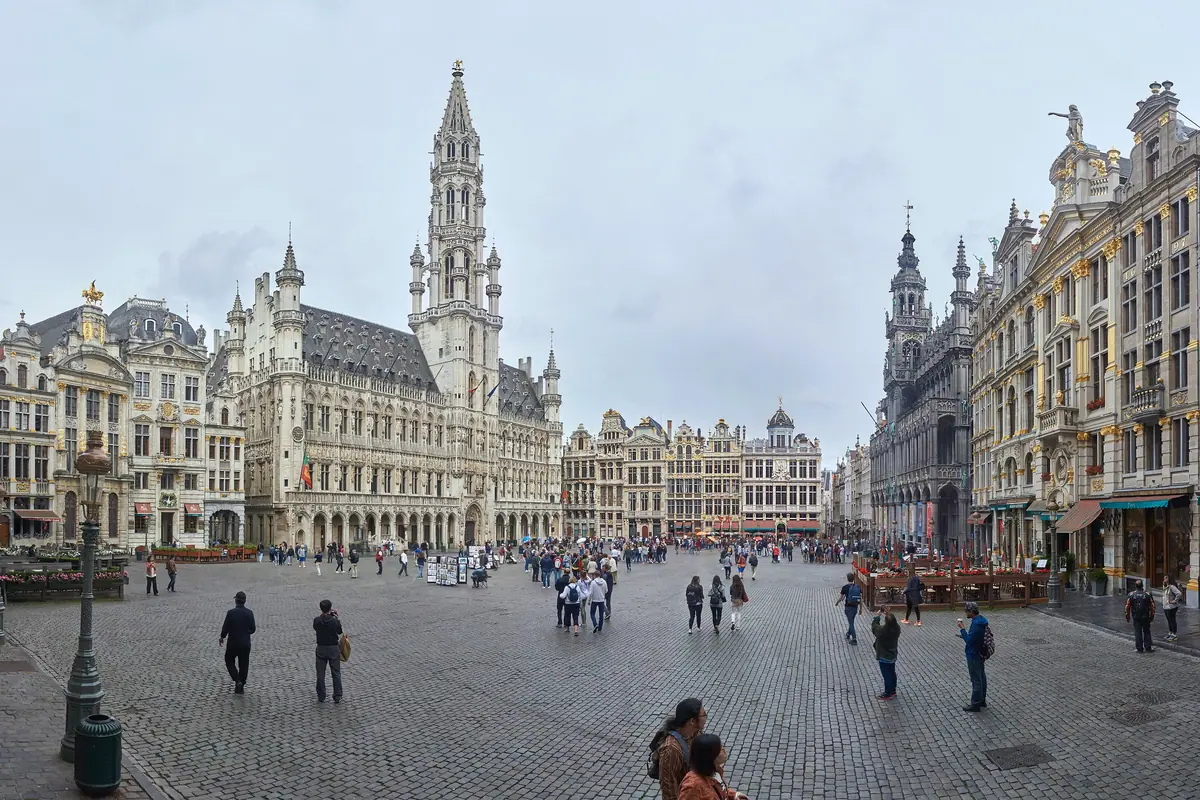
Begin where the city insists you begin: the Grand-Place, a UNESCO-listed square of gilded guildhouses, the flamboyant Gothic Town Hall and the King's House, which holds the Museum of the City of Brussels. Look up, then look down — in mid-August of even-numbered years a vast carpet of begonias is laid across the cobbles. Wander five minutes to Manneken Pis, smaller than anyone expects, and cut through the glass-roofed Galeries Royales Saint-Hubert, Europe's oldest shopping arcade.
Save the evening for the Mont des Arts, where the terraces above the city offer the classic skyline view over the Town Hall spire. Then eat properly: carbonnade flamande, a beer-braised beef stew, moules-frites in season, and a Liège waffle from a street stand for the walk home.
Day 2: Royal Brussels, the Atomium and Comic-Strip Art
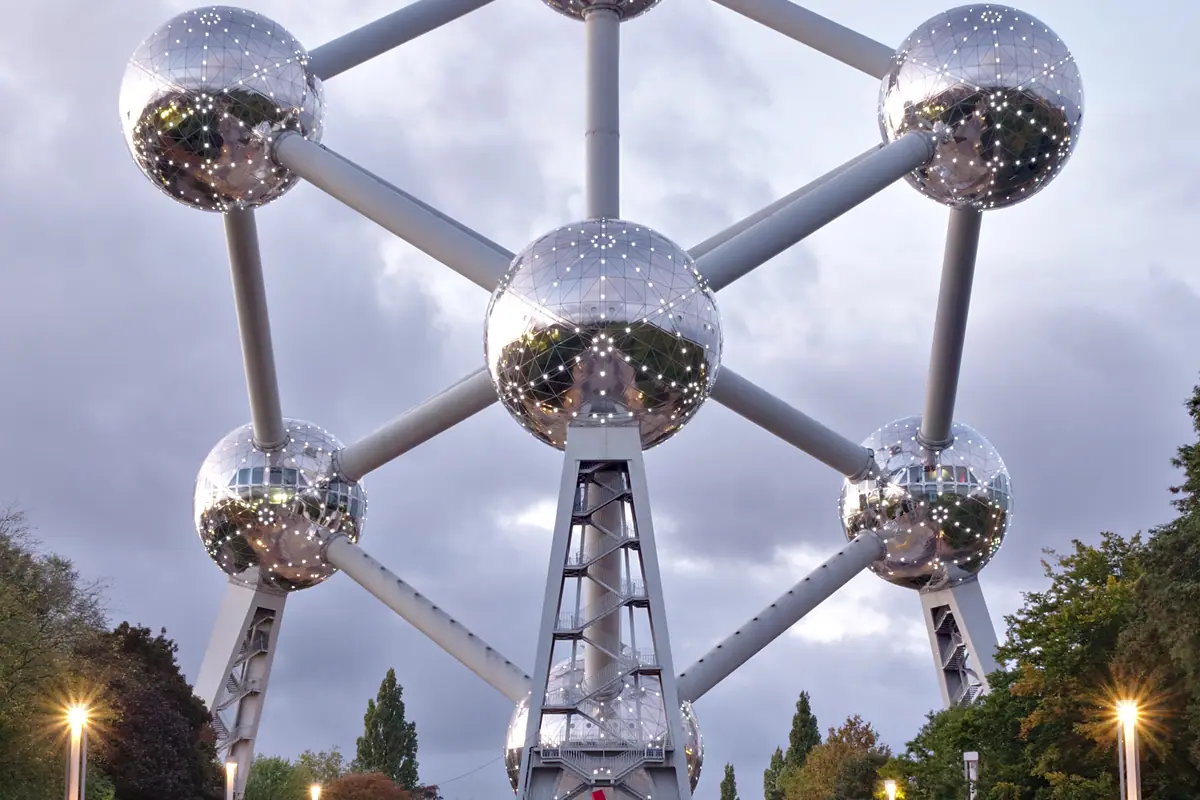
Spend your second day outside the medieval centre. Metro line 6 runs north to Heysel, where the Atomium rises in nine silver spheres, built for the 1958 world's fair and still the strangest, most joyful landmark in the country. Escalators run through the tubes between spheres, and the top pod gives a wide view over the city. Mini-Europe sits at its feet if you are travelling with children.
Back towards the centre, the Royal Palace faces the Parc de Bruxelles, and the Place Royale cluster holds the Royal Museums of Fine Arts, including the Magritte Museum, where the bowler-hatted surrealist's work is displayed in cool, dim galleries that suit it perfectly. Nearby, the colossal Palace of Justice and the Poelaert viewpoint reveal how sharply Brussels drops away into its lower town.
Finish with the Belgian Comic Strip Center, housed in a former textile department store, where original drawings from Tintin and the Smurfs trace how comics became a national art form. Afterwards, browse the Sablon for antiques and chocolates, or the Marolles flea market on the Jeu de Balle square if your visit falls on a weekend morning.
Day 3: Bruges, Belfries and Canal Light
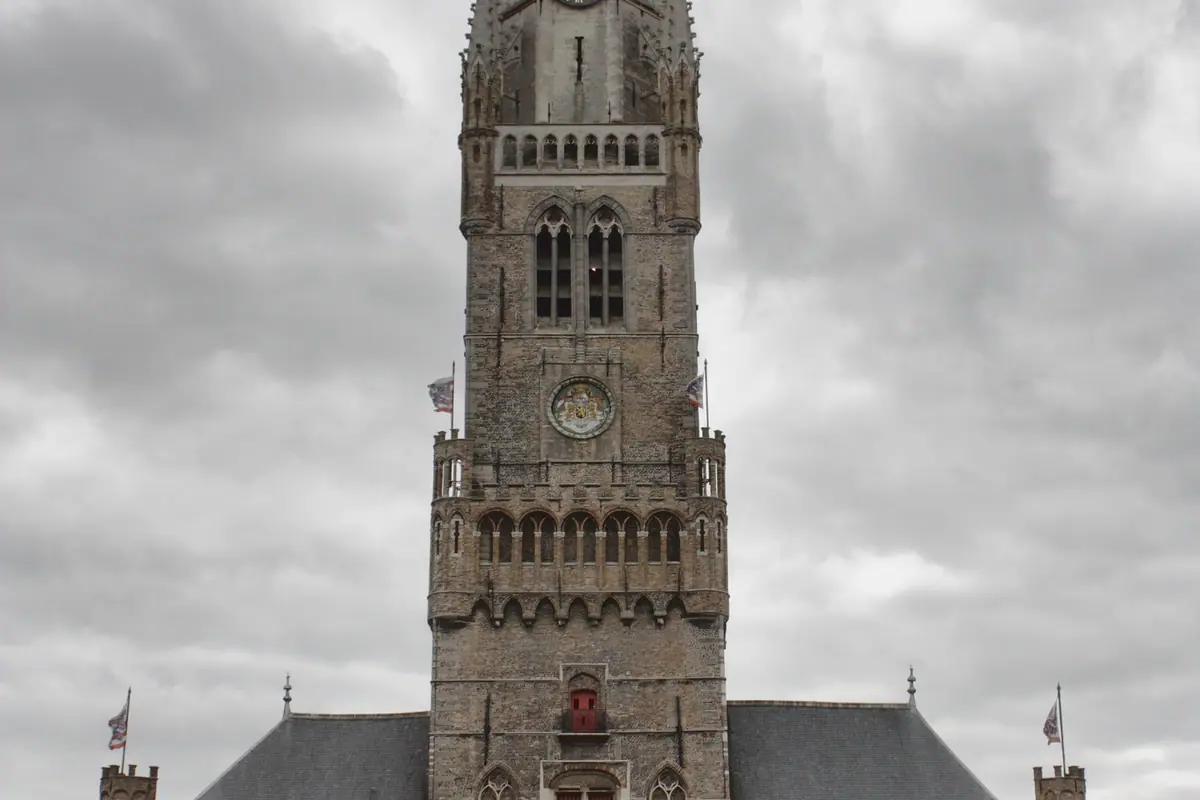
Bruges is about an hour from Brussels by train, and the walk from the station to the Markt takes fifteen minutes past a lake of swans. The Markt is the city's stage: stepped gables, horse carts and the Belfry of Bruges, whose 366 steps and carillon have watched over the wool trade since the thirteenth century. Climb it early, because the staircase narrows and the queue grows by mid-morning.
From the Markt, thread towards the Basilica of the Holy Blood, which claims a relic brought home from the Crusades, and the Church of Our Lady, where Michelangelo's serene Madonna and Child sits in a side chapel — the only sculpture of his to leave Italy in his lifetime. The Minnewater, or Lake of Love, and the whitewashed Beguinage nearby are the quiet counterweight to the busy squares.
Do not treat Bruges as a day trip if you can help it. Day-trippers drain away by late afternoon, leaving the canals to locals and overnight guests. Book a night here, eat in a small brown café away from the Markt, and walk the Rozenhoedkaai at dusk when the reflections turn the water gold.
Day 4: Ghent — Castle, Altarpiece and Student Energy
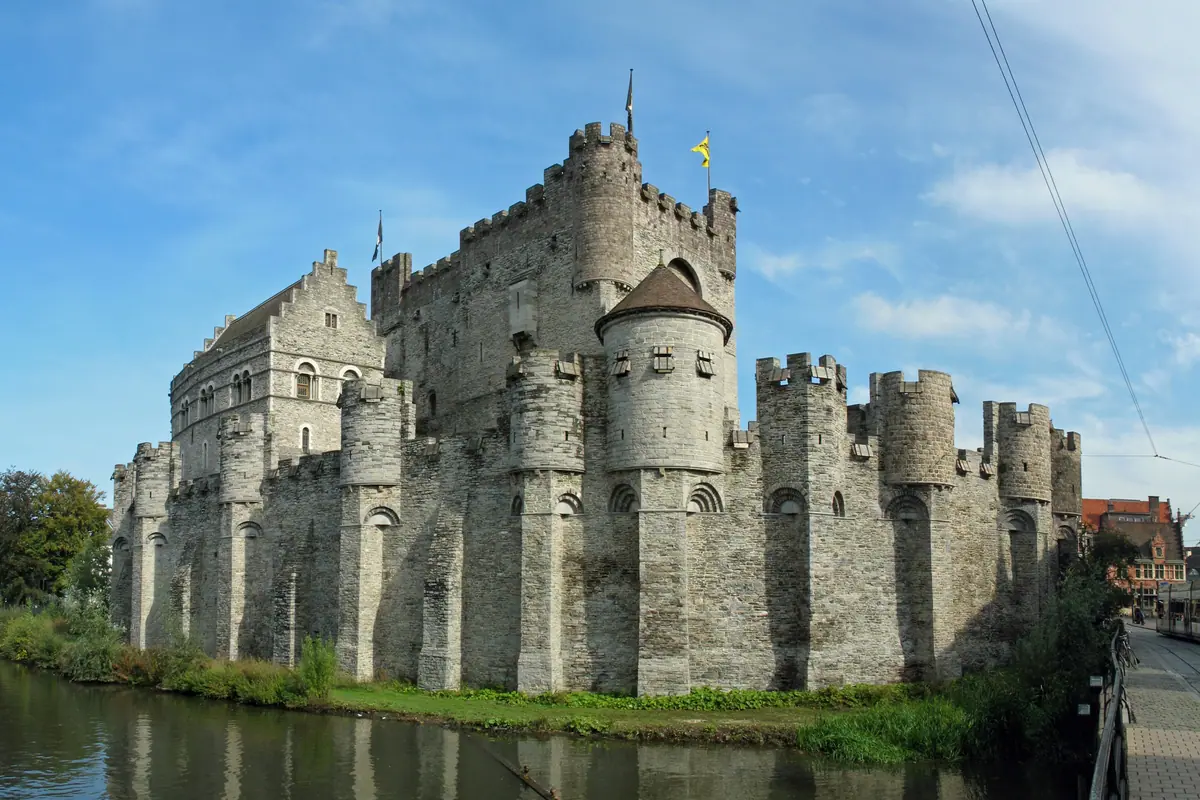
Ghent is thirty-five minutes by train from Bruges and feels like Bruges with a job: a living, working city with a huge student population and a canal-side skyline that is easily as pretty. The Gravensteen, a moated medieval castle in the middle of town, is the showpiece — climb the battlements for a view straight down the Graslei and Korenlei, the twin quays where guild warehouses now hold bars and restaurants.
The other essential is Saint Bavo's Cathedral, home to the Ghent Altarpiece, the van Eyck brothers' multi-panelled masterpiece of 1432. You pay a small fee and view it through a glass case in a darkened chapel, which sounds odd and is in fact mesmerising. The Belfry of Ghent, with its golden dragon weathervane, is a UNESCO-listed climb a few streets away.
Ghent rewards lingering more than ticking off. In the evening, the streets around the Old Market fill with students, and the city has one of Europe's strongest vegetarian and vegan dining scenes, unusual for a place so fond of its own stews. Sleep here rather than returning to Brussels.
Day 5: Antwerp — Rubens, Diamonds and a Cathedral of a Station
Forty-five minutes from Ghent by train, Antwerp announces itself the moment you step off: Antwerp Central is a cathedral of a station, with a stone dome, marble staircases and tiered platforms that turn arrival into an event. Walk twenty minutes through the diamond district — the world's largest — to reach the Grote Markt and its fountain of Brabo throwing a severed hand.
The Cathedral of Our Lady dominates the old town, its single completed tower the tallest church spire in the Low Countries. Inside hang four Rubens triptychs, painted for the very altars they still occupy. Continue the Rubens trail at the Rubenshuis, the artist's own house and studio around a plant-filled courtyard.
Antwerp's contemporary side lives at the Museum aan de Stroom, whose rooftop panorama is free even if the exhibitions are not, and along the Nationalestraat fashion quarter. Round the day off with a beer in a bar off the Meir, where the choice is genuinely bewildering — ask for something local and dark.
Days 6–7: Flanders Fields, the Coast and a Walloon Farewell
For day six, head southwest to Ypres, where the war memorials are handled with restraint and precision. The Menin Gate bears tens of thousands of names of soldiers with no known grave, and every evening at eight o'clock traffic stops for the Last Post ceremony — short, solemn, and free to attend. The In Flanders Fields Museum in the rebuilt Cloth Hall explains the salient, while Tyne Cot Cemetery, a short bus or taxi ride away, is the largest Commonwealth war grave site in the world.
If you would rather have sea air, Belgium's fifty-mile coast is strung together by a tram that runs from De Panne to Knokke-Heist, stopping at Ostend, Blankenberge and quiet De Haan. It is an easy, breezy half-day and a change of register from the medieval cities.
Keep day seven for Wallonia, which most short itineraries skip unfairly. Dinant hugs the Meuse beneath its citadel, reached by cable car, with a bulbous collegiate church and a saxophone-shaped bridge honouring Adolphe Sax, who was born here. Namur's citadel is even larger, and the Lion's Mound at Waterloo marks the battlefield where Napoleon's campaign ended. Whichever you choose, Brussels is rarely more than ninety minutes away by train, and the airport is an easy final hop.
Frequently asked questions
How many days do you actually need in Belgium?
Five to seven days is the sweet spot. Four days covers Brussels, Bruges and Ghent at a rush; a full week adds Antwerp, Ypres or the Meuse valley without exhausting you. Belgium is compact — no internal flight is ever needed, and the longest hop on this itinerary is under two hours by train.
What is the best time of year to visit Belgium?
Late April to June and September to early October give the best balance of mild weather, long days and manageable crowds. July and August are warm but busy, especially in Bruges. December is magical for Christmas markets on the Grand-Place and in Bruges, though daylight is short and rain is constant.
Do I need a car to get around Belgium?
No. The rail network links Brussels, Bruges, Ghent, Antwerp, Leuven, Ypres, Namur, Liège and Dinant directly and frequently. A car is a hindrance in the historic centres, which are largely pedestrianised, and parking in Bruges or Ghent is expensive. Trains from the airport run from early morning until late.
Is Brussels the best base for a week in Belgium?
It is the best single base because every line radiates from it, but splitting your nights works better: two in Brussels, one in Bruges, one in Ghent and one in Antwerp removes a lot of commuting. Hotels fill fast on weekday nights in Antwerp due to business travel, so book ahead.
What should I not miss if I only have time for three cities?
Brussels for the Grand-Place and the Atomium, Bruges for the Belfry and the canals, and Ghent for the Gravensteen and the Ghent Altarpiece. That trio gives you the country's UNESCO highlights in miniature — medieval squares, Flemish painting and canal-side eating.
Sort the rest of your trip
Everything for Belgium, in one place
Stay in Belgium
Hotels, guesthouses and apartments — compared in one search.
Search hotels
Transfer in Belgium
Private driver waiting on arrival — no queues, no surprises.
Book a transfer
Travel insurance
Medical cover, delays and lost baggage — sorted before you go.
Get coveredMore guides in Belgium
Best Time to Visit Belgium for Hotels: A Season-by-Season Booking Guide
Where to Stay in Belgium: Best Areas, Hotels and Must-See Attractions in Brussels, Bruges, Ghent and Beyond
Things to Do in Belgium: Must-See Landmarks and Unmissable Experiences
Belgium Food, Culture and Local Experiences: A Tour Beyond the Postcard