Belgium packs a medieval canal town, a Art Nouveau capital, a diamond-and-Rubens port and a forested southern massif into a country you can cross by train in under three hours. Where you sleep decides whether your trip feels like a checklist or a slow, well-fed wander — so pick your base deliberately, not by habit.
How to Choose Your Belgian Base (and What a Hotel Here Actually Feels Like)
Belgium is small enough that travellers routinely assume one hotel will do for the whole trip. In practice, the country rewards a two- or three-base approach: the cities are close, but their personalities are wildly different, and the hotel stock changes with them. Brussels offers grand nineteenth-century palace hotels and sharp contemporary design properties, Bruges specialises in restored merchant houses where the ceiling beams are older than most nations, Ghent and Antwerp lean toward converted warehouses and design-led boutique rooms, and the Ardennes and Meuse valley are the domain of country inns, château conversions and small family-run guesthouses with a restaurant downstairs.
Expect certain Belgian constants. Breakfast is taken seriously almost everywhere — good bread, regional cheeses, cold cuts, and often a boiled egg and a bowl of speculoos. Rooms in historic buildings can be small and quirky, with steep stairs where a lift has been retrofitted into what was once a servant's corridor. Air conditioning is not universal in older properties, which matters in a July heatwave and rarely matters the rest of the year.
Timing shapes everything. April to June and September to early October are the sweet spots: long daylight, tolerable crowds, and everything open. July and August are busy, especially in Bruges, where day-trippers flood the centre between mid-morning and late afternoon — staying overnight is how you get the empty, lamplit version of the city. Late November through December brings Christmas markets and a genuinely lovely gloom, but daylight ends before five.
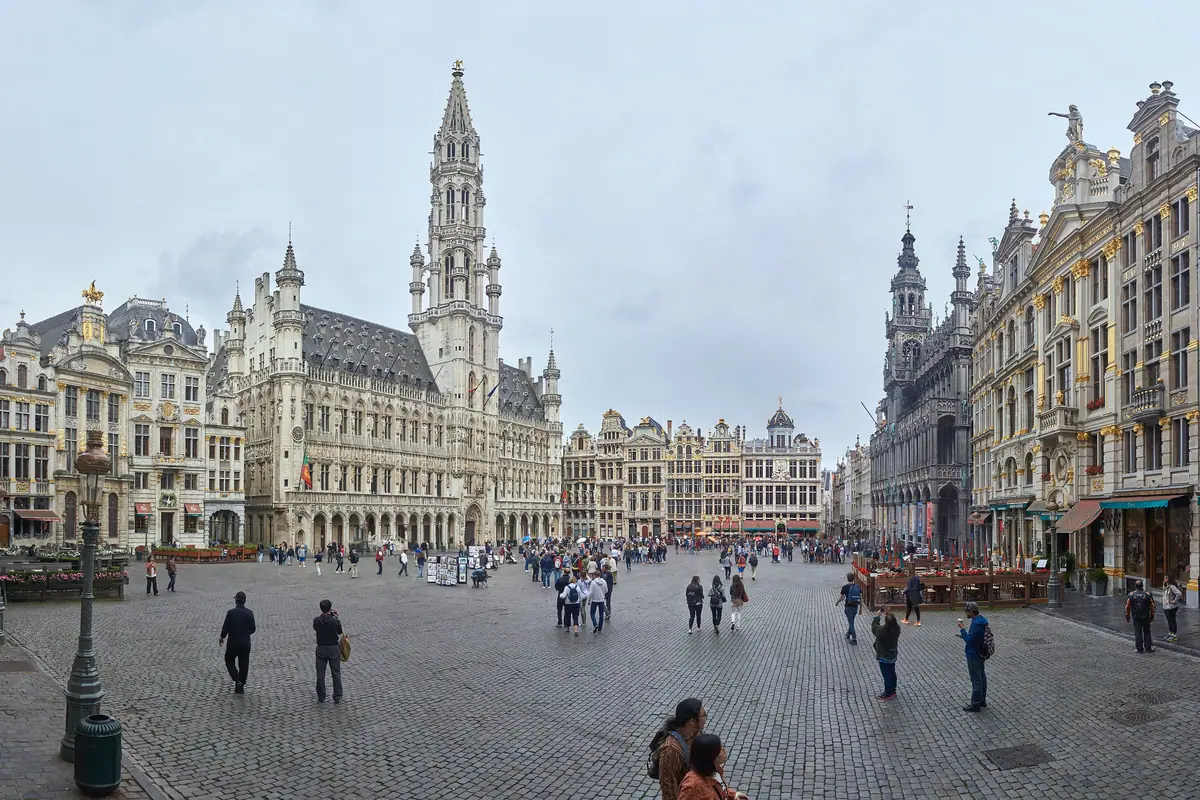
Brussels: Where to Sleep in the Capital of Art Nouveau
Brussels divides neatly for hotel purposes. The historic core around the Grand-Place and the adjacent Îlot Sacré puts you within a few minutes' walk of the city's showpiece square, the gilded guildhalls, the tiny bronze Manneken Pis, the Galeries Royales Saint-Hubert and the comic-strip murals that dot the walls of the lower town. It's the right choice for a first visit, though street noise around rue des Bouchers is real, and you should favour a room on a courtyard rather than the street.
Further uphill, the Sablon and Mont des Arts districts are quieter and more polished, close to the Royal Museums of Fine Arts and the Magritte Museum, the Royal Palace, the Musical Instruments Museum and the Neoclassical colonnade of the Cinquantenaire. South of the centre, the Marolles and Saint-Gilles neighbourhoods have the city's best concentration of small design hotels and guesthouses, plus the daily antiques market at Place du Jeu de Balle.
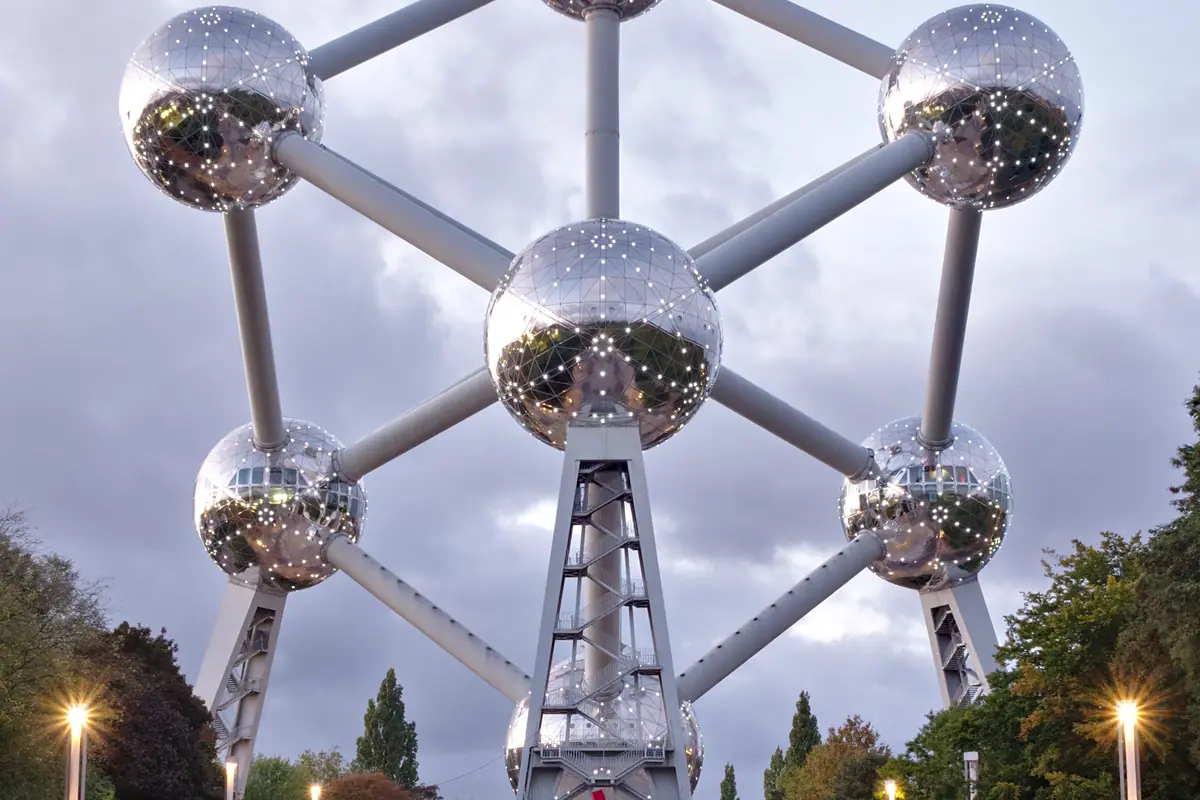
Whichever base you choose, the landmarks fan out from the centre: the Atomium, that gleaming 1958 iron-crystal sculpture in the north of the city, with Mini-Europe next door; the Basilica of the Sacred Heart at Koekelberg; the leafy expanse of the Bois de la Cambre; and the Art Nouveau houses of Victor Horta, including the Horta Museum, which reward anyone willing to walk a few residential blocks.
Bruges: Staying Inside a Canal-Ringed UNESCO Town
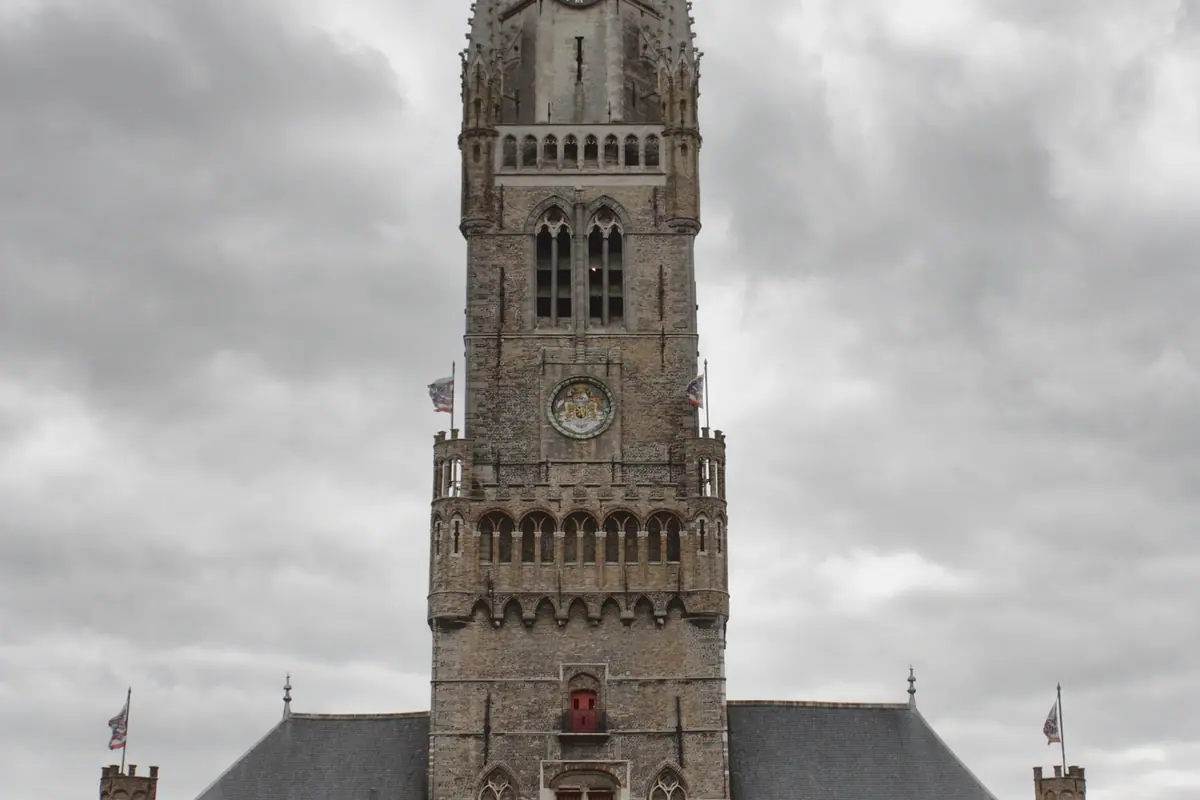
There is a real difference between visiting Bruges and staying in Bruges. Hotels inside the egg-shaped canal ring — many of them in whitewashed former almshouses, merchant mansions or convents — put the Markt, the towering Belfry with its carillon, the Burg, the Basilica of the Holy Blood and the Groeningemuseum's Flemish Primitives within a fifteen-minute walk. The trade-off is price and the low rumble of delivery vans at dawn; the reward is the city at 8pm, when the coaches have gone and the canals turn glassy.
If you want quiet, look at the Minnewater lake area near the Beguinage and the Beginhof convent garden, or across the ring in Sint-Anna, where converted houses sit along the quieter end of the canals. If you want atmosphere over space, the lanes between the Jan van Eyck Square and the Langerei are full of small guesthouses with exposed brick and steep, narrow staircases — pack light, because some have no lift at all.
Use Bruges as a base for the coast and the Flanders battlefields too. Damme is a flat, breezy bike ride along the canal, and the Menin Gate and In Flanders Fields Museum in Ypres make a sobering, easily managed day trip by rail.
Ghent and Antwerp: Two Cities, Two Very Different Hotel Scenes
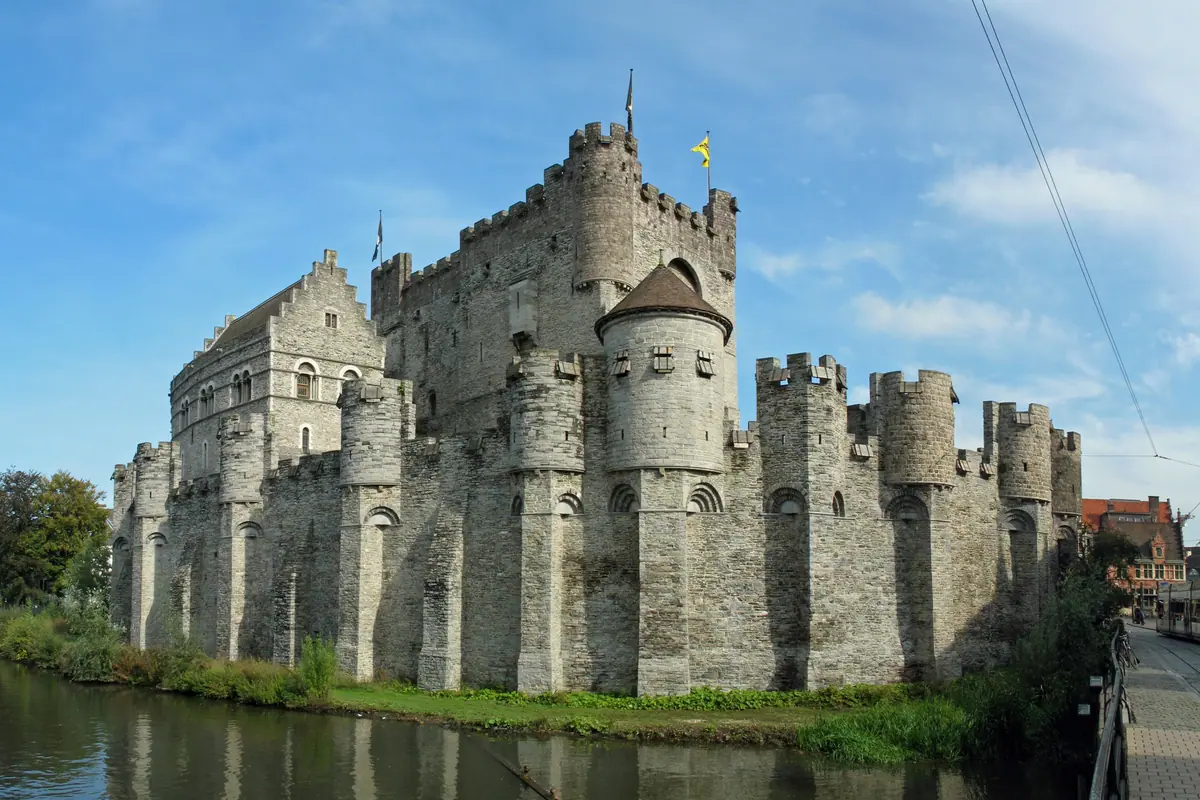
Ghent is the student-spirited, canal-side alternative to Bruges, and its hotels reflect that. Stay near the Graslei and Korenlei quays to wake up to medieval gable houses mirrored in the water; stay around the Patershol quarter for cobbled lanes, restaurants and small converted houses; or stay near Sint-Pieters station if you're moving on quickly. The must-sees cluster tightly: the imposing Gravensteen castle, St Bavo's Cathedral with the van Eyck brothers' Adoration of the Mystic Lamb altarpiece, the Belfry and the Saint Nicholas' Church.
Antwerp is bigger, brasher and more design-forward. The historic centre around the Grote Markt and the Cathedral of Our Lady offers classic hotels in old buildings, while Het Zuid and the fashion district south of the centre have the sharpest contemporary rooms. Don't miss the Rubens House, the Museum aan de Stroom on the docks, the art nouveau Zurenborg neighbourhood, and the vast Central Station, a cathedral of a railway hall worth ten minutes of your time even if you aren't catching a train.
Both cities are compact enough to walk, and both have excellent late-night food — Ghent leans vegetarian and student-priced, Antwerp leans brasserie and seafood. In either, a hotel with a bicycle loan is a genuine advantage: the centres are small, but the ring roads and station districts are not.
The Ardennes, Meuse Valley and Wallonia: Châteaux, Citadels and Forest Inns
Southern Belgium is where the hotel landscape changes entirely: fewer chains, more independent character. Around Dinant, on the Meuse, guesthouses sit below the dramatic citadel and the onion-domed Church of Our Lady, with the Rocher Bayard and the Leffe heritage sites nearby. Namur pairs a riverside centre with the sprawling Citadel fortifications above it, and its hotels range from sleek city properties to countryside retreats ten minutes out.
Liège is grittier and more rewarding than its reputation suggests: the Montagne de Bueren's 374 steps, the Baroque Prince-Bishops' Palace and the vast Sunday market at La Batte are all walkable from the centre, and the hotel stock in the refurbished Guillemins and Outremeuse quarters is improving fast. From there, the Ardennes open up — Bouillon and its crusader castle on a hairpin bend of the Semois, Durbuy's absurdly pretty stone lanes, and the spa town of Spa itself, whose thermal traditions gave the world the word.
For walking, cycling and canoeing trips, base yourself in a small inn around La Roche-en-Ardenne, Vielsalm or Malmedy, and book early for the shoulder-season weekends — many of these places have a dozen rooms and fill up with Belgian and Dutch weekenders long in advance. For history, the Waterloo battlefield and its Lion's Mound lie just south of Brussels and make an easy half-day from the capital.
Practical Tips: Season, Booking and What to Expect
Book Bruges and Brussels at least two to three months ahead for spring and autumn weekends, and up to four for the Christmas market period in December. Business hotels in Brussels empty out at weekends and often represent better value than they do Monday to Thursday — the reverse of most European capitals. In the Ardennes, many restaurants and small inns close on Mondays and Tuesdays outside the school holidays, so check before you commit to a remote base.
Belgium's rail network is dense and punctual, and the main cities are 30 to 60 minutes apart, which makes a multi-base trip painless. City centres are best explored on foot; Brussels and Antwerp both have tram and metro systems worth learning, and Bruges, Ghent and Mechelen are walkable end to end. Tipping isn't expected beyond rounding up, service is usually included, and tap water is fine everywhere.
Two cultural notes for visitors: museum closures fall on Mondays in many Belgian cities, and the country's most celebrated events — the Ghent Festivities in July, Carnival in Binche before Lent, the Ommegang pageant in Brussels — fill hotels months in advance. Finally, learn four words of Dutch or French for whichever region you're in. A greeting in the local language, even a clumsy one, changes how the whole stay feels.
Frequently asked questions
Which city in Belgium is the best base for a first trip?
Brussels is the easiest first base — it's the transport hub, with the Grand-Place, Atomium and excellent museums on the doorstep, and Bruges, Ghent and Antwerp all within an hour by train. If you want a fairy-tale setting rather than a capital, stay in Bruges instead and day-trip out.
How many days do I need in Belgium?
Four to five days covers Brussels, Bruges and Ghent comfortably at a relaxed pace. A week lets you add Antwerp, Mechelen, Leuven or a couple of nights in the Ardennes and Meuse valley. Anything shorter than three days means choosing two cities, not four.
When is the best time to visit Belgium?
Late April to June and September to early October offer the best mix of daylight, weather and manageable crowds. July and August are warm but busy in Bruges and along the coast; December is atmospheric for Christmas markets but dark by late afternoon. February and March are the quietest and cheapest, with unpredictable rain.
Is Bruges better as a day trip or an overnight stay?
Overnight, if your budget allows. Day-trippers see Bruges between roughly 10am and 5pm, which is exactly when the Markt and the Belfry are most crowded. Staying one or two nights gives you the canals at dusk, quieter restaurants, and the Groeningemuseum and Basilica of the Holy Blood before the coach parties arrive.
Do I need to speak Dutch or French in Belgium?
English is widely spoken in hotels and restaurants, so you'll manage easily. Still, the country is split between Dutch-speaking Flanders and French-speaking Wallonia (with German in the east), and a simple greeting in the local language — 'goedendag' in the north, 'bonjour' in the south — is appreciated everywhere.
What should I expect from hotels in historic Belgian buildings?
Charm with compromises: characterful beams, original staircases and small rooms, sometimes without a lift or air conditioning. If you have mobility issues or are travelling in a July heatwave, confirm lift access and cooling when you book, and ask for a room facing a courtyard rather than the street.
Sort the rest of your trip
Everything for Belgium, in one place
Transfer in Belgium
Private driver waiting on arrival — no queues, no surprises.
Book a transfer
Things to do in Belgium
Skip-the-line tickets, guided tours and standout experiences.
See experiences
Stay online in Belgium
Travel eSIM — data the moment you land, no roaming bills.
Get an eSIMMore guides in Belgium
Best Time to Visit Belgium for Hotels: A Season-by-Season Booking Guide
One Week in Belgium: The Perfect 7-Day Itinerary from Brussels
Things to Do in Belgium: Must-See Landmarks and Unmissable Experiences
Belgium Food, Culture and Local Experiences: A Tour Beyond the Postcard