Belgium is small enough to cross in an afternoon yet dense enough that every town has its own beer, its own pastry and its own stubborn dialect of hospitality. This is a country best toured by appetite and by foot: one hand holding a paper cone of frites, the other pointing at a guild house, a belfry or a canal corner you did not expect to find so quietly beautiful. Come for the chocolate, stay for the brown cafés, the carnival drums and the slow stews that taste of rain, beer and patience.
Eating Like a Belgian: Fritkots, Estaminets and Slow Stews
Start with the fritkot, the modest fry shack that outnumbers almost every other kind of eatery in the country. Belgian frites are cut thick, fried twice until the outside shatters and the inside stays fluffy, then scooped into a paper cone with a plastic fork and an unapologetic spoonful of mayonnaise. The best ones sit in working-class neighbourhoods rather than on the main tourist drags, where the oil is fresh, the queue is local and the menu runs to andalouse or samurai sauce rather than anything sweet and neon. Eat them standing, walking, or perched on a windowsill.
Then move into the slow kitchen. Moules-frites arrive in a huge black pot, steamed with white wine, celery and onion, and the meatiest mussels come in the cooler months, roughly September to April. Stoofvlees, also called carbonnade flamande, is beef braised for hours in dark beer until it collapses, served with mustard smeared on bread; Ghent has its own waterzooi, a creamy fish or chicken stew that locals defend fiercely; and paling in 't groen coats eel in a bright green herb sauce that looks alarming and tastes wonderful. In the Ardennes, expect smoked ham, coarse pâtés and game in autumn, often plated without fuss in a village café with a wood stove.
The thrifty way to eat well is the midday menu — a set lunch, chalked on a board, that gives you three courses for roughly the price of an evening main. Browse the Sunday market along the canal in Brussels for Moroccan spices, olives and flatbreads, or wander the Marolles morning flea market for coffee, cheese and grey North Sea shrimp. In spring, watch for white asparagus; in winter, witloof chicory and hearty cabbage dishes replace the salads that vanish with the sun.
Chocolate, Waffles and the Sweet Ritual of the Sablon
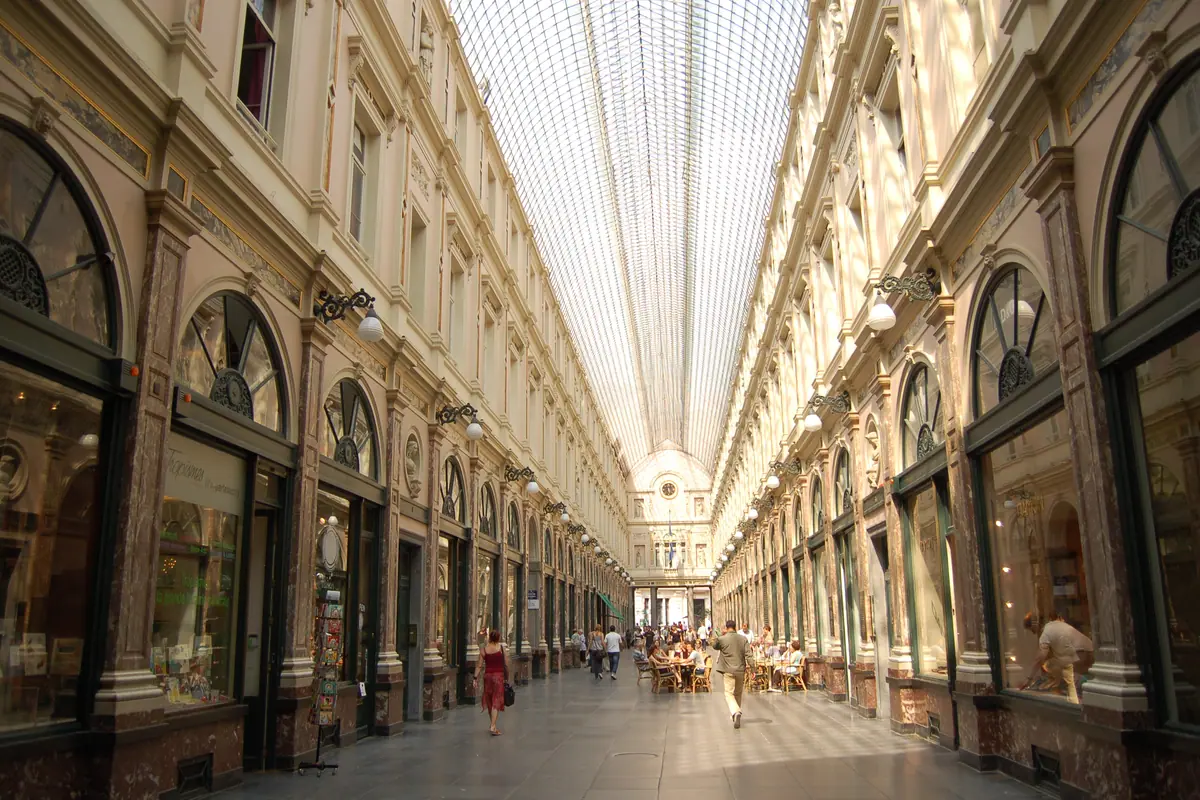
Brussels is where the praline was refined into an art form, and the elegant slope of the Sablon remains its showcase. Independent chocolatiers here work in small batches, and the tell of a good shop is not the packaging but the smell of cocoa and the fact that the truffles were made in the last day or two. Ask the difference between a praline filled with hazelnut cream and one with a ganache, then buy four, not forty — freshness beats volume every time. Around the corner, the galleries of Saint-Hubert shelter a handful of historic confectioners and a glass-roofed arcade that is worth the detour even if you buy nothing.
Waffles need defending against their own reputation. Two distinct kinds matter. The Brussels waffle is pale, rectangular, softly leavened and best dusted with icing sugar; the Liège waffle is dense, studded with pearl sugar that caramelises into crackling shards, and is eaten warm from the hand, usually plain. Anything smothered in fruit syrup, cream and chocolate sauce is a souvenir, not a breakfast. Locals queue at bakeries for koffiekoeken pastries, rice tarts and cuberdons, the violet-coloured cone sweets sold from stalls in Ghent and around spring fairs.
Breakfast is unhurried: a pistolet roll split and filled with cheese or ham, a slab of cramique studded with raisins, strong coffee, and a slice of speculoos or mattentaart if you find your way to a good regional bakery. Sweet shops in Bruges and Antwerp keep older recipes alive, and in the run-up to Saint Nicholas and Christmas, bakeries fill with spiced biscuits and marzipan figures. Buy early in the day; the small workshops sell out before the afternoon crowds arrive.
Beer, Brown Cafés and the Ritual of the Round
Beer here is not a drink so much as a civic institution. The country pours Trappist and abbey ales brewed by monks and their lay successors, witbier made cloudy with orange peel and coriander, saison ales that were once farmhouse refreshment for harvest crews, and the extraordinary lambic tradition of the Zenne valley and the Pajottenland, where wort cools overnight in open air, ferments wild, and is blended into gueuze or steeped with cherries for kriek. Each beer arrives in its own glass shape, because the head, the aroma and the temperature all depend on it.
The rooms where this happens are just as important. Look for a brown café — dark wood, tiled floor, no music, no screens, a long zinc counter and an owner who will serve you a beer you did not know you wanted. Some of the oldest and loveliest sit in the shadow of the Grand-Place in Brussels, in the back streets of Antwerp near the Grote Markt, and along the quays of Ghent and Leuven's Oude Markt, which claims to be one long bar with a square attached.
Order one beer at a time and let the glass empty before the next; asking for a round of different styles is normal, drinking them in sequence is respectful. Cheese plates of Herve or abbey-style wheels pair beautifully with dark ales, and a small bowl of nuts or a slice of tart are common free companions. If you want the full ritual, visit a working brewery in the late morning, then walk it off along a canal before the light goes.
The Can't-Miss Sights: Grand-Place, Canals and Cathedrals
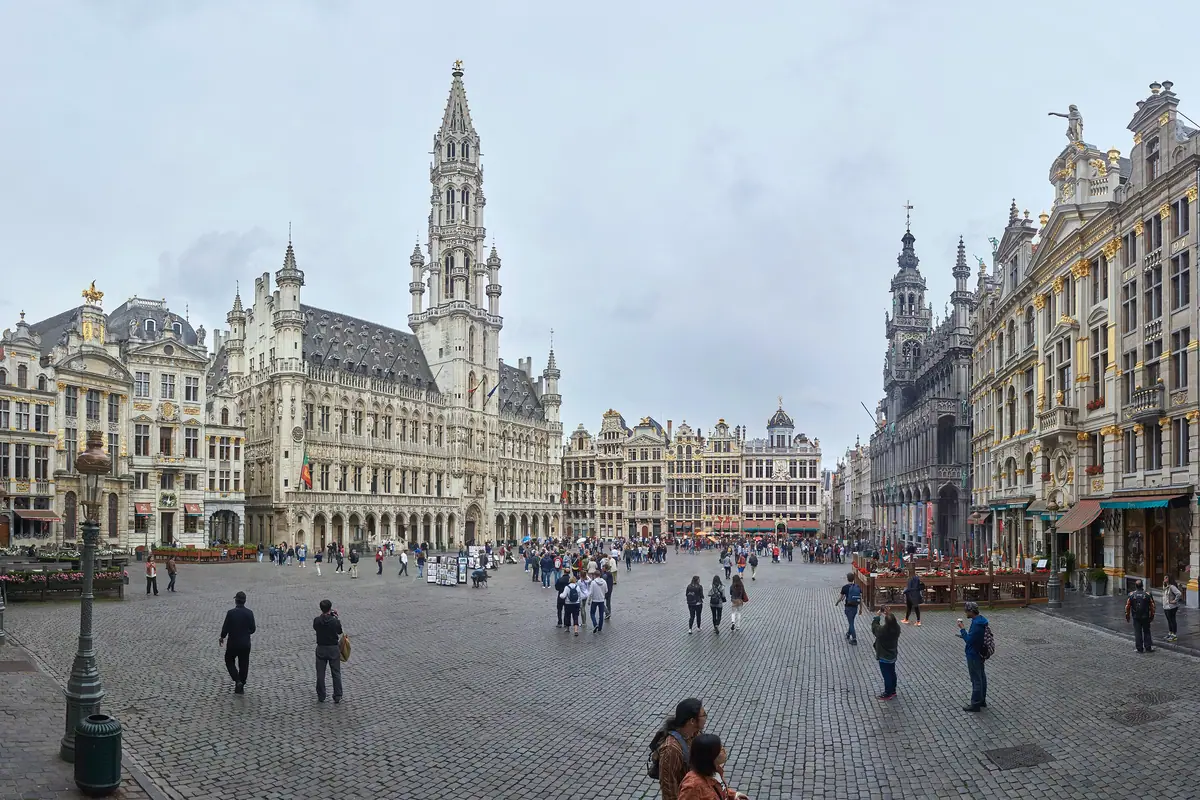
In Brussels, everything starts at the Grand-Place, a square of gilded guild houses and a Gothic town hall that looks theatrical in daylight and genuinely magical when lit at night. From there, cut through to the Manneken Pis, small, absurd and beloved, then climb to the Mont des Arts for the view over the lower city. The Royal Museums of Fine Arts hold the Magritte collection and centuries of Flemish painting, while the Atomium, a shimmering relic of mid-century optimism, sits north of the centre. Comic-strip murals daubed on walls across the city make a free, wandering museum of their own.
Bruges is the postcard everyone warned you about, and it survives the crowds. Climb the Markt's belfry for the bell tower view, then descend to the Basilica of the Holy Blood, which keeps a relic behind a gilded façade, and the quiet courtyards of the Beguinage. The Groeningemuseum holds the Flemish Primitives in glowing detail, and the Rozenhoedkaai canal corner is the most photographed few metres in the country. An evening boat ride, after the day-trippers leave, restores the city to something closer to itself.
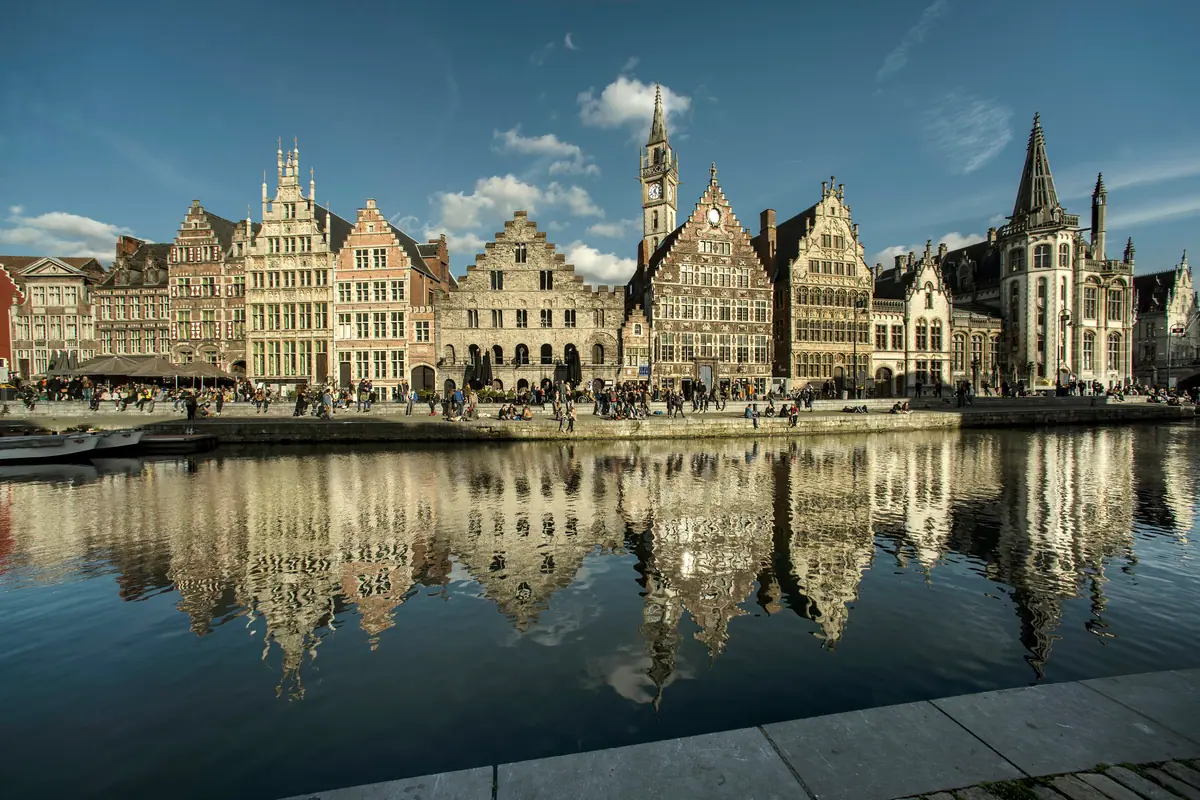
Ghent is the student city with a castle in the middle: the Gravensteen, a medieval fortress with a torture museum and ramparts to walk. The Graslei and Korenlei quays line up step-gabled warehouses along the water, St Bavo's Cathedral shelters the Ghent Altarpiece, and St Michael's Bridge gives the classic skyline. Antwerp counters with the Grote Markt and its Brabo fountain, the Cathedral of Our Lady, the Rubens House, the ambitious MAS museum on the docks and a railway station so grand it is a sight in itself. Mechelen's St Rumbold's Tower and Leuven's Oude Markt fill the gaps between them.
Wallonia and the Ardennes: Clifftop Towns, Castles and Carnival
Head south and the language, the landscape and the pace change. Dinant clings to the Meuse beneath a citadel reached by cable car, with the collegiate church of Notre-Dame pressed against the cliff and the Bayard rock looming downstream; it is also the birthplace of the man who invented the saxophone, so the instrument turns up on bridges in bronze. Namur spreads around its own citadel above the confluence of two rivers, and Liège gives you the theatrical Guillemins station, the brutal charm of the Montagne de Bueren staircase and riverside museums along La Boverie.
Further into the Ardennes, Bouillon's castle loops around its river bend, Spa gave the world its word for a certain kind of indulgence, and the forests fill with walkers, mushrooms and game in autumn. Near Waterloo, the Lion's Mound rises over the battlefield where European history turned, and Tournai keeps one of the country's oldest cathedrals with five towers and a treasury of goldsmiths' work.
Belgium's calendar of local festivals is the real reason to plan around dates. Binche's carnival sends its Gilles into the streets in wax masks and ostrich plumes on Shrove Tuesday, Aalst answers with its own irreverent version, and Mons stages the Ducasse with a dragon fight in the main square. In July, Brussels re-enacts the Ommegang procession at the Grand-Place and Ghent stages ten days of street parties, while December brings Christmas markets to the Grand-Place, Bruges and Liège. Book accommodation months ahead for any of these.
When to Go, How Long to Stay and How to Move Around
Late April to June is the sweet spot: long northern evenings, asparagus and strawberries, blossom in the orchards and outdoor café tables finally earning their keep. September and October are equally good, with harvest menus, forest walks and fewer people in Bruges. July and August are festive but full, with festival crowds and high prices in the art cities; December is dark and cold, though the Christmas markets, lit squares and warming stews make it genuinely atmospheric. February belongs to carnival. Rain falls in every month, so pack layers and a hood rather than hoping for a dry week.
Aim for a week if you can. Two full days in Brussels covers the Grand-Place, museums, Marolles and a chocolate crawl; a day each for Ghent and Bruges works, but spending the night in Bruges is worth it to see the canals empty. Antwerp deserves a day and a half for the cathedral, Rubens and the docks, and three more days let you add Liège, Dinant and a slice of the Ardennes by car. Trains link Brussels, Ghent, Bruges, Antwerp, Leuven and Mechelen frequently and the hops between them take under an hour; in the countryside, a car or a regional bus is the practical choice.
Eat your main meal at lunch when kitchens are calm and prices lower, and book ahead for Friday and Saturday dinners, since many good rooms are small and fill early. Greet staff with a bonjour or goedendag before asking anything, round up the bill rather than calculating a percentage, and expect many museums to shut one weekday and most shops to close on Sundays outside the big cities. Markets are morning affairs; arrive before noon. A handful of words in French or Dutch will change how you are treated, and a little patience with a country that does not rush its meals will change what you taste.
Frequently asked questions
What should I eat on a first trip to Belgium?
Anchor your days around frites from a neighbourhood fritkot, moules-frites, stoofvlees braised in dark beer, and Ghent's waterzooi. Add a warm Liège waffle, a few freshly made pralines and a slice of speculoos or mattentaart, and you have covered the essential canon. If you visit in spring, order white asparagus; in winter, witloof chicory and game.
How many days do I need to tour Belgium properly?
Four to five days covers Brussels, Ghent and Bruges comfortably, with time for museums, markets and long lunches. Give it a full week and you can add Antwerp plus a southern loop through Liège, Dinant and the Ardennes. Anything shorter and you will spend more time in stations than squares.
What is the best time of year to visit Belgium?
May, June, September and October offer the best balance of light, food and manageable crowds. December is the pick for Christmas markets and cosy beer cellars, while July and August bring festivals but also the heaviest visitor numbers in Bruges and Brussels. February is carnival season and worth planning around if you want Binche or Aalst.
Can I explore Belgium without a car?
Yes for the art cities. Frequent trains connect Brussels, Ghent, Bruges, Antwerp, Leuven and Mechelen, and each journey takes well under an hour, with walkable historic centres at the far end. For the Ardennes, Bouillon, Spa and smaller Walloon villages, a car or a regional bus is far more practical.
How do I find authentic local experiences rather than tourist versions?
Follow the everyday rituals: eat at the midday set menu, drink in a brown café away from the main square, shop at morning markets such as Brussels' Sunday market or the Marolles flea market, and check what festival or carnival falls during your dates. Learn a few words of French and Dutch, eat when locals eat, and skip any menu translated into six languages with photos.
Sort the rest of your trip
Everything for Belgium, in one place
Stay in Belgium
Hotels, guesthouses and apartments — compared in one search.
Search hotels
Transfer in Belgium
Private driver waiting on arrival — no queues, no surprises.
Book a transfer
Stay online in Belgium
Travel eSIM — data the moment you land, no roaming bills.
Get an eSIMMore guides in Belgium
Best Time to Visit Belgium for Hotels: A Season-by-Season Booking Guide
One Week in Belgium: The Perfect 7-Day Itinerary from Brussels
Where to Stay in Belgium: Best Areas, Hotels and Must-See Attractions in Brussels, Bruges, Ghent and Beyond
Things to Do in Belgium: Must-See Landmarks and Unmissable Experiences