Belgium is a small country that behaves like several, packed into a few hours of train travel: gilded medieval squares, canal-laced towns, castle-topped hills and a beer culture treated as heritage. This guide maps the places worth your days, the landmarks you should not skip, and the seasons that suit them best.
Brussels: Guild Halls, Surrealism and the Atomium
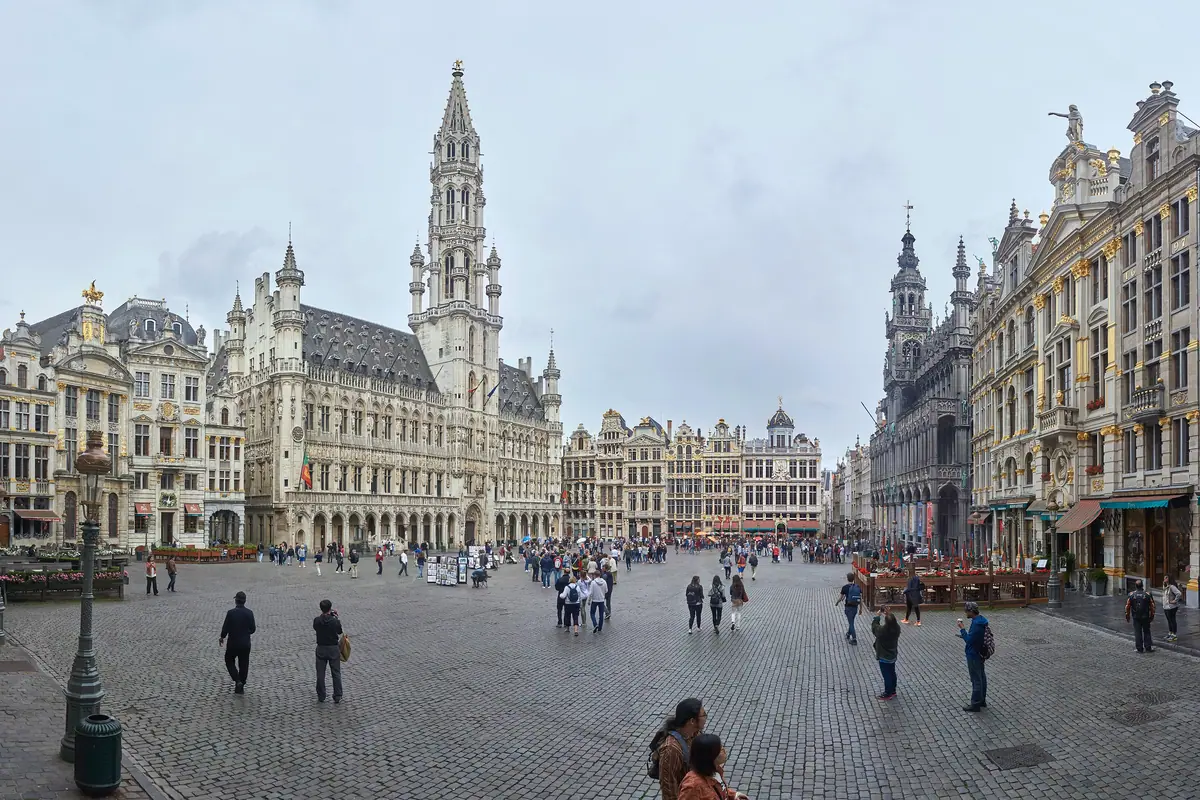
Start where the city shows off. The Grand-Place is one of Europe's great set pieces, a cobbled square framed by 17th-century guild houses with gilded gables, the florid Gothic Town Hall and the King's House opposite. In August of even-numbered years an enormous carpet of flowers is assembled across the stones, but the square is at its most atmospheric before nine in the morning, when the tour groups are still asleep, or after dark when the facades are lit.
From there the city unfolds in layers. Climb to the Mont des Arts for the classic panorama over the rooftops, wander past the Royal Palace and the Place du Sablon with its weekend antiques market and old-school chocolatiers, then pay your respects to Manneken Pis — considerably smaller than most visitors expect. Art lovers should build in time for the Royal Museums of Fine Arts, the Magritte Museum with its room of bowler hats and clouds, and the Comics Art Museum housed in a glass-roofed former department store, a nod to the country's obsession with the ninth art.
East of the centre, the Parc du Cinquantenaire shelters a triumphal arch and several museums under one colonnade, while the Atomium — the nine aluminium spheres built for the 1958 world's fair — remains the city's boldest piece of engineering bravado, with escalators running through the connecting tubes. Two full days is a fair minimum for Brussels, three if you want to add day trips to Waterloo, Leuven or Mechelen.
Bruges: The Canal City That Rewards Staying Overnight
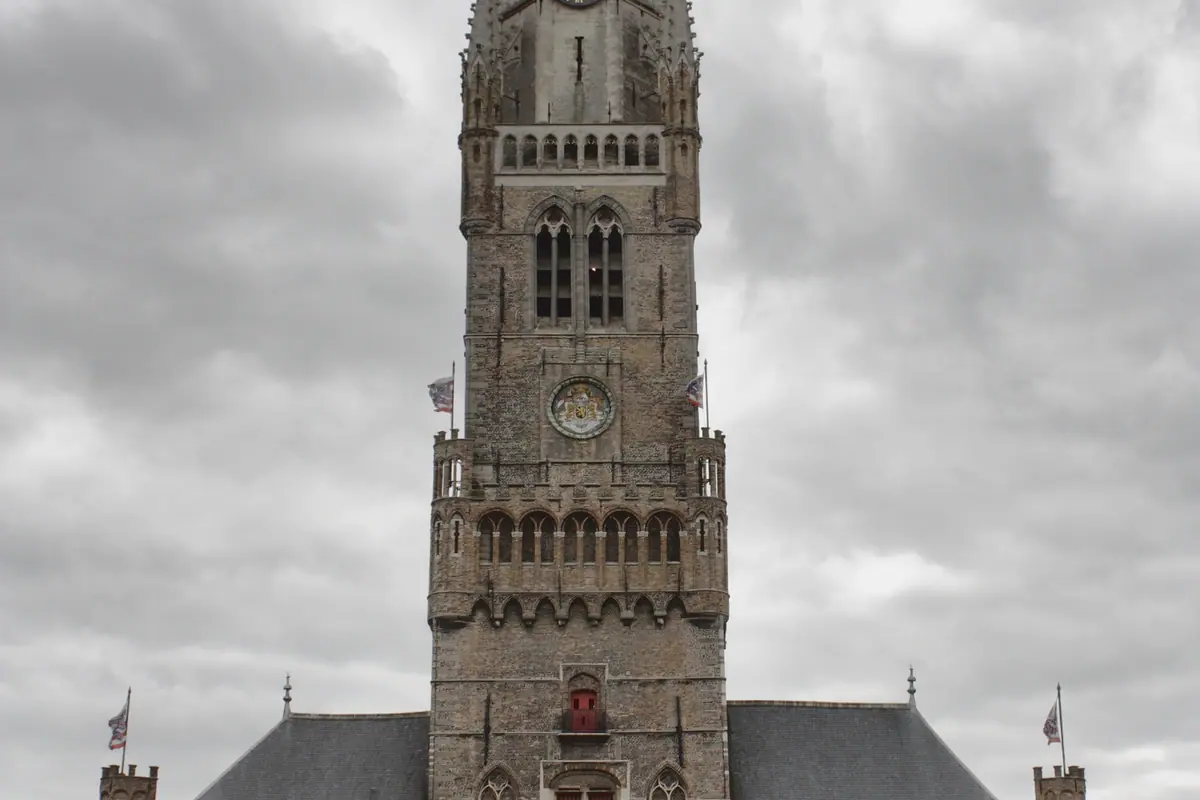
Bruges is the postcard, and it earns it. The Markt is dominated by the Belfry, a medieval watchtower whose carillon still rings across the square; the climb is 366 steps and the reward is a rooftop view over gables, canals and windmills. A few minutes away, the Basilica of the Holy Blood mixes Romanesque and Gothic, and the Church of Our Lady holds a marble Madonna and Child by Michelangelo — one of the few works of his to leave Italy in his lifetime.
For painting, the Groeningemuseum is unbeatable: a compact collection of Flemish Primitives where oil paint was refined into something almost photographic. Add the Sint-Janshospitaal, the old hospital with its timbered sick wards, and the quiet Begijnhof with its whitewashed houses around a lawn.
The real pleasure, though, is doing less. A half-hour boat trip along the canals shows you the city from water level, the Minnewater lake is a peaceful corner for a picnic, and a bicycle ride along the canal to the tiny village of Damme takes about half an hour each way. Bruges is best in April, May, June and September; if you can, sleep inside the old town and walk the streets after the day-trippers have gone, when the whole place exhales.
Ghent and Antwerp: Castle, Altarpiece and Diamonds
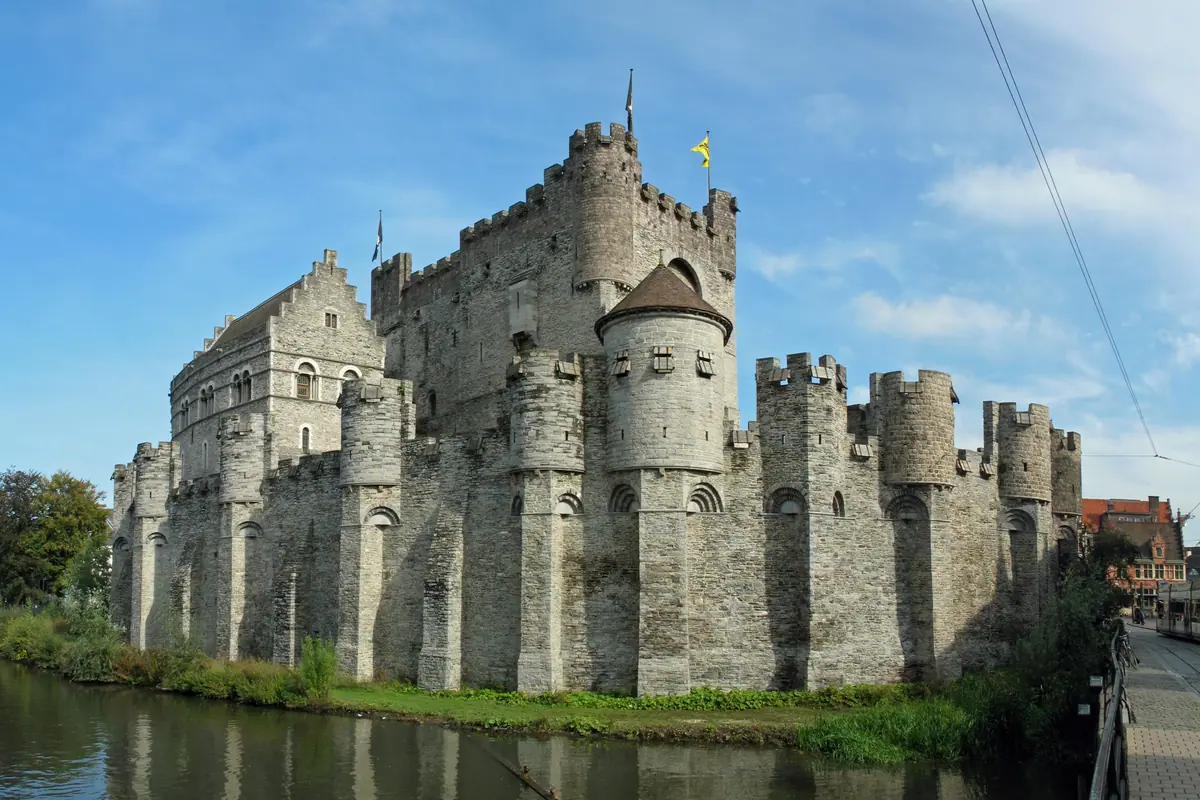
Ghent is Bruges's livelier sibling: a working university city with the same medieval bones but far more noise and grit. The Gravensteen, a moated castle with a torture museum in its cellars, sits almost in the city centre, and a short walk brings you to the Graslei and Korenlei, twin quays where guild warehouses lean over the water and students sprawl on the steps in summer. St Bavo's Cathedral holds the Ghent Altarpiece, the van Eyck brothers' multi-panelled masterpiece and one of the most stolen artworks in history; the adjoining baptismal chapel and crypt are worth the extra time.
Antwerp, an hour north by train, feels like a different country: a port city with a fashion scene, a diamond quarter and a serious art habit. The Grote Markt is lined with ornate guild houses and the Brabo fountain, while the Cathedral of Our Lady — whose spire defines the skyline — displays Rubens triptychs in situ. The Rubens House, the painter's own home and studio, is a few streets away; the MAS museum on the old docks has a free rooftop panorama; and the Plantin-Moretus Museum, a UNESCO-listed printing works, is a love letter to the printed page.
Give Ghent a full day and Antwerp another, ideally on a weekday when the shops and cathedral are quieter. Both cities are flat, compact and easy to cross on foot or by rented bike.
Wallonia and the Ardennes: Citadels, Forests and Battlefields
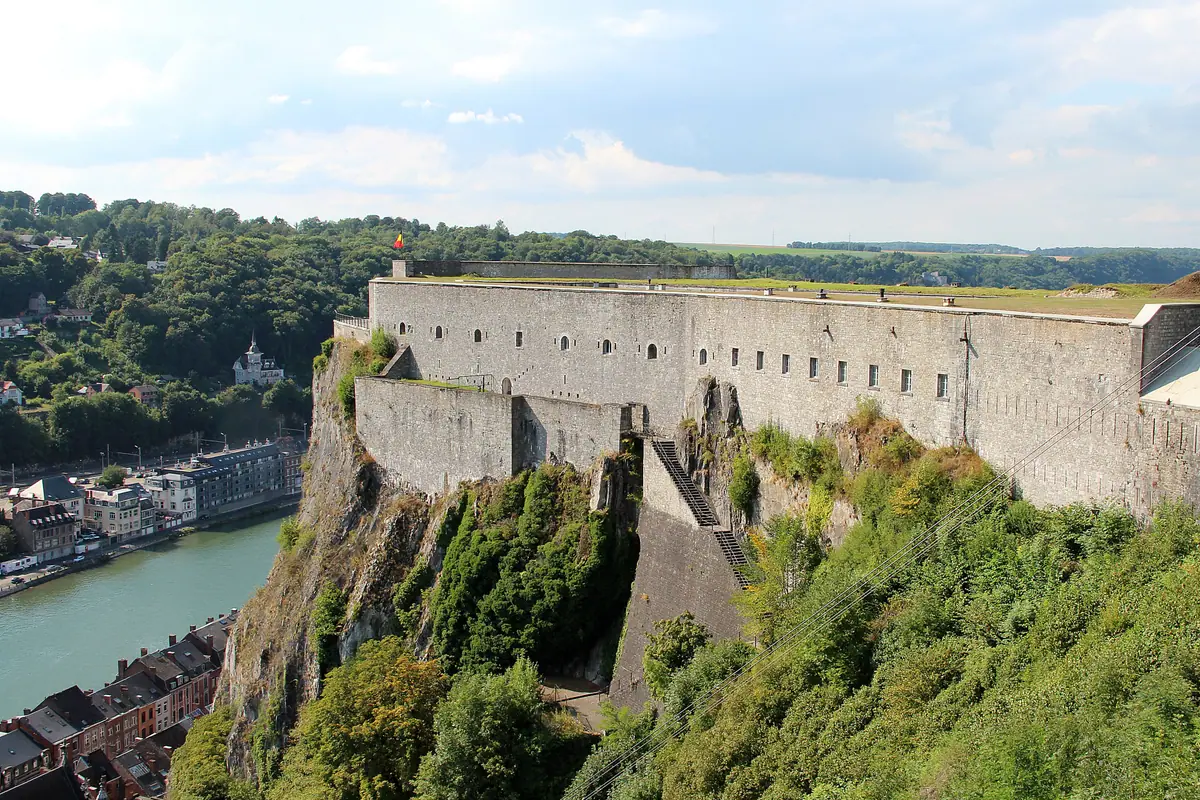
South of the language border, the country turns green, hilly and French-speaking. Dinant is the highlight of the Meuse valley: a bulbous, onion-domed church squeezed between river and cliff, a citadel reached by cable car or a long staircase, and the Bayard Rock, a needle of limestone split, legend says, by a giant's hoof. Adolphe Sax was born here, which explains the saxophone statues along the bridge, and kayak trips down the Meuse are a summer ritual.
Deeper into the Ardennes, the roads wind through beech forest and stone villages. Durbuy claims to be the smallest town in the country, a knot of lanes beneath a castle; La Roche-en-Ardenne has its own ruins above the Ourthe; and Bastogne, with its war museum and the star-shaped Mardasson memorial, tells the story of the winter of 1944 with real weight. Bouillon's fortress, perched on a bend of the Semois, is one of the most dramatic castles in Belgium, and the Signal de Botrange marks the country's highest point at a modest 694 metres, with boardwalks out over the peat bog.
Closer to Brussels, the Lion's Mound at Waterloo rises 40-odd metres over the battlefield, and Mons stages the Ducasse, or Doudou, each Trinity Sunday, when a dragon is paraded through the streets and crowds fight for a piece of it. Allow two to three days if you want the Ardennes without rushing.
Beer, Chocolate and the Belgian Table
Belgian beer is not a drink so much as a taxonomy. Trappist monasteries in West Flanders brew dark, yeasty ales that are still made within abbey walls; the Pajottenland hills south-west of Brussels produce lambic, fermented in open air and aged in oak, which becomes gueuze when young and old batches are blended. Wheat beers, saisons, amber ales and fruit beers fill out the map. The best way to explore is not a checklist but a café: order a small glass, take your time, and ask what is local.
Chocolate here is a craft rather than a souvenir. The praline was refined in Brussels in the early 20th century, and the arcades of the Galeries Royales Saint-Hubert and the lanes around the Sablon still hold family-run workshops where you can watch a tempering machine at work and buy by the piece. Waffles come in two distinct species — the dense, sugar-pearled Liège version eaten hot from a paper sleeve, and the lighter rectangular Brussels waffle piled with cream and fruit. Beyond that: moules-frites, waterzooi, carbonnade flamande, grey shrimp croquettes and speculoos with coffee.
Genever, the juniper spirit that predates gin, is having a quiet revival, with tasting rooms in Antwerp and Hasselt. Tipping is not expected, service is included, and many restaurants close on one or two days a week — check before you set out.
When to Go, How Long and How to Get Around
May, June and September are the sweet spots: long days, terraces open, and the crowds thinner than in high summer. April and October are cheaper and quieter but expect rain and wind; the weather changes fast in every season, so pack layers and a decent waterproof. Winter has its own appeal — Christmas markets fill the squares of Brussels, Bruges, Ghent and Liège from late November, and the Carnival of Binche erupts in February or March with its Gilles in wax masks and ostrich-feather hats. Brussels also stages the Ommegang, a costumed historical procession, in early July, and Ghent's ten-day street festival takes over the city the same month.
For a first visit, plan four to five days: two in Brussels, one in Bruges and one in Ghent, all connected by trains that run frequently and take under an hour. A week lets you add Antwerp, the Meuse valley and a night or two in the Ardennes. The rail network is dense and reliable, and a bike is often the fastest way across the flat Flemish cities.
Museums and galleries commonly close on Mondays, so keep that day for squares, canals and countryside. Most places take cards, though small friteries and village cafés are happier with cash. Finally, learn a few words in the local language — Dutch in Flanders, French in Wallonia, either in Brussels — and you will find doors open a little wider.
Frequently asked questions
How many days do you need to see Belgium?
Four to five days covers Brussels, Bruges and Ghent comfortably, since the cities are less than an hour apart by train. A week gives you room for Antwerp, the Meuse valley around Dinant and a couple of nights in the Ardennes without feeling rushed.
What is the best time of year to visit Belgium?
May, June and September offer the best balance of mild weather, long daylight and manageable crowds. December is ideal for Christmas markets, while February or March brings the Carnival of Binche. Rain is possible year-round, so pack layers and a waterproof.
Should I visit Bruges or Ghent?
Bruges is more photogenic and compact, with canals, the Belfry and the Groeningemuseum, but it fills with day-trippers. Ghent is bigger, lived-in and more energetic, with the Gravensteen castle and the Ghent Altarpiece. If time allows, do both — they are only about 25 minutes apart by train.
Do I need to speak Dutch or French in Belgium?
Dutch is spoken in Flanders (Bruges, Ghent, Antwerp) and French in Wallonia and the Ardennes, while Brussels is officially bilingual. English is widely spoken in cities, hotels and restaurants, but a polite greeting in the local language always helps.
What should a first-time visitor not miss?
The Grand-Place and Atomium in Brussels, the Belfry and canals of Bruges, the Ghent Altarpiece in St Bavo's Cathedral, the Cathedral of Our Lady and Rubens House in Antwerp, and the citadel at Dinant. If you have a spare day, the battlefield at Waterloo and the Ardennes villages are worth the detour.
Plan it — experiences in Belgium
Live search, booked directly with trusted providers.
Sort the rest of your trip
Everything for Belgium, in one place
Stay in Belgium
Hotels, guesthouses and apartments — compared in one search.
Search hotels
Transfer in Belgium
Private driver waiting on arrival — no queues, no surprises.
Book a transfer
Stay online in Belgium
Travel eSIM — data the moment you land, no roaming bills.
Get an eSIMMore guides in Belgium
Best Time to Visit Belgium for Hotels: A Season-by-Season Booking Guide
One Week in Belgium: The Perfect 7-Day Itinerary from Brussels
Where to Stay in Belgium: Best Areas, Hotels and Must-See Attractions in Brussels, Bruges, Ghent and Beyond
Things to Do in Belgium: Must-See Landmarks and Unmissable Experiences