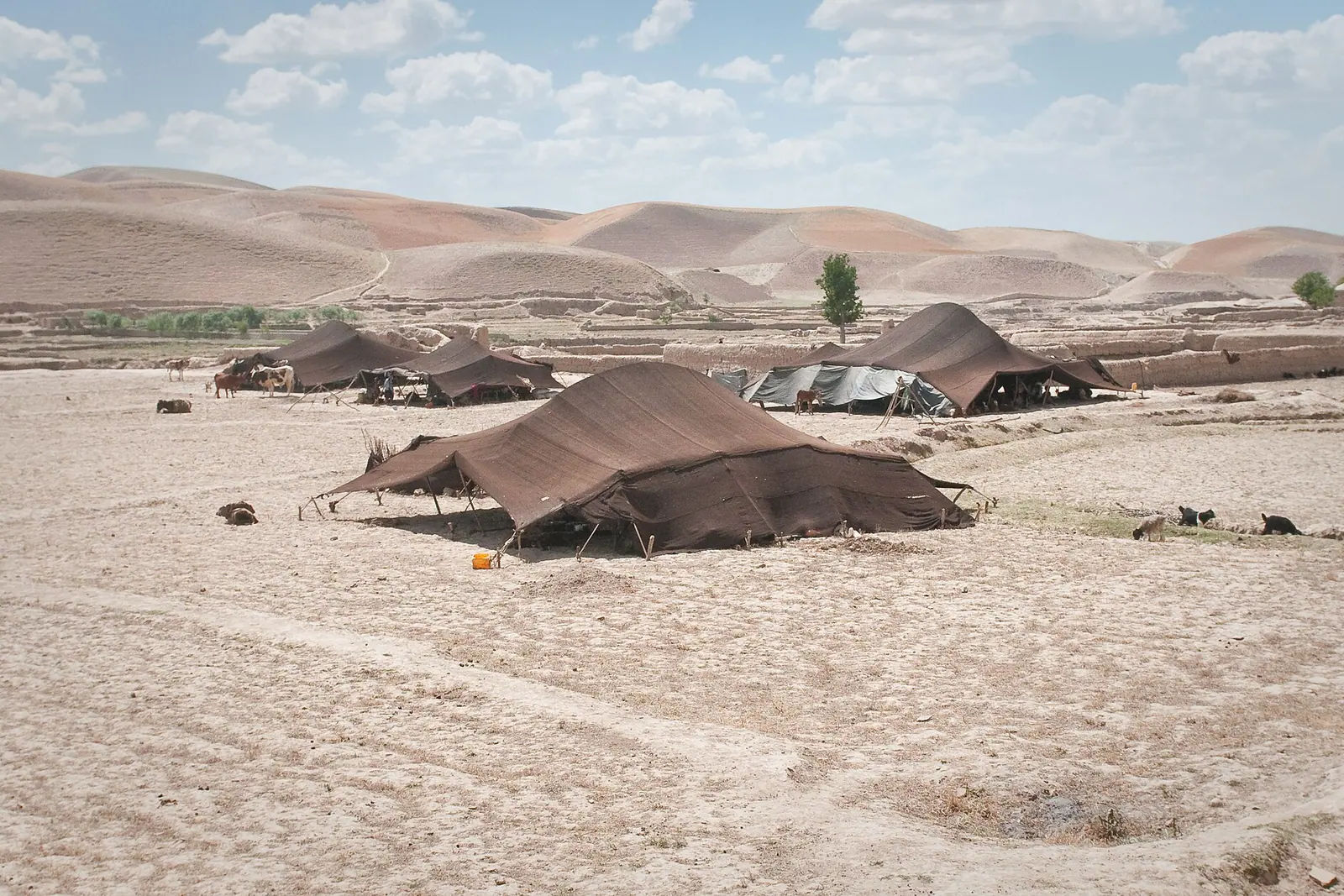
Afghanistan is one of the most storied and least-visited places on earth — a country of turquoise-tiled mosques, Silk Road citadels and lakes so blue they look painted on. Between the Hindu Kush passes lie sights that once drew pilgrims, poets and caravans, and a handful of travellers still make the journey. This guide maps the landmarks that matter most, the seasons that work, and the practical realities no one should ignore.
Kabul: Mughal Gardens, Museums and the Old City
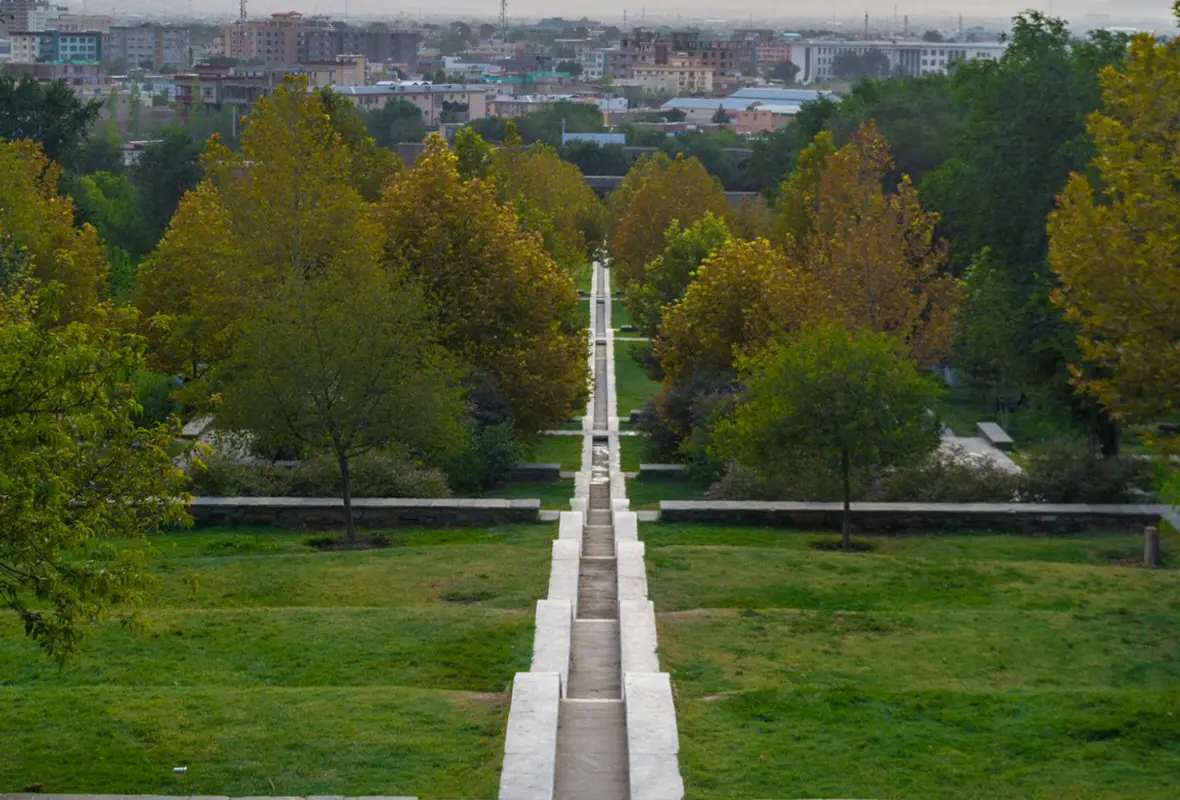
Kabul sits in a dusty bowl at 1,800 metres, ringed by bare mountains that catch pink light at dusk. Start at Bagh-e Babur, the terraced garden where the first Mughal emperor asked to be buried. Laid out in the sixteenth century, it climbs a hillside in stepped platforms of roses, pomegranate and mulberry, with a small marble mosque, a modest museum and a stone tomb pavilion near the top. On Fridays families spread carpets across the lawns for picnics; climb to the upper terrace for the best view of the city sprawling below.
On Darulaman Road, the National Museum of Afghanistan holds one of Asia's great collections — Gandharan sculpture, Bactrian goldwork, glass and coins that trace a crossroads of Greek, Persian, Buddhist and Islamic worlds. Many pieces were looted or smashed during the 1990s, and the displays today are as much a story of survival and return as of display. Nearby stands Darul Aman Palace, a bullet-scarred neoclassical shell slowly being stabilised, and further west Lake Qargha offers lakeside stalls, fried fish and pedal boats on a Friday afternoon.
In the older quarter, the Bala Hissar fortress walls loom over the neighbourhoods below, while Chicken Street and the surrounding lanes still sell carpets, lapis lazuli, carved lapis boxes and hardware. Allow two or three days in the capital. Sightseeing runs best from morning to mid-afternoon, many sites close on Fridays, and you will want a car and driver rather than walking between districts.
Bamyan: Buddha Niches, the City of Screams and the Red City
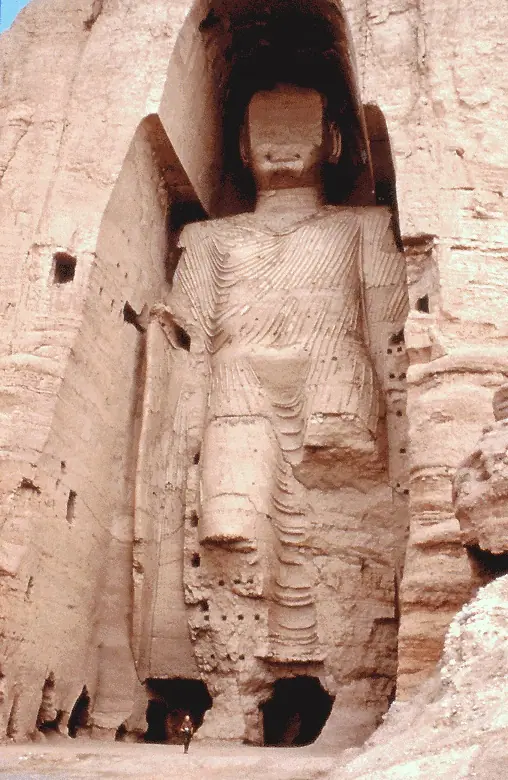
The road west from Kabul climbs over the Shibar Pass and drops into a wide, pale valley at 2,500 metres, where a sandstone cliff rises like a wall. Cut into that cliff are the niches of the Bamiyan Buddhas — two colossal figures, roughly 55 and 38 metres tall, that stood for some fifteen centuries as the westernmost great monuments of Buddhist art. They were destroyed in 2001, and what remains are the vast empty alcoves, the cave monasteries honeycombing the rock, fragments of painted fresco and a small site museum. Standing beneath the larger niche, you can still trace the curve where a shoulder once fitted.
Above the valley, Shahr-e Gholghola — the "City of Screams" — is a ruined citadel on a conical hill, reached by an hour's walk up a switchback path. Genghis Khan's forces sacked it in the thirteenth century, and the name remembers the slaughter. Go an hour before sunset, when the whole valley turns gold and the snow-capped Koh-e Baba range glows behind. On the opposite ridge, the older Shahr-e Zuhak, or Red City, is a tangle of collapsed walls and towers that predate Islam by centuries.
Further down the valley, Dragon Valley takes its name from a long rock formation locals say is a petrified dragon, and the Foladi and Kakrak side valleys hide smaller Buddha figures and cave shrines. Bamyan is also Afghanistan's unexpected winter sports spot, where skiers hike up the slopes above the valley and descend on basic gear. The season matters: May to October is mild and green, while November to March brings deep snow and closed passes.
Band-e-Amir: The Blue Lakes of the Hindu Kush
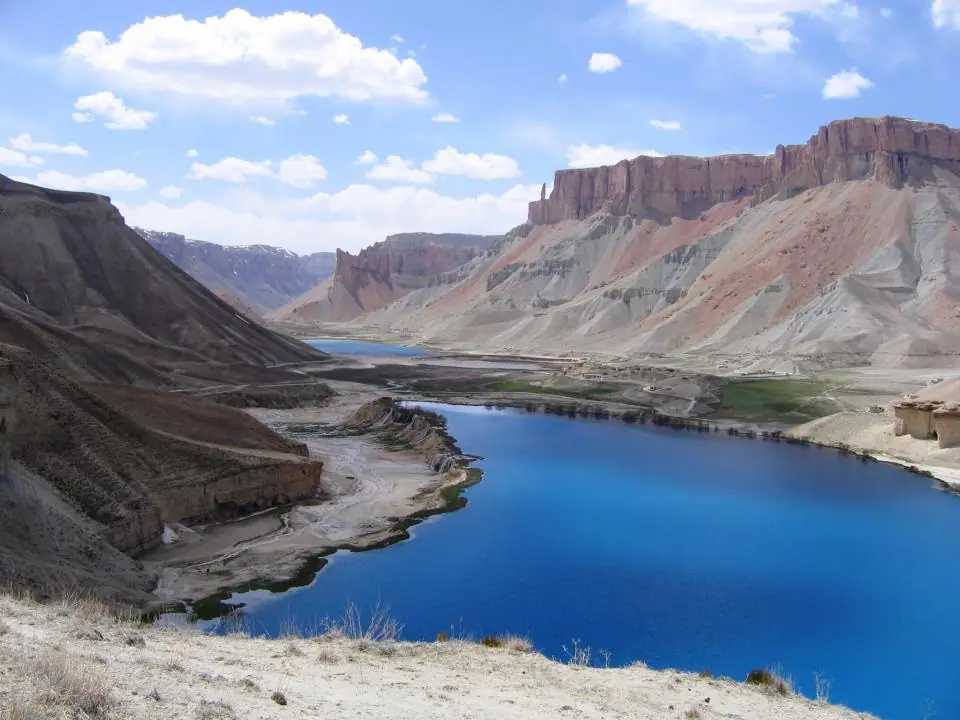
A couple of hours west of Bamyan, the road climbs onto a high, treeless plateau and then the ground simply falls away into colour. Band-e-Amir is a chain of six lakes, dammed naturally by mineral-rich travertine walls that build up a few centimetres a year. The water is an almost unnatural cobalt, deepening to sapphire in the middle and rimmed with white mineral terraces. It became Afghanistan's first national park, and it remains the single most beautiful natural sight in the country.
Each lake has a name and a personality. Band-e Haibat — the Dam of Awe — is the largest and most photographed, with a natural causeway of travertine you can walk across and swan-shaped pedal boats for hire at the shore. Band-e Zulfiqar, Band-e Panir, Band-e Pudina, Band-e Qambar and Band-e Gholaman string out along the plateau, quieter as you move away from the main overlook. Locals consider parts of the site sacred, so swim only where others do, and ask before photographing people at prayer.
Facilities are minimal: a scatter of simple teahouses and guesthouses in the nearby village, no reliable electricity, no card machines. Bring cash, drinking water, sun protection and — because you are above 2,900 metres — warm layers for the evening. The park is generally accessible from roughly May to October; in winter the road is snowed in and the lakes freeze over. A long day trip from Bamyan is possible, but an overnight lets you see sunrise on the water.
Herat, Mazar-i-Sharif and the Ruins of Balkh
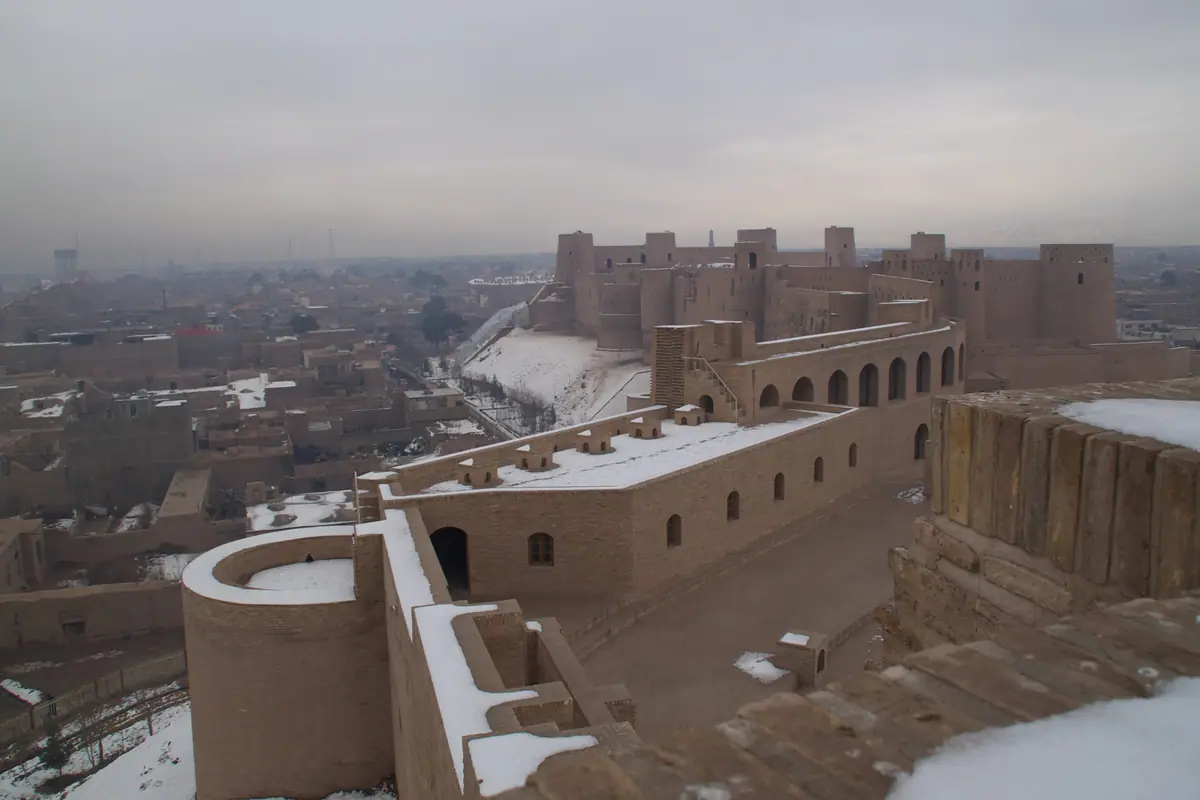
In the far west, Herat was for centuries the cultural capital of the Timurid world, and its Citadel — Qala Ikhtyaruddin — is one of the great fortresses of Central Asia, a massive earthen and brick bastion rebuilt so many times after earthquakes and sieges that its layers read like a history of the region. Walk the ramparts in the late afternoon and the whole old city opens below you, dominated by the blue-tiled bulk of the Friday Mosque.
The Friday Mosque of Herat is the city's masterpiece: a vast courtyard lined with hundreds of columns, walls sheathed in turquoise and cobalt tilework, minarets rising in bands of geometric pattern. Nearby, the Musalla complex's surviving minarets tilt against the sky, and the covered bazaars still sell saffron, dried fruit and hand-knotted carpets. Herat rewards slow wandering — two or three days, with mornings for monuments and evenings for the teahouses around the old city.
North in Balkh province, Mazar-i-Sharif centres on the Blue Mosque, or Rawze-e-Sharif, whose tiled domes and white doves draw pilgrims year-round and host the great Nowruz flag-raising each spring. Twenty kilometres away lies Balkh itself, the "Mother of Cities", an ancient Bactrian metropolis reduced to a field of mounds and mudbrick walls. Do not miss the Noh Gonbad Mosque, a small ninth-century jewel of carved stucco and brick, one of the oldest Islamic buildings in the country. Spring and autumn are the kindest months here; midsummer in the northern plains is punishing.
The Minaret of Jam, Panjshir and the Wakhan Corridor
Deep in Ghor province, where two rivers meet in a narrow gorge, stands the Minaret of Jam — a twelfth-century tower of fired brick rising some 60 metres, wrapped in bands of geometric relief and Kufic inscription, built by the Ghurid dynasty that briefly ruled from India to Persia. It is a World Heritage Site in one of the most remote spots imaginable, reached by a long, rough road and a river crossing that is impassable in spring melt. Very few travellers make it; those who do call it the highlight of their lives.
Closer to Kabul, the Panjshir Valley runs north from Charikar as a green ribbon of orchards and emerald river beneath bare mountains, a straightforward day out via the Salang road. The Salang Pass itself, with its long Soviet-era tunnel, is a legendary and dramatic crossing into the northern provinces. Further east and far wilder is the Wakhan Corridor, the thin panhandle where the Pamir and Hindu Kush meet, home to Wakhi farmers and Kyrgyz herders, and to high lakes and peaks visited by almost no outsiders.
Elsewhere, Ghazni keeps two ornate brick minarets and a sprawling citadel, Kandahar holds the Shrine of the Cloak, and the valleys of Nuristan hide wooden mosques and terraced villages. Be realistic about distances: roads are slow, checkpoints are frequent, and a route that looks short on a map can take a full day.
When to Go and How Travel Works Right Now
Timing shapes everything. April, May, September and October are the sweet spots — mild days, clear mountain views, open passes. June to August is fierce in Kabul, Jalalabad and the northern plains but pleasant in Bamyan and Band-e-Amir. From December to March snow closes the high routes, including the Bamyan and Salang approaches, while Kabul turns cold and muddy. If Band-e-Amir and Bamyan are your priority, aim for June to September.
Practical realities deserve honesty. Afghanistan is not a conventional tourist destination: independent travel is heavily restricted, most foreign governments advise against all travel, and the de facto authorities require visitors to register and comply with rules that change without notice. There is no ordinary visa-on-arrival system for leisure trips, and a licensed local guide or fixer is effectively essential for permits, transport and checkpoints. Women travellers face additional requirements, including being accompanied by a male relative on longer journeys, and all visitors are expected to dress modestly with heads covered.
Inside the country, carry cash — US dollars are widely accepted, cards and ATMs are almost useless, and there are few banks in remote areas. Medical facilities are limited outside Kabul, so travel insurance with evacuation cover is not optional. Move by private car or domestic flight, travel in daylight, keep a headscarf and sturdy shoes in your day bag, and pack for altitude at Band-e-Amir and Bamyan. Expect simple guesthouses and homestays rather than hotels, and treat the journey itself — the passes, the teahouses, the hospitality — as part of the destination.
Frequently asked questions
What are the absolute must-see landmarks in Afghanistan?
Band-e-Amir's blue lakes, the Buddha cliff and ruined citadels of Bamyan, the Herat Citadel and Friday Mosque, the Blue Mosque at Mazar-i-Sharif, the gardens and national museum in Kabul, and the remote Minaret of Jam in Ghor. Balkh's Noh Gonbad Mosque and the Panjshir Valley round out a first-time route.
When is the best time to visit Afghanistan?
April, May, September and October offer the most comfortable weather and open mountain roads. June to August is best for Bamyan and Band-e-Amir but extremely hot in the lowlands, while December to March brings snow that closes the high passes.
How do you reach Bamyan and Band-e-Amir?
Bamyan is roughly eight to nine hours by road from Kabul over the Shibar Pass, or a short domestic flight. Band-e-Amir is a further two hours west of Bamyan on a partly paved road, usually done as a long day trip or, better, with an overnight stay.
Is it safe to travel in Afghanistan right now?
Most foreign governments advise against all travel to Afghanistan, and independent tourism is heavily restricted. Anyone visiting should expect registration requirements, frequent checkpoints, a compulsory local guide, and rules that can change suddenly. If you go, arrange everything through people on the ground and follow current official guidance.
What should visitors wear and carry in Afghanistan?
Dress modestly and conservatively: long sleeves, loose trousers or a long skirt, and a headscarf for women. Carry cash, since cards rarely work, plus drinking water, sun protection, warm layers for high altitudes, and any medication you may need. Medical facilities outside Kabul are limited.
Plan it — experiences in Afghanistan
Live search, booked directly with trusted providers.
Sort the rest of your trip
Everything for Afghanistan, in one place
Stay in Afghanistan
Hotels, guesthouses and apartments — compared in one search.
Search hotels
Transfer in Afghanistan
Private driver waiting on arrival — no queues, no surprises.
Book a transfer
Stay online in Afghanistan
Travel eSIM — data the moment you land, no roaming bills.
Get an eSIMMore guides in Afghanistan
Best Places to Visit in Afghanistan: From Band-e Amir to Herat
Best Time to Visit Afghanistan: Seasons, Hotels and Must-See Sights
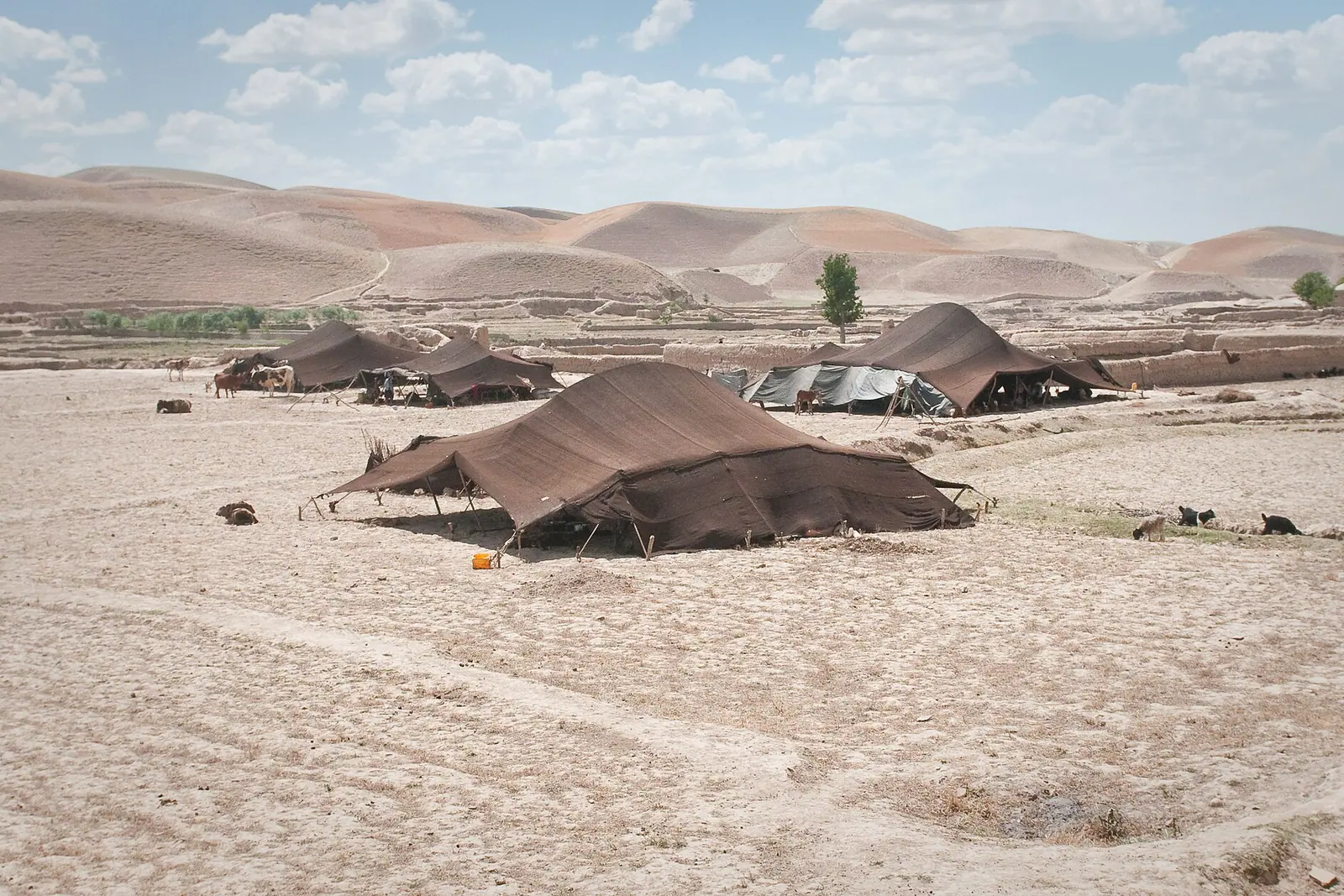
Touring Afghanistan: Food, Culture and the Sights You Should Not Miss
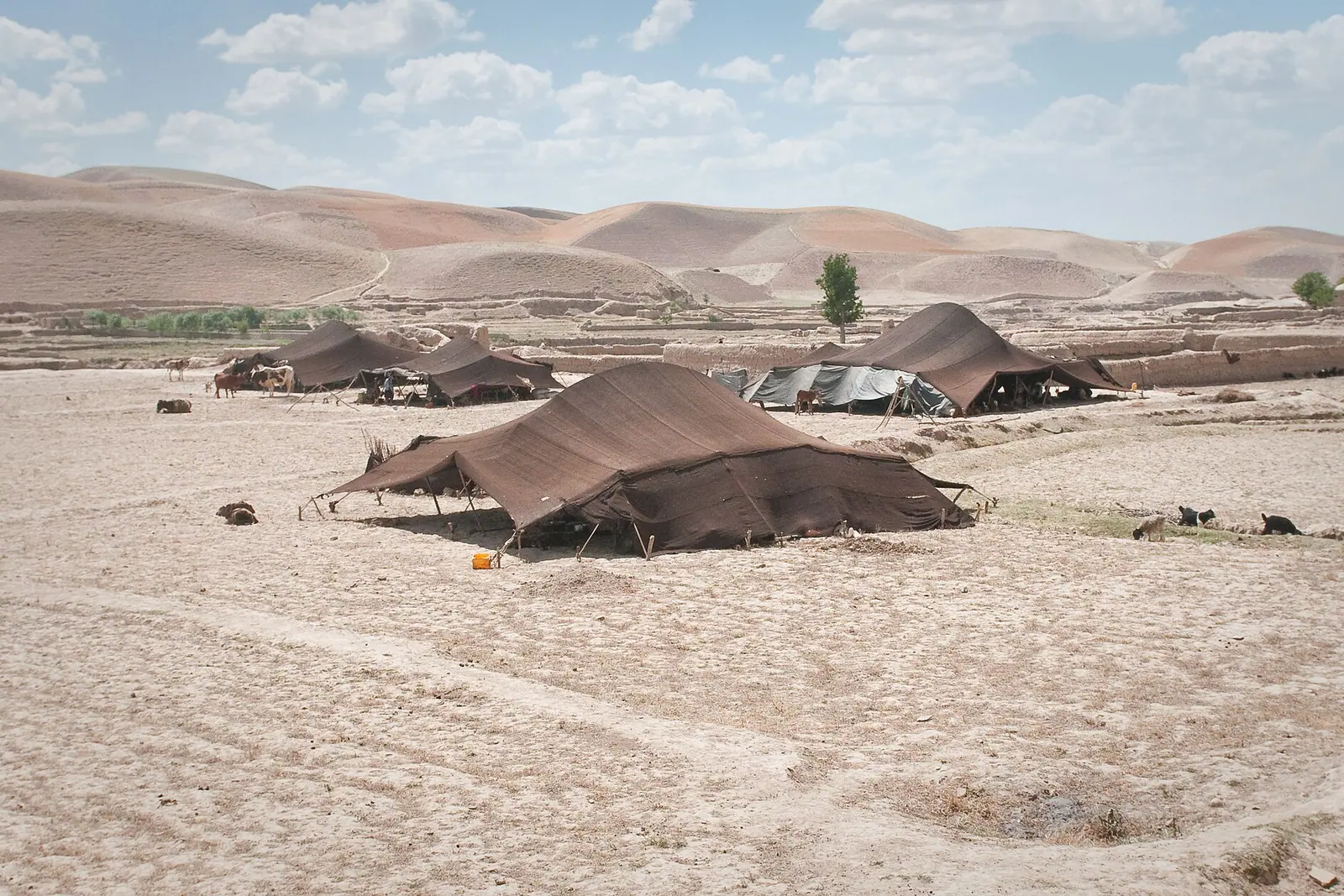
Flying Through Afghanistan: A One-Week Air Itinerary to Kabul, Bamiyan, Mazar-i-Sharif and Herat