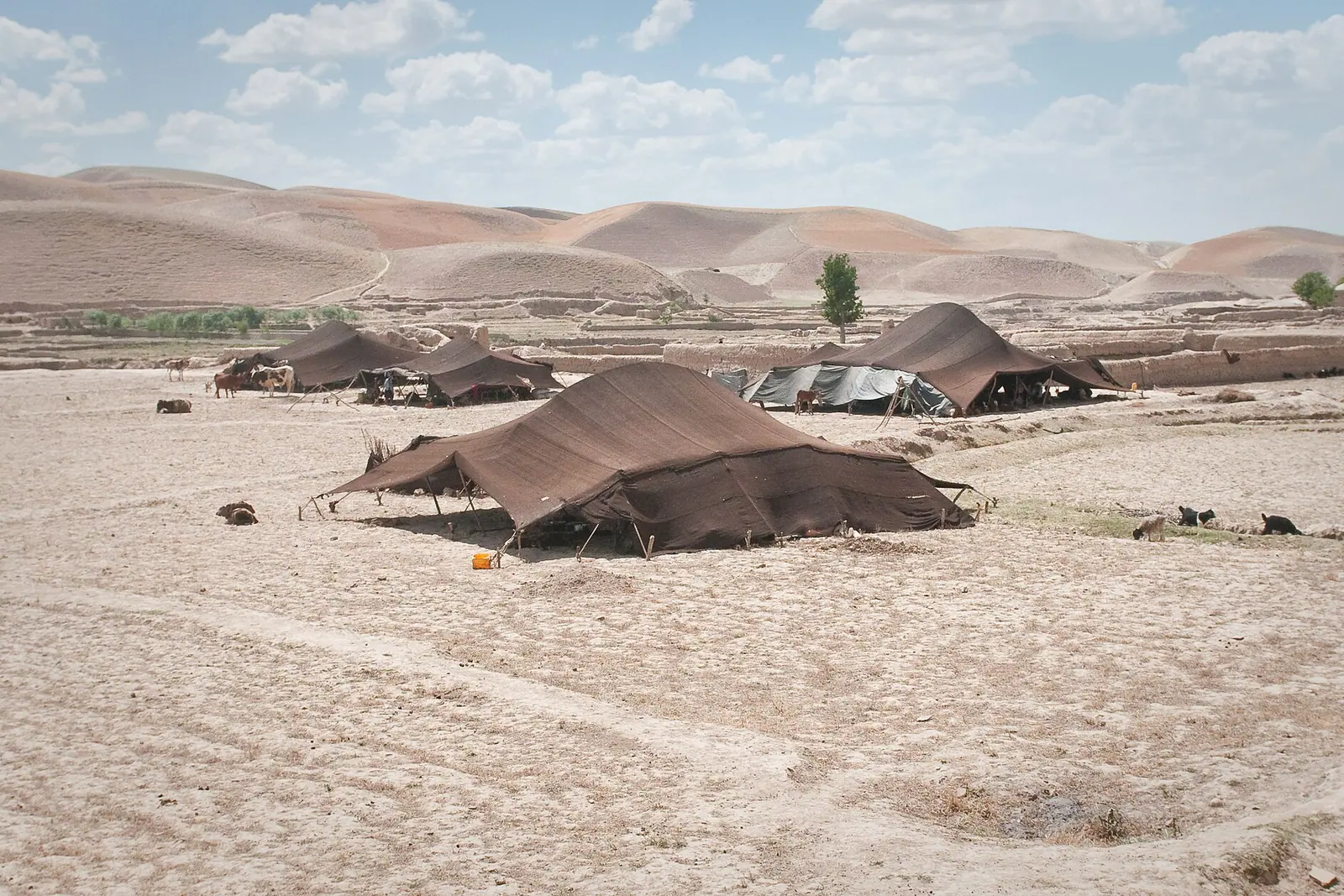
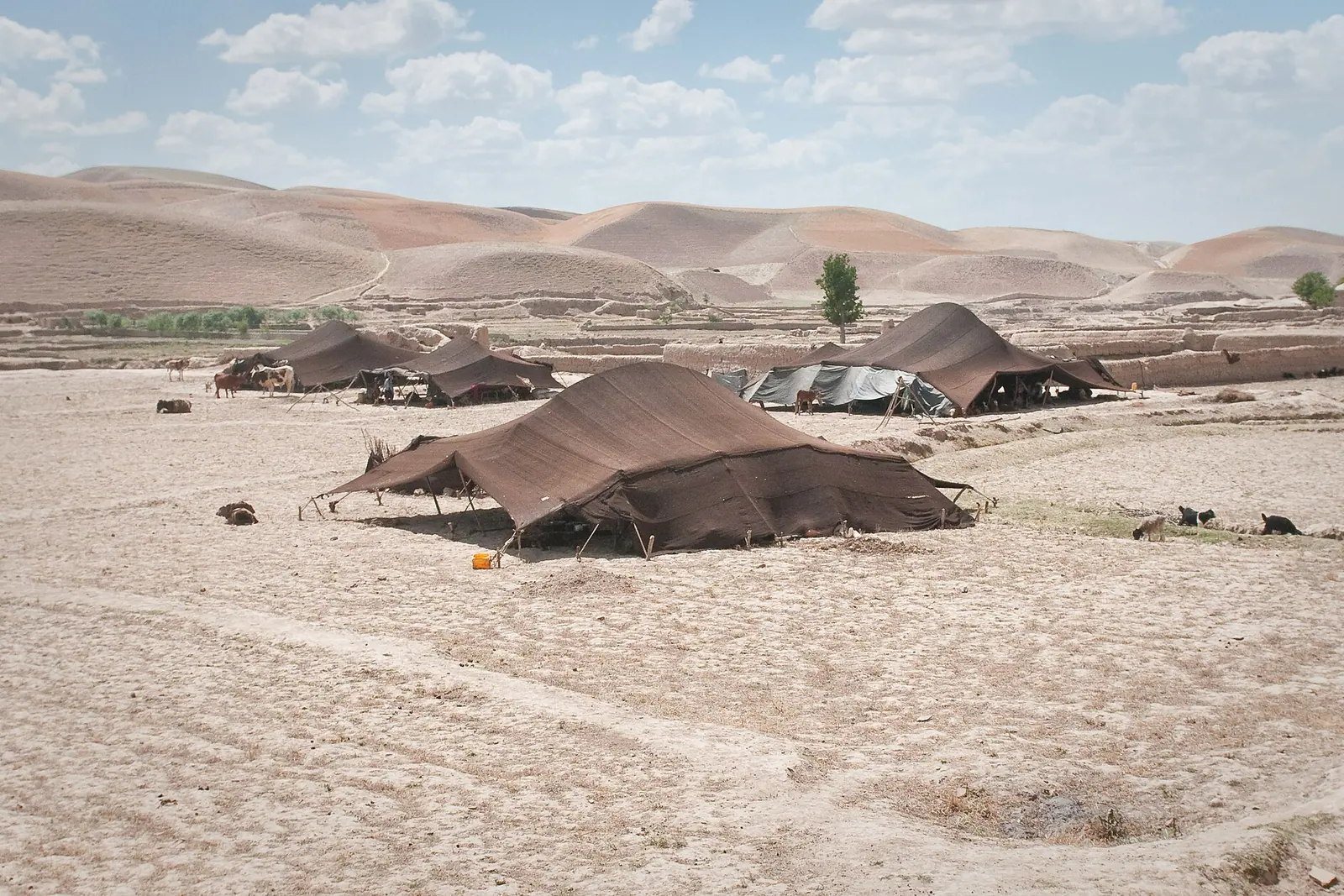
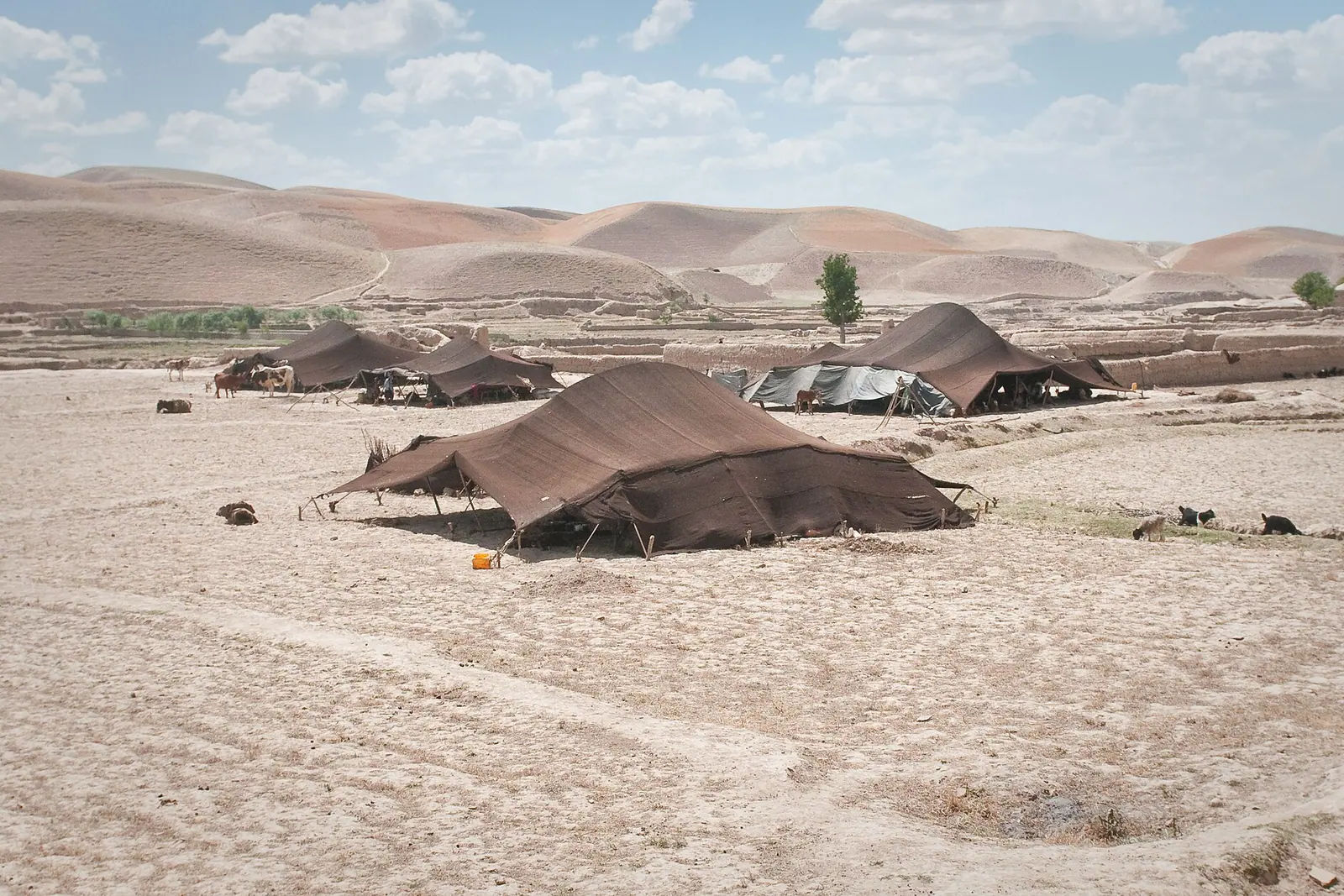
Afghanistan by air is a country compressed into a handful of runways: a morning hop over the Hindu Kush, a landing between snow peaks, and you have crossed ground that would take days by road. This one-week route links Kabul, Bamiyan, Mazar-i-Sharif, Herat and Kandahar — the landmarks a first-time visitor should know by name. It is written for travellers who are already committed and properly supported, not for casual sightseers.
Before You Fly: An Honest Read of Afghanistan's Air Map
Start with the fact that most governments advise against all travel to Afghanistan, and that advice has real consequences: travel insurance is typically void, consular help is minimal, and hospitals able to treat serious trauma are concentrated in Kabul. Arrival is by air, because land borders are unpredictable and road movement outside cities carries the highest risk. Visas must be arranged in advance through an Afghan diplomatic mission, usually with a sponsorship or invitation letter; there is no tourist visa on arrival. Realistically, this itinerary only functions for people travelling with an organisation, a fixer and a security plan — journalists, humanitarian staff, researchers, or diaspora visiting family.
The flying season matters enormously. Aim for late April to mid-May or September to October, when the Hindu Kush passes are clear and daytime temperatures in Kabul sit in the low twenties. Winter brings snow, fog and frequent cancellations, and the high Salang route north can close for days. Summer is punishing: Kabul regularly climbs past 35°C, and Kandahar in the south pushes well beyond 40°C, so sightseeing shifts to early mornings and late afternoons.
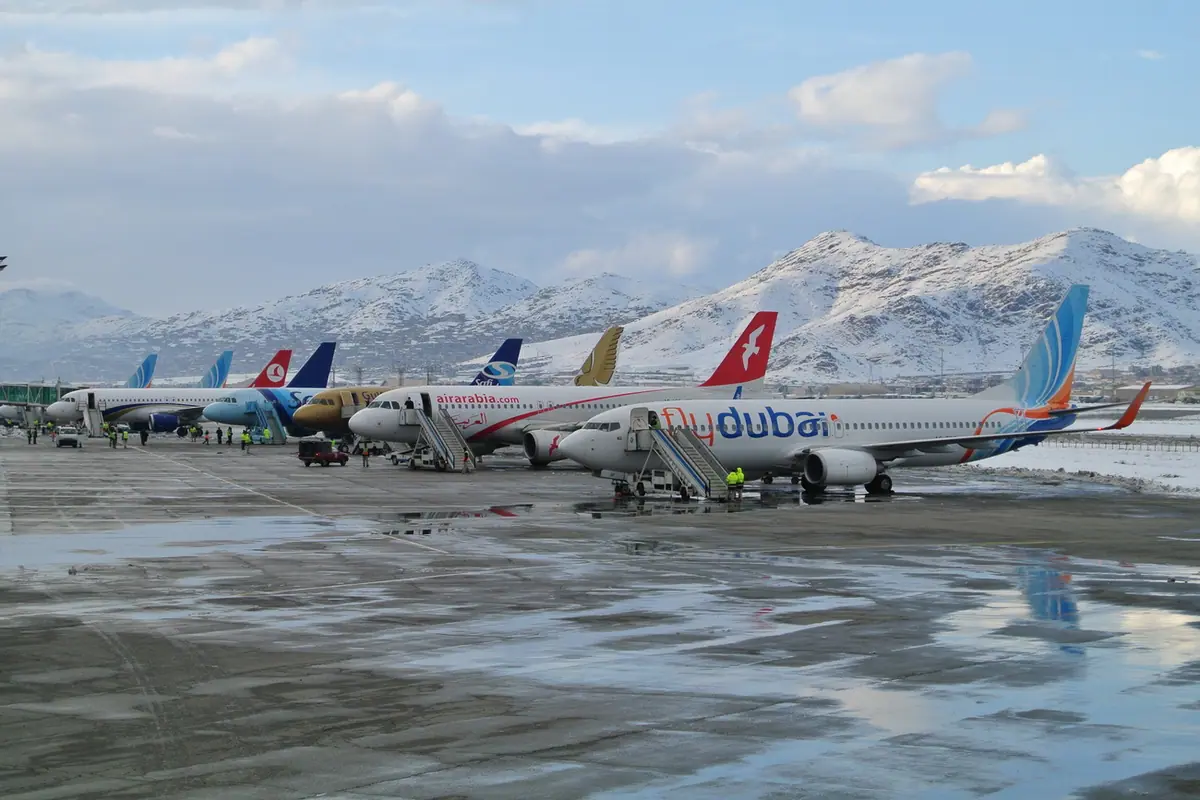
Domestic air travel in Afghanistan is small-scale and cash-driven. Seats are sold through ticket offices in Kabul rather than reliable online booking, schedules change without warning, and luggage allowances on the smaller aircraft are tight — expect a strict weight limit and a soft bag. Book morning departures where you can; afternoon winds, dust and mountain weather are what cancel flights. Reconfirm every leg the day before, and always hold a plan B on the ground.
Days 1–2: Kabul's Gardens, Palaces and Old City
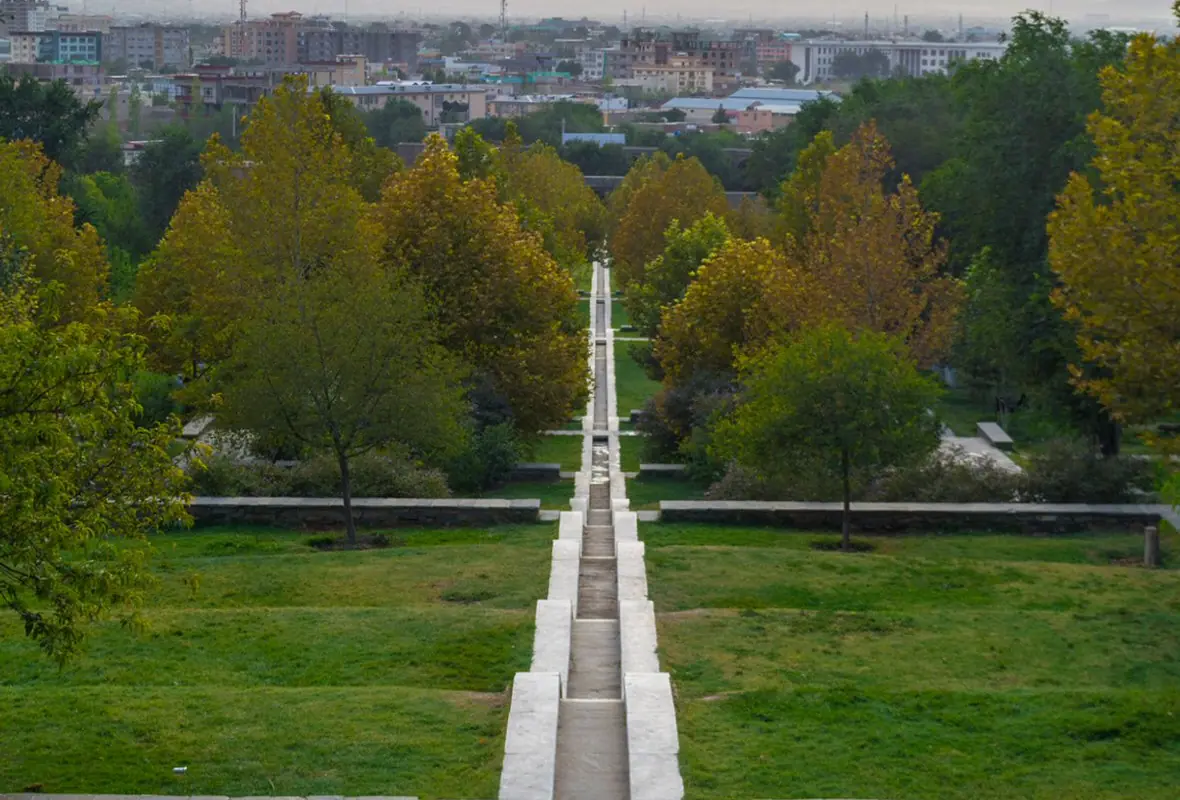
Kabul rewards slow mornings. Begin at Bagh-e Babur, the terraced Mughal garden where the emperor Babur asked to be buried; its restored water channels climb a hillside to a marble tomb and a pavilion with one of the best views over the city. From there, drive the long straight road south-west to Darul Aman, where the National Museum of Afghanistan holds a remarkable collection of Greco-Buddhist sculpture, carved ivories and items from the country's Buddhist and Silk Road past — the displays are modest, the objects extraordinary. The neighbouring Darul Aman Palace, a 1920s royal residence gutted by decades of war, is viewed from outside and is worth the stop for its stark silhouette alone.
Spend the second day in the older layers of the city. Bala Hissar, the ancient fortress on the ridge above the old town, has been garrisoned since before the Mongols and remains a military site, so it is seen from its approaches rather than entered. Below it, the covered lanes around Ka Faroshi bird market and the shops off Chicken Street show the commercial Kabul that never quite stopped working. Finish at Pul-e Khishti Mosque, the largest in the capital, with its wide turquoise dome, then drive out to Qargha Lake for tea by the water.
If you have a spare afternoon, head west to Paghman, roughly 25 km away, where a triumphal arch and formal gardens were laid out in the 1920s as a summer retreat. Weekends are busy with families; weekdays are quiet enough to walk the whole site.
Day 3: Bamiyan — Buddha Niches and the City of Screams
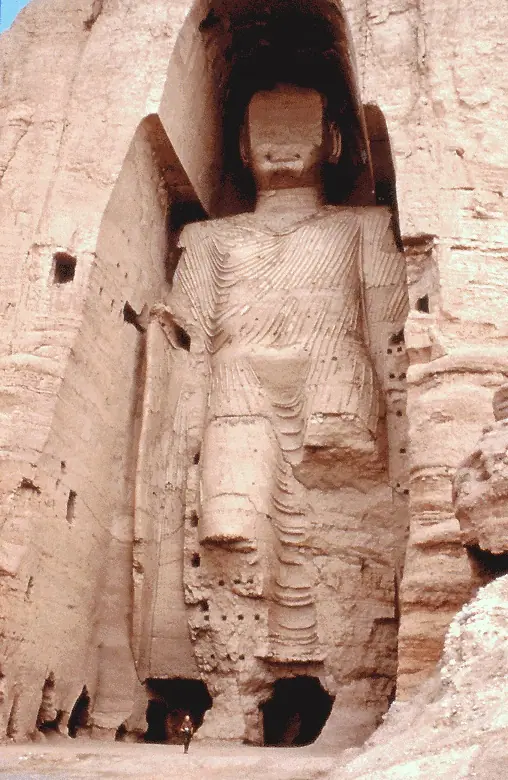
Fly or drive north-west to Bamiyan, a high valley at around 2,500 metres where the air is thin and cold even in summer. The cliff face that once held the two great Buddhas — 55 and 38 metres tall, carved in the sixth century and destroyed in 2001 — remains the defining sight: the empty niches are visible from across the valley, and the surrounding caves still carry fragments of painted decoration. Local guides walk visitors up to the smaller niche, which gives a sense of the scale.
On the far side of the valley stands Shahr-e Gholghola, the 'City of Screams', a ruined citadel on a cone of rock with a view that opens out over the entire Bamiyan basin. Nearby is Shahr-e Zuhak, the 'Red City', its walls the colour of dried brick against the pale hills. Both are half-hour climbs on uneven ground; allow two to three hours for the pair. Dara-e Ajdahar, the Dragon Valley, makes an easy late-afternoon walk through a narrow gorge of carved rock.
Travel within the valley is by shared taxi or private vehicle arranged through your guesthouse. Bring cash: there are almost no working ATMs, and card payments are essentially unknown outside Kabul. Nights are cold year-round, and between November and April, snow can close the approaches entirely.
Day 4: Mazar-i-Sharif and the Ruins of Balkh
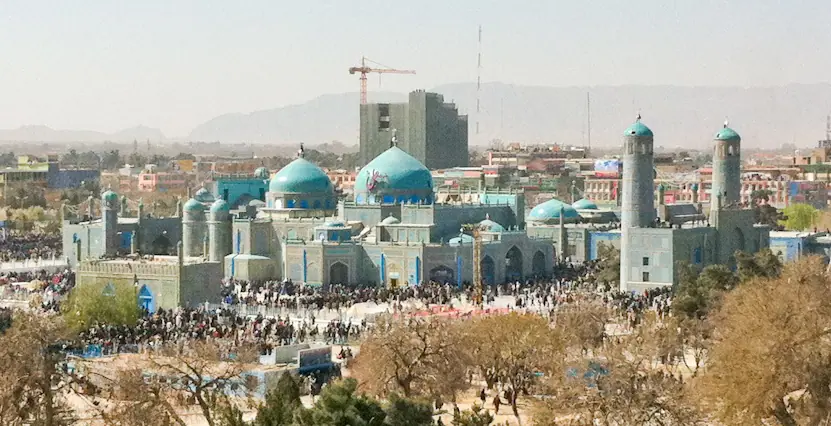
The flight north to Mazar-i-Sharif crosses the Hindu Kush and lands in the country's flattest, hottest plain. The city exists because of the Rawza-e Sharif, the great shrine complex known simply as the Blue Mosque — a cascade of cobalt and turquoise tile around the supposed tomb of Ali. Non-Muslim visitors generally view the courtyards and outer tiling rather than the inner sanctuary, and the dress code is strict: head covering, long sleeves and trousers for everyone, shoes removed at the thresholds.
The best time to be here is the week around Nowruz in late March, when the shrine hosts the raising of the janda flag and the city fills with pilgrims and picnics — one of the few moments when Afghanistan feels like a mass tourism destination. Outside that window, mornings are the time to visit; afternoons in June and July are brutally hot.
Twenty kilometres west lies Balkh, one of the oldest continuously inhabited places in the region and once a great centre of Buddhism, Zoroastrianism and Persian poetry. Little stands above ground beyond the long circuit of mud-brick walls, but the site of Takht-e Rustam holds the remains of a Buddhist stupa and monastery, and a modest shrine marks the tomb of Rabia Balkhi, often described as the first woman to write poetry in New Persian. Give Balkh half a day and take a local guide — without one, it reads as bare earth.
Day 5: Herat — Citadel, Friday Mosque and the Musalla Minarets
Herat, in the west, is Afghanistan's most civilised city in the older sense of the word, and its two anchors are among the finest monuments in the country. The Citadel of Herat, also called Qala Ikhtiyaruddin, sits on foundations that predate Alexander and was rebuilt under the Timurids; a decade-long restoration left its brick walls, bastions and inner courtyards walkable. An hour's visit stretches easily to three.
A short walk away is the Friday Mosque, the Jama Masjid of Herat, whose blue-tiled iwan and courtyard were largely shaped in the fifteenth century under the patronage of Gowhar Shad. It is a working mosque, busiest at midday prayers. Continue to the Musalla Complex, where a cluster of minarets — survivors of a Timurid madrasa complex largely destroyed in the nineteenth century — lean at angles that make photographers nervous and engineers worse. Their tilework is among the most beautiful in Central Asia.
Beyond the monuments, Herat is a city of gardens and crafts. The shrine and garden of Gazur Gah, north of the centre, is a calm, tree-shaded place associated with a fifteenth-century Sufi teacher, and the surrounding bazaars sell the saffron for which the province is known — harvested in November, which is another good reason to schedule a western swing late in the year. Herat is also the usual jumping-off point for the remote Minaret of Jam in Ghor province, but that journey needs days, not hours, and serious planning.
Day 6–7: Kandahar and the Flight Home
A morning flight south brings you to Kandahar, the spiritual and political heart of the Pashtun south and the hottest stop on this route. The Shrine of the Cloak, the Kirka Sharif, holds a mantle said to have belonged to the Prophet and is the city's most revered building; the surrounding complex includes a mosque where visitors may walk the outer courtyards. Nearby, Chilzina — the 'Forty Steps' — is a rock-cut staircase and chamber with an inscription attributed to the Mughal emperor Babur, and it offers the classic view across the flat, dusty plain.
For something quieter, drive out to the Baba Wali shrine on the Arghandab River, where tea houses sit above the water and cliffs carry painted devotional images. Kandahar is conservative even by Afghan standards: dress modestly, keep cameras low, and expect separate seating and entrances in many public places. Women travelling here need to understand current restrictions, which include dress requirements and, for longer journeys, a male guardian; rules change and should be checked immediately before departure.
Return to Kabul on the last evening or the following morning, allowing a full buffer day before any onward international flight, because domestic cancellations are routine. If you have built a day of slack into the plan, spend it on the walk up to the old walls above Kabul at sunset — the best farewell the country offers.
Frequently asked questions
How do I get a visa for Afghanistan?
Apply in advance at an Afghan diplomatic mission; most travellers need a sponsorship or invitation letter and cannot obtain a tourist visa on arrival. Requirements and processing times change frequently, so confirm with the mission handling your case before booking flights.
Are there domestic flights between Afghan cities?
Yes, but the network is thin. Kabul connects most reliably with Mazar-i-Sharif and Herat, with Kandahar and Bamiyan served less consistently. Seats are usually bought in cash at ticket offices, aircraft are small, luggage limits are strict, and cancellations are common — always keep a ground alternative and a spare day.
Is it safe to visit Afghanistan as a tourist?
Most governments advise against all travel, and that is not boilerplate: there is a continuing risk of bombings, kidnappings and armed incidents, travel insurance is usually invalid, and medical evacuation is difficult. Independent sightseeing is not advisable; anyone travelling should do so with organisational backing, a local fixer and a professional security plan.
What is the best time of year to fly around Afghanistan?
Late April to mid-May and September to October. Skies are clearest, mountain passes are open, and daytime temperatures are manageable. Winter brings fog, snow and frequent flight cancellations, while midsummer heat in Kabul and Kandahar makes daytime sightseeing exhausting.
Should I carry cash, and what should I wear?
Carry enough Afghanis for the entire trip — ATMs are unreliable and card payment is rare outside a few Kabul hotels. Dress conservatively everywhere: long trousers and sleeves, and a headscarf for women. Alcohol is prohibited, photography of military sites, checkpoints and government buildings is not permitted, and asking before photographing people is both polite and safer.
Plan it — flights in Afghanistan
Live search, booked directly with trusted providers.
Sort the rest of your trip
Everything for Afghanistan, in one place
Stay in Afghanistan
Hotels, guesthouses and apartments — compared in one search.
Search hotels
Transfer in Afghanistan
Private driver waiting on arrival — no queues, no surprises.
Book a transfer
Travel insurance
Medical cover, delays and lost baggage — sorted before you go.
Get covered