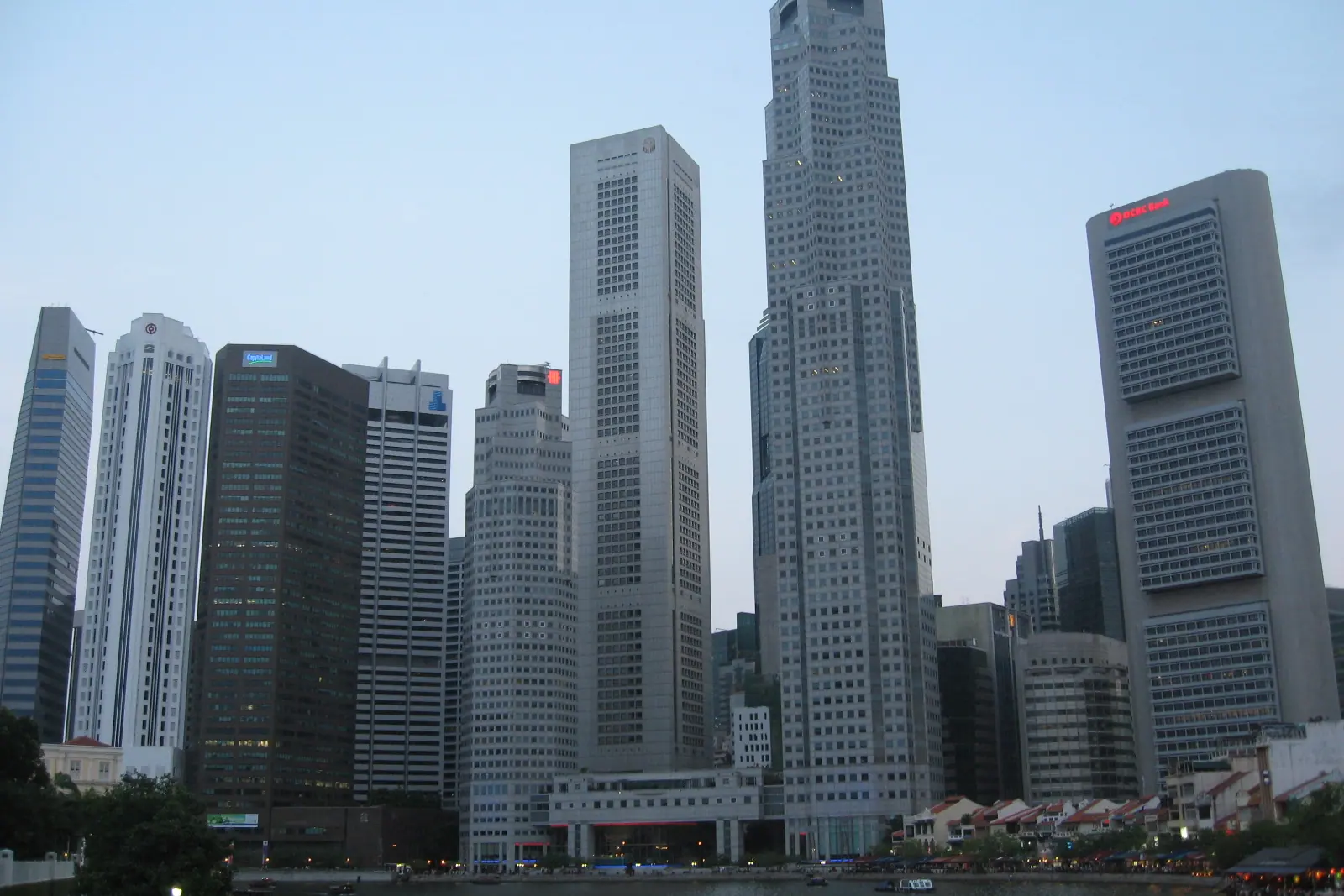
Singapore packs an entire continent of experiences into an island you can cross in under an hour, which is exactly why a week here rewards slow, deliberate planning rather than frantic sightseeing. This seven-day route moves from the glass-and-lights spectacle of Marina Bay through colonial shophouses, temple-lined ethnic quarters, rainforest trails and beachy Sentosa, always with a hawker centre within walking distance.
Day 1: Landing at Changi and the First Night on Marina Bay
Most long-haul flights land at Changi Airport, itself a destination worth an hour of your time. Before leaving the terminals, walk to Jewel Changi Airport to see the Rain Vortex, a 40-metre waterfall pouring through a glass-domed garden of ferns and orchids; the light-and-sound show after dark is free and genuinely mesmerising. Change money and pick up a contactless transit card or a tourist travel pass at the airport MRT station — the train reaches the city centre in about half an hour for a fraction of a taxi fare.
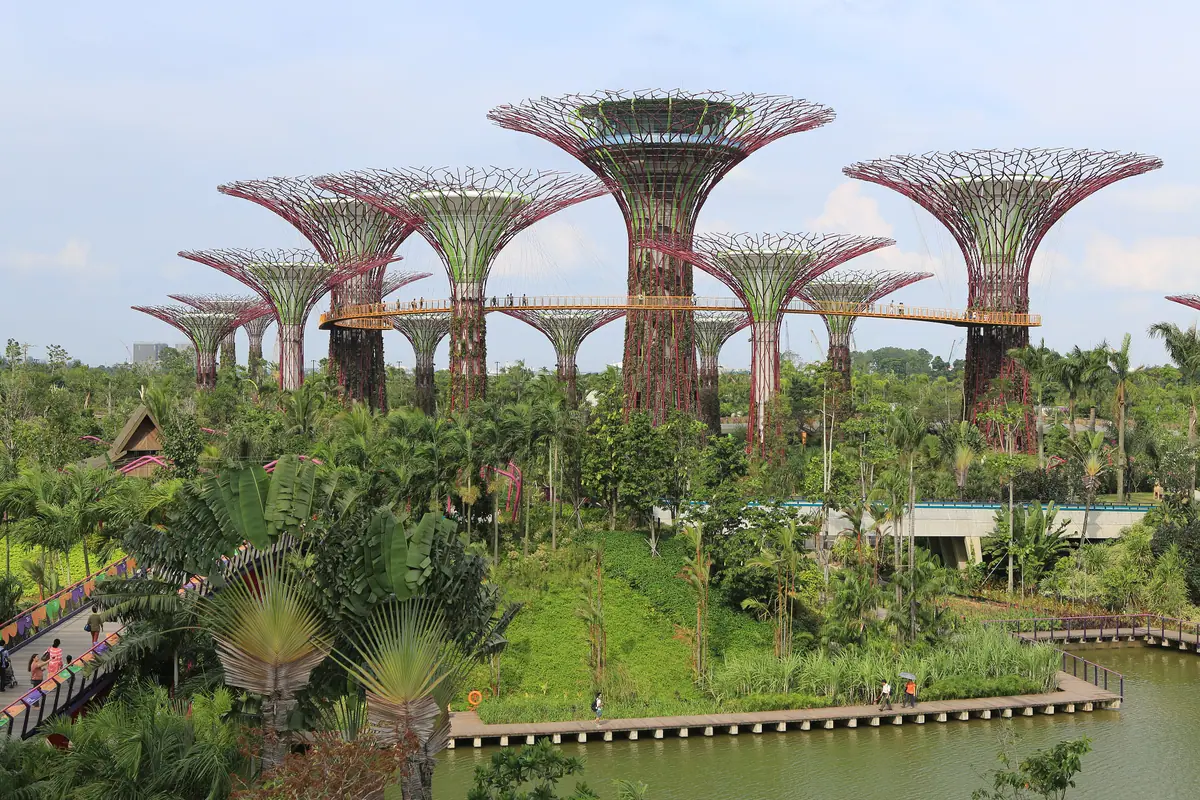
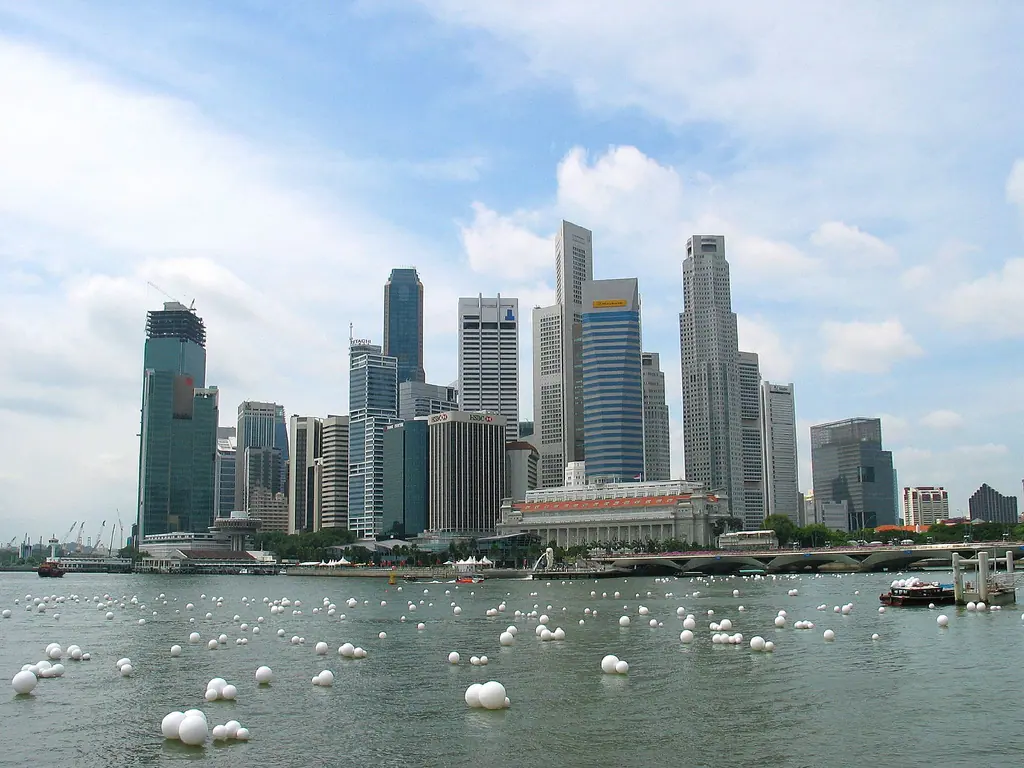
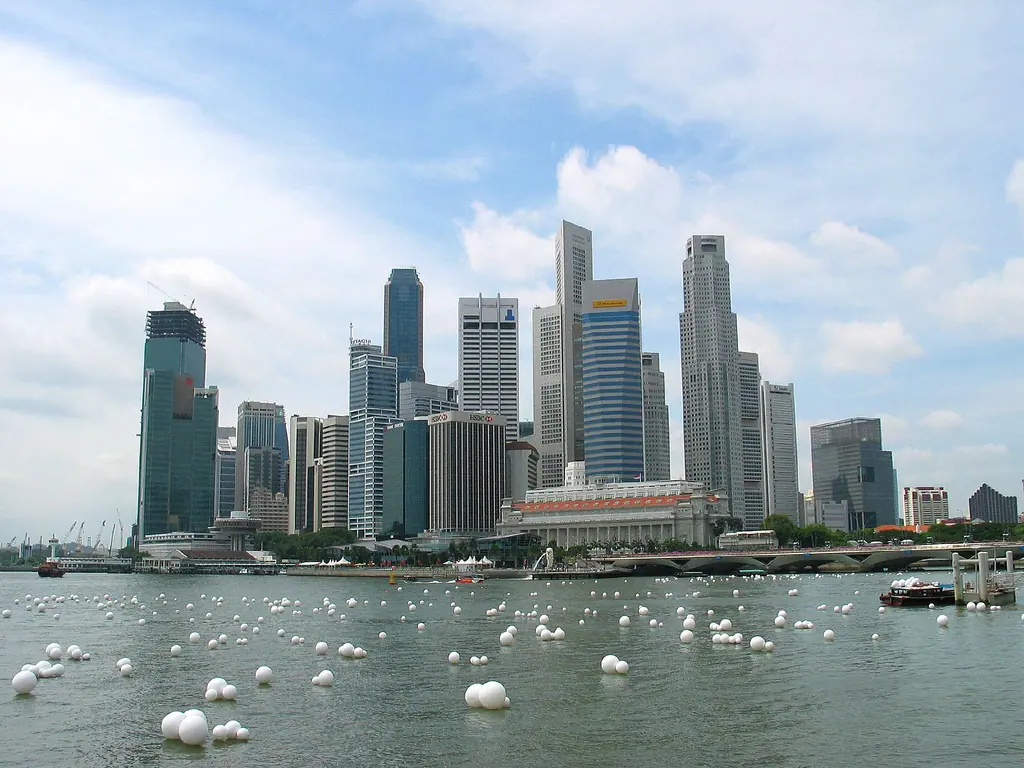
Ease into the time zone with an evening around Marina Bay. Walk the waterfront promenade from the Esplanade — locals call its spiky aluminium roof the durian — around to Merlion Park, where Singapore's half-lion, half-fish mascot spouts water against the skyline. Stay for the nightly Spectra light-and-water show at Marina Bay Sands and the free Supertree light display across the bay in Gardens by the Bay, which runs twice each evening.
Eat your first proper meal at Lau Pa Sat, a cast-iron Victorian market hall in the financial district where satay stalls fire up on the surrounding street from around 7pm. Order skewers by the handful, pay in cash, and claim a plastic stool. Jet lag is best fought with strong local kopi and a slow stroll, not an early night.

Day 2–3: Gardens, Museums and the Colonial Core
Give your first full day to Gardens by the Bay, which deserves a half-day at minimum. The cooled conservatories — Cloud Forest, with its misted indoor waterfall and elevated walkways, and Flower Dome, whose seasonal displays shift from cherry blossoms to tulips — take two to three hours together. Add the OCBC Skyway and Supertree Observatory for the best elevated views, then cross the Helix Bridge to the ArtScience Museum, whose lotus-shaped building houses touring exhibitions that suit both adults and children.
Day three belongs to the colonial core. Start at the National Gallery Singapore, two former civic buildings joined by a sweeping canopy, and give its Southeast Asian art collection two hours. Continue to St Andrew's Cathedral, the Padang and the riverside statue of Sir Stamford Raffles, then walk north to Fort Canning Park for its spice garden and the tree-lined path down to Clarke Quay, where riverside restaurants glow after sunset. A short river cruise from Boat Quay is the easiest way to see the old shophouse waterfront from the water.
Carve out time for the Singapore Botanic Gardens, a UNESCO-listed green space north of Orchard Road. The National Orchid Garden inside it is the highlight, with thousands of blooms including the hybrid orchids named after visiting dignitaries. Go early, before 9am, when the heat is bearable and the joggers and herons are out in force.
Day 4: Chinatown, Little India and Kampong Glam
Singapore's ethnic quarters sit within a few MRT stops of each other and are best tackled in one long, hungry day. Begin in Chinatown at the Buddha Tooth Relic Temple, a five-storey Tang-style complex with a rooftop garden and a museum floor, then walk to Sri Mariamman Temple, the city's oldest Hindu temple, recognisable by its carved, brightly painted gopuram tower. Between them, the Chinatown Complex food centre offers hundreds of stalls — go for Hainanese chicken rice, char kway teow and oyster omelette.
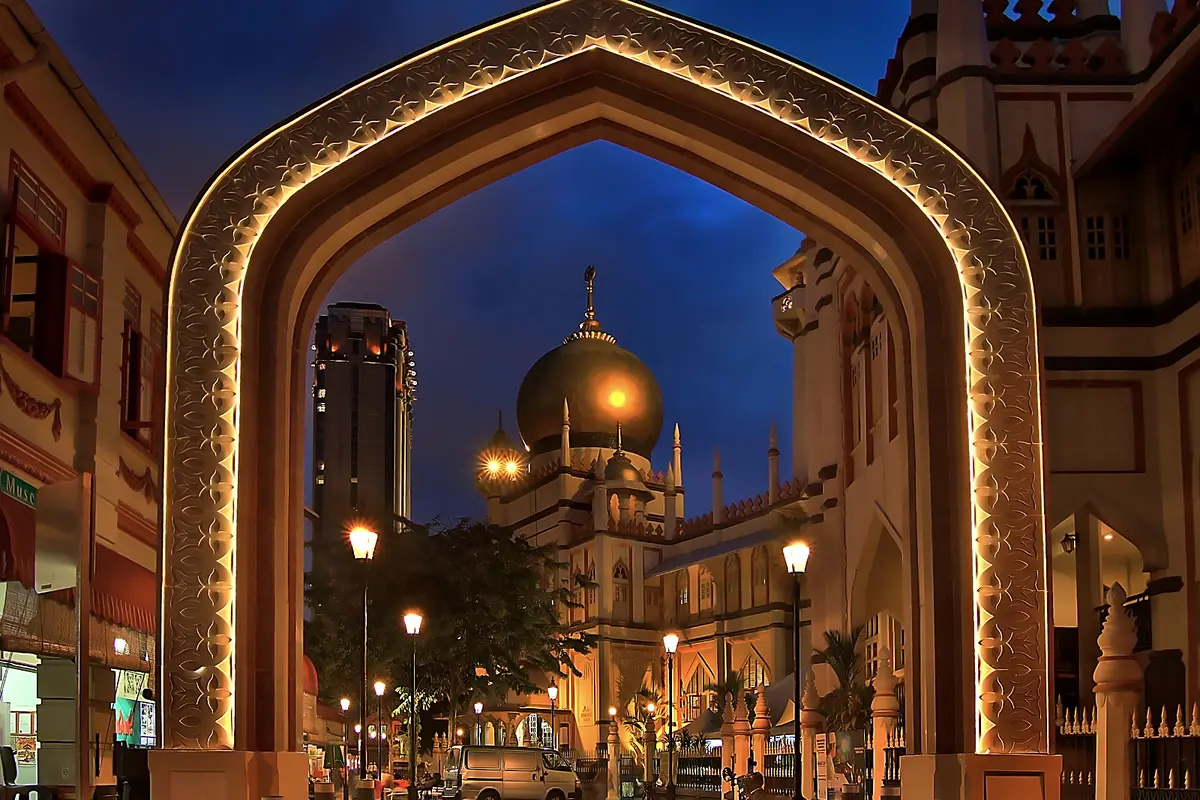
Little India is a sensory shift: garlands, gold shops and the candy-coloured Sri Veeramakaliamman Temple on Serangoon Road. Tekka Centre is the place for biryani, dosa and teh tarik, and the House of Tan Teng Niah nearby is one of the most photographed shophouses on the island. Continue to Kampong Glam for Kampong Glam's Sultan Mosque, whose golden dome anchors Bussorah Street, and the mural-covered back lanes of Haji Lane and Arab Street, where boutiques and cafés occupy restored shophouses.
Round off the day with a drink above the city at one of the rooftop bars near Marina Bay, or head to Clarke Quay if you want something livelier. Wear shoes you can slip off — several temples require it — and keep shoulders and knees covered as a mark of respect.
Day 5: Sentosa Island and the Southern Coast
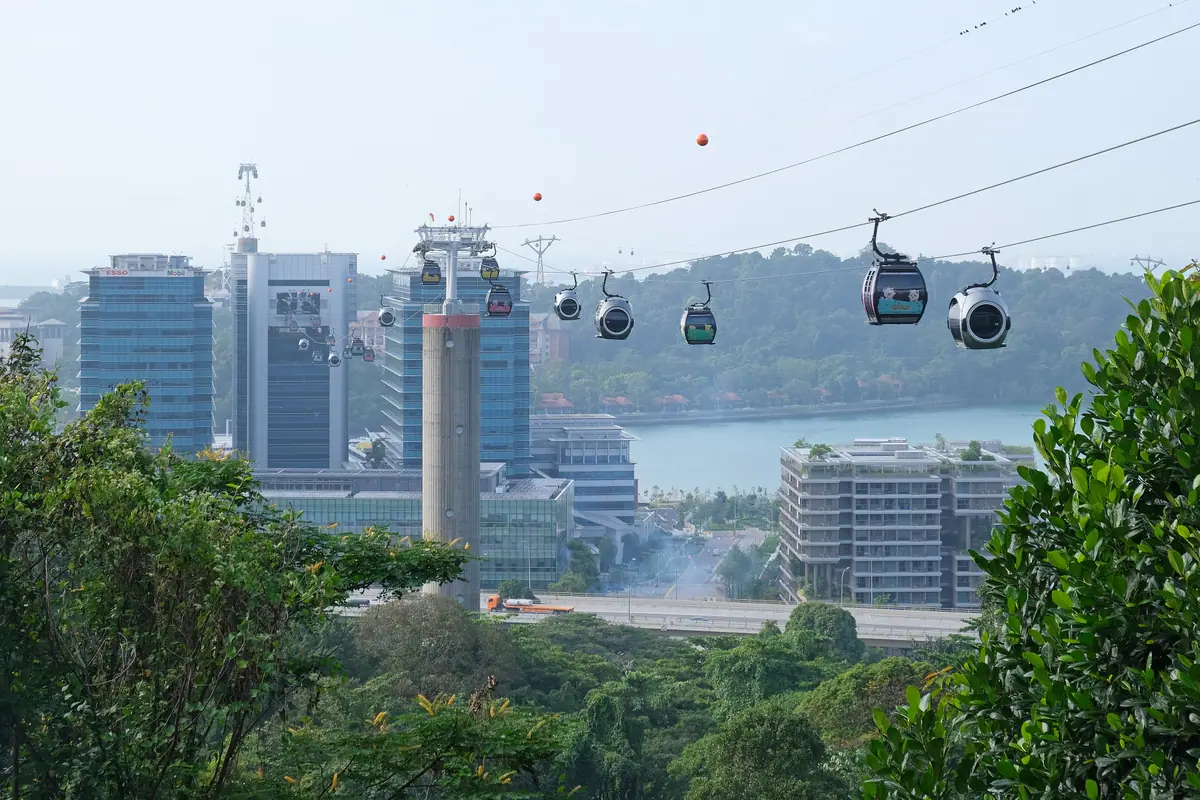
Sentosa is Singapore's resort island, reached by cable car from Mount Faber or HarbourFront, by monorail from VivoCity, or on foot via the boardwalk. Universal Studios Singapore fills a full day on its own for thrill-seekers, while families often split their time between the aquarium, the waterpark and the beaches. Fort Siloso, a restored coastal fort with wartime tunnels and guns, adds a dose of history and has far fewer crowds than the rides.
For a calmer alternative, walk the Southern Ridges trail from Mount Faber through Henderson Waves — a wave-shaped pedestrian bridge suspended above the forest — to HortPark and Kent Ridge Park. It takes three to four hours at an unhurried pace and delivers canopy views that most visitors never see. Finish with sunset at Palawan Beach, crossing the rope bridge to the small southernmost point of continental Asia marker.
Book major attractions online in advance during weekends, school holidays and the June–August peak, when queues at Sentosa swell dramatically. Weekday mornings are noticeably quieter.
Day 6: Rainforest, Wildlife and Pulau Ubin
Singapore's green side is genuinely wild, and a day spent in it balances the urban intensity. MacRitchie Reservoir's Treetop Walk suspends you 25 metres above the forest floor on a one-way canopy bridge; the full loop is roughly 11 kilometres and takes three to four hours, with long-tailed macaques, monitor lizards and, if you are lucky, colugos. Arrive by 7.30am for cooler air and better wildlife sightings.
Wildlife parks cluster in the north. The Singapore Zoo is famous for its open, moat-free enclosures, River Wonders covers freshwater habitats with a boat ride and giant pandas, and the Night Safari opens after dark for a tram-based look at nocturnal species. Trying to do all three in one day is exhausting; pick two, or spread them across the week.
If the city feels too polished, take a bumboat from Changi Point Ferry Terminal to Pulau Ubin, a kampong-style island of dirt tracks, mangroves and abandoned granite quarries. Rent a bicycle, ride to Chek Jawa Wetlands and its coastal boardwalk, and eat at a village café. It is the closest thing to old Singapore left.
Day 7: Orchard Road, Tiong Bahru and Departure
Spend your last morning shopping and eating. Orchard Road is the retail spine, from luxury malls to the electronics towers at its eastern end, and ION Orchard's observation level gives a free view down the tree-lined boulevard. For something more local, detour to Tiong Bahru, a 1930s art deco estate of low-rise flats now filled with independent bookshops, bakeries and a superb market food centre on the ground floor.
Before heading to the airport, eat one final hawker meal — chilli crab, laksa or a plate of Hainanese chicken rice — and buy kaya coconut jam and bak kut teh spice packets as souvenirs. Allow three hours at Changi before an international departure: terminals are large, and the immigration and security process is thorough. If you have time to spare, the Jewel attractions and the butterfly garden inside the terminals make the wait pleasant.
On timing: February to April brings the driest, sunniest conditions, while November to January is monsoon season with heavy afternoon downpours. Whatever the month, expect 26–32°C and high humidity, plan outdoor sights for early morning, and keep an umbrella and a refillable water bottle with you at all times.
Frequently asked questions
Is seven days too long for Singapore?
Not at all. Most first-timers cover Marina Bay, the ethnic quarters and Sentosa in four or five days, but a week lets you add rainforest walks at MacRitchie Reservoir, the Southern Ridges, a day trip to Pulau Ubin and unhurried time in the Botanic Gardens. It also leaves room for a slower pace in the midday heat.
What is the best time of year to visit Singapore?
February to April is generally the driest and most comfortable window. June to August is busy with school-holiday crowds, and November to January brings the northeast monsoon, with short but intense afternoon thunderstorms. Rain falls year-round, so plan indoor attractions like the National Gallery and the Cloud Forest as backups.
How do I get around Singapore without a car?
The MRT train network and buses are cheap, air-conditioned and cover nearly every attraction on this itinerary; tap in and out with a contactless bank card or buy a stored-value transit card. Taxis and ride-hailing apps are affordable for late nights, and Sentosa is reachable by cable car, monorail or a short boardwalk from HarbourFront.
Do I need cash in Singapore?
Cards and mobile payments work almost everywhere, but many hawker stalls still prefer cash or local QR payments, so keep a modest amount of Singapore dollars on you. Food centre meals are inexpensive, and small notes make life easier at satay street stalls and market vendors.
Is Sentosa worth a full day?
Yes, if you enjoy theme parks or beaches. Universal Studios Singapore alone fills a day, and Fort Siloso, the aquarium, the waterpark and the beaches can easily absorb another. If you prefer nature, swap Sentosa for the Southern Ridges trail and Pulau Ubin instead.
Plan it — flights in Singapore
Live search, booked directly with trusted providers.
Sort the rest of your trip
Everything for Singapore, in one place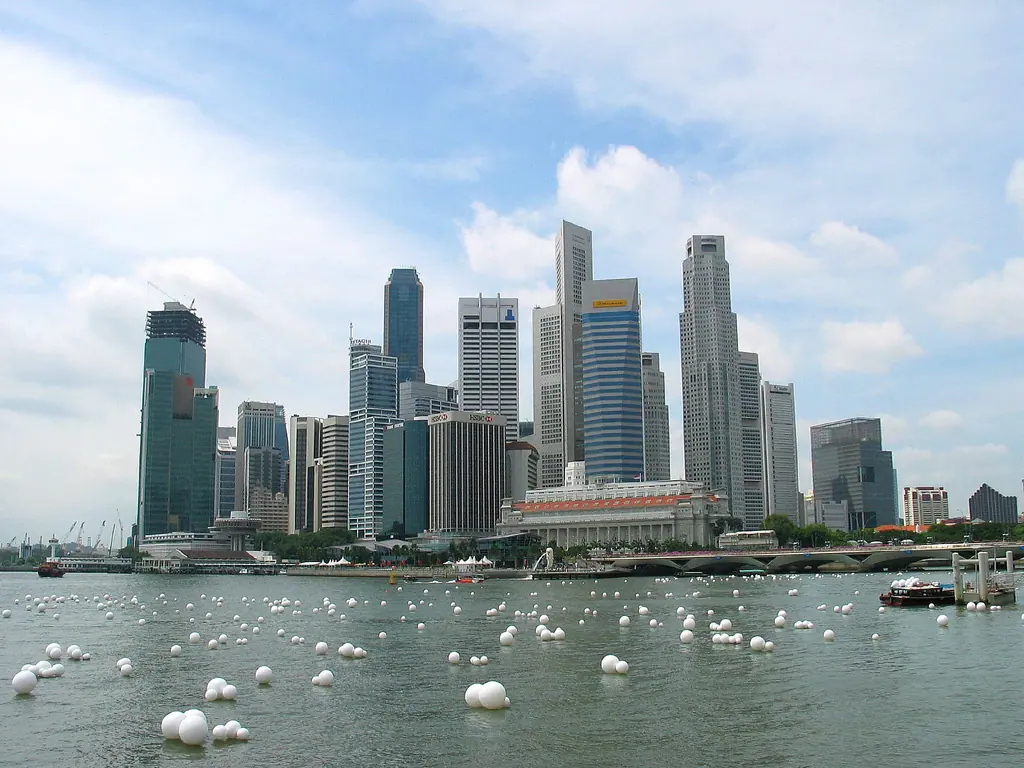
Stay in Singapore
Hotels, guesthouses and apartments — compared in one search.
Search hotels
Transfer in Singapore
Private driver waiting on arrival — no queues, no surprises.
Book a transfer
Travel insurance
Medical cover, delays and lost baggage — sorted before you go.
Get coveredMore guides in Singapore
Top Things to Do in Singapore: Landmarks, Neighbourhoods and Nature
Best Time to Visit Singapore for Hotels: Weather, Peak Seasons and Smart Booking Windows
Best Places to Visit in Singapore: Must-See Sights and Neighbourhoods
Singapore Food, Culture and Local Experiences: A Guide to Hawker Centres, Neighbourhoods and Must-See Sights