Sierra Leone squeezes an improbable range of landscapes into a country about the size of Ireland: a creole capital of iron roofs and wooden churches, rainforest ridges that fall straight onto empty Atlantic sand, and river islands where chimpanzees call across the water at dawn. Where you sleep shapes the trip here more than in almost any other corner of West Africa, because good rooms are few, roads are slow and distances on the map flatter you. This guide maps the main places to base yourself, the landmarks beside them and the practical detail that keeps a stay running smoothly.
Freetown: Choosing a Neighbourhood in the Creole Capital
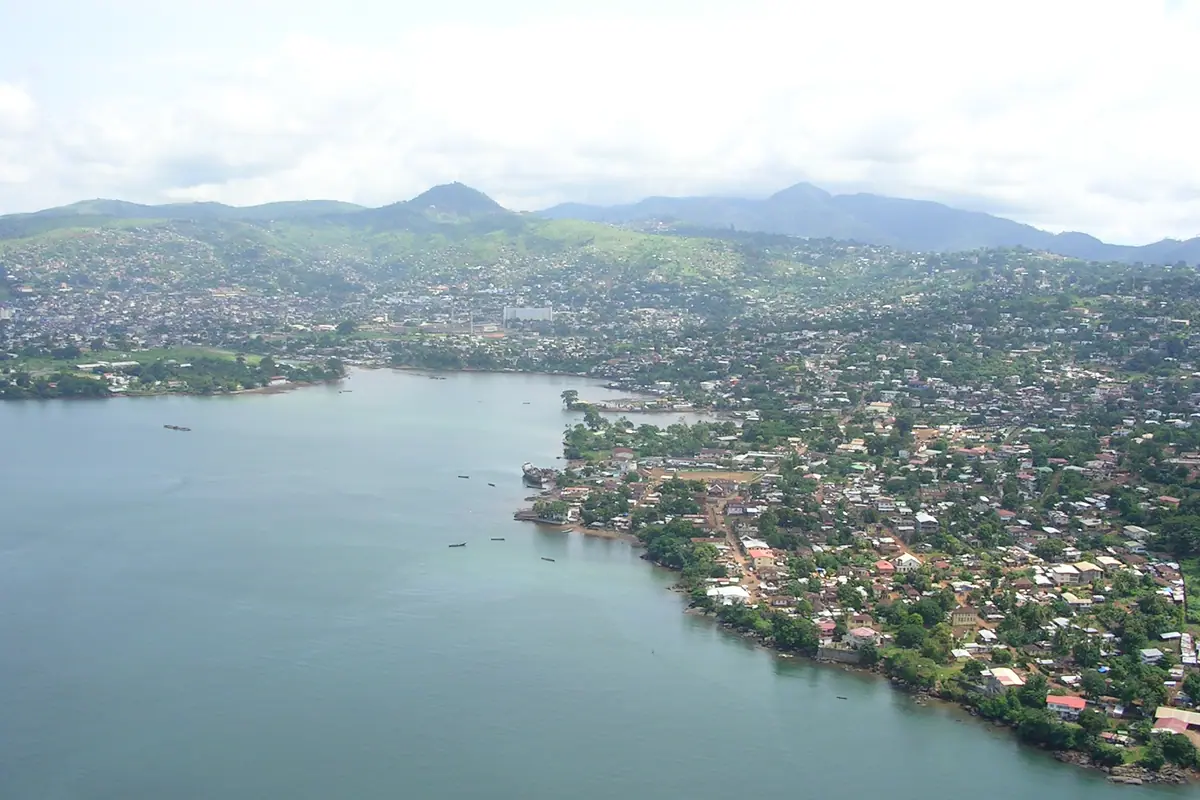
Almost every Sierra Leone itinerary begins in Freetown, and the choice of neighbourhood matters more than the hotel star rating. Aberdeen and Lumley, on the city's western edge, are the beach suburbs: a ribbon of mid-range hotels, guesthouses and serviced apartments a few minutes' walk from the sand, with the country's densest cluster of restaurants and bars strung along the coast road. Hill Station, up on the ridge behind the city, is cooler, greener and quieter, and is where many longer-stay visitors, aid workers and business travellers end up. The historic centre around Siaka Stevens Street puts you within walking distance of the old sights, but it is loud, congested and thin on comfortable rooms. Freetown traffic is genuinely punishing, so base yourself by purpose rather than by price.
Freetown's landmark sights are concentrated and easy to string together on foot or in a single day's driving. The Sierra Leone National Museum holds an absorbing, modest collection of Bundu and Temne masks, carved stone figures and old photographs of the colony's creole heyday. A short walk away stand St John's Maroon Church, built in 1820 by Jamaican Maroons resettled in the city, and St George's Cathedral, along with the Foulah Town Mosque and its distinctive Islamic architecture. On the waterfront, the preserved wooden staircase of the Old King's Yard gateway is a quietly powerful monument to the recaptives who passed through it, while the De Ruyter Stone, carved into a wall by a Dutch admiral in the 1660s, is easy to miss and worth hunting for. Climb to Fourah Bay College on Mount Aureol for the classic view across the estuary.
Beyond the centre, three landmarks justify a day each. Tacugama Chimpanzee Sanctuary sits in the Western Area Peninsula Forest Reserve, forty minutes or so from the city, where rescued chimpanzees live in large forested enclosures and guided walks run through the morning. Leicester Peak, on the road up to the sanctuary, gives the widest panorama of the capital, the estuary and the peninsula's forested spine. And Bunce Island, a ruined fortified trading post on the Sierra Leone River, is reached only by boat and takes half a day; the crumbling castle walls, slave quarters and jetty make it one of the most affecting heritage sites in West Africa.
The Peninsula Beaches: Tokeh, River No. 2 and Bureh
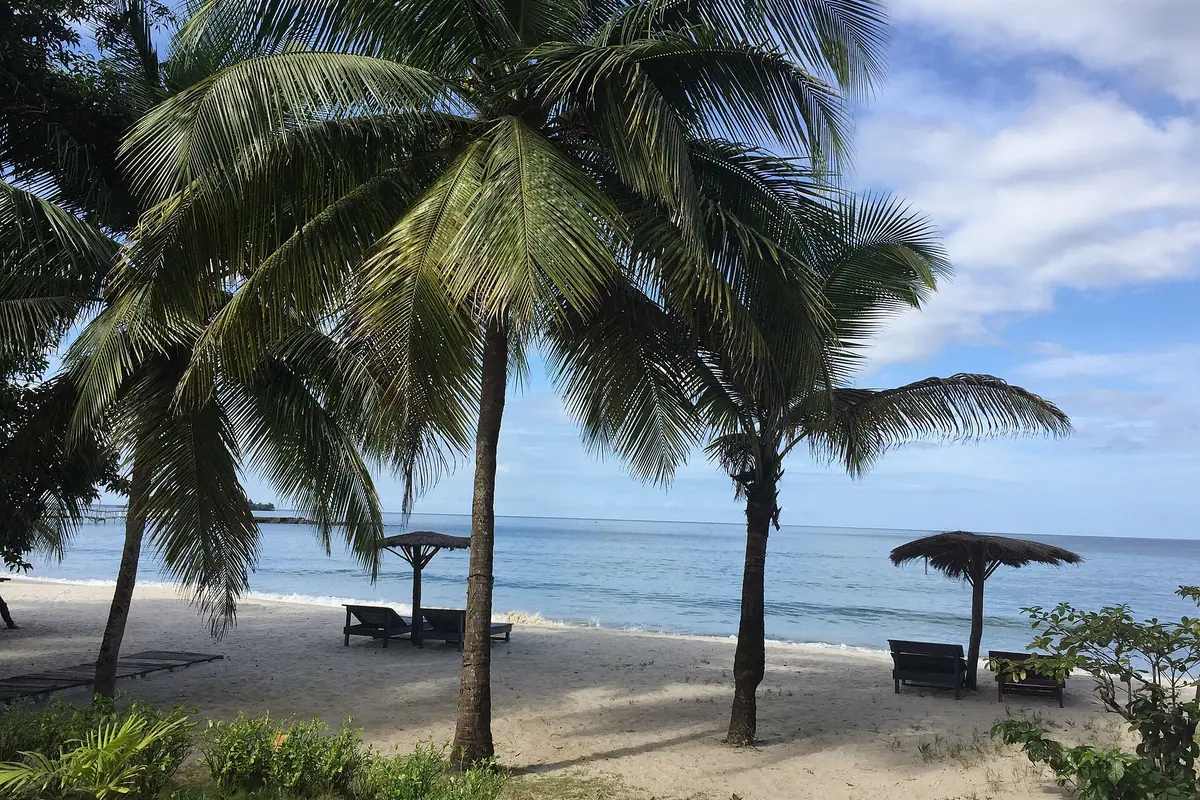
The road south from Freetown along the Western Area Peninsula is one of the region's great short drives. It threads fishing villages, palm groves and forested ridges before opening onto a chain of beaches that most visitors never expect. River No. 2, near the village of Kent, is the postcard image: a river mouth slicing through the sand, palms leaning over the water, and the forested hills of the reserve behind. Tokeh, a few kilometres further on, is longer, calmer and quieter, with a village at its back and a handful of places to stay. Bureh, at the far end of the easy stretch, has the best waves and a relaxed weekend surf scene with boards available for hire.
Accommodation on the peninsula runs from barefoot beach camps with thatched chalets, shared bathrooms and bucket showers to comfortable lodges with en-suite rooms, generator power and kitchens serving grilled fish, rice and pepper soup. Very few rooms have air conditioning; most rely on sea breeze and ceiling fans, which is usually enough. Expect intermittent electricity, limited Wi-Fi and cash-only payment, and pack a torch, mosquito repellent, reef shoes for the rocky patches at low tide and small notes for tips and village purchases.
Reaching the beaches takes between forty-five minutes and two hours from central Freetown via Waterloo, depending on traffic and the state of the later stretches of road, which suffer after heavy rain. Hiring a car with a driver is the most comfortable option; shared taxis and minibuses run the route more cheaply and much more slowly. Beyond Bureh, the coast grows wilder and lodgings thinner — Sussex, York Island, Baw Baw near John Obey and Black Johnson beach are for travellers who want solitude more than service.
Island Stays: Banana Islands, Bunce Island and the Remote South
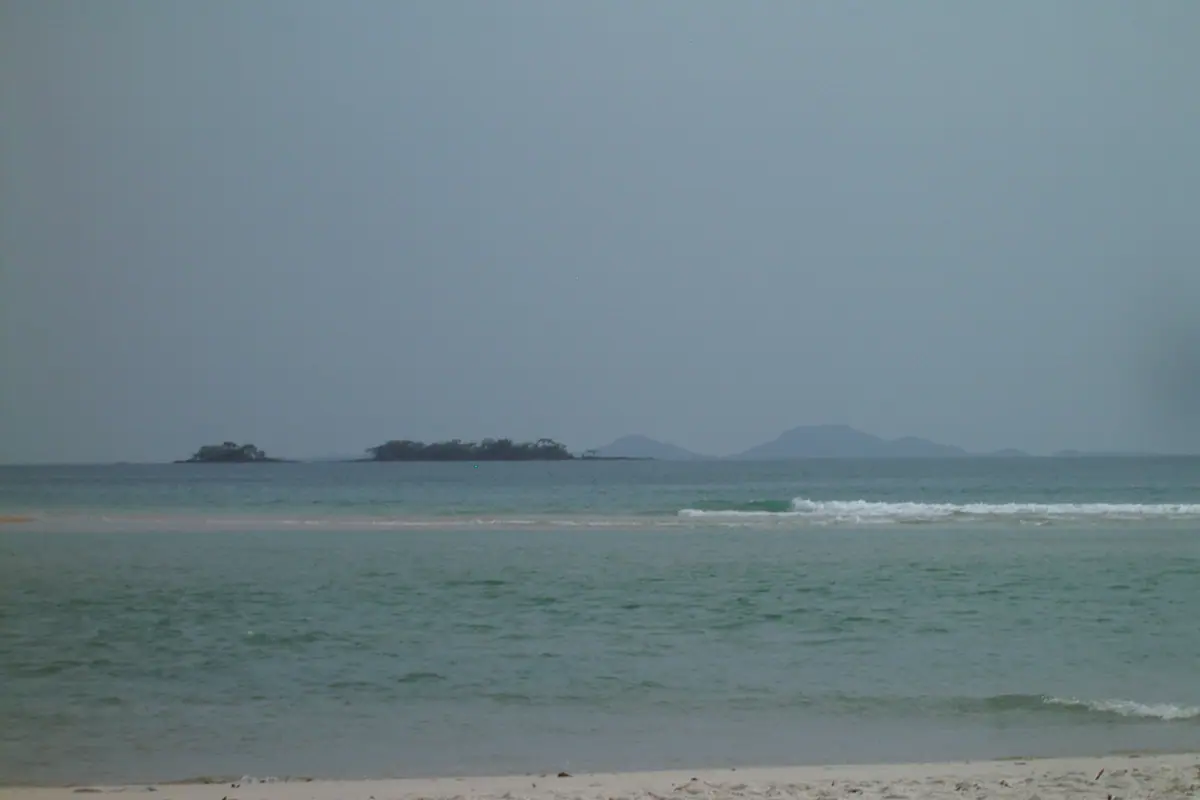
The Banana Islands — Dublin and Ricketts, joined by a causeway — lie off the peninsula's southern tip near Kent and are reached by boat in roughly one to two hours depending on the sea. Guesthouses here run on solar power and offer simple rooms, home-cooked food and a level of quiet that is hard to find on the mainland. Days pass snorkelling over reef, fishing with local crews, walking to the rusting shipwreck and the ruins of a slaving-era fort and stone church on Dublin Island. Capacity is tiny, so reserve well ahead and confirm your boat transfer in the days before you travel; weather and fuel decide schedules, not timetables.
For heritage rather than beaches, Bunce Island is the essential island trip. Boatmen in Freetown will take you up the Sierra Leone River for a half-day, and a local guide walks you through the ruined fort, the castle, the quarters and the jetty where captives were once loaded. The Turtle Islands, a scattering of eight small islands near Shenge, offer turtle-nesting beaches and village guesthouses with minimal facilities. Further south, Sherbro Island and the decaying colonial town of Bonthe reward the genuinely intrepid with crumbling Krio-era houses, a half-sunk wharf and mango trees swallowing old streets — but accommodation is basic, transport is by fishing boat, and you should allow buffer days.
The practical rules for islands are consistent: carry more cash than you think you need, bring any medication and snacks with you, treat drinking water with care, and accept that plans change with the tide. Because rooms number in the single digits at most of these properties, a confirmed booking and a phone call the day before departure will save a lot of frustration.
Inland Bases: Bo, Kenema, Tiwai Island and Gola Rainforest
Bo, the country's second city, is the southern hub and the natural overnight stop between Freetown and the eastern forest belt. It has a workable spread of functional hotels and guesthouses, a lively market and university quarter, and it sits close to the Kambui Hills Forest Reserve, a birdwatcher's destination with trails through remnant forest. Rooms here are practical rather than luxurious, but standards have risen steadily and a clean en-suite room with reliable power is now a reasonable expectation.
Kenema, further east, is the gateway to Gola Rainforest National Park, one of the largest surviving blocks of Upper Guinean rainforest anywhere in West Africa. Community-run trails lead into the forest, where forest elephants, chimpanzees and hundreds of bird species — including the striking white-necked picathartes — are the draw, and where a handful of simple eco-lodges and research camps provide the only beds inside the park boundary. Kenema itself offers ordinary town hotels, useful for a night before or after the forest.
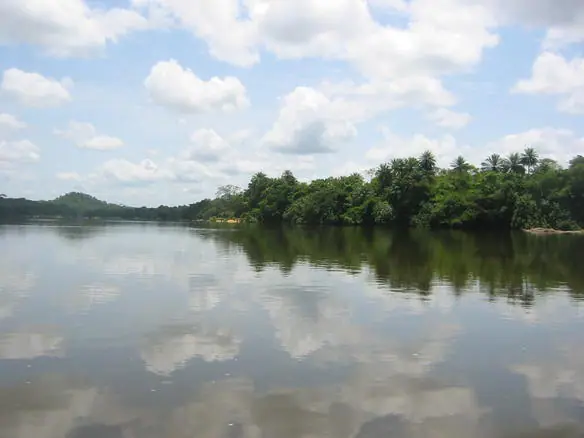
Tiwai Island Wildlife Sanctuary, a twelve-square-kilometre island in the Moa River, is the country's flagship primate destination: eleven species live here, most famously the western chimpanzee, alongside Diana monkeys, colobus and the rare pygmy hippo in the surrounding waterways. Accommodation is deliberately low-key — basic huts and campsites, with a communal kitchen, guides and night walks — and it must be arranged before you travel. Makeni, in the north-centre, is the other useful inland staging post, with the best hotel choice outside Freetown and easy links to the northern parks.
The Wild North: Outamba-Kilimi and the Loma Mountains
Outamba-Kilimi National Park, near Kamakwie in the far north close to the Guinean border, protects a mosaic of savannah woodland, riverine forest and grassland. Hippos wallow in the Little Scarcies River, elephants and chimpanzees move through the park, and more than 250 bird species have been recorded. This is not a place with a lodge strip: accommodation means the park's rest huts and a small camp, arranged through the park office, and you should bring food, water, bedding and a vehicle with a driver who knows the tracks.
The Loma Mountains, further east, contain Bintumani Peak at 1,945 metres — the highest point in West Africa west of Mount Cameroon. Reaching the summit is a serious two- to four-day trek with local guides and porters from the villages below, camping en route and starting before dawn for the final climb. The dry season is the only sensible window, and the rewards are grassland plateaus, forest gullies and views across the whole northern interior with barely another walker in sight.
Kabala, the hill town that serves as the usual staging point for the Lomas, is a pleasant surprise: cooler air, a slow market and a few simple hotels that make a comfortable night before or after the trek. Allow extra time for every journey in this region, carry spare fuel and water, and expect mobile coverage to vanish for long stretches.
Practical Planning: Seasons, Airport Transfers and Money
The dry season, from November to April, is the best time for beaches and travel generally, with clear skies, calm seas and passable roads. December to February brings the harmattan, a dry dusty haze that softens the light and can irritate eyes and lungs but keeps temperatures bearable. The rainy season runs from May to October, with the heaviest downpours between July and September; some beach lodges close, peninsula roads degrade badly, and rainforest travel becomes muddy and slow — though the country is at its greenest and quietest for those who do not mind getting wet.
Lungi International Airport sits across the estuary from Freetown, and the crossing is by ferry or water taxi, taking roughly half an hour to forty-five minutes, or by a long road detour around the estuary via Port Loko that can consume three hours or more. Travellers with early departures or late arrivals often spend a night near Lungi rather than risk the crossing, and it is worth building slack into your itinerary on both ends of the trip.
Elsewhere, plan around cash and power. The leone is the currency, ATMs exist mainly in Freetown and a few large towns and are unreliable, and cards are accepted in only a small number of city hotels — so bring enough cash for the whole stay outside the capital. Supply is 220–240V with UK-style three-pin sockets, frequently backed by generators or solar. A yellow fever certificate is required for entry, malaria prophylaxis is essential, English is the official language with Krio as the everyday lingua franca, and most visitors need a visa arranged in advance online.
Frequently asked questions
What is the best time of year to visit Sierra Leone?
November to April is the dry season and by far the easiest time to travel, with calm seas, firm roads and reliable beach weather. December to February brings harmattan dust haze. May to October is the wet season, with the heaviest rain from July to September, when some beach lodges shut and peninsula roads deteriorate.
How do I get from Lungi Airport to hotels in Freetown?
The airport lies across the estuary, so arrivals cross by ferry or water taxi in roughly thirty to forty-five minutes, or take the long road route around via Port Loko, which can take three hours or more. Many travellers spend their first or last night near Lungi to avoid a rushed crossing.
Should I book accommodation in Sierra Leone in advance?
Yes, particularly between November and April and around public holidays. Outside Freetown, inventory is very limited: peninsula lodges, island guesthouses, the Gola and Tiwai camps and the northern park huts may have only a handful of rooms, and some require you to arrange transport and catering with them directly.
Is it worth staying outside Freetown?
Absolutely. The peninsula beaches at Tokeh, River No. 2 and Bureh are the country's most relaxing bases, the Banana Islands offer reef and wreck diving, and inland towns such as Bo, Kenema and Makeni open up Gola Rainforest, Tiwai Island and Outamba-Kilimi. Each has a distinctly different character and standard of comfort.
What should I pack and how should I handle money and power?
Bring cash — the leone — because ATMs outside Freetown are scarce and unreliable and cards are rarely accepted. Pack a UK three-pin adapter and a power bank, as electricity is intermittent and often generator or solar backed, plus mosquito repellent, a torch, reef shoes and any medication you need. A yellow fever certificate is required for entry.
Plan it — hotels in Sierra Leone
Live search, booked directly with trusted providers.
Sort the rest of your trip
Everything for Sierra Leone, in one place
Transfer in Sierra Leone
Private driver waiting on arrival — no queues, no surprises.
Book a transfer
Things to do in Sierra Leone
Skip-the-line tickets, guided tours and standout experiences.
See experiences
Stay online in Sierra Leone
Travel eSIM — data the moment you land, no roaming bills.
Get an eSIMMore guides in Sierra Leone
Best Places to Visit in Sierra Leone: Beaches, Rainforest and Freetown's Old Town
Top Things to Do in Sierra Leone: Beaches, Chimpanzees and Rainforest Landmarks
Sierra Leone in One Week: A Flight-In, Beach-Out Itinerary
Sierra Leone Travel Guide: Food, Culture and Local Experiences