Sierra Leone arrives as a green hem of mangrove and rainforest stitched to the Atlantic, with Freetown's lights scattered across a peninsula of hills. Few countries reward a single week so richly — and almost none begin with a landing quite like this one, wheels skimming the water before you even set foot on the sand.
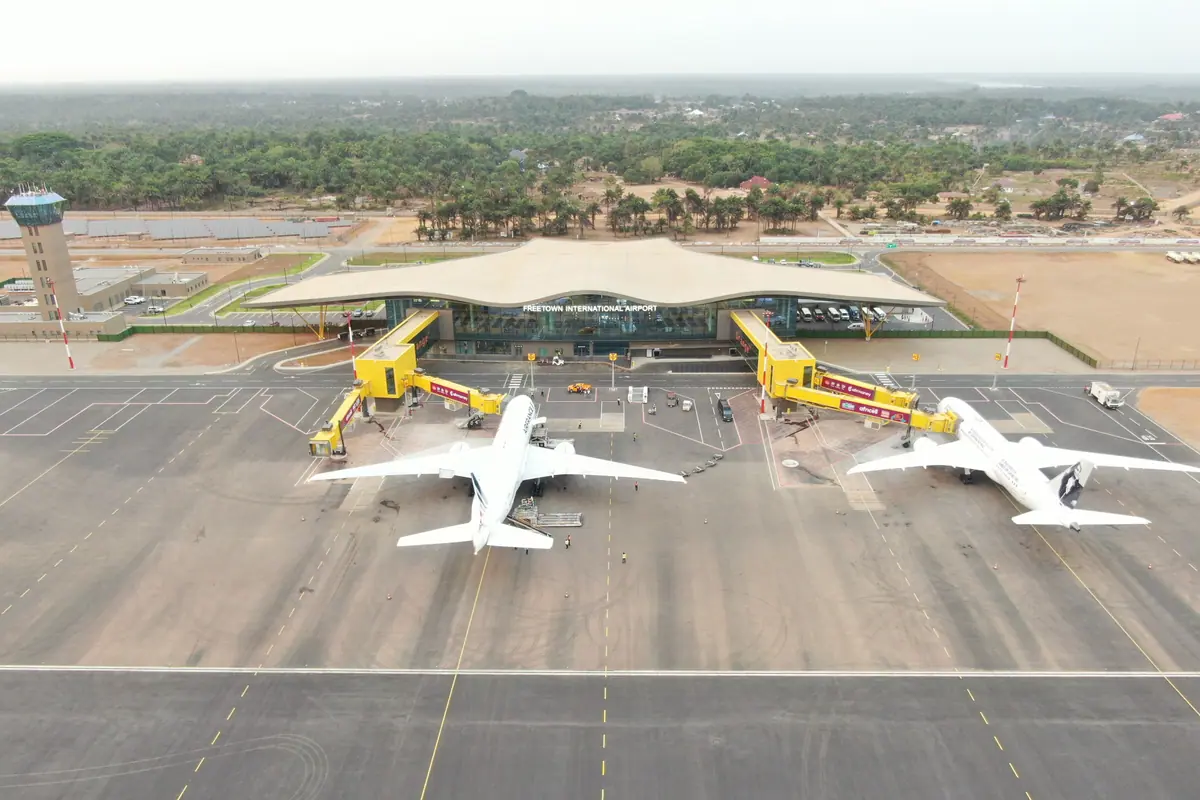
Arrival at Lungi: Crossing the Sierra Leone River to Freetown
Your flight lands at Lungi, on the Bullom shore north of the estuary, with the final approach gliding low over mangroves and the broad Sierra Leone River. There is no bridge across that water, so the last stage of the journey is by boat: fast private water taxis skim across to Aberdeen in roughly 30 to 40 minutes, while the larger vehicle ferry takes a slower, cheaper line to the Kissy side of the city, where you rejoin the road for another half-hour or so into the centre.
Treat the transfer as half a day in each direction. Immigration, luggage, the crossing and Freetown's traffic can easily consume three hours, and longer in the rains. Carry your accommodation address in writing, keep small notes in Sierra Leonean leones for tips and fares, and reconfirm your return crossing the day before departure. If you land after dark, boat services thin out considerably, so many travellers overnight near the airport and cross by morning light.
Entry formalities are straightforward but worth preparing for: a valid passport with blank pages, a visa arranged in advance or on arrival depending on nationality, and a yellow fever vaccination certificate that is commonly requested at the health desk.
Days 1–2: Freetown's Historic Heart and the Tacugama Chimpanzees
Start downtown, at the site of the historic Cotton Tree, the enormous kapok that for two centuries marked the place where freed Africans gathered to give thanks on arrival. The tree came down in a storm in 2023, but its clearing still feels like the symbolic centre of the city. Within a few minutes' walk are the Sierra Leone National Museum, with carved masks, drums and records of Krio, Mende and Temne culture, the early nineteenth-century St John's Maroon Church and St George's Cathedral, and the Sierra Leone National Railway Museum, where colonial-era locomotives from the old upcountry line stand under a tin roof.
Spend an afternoon at Big Market on Wallace Johnson Street, a dense, noisy grid of tailoring, weaving, produce and hardware where haggling is friendly and expected. Later, the Amputch district and the steps of Fourah Bay College on Mount Aureol give wide views over the harbour, the busiest natural port on this coast.
Day two belongs to Tacugama Chimpanzee Sanctuary, tucked into the Western Area Peninsula Forest above Regent, about 45 minutes from the centre. Rescued chimps live in forested enclosures reached on guided walks, with a small eco-lodge that looks straight into the canopy. Pair the visit with Charlotte Falls and the old village of Charlotte on the same road, then finish at Lumley Beach for grilled fish as the sun drops into the Atlantic.
Day 3: Bunce Island and the Banana Islands
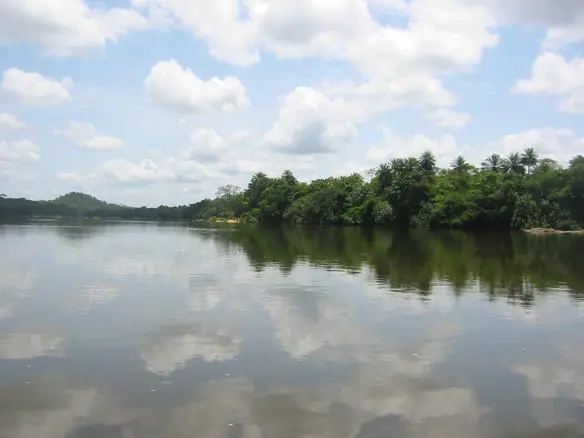
Bunce Island sits in the Sierra Leone River roughly 30 kilometres upstream of Freetown, and it is the most sobering place in the country. Here stand the ruined walls of a fortified trading post that sent thousands of enslaved Africans across the Atlantic in the eighteenth century — roofless brick warehouses, the remains of the surgeon's house and the graves of the traders who ran it, all under a canopy of trees and birdsong. There is no scheduled service, so you go with a boatman from Freetown, around 90 minutes to two hours each way, making it a full day. Take water, sun protection and a guide who will tell the story honestly rather than soften it.
If you would rather trade ruins for reef, head instead for the Banana Islands — Dublin, Ricketts and Mes-Meheux — off the southern tip of the peninsula. You can reach them by road to Kent and then by boat, or directly by sea from Freetown. Dublin has a village, an old church and simple guesthouses; Ricketts is where snorkellers find coral, reef fish and the ribs of a wreck in clear water.
Both trips are fair-weather propositions. From December through April the sea is calm and the crossings comfortable; in the wet months, swell and rain make this the first plan to be reshuffled.
Days 4–5: The Peninsula Beaches — River No. 2, Tokeh and Bureh
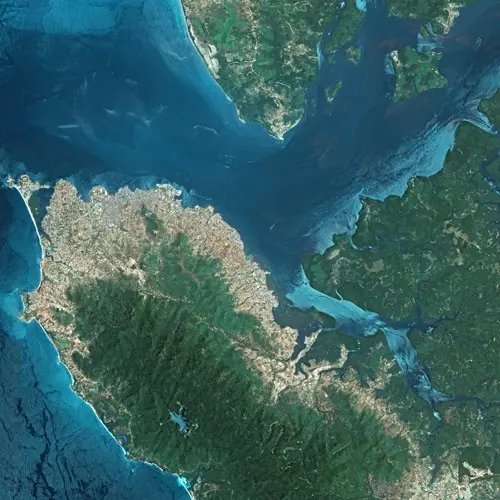
The coastal road south from Freetown is one of West Africa's great drives: forested hills on one shoulder, the Atlantic on the other. River No. 2 Beach, where a freshwater river slides into the sea, is the postcard one — pale sand, granite boulders, and beach bars serving grilled barracuda and cold drinks under thatch. A little further on, Tokeh Beach is quieter, with a handful of small guesthouses and plenty of space between the fishing canoes.
Keep going to Bureh Beach, a fishing community with a genuine surf scene, boards to rent and instructors who grew up on the break, then on to Sussex and York for sheltered coves. Days here are deliberately slow: swim, walk to the next village, eat rice with cassava leaves, watch the pirogues come in. Two nights give you a full beach day on either side of the drive, which is what makes the peninsula feel like a holiday rather than a checklist.
The tarmac is decent but the going is slow — allow an hour to River No. 2 and up to two hours to Bureh, more after heavy rain or on market days. Lodges are small, often cash-only, and prone to power cuts, so bring a torch and a power bank. Book ahead for the December to February peak.
Days 6–7: Upcountry to Bo, Tiwai Island and the Rainforest
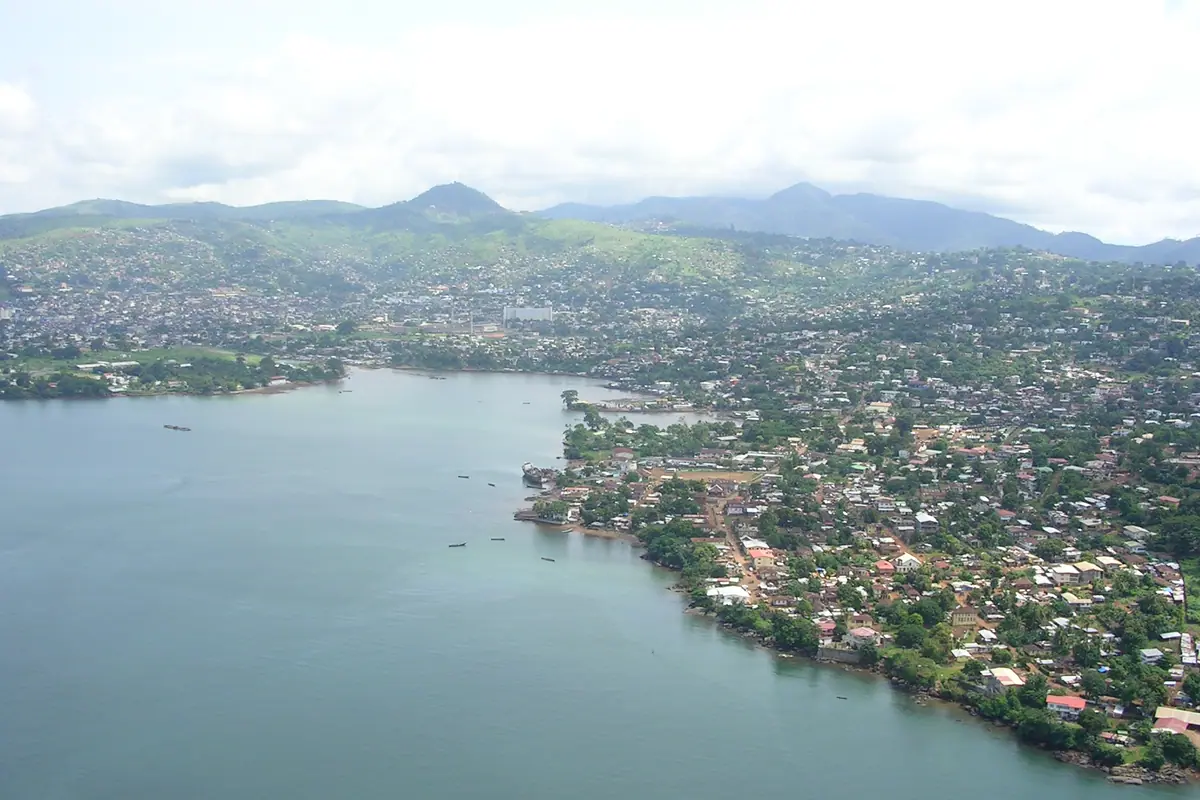
The interior is where Sierra Leone turns wild. The road from Freetown to Bo takes four to five hours in good conditions, Kenema another two or so beyond that, and Tiwai Island — a protected sanctuary in the Moa River — is reached via Zimmi and a short boat ride. Tiwai holds one of the densest primate populations in West Africa, with more than ten species including chimpanzees, plus pygmy hippos in the water and a canopy platform for overnight stays. Dawn from that platform, with the forest waking around you, is worth the long day of travel.
Alternatives, if you prefer a different flavour of wilderness: Gola Rainforest National Park in the southeast, one of the last large blocks of Upper Guinean rainforest, laced with trails and superb for birding; the Loma Mountains and Mount Bintumani, the highest peak in the region at around 1,945 metres, for a serious overnight trek; or Outamba-Kilimi National Park in the far north near the Guinean border, where river safaris offer hippos, elephants and a genuine sense of remoteness at the cost of a very long journey.
Be realistic about a single week: choose one interior destination, not two. Sierra Leone has essentially no scheduled domestic flight network — a few airstrips see the occasional charter, and the helicopter shuttle that once linked the airport with the city is not something to rely on — so build the week around road transfers and long, dusty, memorable days. Return to Freetown on day seven to fly out, sleeping near Lungi the night before if your departure is early.
Flight Logistics, Weather and What to Expect
Most long-haul journeys to Sierra Leone involve a connection through a regional or European hub before the final hop into Lungi, and arrivals are often late at night. The dry season runs from November to April, with warm, humid days and a hazy harmattan wind from December to February that softens the light and cools the mornings. May to October brings rain, heaviest in July and August, when downpours are torrential, the hills turn emerald and some dirt roads become genuinely difficult. December to March is the sweet spot for beaches, wildlife and photography.
Health and money shape the trip more than most first-timers expect. Yellow fever vaccination is a documented entry requirement, malaria prophylaxis is strongly advised, and travel insurance with medical evacuation cover is worth every penny. Cash in leones is king: ATMs outside central Freetown are scarce and unreliable, cards are accepted in only a few hotels and restaurants, so carry more than you think you need and keep it in small denominations.
A local SIM card with data is cheap and easy to buy, and mobile coverage reaches surprising corners of the interior. Greetings matter here — take a moment to ask how someone is before launching into a question, and always ask before photographing people. Pack light, breathable clothing, a rain shell for the wet months, sturdy shoes for forest trails and reef-safe sun protection for the islands.
Frequently asked questions
How do I get from Lungi airport to Freetown?
Your flight lands north of the estuary, so you cross by water. Private water taxis reach Aberdeen in around 30 to 40 minutes; the vehicle ferry runs a slower, cheaper route to the Kissy side of the city, followed by a 30 to 45 minute drive. Services thin out after dark, so late arrivals often overnight near the airport and cross in the morning. Allow three hours door to door.
When is the best time of year to visit Sierra Leone?
November to April is the dry season and the most comfortable window overall, with December to March the peak for beach weather and clear light — expect harmattan dust haze between December and February. May to October is the wet season, heaviest in July and August, when travel is greener but slower and island crossings can be rough.
Are there domestic flights inside Sierra Leone?
Effectively no. There is no reliable scheduled domestic network, and only the occasional charter uses the country's small airstrips. The helicopter transfer that once linked the airport with Freetown is not something to count on. Plan your week around road transfers — they are slow but the scenery and the roadside towns are half the experience.
How many days do you need in Sierra Leone?
A week is enough for Freetown's historic sights, the Tacugama sanctuary, the peninsula beaches at River No. 2, Tokeh and Bureh, and one interior trip such as Tiwai Island or Gola Rainforest. Ten days to two weeks lets you add the Banana Islands, Mount Bintumani or the far north without rushing.
What vaccinations, money and essentials should I sort before flying?
Arrange a yellow fever vaccination certificate, as it is commonly checked on entry, and discuss malaria prophylaxis with a travel clinic. Bring cash in leones — ATMs and card acceptance are limited outside central Freetown — plus a power bank, a torch for rural lodges, a rain shell in the wet months and sturdy shoes for forest trails.
Plan it — flights in Sierra Leone
Live search, booked directly with trusted providers.
Sort the rest of your trip
Everything for Sierra Leone, in one place
Stay in Sierra Leone
Hotels, guesthouses and apartments — compared in one search.
Search hotels
Transfer in Sierra Leone
Private driver waiting on arrival — no queues, no surprises.
Book a transfer
Travel insurance
Medical cover, delays and lost baggage — sorted before you go.
Get covered