Malta arrives all at once: honey-coloured limestone, a harbour the size of a small city, and 7,000 years of temples, knights and watchtowers packed into an island you can cross in under an hour. This one-week route pairs the heavyweights — Valletta, Mdina, the Blue Lagoon — with the quiet corners most short-break visitors never reach, and folds in the flight and ferry logistics that keep the week running smoothly.
Days 1–2: Landing at Luqa and Falling for Valletta
Flights into Malta land at Luqa, roughly 8 km from the capital, and the arrivals hall is small enough that you are usually through passport control within half an hour. Buses and taxis both run to Valletta in about 20 minutes outside peak traffic; if you land after midnight, pre-book a transfer rather than relying on the bus. Direct services connect Malta to most major European cities year-round, with the widest choice of departure times between March and October — which is also when fares climb, so booking two to three months ahead pays off.
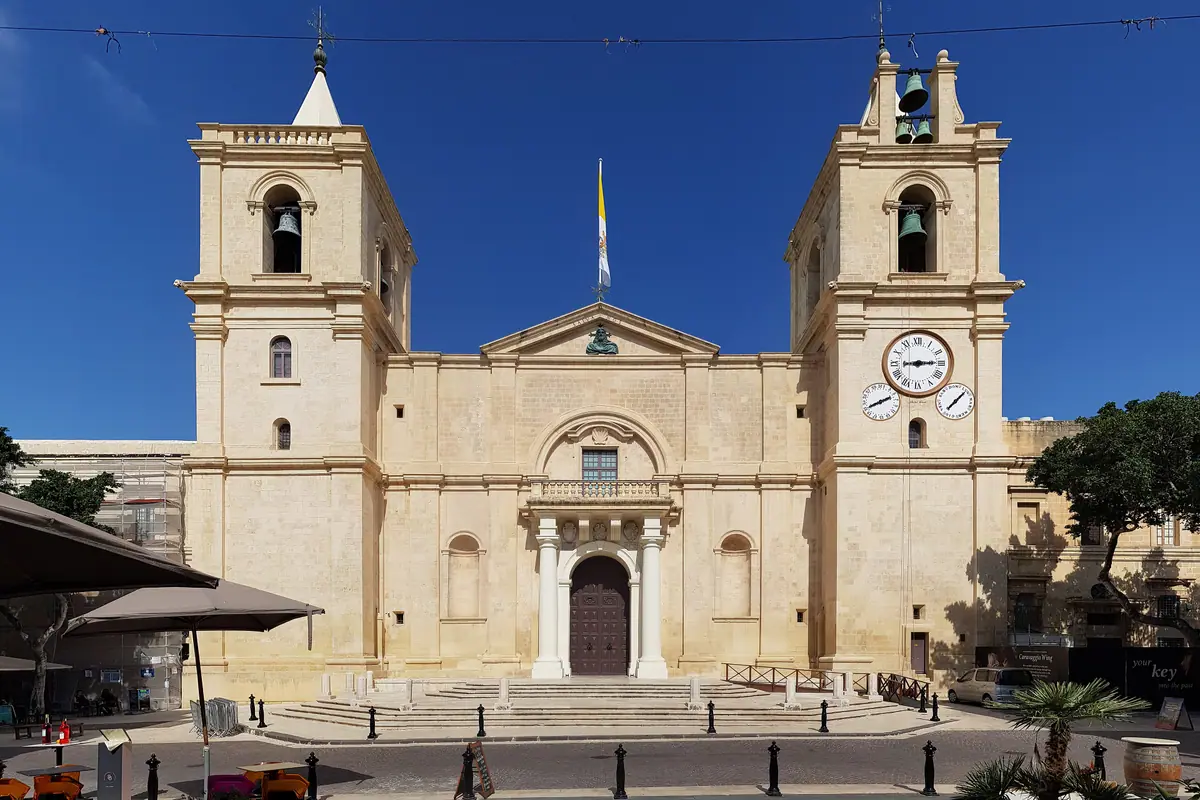
Spend your first full day inside the fortified grid of Valletta, a UNESCO-listed city built by the Knights of St John and small enough to walk end to end in 25 minutes. Start at St John's Co-Cathedral, whose plain exterior hides a riot of gilded baroque carving and two Caravaggio canvases, then follow Republic Street downhill to the Upper Barrakka Gardens for the sweeping Grand Harbour view and the midday cannon fired from the Saluting Battery below.
Day two belongs to the edges of the capital: Fort St Elmo and its National War Museum at the tip of the peninsula, the Siege Bell War Memorial and Lower Barrakka Gardens overlooking the breakwater, and the hands-on displays at the Malta Experience if you want the island's story condensed into an hour. Come evening, Hastings Garden catches the sunset, and the old entertainment lane of Strait Street — once packed with sailors' bars — is now a strip of wine bars worth lingering in.
Day 3: The Three Cities, Marsaxlokk and the South Coast
Cross the Grand Harbour by the little passenger ferry from Valletta's waterfront to Birgu, the oldest of the Three Cities and the Knights' original stronghold. Fort St Angelo guards the water from its own peninsula, the Inquisitor's Palace preserves a grimly fascinating courtroom and prison, and the narrow lanes of Birgu's Collachio are best explored without a map. Neighbouring Senglea and Cospicua complete the trio, all linked by waterfront promenades and a slow, lived-in atmosphere that Valletta has partly traded for polish.
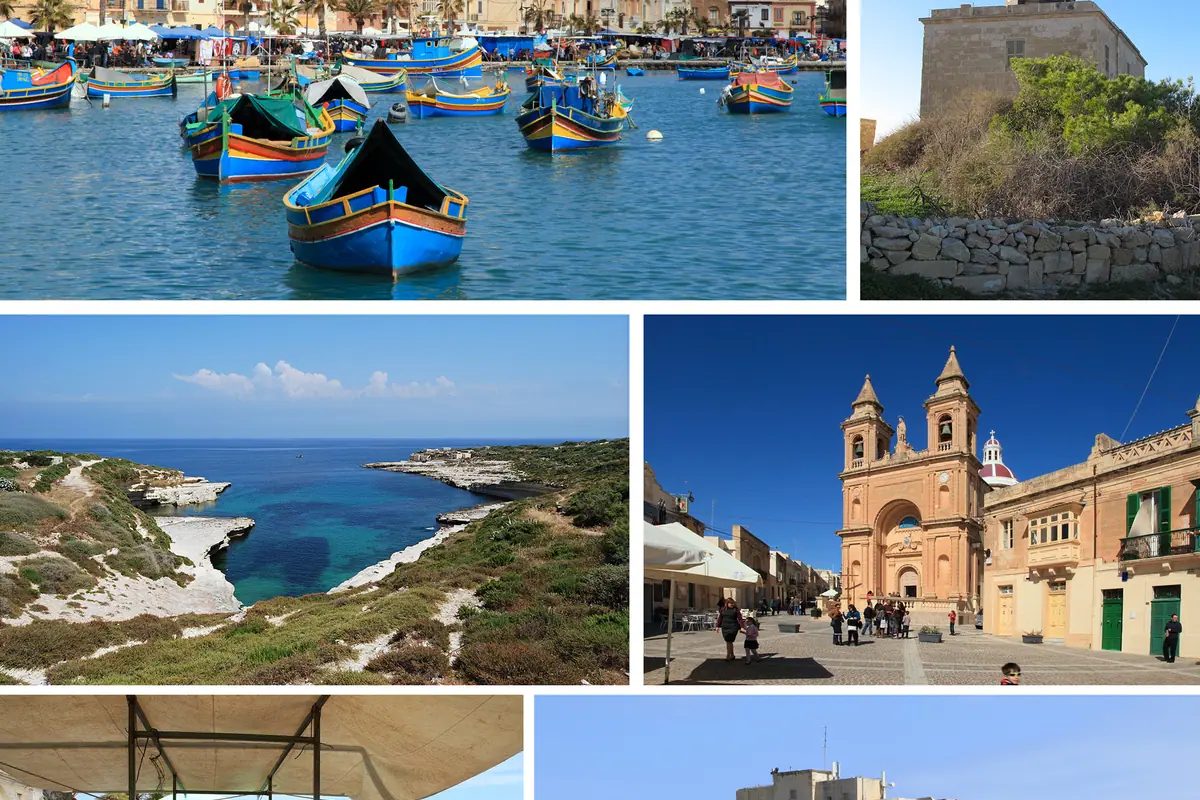
From there, head south to Marsaxlokk, a working fishing village whose harbour is lined with brightly painted luzzu boats and whose Sunday market draws crowds from across the island. Order whatever came off the boats that morning at one of the waterfront restaurants. Continue along the coast to the Blue Grotto, where small boats thread into sea caves under towering cliffs, then drive inland to Ħaġar Qim and Mnajdra, two megalithic temple complexes older than the Egyptian pyramids, standing roofless under canvas shelters on a bare limestone plateau.
Day 4: Mdina, Rabat and the Dingli Cliffs
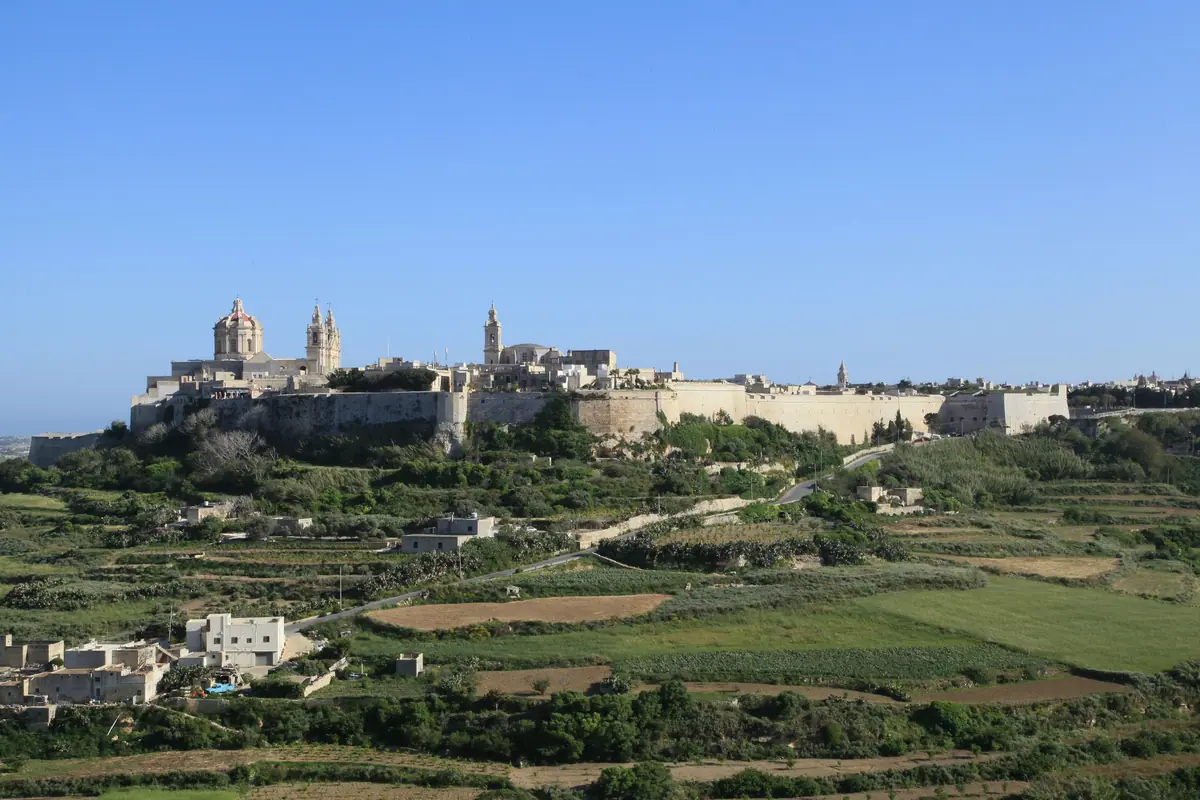
Mdina, the walled 'Silent City', is the day trip that convinces most people Malta is more than beaches. Cars are largely banned inside its gates, so the effect is genuinely hushed: golden stone palazzi, the baroque St Paul's Cathedral, the ornate Palazzo Vilhena housing the national natural history collection, and bastion terraces where you can see most of the island at once. Arrive before 10am or after 4pm to dodge the coach groups, and stay for the way the walls glow at dusk.
Just outside the walls, Rabat holds the island's deepest history: St Paul's Catacombs, an underground network of Roman-era tombs, and the grotto beneath St Paul's Church where tradition places the apostle's three-month stay after his shipwreck. Finish the day at the Dingli Cliffs, Malta's highest point at around 250 metres, where the land simply stops and the sea stretches to Africa. Nearby Buskett Gardens and the mysterious parallel cart ruts at Clapham Junction make an easy final stop before heading back.
Day 5: A Full Day on Gozo
Gozo is a 25-minute car ferry ride from Ċirkewwa in the north of Malta, and while it is technically a day trip, the island rewards a full, unhurried day. On arrival at Mġarr, head first to Victoria and the Ċittadella, a fortified citadel on a hill in the middle of the island with cathedral, battlements and long views in every direction. The town below is the best place on either island for a slow lunch of Gozitan cheeselets, ftira bread and local wine.
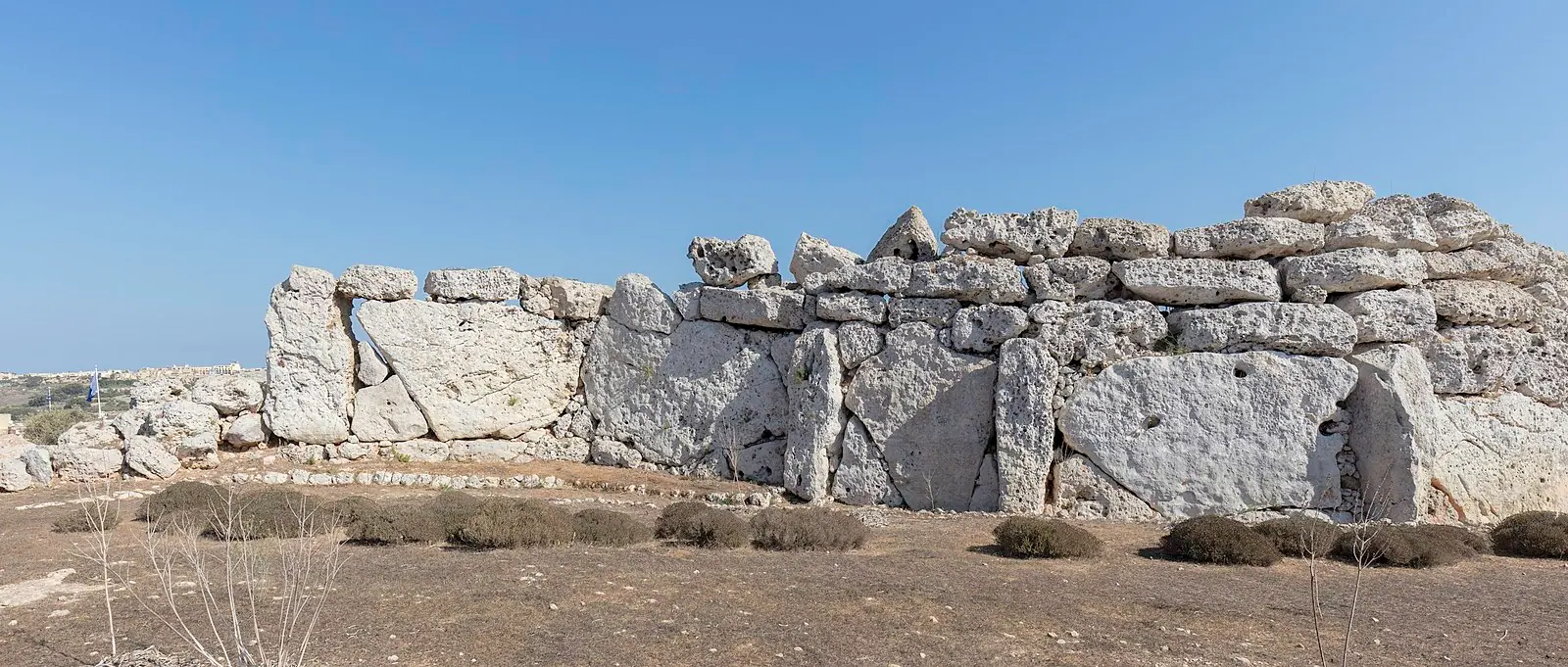
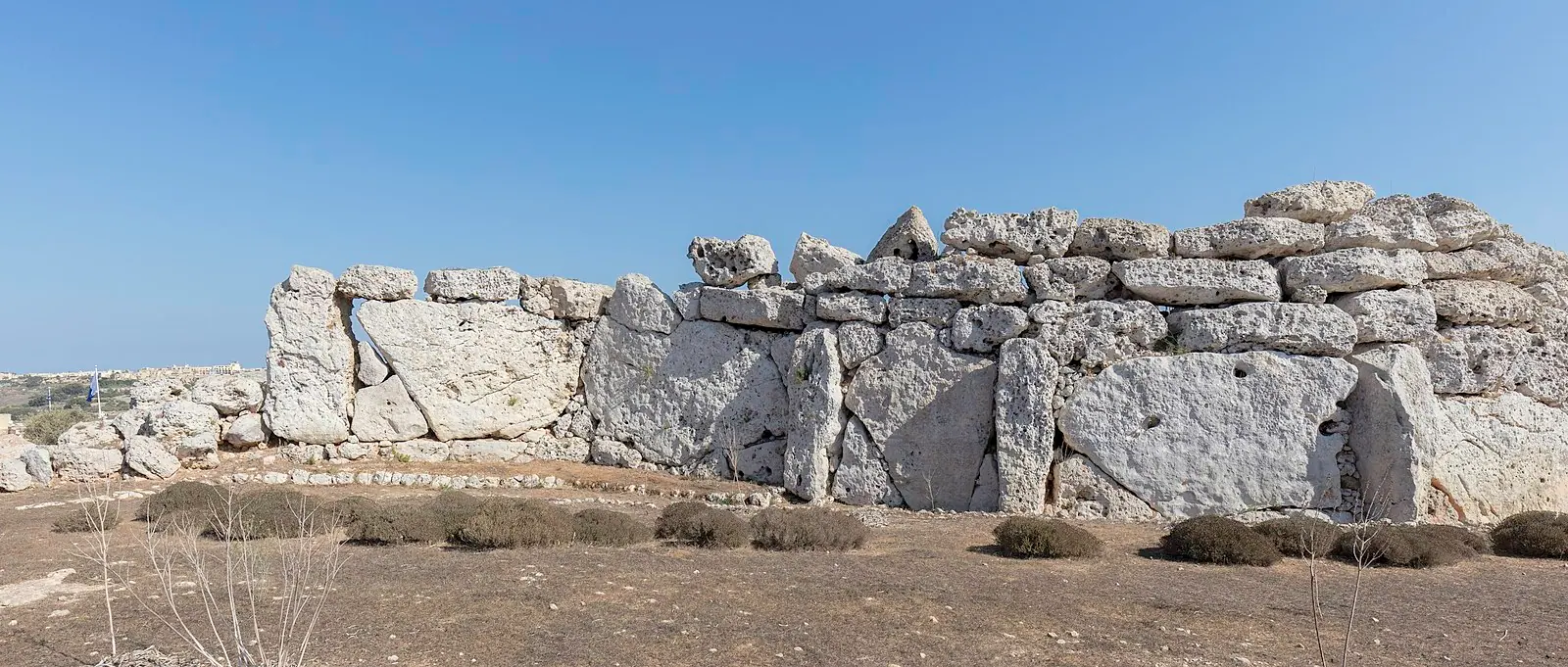
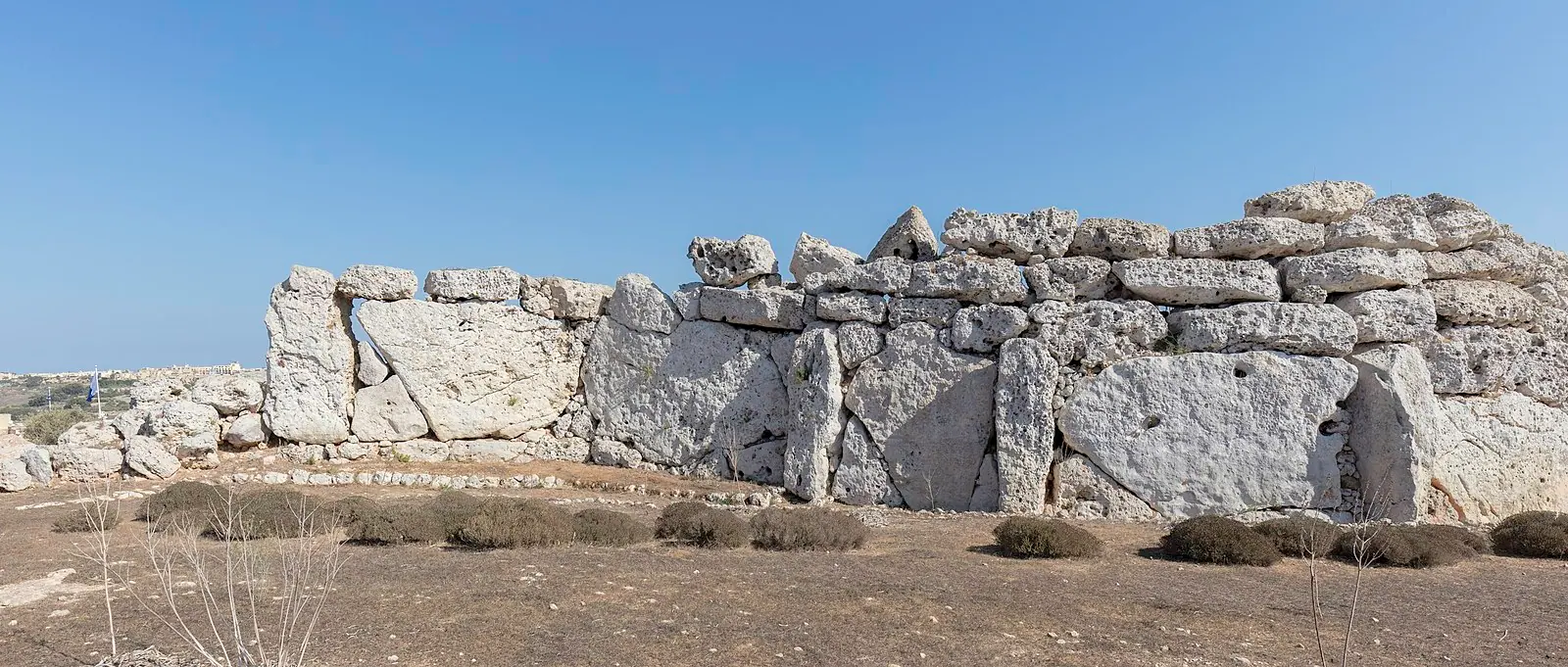
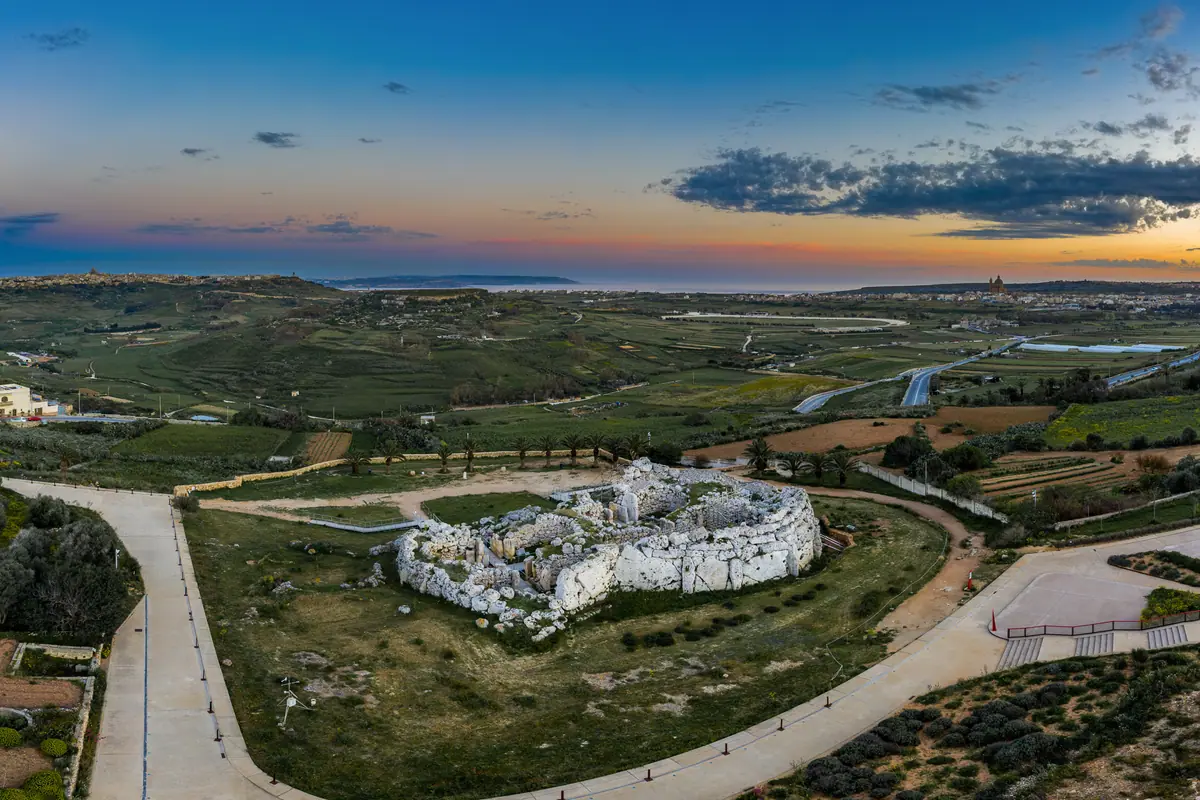
In the afternoon, work your way around the coastline: the Ġgantija Temples in Xagħra, two enormous megalithic shrines roughly 5,600 years old and the oldest free-standing stone structures anywhere in the world; the basilica of Ta' Pinu, still busy with pilgrims; the Inland Sea and cliffs at Dwejra, where the famous natural arch stood before it collapsed into the sea; and the red sands of Ramla Bay, the best swimming on the island. Buses link the main sights, but hiring a car for the day or joining a small-group tour saves hours.
Day 6: Comino's Blue Lagoon and the Northern Coast
Comino, the small island between Malta and Gozo, is reached by frequent boats from Mġarr and Ċirkewwa and is essentially one big swimming destination. The Blue Lagoon, a shallow turquoise channel between Comino and the islet of Cominotto, is the postcard shot — and it gets extraordinarily crowded between June and September. Go early, or base yourself instead at the quieter Santa Marija Bay or the deeper water of Crystal Lagoon, and walk the island's modest trails to the old tower and chapel in the middle.
Back on Malta, the north coast fills the rest of the day. Mellieħa Bay is the longest sandy beach on the island, the Red Tower of St Agatha's stands on the ridge above it, and Popeye Village — the film set turned attraction — sits in Anchor Bay just along the cliffs. If you have energy left, the Rotunda of Mosta is a short drive inland: a vast neoclassical dome that famously survived a wartime bomb that punched through the roof and failed to explode.
Day 7: Sliema, St Julian's and the Last Dip
Spend your final day on the other side of the harbour, in the modern resort strip that runs from Sliema to St Julian's. The seafront promenade links Sliema Ferries, Balluta Bay and Spinola Bay, and it is the easiest walk in Malta — flat, breezy and lined with swimming spots, cafes and, at dusk, the evening passeggiata. The Valletta–Sliema ferry is the most scenic way to get across and back, costing a fraction of a taxi and taking about ten minutes.
Before flying home, use any spare hours wisely. The Ħal Saflieni Hypogeum, an underground prehistoric burial complex in Paola, releases a limited number of tickets daily and must be booked weeks or months ahead; the Tarxien Temples nearby are far easier to visit. Golden Bay and Għajn Tuffieħa, on the northwest coast, are the best last-minute swims, with the latter reached by a steep staircase down the cliff and much quieter than its neighbour. Allow two hours before departure for the airport during summer weekends.
Frequently asked questions
When is the best time to visit Malta?
April to mid-June and September to October are the sweet spots: sea temperatures are comfortable, the temples and Mdina are pleasant to walk, and the crowds are thinner than in July and August. High summer brings intense heat and a packed Blue Lagoon, while winter is mild and quiet but too cool for most people to swim.
How do I get from Malta's airport to Valletta?
The airport at Luqa sits about 8 km from the capital. Taxis and pre-booked transfers take roughly 20 minutes, and public buses run to Valletta regularly, taking a little longer in traffic. Late-night arrivals are better served by a pre-booked transfer, as bus frequency drops sharply after midnight.
Do I need a car to see Malta?
Not strictly — the bus network reaches Valletta, Mdina, the ferry ports and most major sights, though journeys can be slow and Sunday service is reduced. For a one-week itinerary covering Gozo, the south coast and the north, hiring a car for two or three days gives you far more freedom, especially for the Dingli Cliffs and Ħaġar Qim.
Can Gozo and Comino both be done as day trips?
Yes, but keep them separate days. Gozo deserves a full day on its own for the Ċittadella, Ġgantija Temples and Dwejra, while Comino works best as a half-day focused on swimming at the Blue Lagoon or the quieter Santa Marija Bay. Trying to combine them leaves you rushing the ferries.
What should I book well in advance in Malta?
The Ħal Saflieni Hypogeum has strictly limited daily entry and sells out weeks ahead, so reserve early if you want to see it. Summer flights, August accommodation and Comino boat trips also fill up, and the last ferry back from Gozo is worth checking before you plan a late dinner on the island.