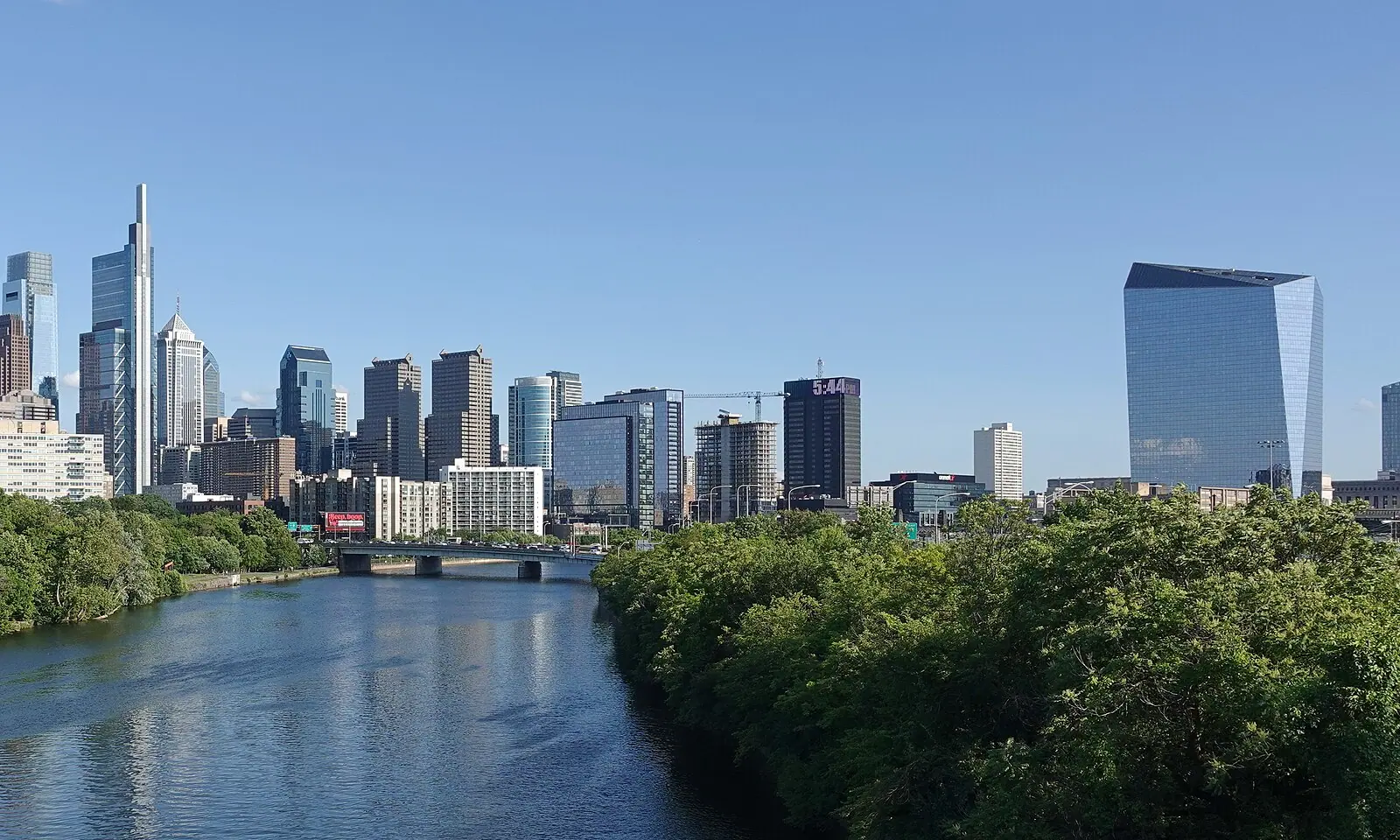
The United States is less a single cuisine than fifty kitchens arguing across one enormous map, where a Maine lobster roll, a Texas brisket plate and a New Mexico green chile stew share nothing but a passport. Travel it slowly, and the landmarks become seasoning: the Statue of Liberty with a bagel in hand, the Grand Canyon after a diner breakfast, Jackson Square at dusk with a paper cup of chicory coffee. This guide maps the flavours, neighbourhoods and must-see sights worth building a trip around.
How American Food Culture Actually Works
American cooking is regional to its bones, shaped by climate, migration and distance. Clam chowder and maple syrup belong to New England, Lowcountry boils and shrimp and grits to the Carolina and Georgia coast, brisket and kolaches to central Texas, green chile to New Mexico, salmon and hazelnuts to the Pacific Northwest. Gumbo in Louisiana descends from West African, French and Spanish kitchens at once; a Cuban sandwich in Miami, a banh mi in Houston and a pierogi in Cleveland tell the same story of arrivals reshaping a menu.
Practically, this means you travel by appetite, not by checklist. Farmers' markets open early and close by noon; diners serve breakfast from 6am; barbecue pits sell out when the meat runs out, often by mid-afternoon. Portions run large, iced water arrives free, and tipping 18–20 per cent at sit-down restaurants is expected rather than optional. Cash still helps at rural stands and food trucks.
Timing matters as much as place. Autumn is prime for New England cider and Chesapeake blue crabs; spring brings strawberries and azaleas to the South; summer belongs to park picnics and Pacific salmon runs; winter is peak season for citrus in Florida and oysters in the Gulf. Plan two or three regions per trip rather than trying to sprint the whole country.
Northeast Icons: Statue of Liberty, Freedom Trail and Market Halls
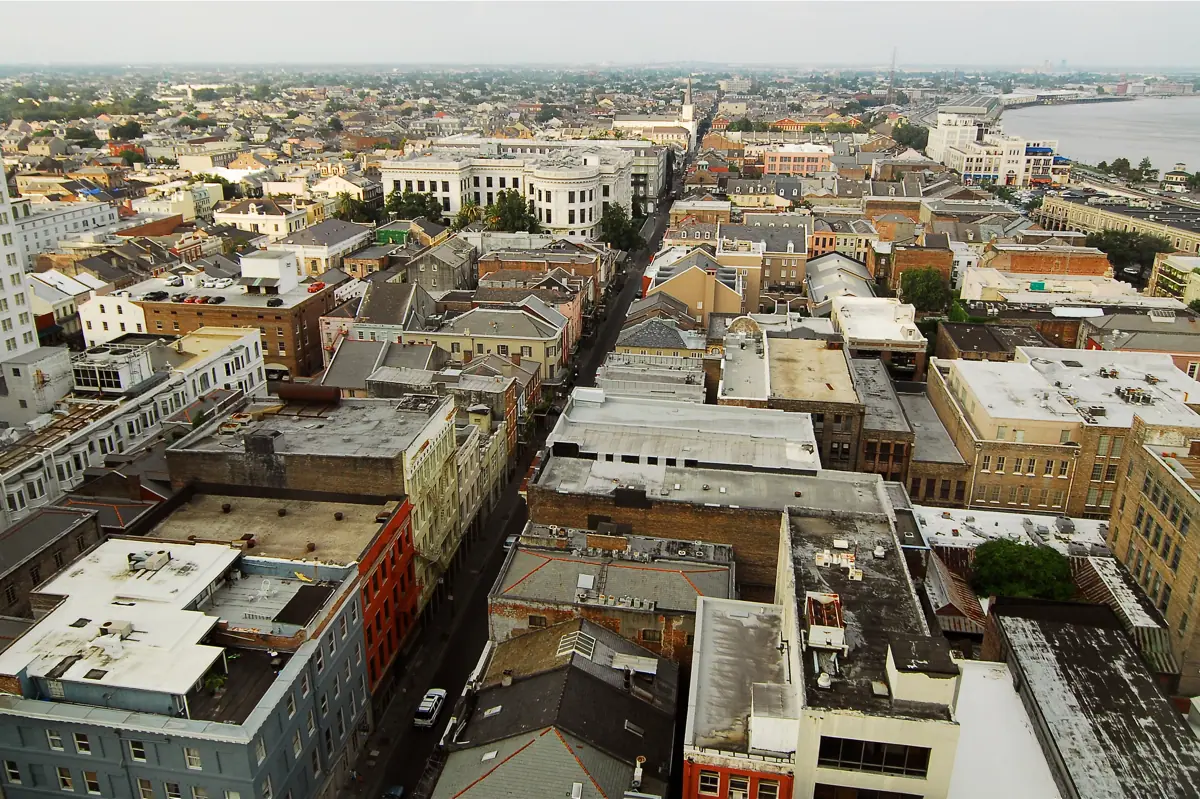
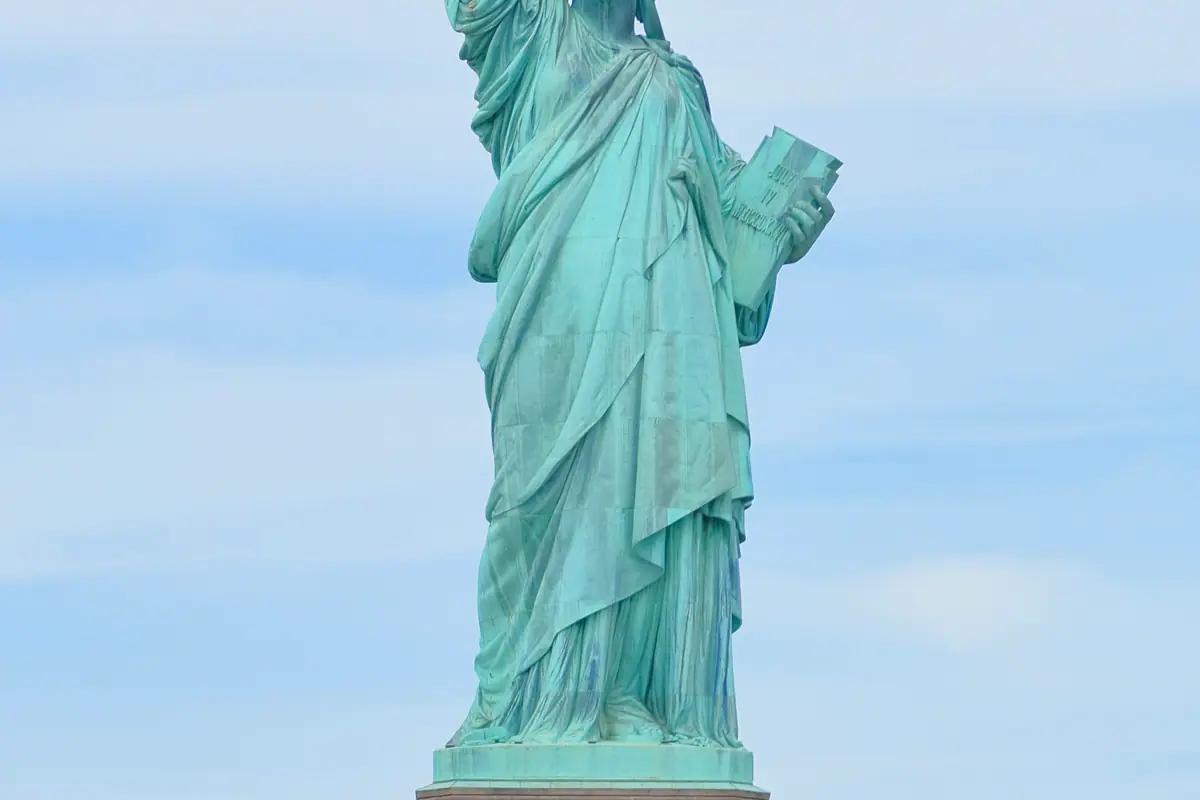
Start in New York, where the Statue of Liberty and Ellis Island sit a short ferry ride from Battery Park and the immigrant story behind America's kitchens becomes literal. Walk the Freedom Trail in Boston, a 2.5-mile red-brick route past Boston Common, Faneuil Hall and the Old North Church, then eat your way through Philadelphia's Reading Terminal Market near the Liberty Bell and Independence Hall — cheesesteaks, soft pretzels and water ice in one crowded hall.
New York's Lower Manhattan rewards wandering: Chinatown for dim sum and roast duck, Little Italy for espresso and pastries, and the Union Square greenmarket for apples, cider and farm cheese. Boston answers with chowder and lobster rolls near the waterfront, and Providence and Portland add serious small-city restaurant scenes. Expect five to seven days for a satisfying loop, with September and October delivering the best weather and fewest crowds.
Use transit rather than a car in the big cities, and book landmark ferries and tours well ahead in summer. Layers help: northeastern springs are damp and cool, autumn evenings arrive fast, and a windy harbour ferry can feel a season colder than the street you left.
The South: Soul Food, Creole Kitchens and Music Trails
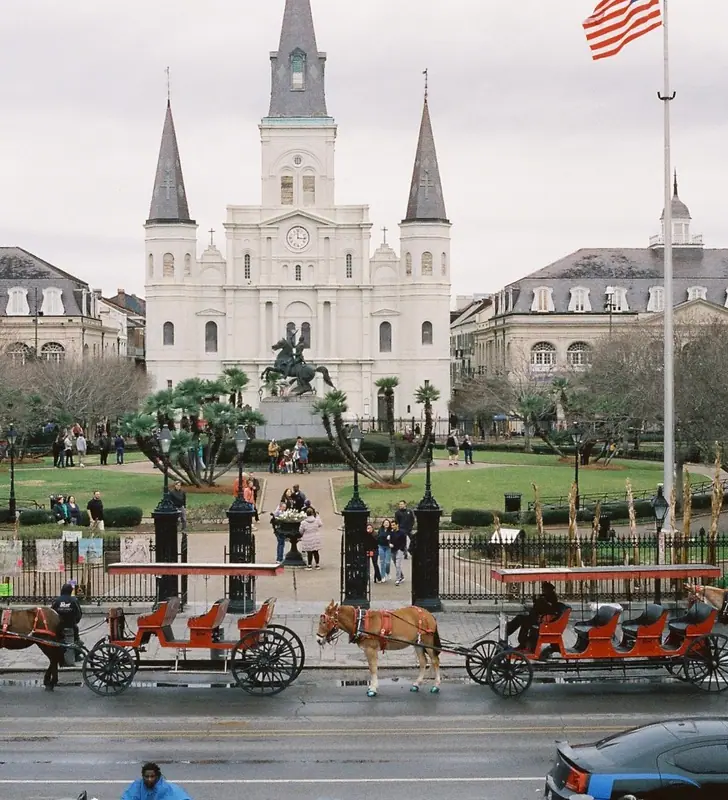
New Orleans is the country's most complete food city. In the French Quarter, Jackson Square and St. Louis Cathedral anchor the morning, Bourbon Street the night, and the surrounding blocks deliver gumbo, jambalaya, po'boys, muffuletta and beignets dusted in sugar. Mardi Gras in February or early March floods the streets; otherwise aim for late autumn and early spring, when the humidity loosens and the brass bands play on every corner.
Follow the music north. Memphis pairs Beale Street blues with dry-rub ribs and the Graceland mansion, while Nashville's Lower Broadway honky-tonks and the Country Music Hall of Fame sit alongside hot chicken that ranges from mild to genuinely punishing. Charleston and Savannah slow the pace with shrimp and grits, fried green tomatoes, she-crab soup and Lowcountry boils served under live oaks and pastel antebellum houses.
Soul food is the through-line — collard greens, cornbread, fried catfish, red beans on Mondays. Many of the best versions come from small family kitchens and church suppers rather than anywhere fancy. Sundays are busy, many spots close early, and asking what's freshest that day is never a mistake.
Road Trips: Route 66, Diners and Barbecue Pits
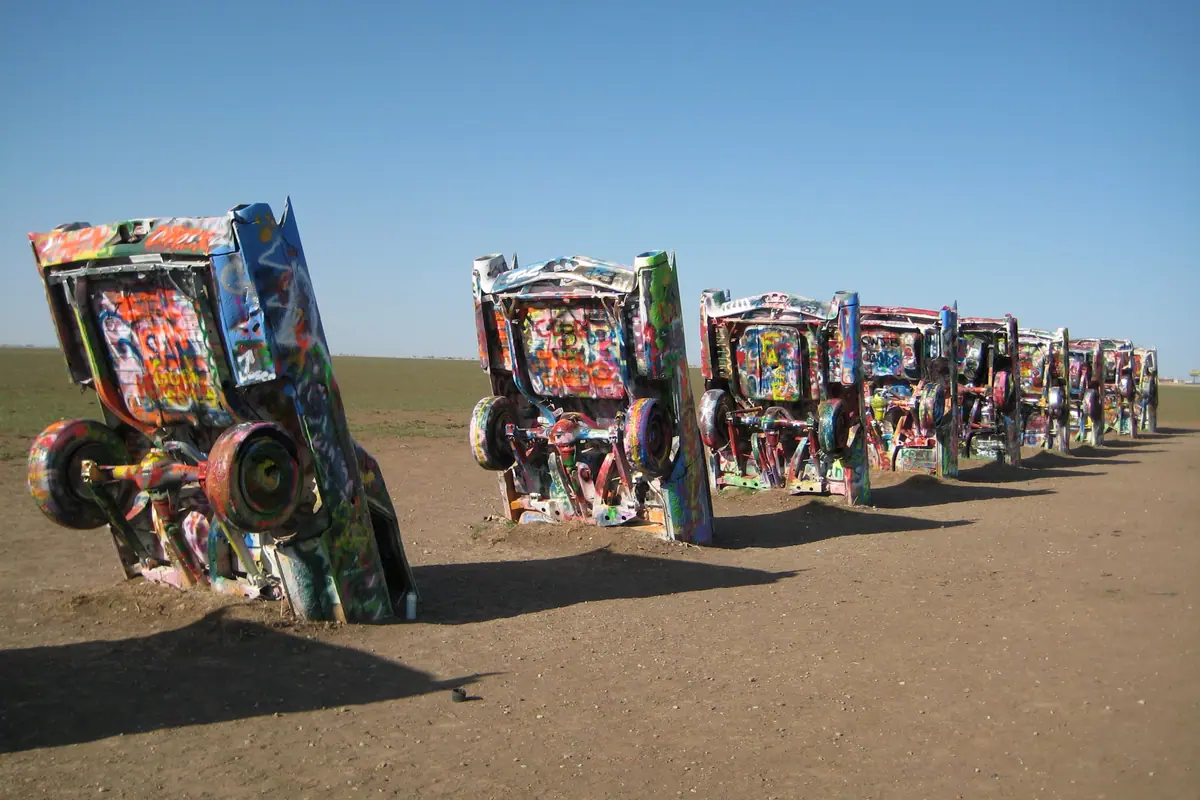
Nothing explains America's food culture like driving it. Route 66 still stitches Chicago to Santa Monica through small-town diners, neon motel signs and the Cadillac Ranch outside Amarillo, where battered cars stand nose-down in a field. Detour to the Grand Canyon's South Rim, the petrified forests of Arizona and the painted deserts of New Mexico, finishing at Santa Monica Pier on the Pacific.
Barbecue is the road-trip religion, with distinct liturgies: central Texas brisket smoked over post oak, Kansas City's sweet tomato sauce, Carolina's vinegar-and-pepper pork, Memphis's dry rub. Order by weight, expect butcher paper and white bread, and arrive before noon. Between pits, diners offer blue-plate specials, biscuits and gravy, and bottomless coffee from early morning.
Give a cross-country drive three weeks or more; a single state can easily swallow a week. Rental cars are easiest picked up and dropped in different cities, and one-way fees apply. Fuel stations are sparse on desert stretches — fill up when you can, carry water, and avoid long drives after dark where wildlife crosses.
Immigrant Neighbourhoods and City Market Halls
Some of the country's best eating happens in a handful of blocks. San Francisco's Chinatown, entered through the Dragon Gate on Grant Avenue, plus the Mission District's murals and taquerias, makes a full day of it, while Seattle's Pike Place Market stacks fishmongers, bakeries and produce stalls above the waterfront. Chicago's Pilsen brings Mexican bakeries and taquerias; Miami's Little Havana counters with Cuban coffee, croquetas and Calle Ocho's domino park.
Los Angeles spreads it out — Koreatown for late-night grills, Grand Central Market downtown for a dozen cuisines in one historic hall, and San Gabriel Valley for some of the finest Chinese cooking outside Asia. Houston's Asiatown and Washington's Ethiopian kitchens along U Street round out the picture. Food halls and market stalls let you sample widely for less, and mornings are calmest.
Come curious and specific. Ask what's best today, order the thing the shop is named for, and eat where the queue is local. Lunch specials in immigrant neighbourhoods are often the best value of any meal on a US trip, and many places take cards now, though small vendors still prefer cash.
National Parks, Seasonal Feasts and Planning the Trip
America's table is set outdoors as much as indoors. Yellowstone's geysers, Yosemite's granite walls, the Great Smoky Mountains' misted ridges, Acadia's rocky coast and Zion's red canyons each pair with a regional plate — huckleberry anything in Montana, salmon in the Pacific Northwest, apple cider doughnuts in New England, blue crabs in the Chesapeake, roasted Hatch green chile across New Mexico each autumn.
Seasons decide everything. May to September suits the northern parks; April and October are ideal for the desert Southwest and southern cities; winter turns Yellowstone and the Rockies over to snow sports and quiet. Summer weekends mean full car parks and timed-entry systems at popular gates, so reserve park lodging months ahead and start hikes at dawn.
Allow seven to fourteen days for a focused region, longer for a coast-to-coast run. Distances are deceiving — Texas alone spans more driving than many countries — so build in rest days. Carry layers, water and sun protection, respect wildlife distance rules, and remember that small-town kitchens close early; plan dinner before nine.
Frequently asked questions
What is the best time of year for a food and culture tour of the United States?
Late April to early June and September to October suit most regions, with mild weather and quieter landmarks. Winter favours Florida, the Gulf Coast and the desert Southwest; midsummer is best for northern national parks but brings heat and crowds.
How long do I need to see the highlights of the United States?
Two weeks covers one or two regions properly — for example New England plus the Mid-Atlantic, or the Deep South with a Texas add-on. A coast-to-coast Route 66 style trip needs three weeks or more to avoid constant driving.
Do I need a car to experience local food and culture in the US?
In New York, Boston, Chicago and San Francisco, public transport is enough. Everywhere else — barbecue trails, national parks, small-town diners — a car is close to essential. Book early for summer, and note that one-way rentals carry extra fees.
What should I know about tipping and ordering in American restaurants?
Tip 18–20 per cent at sit-down restaurants, a dollar or two per drink at bars, and similar for counter service if you're served. Iced water is free, refills are common, and splitting bills is standard. Tax is added at checkout, not included on the menu price.
Which single region gives the most authentic local food experience on a first trip?
South Louisiana is hard to beat: New Orleans and the surrounding bayou country combine Creole and Cajun cooking, live music and walkable historic sights like Jackson Square. Pair it with Memphis or the Mississippi Delta for a music-and-food route.
Plan it — tours in United States
Live search, booked directly with trusted providers.
Sort the rest of your trip
Everything for United States, in one place
Stay in United States
Hotels, guesthouses and apartments — compared in one search.
Search hotels
Transfer in United States
Private driver waiting on arrival — no queues, no surprises.
Book a transfer
Stay online in United States
Travel eSIM — data the moment you land, no roaming bills.
Get an eSIMMore guides in United States
Best Time to Visit the USA: A Season-by-Season Hotel and Landmark Guide
One Week in the USA by Flight: A Coast-to-Coast Itinerary
Where to Stay in Portland: Hotels and Neighborhoods for First-Time Visitors
Best Time to Visit San Francisco: A Season-by-Season Guide to Weather, Crowds and Where to Stay
Where to Stay in Denver: The Best Neighborhoods and Hotels