Türkiye is a country you taste before you fully understand — cardamom-scented coffee on a ferry deck, pistachio baklava eaten standing up, smoke rising from a clay pot cracked open at your table. This guide maps a journey that pairs the country's must-see monuments with the meals, markets and everyday rituals that give them meaning.
Istanbul: Bazaars, Ferries and the First Bite of Türkiye
Almost every tour of Türkiye starts in Istanbul, and the city teaches you the local rhythm within an hour. Buy a ring of simit from a street cart near Eminönü, cross the Galata Bridge past the fishermen, and take the ferry to Kadıköy on the Asian side, where the market streets behind the ferry pier fill with cheese stalls, pickle vendors and olive-oil shops. Order a glass of çay — tea served in a tulip shape — and you have already joined a ritual repeated millions of times a day across the country.
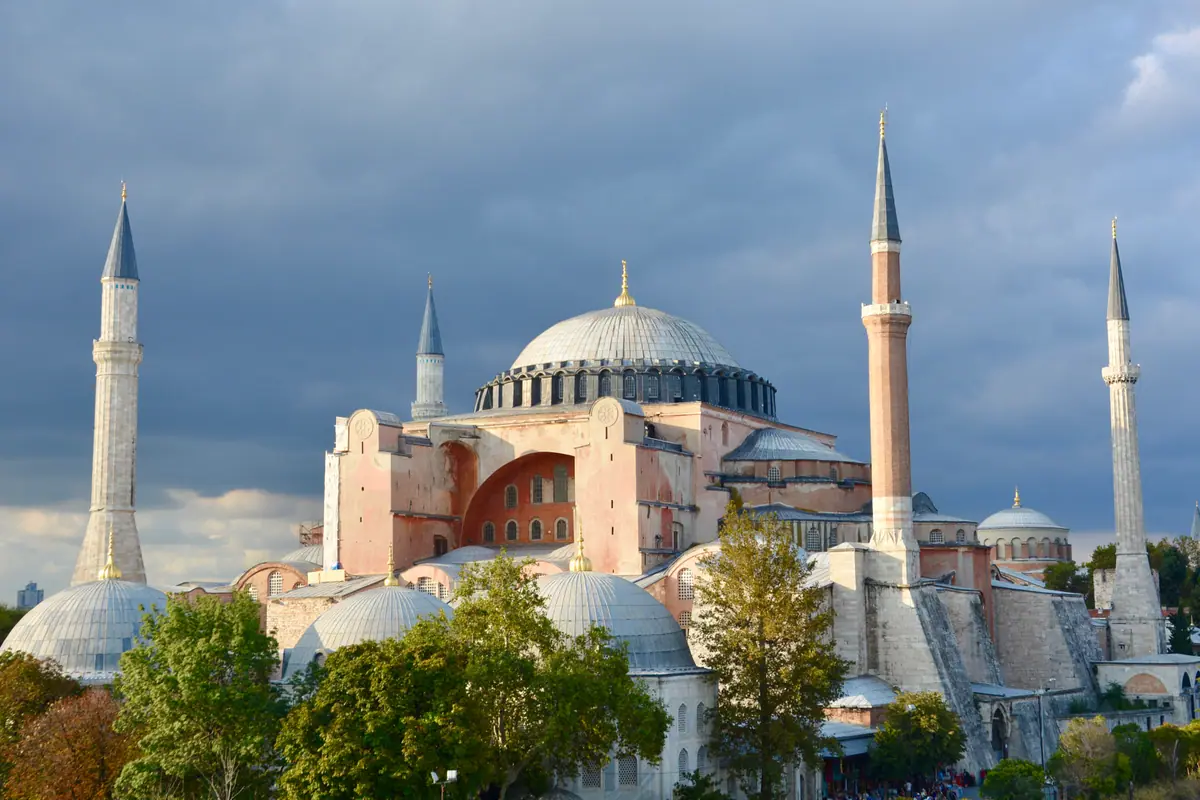
The historic peninsula holds the sights you have seen in photographs: Hagia Sophia with its vast dome and shimmering mosaics, the Blue Mosque facing it across a garden square, Topkapı Palace with its harem courtyards and treasury, and the Basilica Cistern, a forest of columns standing in shallow water. The Grand Bazaar, a covered city of some four thousand shops, rewards a slow wander rather than a shopping list; nearby, the Spice Bazaar is the better place to buy dried apricots, saffron and lokum.
In the evening, climb to the Galata Tower for the view over the Golden Horn, then drift down İstiklal Avenue into Beyoğlu, where meyhane taverns in Asmalımescit serve small plates of mezze — tarama, haydari, stuffed vine leaves — alongside rakı. Ask what is fresh that day and let the waiter bring it; that is how locals do it.
Beyond Istanbul: Regional Kitchens from Gaziantep to the Black Sea
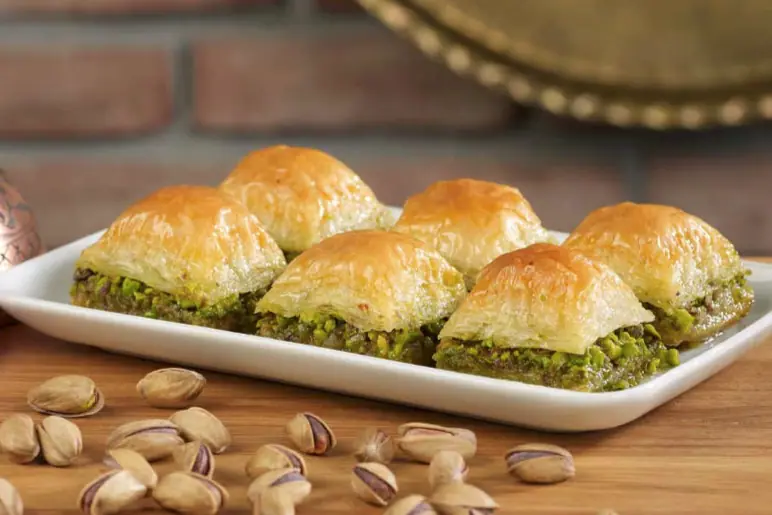
Türkiye's food changes dramatically with the landscape, and the southeast is where it reaches its richest. Gaziantep, in the pistachio belt near the Syrian border, is the country's pastry capital: paper-thin baklava layered with bright green Antep pistachios, katmer folded with clotted cream for breakfast, and lahmacun eaten with parsley and lemon. The city's Zeugma Mosaic Museum, home to the haunting Gypsy Girl mosaic, makes a natural pairing with a long lunch.
Move west and the kebabs change character. In Adana, minced lamb is kneaded with red pepper and grilled over charcoal; in nearby Mersin, tantuni is wrapped in thin flatbread with sumac onions. Konya, the home of the whirling dervish tradition, is known for etli ekmek — a long, thin flatbread topped with spiced meat — and for fırın kebab slow-cooked in a sealed clay oven. In the far east, Van lays out the definitive Turkish breakfast: honey and clotted cream, herb cheeses, walnuts, black olives and endless tea.
Along the Black Sea coast the cooking turns to the sea itself. Trabzon and its neighbours build entire meals around hamsi, the small anchovy that arrives in winter, fried, grilled or baked into cornbread. Inland from Trabzon, the cliffside Sümela Monastery clings to a rock face above a forested valley — a reminder that on this tour, the road between meals is rarely empty of wonders.
Cappadocia: Balloon Dawns, Cave Churches and Testi Kebab
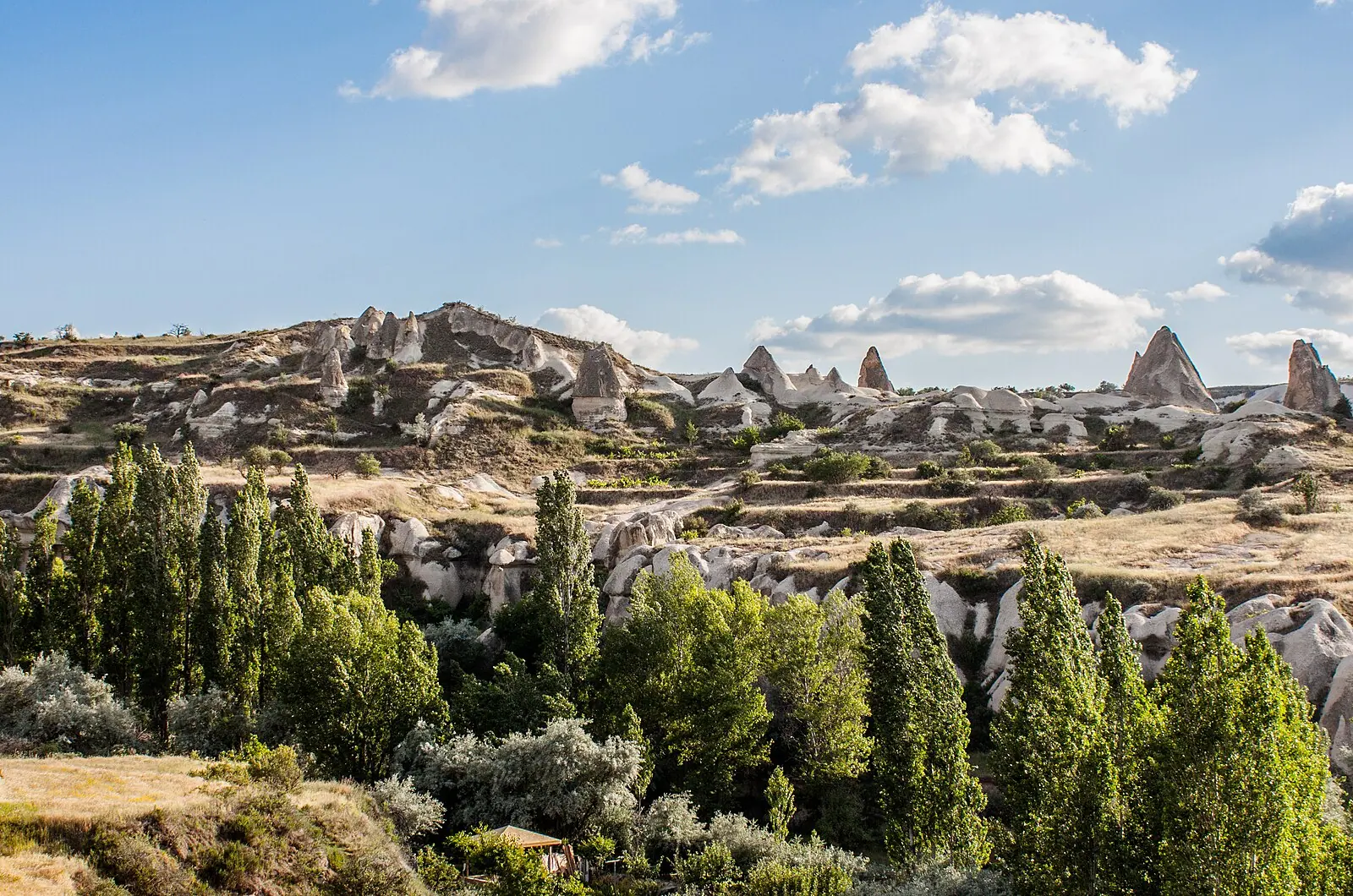
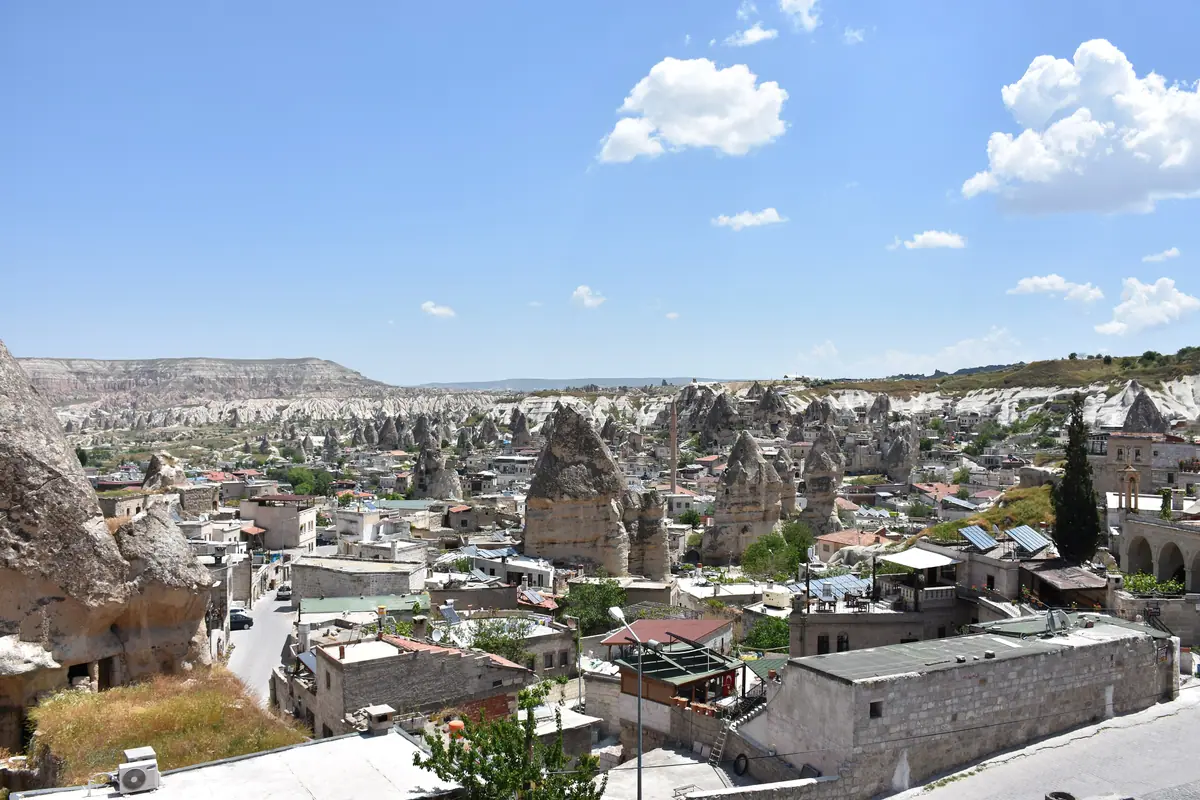
Cappadocia is the part of Türkiye that feels least like anywhere else. The Göreme Open-Air Museum shelters rock-cut churches whose walls still carry ninth- to eleventh-century frescoes, while the valleys around it — Devrent, Paşabağ, Rose Valley — are filled with fairy chimneys and cave dwellings carved straight from the volcanic tuff. Below ground, the multi-level cities of Derinkuyu and Kaymaklı descend for eight storeys, complete with stables, wineries and ventilation shafts.
The dawn balloon flights over Göreme are the region's signature experience: roughly an hour in the air, lifting as the sun clears the ridge and casting the valleys in pink and gold. Flights typically run year-round but depend on wind and visibility, so travellers usually build in a spare morning. Spring (April to June) and autumn (September to November) give the most reliable conditions and the most comfortable hiking, while midsummer days can be fiercely hot by noon.
For dinner, seek out testi kebab in Avanos, a pottery town on the Kızılırmak river. The stew of lamb, tomato and chickpeas is sealed inside a clay jug, baked for hours, then brought to the table and cracked open with a sharp tap — a small piece of theatre that locals have performed for centuries. Pair it with a glass from one of the region's small wineries around Ürgüp.
The Aegean and Mediterranean: Ephesus, Pamukkale and Ölüdeniz
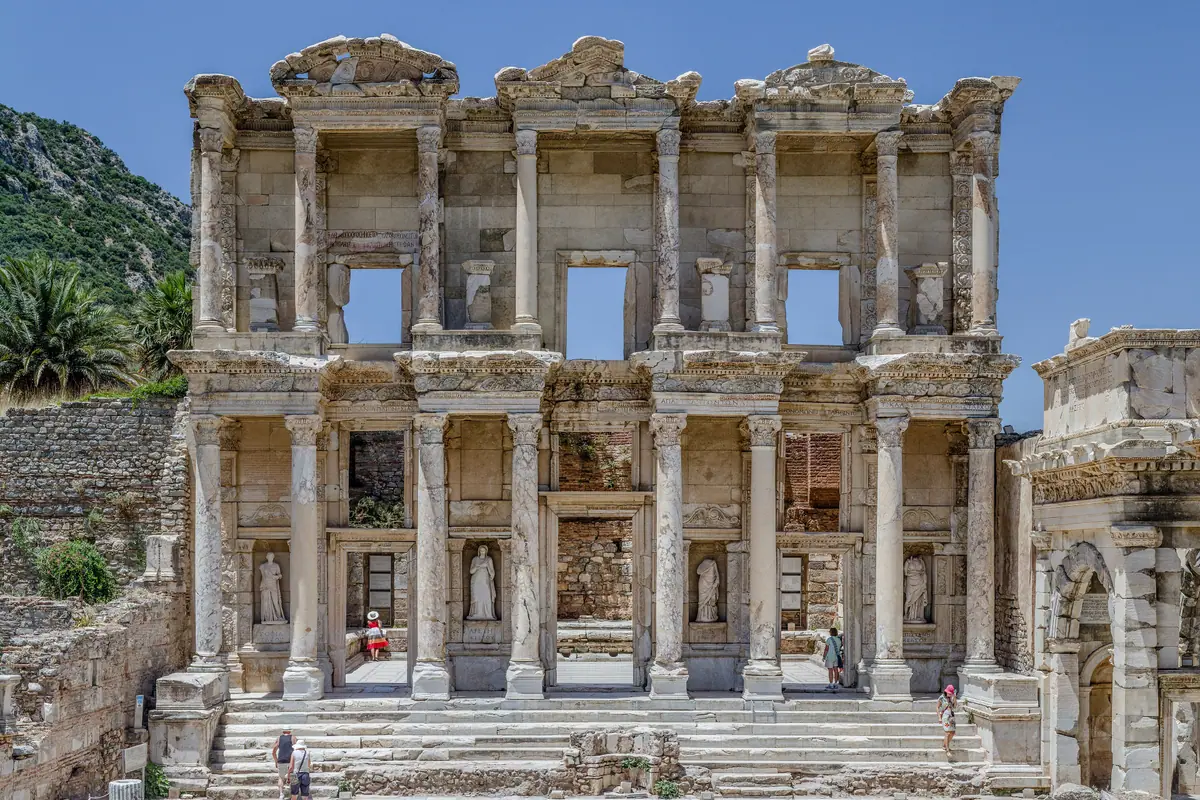
The Aegean coast trades rock formations for marble ruins and olive groves. Ephesus, near Selçuk, is the great classical city of the region: walk down the marble-paved Curetes Street past the Temple of Hadrian to the Library of Celsus and the Great Theatre that once held some twenty-five thousand spectators. The Terrace Houses above the street, roofed for protection, preserve frescoes and mosaic floors that make the daily life of Roman Ephesus suddenly visible.
Inland, Pamukkale's white travertine terraces cascade down a hillside above the ruins of Hierapolis, whose Roman theatre and necropolis sit on the plateau itself. Visitors walk the terraces barefoot along marked paths; the warm spring water in the antique pool is said to have drawn bathers for two thousand years. Come early in the morning to beat both the heat and the crowds.
Further south, the Mediterranean begins in earnest. Ölüdeniz's Blue Lagoon is a sheltered curve of turquoise water backed by pine-covered mountains, with the abandoned village of Kayaköy and the start of the Lycian Way nearby. Antalya's old quarter, Kaleiçi, mixes Ottoman houses, a Roman harbour and the fluted minaret of Yivli Minare, while day trips reach the Roman theatre of Aspendos and the rock-cut tombs of Myra. Give this coastline at least four or five days if you want to swim as well as sightsee.
The Southeast: Göbeklitepe, Mardin and Sunrise on Mount Nemrut
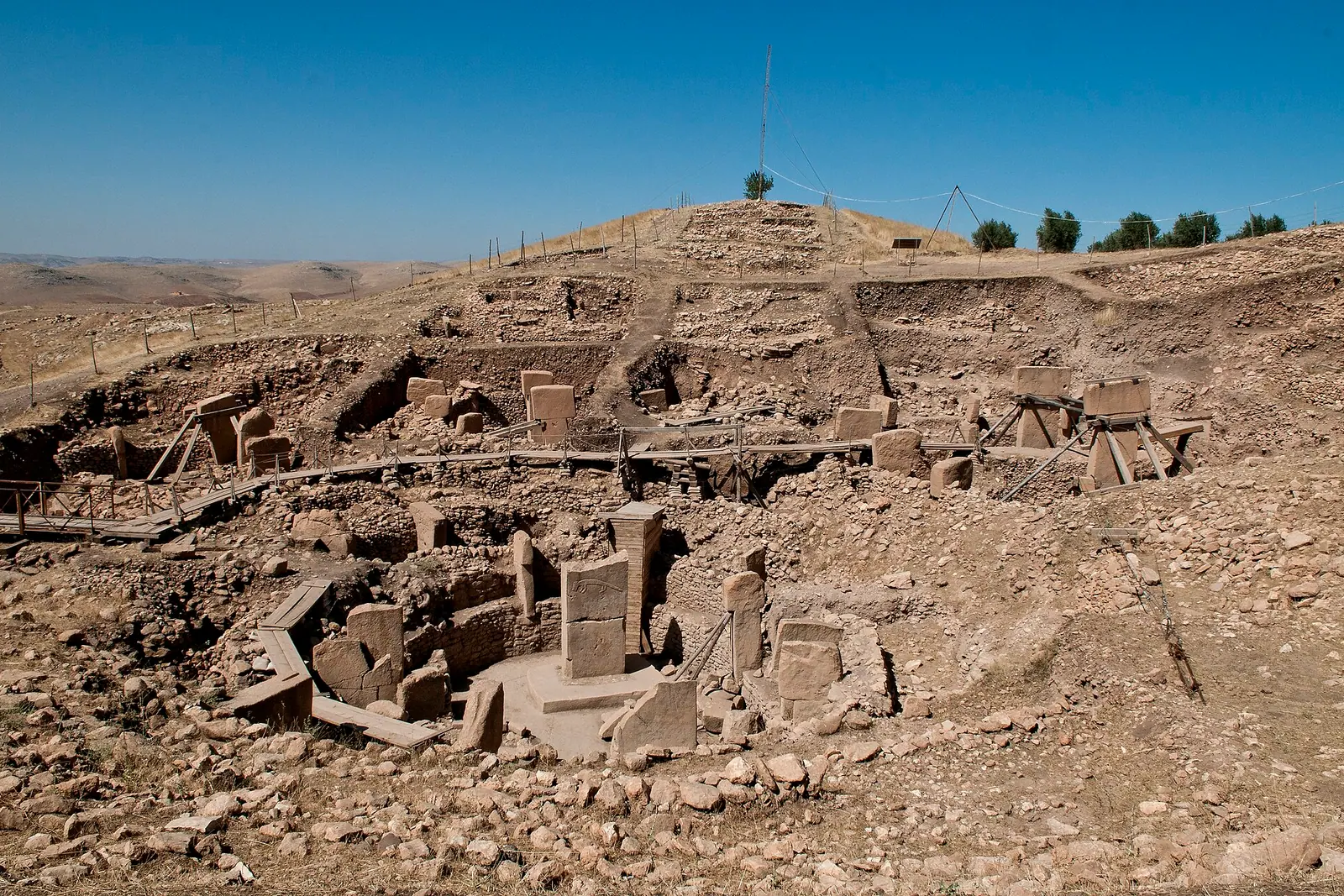
For many travellers, the southeast is the revelation of the trip. Göbeklitepe, outside Şanlıurfa, is the world's oldest known temple complex — monumental T-shaped pillars carved with animal reliefs, raised by hunter-gatherers roughly eleven thousand years ago, long before pottery or metal. Its covered excavation site and visitor centre make it genuinely easy to reach, and the nearby pools of Balıklıgöl and the bazaar in Şanlıurfa fill out a full day.
East of there, Mardin climbs a hillside in honey-coloured stone, its honeycomb houses looking over the Mesopotamian plain. The old city is a maze of caravanserais, churches and mosques, and the local kitchen — kaburga dolması, lamb ribs stuffed with rice and almonds, and small savoury pastries called sembusek — is unlike anything you will eat elsewhere in the country.
Inland, Mount Nemrut near Adıyaman is the region's great sunrise pilgrimage. A headless pantheon of colossal statues, commissioned by a first-century BC king, sits on a summit at over two thousand metres; most visitors stay in nearby villages and climb before dawn to watch the light come up over the heads lining the terraces. Nights are cold even in summer, so pack a layer.
Practical Rhythms: Tea, Hammams, Seasons and Local Etiquette
Türkiye runs on tea and conversation. Offers of çay are a form of hospitality rather than a sales tactic, and accepting is rarely a mistake; in shops and workshops, drinking a glass while you chat is normal and unhurried. A traditional hammam — the historic baths of Istanbul, Bursa and Gaziantep among them — is worth half a day, with scrubbing and foam massage offered as separate services and modest swimwear or a wrapped towel expected.
Timing matters. April to June and September to November are the sweet spots for a country-wide tour: mild in Istanbul and Cappadocia, comfortable along the Aegean, and cool enough for the southeast before the midsummer heat. July and August are best spent on the coast or in the highlands of the east; winter brings snow to Cappadocia and the east, ski conditions around Erzurum, and quiet, misty days in Istanbul.
For a first visit, ten to fourteen days covers Istanbul, Cappadocia and the Aegean or Mediterranean coast at a relaxed pace, with internal flights saving long drives; buses and the rail line east from Ankara toward Kars suit slower travellers. When visiting mosques, dress modestly, remove shoes and avoid prayer times; in bazaars, polite haggling is part of the ritual, but walking away without buying is perfectly acceptable.
Frequently asked questions
What is the best time of year for a food and culture tour of Türkiye?
April to June and September to November are ideal across most of the country: mild in Istanbul and Cappadocia, comfortable on the Aegean and Mediterranean, and manageable in the southeast. July and August are best limited to the coast or highlands, while winter suits Istanbul, ski areas near Erzurum and quiet Cappadocia.
How many days do you need to see Türkiye's highlights?
Ten to fourteen days is a realistic first visit. That allows three or four days in Istanbul, two or three in Cappadocia, and the rest split between Ephesus, Pamukkale and the Mediterranean coast. Add a week or more if you want the southeast — Göbeklitepe, Mardin and Mount Nemrut are far apart.
Which Turkish dishes should a first-time visitor not miss?
Start with a full Turkish breakfast of cheeses, olives, honey and clotted cream, then work through simit, lahmacun, Adana kebab, testi kebab in Cappadocia, Black Sea hamsi in winter, and pistachio baklava in Gaziantep. Finish with Turkish coffee and a glass of tea.
Is it easy to travel between Istanbul, Cappadocia and the coast?
Yes. Domestic flights connect Istanbul with Kayseri or Nevşehir for Cappadocia, and with İzmir, Antalya and Gaziantep for the coasts and southeast. Overnight and daytime buses cover almost everywhere, and long-distance trains such as the line east from Ankara are slow but scenic.
What should I know about mosques, hammams and local customs?
Dress modestly at mosques, cover your head and shoulders, remove your shoes and avoid visiting during prayer times, especially Friday midday. In hammams, expect separate sections or hours for men and women. Accepting offered tea is normal courtesy, and polite bargaining in bazaars is welcome — but never feel obliged to buy.
Sort the rest of your trip
Everything for Türkiye, in one place
Stay in Türkiye
Hotels, guesthouses and apartments — compared in one search.
Search hotels
Transfer in Türkiye
Private driver waiting on arrival — no queues, no surprises.
Book a transfer
Stay online in Türkiye
Travel eSIM — data the moment you land, no roaming bills.
Get an eSIMMore guides in Türkiye
Best Things to Do in Türkiye: Top Places to Visit and Unmissable Experiences
Best Time to Visit Türkiye for Hotels: A Season-by-Season Guide
Türkiye in One Week by Plane: Istanbul, Cappadocia, Ephesus and Antalya
Things to Do in Türkiye: Must-See Landmarks from Istanbul to Cappadocia
Hotels in Türkiye: Where to Stay in Istanbul, Cappadocia and on the Coast