Türkiye is a country where two hours of flying can move you from ski jackets to swimsuits, so the calendar shapes your hotel as much as your itinerary. Pick the wrong week and you'll pay peak rates for a shuttered Aegean resort or swelter through a Bosphorus city break. Pick the right one and you'll get Cappadocia balloons at sunrise, an empty Pamukkale terrace and Istanbul at its most walkable.
Why the Season Decides Which Türkiye Hotel You Book
Türkiye stretches from the Thracian plains to the Mesopotamian border, which means there is no single national season. Istanbul and the Marmara coast run on a temperate rhythm of mild springs and grey, damp winters, while the Mediterranean riviera around Antalya, Fethiye and Bodrum holds warmth from March into November. Inland, the Anatolian plateau around Cappadocia and Konya swings harder: crisp, bright autumn days, cold nights, and summers that bake the fairy chimneys by noon. Whatever month you travel, you are effectively choosing a different country.
The second force on hotel availability is domestic travel. Turkish school holidays run from roughly mid-June to mid-September, and families descend on the Aegean and Mediterranean coasts with military precision — resorts in Bodrum, Çeşme and Antalya sell out months ahead and prices roughly double. Religious holidays shift earlier each year on the Gregorian calendar and create short, intense bursts of demand along the coast, when even modest guesthouses in Kaş or Ölüdeniz command peak rates. Checking where these holidays fall before you book is one of the most useful habits you can develop.
As a rule, the golden windows are April to early June and September to late October: warm enough for swimming in the south, comfortable for walking in Istanbul and Cappadocia, and free of the July crush. High summer is best for beach hotels and little else. Winter belongs to city hotels, ski lodges and the strange pleasure of having Pamukkale's white terraces almost to yourself.
March to May: Istanbul in Bloom and the Aegean Before the Heat
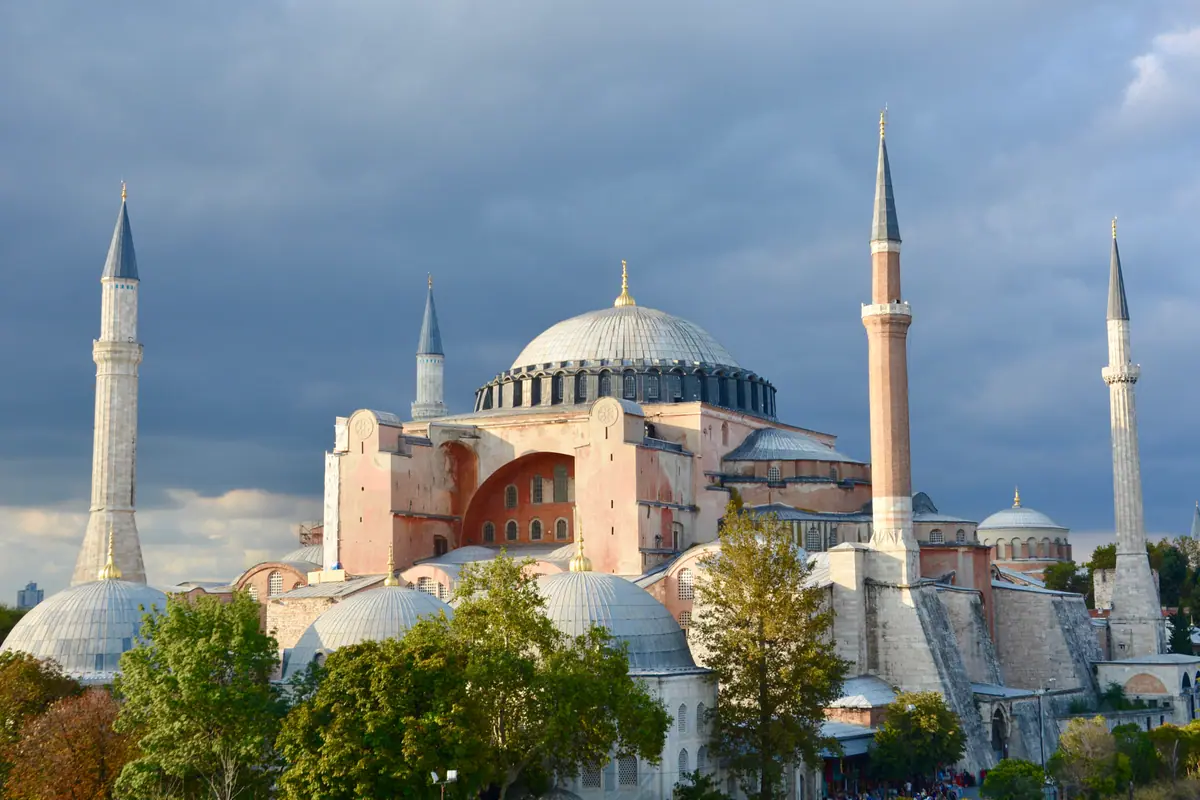
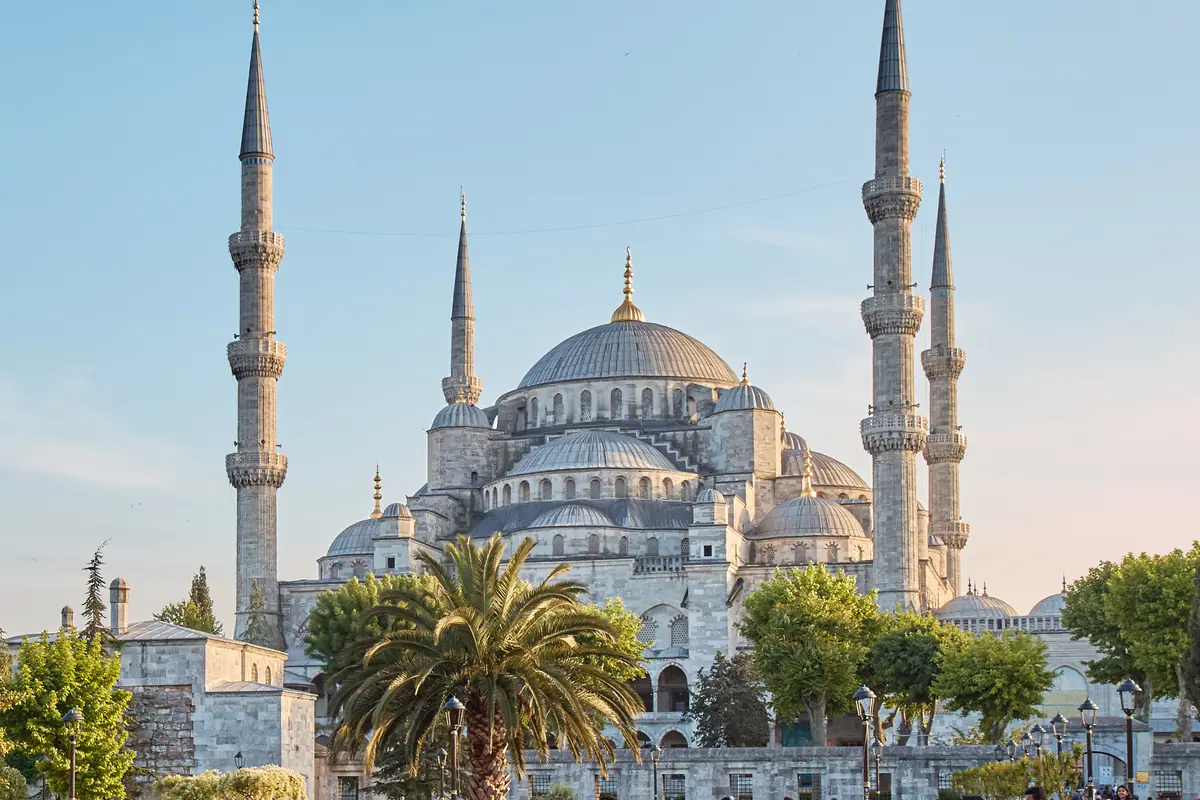
Spring is when Istanbul earns its reputation as one of the world's great walking cities. In April the tulips come out across the city's parks and boulevards, and the queue-free mornings at Hagia Sophia, the Blue Mosque and Topkapı Palace are a gift. Sultanahmet Square becomes a slow promenade between Byzantine and Ottoman monuments, the Basilica Cistern's dim, dripping columns offer cool refuge on a warm afternoon, and the Grand Bazaar's 4,000-odd shops are pleasant rather than punishing. Across the Golden Horn, a climb up the Galata Tower rewards you with the whole peninsula laid out below, ferries stitching the Bosphorus together.
Hotel-wise, this is the sweet spot for Istanbul: boutique converted townhouses in Beyoğlu and Karaköy, restored Ottoman mansions in Sultanahmet, and Bosphorus-view rooms are all bookable at sensible rates — though April and early May weekends fill fast, so aim for two to three months ahead. Expect 15–22°C days, occasional showers, and evenings that still need a jacket.
Follow the spring south and the Aegean opens up. Ephesus, near Selçuk, is far more bearable in May than in August, when the marble streets radiate heat and the tour groups thicken. The same applies to Pergamon's steep theatre, the white terraces of Pamukkale with ancient Hierapolis above them, and the ruins scattered around Izmir. Coastal hotels in Kuşadası and Selçuk reopen through April, and by mid-May the sea is swimmable for the hardy.
Late May to June: The Aegean and Mediterranean Coast Before Peak
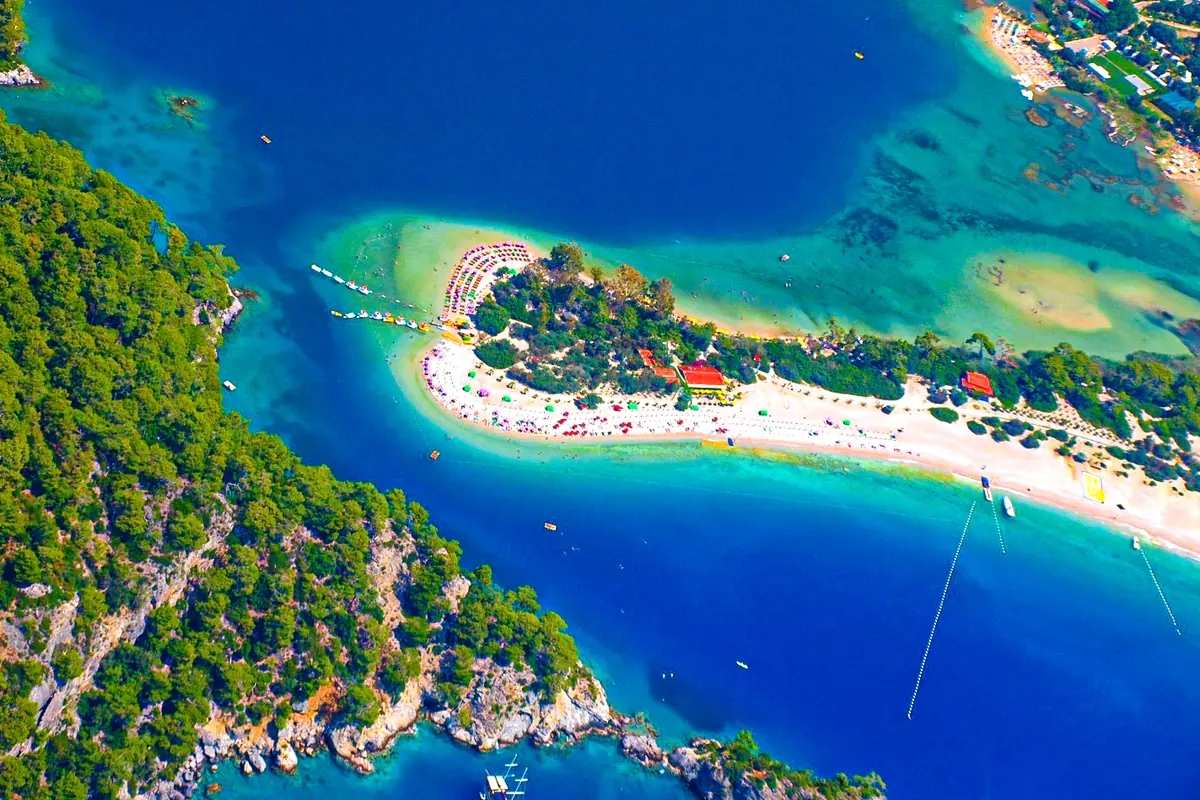
This is the connoisseur's window on the Turkish coast. Daytime temperatures hover in the mid-twenties, the sea has warmed enough for long swims, and the big resorts have not yet filled with school-holiday families. Bodrum, with its crusader castle and whitewashed lanes, is at its most charming; the castle's underwater archaeology collection alone justifies a slow morning. Further east, Ölüdeniz's Blue Lagoon holds that impossible turquoise, and the paragliders launching off Babadağ drift down over the water most afternoons.
Antalya's old town, Kaleiçi, is a warren of Ottoman houses turned into small hotels and courtyards, and June is the month they feel genuinely relaxed. From here you can day-trip to the Roman theatre at Aspendos, which still hosts performances and remains one of the best-preserved in the Mediterranean world, or drive the coast to Kaş, a diving and sailing town that makes an excellent base for the Lycian Way and boat trips over the sunken ruins at Kekova.
Book coastal boutique hotels for this period by late winter or early spring. Rates climb sharply from the second week of June, and the most atmospheric properties — cave-cut rooms, stone houses with plunge pools, hillside terraces over the water — are the first to go.
July and August: Beach Hotels, Heat and Peak Prices
High summer is simple: if you want hot sun, warm sea and resort comfort, this is your moment, and you will pay for it. Sea temperatures along the Aegean and Mediterranean reach 25–27°C, Çeşme and Bodrum turn into open-air party towns, and all-inclusive resorts from Marmaris to Alanya operate at full capacity. Hotels frequently require minimum stays of three to seven nights, and the most desirable seafront rooms vanish three to four months in advance.
Inland, the heat is a different animal. Cappadocia's valleys are dazzling but exhausting by midday, so balloon flights and hikes happen at dawn; Pamukkale's travertines are best at opening time, before the buses arrive. If you want mountains instead of beaches, the Kaçkar range above the Black Sea coast, the highlands around Lake Van, and the slopes of Mount Ararat offer cool air and serious walking — with small, family-run guesthouses rather than resorts.
The practical advice for July and August is to commit early, choose air conditioning and shade over location prestige, and plan your sightseeing for the first three hours of daylight. If your heart is set on Istanbul, consider saving it for autumn: the city in August is humid and crowded, and hotel rates in Sultanahmet and Beyoğlu are at their yearly high.
September to November: Cappadocia Balloons and Golden Light
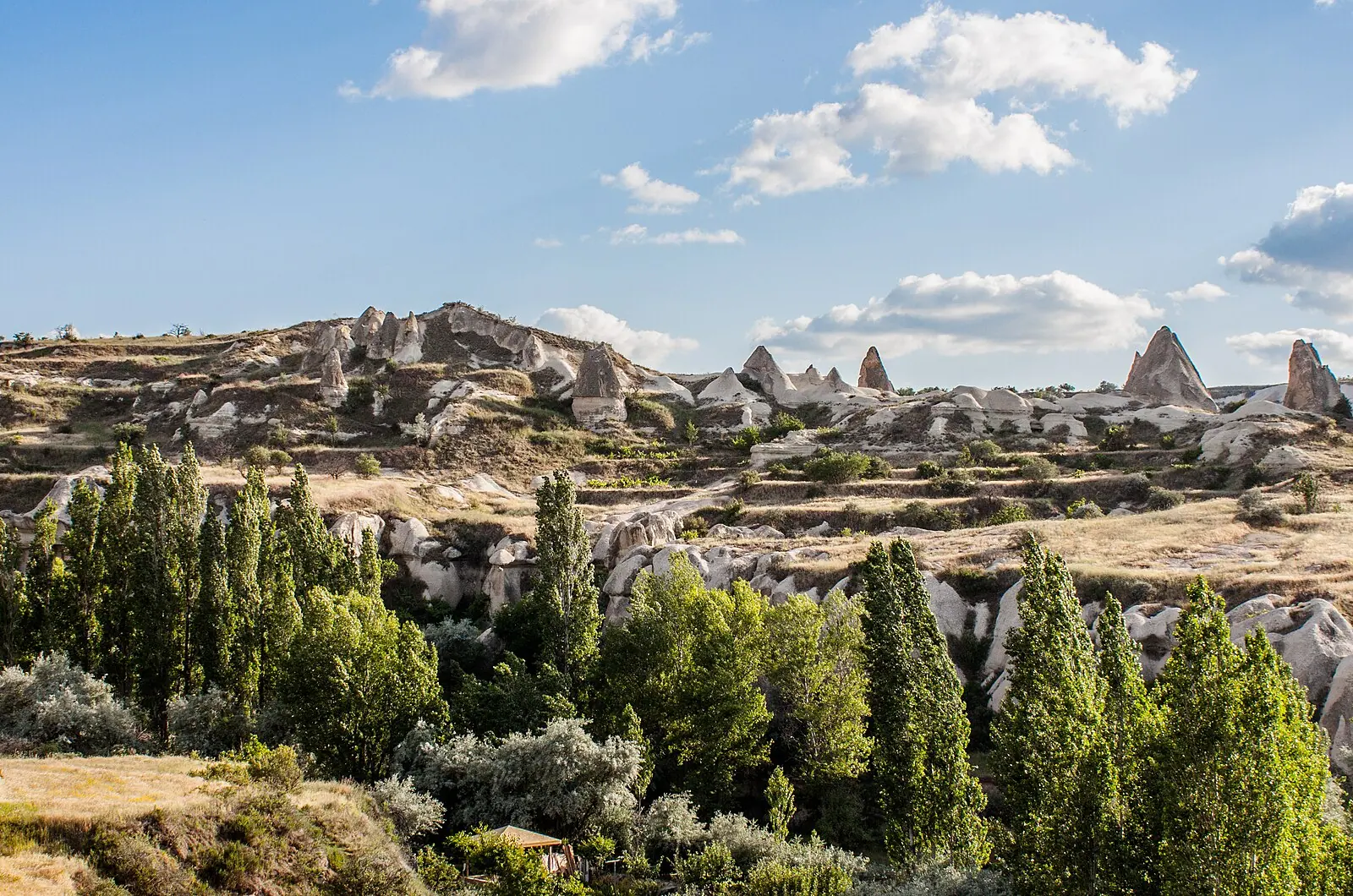
Autumn is arguably the finest season in the whole country, and nowhere more so than Cappadocia. The fairy chimneys around Göreme, the rock-cut churches of the Göreme Open-Air Museum, the fortress outcrop of Uçhisar Castle and the painted depths of the Derinkuyu and Kaymaklı underground cities all look their best in low, slanting light. Balloons lift off at sunrise year-round when winds allow, but September and October deliver the most reliable string of clear, calm mornings — and the flights last about an hour, drifting over the valleys before landing for a celebratory glass of something bubbly.
Cave hotels, cut into the soft tuff and often with terraces facing the balloons, are the signature stay here. They fill quickly for October, when the weather is dry, the days are around 20°C and the nights turn cool — reserve two to three months ahead if you want a room with a view over Göreme.
Autumn also transforms Istanbul, Ephesus and the Lycian Way. October is ideal for walking the coastal trail between Fethiye and Antalya, and for exploring Mount Nemrut, where colossal stone heads stare out over the Anti-Taurus range; the access road typically closes with the first heavy snow, usually sometime in November. On the south coast, September's sea is still bath-warm and the crowds have thinned noticeably.
December to February: City Breaks, Ski Slopes and Quiet Travertines
Winter is the season for Türkiye's cities and its mountains. Istanbul turns atmospheric rather than grim: the Grand Bazaar is warm and busy, the mosaics of the Chora Church glow in the low light, Dolmabahçe Palace shows off its Bosphorus frontage without queues, and a traditional hammam becomes the highlight of the day rather than an indulgence. Hotel rates drop to their lowest of the year outside the New Year period, and a room with a Bosphorus view suddenly becomes affordable.
For snow, head for the slopes above Bursa at Uludağ, the volcanic cone of Mount Erciyes above Kayseri, or the long runs at Palandöken near Erzurum. These are genuinely cold, well-equipped resorts with a strong domestic following, so weekend bookings matter. Elsewhere, the Anatolian plateau around Konya and the Mevlana Museum is at its most evocative in winter, and Cappadocia's off-season cave hotels offer bargain rates — with the trade-off of occasional cancelled balloon flights.
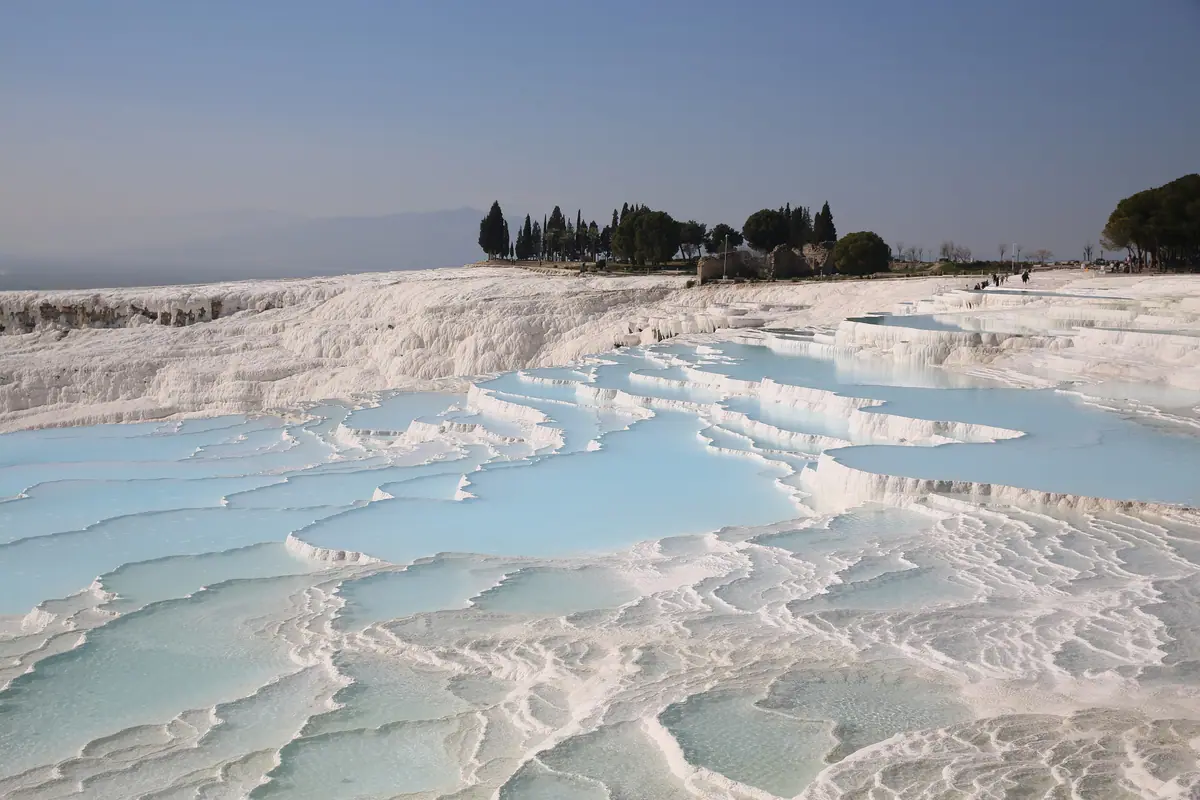
Along the Aegean and Mediterranean, most boutique coastal hotels in Bodrum, Çeşme and Ölüdeniz close from November until April, so check before booking. Antalya is the exception: its riviera stays mild enough for café lunches and long seaside walks even in January, and Pamukkale's terraces, fed by warm mineral springs, are blissfully empty and arguably more photogenic under winter light.
Frequently asked questions
What is the cheapest time of year to stay in a Türkiye hotel?
Late November, early December and the stretch from mid-January to mid-March are the cheapest months overall, especially for Istanbul city hotels and Cappadocia cave stays. Coastal resorts in Bodrum, Çeşme and Ölüdeniz largely shut from November to April, so cheap rooms there are rarely an option. Antalya and the surrounding riviera stay open year-round and offer the best-value winter beach-adjacent stays.
When is the best time to book a Cappadocia cave hotel for balloon season?
September and October are the most reliable months for calm, clear sunrise flights, with April to early June a close second. Cave hotels in Göreme, Uçhisar and Ürgüp with balloon-facing terraces sell out two to three months ahead for this window, so reserve early. Winter flights still operate when winds allow, but cancellations are more common and mornings are well below freezing.
How far ahead should I book hotels for Istanbul and the Aegean coast?
For April, May, September and October — the two golden windows — book Istanbul two to three months ahead and coastal boutiques by late winter. For July and August, seafront resorts from Bodrum to Alanya often require minimum stays and are best secured three to four months in advance. Outside peak periods, a few weeks' notice is usually enough.
Can I have a beach holiday in Türkiye in winter?
Yes, but only on the southern riviera. Antalya and its neighbours stay mild enough for seaside walks and outdoor lunches from December to February, though sea temperatures hover around 17–18°C, which is bracing rather than comfortable for most swimmers. The Aegean resorts and most Mediterranean boutique hotels further west close for the season.
Which month is best for combining Istanbul with ancient sites like Ephesus and Pamukkale?
May and October strike the best balance: comfortable temperatures for walking marble streets and terraces, thinner crowds than midsummer, and all hotels and restaurants open. October usually adds drier, more stable weather, while May brings wildflowers and greener countryside. Avoid July and August, when Ephesus and Pamukkale are at their hottest and busiest.
Sort the rest of your trip
Everything for Türkiye, in one place
Transfer in Türkiye
Private driver waiting on arrival — no queues, no surprises.
Book a transfer
Things to do in Türkiye
Skip-the-line tickets, guided tours and standout experiences.
See experiences
Stay online in Türkiye
Travel eSIM — data the moment you land, no roaming bills.
Get an eSIMMore guides in Türkiye
Best Things to Do in Türkiye: Top Places to Visit and Unmissable Experiences
Türkiye in One Week by Plane: Istanbul, Cappadocia, Ephesus and Antalya
A Food and Culture Tour of Türkiye: Markets, Mezze and Must-See Sights
Things to Do in Türkiye: Must-See Landmarks from Istanbul to Cappadocia
Hotels in Türkiye: Where to Stay in Istanbul, Cappadocia and on the Coast