South Korea rewards travellers who arrive hungry. Between the palace gates of Seoul and the charcoal grills of Jeju, eating, drinking and wandering are folded into one continuous experience — a market breakfast, a temple lunch in the mountains, a late-night bowl of noodles shared with strangers. This guide maps the food, culture and local experiences worth building a whole trip around.
Seoul: Palace Gates, Hanok Alleys and a First Proper Meal
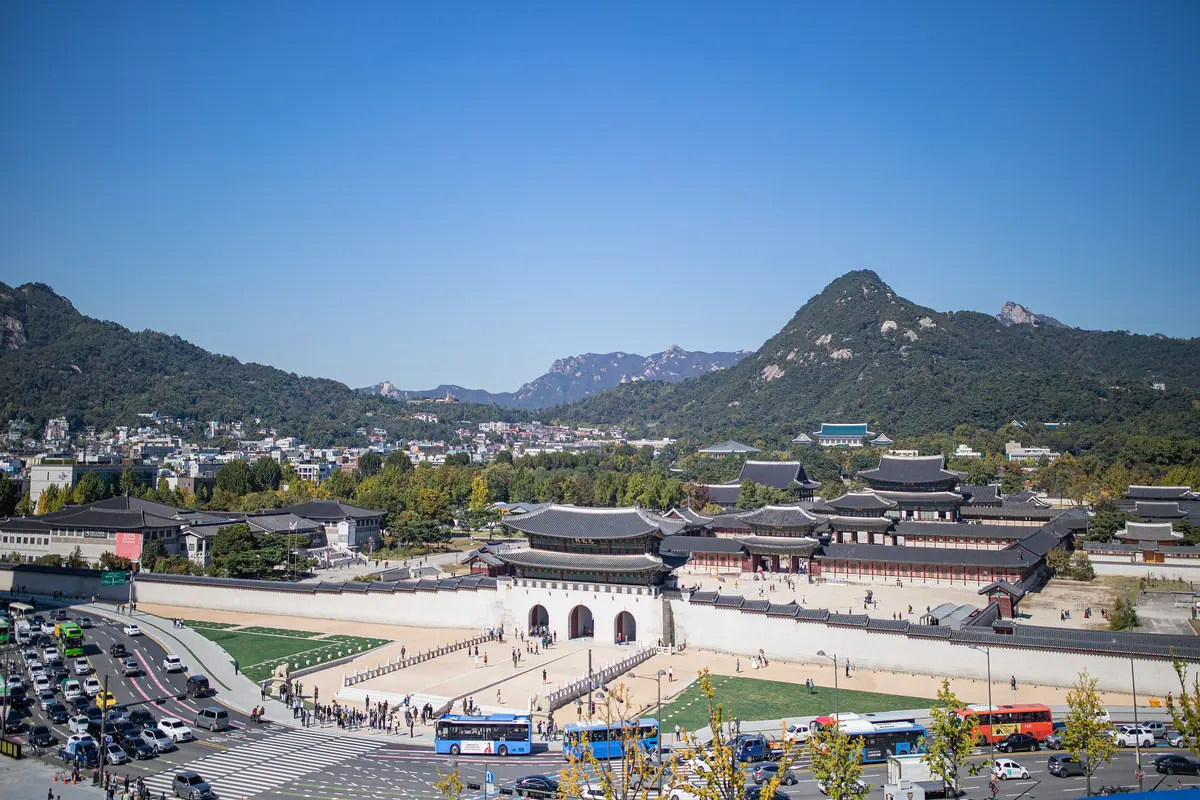
Begin where the city itself begins. Gyeongbokgung, the principal palace of the Joseon dynasty, throws its gates open at nine in the morning, and the changing of the royal guard — drums, painted banners, slow ceremonial marching — happens twice daily. Note that the palace closes on Tuesdays. Rent a hanbok from one of the shops lining the street opposite and admission is waived, which is why you will see crowds of visitors gliding past the throne hall in silk. From the rear gate it is a fifteen-minute walk to Bukchon Hanok Village, a hillside of tiled roofs and narrow lanes that is genuinely quiet only before nine, when the shutters are still down.
Stay in the neighbourhood for your first real meal. Hanjeongsik, the multi-course table once served at court, arrives as a slow parade of small dishes — braised short ribs, seasoned roots, grilled fish, cold jelly — and is best ordered at lunch when it is kinder to the wallet. Simpler and just as memorable is ginseng chicken soup, a whole young bird stuffed with glutinous rice, garlic and jujube and simmered in an earthenware pot until the broth turns milky.
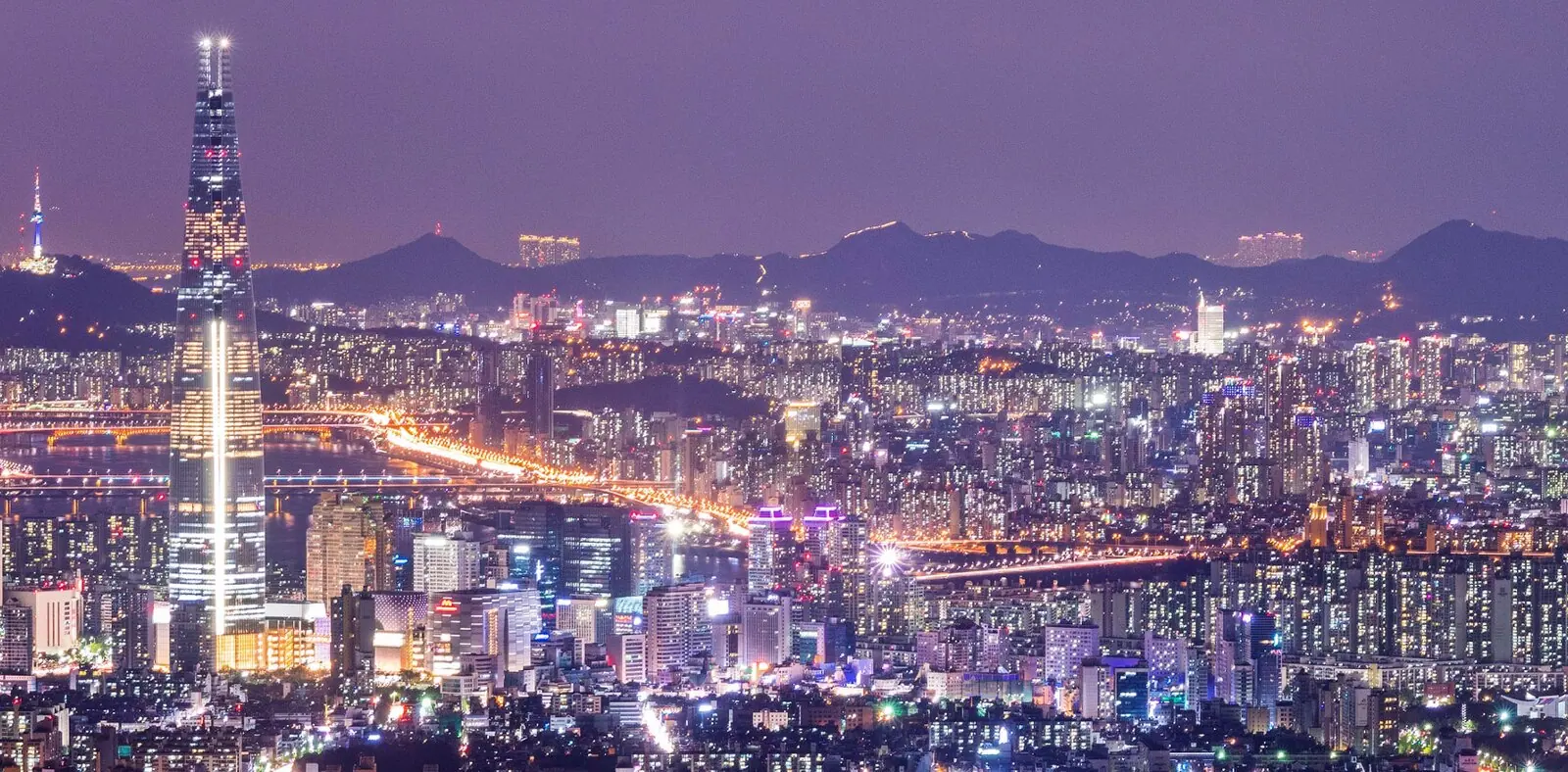
Come dusk, climb Namsan on foot or by cable car for the city skyline from N Seoul Tower, then drop into Insadong for tea in a converted hanok and a browse through the ceramics and paper shops. It is a gentle first day, and deliberately so: Seoul is a city you read slowly.
Gwangjang Market: Eating Standing Up in Korea's Oldest Market
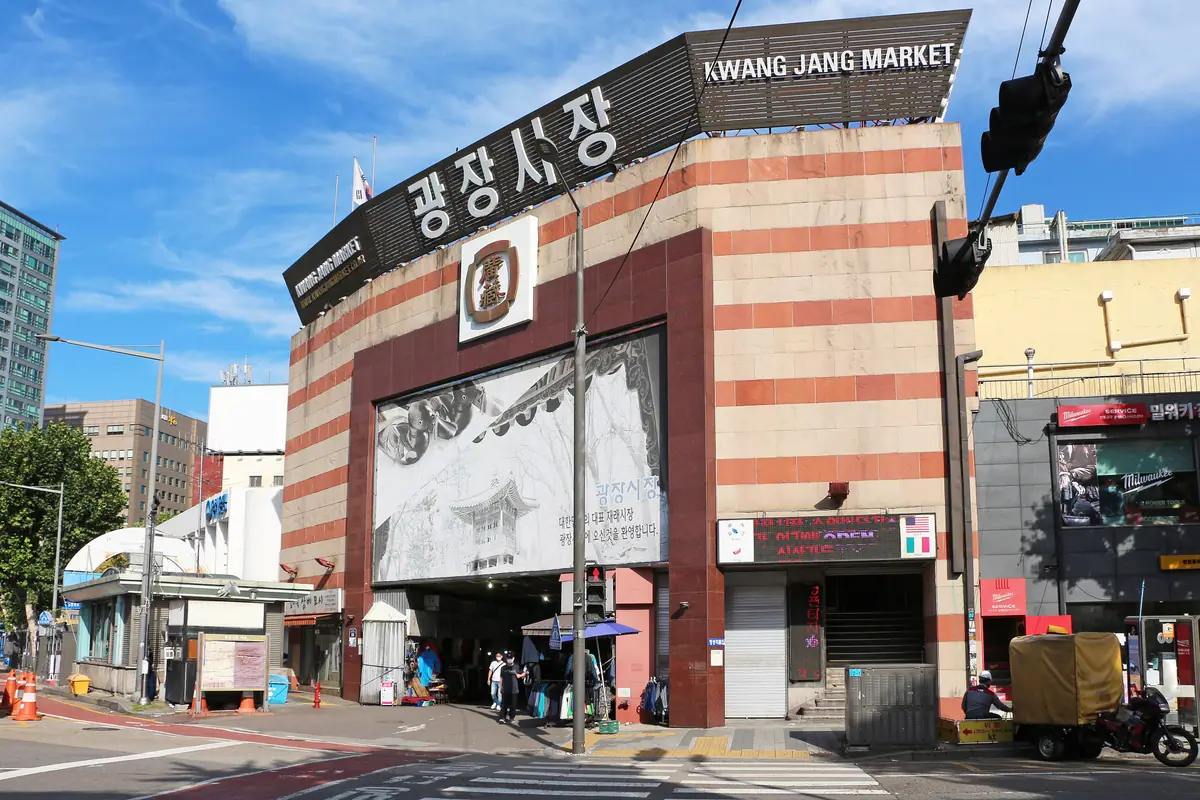
Gwangjang Market has been trading since 1905 and is the country's oldest permanent market, a warren of fabric stalls, vintage clothing and — increasingly — one of the best places in Asia to eat while standing up. The food aisles are the draw: mung-bean pancakes fried in oil until lacy and crisp, hand-rolled knife-cut noodles in anchovy broth, rice rolls the size of your thumb, blood sausage, raw beef with pear and sesame oil. You sit on a plastic stool at a communal counter, elbow to elbow with office workers and grandmothers, and order by pointing.
Timing matters more than most guides admit. Arrive between eleven and noon for the market at its calmest, or after seven in the evening when the soju bottles come out and the atmosphere turns festive. Small notes are useful for the older stalls, though most now take cards.
Pair the market with the other great grazing grounds. Myeongdong's pedestrian streets turn into a street-food carnival after dark — rice cakes in chilli sauce, sweet-filled pancakes, egg bread, skewered chicken — while Namdaemun Market is where locals go for dumplings, ginseng and kitchenware in the same afternoon. In every market, side dishes are refilled without charge, and a cheerful nod to the stallholder is worth more than a large tip.
Busan: Harbour Plates and a Hillside Painted in Pastels
High-speed rail links Seoul to Busan in about two and a half hours, and the change in flavour is immediate. Jagalchi is the country's largest seafood market: tanks and trays of flatfish, octopus, sea squirts and shellfish downstairs, then upstairs where your selection is sliced as raw fish with chilli paste, lettuce and perilla leaves, or grilled at the table. Sliced raw fish with a cold beer at sunset, with the harbour working below you, is the defining Busan meal.
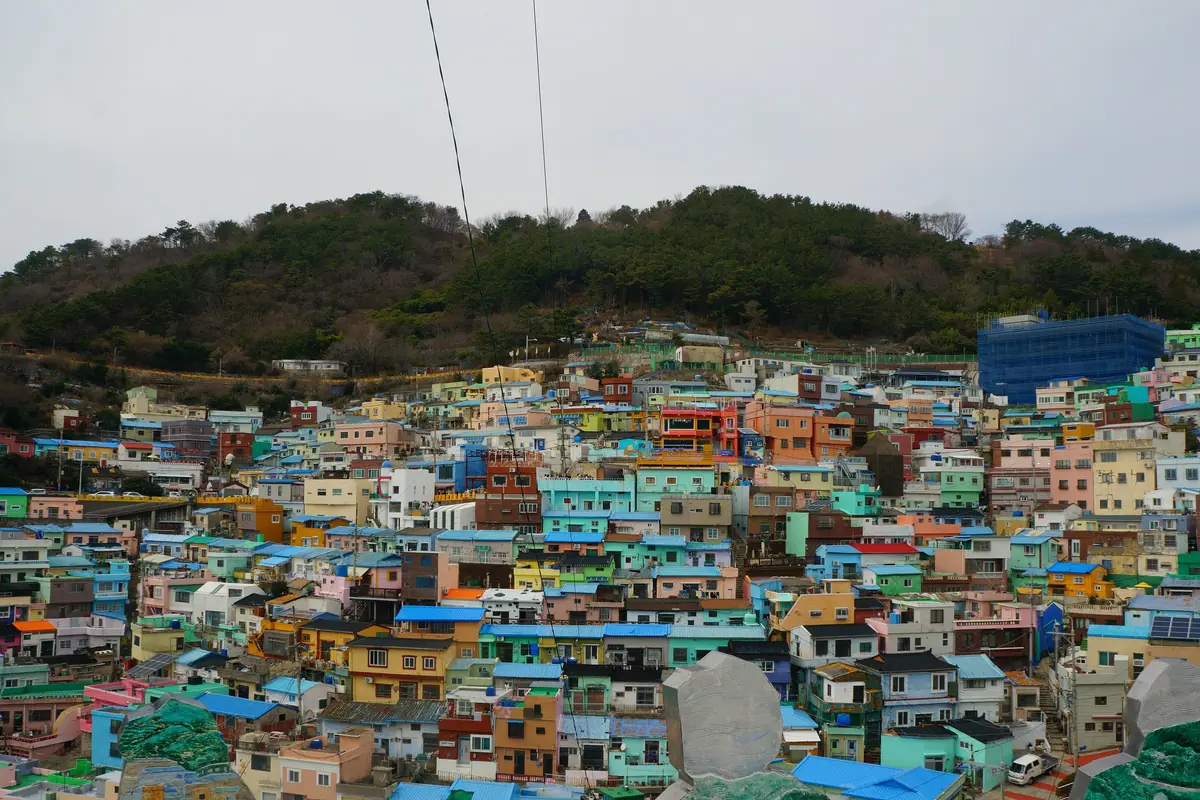
The city's second signature is a hillside. Gamcheon Culture Village was built by families who settled on the slopes during the post-war years, and it has since been repainted in blues, yellows and pinks, threaded with murals, tiny galleries and cafés occupying former houses. Go early, follow the stamp trail, and respect the fact that people still live there. Above the city, Beomeosa Temple offers a wooded escape and, in the surrounding hills, some superb mountain-vegetable cooking.
Eat locally between sights: dwaeji gukbap, a pork-and-rice soup eaten for breakfast with salt and chives on the side; milmyeon, cold wheat noodles in a chilled broth; and seed-filled hotteok from a street cart near Haeundae Beach. Finish with a walk along the beach promenade as the lights come on across the bay.
Jeju Island: Volcanic Soil, Sea Women and Charcoal-Grilled Black Pork
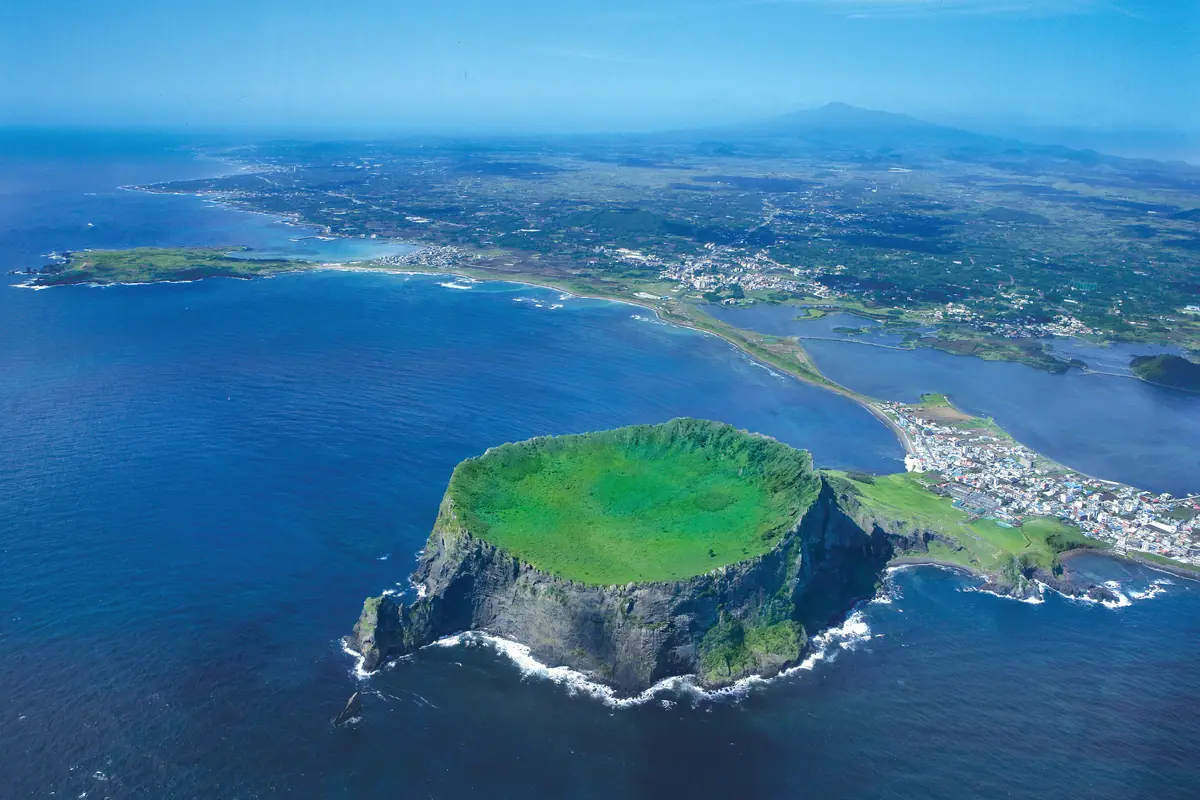
Jeju is a volcanic island with its own accent, its own citrus and its own rules about food. Rise before dawn to climb Seongsan Ilchulbong, a tuff cone rising 182 metres straight out of the sea; the paved path takes most people thirty to forty minutes, and the reward is sunrise over the crater rim. Down at the harbour, the haenyeo — Jeju's women free divers — still descend without tanks, some well into their seventies and eighties, to gather abalone, conch and sea urchin. Watch them surface, then eat what they caught: abalone porridge, sea urchin soup, sizzling shellfish at a waterfront table.
Inland, the island feeds you differently. Jeju black pork belly is grilled over charcoal and eaten wrapped in lettuce with salted shrimp and a strong soybean paste. Winter brings hallabong tangerines, sweet and almost seedless, sold by the crate at roadside stands; the volcanic soil also produces excellent green tea and camellia honey. Underground, Manjanggul is one of the longest lava tubes in the world, cool and echoing, with a stone column near the far end that looks sculpted but is entirely accidental.
Above it all stands Hallasan, the country's highest peak at 1,947 metres. The gentlest route to the summit takes eight to nine hours round trip and starts early; in winter you will need traction spikes. A rental car is by far the easiest way to move around the island, though buses connect the main towns.
Gyeongju and Andong: Where History Is Served on a Tray
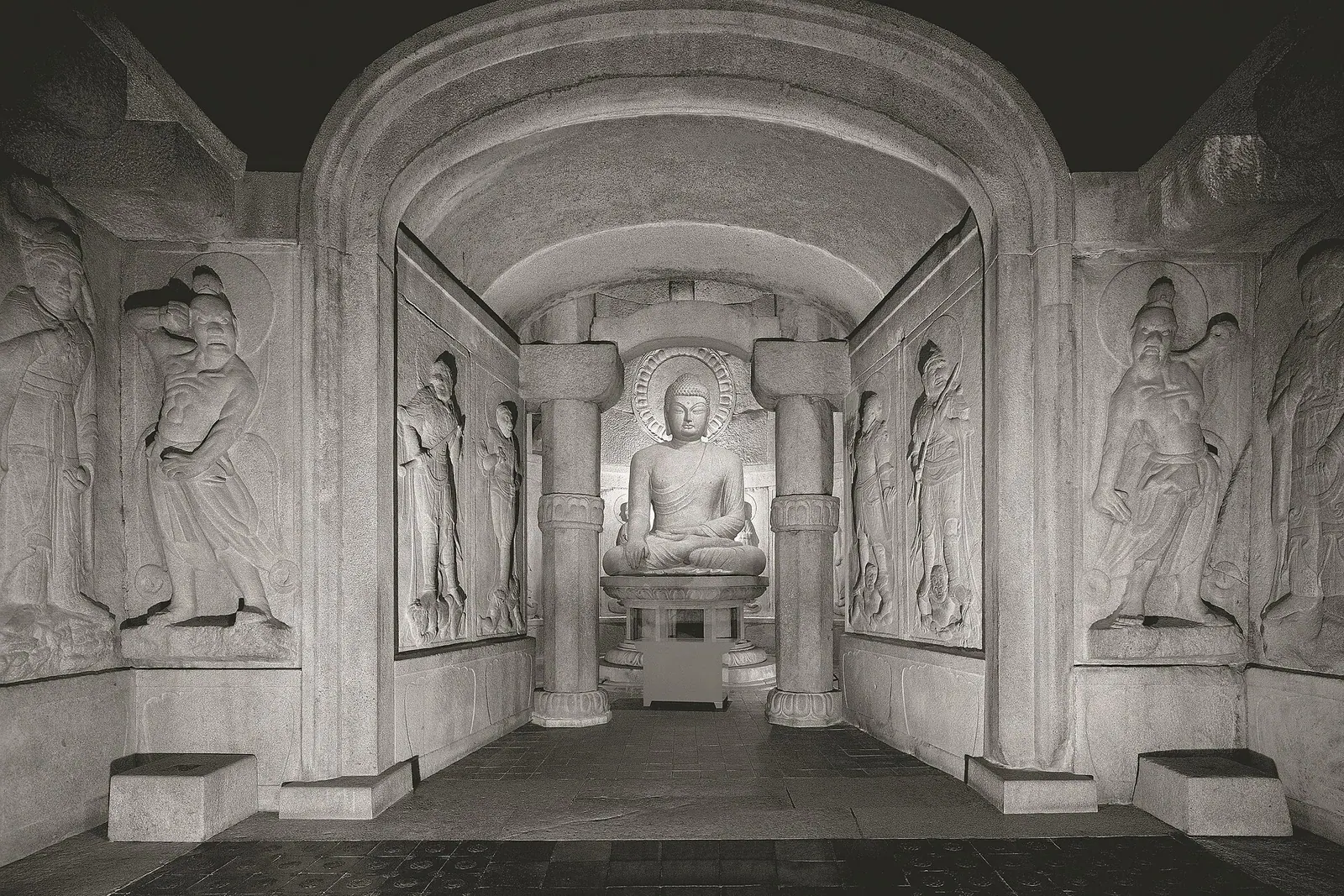
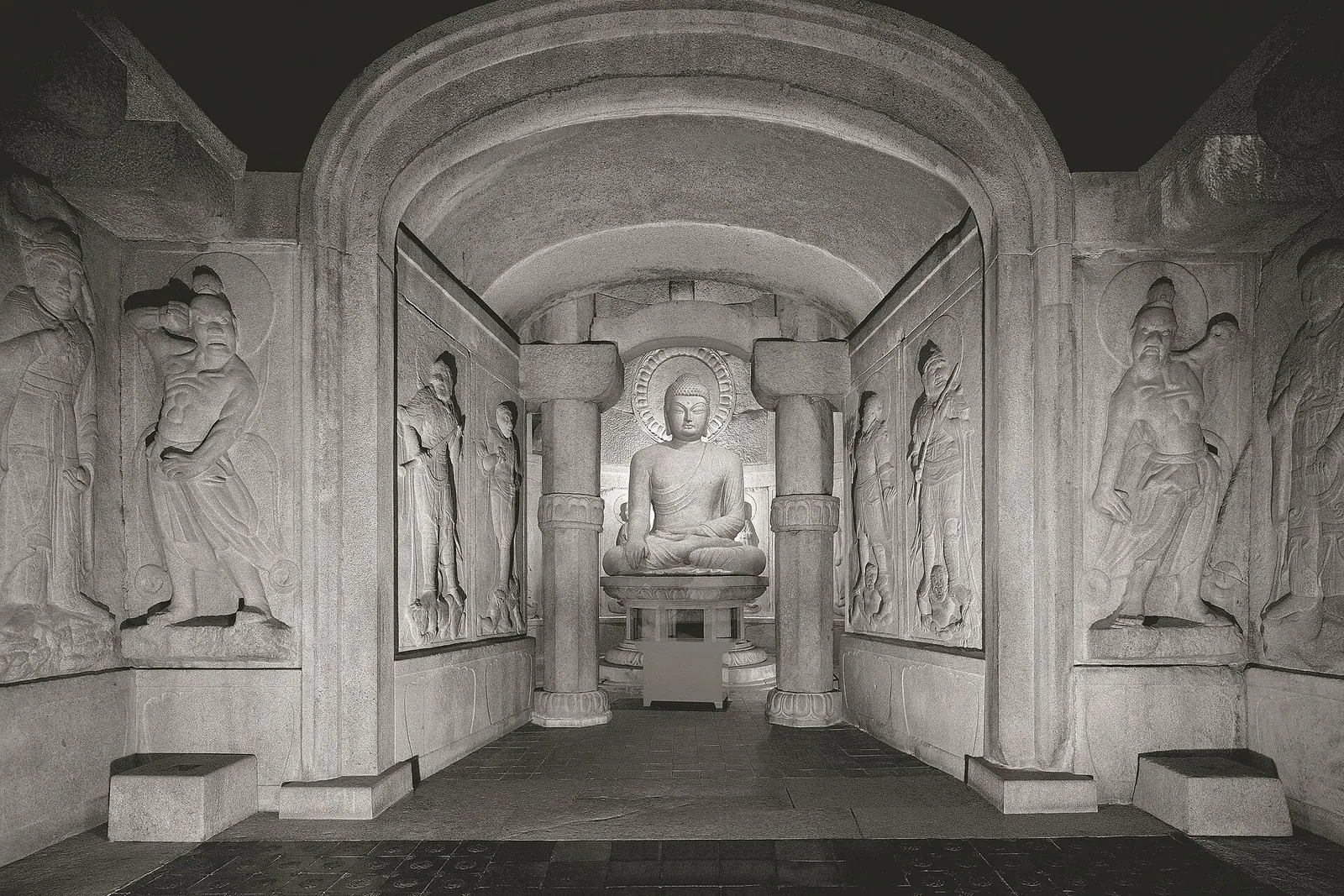
Gyeongju, capital of the Silla kingdom for nearly a thousand years, is often described as a museum without walls, and it earns the phrase. Daereungwon Tomb Complex is a park of grass-covered royal mounds; Cheomseongdae, built in the seventh century, is the oldest surviving astronomical observatory in the region; and Donggung Palace with its Wolji Pond is at its best after dark, when the pavilions and their reflections are lit against the water. In the hills above town, Bulguksa Temple and the granite Seokguram Grotto — a serene stone Buddha gazing out over the coast — make a half-day trip. Refuel on hwangnamppang, a small sweet bread filled with red bean paste, sold warm from the oven on Hwangnidan-gil, the street of cafés and craft shops near the tombs.
Andong, two hours north, is the country's Confucian heartland. Hahoe Folk Village preserves tiled and thatched houses still occupied by the same families, with mask-dance performances staged in the village amphitheatre and a cliff-top view over the river bend from Buyongdae; the nearby Byeongsan Seowon academy is a study in quiet wooden restraint. The town's signature dish is Andong jjimdak, braised chicken with glass noodles, potatoes and a soy-based sauce that is sweeter than you expect, best washed down with the local soju.
Add Jeonju if time allows. Its hanok village holds several hundred traditional houses and claims to be the home of bibimbap, the rice bowl arranged with vegetables, beef and egg and stirred together at the table — followed by a bowl of rice wine in a nearby brewery.
A Year at the Korean Table: Seasons, Festivals and What to Eat When
Spring arrives in early April with cherry blossoms, and one of the finest displays is at Jinhae, where the tracks around Gyeonghwa Station disappear under a canopy of petals during the town's annual festival. In the tea hills of Boseong, the terraced rows of Daehan Dawon turn emerald as the first flush is picked in May. Spring cooking is green and herbal: wild mountain vegetables blanched and dressed with sesame, and azalea rice cakes cooked on a griddle with fresh petals.
Summer is hot, humid and unapologetically food-focused. On the three hottest days of the year, Koreans queue for samgyetang — ginseng chicken soup — on the theory that heat should be fought with heat. Cold buckwheat noodles and shaved-ice desserts piled with fruit and red beans do the opposite. The monsoon runs from late June into July, and typhoons can brush the south coast in late summer, so build indoor days into your plan.
Autumn is the country's finest season: clear skies, chestnuts, persimmons, and crowds heading for the ridges of Seoraksan as the maples turn. Late autumn is also kimjang time, when families gather to make a year's supply of kimchi, and some guesthouses and rural villages invite visitors to join. Winter brings hotteok and fish cakes from street carts, and tteokguk, a rice-cake soup eaten at Seollal. Be aware that during Seollal and Chuseok — the two biggest holidays — many shops and restaurants close and intercity transport sells out weeks in advance.
Frequently asked questions
How many days do I need to see South Korea properly?
Ten days is a comfortable introduction: three or four in Seoul, two in Busan, two or three on Jeju, and a day or two in Gyeongju or Andong. High-speed rail makes Seoul to Busan about two and a half hours, and short domestic flights or a ferry connect the mainland to Jeju. If you only have a week, choose Seoul plus either Busan or Jeju rather than trying to do everything.
When is the best time to visit South Korea?
Mid-April to May and October to early November offer the best combination of weather and scenery — cherry blossoms or autumn foliage, mild temperatures and clear skies. July and August are hot, humid and rainy, with typhoons possible on the south coast. Winter is dry and cold, often well below freezing inland, though Jeju stays noticeably milder.
What are the key dining etiquette rules?
Take your shoes off at the door of a hanok restaurant or a home. Wait for the eldest at the table to lift their chopsticks before you start. Pour drinks for others with both hands and receive them the same way, turning slightly away when you sip. Never stand chopsticks upright in a bowl of rice, and don't be shy about refilling shared side dishes — they are usually free.
Can I travel around South Korea without speaking Korean?
Yes, though it gets easier in cities. Seoul and Busan have romanised signage, picture menus and English on most transport routes. Rural areas such as Andong, Boseong and parts of Jeju rely far more on Korean, so a translation app, a few phrases — hello, thank you, please give me this — and screenshots of your destination in Korean will carry you a long way.
Is South Korea difficult for vegetarians?
It takes planning. Kimchi and many side dishes contain fish sauce or dried shrimp, and soups are frequently built on anchovy or beef stock. Temple restaurants, which serve entirely plant-based meals, are the easiest solution, along with bibimbap ordered without beef and egg. Writing your requirements in Korean on your phone and showing it at the counter works far better than explaining in English.
Plan it — tours in South Korea
Live search, booked directly with trusted providers.
Sort the rest of your trip
Everything for South Korea, in one place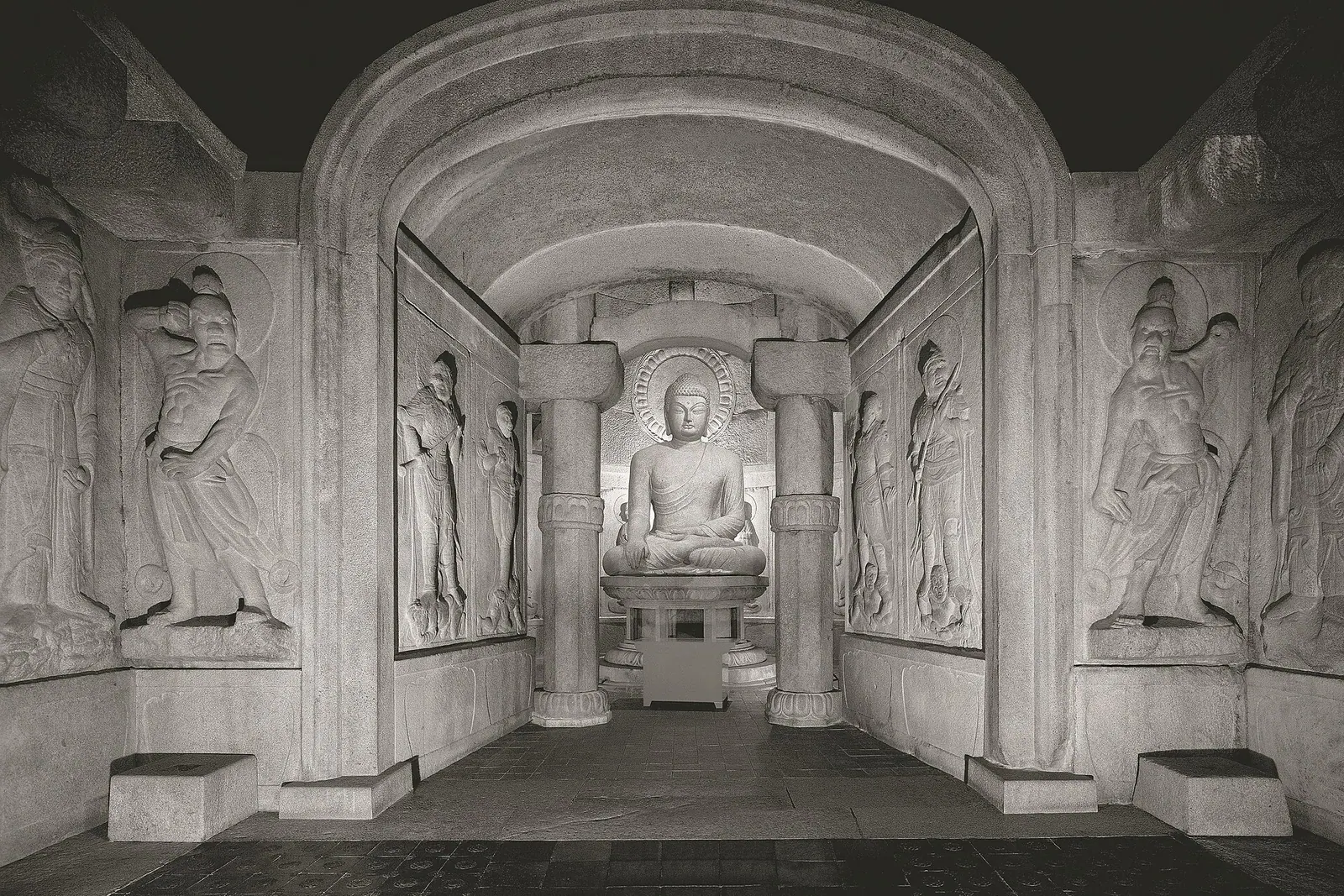
Stay in South Korea
Hotels, guesthouses and apartments — compared in one search.
Search hotels
Transfer in South Korea
Private driver waiting on arrival — no queues, no surprises.
Book a transfer
Stay online in South Korea
Travel eSIM — data the moment you land, no roaming bills.
Get an eSIM