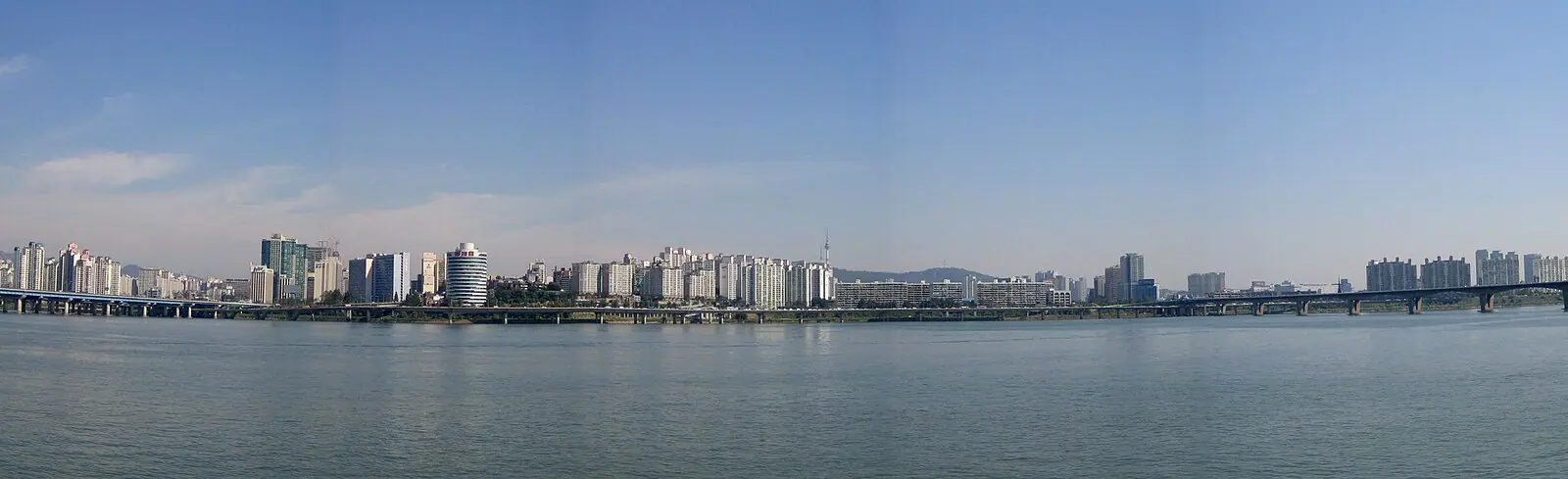
South Korea compresses an extraordinary amount into a country you can cross by train in half a day: dynastic palaces in the middle of a hyper-modern capital, burial mounds scattered across a former Silla capital, and a volcanic island where the highest mountain in the country rises straight out of the sea. Whether you have a week or a month, the trick is knowing which places deserve your slow days and which ones reward a quick, early-morning visit.
Seoul: Palaces, Hanok Lanes and a Ridge of City Lights
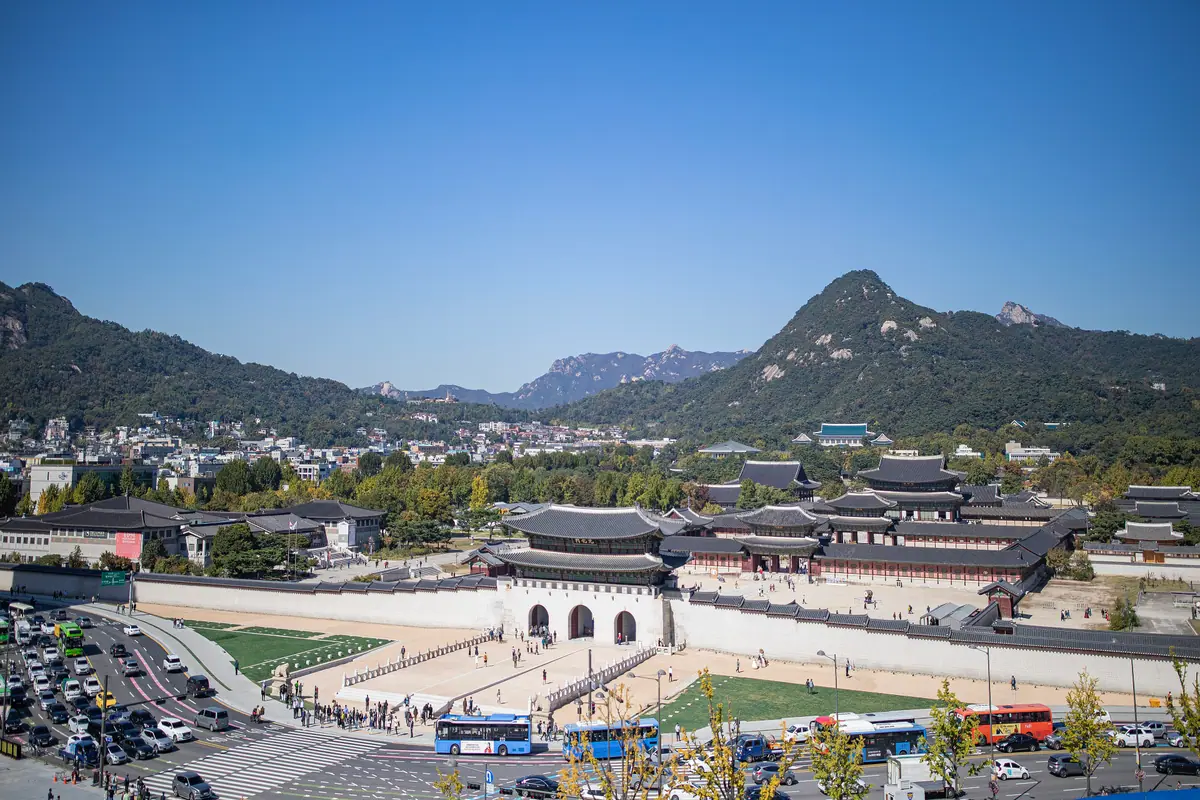
Start at Gyeongbokgung Palace, the largest of the Joseon royal compounds and the anchor of central Seoul. Arrive for the changing of the royal guard, staged a couple of times each morning outside the main gate, then wander the throne halls and pavilions — the grounds close on Tuesdays, so plan around that. If you rent a hanbok from one of the many shops nearby, admission to the palace is waived, and the effect of walking through the courtyards in period dress is genuinely worth the small hassle.
Walk east to Changdeokgung, the most graceful of the palaces, and its rear Secret Garden, entered only on timed guided walks that sell out fast during the October and November foliage peak. Below it, Bukchon Hanok Village's steep alleys of tiled-roof houses are at their best before 9am, when the tour groups have not yet arrived; by midday you are squeezing past selfie sticks. Nearby Insadong is the place for tea houses, handmade paper and ceramics, and Ikseon-dong's narrow grid hides cafés in converted courtyard homes.
For the evening, ride the cable car or walk the wooded trail up Namsan to N Seoul Tower for the classic view over the Han River, or head to Gwangjang Market, where vendors fry mung-bean pancakes and hand out seaweed rice rolls at crowded communal tables. End along the sunken Cheonggyecheon stream, which is lit and pleasantly cool after dark, or cross to Hongdae for busking and late-night bars.
Gyeongju and Andong: Korea's Open-Air Museum
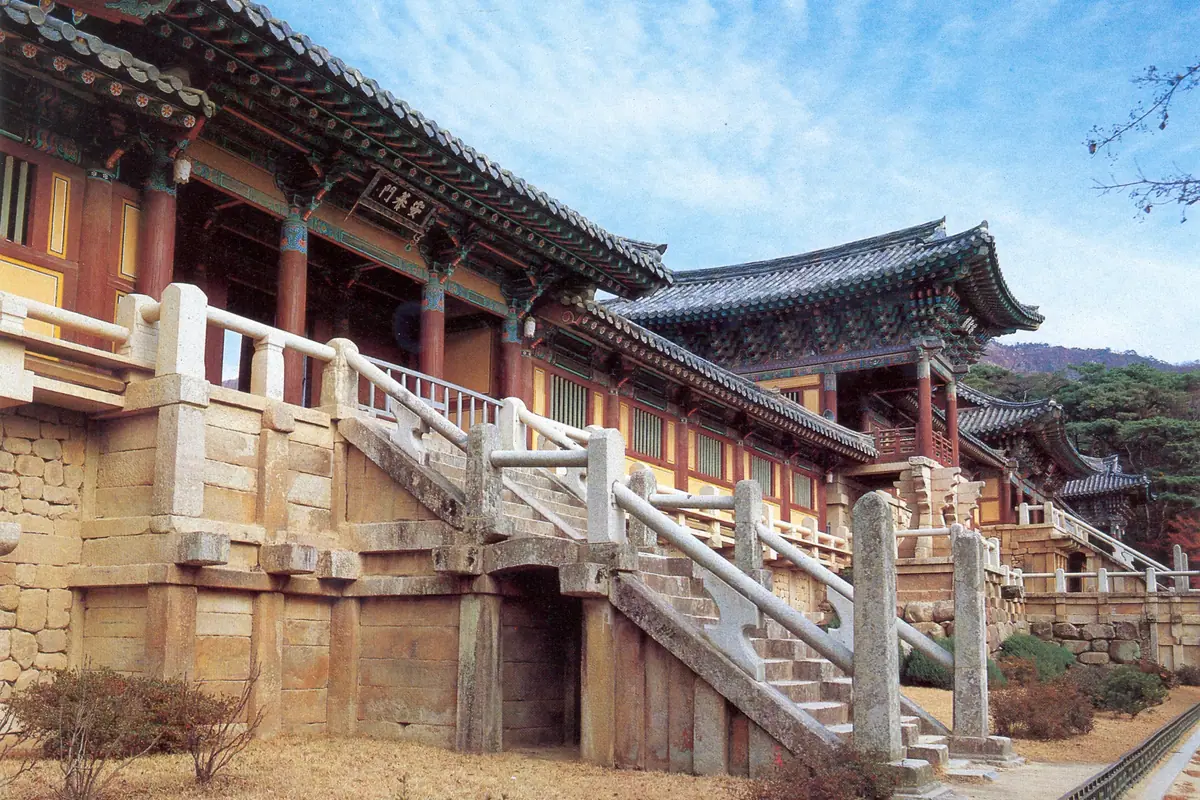
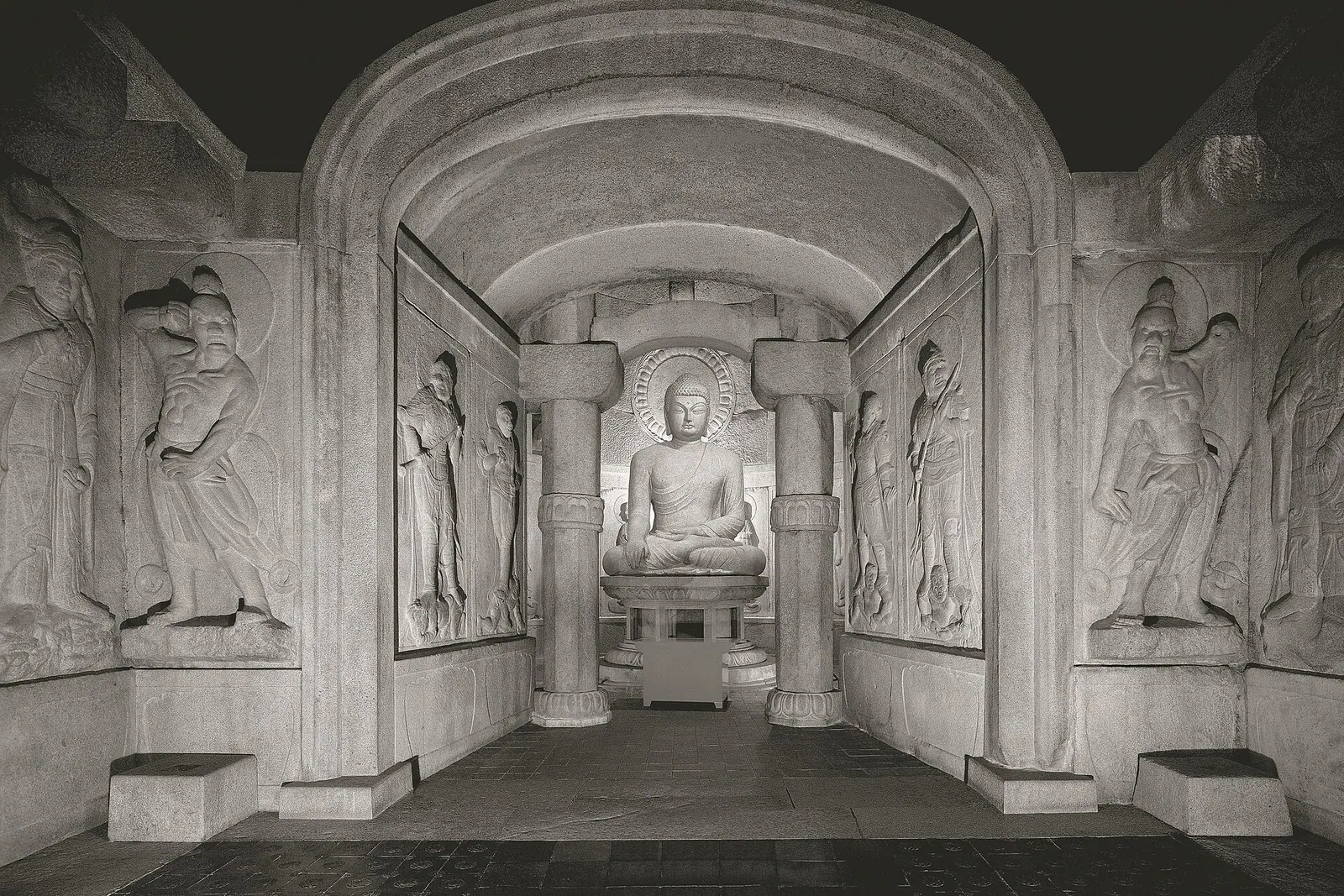
Gyeongju was the capital of the Silla kingdom for nearly a thousand years, and the entire basin feels like an archaeological site. Bulguksa Temple, a heritage-listed complex of stone terraces and painted wooden halls, is the headline act; a short uphill drive or a steep forty-minute walk above it brings you to Seokguram Grotto, a granite sanctuary with a serene Buddha gazing out to sea. Go to the grotto at opening time, since the small chamber becomes crowded and humid later in the day.
Back in town, the Daereungwon Tomb Complex is a park of grassy mounds the size of small hills, one of which you can enter to see a reconstructed royal burial chamber. Cheomseongdae, a seventh-century stone observatory, stands a short walk away, and Donggung Palace and Wolji Pond is the place to finish: the pavilions reflect in the water under floodlights from dusk until about 10pm. The whole historic core is flat and made for bicycles, which you can rent near the bus or rail station; a day and a half covers the essentials comfortably.
Pair the region with Andong, two hours north, where Hahoe Folk Village preserves a working clan community of tiled and thatched houses inside a bend of the Nakdong River. The village's mask dance tradition comes alive at the Andong Mask Dance Festival in late September and early October, and the local braised chicken with glass noodles, jjimdak, is the dish to order afterwards.
Jeju Island: Volcanoes, Lava Tubes and Black-Rock Coast
Jeju is a volcanic island off the southern coast, and its centrepiece is Hallasan, the country's highest peak. Two main trails lead to the summit crater lake — figure on a full day, eight to ten hours round trip, with an early start since upper sections close in the afternoon. If you are not chasing the summit, the lower forest trails and the Gwaneumsa valley are rewarding on their own, especially in May when the azaleas and royal azaleas bloom.
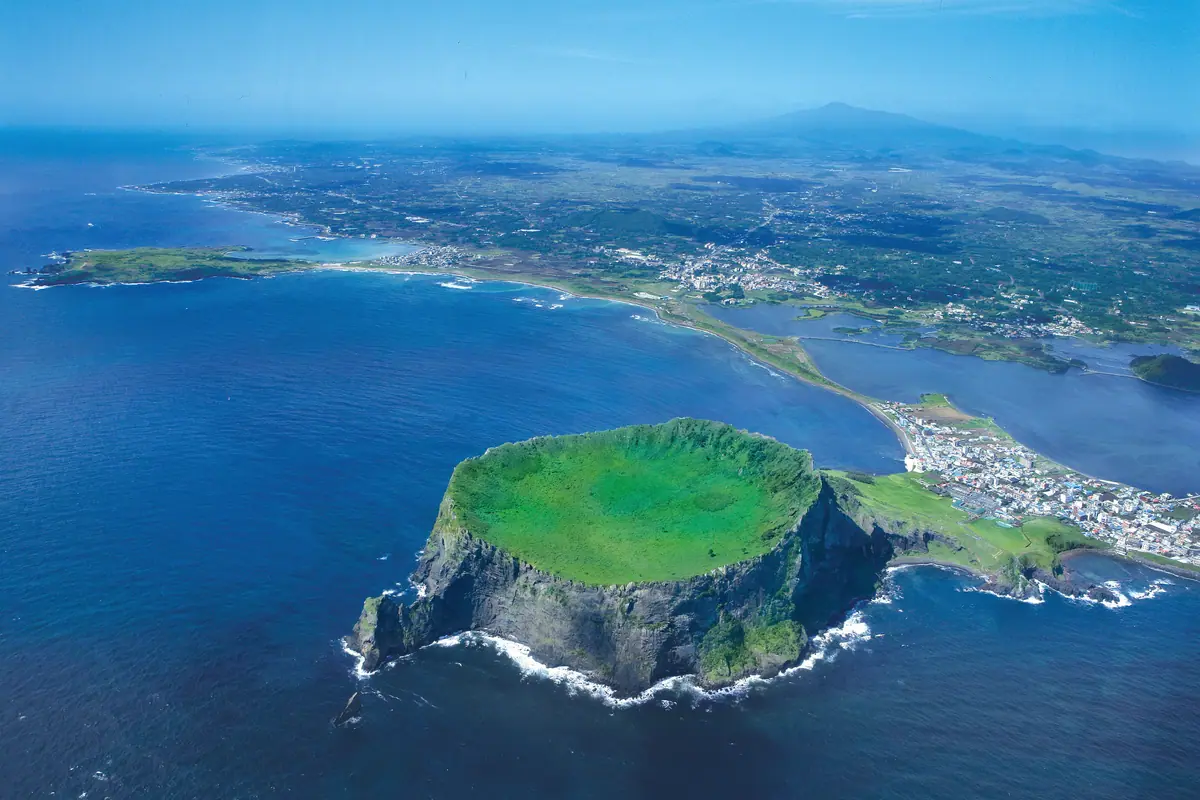
On the east coast, Seongsan Ilchulbong is a tuff cone rising about 180 metres straight from the water; the climb is a brisk 25 to 30 minutes up stone steps, and people time it for sunrise, which means a very early taxi. Inland, Manjanggul Lava Tube lets you walk roughly a kilometre through a cool, dim tunnel of hardened lava — the interior stays chilly year-round, so bring a layer even in August. Waterfalls at Cheonjiyeon and Cheonjeyeon, the black-rock beaches of the south, and the small island of Udo, reached by a short ferry and best explored by rented scooter or bicycle, fill out the rest.
Jeju is also where you eat: black pork belly grilled at the table, seafood stews, and hallabong tangerines in winter. The island's long-distance walking routes, the Olle trails, are an excellent way to see the coast in short, signposted stages — pick a section rather than attempting the whole network, and note that spring and autumn are far more comfortable than the humid, typhoon-prone stretch from late August into September.
Busan and the Southern Coast
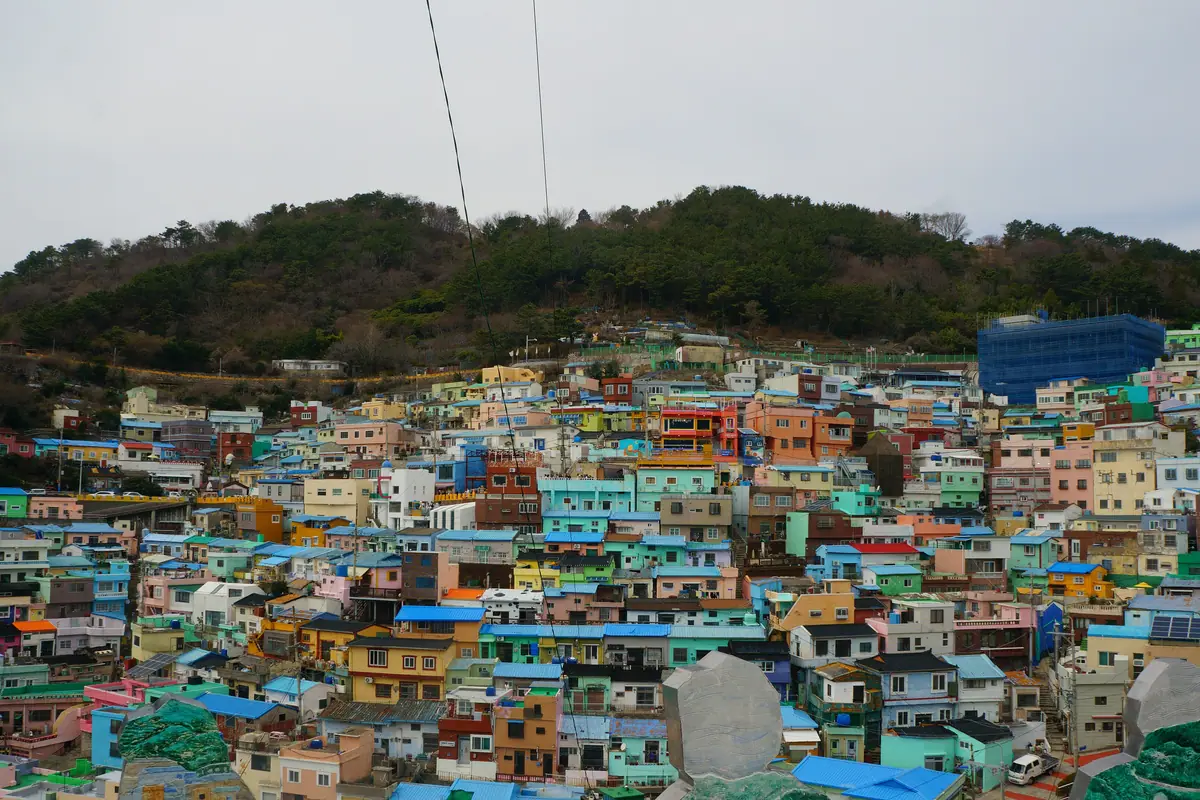
Busan is South Korea's second city and its most cinematic. Gamcheon Culture Village cascades down a hillside in pastel-painted houses linked by stairways and murals; go early, as the lanes are narrow and the light is better before noon. Below it, Jagalchi Fish Market is a sprawling indoor and outdoor bazaar where you can pick a fish downstairs and have it sliced as raw hoe upstairs. Haeundae Beach and the neighbouring Dalmaji hill give you the brash seaside version of the city, and the cliffs of Haedong Yonggungsa Temple, with waves crashing beneath the prayer hall, are a short bus ride away.
Give yourself a temple night at Beomeosa, tucked into the mountains on the city's northern edge; many temples in the country run overnight stays with a 4am bell, meditation sessions and vegetarian meals, and this is one of the most accessible. Gwangalli Beach faces the illuminated Gwangan Bridge, a fine place for a late drink, and the Songdo marine cable car and skywalk add a breezy coastal hour. If your timing is lucky, the city's international film festival fills cinemas and streets in early October.
Continue west along the south coast for a slower rhythm: Yeosu's waterfront cable car and night sea views, the reed beds of Suncheon Bay, which turn gold in November, and the terraced tea fields of Boseong, vivid green in late spring. Buses connect these towns, but a car makes the smaller coastal stops far easier.
Mountains, Foliage and Seasonal Spectacles
Seoraksan National Park, near the east coast, is the country's most dramatic mountain scenery. The hike to Ulsanbawi, a jagged granite fin reached by 808 stone steps, takes around four hours round trip and is steep enough to feel earned. Autumn colour peaks here from late September into mid-October and the park becomes genuinely busy, so start before 7am; a cable car offers a gentler route to the Gwongeumseong ridge if you would rather not climb. Winter turns the same valleys into a landscape of frozen waterfalls and frosted pines.
Elsewhere, Jirisan offers the country's longest ridge walks for serious hikers, Naejangsan draws crowds through a tunnel of maples in early November, and the bamboo groves and tree-lined roads around Damyang make an easy day trip from the south-west. Cherry blossom season arrives in the first week of April in the south — Jinhae's festival is the most famous — and reaches Seoul's Yeouido and Seokchon Lake about a week later. In deep winter, the mountains of Gangwon province turn to ski slopes, and January ice-fishing festivals on frozen lakes draw families from across the country.
What ties these places together is timing. Korea's monsoon runs from late June to mid-July and brings heavy, persistent rain; midsummer is hot and humid everywhere except the high mountains. Your best windows are April to May and late September to November, and if your trip collides with the Lunar New Year or the autumn harvest holiday, book long-distance rail seats and accommodation well in advance, because the whole country travels at once.
Food, Bathhouses and Getting Around
Food is the thread that runs through every itinerary. Jeonju, west of the mountains, is the公认 home of bibimbap, served in a hot stone bowl with a spread of side dishes; Jeonju's hanok village is a pleasant base for it. In Seoul, market meals are the best value and the most fun — trade small coins for lunch at Tongin Market, or join the queues for pancakes and hand-rolled noodles at Gwangjang Market. Grill-your-own pork and beef is a group activity best done with locals, and cold buckwheat noodles or spicy stir-fried chicken are the staples to know by name.
Rituals matter too. A jjimjilbang, the Korean bathhouse and sauna complex, is open around the clock, costs little, and doubles as a place to soak, sweat, sleep on a heated floor and reset after a long flight. Temple stays offer a quieter version of the same pause. Etiquette is simple: remove shoes in homes and many traditional restaurants, use both hands when giving or receiving something, and leave no tip — service is included everywhere.
Getting around is straightforward. High-speed rail links Seoul to Busan in about two and a half hours and reaches Gyeongju, Jeonju and Yeosu on branch lines; a rechargeable transit card works on metros, buses and many taxis in most cities. Long-distance buses fill the gaps to smaller towns and national parks. Seoul's metro is bilingual and easy, but rural bus timetables thin out in the evening, so check return times before you set off on a hike. Download offline maps before you arrive, as some international mapping services give patchy walking directions here.
Frequently asked questions
How many days do I need for a first trip to South Korea?
Ten days is a comfortable minimum. Spend three or four nights in Seoul for the palaces, Bukchon and the markets, one or two in Gyeongju for Bulguksa and the tomb park, two in Busan, and two or three on Jeju if you want to hike Hallasan or catch sunrise at Seongsan Ilchulbong. Two weeks lets you add Seoraksan, Andong and the south coast without rushing.
When is the best time of year to visit South Korea?
April to May and late September to November offer the most reliable weather. Cherry blossoms arrive in the south in early April and in Seoul about a week later; autumn foliage peaks at Seoraksan in late September to mid-October and at Naejangsan in early November. Avoid the monsoon from late June to mid-July, and book early if you travel during the Lunar New Year or the autumn harvest holiday.
Do I need to speak Korean or rent a car?
No for Korean, and mostly no for a car. High-speed rail, buses and city metros reach nearly every major sight, and Seoul and Busan have good English signage on transport. A car genuinely helps on Jeju, in Andong and along the south coast, and you need an international driving permit if you want to rent a scooter on Udo or elsewhere. Rural buses often stop running by early evening, so plan around them.
What are the absolute must-see sights on a first visit?
Gyeongbokgung and Changdeokgung palaces with Bukchon Hanok Village in Seoul; Bulguksa Temple, Seokguram Grotto and the illuminated Donggung Palace and Wolji Pond in Gyeongju; Gamcheon Culture Village and Jagalchi Fish Market in Busan; and Seongsan Ilchulbong at sunrise plus Manjanggul Lava Tube on Jeju. Add one mountain — Seoraksan's Ulsanbawi is the most spectacular short hike.
What should I pack, and are the hikes difficult?
Bring broken-in trail shoes, layers, and a rain shell if you travel between June and September. Korean mountain trails are well marked and often stepped, but steep: Ulsanbawi's 808 stairs and Hallasan's summit route are full-day efforts for average fitness. Jeju's lava tube stays cold year-round, so carry a light jacket even in summer, and note that palace grounds, temples and bathhouses all have their own shoe and clothing customs.
Plan it — experiences in South Korea
Live search, booked directly with trusted providers.
Sort the rest of your trip
Everything for South Korea, in one place
Stay in South Korea
Hotels, guesthouses and apartments — compared in one search.
Search hotels
Transfer in South Korea
Private driver waiting on arrival — no queues, no surprises.
Book a transfer
Stay online in South Korea
Travel eSIM — data the moment you land, no roaming bills.
Get an eSIMMore guides in South Korea
Where to Stay in South Korea: Top Cities, Neighborhoods and Must-See Attractions
Best Time to Visit South Korea for Hotels: A Season-by-Season Guide
South Korea Food and Culture Guide: Markets, Hanok Villages and Must-See Sights
Top Things to Do in South Korea: Palaces, Peaks and Coastal Cities
Best Time to Visit Seoul for Hotels: A Season-by-Season Guide