Eritrea arrives in layers: a highland capital of palm-lined boulevards and streamlined 1930s facades, then a plunge of more than two thousand metres to a coral-blocked Red Sea port where the air smells of salt and cardamom. Between them lie camel markets, cliff monasteries and a coffee ritual so unhurried it can swallow an afternoon — and you will be glad it did.
Asmara: A Modernist Capital Made for Walking
Most journeys begin in Asmara, a city sitting at roughly 2,300 metres, where the thin air makes the first day feel pleasantly dreamlike and the evenings genuinely cold. The spine of the city is Harnet Avenue — Liberation Avenue to everyone local — a long, palm-shaded promenade that fills at dusk with families, students and couples strolling past gelato counters and old-fashioned cafés. Give yourself two unhurried days here before thinking about anywhere else.
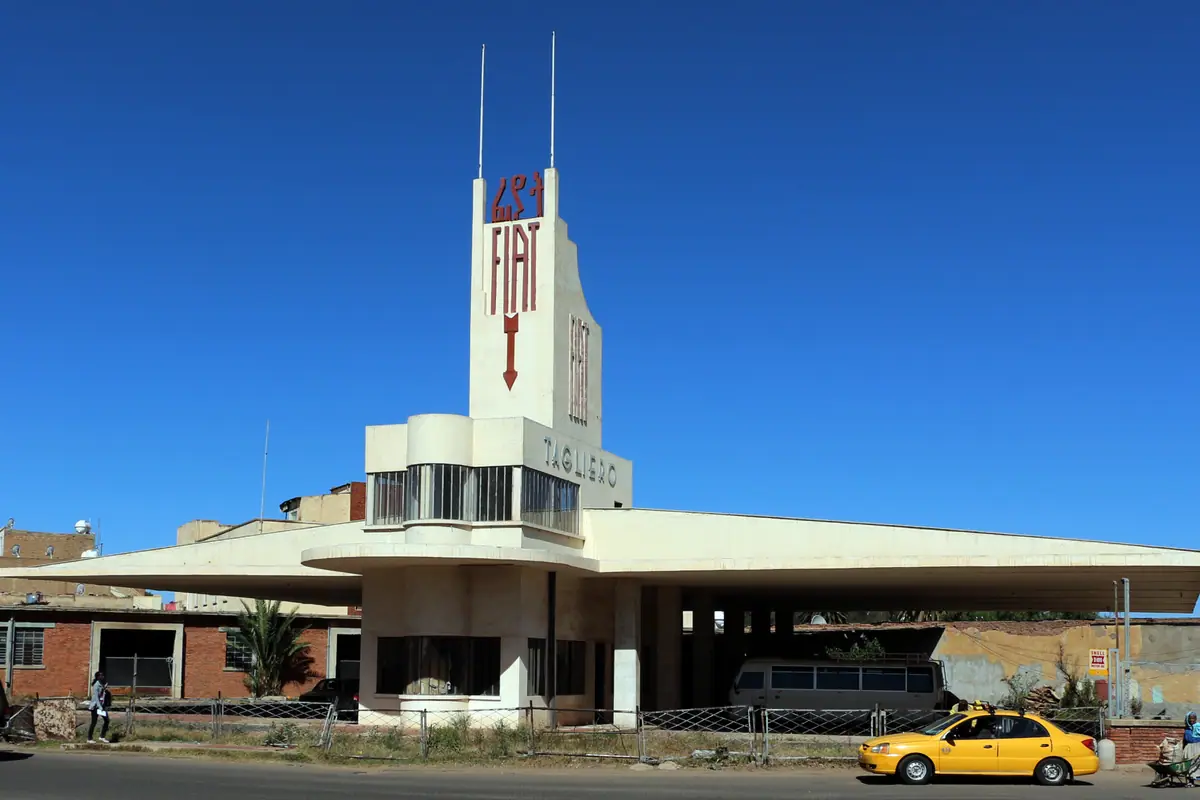
The architecture is the reason travellers come, and it never lets up. The Fiat Tagliero, a 1938 service station shaped like a plane with thirty-metre cantilevered wings, is the city's showstopper, still standing on its corner as if about to taxi down the road. Nearby, Cinema Impero and Cinema Roma keep their curved balconies, neon lettering and rattan seats from the same era, and screenings still happen. Along the same stretch you pass the twin towers of Enda Mariam Cathedral and the striped minaret of the Al Khulafa Al Rashedin Mosque, an easy five-minute walk apart — a good shorthand for how this city has always mixed Orthodox, Catholic and Muslim life.
For a sense of daily commerce, head to Medebar, the sprawling open-air market where sacks of berbere, dried chickpeas, frankincense and second-hand shoes are arranged with great seriousness. Afterwards, wander the side streets off the avenue, where Italian-era bakeries still turn out macchiato, and pasta — especially pasta al forno and capretto stewed with tomato — sits comfortably beside Eritrean classics on the same menu.
The Coffee Ceremony, Injera and How Eritrea Eats
Nothing explains Eritrea faster than the coffee ceremony. Green beans are roasted over coals in front of you, the smoke waved toward each guest so they can take the scent, then ground and brewed in a clay jebena. The first cup, awel, is followed by a second, kale'i, and finally bereka — the blessing round. Popcorn, roasted barley and sometimes himbasha, a soft sweet bread, are passed around, incense burns, and nobody stands up for at least an hour. Refusing the third cup is a small social crime.
The main meal is injera, a wide sourdough flatbread made from the tiny grain teff, laid out like a communal plate. On top goes tsebhi, a slow-cooked stew — often chicken, sometimes goat, sometimes lentils — with shiro, a silky chickpea purée, silsi, a fresh tomato and pepper relish, and piles of greens. You tear injera with your right hand and scoop. Eating is communal, and offering someone a rolled-up morsel — a gursha — is an act of affection.
Vegetarians eat extraordinarily well, because Orthodox fasting days strip animal products from the table and leave behind gloriously rich vegan cooking. Breakfast means firfir, shredded injera soaked in spiced sauce, or ful, fava beans simmered with chilli and onion and eaten with bread. In highland villages, look for tihlo — barley dumplings dipped into a fiery meat or pulse sauce — while lowland markets sell sambusa and grilled corn. In the evening, home-brewed suwa, a cloudy barley beer, and mies, a honey wine, appear in neighbourhood bars; Asmara's own brewery supplies the lager that accompanies most dinners.
Massawa: Heat, Coral Architecture and Red Sea Fish
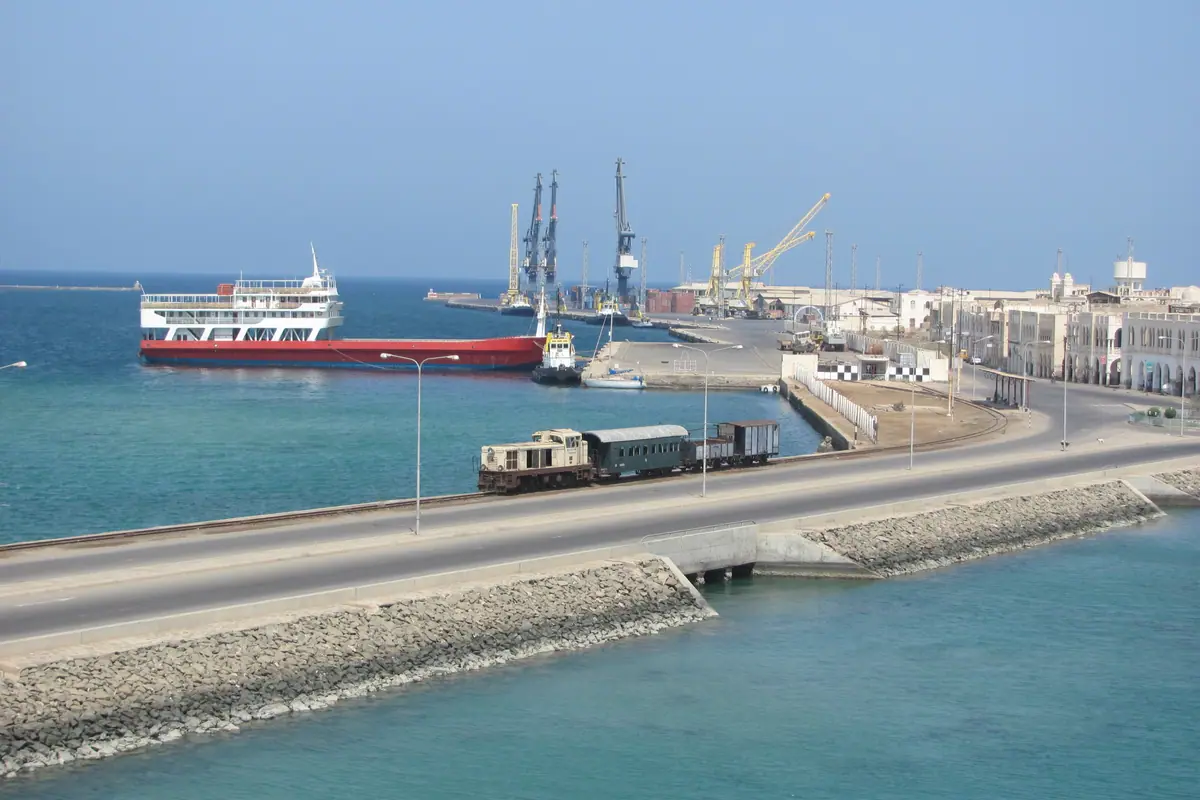
The road down from the highlands to Massawa drops more than two thousand metres in a couple of hours, and the temperature rises with every hairpin. Suddenly you are in a different country: blinding light, salt haze, and an old port town of coral-block houses stained grey and rose by centuries of sea air. The old town sits on an island connected to the mainland by causeways, so you can walk from the Turkish-era quarters to the waterfront in twenty minutes.
The Sheikh Hanafi Mosque, with its fifteenth-century minaret and cool, carpeted prayer hall, is the delicate centrepiece, and the crumbling Emperor's Palace presides over the harbour — you can look but not enter. Massawa's real magnet for travellers is the fish market, where the morning catch comes in on wooden boats: grouper, snapper, kingfish and prawns. Pick your fish and it will be grilled with chilli, lime and clarified butter at one of the open-fronted eateries nearby, best washed down with very sweet tea or a spiced coffee.
This is also the launch point for the Dahlak Archipelago. Day boats run to Green Island, a sandbar with shallow, bath-warm water good for swimming and snorkelling, while longer trips reach reefs where parrotfish, rays and the occasional turtle cruise over hard corals. Between November and March the coast is merely hot rather than punishing; from June to September the humidity on the littoral is fierce, so most travellers save the sea for the cooler months and stay in the highlands.
Keren and the Monday Camel Market
Keren, Eritrea's second city and a few hours northwest of Asmara, is a highland town of Italian villas gone gracefully shabby, bougainvillea, and one enormous claim to fame: its Monday livestock market. Early in the morning, herders from the lowlands and Rashaida traders in embroidered veils drive in camels, goats, sheep and cattle, and the whole field becomes a low roaring negotiation in Tigre, Tigrinya and Arabic. Come before nine for the best light and the noisiest bargaining.
Above the town, the shrine of Mariam Dearit — the Lady of the Baobab — is built into the hollow trunk of an enormous tree, reached by a short climb with wide views over the valley. Further up is the Tigu, a vast sycamore fig where locals gather in the shade, and, on the road toward Asmara, a Commonwealth war cemetery and an Italian memorial that quietly record the brutal fighting of the 1940s. Evenings in Keren are for tea, card games and unhurried conversation.
This is also where highland food culture becomes most visible. Barley and sorghum grow around the town, honey comes in from the surrounding villages, and home-brewed drinks taste stronger and sweeter than in the capital. If you are invited to a household meal, expect a low stool, a shared platter, a jug of water for washing hands, and an insistence that you eat more than you intended to.
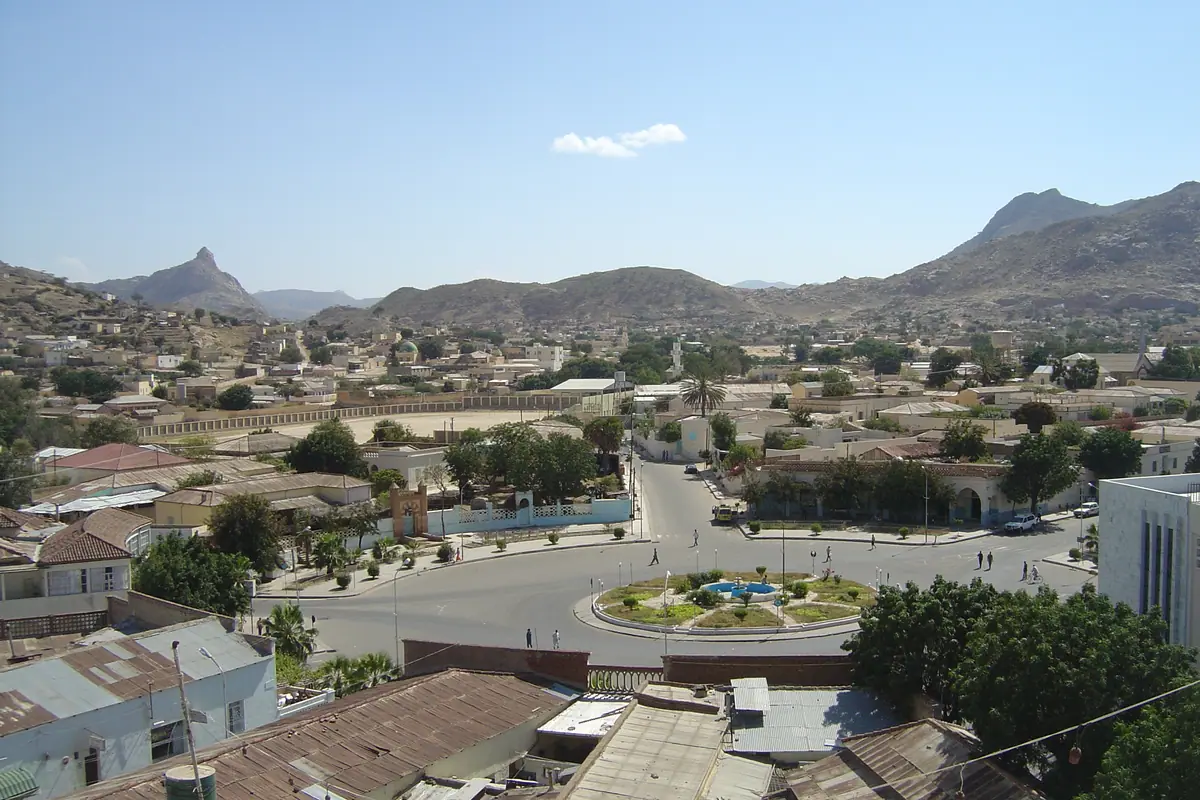
Ancient Sites, Cliff Monasteries and the Dahlak Islands
Eritrea's deepest history sits outside its cities. The Qohaito plateau, at around 2,600 metres near the road to Senafe, holds the ruins of a substantial ancient town, rock shelters painted with cattle and human figures, dams, tombs and stretches of paved road. It is unguarded, uncommercial and often entirely empty — bring water, sun protection and a guide who knows the paths. Nearby rises Emba Soira, the country's highest peak, a long, hard day's walk for anyone wanting the summit view.
Further south, the stelae field at Metera, with its carved standing stones, is a reminder that this landscape once belonged to the same monumental culture as the great northern highland civilisations. Down on the coast, the ruins of Adulis lie near the village of Zula — the harbour that once supplied an empire, now a scatter of foundations and sherds beside the sea, with no ticket office and no crowds.
Monasteries are the other pilgrimage. Debre Bizen, founded in the fourteenth century, sits on a sheer cliff face near Nefasit, an hour or two of steep walking from the road; it holds ancient manuscripts and an extraordinary library, and admits male visitors only. Offshore, the Dahlak islands are their own world: Dahlak Kebir carries old coral-stone graves inscribed in early Arabic script and the memory of a pearl-diving trade that once made these islands famous. Inter-island transport is slow and irregular, so plan a boat through a local operator in Massawa rather than assuming a schedule.
Practical Culture: Permits, Seasons and Manners
Eritrea is not a spontaneous destination, and the single most useful thing to know is that foreigners need a travel permit to go anywhere outside Asmara. The permit is arranged through the tourism authorities in the capital and normally takes a day or two, so build slack into your itinerary: secure it first, then plan Massawa, Keren or the south. The country runs on cash. Cards are rarely accepted outside a handful of hotels, international ATMs do not work, and you should arrive with enough hard currency to exchange for nakfa at banks in Asmara for the whole trip.
Timing matters more than most people expect. October to March is the sweet spot: dry, bright and mild in the highlands, with cold nights in Asmara and comfortable days on the coast. June to September brings the kiremti rains to the plateau, turning roads green and occasionally muddy, while the Red Sea littoral becomes brutally humid. Late September brings Meskel with its bonfires, January brings Timkat, 24 May is Independence Day and 20 June is Martyrs' Day — huge, emotional national occasions with processions and music, but also days when services slow down.
Finally, etiquette. Photography is restricted: do not photograph government buildings, airports, police, soldiers or bridges, and always ask before photographing people — many will say yes, some will not. Dress modestly away from hotel beaches, particularly in Massawa and Muslim neighbourhoods, and greet before launching into questions; a simple 'selam' goes a long way. Toilets, transport and opening hours can be unpredictable, so carry patience along with your water bottle, and you will find that the unhurried pace — the long coffee, the second round of injera, the market conversation that takes an hour — is the actual point of the place.
Frequently asked questions
Do I need a permit to travel outside Asmara?
Yes. Foreign visitors must obtain a travel permit before leaving the capital, arranged through the tourism authorities in Asmara, usually within one or two working days. The permit names the specific areas you intend to visit, so finalise your route first and keep a copy with your passport. Plan your trip so the first days are spent in Asmara while the paperwork is processed.
What is the best time of year to visit Eritrea?
October to March suits almost everything: dry, sunny days in the highlands with cold nights in Asmara, and tolerable heat along the Red Sea coast. The highland rainy season runs roughly June to September and the coast is very humid in the same months. If you want the Dahlak islands or time in Massawa, aim for November through March.
How do I pay for things in Eritrea?
Bring cash. International bank cards and credit cards are accepted almost nowhere outside a few large hotels, and foreign cards generally do not work in local cash machines. Take enough US dollars or euros to exchange for nakfa at banks in Asmara for the length of your stay, and keep smaller notes for markets, taxis and village restaurants.
Is Eritrea good for vegetarians and vegans?
Exceptionally good. The Orthodox fasting tradition removes meat and dairy from huge portions of the menu, so shiro, hilbet, silsi, lentil tsebhi, tomato salads and greens are everyday staples rather than special requests. Ask for dishes 'betsom' — fasting-style — and you will eat very well, usually for very little.
What should I avoid photographing?
Government buildings, military sites, airports, bridges, police and soldiers are off-limits, and it is wise not to point a camera at any official installation, however scenic it looks. Always ask permission before photographing people, especially in markets and rural areas. When in doubt, put the camera down and ask — the answer is often yes.
Sort the rest of your trip
Everything for Eritrea, in one place
Stay in Eritrea
Hotels, guesthouses and apartments — compared in one search.
Search hotels
Transfer in Eritrea
Private driver waiting on arrival — no queues, no surprises.
Book a transfer
Stay online in Eritrea
Travel eSIM — data the moment you land, no roaming bills.
Get an eSIMMore guides in Eritrea
Best Time to Visit Eritrea: Highlands, Red Sea and Danakil by Season
Eritrea in One Week: Fly to Asmara, Ride the Old Railway to Massawa
Best Things to Do in Eritrea: Asmara, Massawa and the Red Sea Coast
Best Places to Visit in Eritrea: From Asmara to the Dahlak Islands