Eritrea is not a country you drift through — it is one you plan for, and the planning pays you back tenfold. In a single week you can drop from a cool, cobbled highland capital of 1930s futurist architecture to a sweltering Ottoman-flavoured port on the Red Sea, then out to coral islands where the diving is still close to untouched. Fly into Asmara, and the rest of the week unravels downhill to the water and back up again.
Day One: Landing in the Highlands at Asmara International Airport
Almost every visit to Eritrea begins with a flight into Asmara International Airport, a compact, unhurried strip of tarmac about six kilometres south of the city. The approach is the first spectacle of the trip: aircraft cross the hot coastal plain, then climb hard over the eastern escarpment, banking into a plateau more than 2,300 metres above sea level. From a window seat the land falls away in terraced folds, and then suddenly the pale, orderly roofs of Asmara appear below you, cool and leafy and nothing like the Africa you were bracing for.
The terminal is small and calm, and formalities are usually quick — but this is the moment to remember that Eritrea runs on paperwork and permits. Most nationalities need a visa arranged before departure, and any travel outside the Asmara region requires a separate permit obtained once you are in the country, so sort out the essentials early. Change money officially on arrival, keep the receipts, and carry more clean, undamaged cash than you think you need: outside a handful of city hotels, cards are effectively useless here.
Take a taxi the short run into the centre, agree the fare before you get in, and resist the urge to do much on day one. Asmara sits at altitude, and the thin air catches people out; drink water, eat something light, and take an evening stroll along Liberation Avenue — known locally as Harnet Avenue. The city's Italian inheritance is everywhere: macchiato served in tall glasses, pastries behind curved glass, a slow evening promenade under jacaranda trees. Bring a jacket. Highland nights are genuinely cold.
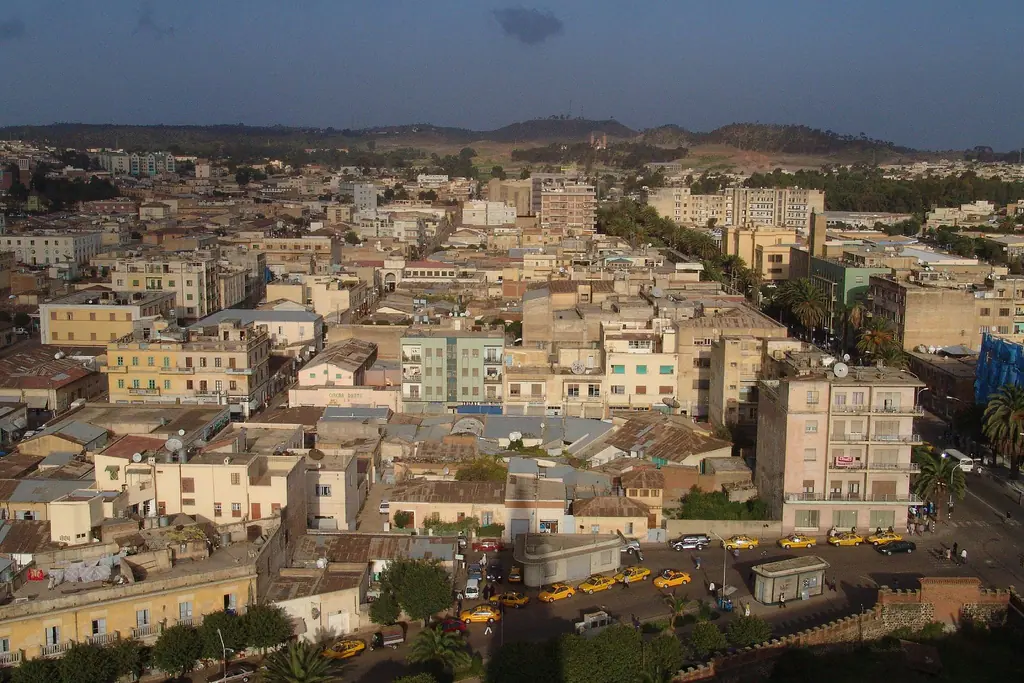
Days Two and Three: Asmara's Modernist Landmarks on Foot
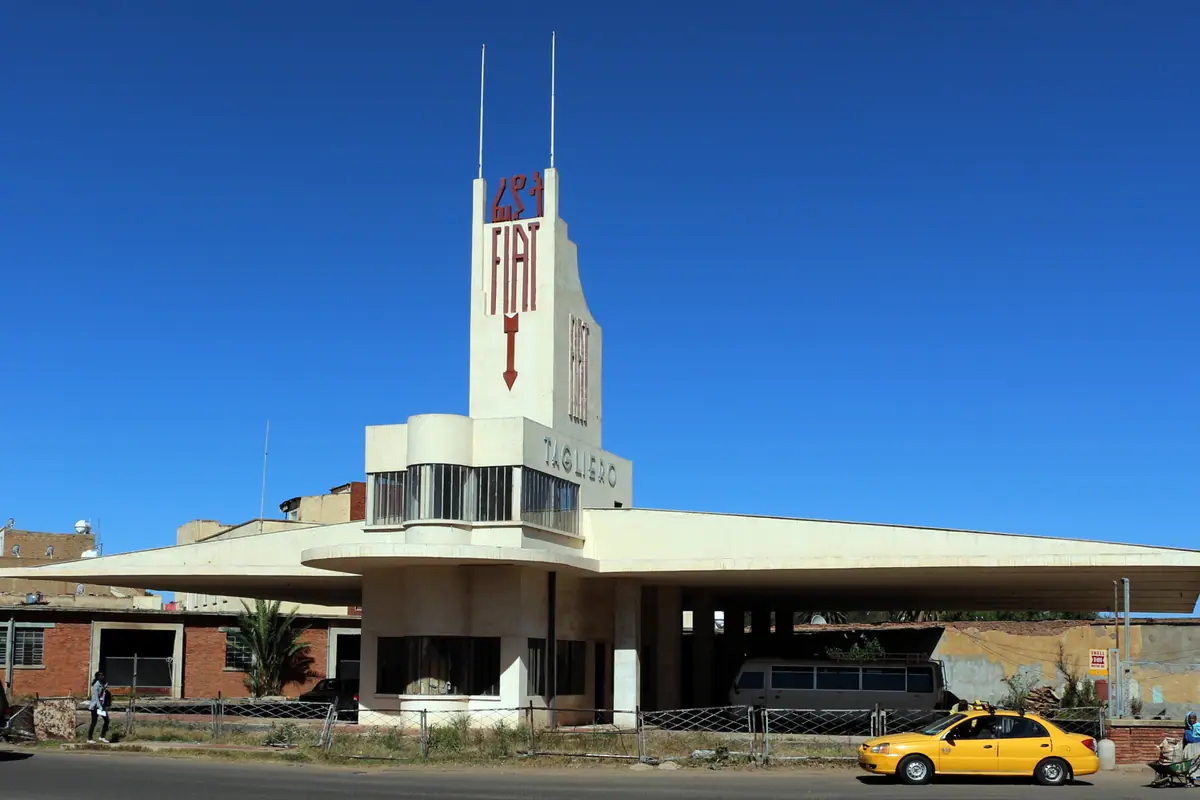
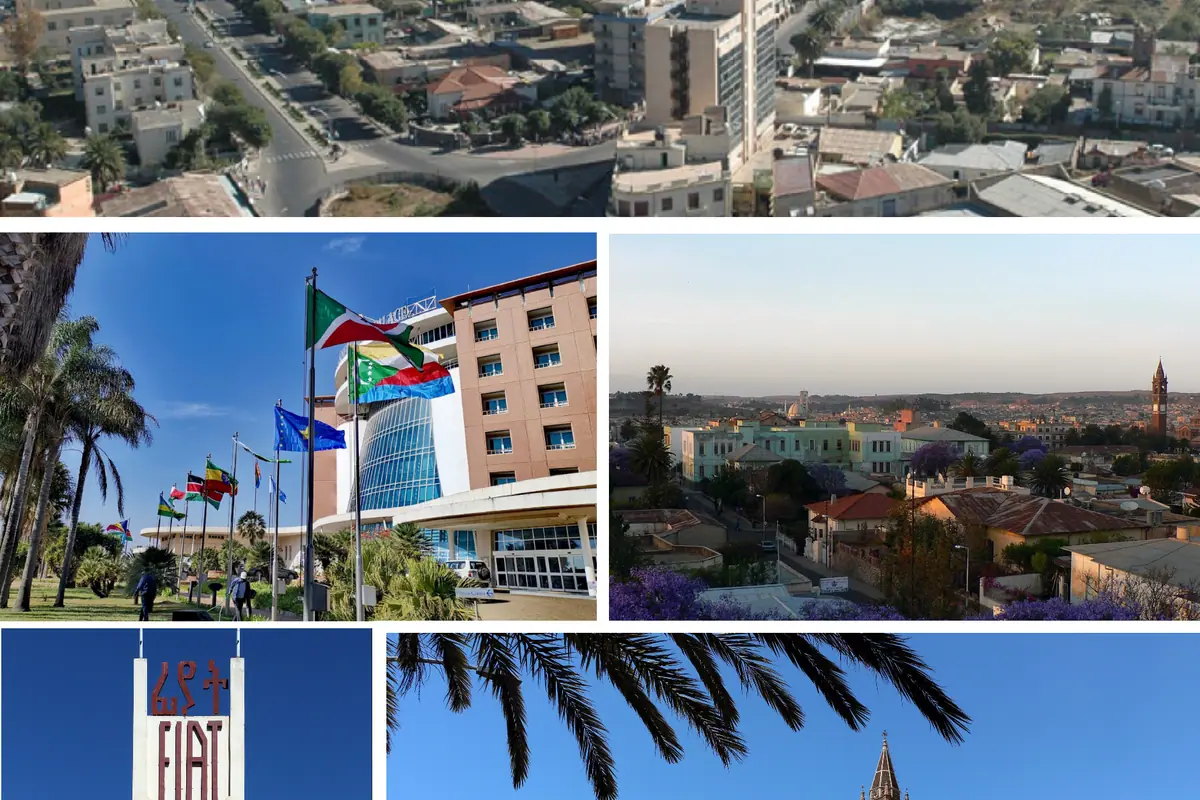
Asmara's great gift is that its finest sights sit within a twenty-minute walk of each other, and the whole central district is inscribed as a World Heritage site for its extraordinary concentration of early twentieth-century modernist architecture. Start at the Fiat Tagliero, a 1938 service station shaped like a grounded aeroplane, its two concrete wings cantilevering eighteen metres with no visible support — an engineering boast that still looks faintly impossible. Nearby, the Cinema Impero and the smaller Cinema Roma preserve their streamlined foyers and neon-era curves, while the old opera house and the post office tower keep the same confident, geometric line.
Work your way through the religious architecture that gives the city its easy pluralism: the Al Khulafa Al Rashedun Mosque, with its slender minaret rising over the market district, the red-brick Orthodox cathedral of Enda Mariam with its curious layered towers, and the Catholic cathedral of Kidane Mehret, whose tall spire has become an Asmara signature. The National Museum, with its archaeology, manuscript and independence-era collections, is a good hour and a half, and the central market is worth longer — sacks of berbere and cardamom, coils of basketry, tailors, and the smell of roasting coffee drifting out of doorways.
Give the second day to slow wandering: the tree-lined streets of the old Italian quarter, the faded cursive shopfronts, the pastry counters, the shoe-shine boys on Harnet Avenue. Asmara is a walking city and one of the safest capitals in the region, but respect the local caution around official buildings, police posts and anything military — put the camera away without being asked. Late afternoon is the best light, and the terraces along Liberation Avenue fill up as the temperature drops.
Day Four: A Vintage Steam Railway and the Cliffside Monastery of Debre Bizen
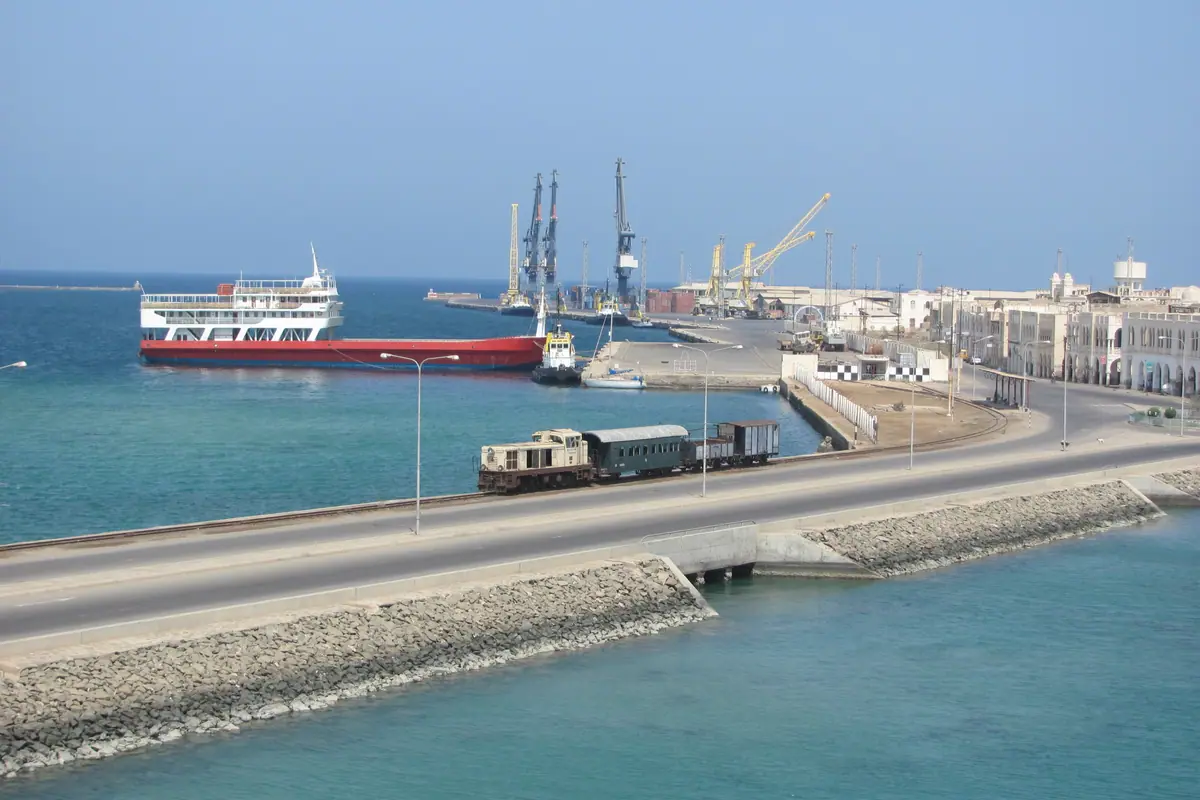
Eritrea's railway is a piece of living heritage: a narrow-gauge line pushed from the coast up the escarpment by Italian engineers between the 1880s and the 1930s, wrecked during the long independence war and painstakingly brought back to life by local engineers from the 1990s onwards. Excursion trains run on selected days from Asmara's old station, using restored Italian-built locomotives and wooden carriages, and the steepest stretches climb on a toothed rack rail cut into the rock. The classic run drops through tunnels and hairpins to the little town of Nefasit, taking a leisurely morning; longer chartered runs reach Arbaroba, and occasionally the whole way down to Massawa.
Above Nefasit, a footpath climbs for roughly two hours to Debre Bizen, a monastery perched on a ridge at around 2,500 metres with a view that runs all the way to the Red Sea on a clear day. Its library and community date back many centuries, and long-standing tradition restricts the monastery and the final ascent to men, so women in the group should plan an alternative — the lower viewpoints and the town's cafés are a perfectly good afternoon in themselves.
Timetables for the train are erratic and services can be cancelled without notice, so ask at the station or through your guesthouse a day or two ahead and treat the whole outing as a flexible bonus rather than a fixed appointment. If the train does not run, the drive to Nefasit and the escarpment viewpoints is still one of the great half-days of the country.
Day Five: The Descent to Massawa and the Red Sea Old Town
The road from Asmara to Massawa is only about 120 kilometres, but it sheds well over two thousand metres of altitude, and the change is theatrical. You leave the highland plateau in cool air, wind past Nefasit and the orchards of the Green Belt around Semenawi Bahri National Park, where the escarpment suddenly turns lush, and drop through the fruit-growing lowlands around Ghinda and Filfil. Expect hairpins, tunnels and long views over the coastal plain, and expect the temperature to climb steadily with every kilometre — allow three to four hours including stops.
Massawa itself sprawls across two islands linked to the mainland by causeways, and the old town is a different world from the capital: coral-block houses bleached white and ochre, deep wooden balconies, and the ruin of decades of war and heat. The Sheikh Hanafi Mosque, with its finely carved minaret, is one of the oldest Islamic monuments on this coast, and the Imperial Palace, a former Ottoman and then colonial governor's residence, dominates the waterfront. Wander the port side at sunset, when the dhows come in and the whole city smells of salt and charcoal-grilled fish.
November to March is the sweet spot here; from May to September the coast is punishingly hot and humid, and sightseeing becomes an early-morning and late-evening affair. Sleep in the old town if you can, eat grilled reef fish by the water, and take a short ride north to Gurgusum Beach if you want a swim without leaving the mainland. Be modest in dress in the old town, and ask before photographing people or buildings.
Day Six: Sailing the Dahlak Archipelago
The Dahlak Archipelago scatters more than two hundred islands across the Red Sea just off Massawa, and a day out among them is the highlight of most Eritrean itineraries. Dahlak Kebir, the largest, carries the remains of an old necropolis with early Arabic inscriptions and a history of pearl diving that once made these waters famous as far away as India and Arabia. Closer in, Dissei and the reefs around Green Island offer easy snorkelling over hard and soft coral, with reef fish, turtles and the occasional dugong in the seagrass shallows.
There is no ferry you can simply turn up for. Boats are arranged in Massawa through guesthouses and local boatmen, usually the evening before, and you should expect a full day on the water with an early start, shade on deck, and your own mask and fins if you are particular. Bring more water and sun protection than seems reasonable, wear a long-sleeved top against the sun, and take cash — there is nothing to spend it on out there anyway.
Some islands and stretches of coast are restricted for security reasons, and divers intending to go deep should be aware that medical and decompression facilities here are minimal, so dive conservatively and stay within your training. If you would rather stay dry, half-day trips along the harbour and out to the nearer islands are just as rewarding, and the light on the water in the late afternoon is extraordinary.
Day Seven: Keren's Camel Market, Ancient Ruins and the Flight Home
With a week nearly spent, spend the last full day in the western lowlands around Keren, a two-hour drive northwest of Asmara and the country's second city. Monday is market day, when herders bring camels, cattle and goats in from the surrounding plains to a sprawling livestock market that is one of the great spectacles of the Horn of Africa. Also in Keren are the chapel of Mariam Dearit, improbably built into the hollow trunk of a giant baobab tree, and the war cemetery that holds the graves of the 1941 battle fought across these hills.
If you would rather head south instead, the plateau around Qohaito and Adi Keyh is scattered with pre-Aksumite and Aksumite ruins — temples, reservoirs and rock art — and further on near Senafe stands the carved obelisk known as the Hawulti, marking the site of Matara. On the coast, the excavated port of Adulis near Zula was trading with Rome and Arabia long before Europe had anything to sell, and wandering its low stone walls with a guide is a quietly remarkable experience.
Back in Asmara, keep the final evening free. Most international departures leave in the small hours, which means checking in two to three hours before a very early flight and not attempting any long drive the same day. Flying between Eritrean cities is a poor bet — domestic services have appeared and disappeared over the years — so build your week on the roads and treat any internal flight as a lucky extra. Bring your permits, your cash and your patience, and this country will reward you with a week few travellers ever get to have.
Frequently asked questions
Do I need a permit to travel outside Asmara?
Yes. Foreign visitors need a travel permit for trips beyond the capital, arranged in Asmara before departure and listing the route and dates you intend to travel. Checkpoints on the main roads may ask to see it, so carry the original with your passport. Some regions, particularly near land borders and in the far south, remain off-limits entirely, so confirm your intended route while you are still in the capital.
Can I fly between Eritrean cities?
Only rarely. Domestic air service to Massawa and Assab has been intermittent and unreliable for years, with schedules appearing and then vanishing. The realistic plan is to fly into Asmara from abroad and then travel by road, hiring a vehicle and driver through your guesthouse or a local operator. Treat any internal flight as a bonus rather than a plan.
What is the best time of year to visit Eritrea?
October to March suits almost everyone. The highlands around Asmara stay mild and dry, with cold nights from December to February, while the Red Sea coast around Massawa becomes bearable rather than brutal. The rains run roughly June to September, greening the escarpment beautifully but making some roads slick and the coast oppressively hot. If you want both the highlands and the Dahlak Islands in one trip, aim for November, December or January.
How should I handle money in Eritrea?
Bring clean, untorn banknotes in a major convertible currency and exchange them officially once you arrive, keeping the receipts. Cards are accepted almost nowhere outside a few big-city hotels, ATMs are not a dependable option, and there are no easy ways to top up. Budget for your whole trip in cash, including permits, transport, boats and entry fees.
Is it possible to visit the Dahlak Archipelago?
Parts of it, yes. Boat trips leave from Massawa to islands such as Dahlak Kebir, Dissei and the reefs nearer the mainland, arranged locally the day before through guesthouses or boatmen. Some islands and coastal zones are restricted for security reasons, so always go through someone who knows the current rules. Expect a full day on the water, strong sun, and no facilities once you leave the port.
Sort the rest of your trip
Everything for Eritrea, in one place
Stay in Eritrea
Hotels, guesthouses and apartments — compared in one search.
Search hotels
Transfer in Eritrea
Private driver waiting on arrival — no queues, no surprises.
Book a transfer
Travel insurance
Medical cover, delays and lost baggage — sorted before you go.
Get covered