Chad is not a country you stumble into — it is one you plan for, and the reward is a landscape that swings from Saharan sand seas to elephant-filled floodplains in a single flight. Accommodation here comes in two flavours: air-conditioned business rooms in the capital, and tents pitched beside a waterhole or beneath sandstone arches. This guide maps where to sleep, what to see between stops, and when to go.
Chad hotels 101: what the country's accommodation actually looks like
Almost every conventional hotel room in Chad is in N'Djamena. The capital holds the country's only international-standard properties, clustered around Avenue Charles de Gaulle, the central business blocks and the Chari riverfront, with a tier of mid-range hotels and cheap auberges on the side streets. Outside the capital the vocabulary changes: in Abéché, Faya-Largeau, Moundou, Sarh and Bol you choose between small guesthouses, mission rest houses and provincial auberges with a fan and a shared bathroom.
Expect to pay in cash. The Central African CFA franc is the currency, and cards work at only a few large hotels in N'Djamena; everywhere else you need notes, ideally small ones. Ask three questions before taking a room: does the generator run all night, is the water tank full, and is the room climatisée or simply fan-cooled? By April, that distinction decides whether you sleep.
Two practical facts shape every booking. Travellers usually need an internal travel permit to leave the N'Djamena region, arranged in advance through a local host or ground operator. And capacity is tiny — a handful of rooms per town can vanish to aid agencies and construction crews weeks ahead. The most comfortable window is November to February, when harmattan haze softens the heat; March to May pushes past 40°C, and southern rains from June to September turn bush tracks to soup.
N'Djamena: the capital's hotel districts and must-see sights
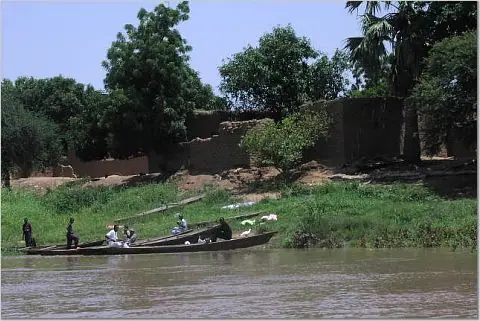
N'Djamena sprawls along the east bank of the Chari River, facing Cameroon across the water, with the Logone joining just downstream. The centre is compact enough to walk in the cool of the morning: Avenue Charles de Gaulle runs past the Grand Mosque and the cathedral, and most of the larger hotels sit within a short drive of it. Quieter, cheaper neighbourhoods such as Chagoua, Klemat and Paris-Congo hide small guesthouses; Farcha, by the airport, suits early flights.
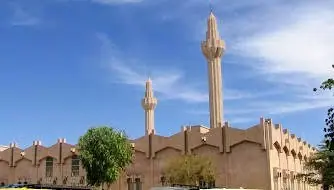
Start at the Grand Marché, a dense grid of stalls selling printed cloth, leather, silverwork, spices and crafts; go early, keep your bag in front of you and ask before photographing people. Nearby, the National Museum of Chad displays archaeological finds from the country's deserts, including casts of the ancient hominin skull uncovered in the Djurab, alongside Sao bronzes and traditional instruments. The Grand Mosque and the brick Saint-Paul Cathedral anchor the skyline, and the riverside at dusk — grilled tilapia, cold drinks, pirogues sliding past — is where the city exhales.
Give yourself half a day for Gaoui, a village of Sao potters about ten minutes east of the city, where women have shaped and fired clay for generations. Its mud-brick architecture and old fort walls make an easy introduction to pre-colonial Chad, and no travel permit is needed.
Zakouma National Park: safari camps in elephant country
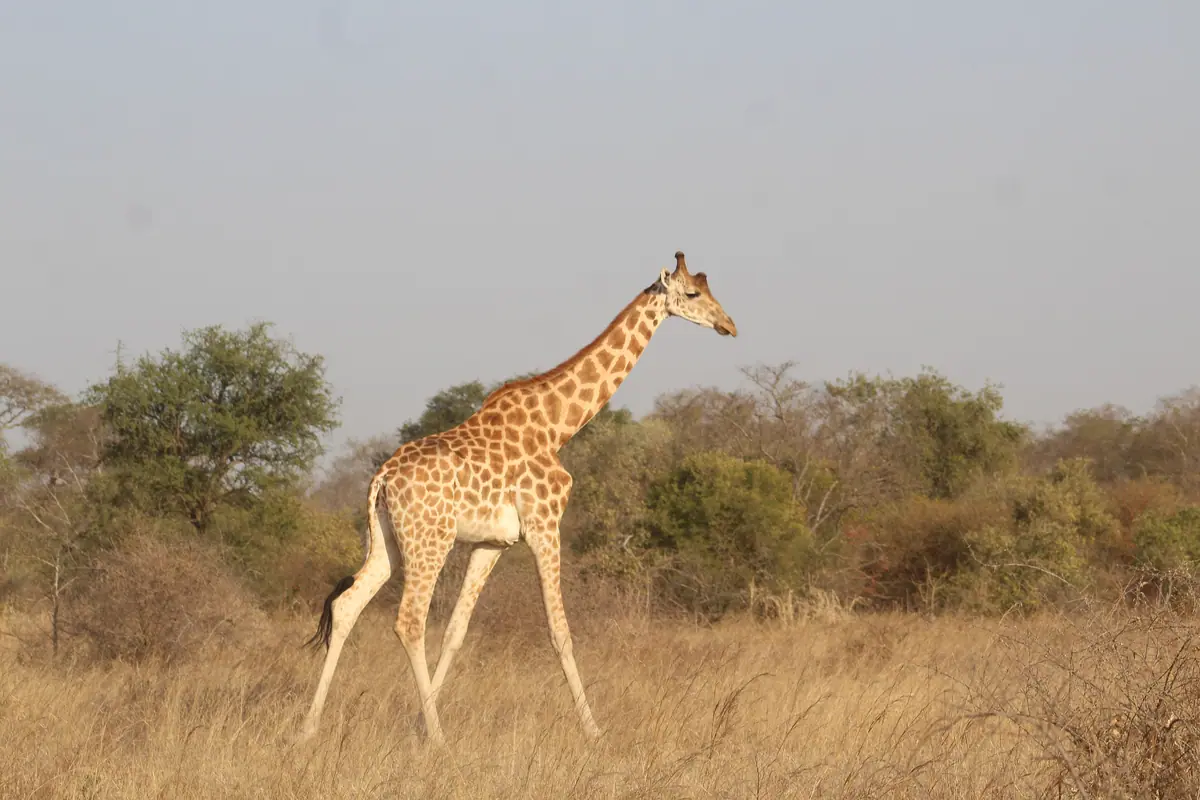
Zakouma National Park, in the Salamat region of south-eastern Chad, is the country's one true safari destination. It protects a mosaic of floodplain, savanna woodland and seasonal wetland that swells with water from roughly June to October, then shrinks into pools that concentrate wildlife spectacularly in the dry months. Its elephants — among the last large herds in the Sahel — move in tight family groups, and Kordofan giraffe, lion, buffalo, Lelwel's hartebeest and hundreds of bird species share the park.
Accommodation is deliberately minimal: one small permanent camp with tented rooms, solar power and bucket showers, set close to a major waterhole. That scarcity is the point — you may be the only vehicle at a sighting. The camp generally opens only in the dry season, from around November until the rains arrive, and days begin before dawn with game drives and guided walks along the floodplain edge.
Getting there is part of the trip. Most visitors join an organised convoy for the long, dusty drive south-east via Am Timan, or fly in to the park's airstrip. Plan months ahead, budget for park fees and guides, and carry everything you need — cash, medication, spare batteries. Zakouma is not an add-on; it is the reason for the journey.
The Ennedi Massif and the Ounianga Lakes: camping in Chad's Sahara
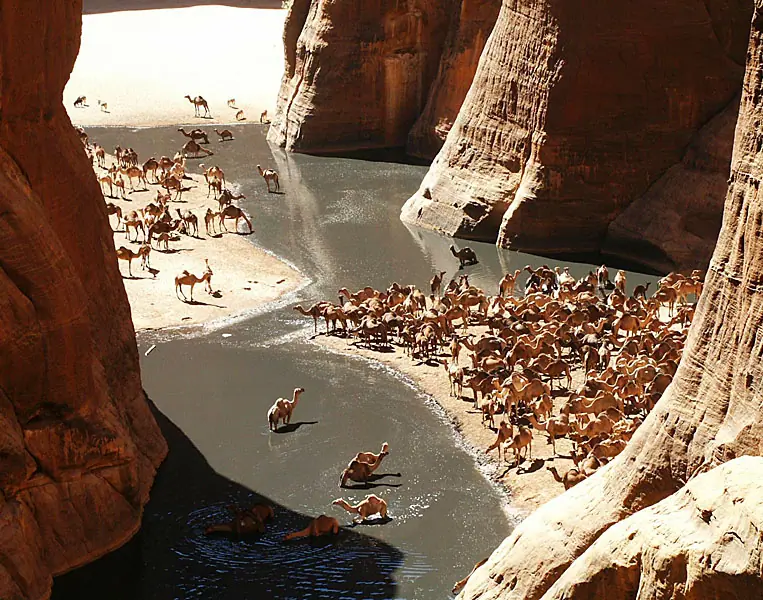
East of the Sahara's sand seas, the Ennedi Massif rises in cliffs, towers and arches of orange sandstone across a World Heritage-listed landscape. Fada is the gateway town, with a few simple guesthouses; from there expeditions reach the Aloba Arch, one of the largest natural rock arches on the planet, and the Guelta d'Archeï, a hidden canyon where Nile crocodiles survive in brackish pools beneath rock paintings of cattle and hunters. Elsewhere, Manda Guéli cave shelters painted herds and the Niola Doa engravings depict stylised figures that have puzzled researchers for decades.
North of the Ennedi, the Ounianga Lakes are among the strangest sights in the Sahara: a chain of lakes, the largest being Lake Yoan, sitting in a basin of fossil groundwater and ringed by salt crusts, palms and reeds. Their colours shift from cobalt to jade with the angle of the light.
There are no hotels here — this is camping country. A proper Ennedi or Ounianga journey means two or more 4x4s, a guide who knows the tracks, and fuel and water carried for days. November to February is the season: warm days, cold nights that demand a jacket. After February the heat builds fast and by April the massif is furnace-hot. Permits and reliable local organisation are essential; independent travel is not realistic.
Lake Chad and the far north: Bol, Faya-Largeau and the Tibesti
Lake Chad, the shallow, island-dotted water body that gave the country its name, is reached by a long drive north from N'Djamena to Bol, the main Chadian town on its shore. The lake still supports a remarkable way of life — fishing pirogues, reed islands, cattle that swim between pastures — and Bol has a lively market and a handful of basic guesthouses. Birdlife is excellent, hippos are present, and sunset over the water repays the dust. Border zones change quickly, so travel with local advice and the correct permits.
Further north, the Tibesti Mountains form Chad's volcanic heart: Emi Koussi, the highest point in the Sahara; the white-floored caldera of Trou au Natron; the lava fields and hot springs of Tarso Toussidé. Faya-Largeau, a palm-shaded oasis in the Borkou, is the practical base, with a few very simple hotels and the last dependable fuel before the mountains. The Tibesti is generally off limits without official permission, an experienced operator and a great deal of patience.
For northern stays, treat every room as a bonus. Expect shared bathrooms, cold water, limited power and long hours on rough tracks between them, and bring a head torch, water purification and a sleeping sheet in case the bedding is thin.
Eastern and southern Chad: Abéché, Moundou, Sarh and Lake Fitri
Abéché, in the east near the Sudanese border, was the capital of the Ouaddaï Sultanate and still feels like a caravan town, with a big market, a historic mosque, the sultan's palace and streets of mud-brick houses. It is the most atmospheric stop on the eastern route, with a small selection of guesthouses used by traders and travellers.
In the greener south, Moundou on the Logone and Sarh on the Chari are working cities with basic hotels, river fishing and a landscape of cotton fields and mango trees. West of centre, Lake Fitri near Ati is a shallow, bird-rich wetland where pelicans, storks and hippos gather — a low-key, rewarding stop with simple lodging in town.
In this part of Chad, bookings happen by phone, by message to a local host, or on arrival. Online accommodation platforms barely reach the country, and waiting for them to appear is pointless. Arrange rooms through a ground operator, a mission or a contact on the ground, reconfirm the day before, and always keep a fallback in mind.
Frequently asked questions
Do I need a visa and a travel permit to visit Chad?
Most visitors need a visa arranged in advance through a Chadian embassy, along with a yellow fever vaccination certificate. Once inside the country, an internal travel permit is typically required to leave the N'Djamena region, and some areas — the Tibesti, parts of the Lake Chad shoreline and border zones — need separate authorisation. Ask a licensed local operator to handle paperwork before you arrive.
When is the best time to visit Chad?
November to February is the sweet spot: dry, dusty and comparatively cool, with chilly desert nights in the north. March to May is punishingly hot, often above 40°C, and the southern rains from June to September make tracks impassable and close the safari season in Zakouma. Desert trips to the Ennedi suit the same November-to-February window.
Can I pay by card in Chad?
Rarely. The currency is the Central African CFA franc, and cash is the rule outside a small number of large hotels in N'Djamena. Bring euros or US dollars to exchange, carry small notes for markets, fuel and tips, and do not count on ATMs working when you need them.
Is Chad safe for travellers?
The security picture varies sharply by region and can change quickly. N'Djamena is generally manageable for visitors who take normal precautions, while northern, eastern border and lake areas carry real restrictions and risks. Travel with a reputable local operator, keep your permits with you, register with your embassy, and check your own government's current advice before booking.
How far ahead should I book a Zakouma safari or an Ennedi expedition?
Several months, especially for the November-to-March dry season. Zakouma has only one small permanent camp, and Ennedi expeditions depend on a limited pool of guides, vehicles and permits, so late enquiries often fail. Confirm the season, the route, the included fees and what you must bring yourself — cash, medication and personal gear are all on you.
Sort the rest of your trip
Everything for Chad, in one place
Transfer in Chad
Private driver waiting on arrival — no queues, no surprises.
Book a transfer
Things to do in Chad
Skip-the-line tickets, guided tours and standout experiences.
See experiences
Stay online in Chad
Travel eSIM — data the moment you land, no roaming bills.
Get an eSIM