Chad is the Africa that very few travellers ever see: a Sahara of black volcanoes and painted canyons, a Sahel where elephant herds still move through the tall grass, and a scatter of desert lakes that shine turquoise in a sea of sand. It is a country that demands patience, paperwork and a good 4x4, and gives back landscapes and encounters you will not find anywhere else on the continent.
N'Djamena: A Capital on the Chari River
Chad's capital sits at the meeting point of the Chari and Logone rivers, a low-rise city of sandy boulevards, mango trees and the ever-present sound of pirogues on the water. Almost every Chad itinerary starts here, and it deserves more than a night in transit. The National Museum of Chad holds ceramics and bronzes from the ancient Sao civilisation alongside replicas of the country's celebrated early-hominid discoveries, while the Grand Marché is a hot, noisy maze of spice sacks, indigo cloth, dried fish and camel-milk cheese.
Walk down Avenue Charles de Gaulle towards the Grand Mosque, whose minarets rise above the rooftops, then head to the riverbank for sunset, when the light turns the water copper and fishermen pole their way home past herds of cattle being swum across. A short drive east of the city, the village of Gaoui is the place to watch potters working clay by hand and to see the angular mud-brick architecture of the old Sao settlements, a style that has survived for centuries.
Allow two or three days in N'Djamena before heading north or east. The city is hottest and dustiest from March to May, so most visitors aim for the cooler, clearer months between November and February, when evenings are pleasant enough to sit outside and the roads out of town are at their most passable.
Zakouma National Park: Chad's Wildlife Comeback
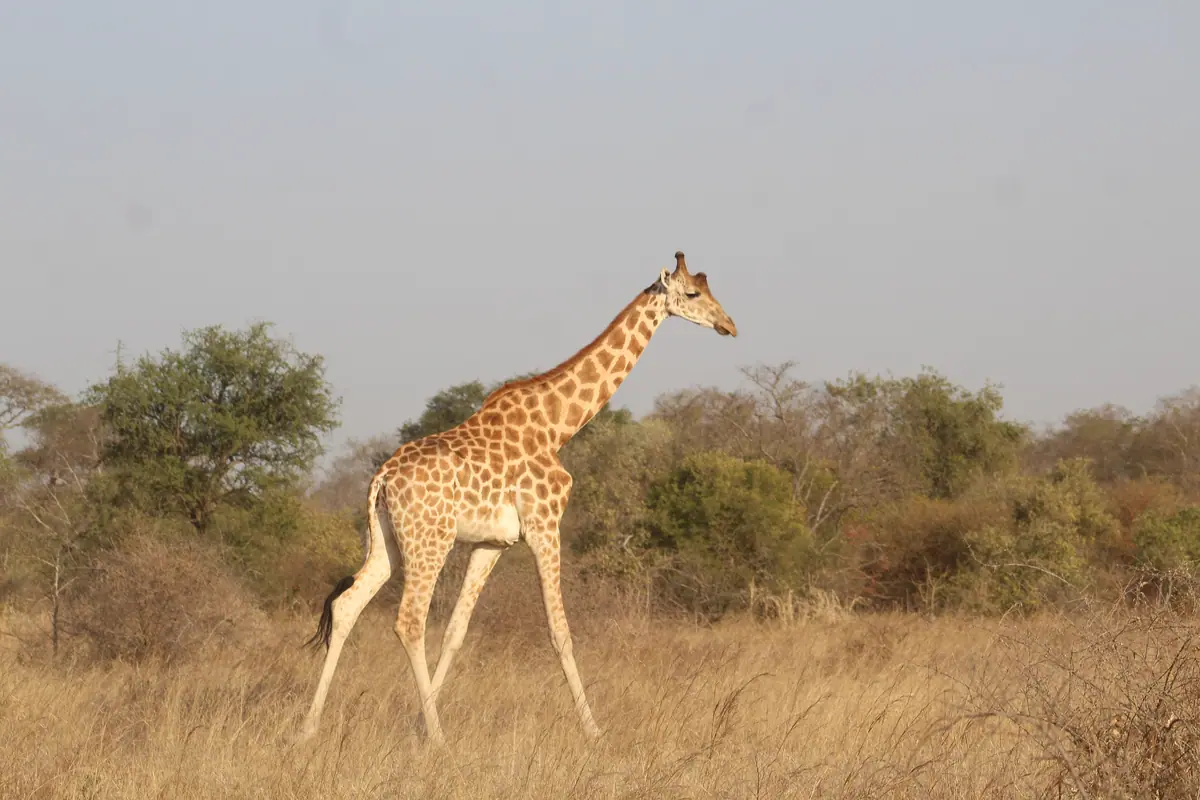
In the south-eastern Salamat region, roughly a day's drive from the capital, Zakouma National Park protects a mosaic of floodplain, savanna woodland and seasonal wetlands that has become one of the Sahel's most important wildlife strongholds. Elephants move here in sizeable herds, often with calves in tow, and they share the plains with Kordofan giraffe, buffalo, Lelwel hartebeest, red-fronted gazelle and warthog. The birdlife is extraordinary: hundreds of species pass through, including black-crowned cranes, secretary birds, Abyssinian ground hornbills and vast flocks of quelea.
The park is at its best in the dry season, from November through April, when the grass thins, waterholes shrink and animals concentrate around the remaining water. Access is either by light aircraft from N'Djamena or by a long 4x4 journey, and visiting is only possible with an organised safari using the park's simple camps, where accommodation is comfortable but decidedly bush-style rather than luxurious. Game drives at dawn and late afternoon are the norm, with the middle of the day given over to shade, cold drinks and the sound of doves.
What makes Zakouma special is how close the wildlife comes. Decades of careful protection, carried out through a long-term partnership between the state and an international conservation body, have produced elephants that are relaxed around vehicles, so herds frequently cross the track just metres from your bonnet. Local guides, many from surrounding villages, know the individual animals and the histories of the herds, which turns a game drive into something closer to a soap opera than a checklist.
The Ennedi Massif: Arches, Canyons and the Guelta d'Archei
The Ennedi Massif in north-eastern Chad is the country's greatest natural spectacle and its most famous World Heritage-listed landscape: a sandstone plateau the size of a small European country, eroded into towers, amphitheatres, slot canyons and arches. The best known of these is the Aloba Arch, a vast span of rock that ranks among the largest natural arches on Earth, but the whole plateau is a gallery of improbable forms. Driving or trekking through it feels like moving across the set of a film that was never made.
At the heart of the massif lies the Guelta d'Archei, a deep, near-permanent pool of water in a canyon walled by black rock, where a relict population of Nile crocodiles survives in the middle of the Sahara and camels are watered by Toubou herders in the shade. Nearby, the rock art of Niola Doa and the painted shelters of Manda Guéli record a greener Sahara: cattle, giraffes, hunters and strangely stylised human figures daubed on the stone thousands of years ago. Addax, Barbary sheep and dorcas gazelle still cling on in the wider Ennedi Faunal Reserve.
Practicalities matter here. Almost all visits begin in the small town of Fada, reached by 4x4 from Abéché, and most expeditions run for ten days to two weeks with a Toubou guide, a camel caravan or a support vehicle, and water cached in advance. The season runs from November to February, when daytime temperatures are bearable; by March the heat is punishing and by the summer rains some tracks become impassable. Permits must be arranged in advance through a licensed operator, and self-driving is not realistic.
The Lakes of Ounianga: A Water World in the Sahara
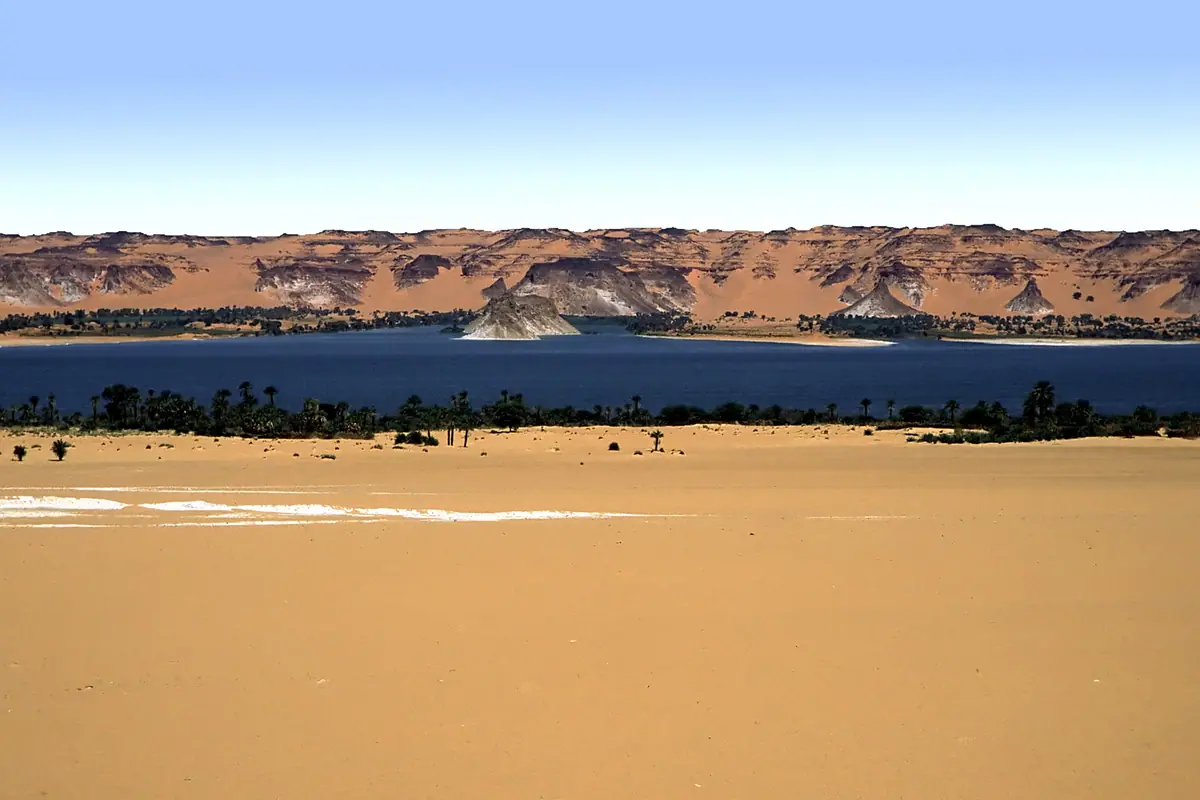
Far to the north, close to the Libyan border, the Lakes of Ounianga form one of the strangest landscapes on the planet: eighteen lakes divided into two groups, Ounianga Kebir and Ounianga Serir, sitting in a hollow between dunes and sandstone ridges. They exist because fossil groundwater, trapped beneath the desert since a much wetter era, seeps upward and evaporates faster than it can be replaced. The result is a chain of pools in impossible colours, from deep cobalt to jade green, fringed with reeds and salt crusts.
Lake Yoan, the largest, is saline and ringed by thick white salt that local people have long cut and traded; nearby Lake Teli is fresh, shallow and crowded with reeds and birdlife, while Lake Katam and the smaller lakes of the Serir group alternate between brackish and sweet. The surrounding dunes and scattered palms make it a photographer's dream, especially in the low light of early morning and late afternoon.
Ounianga is usually folded into a longer northern itinerary, either as an extension of an Ennedi expedition or as part of a route linking Fada with the far north. There is no tourist infrastructure to speak of: you camp, you carry in everything you need, and you travel with a guide who knows the water points. The cool months from November to February are the only sensible window, and even then nights in the desert can be bitterly cold.
The Tibesti Mountains and Emi Koussi
North-western Chad is dominated by the Tibesti, a volcanic massif rising out of the Sahara that contains Emi Koussi, at 3,445 metres the highest peak in the entire desert. This is a world of black lava fields, ash cones, basalt cliffs and hot springs, crowned by the Trou au Natron, a vast crater whose floor is streaked with white, green and yellow mineral deposits left by evaporating water. The main settlement, Bardaï, is a small Toubou town with a market, a hospital and a frontier feel.
The mountains are also an open-air museum. Rock paintings and engravings of giraffes, ostriches, cattle and hunters are scattered across the massif, evidence of a time when the Sahara was grassland, and Toubou families still move between wells with their herds much as their ancestors did. The culture here is distinct: the Toubou are renowned for their independence, their poetry and their knowledge of water in a landscape that offers almost none.
Reaching the Tibesti is a serious undertaking. Access is usually via Faya-Largeau, with permits, a licensed operator, a well-prepared 4x4 and local guides, and expeditions commonly run two to three weeks. There are no hotels, no fuel stations in the mountains and no room for improvisation, and the region should only be attempted with an experienced team. For those who make it, the reward is a Sahara that feels genuinely unexplored.
Lake Chad, Abéché and the Eastern Sahel
Lake Chad, in the country's far west, is a shallow inland sea scattered with reed islands, and it supports a whole way of life. From the town of Bol you can head out by motorised pirogue through channels of papyrus and water lilies, passing fishing villages built on floating mats of vegetation, where nets are dried, fish are smoked and cattle are grazed on the floodplain. The lake's extent rises and falls with the seasons and has changed dramatically over the decades, which makes every visit feel like a snapshot of a shifting world.
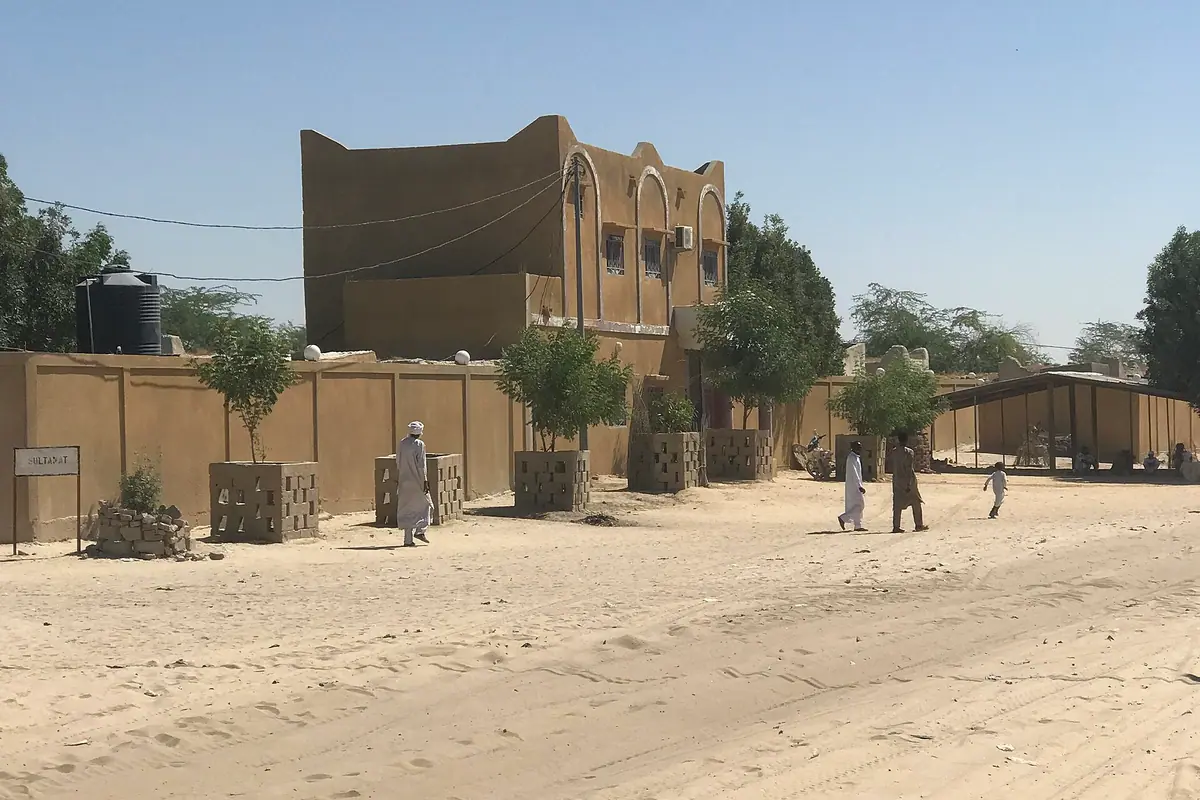
In the east, Abéché is the most compelling town in Chad after the capital. Once the capital of the Wadai Sultanate, it retains the Sultan's palace, a grid of old trading streets and a sprawling livestock market where camels, cattle and sheep are haggled over at dawn. It is also the practical gateway to the Ennedi, since the long track to Fada begins here, and a good place to buy supplies and hire vehicles before committing to the desert.
Between November and February the whole Sahel is at its most forgiving, with cool nights and clear skies; in September and October, after the rains, the grasslands are green and the Wodaabe herders of the Chari-Baguirmi region sometimes hold their Gerewol gatherings, with dancing, elaborate face paint and courtship rituals that are among the most photogenic cultural events in the Sahel. Note that the lake and eastern regions are sensitive areas, so check current travel advice and always travel with people who know the ground.
Frequently asked questions
When is the best time to visit Chad?
November to February is the sweet spot across most of the country: cooler days, cold desert nights and firm tracks in the Ennedi, Tibesti, Ounianga and Zakouma. March to May is brutally hot almost everywhere, and the rains from roughly June to September turn southern Chad green and muddy while making many desert routes difficult, though the far north often escapes the worst of it.
Do I need permits and a guide to visit the Ennedi or Zakouma?
Yes. Remote regions such as the Ennedi Massif, the Tibesti, the Lakes of Ounianga and Zakouma National Park all require advance permits and must be visited with a licensed operator. Independent travel is not realistic in the deep desert or in national parks, and paperwork is normally arranged weeks or months ahead, so plan early and build flexibility into your dates.
How long do I need to see Chad properly?
Two to three days is enough for N'Djamena and Gaoui, and four to six days works for Zakouma plus the journey there and back. An Ennedi expedition typically takes ten days to two weeks from Fada, and combining the Ennedi with Ounianga or adding the Tibesti pushes a trip to two to three weeks. Most first-timers choose one region and do it well rather than rushing.
What should I pack and prepare for a Chad trip?
Expect extreme temperature swings: light, loose clothing and sun protection for the day, plus a proper fleece or down layer for desert nights. Bring a head torch, a personal water filter or purification tablets, rehydration salts, a generous first-aid kit and all medications you need, since pharmacies are limited outside N'Djamena. Yellow fever vaccination is required for entry, malaria prophylaxis is strongly recommended, and travel insurance covering remote evacuation is essential.
How do travellers get around Chad?
N'Djamena is the hub for international arrivals and internal flights to a handful of towns. Beyond the capital, paved roads are limited, and most journeys are made in a sturdy 4x4 with a driver-guide, either in convoy or with pre-arranged fuel and water drops. Some parks and desert sites are reached by light aircraft. French and Arabic are the main languages, the currency is the Central African CFA franc, and cash is king once you leave the capital.
Sort the rest of your trip
Everything for Chad, in one place

More guides in Chad
Where to Stay in Chad: Hotels, Camps and Must-See Sights
Chad Travel Guide: Food, Culture and Local Experiences
Top Things to Do in Chad: Landmarks, Deserts and Wild Places
One Week in Chad by Flight: N'Djamena, the Ennedi Massif and the Ounianga Lakes