Chad is vast enough that its seasons behave like three different countries at once: a dusty cool dry north, a humid green Sahelian south, and a desert interior where the only reliable rain falls in brief August cloudbursts. Choosing when to go decides whether you spend your days tracking elephants in Zakouma or sheltering from 45°C heat in a N'Djamena hotel room.
Chad's Three Seasons in One Country
Chad stretches roughly 1,700 kilometres from the Sahelian belt around Lake Chad to the volcanic peaks of the Tibesti, and the climate shifts dramatically along that line. The south, around Moundou and Sarh, is tropical: a single wet season from June to September dumps well over a metre of rain and turns the roads to red clay soup. N'Djamena sits in the middle, with a shorter, less punishing rainy season peaking in August. The far north — the Ennedi Massif, the Lakes of Ounianga and the Tibesti — is true Sahara, where annual rainfall can be measured in a few stray millimetres and summer temperatures routinely exceed 45°C.
Layered over that geography is the harmattan, the dry, dust-laden wind that blows down from the north between December and February. It softens the heat but hazes the horizon, which matters if you have come for the sandstone arches and canyons of the Ennedi Massif. For most travellers, the practical answer is that Chad's travel window runs from November to early March, with a second, hotter window from March to May that suits wildlife watching in the southeast.
There is no single 'best' month, only a best month for what you want to see. Desert landscapes and rock art belong to the cool months; big mammals and birdlife in Zakouma belong to the tail end of the dry season; and the green south, with its markets and waterfalls, is at its most photogenic — and its least accessible — in the rains.
November to February: The Cool Dry Season and the Easiest Travel
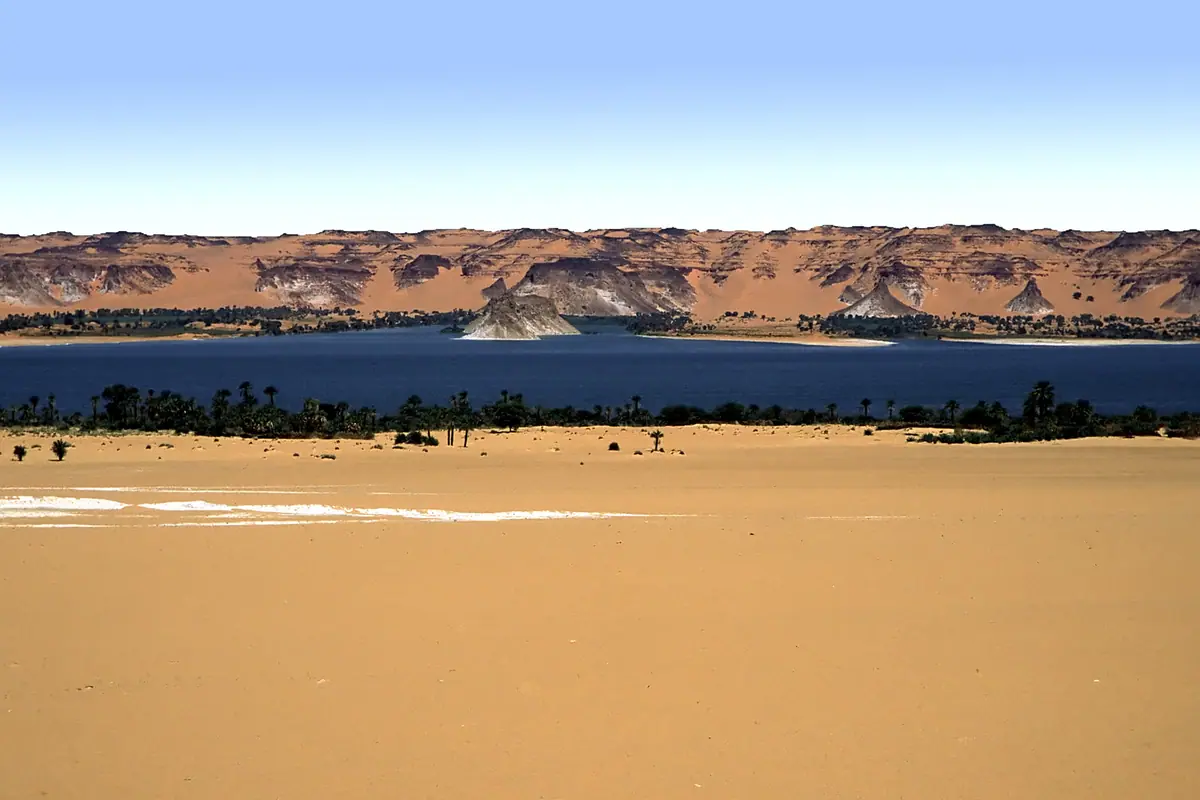
From November through February, daytime temperatures in N'Djamena sit in a comfortable band, evenings turn genuinely cool, and the desert north is at its most bearable. This is when the Lakes of Ounianga — the UNESCO-listed chain of 18 lakes in the Ennedi region, some of them startlingly blue among the dunes of Ounianga Kébir and Ounianga Sérir — can be visited without the punishing heat of spring. It is also the standard season for expeditions into the Tibesti Mountains, including the climb toward Emi Koussi, the highest point in the Sahara, and the surreal volcanic crater of Trou au Natron.
Hotel supply across Chad is thin, and this is the season when it feels thinnest. N'Djamena has the country's only concentration of international-standard hotels, mostly clustered around the central avenues and the airport district, plus a scattering of smaller guesthouses and furnished apartments. From October to March these fill with aid workers, diplomats, oil and mining staff and visiting delegations, so rooms should be reserved weeks rather than days ahead — particularly for the second half of December and January.
Outside the capital the picture is simpler. Abéché, the old caravan capital of the Ouaddaï region and home to a striking sultan's palace and a labyrinthine market quarter, has a handful of modest hotels that are perfectly serviceable but basic. Moundou and Sarh in the south offer similar small-town lodging. Anything deeper into the desert means tented camps or camping, arranged through an operator who handles the permits and the 4x4 logistics.
March to May: Heat, Dust and the Best Wildlife in Zakouma
As the cool season fades, temperatures climb steeply. By April, N'Djamena regularly hits the low 40s°C and the desert is beyond comfortable. Paradoxically, this is the most rewarding stretch of the year for Zakouma National Park in the southeast, Chad's flagship reserve and one of the last strongholds of the African elephant in the Sahel belt.
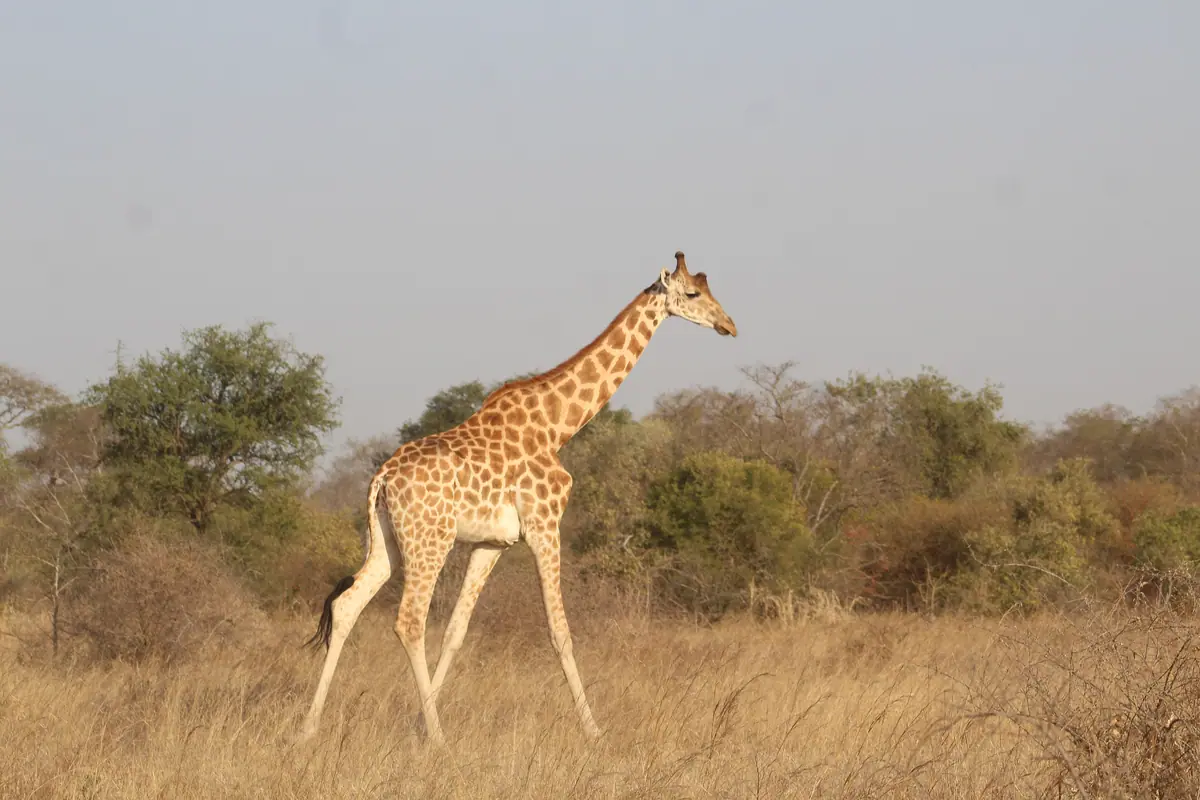
In the late dry season, vegetation thins, waterholes shrink and animals concentrate, making sightings far easier. Zakouma is known for its elephants — which have slowly recovered after decades of poaching pressure — along with Kordofan giraffe, Lelwel hartebeest, buffalo, roan antelope and huge flocks of waterbirds around the floodplains, including black-crowned cranes. The park's tented camps operate roughly from November to May, and the rains, when they arrive, shut the whole operation down because the tracks become impassable.
If your trip revolves around Zakouma, aim for March or April and accept the heat. Plan game drives for the first light of morning and the last two hours before dusk, drink far more water than feels necessary, and choose your room or tent with shade and a fan or air conditioning in mind. The reward is a park you may share with only a handful of other visitors.
June to September: The Rains, Green Sahel and Closed Parks
The wet season arrives in the south first, in late May or June, and creeps north to N'Djamena by July. In the far north it barely registers as weather — a brief, dramatic downpour in July or August is often the only rain the Ennedi sees all year. In the south it is a different world: rivers rise, low-lying tracks vanish, and travel between towns can take twice as long as it does in the dry season.
For most visitors this is not the season to attempt Zakouma, the Ennedi Massif or the Tibesti, since camps close, access roads deteriorate and the heat combines with humidity to make the Sahel genuinely oppressive. That said, the rains transform the landscape. The centre of the country, around the Hadjer el Hamis massif near Mongo, turns vividly green, and this is when the region's well-known dance ceremonies and market days are at their liveliest.
The upside for hotels is availability and price. N'Djamena's international-standard properties and guesthouses are quieter, and the modest hotels in Abéché, Moundou and Sarh are easier to secure at short notice. If your reason for visiting is humanitarian, business or family rather than sightseeing, the rainy months can be the most practical time to travel — just build slack into your itinerary for delayed domestic flights and slow road transfers.
The Must-See Sights and How the Seasons Shape Them
First-time visitors should build an itinerary around a short list of places. In and around N'Djamena, the National Museum of Chad holds archaeological and ethnographic collections that make sense of the country's extraordinary ethnic patchwork, while the Grand Mosque and the central market district give the capital its texture. A short drive brings you to Gaoui, a village celebrated for its pottery and its old mud-brick architecture.
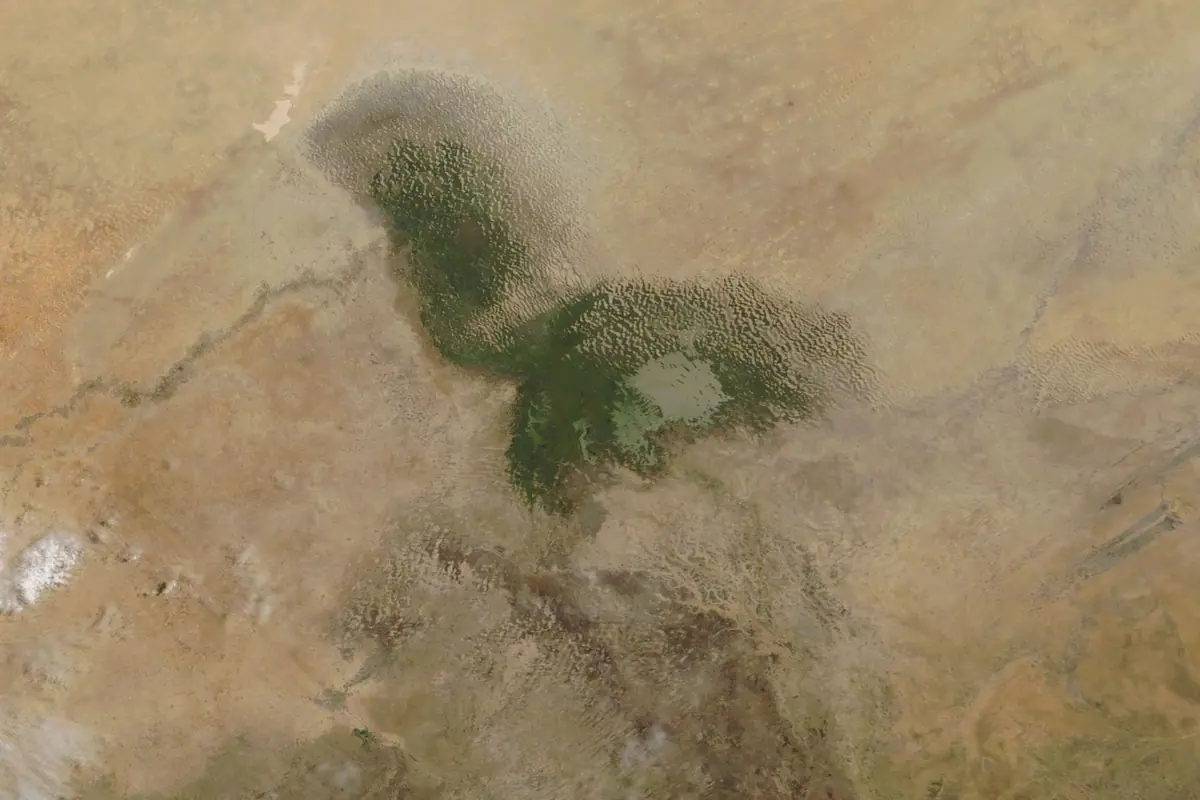
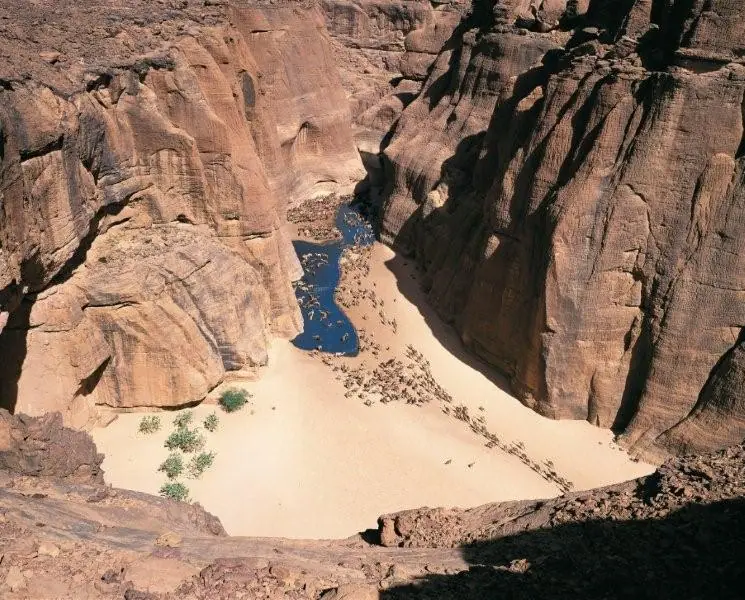
Further afield, Lake Chad itself remains one of the continent's great geographic stories — a shallow, island-dotted inland sea best reached via Bol, where fishing villages and reed islands are at their most accessible in the dry months. In the east, the Ennedi Massif is the country's most spectacular landscape: natural arches, canyons and the guelta of Archei, a hidden canyon pool where relict crocodiles survive. The Lakes of Ounianga, Emi Koussi and the Tibesti round out the bucket list.
Every one of these sights has a season. The Ennedi and Tibesti need the cool months from November to February and will require a licensed guide, permits and a properly equipped vehicle. Lake Chad and the N'Djamena sights are year-round but most comfortable from November to February. Zakouma wants the dry months, ideally March to May. Trying to see the desert and the park on the same trip is possible but tight — most travellers choose one and give it proper time.
Booking Windows, Practical Timing and What to Pack
Because accommodation is scarce, timing your booking matters as much as timing your trip. For N'Djamena, reserve two to three months ahead for the November-to-February peak, and expect the best rooms to be gone during major regional summits or election periods. Desert camps in the Ennedi and Zakouma's tented camps should be booked as part of an organised package, usually several months in advance, since vehicles, fuel, guides and permits all have to be arranged together.
Travel outside the capital generally requires authorisation from the relevant authorities, and desert regions are best visited with an established operator who understands current conditions. It is worth checking your own government's travel advice before booking anything, and building in buffer days — domestic flights and long road transfers in Chad rarely run to a tidy schedule.
Pack for two climates whatever month you choose: light, loose, long-sleeved clothing and a hat for the day, plus a fleece or jacket for desert nights between December and February, when temperatures in the Tibesti and Ennedi can drop close to freezing after sunset. Add a dust scarf or buff, a headlamp, water purification, and cash in the local Central African franc, since card acceptance is limited outside a few N'Djamena hotels.
Frequently asked questions
What is the best month to visit Chad overall?
November to February is the most comfortable window across most of the country, with cooler days in N'Djamena and bearable conditions in the desert north. If wildlife is your priority, shift to March or April for Zakouma National Park.
When is the best time to visit Zakouma National Park?
The park and its tented camps generally operate from November to May, and the late dry season between March and May offers the best wildlife concentrations around shrinking water sources. The rains close the park and make its tracks impassable, so avoid June to October.
Can you visit the Ennedi Massif and the Lakes of Ounianga, and when?
Yes, but only with a licensed operator, permits and a properly equipped 4x4. Plan for November to February, when daytime temperatures are manageable and nights are cold. March onwards becomes extremely hot and access is far harder.
Are hotels in N'Djamena difficult to book?
They can be. The capital has the country's only real concentration of international-standard hotels, and demand from aid, diplomatic and business travellers peaks between October and March. Book two to three months ahead for that window, and expect limited choice everywhere outside N'Djamena.
Is the rainy season a bad time to visit Chad?
Not necessarily. June to September brings green landscapes and easier hotel availability, and it is often the most practical period for business or family travel. But southern roads deteriorate, some camps close, and sightseeing in the desert and national parks is largely off the table.
Sort the rest of your trip
Everything for Chad, in one place
Transfer in Chad
Private driver waiting on arrival — no queues, no surprises.
Book a transfer
Things to do in Chad
Skip-the-line tickets, guided tours and standout experiences.
See experiences
Stay online in Chad
Travel eSIM — data the moment you land, no roaming bills.
Get an eSIM