Ten volcanic islands scattered across the Atlantic, each with its own climate, dialect and way of doing breakfast — Cabo Verde rewards travellers who choose their base carefully. Stay on the wrong island and you will miss the salt pans, craters and colonial squares that make this archipelago far more than a fly-and-flop destination.
Cabo Verde at a Glance: Ten Islands, Two Seasons, One Trade-Wind Climate
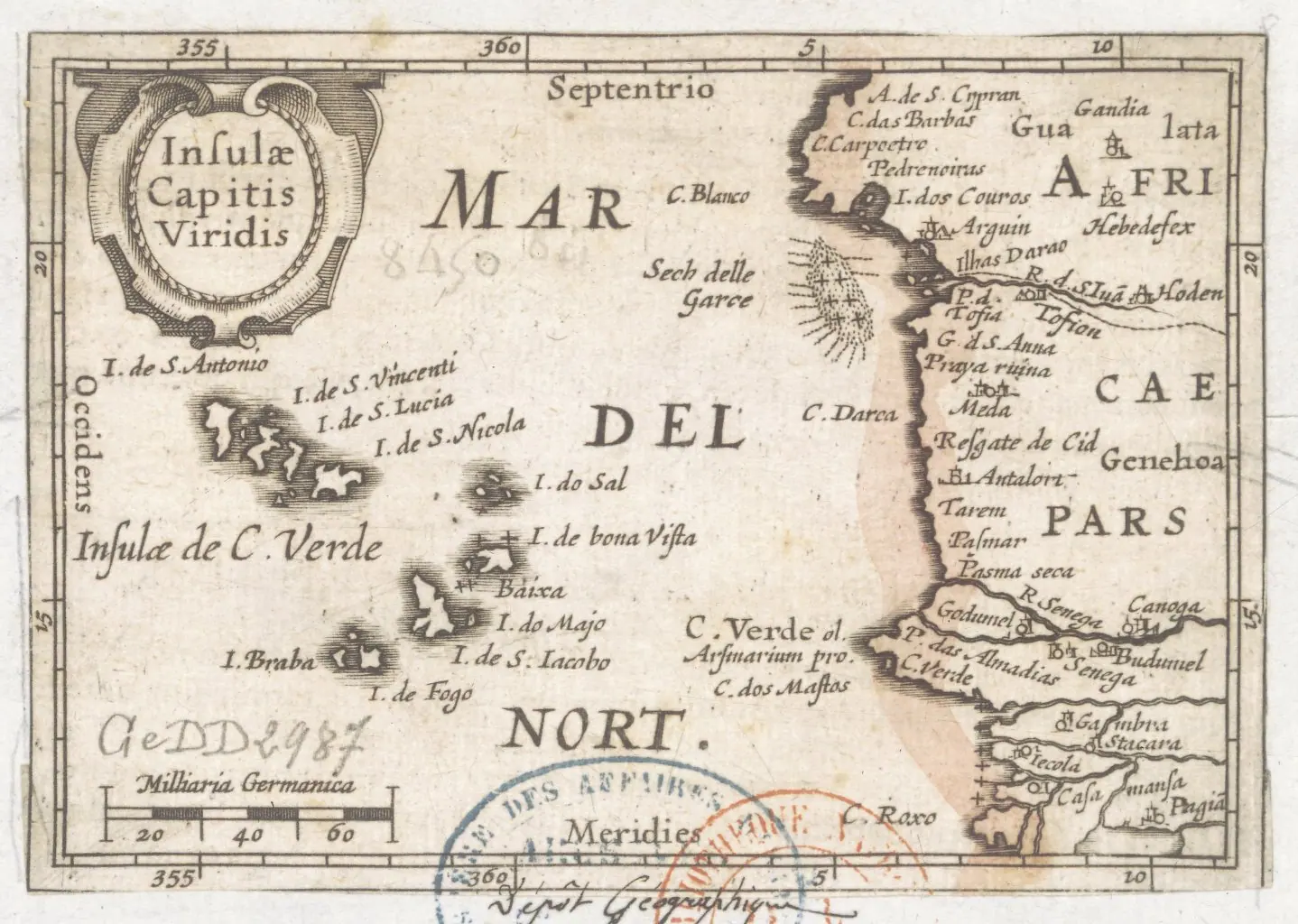
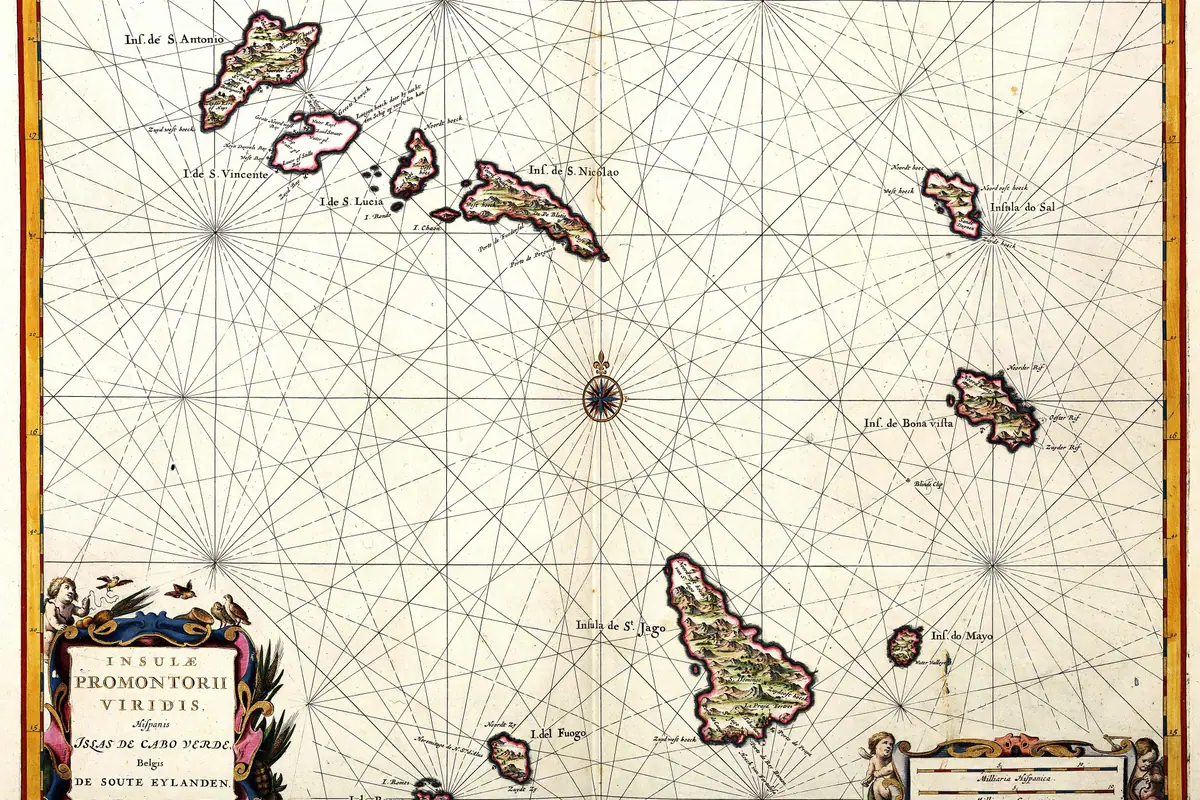
Cabo Verde sits roughly 500 kilometres off the West African coast, an archipelago of ten islands split between the windward group in the north — Santo Antão, São Vicente, Santa Luzia, São Nicolau, Sal and Boa Vista — and the leeward group of Maio, Santiago, Fogo and Brava in the south. The landscapes change dramatically from island to island: Sal and Boa Vista are flat, sandy and almost desert-like, while Santo Antão and Fogo rise into pine-scented highlands and an active volcano. Portuguese is the official language, but everyday life runs on Kriolu, and the currency is the Cabo Verdean escudo.
The climate divides the year neatly. The dry season from November to June brings reliable sunshine, sea temperatures in the mid-twenties and steady trade winds; the rains, when they come, usually arrive between August and October, along with higher humidity. Between December and February a dry, dusty haze known locally as bruma seca can drift in from the Sahara and soften the horizon for a day or two. For beach weather, aim for November through June; for turtle hatchlings on the sand, July to October; for humpback whales offshore, February to May; and for kitesurfing, the windiest months from December to March.
Accommodation is spread in a very particular pattern. Big all-inclusive resorts and beach hotels cluster on the south coasts of Sal and Boa Vista, boutique guesthouses and converted colonial townhouses fill Praia and Mindelo, eco-lodges and small beach retreats hide on Maio, hikers' inns sit in the valleys of Santo Antão, and on Fogo you can sleep in a village inside a volcanic crater. Matching your base to the kind of holiday you want matters far more here than in a single-island destination.
Sal: Resort Beaches, Salt Pans and the Blue Eye
Sal is the archipelago's most developed island for tourism, and most visitors land at Espargos before transferring south to Santa Maria, where the resort belt lines a long curve of pale sand. The main town beach, Praia de Santa Maria, is walkable from dozens of hotels and guesthouses, with beach bars and restaurants behind the dunes. Around the headland at Ponta Preta the swell picks up, which is why windsurfers and kitesurfers migrate here, and the shallow lagoon at Kite Beach, just east of town, hosts serious competitions in the windy season.
The island's two unmissable sights lie inland and to the north. At Pedra de Lume, salt has been harvested since the eighteenth century from pools inside an extinct volcanic crater, and the water is so saline you float without trying; the rusting machinery of the old salt works still stands at the crater's edge. Further along the north-west coast is Buracona, where a collapsed lava tube opens into a natural pool known as the Blue Eye — the trick is to visit in the middle of the morning, when sunlight angles into the underwater cave and the water turns a luminous turquoise from above.
Sal suits travellers who want convenience: short transfers, English spoken widely in Santa Maria, and easy day trips. Add Shark Bay near Serra Negra, where lemon sharks glide through knee-deep water at high tide, and Murdeira Bay, a sheltered spot where loggerhead turtles come ashore to nest between July and October. Because the island is flat and dry, there is little hiking — this is a place to swim, sail and eat grilled fish at sunset, not to climb mountains.
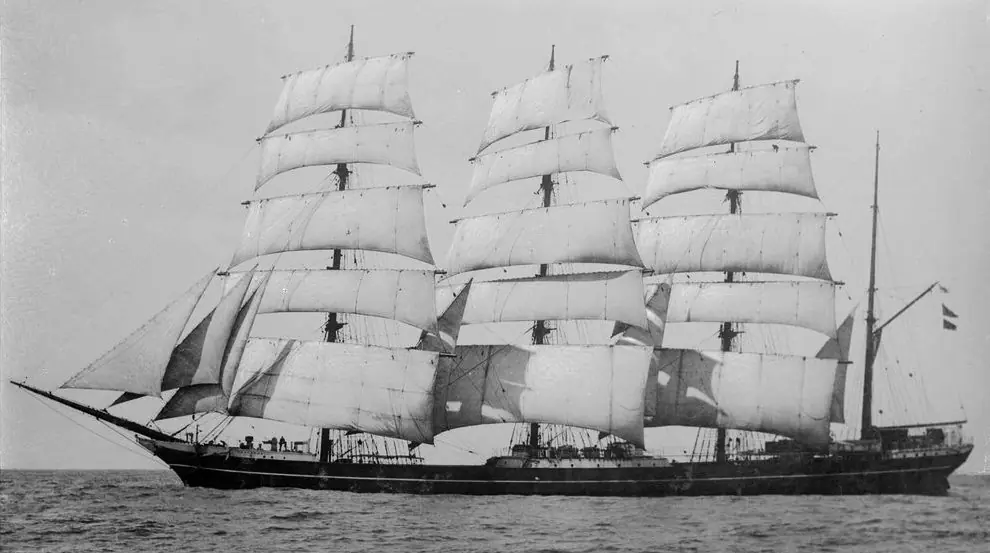
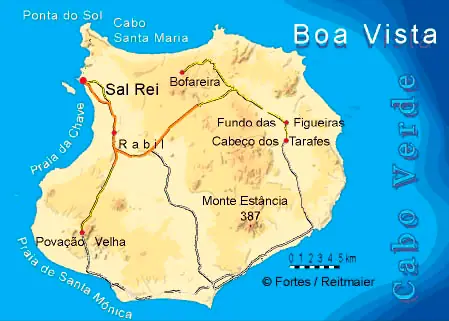
Boa Vista: Dunes, Turtle Beaches and a Rusting Shipwreck
Boa Vista is the sand island, with beaches running for tens of kilometres and a capital, Sal Rei, small enough to cross on foot in fifteen minutes. Praia de Santa Mónica is the showpiece: an enormous sweep of white sand with no buildings behind it, reachable by bumpy tracks from the resort strip. Near Sal Rei, Praia de Estoril and Praia da Chave are calmer options for families, while the little Forte Duque de Bragança above the harbour gives you a quick dose of history and a view over the bay.
Inland, the Deserto de Viana spreads orange dunes across the north of the island, best visited early or late in the day when the light is low. On the east coast, Curral Velho is a ghost village of ruined stone houses with a lagoon behind it that attracts waders and flamingos, and further south the cargo ship that ran aground on the beach in 1968 still sits half-buried in the sand, slowly rusting and slowly breaking apart. Both are reachable only with a four-wheel-drive or a local driver-guide.
Boa Vista's accommodation leans towards low-rise beach lodges and a handful of larger resorts, with a growing number of small boutique hotels in Sal Rei itself. Wildlife is the real draw: the island is one of the Atlantic's most important loggerhead turtle nesting grounds, with hatchlings emerging on beaches such as Ervatão and João Barrosa between July and October, and humpback whales passing offshore from February to May. Book turtle-watching excursions through your guesthouse, and expect strict rules about lights, torches and keeping your distance.
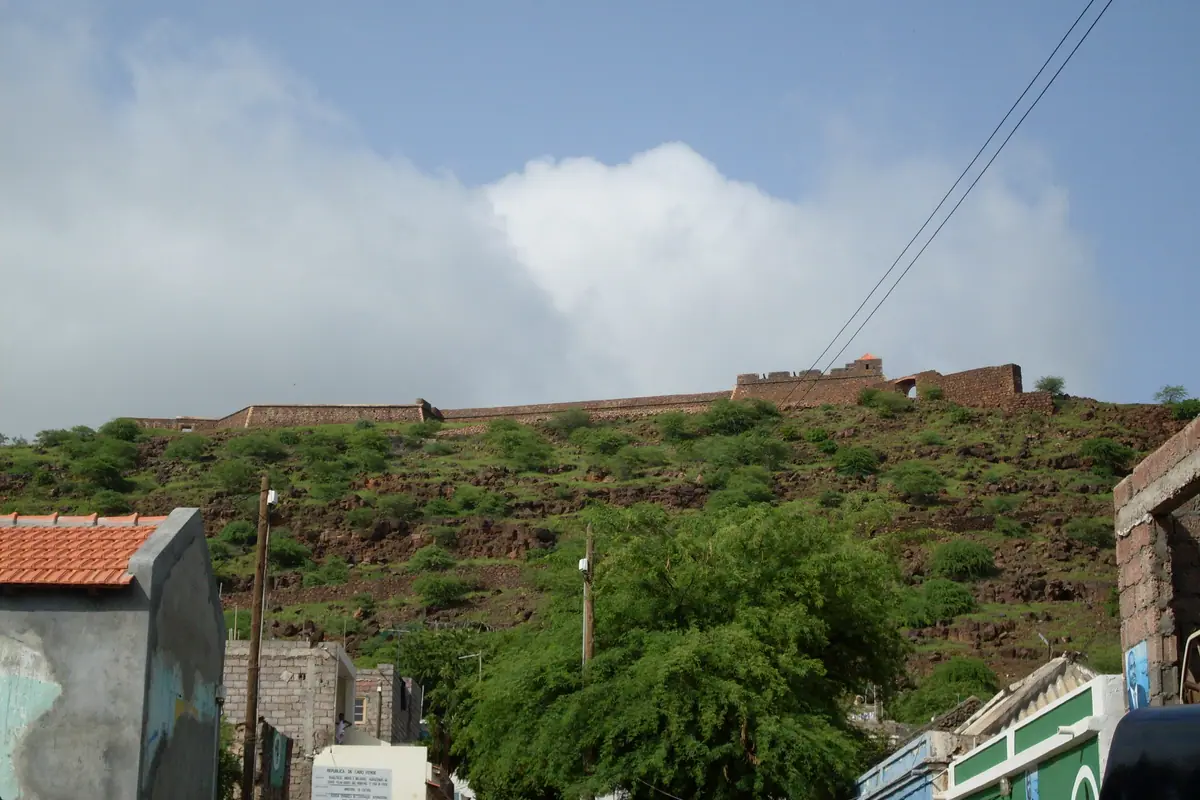
Santiago and Praia: Colonial History from the Plateau to Cidade Velha
Santiago is the largest island and home to Praia, the capital, built on a rocky plateau above the sea. The old upper town, known simply as the Plateau, is a grid of colonial buildings, small museums and the presidential palace, with the bustling Mercado de Sucupira tumbling down the cliff edge towards the port. Below, the beaches at Gamboa and Quebra Canela offer swimming within a short taxi ride of the centre, and several of the capital's best small hotels sit within walking distance of both the market and the waterfront.
Fifteen kilometres west lies Cidade Velha, the first European colonial town in the tropics and a UNESCO World Heritage Site. Founded in the fifteenth century as Ribeira Grande, it grew rich on the transatlantic trade and was repeatedly raided by pirates. Walk the cobbled Rua Banana, the oldest street in the country, and you pass the restored Nossa Senhora do Rosário church, the marble Pelourinho pillory in the square, and the ruins of the Sé cathedral. Above it all stands the Forte Real de São Filipe, whose ramparts look straight down the green valley of sugar cane and banana terraces.
Beyond the capital, Santiago keeps rewarding slow travel. The Serra Malagueta Natural Park offers ridge walks through farmland and forest, the beach at Praia de São Francisco is a local favourite for swimming and grilled fish, and the town of Tarrafal combines a lovely bay with a former prison camp that is now a sobering museum. Guesthouses here are simple, family-run and inexpensive, and the island is the easiest place in the archipelago to eat your way through catchupa, pastries and island-grown coffee.
São Vicente and Santo Antão: Mindelo's Music and the Crater-to-Coast Trails
Mindelo, on São Vicente, is the cultural heart of the country: a crescent harbour town of pastel colonial facades, a lively fish market and Praça Nova at its centre, where the evening passeggiata fills the square. Avenida Marginal runs along the water towards Laginha beach, and after dark the bars fill with live morna and coladeira. Time your visit for Carnival, held in the days before Lent, or for the Baía das Gatas festival on the August full moon, when the whole bay turns into a music camp. Outdoors, you can hike to the summit of Monte Verde, the island's high point at 774 metres, for views across the channel, or head to Salamansa and Calhau for wind and kitesurfing.
A one-hour ferry ride away, Santo Antão is the walking island and a total change of scenery. The ferry docks at Porto Novo, from where aluguers — the shared minibuses that serve as public transport — climb into the mountains. The classic hike starts at the Cova crater, a cool, pine-ringed bowl at around 1,400 metres, and descends through terraced fields into the Vale do Paúl, passing mango trees, sugar cane and tiny villages on the way to the coast.
Around Ponta do Sol and Ribeira Grande, the cliffs are stitched with old cobbled paths, and the village of Fontainhas clings so tightly to a headland that it is often called the most dramatically sited settlement in the country. Further west, Tarrafal de Monte Trigo is reached by boat or a long, spectacular drive. Accommodation here is mostly small guesthouses and family-run inns in the valleys, often with half-board and packed lunches for hikers — book ahead in the December-to-April walking season, when rooms in Paúl and Ponta do Sol fill quickly.
Fogo: Sleeping Inside a Volcanic Crater
Fogo is the archipelago's dramatic outlier, a single cone rising to Pico do Fogo at 2,829 metres, the highest point in Cabo Verde. Inside the caldera, on a black floor of ash and lava, sit the villages of Chã das Caldeiras, where farmers grow grapes, figs and coffee in volcanic soil and a handful of simple pensões put up hikers for the night. The last eruption, in 2014, destroyed parts of the village and reshaped the landscape you walk through today — expect stark, beautiful terrain and a sense of staying somewhere genuinely wild.
Climbing Pico do Fogo is the main event, usually starting before dawn to avoid the midday heat and taking four to six hours up and down with a local guide, who is required. Sleep at altitude and you will also see the Bordeira, the crater rim, glowing at sunset. On the coast, the old capital São Filipe has handsome colonial townhouses, a black-sand beach and a slow, friendly pace, and a short ferry hop reaches Brava, the smallest inhabited island, whose hill town of Nova Sintra is famous for its gardens.
Practicalities shape any Fogo stay. Bring cash, because ATMs are scarce and card payments often fail; expect cold nights in the crater and fierce sun on the climb; and confirm your guide and transfers before you arrive. More broadly, the same advice applies across the archipelago: high season runs roughly from December to April, when Christmas, New Year and Easter dates should be booked months in advance, while September and October are quiet enough that some smaller hotels and restaurants close entirely. Inter-island flights and ferries also fill up in peak weeks, so lock in your island-hopping legs at the same time as your rooms.
Frequently asked questions
Which Cabo Verde island is best for a first visit?
For a beach holiday with easy logistics and plenty of hotels, choose Sal or Boa Vista, both of which have international airports and resort strips. If you want culture, colonial history and hiking, base yourself in Praia on Santiago. Many travellers combine a beach island with one or two others by short internal flight or ferry.
What is the best time of year to visit Cabo Verde?
November to June is the driest, most reliable stretch for beach weather, with warm seas and steady trade winds. August to October is hotter and more humid with a chance of rain. Wildlife timing matters too: turtles nest and hatch from July to October, and humpback whales pass offshore between February and May.
How do you travel between the islands?
Inter-island flights connect the main islands, including Sal, Boa Vista, Santiago, São Vicente, Fogo, São Nicolau and Maio, but seats are limited in peak season. Ferries link São Vicente with Santo Antão in about an hour and Fogo with Brava, while longer overnight crossings connect the northern and southern groups. Schedules change with weather, so build in a buffer day.
What should I know about paying for hotels and meals?
The local currency is the Cabo Verdean escudo, and while larger hotels and restaurants on Sal, Boa Vista and in Praia and Mindelo accept cards, smaller guesthouses on Santo Antão, Fogo and Maio often prefer cash. ATMs are scarce outside the main towns, so withdraw enough before hopping to a quieter island, and carry small notes for markets, aluguers and beach bars.
Is Cabo Verde a good destination for hiking?
Yes, and the walking is best on Santo Antão and Fogo. Santo Antão offers valley and cliff trails between Cova crater, the Vale do Paúl and Fontainhas, while Fogo's centrepiece is the guided climb of Pico do Fogo. Bring sturdy shoes, layers for cold highland nights, a hat and more water than you think you need; guides are required on the volcano and easy to arrange locally.
Plan it — hotels in Cabo Verde
Live search, booked directly with trusted providers.
Sort the rest of your trip
Everything for Cabo Verde, in one place
Transfer in Cabo Verde
Private driver waiting on arrival — no queues, no surprises.
Book a transfer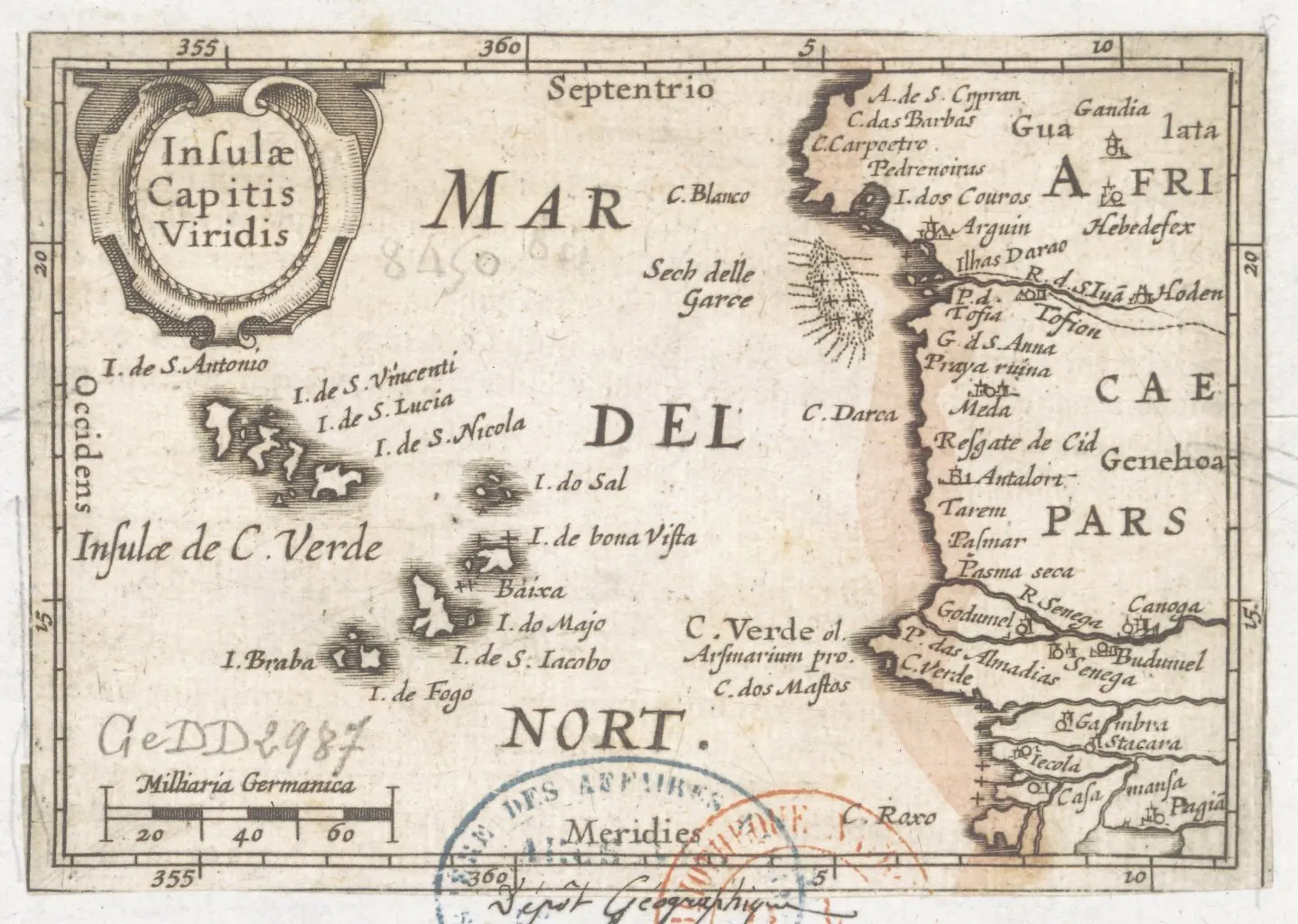
Things to do in Cabo Verde
Skip-the-line tickets, guided tours and standout experiences.
See experiences
Stay online in Cabo Verde
Travel eSIM — data the moment you land, no roaming bills.
Get an eSIM