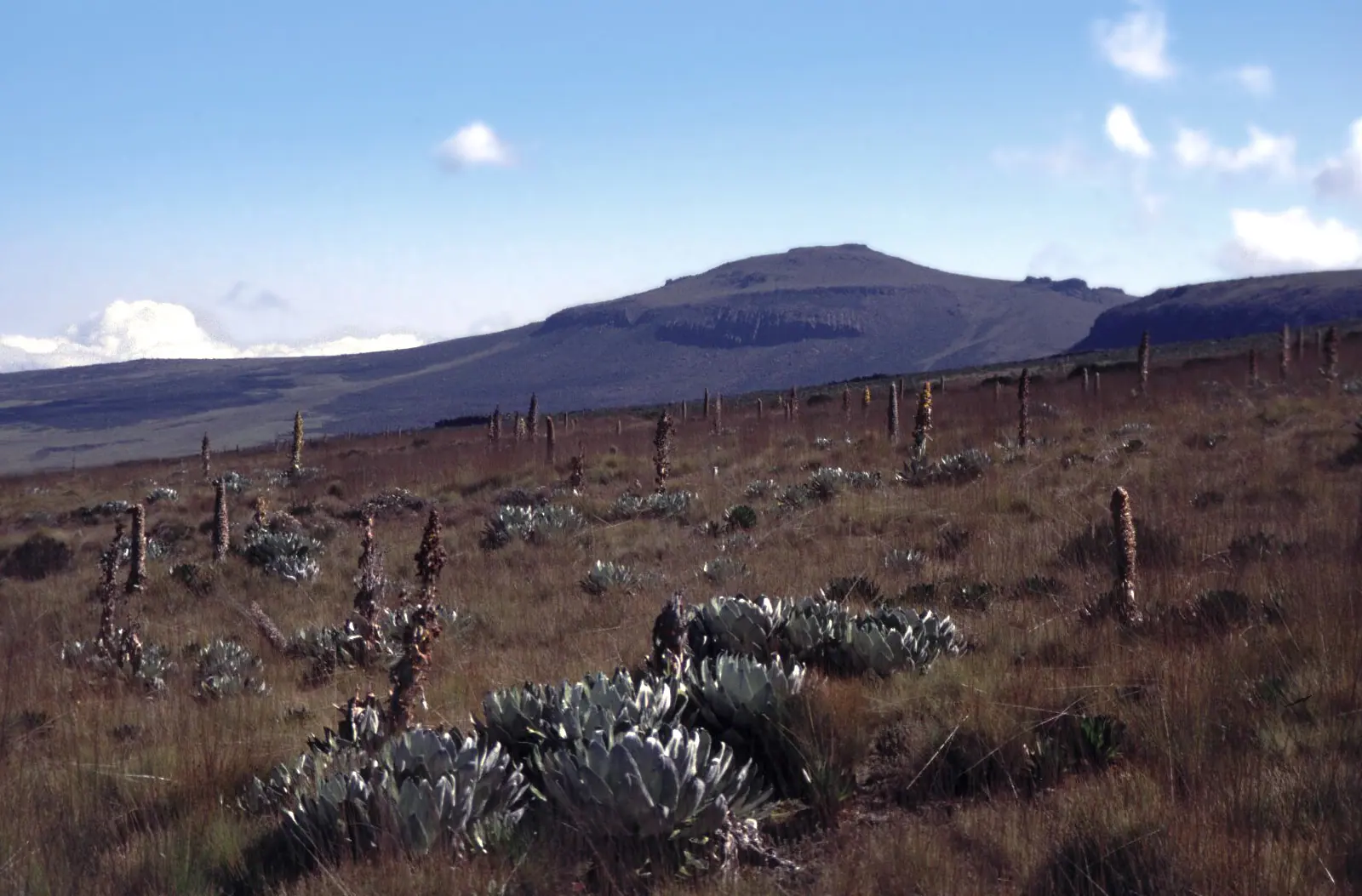
Kenya runs on two clocks: the long, hot dry months when the plains turn gold and animals crowd the waterholes, and the green season when the savannah erupts in grass and storms roll across the Rift Valley. Getting the timing right decides whether you watch wildebeest plunge into the Mara River or share a Diani beach with nobody at all — and it decides what you'll pay for a room.
Kenya's Seasons at a Glance: Rains, Heat and Hotel Rates
Kenya's climate is shaped by two rainy periods rather than four tidy seasons. The long rains arrive roughly from late March and soak the country into May, sometimes trailing into early June. The short rains follow in November, usually lighter and more scattered, often fading by mid-December. Between them sit two dry windows: the hot, clear stretch from January to early March, and the long cool dry season from late June through October, which is the classic safari period.
Where you are matters as much as when. Nairobi and the highlands sit at around 1,700 metres, so days hover in the low-to-mid twenties even in the dry season, and mornings in the Maasai Mara or on the Laikipia plateau can be genuinely cold before sunrise. The Indian Ocean coast — Mombasa, Diani, Watamu, Lamu — is a different climate entirely: humid, tropical and warm year-round, with the heaviest rain landing later than in the interior, often peaking in May.
This split has a direct effect on hotels. Safari camps in the Mara and Amboseli frequently close for part of April and May, when roads turn to soup and many bush airstrips are unreliable. Coastal resorts thin out or shut altogether during May. Outside those windows you'll find the widest choice of lodges, the easiest availability and the softest rates in the green-season months of late March, May and November.
July to October: The Great Migration and Kenya's High Season
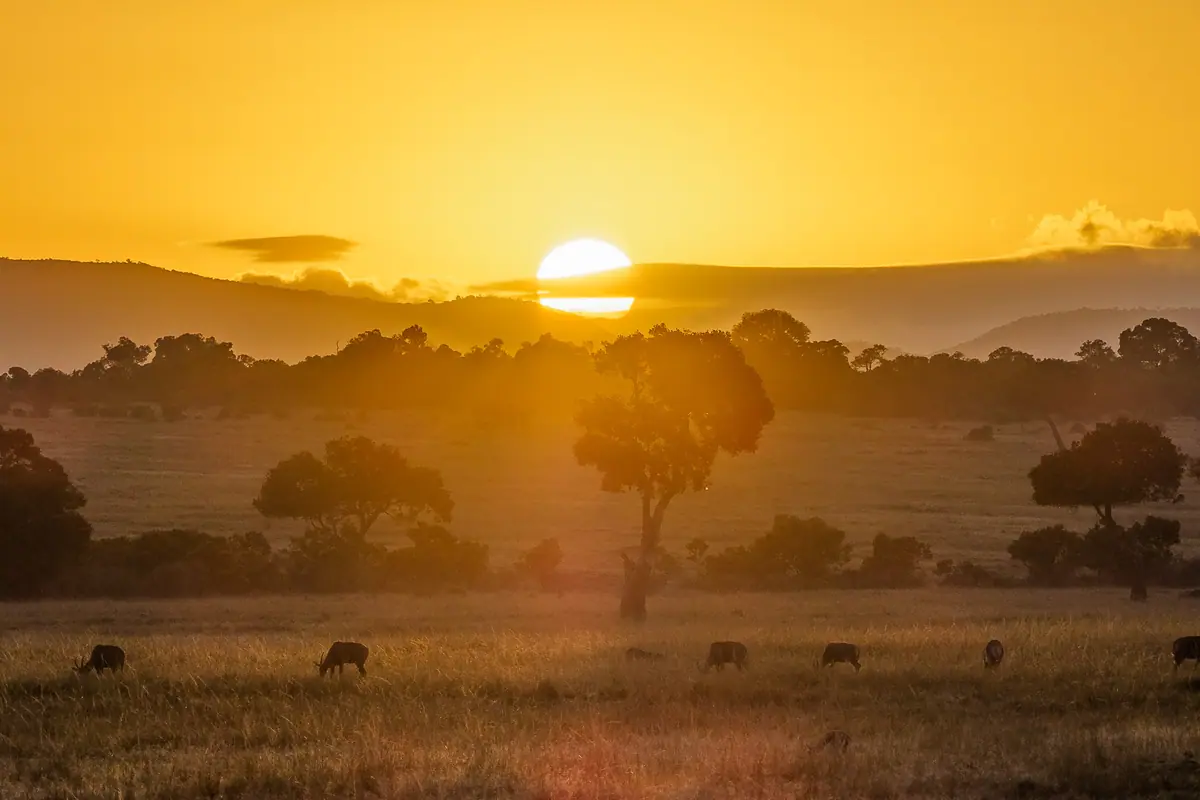
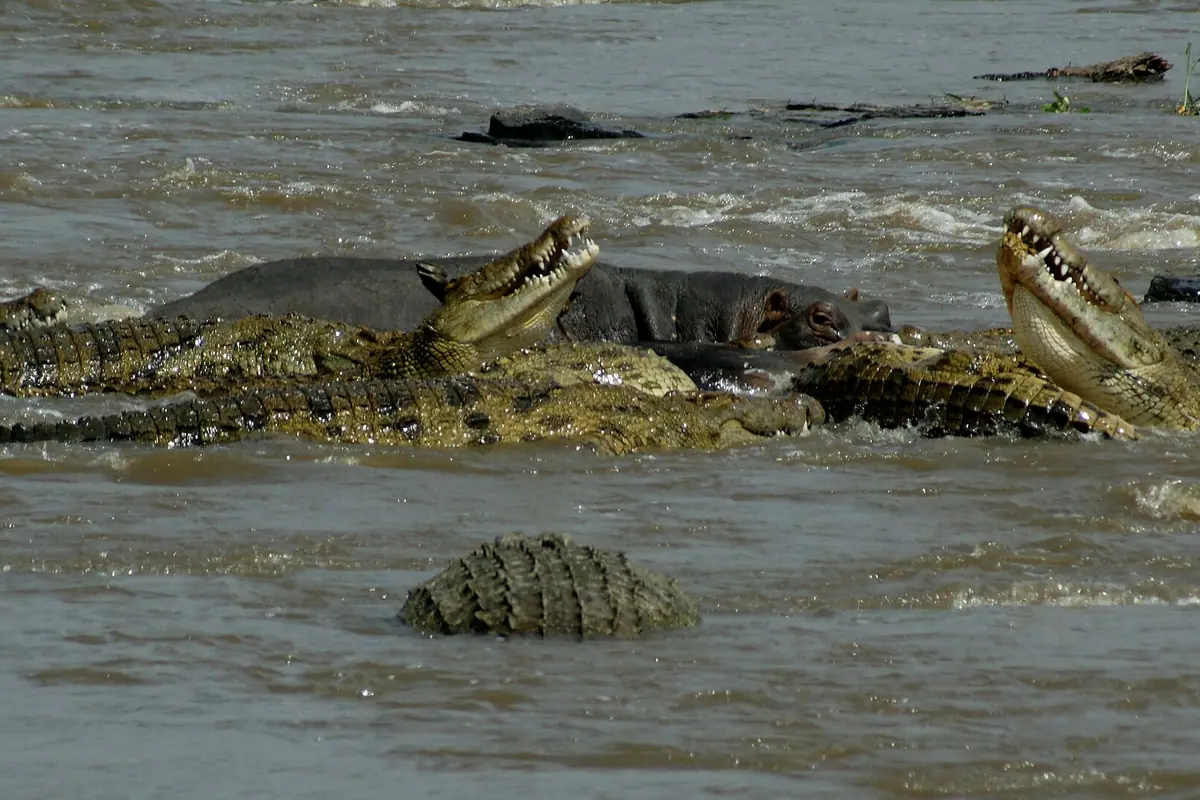
This is the stretch most people picture when they imagine Kenya. Vast herds of wildebeest and zebra cross from the Serengeti into the Maasai Mara National Reserve in search of grazing, and the Mara River becomes the stage for the famous crossings — animals bunching on the banks, dust rising, crocodiles waiting in the current. The drama concentrates on the northern reaches of the reserve and the adjoining Mara Triangle, though herds spread widely across the wider ecosystem.
Because grass is short and water scarce, predators are easier to find than at any other time. Lions, cheetah and leopard are visible across the Mara's plains, while Amboseli National Park offers its own dry-season spectacle: elephant families moving across the dusty flats with Mount Kilimanjaro rising behind them. Farther north, Samburu National Reserve and the adjoining conservancies deliver the species you won't see in the south — Grevy's zebra, reticulated giraffe, gerenuk and Somali ostrich — and Ol Pejeta Conservancy combines rhino sightings with views towards the Aberdare Range.
Two trade-offs come with this window. First, it's the most expensive and most crowded time to be in the Mara, with vehicles clustering around known crossing points and prime camps booked out many months ahead. Second, the weather can surprise: July and August mornings are chilly, and the short-grass months mean haze and dust. Visiting the private conservancies bordering the reserve is the standard fix — they allow off-road driving, night game drives and walking safaris, and they cap the number of beds.
January to Early March: Clear Skies, Big Cats and Birdlife
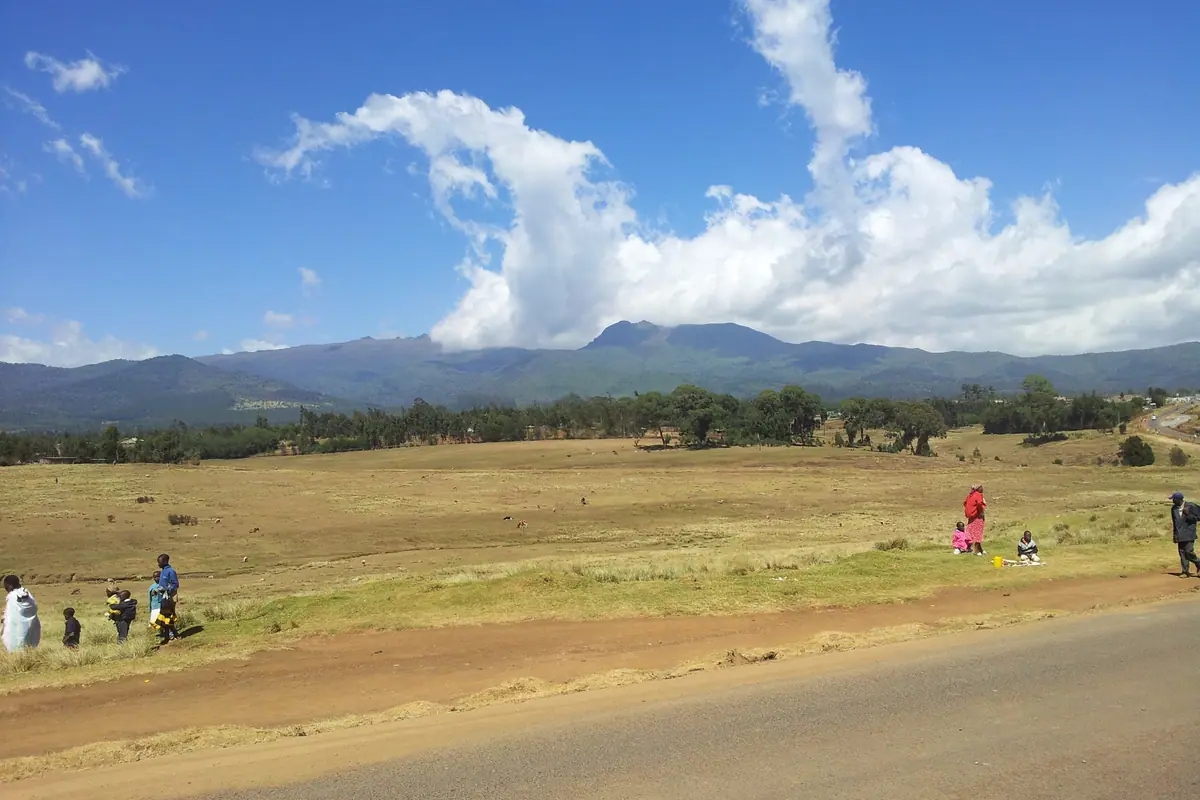
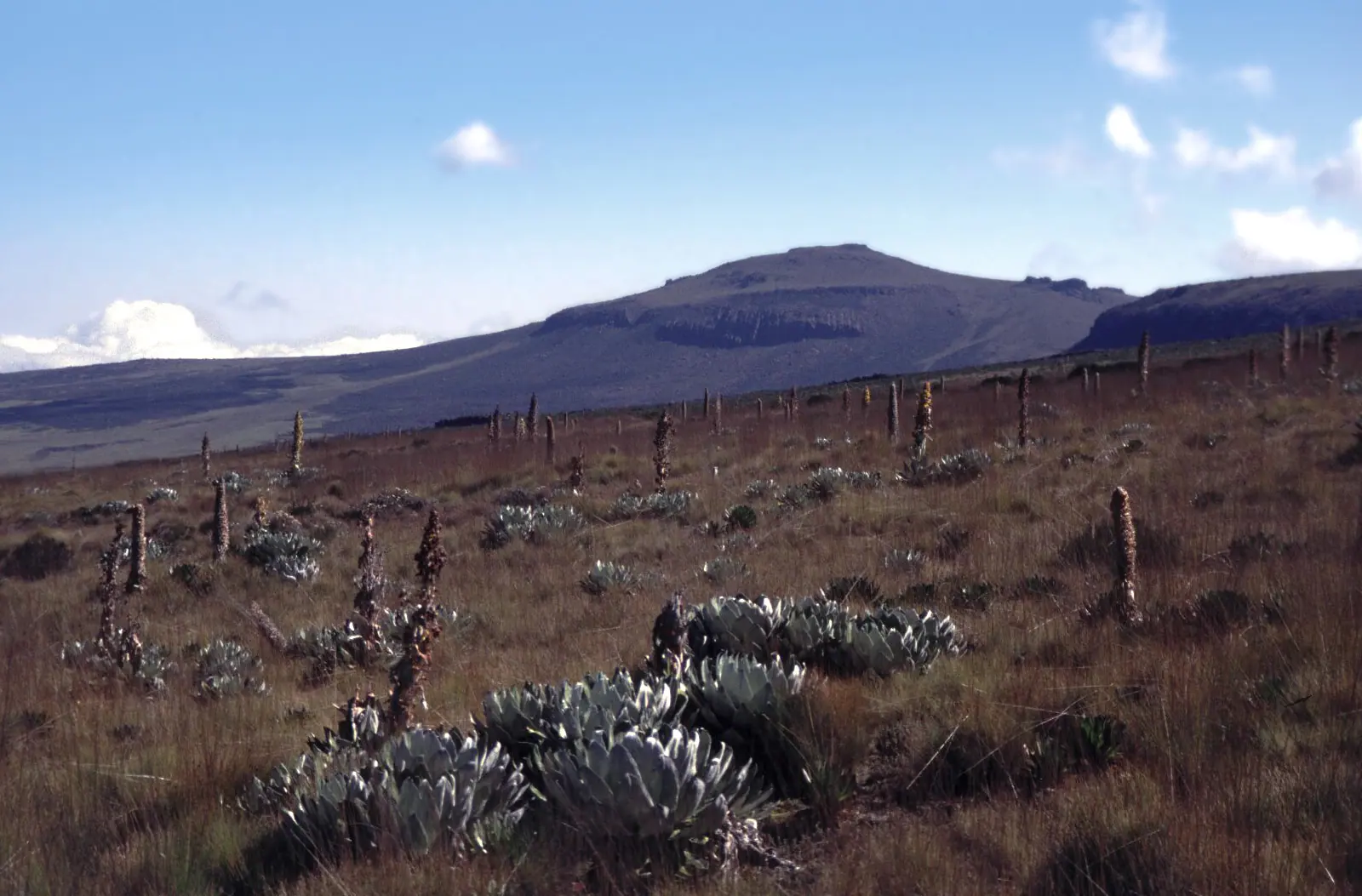
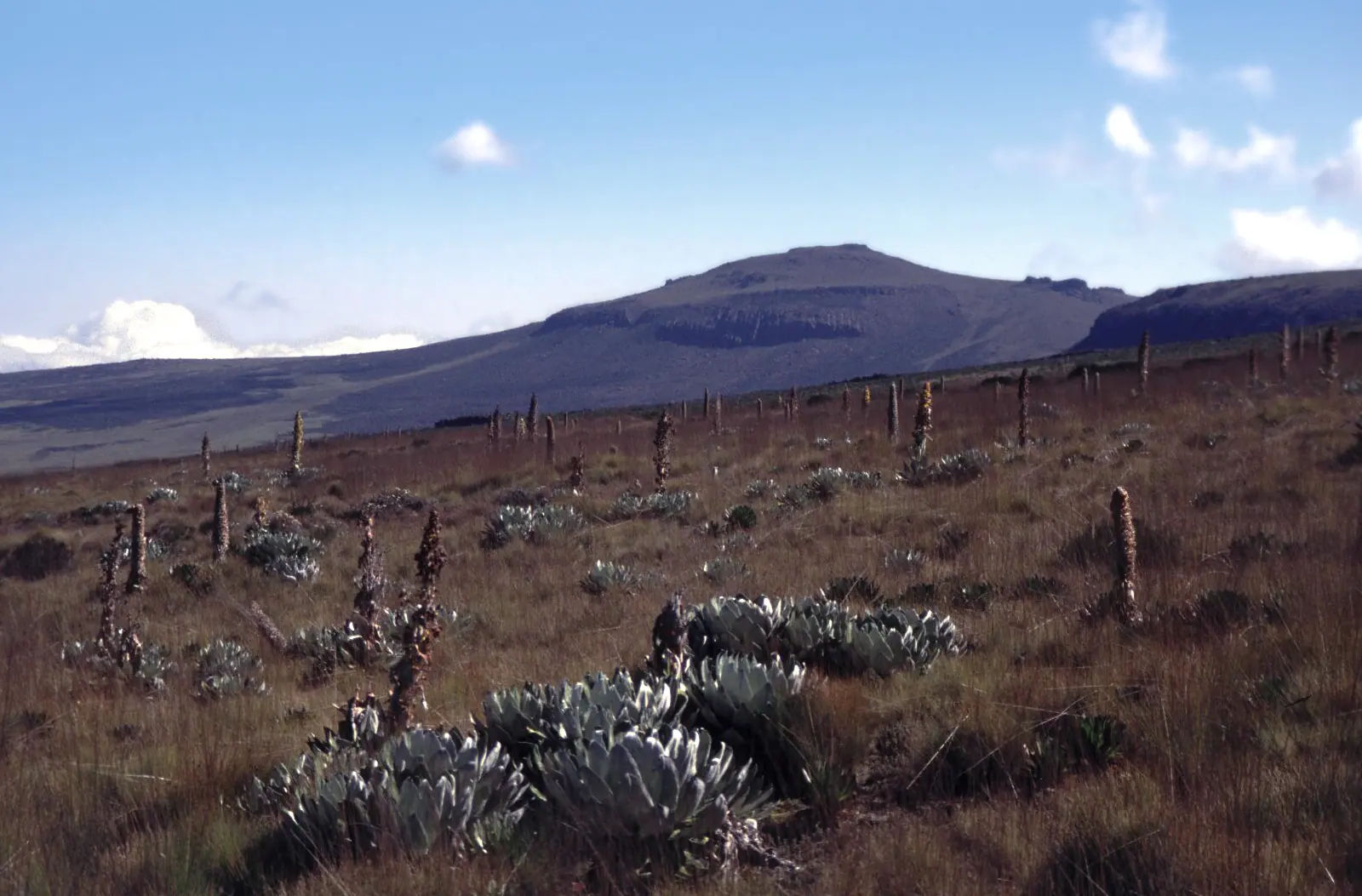
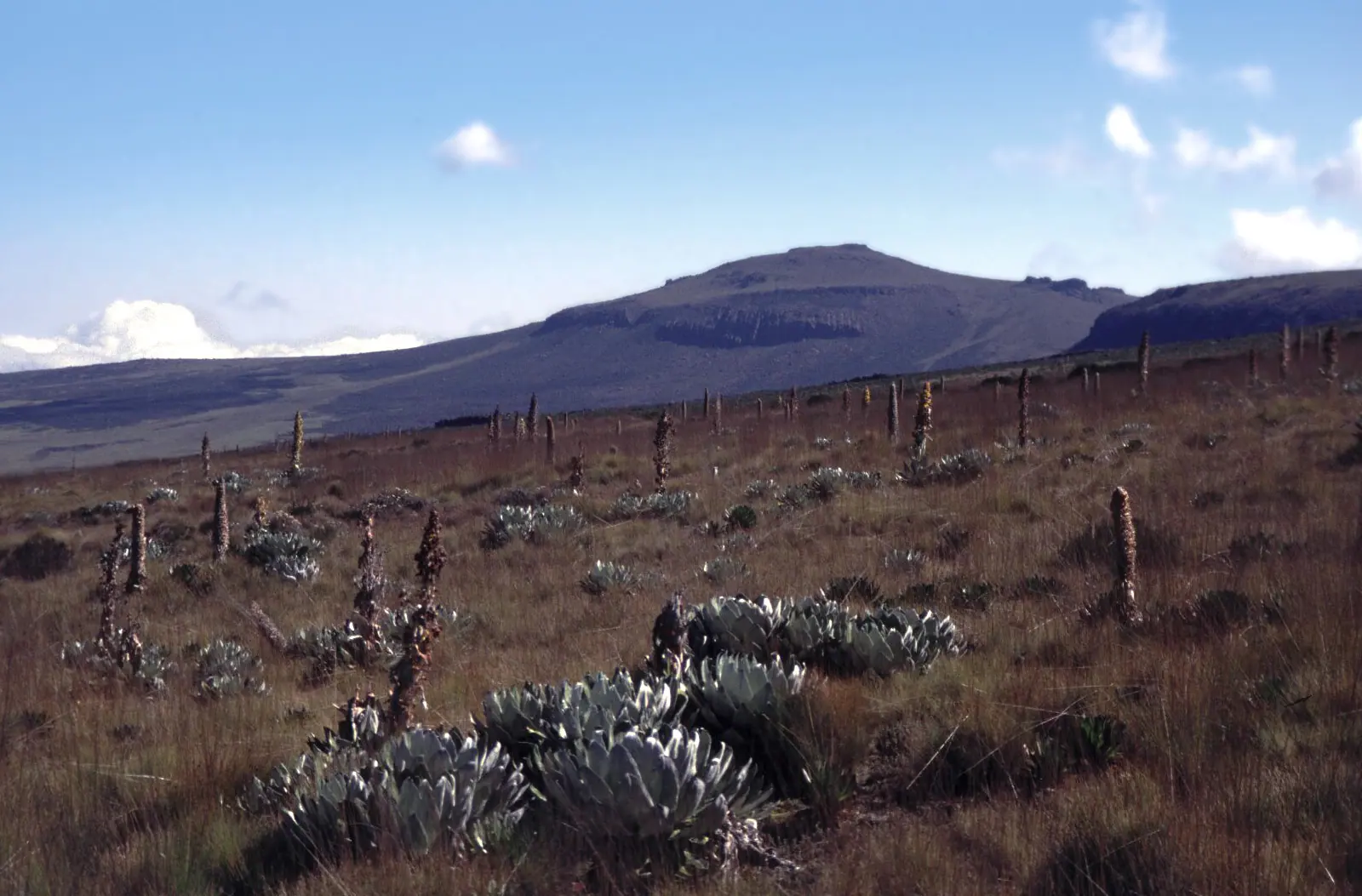
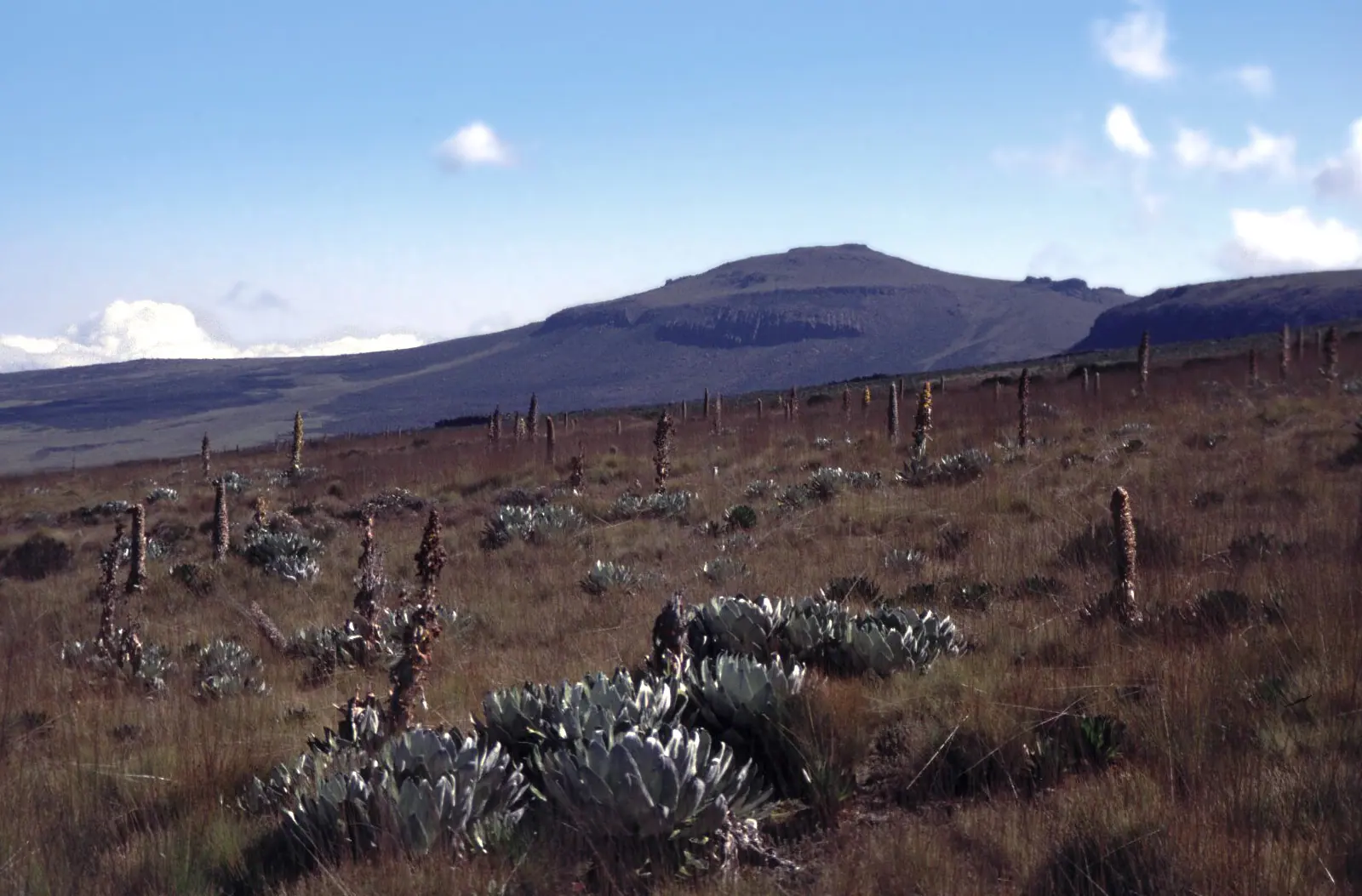
The short dry season that begins in January is arguably Kenya's most underrated safari window. Skies clear, the plains are green but not overgrown, and the light is superb for photography. Big cats are active and often found with cubs, and elephant herds in Amboseli and Tsavo East and West gather around remaining water sources. It's also the best time to combine a safari with Mount Kenya, whose trekking routes — approaching Point Lenana at 4,985 metres — are most reliably dry from January to February and again from late August into September.
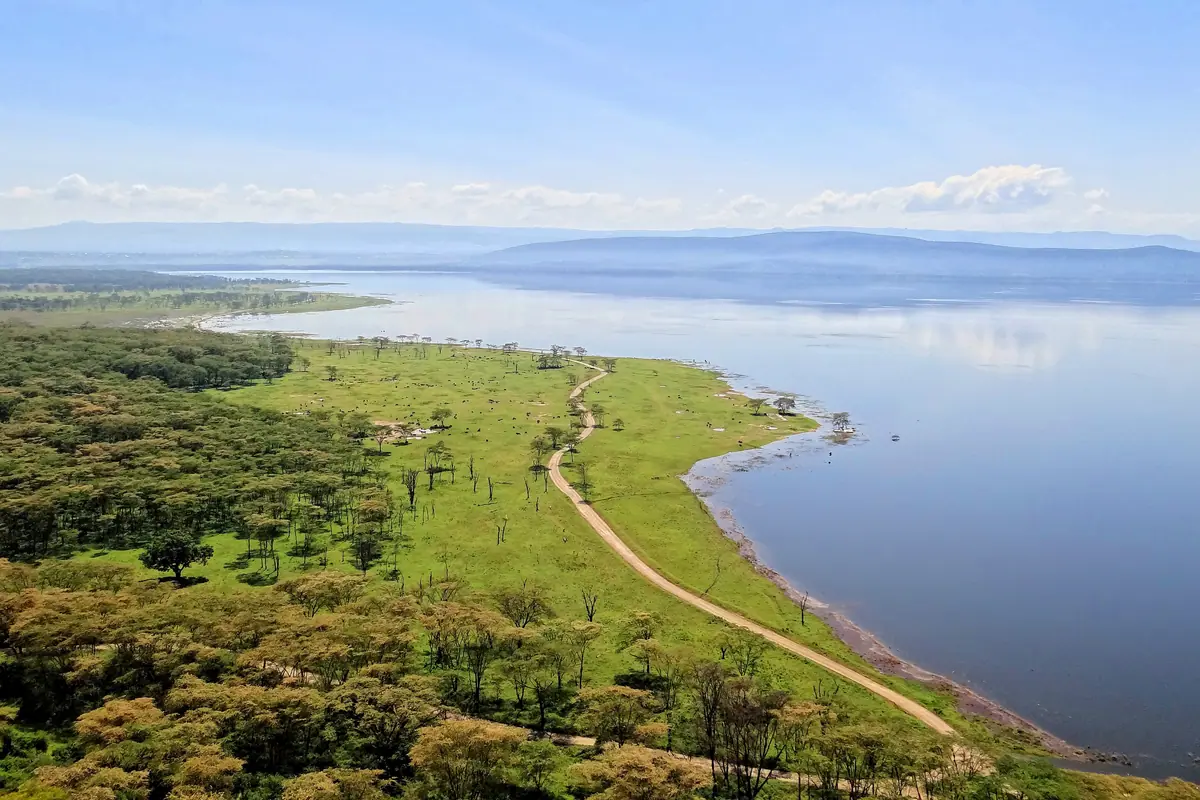
Birds are the other reason to travel now. Lake Nakuru National Park, with its flamingos, pelicans and rhinos, is at its most photogenic in these dry months, and the Rift Valley lakes — Naivasha, Baringo, Bogoria, Elementaita — fill with waterfowl and raptors. Serious birders tend to aim for November through March, when migratory species join the resident population and the lake shores are busy with nesting colonies.
On the coast, this is prime time. Seas are calm, visibility for diving improves, and whale sharks pass through the waters off Watamu and Diani between roughly November and March. Temperatures are hot and humid, so coastal hotels tend to be busy over the Christmas and New Year period, then quieter from mid-January onwards.
Late March to May: Green Season Value in the Rains
The long rains frighten people off, which is exactly why the green season appeals to travellers who value solitude and a lighter bill. Landscapes turn emerald, dust disappears, and the air is washed clean after each storm. Rain typically falls in heavy afternoon or evening bursts with bright mornings in between, rather than constant grey drizzle — though you should expect muddy tracks, slippery slopes and the occasional washed-out route in remote areas.
The practical consequences are real. Several Maasai Mara camps, Amboseli lodges and coastal resorts close for maintenance, especially in May, and prices elsewhere drop noticeably. Tsavo East and Tsavo West, closer to the coast and easier to reach year-round, stay open and feel wonderfully empty. Nairobi National Park, with the city skyline rising behind grazing rhino, is a rewarding half-day at any time of year and rarely affected by the rains.
This is also peak season for lush photography, newborns in the herds, and dramatic skies. If you're flexible, late March and early June offer a sweet spot: the heaviest rain has passed, camps are reopening, and rates haven't yet jumped to high-season levels.
The Coast and Lamu: Sunshine Beyond the Safari Circuit
Kenya's coastline deserves its own timing rules. Diani Beach, south of Mombasa, and Watamu and Malindi to the north are at their best from December to March, when the water is clearest and the winds suit diving and snorkelling. From June to October the kitesurfing season kicks in around Diani and Galu, with steady onshore winds and slightly cooler air. The unreliable months are April and May, when humidity peaks, many beach hotels close and seaweed can dull the water.
Culture rewards the same trip. Lamu Old Town, a UNESCO World Heritage Site of coral-stone houses, donkey alleys and carved Swahili doors, stays warm all year and is at its most atmospheric during the Lamu cultural festival period. In Mombasa, Fort Jesus — a 16th-century Portuguese fortress overlooking the old harbour — and the winding lanes of Old Town pair naturally with a few days on the sand.
When choosing a coastal hotel, think about the monsoon pattern, not just the temperature. Hotels on the sheltered western side of the bays and those with reef-protected swimming areas stay pleasant even when the kaskazi and kusi winds shift. Booking early matters most for the Christmas–New Year fortnight, when rates and demand on the south coast reach their annual peak.
Mount Kenya, the Rift Valley and How to Time Your Booking
Kenya's interior highlights each have their own best months. Hell's Gate National Park, near Lake Naivasha, is superb for walking and cycling safaris in the dry seasons, when the gorge is safe to explore and the rock towers are dry enough to climb. Mount Kenya's trekking routes are most dependable in January–February and August–September, while the Aberdare Range and the forests around it are wettest from April to May and again in November.
For hotels, the single most useful rule is that Kenya's peak demand doesn't track the weather alone — it tracks school holidays, the migration calendar and the festive season. If you want a bed inside the Maasai Mara National Reserve, in a conservancy, or on a private Laikipia ranch between July and October, or over Christmas and New Year, plan six to twelve months out. For January to March and the shoulder weeks of June and November, two to four months is usually enough.
A few structural details help you choose where to sleep. Lodges inside parks and reserves cut out long pre-dawn drives but cost more; camps on conservancies offer night drives and walking, which national parks generally prohibit. Nairobi stopovers work best in neighbourhoods close to Nairobi National Park, the Karen Blixen Museum and the city's craft markets, so a single overnight doesn't become an all-day transfer. Whatever the season, pack layers for highland mornings, light rain gear for the green months, and reef shoes for the coast.
If your dates are fixed, remember that Kenya rarely delivers a bad trip — only a different one. Dry months bring concentrated wildlife and higher prices; wet months bring green plains, empty roads and rooms that cost a fraction of the high-season tariff.
Frequently asked questions
What is the best month to visit Kenya for a safari?
July to October is the classic window for the Maasai Mara and the Great Migration, with dry conditions and concentrated wildlife. January to early March is the strongest alternative, offering clear skies, excellent big-cat viewing and good conditions for trekking Mount Kenya.
When can I see the Great Migration in the Maasai Mara?
Herds generally arrive in the Maasai Mara from around July and stay into October, with the most dramatic Mara River crossings usually happening between August and early September. Exact timing shifts each year with rainfall, so build in flexibility.
Is the rainy season a bad time to visit Kenya?
Not necessarily. The long rains from late March to May and the short rains in November bring lush scenery, fewer visitors and much lower room rates. Expect muddy roads, some camps and coastal hotels closed, and rain falling mostly in heavy afternoon bursts rather than all day.
When is the best time for a beach holiday on Kenya's coast?
December to March offers the calmest, clearest water around Diani Beach, Watamu and Malindi, along with whale shark sightings offshore. June to October suits kitesurfing and cooler conditions. Avoid April and May, when humidity peaks and many resorts shut.
How far in advance should I book safari lodges in Kenya?
For July to October, or over Christmas and New Year, book six to twelve months ahead — prime camps inside the Maasai Mara and the private conservancies sell out early. For January to March and the shoulder months of June and November, two to four months is typically sufficient.
Sort the rest of your trip
Everything for Kenya, in one place
Transfer in Kenya
Private driver waiting on arrival — no queues, no surprises.
Book a transfer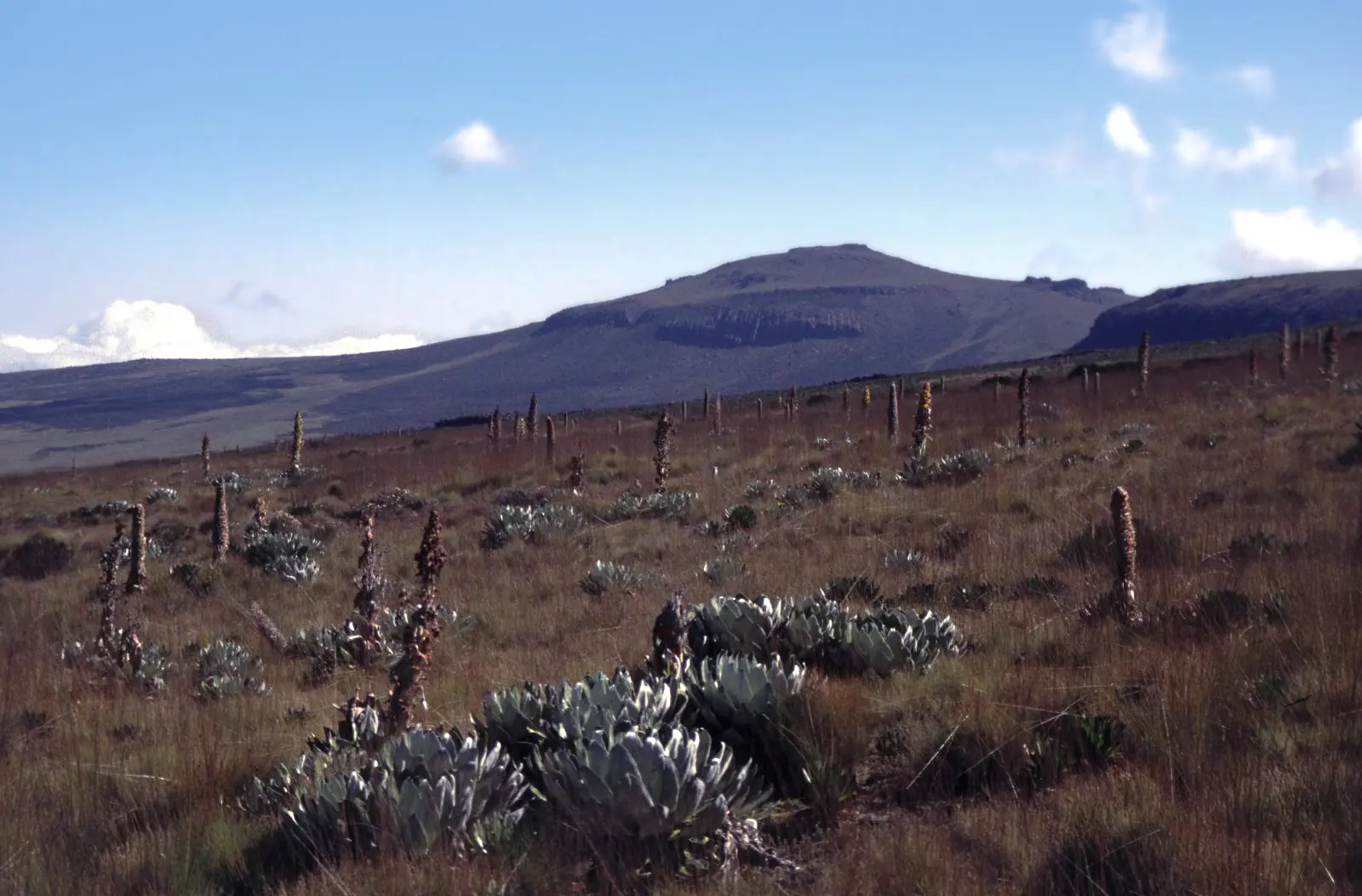
Things to do in Kenya
Skip-the-line tickets, guided tours and standout experiences.
See experiences
Stay online in Kenya
Travel eSIM — data the moment you land, no roaming bills.
Get an eSIMMore guides in Kenya
Best Places to Visit in Kenya: the Maasai Mara, the Coast and Beyond
Top Things to Do in Kenya: Safari Icons, Coast and Must-See Landmarks
Kenya in One Week by Plane: A 7-Day Flying Safari Itinerary
Touring Kenya: Food, Culture and Local Experiences Beyond the Safari Jeep