Timor-Leste is Southeast Asia's youngest nation and one of its least visited — a half-island of cloud-wrapped ridges, empty white beaches and reef drop-offs that most travellers have never considered. In a single week you can snorkel over coral off Atauro, climb to a dawn statue on the country's highest peak, and stand on the island's easternmost shore looking across a channel to a sacred, uninhabited island. Distances look short on the map and feel long on the road, which is exactly why it rewards slow travel.
Dili: The Small Capital That Explains the Country
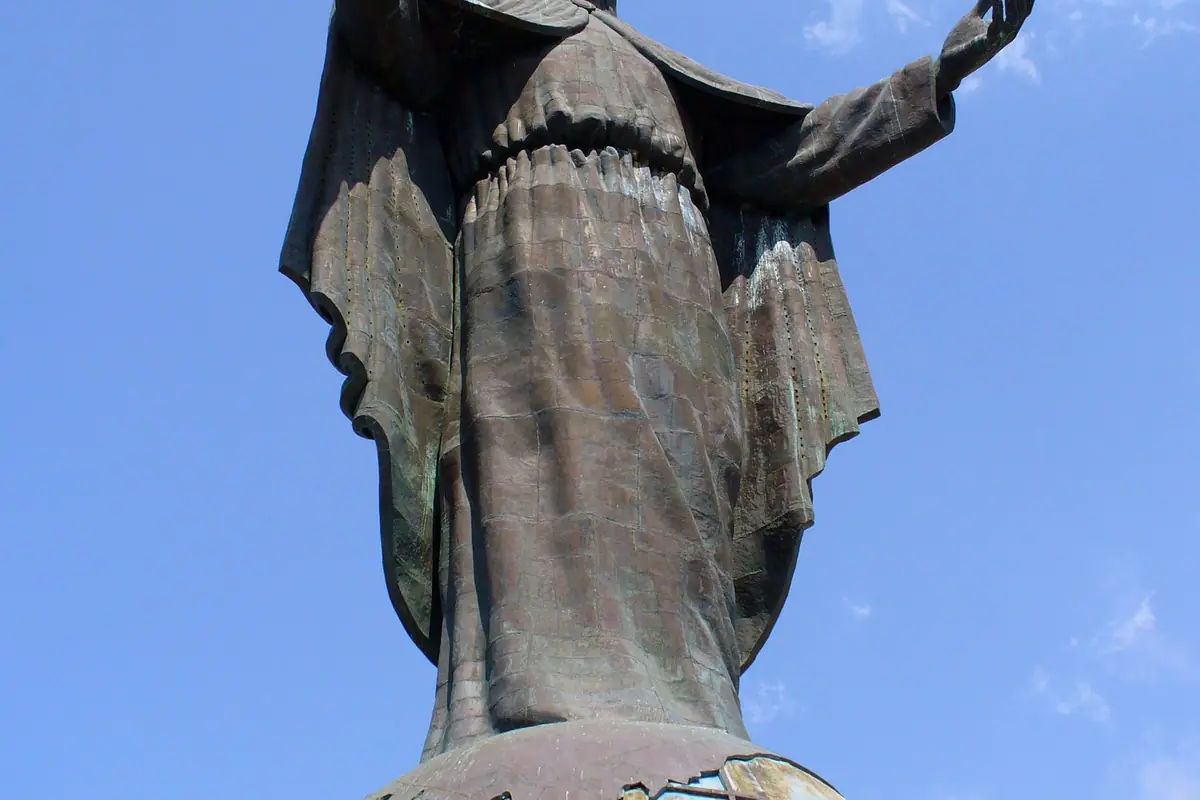
Almost every trip begins on Dili's waterfront, where the Avenida de Portugal curves past the pale Government Palace, the Immaculate Conception Cathedral and the lawns of Largo de Lecidere. It is a capital you can read in an afternoon: fishermen mending nets at dawn, school groups in uniform, and the smell of grilling fish after dark. Twenty minutes east at Cape Fatucama, the 27-metre Cristo Rei statue stands with its back to the bay; climb the steps behind it for a sweep of white sand, turquoise shallows and the islands on the horizon, then swim at the beach directly below.
To understand what this country lived through, give half a day to the Resistance Museum on Rua da Cidade de Lisboa, where photographs, letters and homemade radio equipment tell the story of the long occupation and the independence struggle. South of the centre, Santa Cruz Cemetery is a quiet, deeply moving place marked by white crosses. In Balide, guided visits inside the former prison compound add another layer, while the Arte Moris art centre shows the same history through a younger, louder lens.
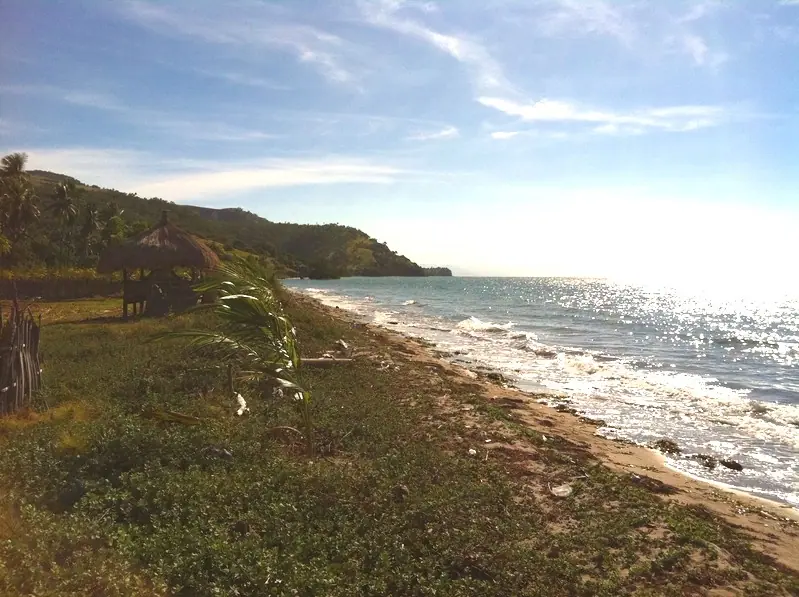
Two days is a sensible Dili allowance. Mornings are best for the tais market near the waterfront, where handwoven cloth is sold by the metre, and for the produce stalls behind it. Save an afternoon for Areia Branca, the 'white sand' beach 30 to 40 minutes east toward Metinaro, where thatched shelters, calm water and grilled fish make an easy introduction to the coast before you head further afield.
Atauro Island: Reefs, Ridge Villages and a Whale Highway
Atauro rises out of the sea about 25 kilometres north of Dili, reached by a scheduled ferry from the capital's harbour in roughly two hours, with faster private boats and small aircraft also making the crossing. The island's spine is Mount Manucoco, and the four-to-five-hour return hike from the east-coast village of Vila rewards you with views straight back to Dili's shoreline. Between Vila, Beloi in the south and the ridge villages of Makadade and Bikeli, life is quiet and community-run: weaving cooperatives, small homestays and meals of fresh fish and cassava leaves.
The water is the real draw. The strait between Dili and Atauro is a migration corridor, and between roughly October and December blue whales, sperm whales and large dolphin pods move through it — local boat operators run watching trips in season. On the reefs you can expect turtles, bumphead parrotfish and broad table corals, with good snorkelling straight off the beach at Beloi and around the jetty at Vila. Divers usually rate visibility best in the shoulder months at either end of the dry season.
Practicalities matter here: bring enough cash in US dollars, since ATMs are scarce, plus drinking water and reef-safe sunscreen. Electricity can be intermittent, so a power bank is useful. Two to four nights turns a day trip into a proper stay, and advance arrangements for boats and beds are wise in the July-to-September peak.
The Wild East: Nino Konis Santana National Park, Tutuala and Jaco Island
The drive east from Dili runs through Baucau and on to Lospalos, and it takes most of a day — six to seven hours in a sturdy vehicle, with stretches of sealed road giving way to rough gravel. Beyond Lospalos the landscape opens into Nino Konis Santana National Park, the country's first national park, which protects coastal forest, savanna, coral reefs and Lake Ira Lalaro, the largest lake in the country and habitat for saltwater crocodiles. The lake is skirted by a rough track rather than a proper road.
At Tutuala, a cliff-top village with wide views over the sea, the true highlight begins: from the beach below, local boatmen ferry visitors across a narrow channel to Jaco Island, an uninhabited islet of white sand, glassy water and living coral. Jaco is culturally sacred to the local community, and visits are day-only — no camping or overnight stays — so go with respect and a local guide. Nearby is Ponta Leste, the easternmost point of Timor, where the land simply stops and the water keeps going.
There are no fuel stations or ATMs beyond Lospalos, so fill up and carry supplies, water and reef shoes. Accommodation is simple: a small guesthouse on the Tutuala headland and family-run stays in Lospalos. The dry months from May to November are by far the easiest for this corner of the country, when tracks dry out and the channel crossing is calm.
Mount Ramelau: Sunrise on the Country's Highest Peak
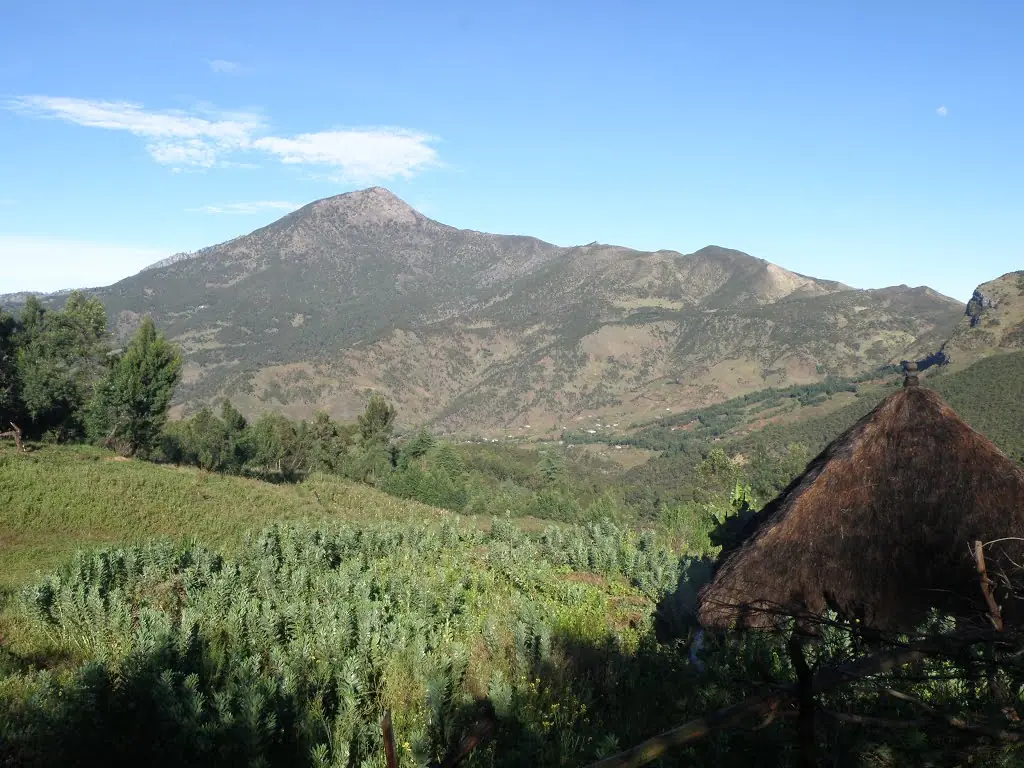
Mount Ramelau, also called Tatamailau, tops out at 2,963 metres in the central highlands and is the highest point in Timor-Leste. The usual base is the small mountain town of Hato-Builico, reached by a rough road from Maubisse. Most walkers set off at three or four in the morning to be on the summit for sunrise, following a dirt road and then a trail for roughly two and a half to three and a half hours uphill.
At the top stands a statue of Our Lady of Ramelau, and on 7 and 8 September tens of thousands of pilgrims climb through the night for a mass at the summit — beds in Hato-Builico and Maubisse sell out well in advance. On a clear morning you look down across the island to the sea on both the north and south coasts. Pre-dawn temperatures commonly sit between five and ten degrees Celsius, so pack a fleece, gloves, a headtorch and plenty of water.
Time your climb for the dry season, between May and November; July and August bring the coldest, clearest mornings, while the wet season turns the access roads to mud and triggers landslides. Allow at least two days from Dili — one to reach the highlands, one to climb and descend.
Coffee Highlands and Colonial Hill Towns: Ermera, Maubisse and Baucau
Ermera district is the heart of Timor-Leste's coffee country, where shade-grown arabica covers the slopes around Gleno and Letefoho. Farm gates and small processing sheds along the winding roads often welcome visitors, and buying beans directly is one of the best souvenirs you can carry home. Roads here are slow and switchbacked, so plan on a full day for what looks like a short hop on the map.
Maubisse, sitting around 1,400 metres, makes a comfortable highland base: a Portuguese-era pousada with mountain views, cool nights, and a lively Saturday market where produce, tais and horses change hands. Ridge trails around town are excellent for half-day walks or pony trekking, and it is the natural stopping point before Hato-Builico and Ramelau.
Baucau, the country's second city, is worth two nights. Its old town still carries Portuguese arcades and pastel facades, the morning market is one of the best in the country, and the grand old pousada on the hill is a landmark in its own right. Below town, a black-sand beach waits at Watabo'o at the end of the valley road, while hot springs in the surrounding hills are a welcome soak after a long drive.
The West and the South: Maubara, Balibo, Suai and Oecusse
West of Dili, the coastal town of Liquiçá leads to Maubara, where a small eighteenth-century fort faces a long black-sand beach and an old church stands nearby. It is an easy half-day run from the capital, or a gentle overnight stop on the way to the border hills. The fort's thick walls and the empty shoreline give the place a melancholy, end-of-the-road feel that suits the region.
Balibo, further inland on the road toward the Indonesian border, is one of the most historically charged places in the country. The old fort now serves as a small guesthouse with sweeping valley views, and Balibo House, with its flag and memorial to the journalists killed here in 1975, explains a great deal about the years that followed. Roads near the border demand care and daylight driving.
On the south coast, Suai and its Ave Maria church carry their own difficult history, and the coast road toward Betano passes beaches where Second World War commandos came ashore. Far to the west, the Oecusse enclave is reached by ferry or small aircraft from Dili: Pante Macassar and the Lifau monument, marking the Portuguese landing of 1515, sit at the far edge of the map and reward the travellers who make the effort.
Frequently asked questions
When is the best time to visit Timor-Leste?
The dry season runs from roughly May to November, with the most reliable roads, clearest mountain views and calmest sea crossings. October and November are often best for diving visibility and for whale watching in the strait between Dili and Atauro. The wet season, December to April, brings heavy rain, landslides and rougher ferry crossings, though the landscape is at its greenest.
How many days do I need in Timor-Leste?
Ten days to two weeks lets you cover Dili, Atauro Island, the eastern parks around Tutuala and Jaco Island, and a Ramelau sunrise, without spending every day in a vehicle. If you only have a week, choose two of those and do them properly — the roads are slow, and cramming in too much ruins the experience.
Do I need a visa to enter Timor-Leste?
Many nationalities can obtain a visa on arrival at Dili's airport, but rules vary and change, so confirm your own requirements with an official diplomatic source before booking. Carry a passport valid for at least six months, proof of onward travel and enough US dollars for the fee if one applies to you.
Is Timor-Leste safe for travellers?
The country is generally peaceful and welcoming to visitors. The bigger risks are practical: rough roads, long distances between services, limited medical facilities outside Dili, and strong currents at some beaches. Travel insurance with medical evacuation cover is essential, and it is wise to avoid unnecessary travel near the land border.
How do I get around and pay for things?
In Dili, minibuses and taxis cover the city; for the rest of the country, hire a four-wheel drive with a driver, since many routes are gravel or badly potholed. Small aircraft connect the capital with Baucau, Suai and Oecusse, and ferries serve Atauro and Oecusse. The US dollar is the everyday currency, cash is king outside the capital, and ATMs are rare, so carry more than you think you need.
Plan it — experiences in Timor-Leste
Live search, booked directly with trusted providers.
Sort the rest of your trip
Everything for Timor-Leste, in one place
Stay in Timor-Leste
Hotels, guesthouses and apartments — compared in one search.
Search hotels
Transfer in Timor-Leste
Private driver waiting on arrival — no queues, no surprises.
Book a transfer
Stay online in Timor-Leste
Travel eSIM — data the moment you land, no roaming bills.
Get an eSIM