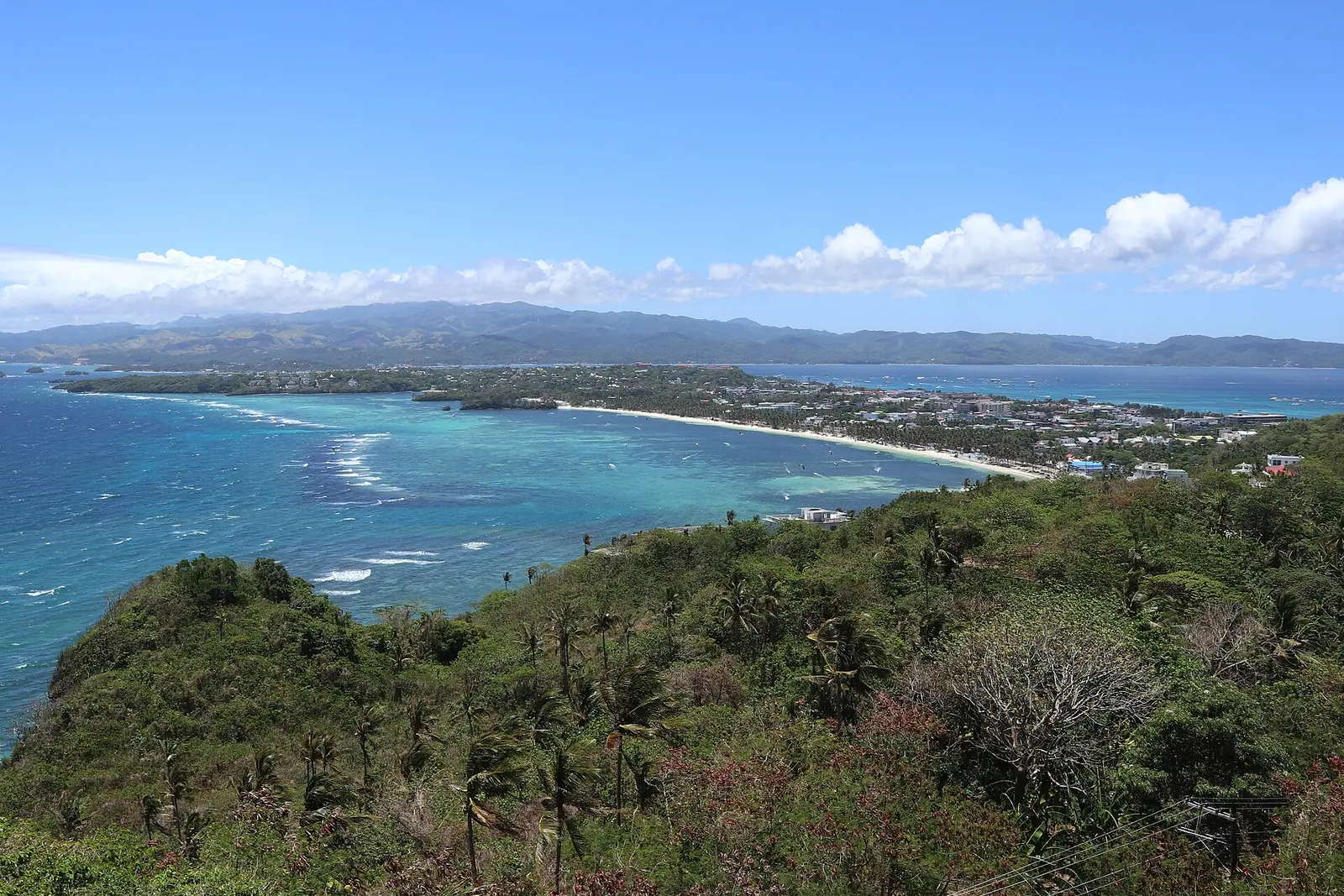
More than 7,000 islands, one shared language of turquoise water, warm sand and jeepney horns. The hard part of planning a Philippines trip isn't finding somewhere beautiful — it's choosing which three of the impossible many you'll actually see. This guide maps the places worth building a whole itinerary around.
Palawan: El Nido, Coron and the Lagoons of Bacuit Bay
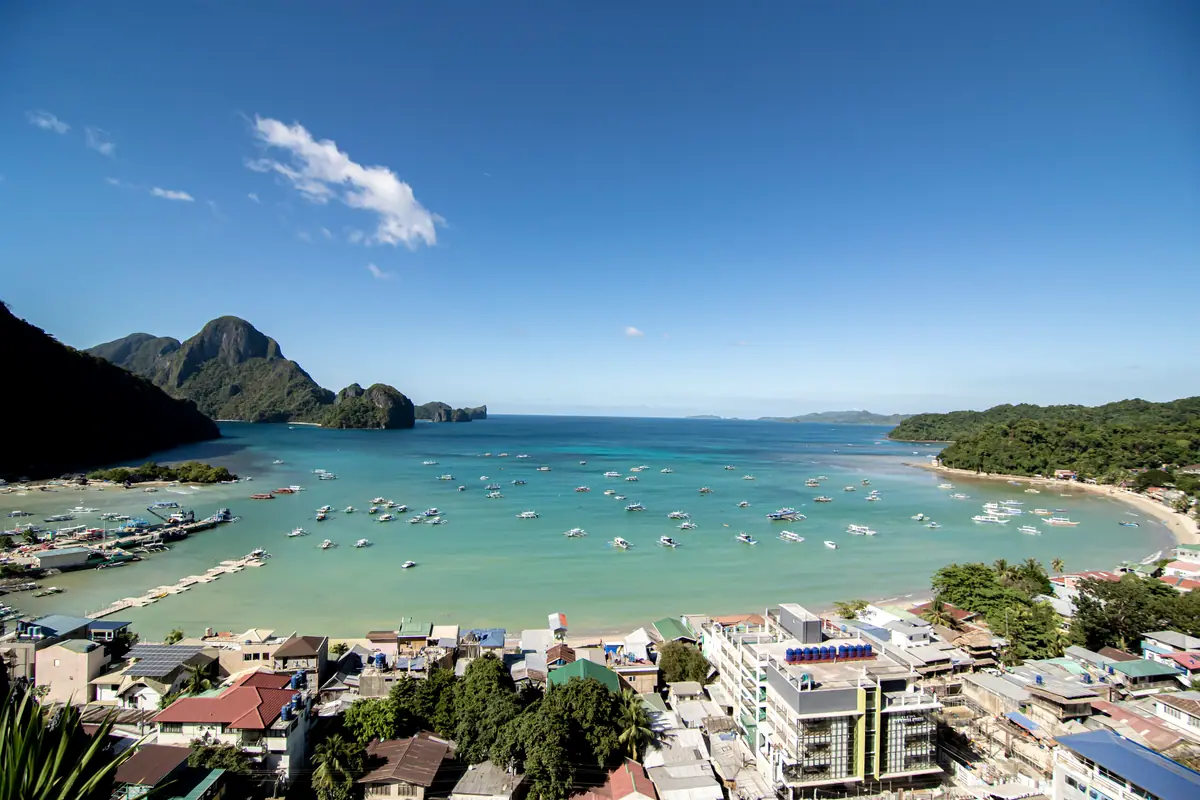
Palawan is the island province most travellers picture when they close their eyes: sheer karst cliffs, hidden bays and water so clear the boat seems to float on air. Base yourself in El Nido town and spend your days on island-hopping boat routes across Bacuit Bay, where the Big Lagoon's shallow blue channel cuts between limestone walls, the Small Lagoon is entered through a gap barely wide enough to kayak, and Secret Lagoon hides behind a rock keyhole. Add Seven Commandos Beach for swimming and Nacpan Beach, a four-kilometre curve of sand about 45 minutes north by tricycle, for a lazy afternoon.
Coron, further north and reached by fast ferry or a short flight, trades lagoons for shipwrecks and lakes. Kayangan Lake is the postcard — a climb over a jagged ridge, then a swim in water so clear it's almost invisible — while Twin Lagoon rewards anyone willing to duck under the limestone arch to reach the warm inner pool. Divers come for the Japanese shipwrecks of Busuanga, and everyone climbs the 700-plus steps of Mount Tapyas for sunset over the whole caldera.
Allow four to five days per hub, and plan between December and May when seas are calmest; the wetter months can scrub boat trips at short notice. On the mainland, the Puerto Princesa Underground River is a UNESCO-listed navigable river that runs through a mountain cave — permits are capped daily, so arrange yours through the local tourism office a few days ahead, not on the morning of.
Boracay and the Central Visayas Beach Circuit
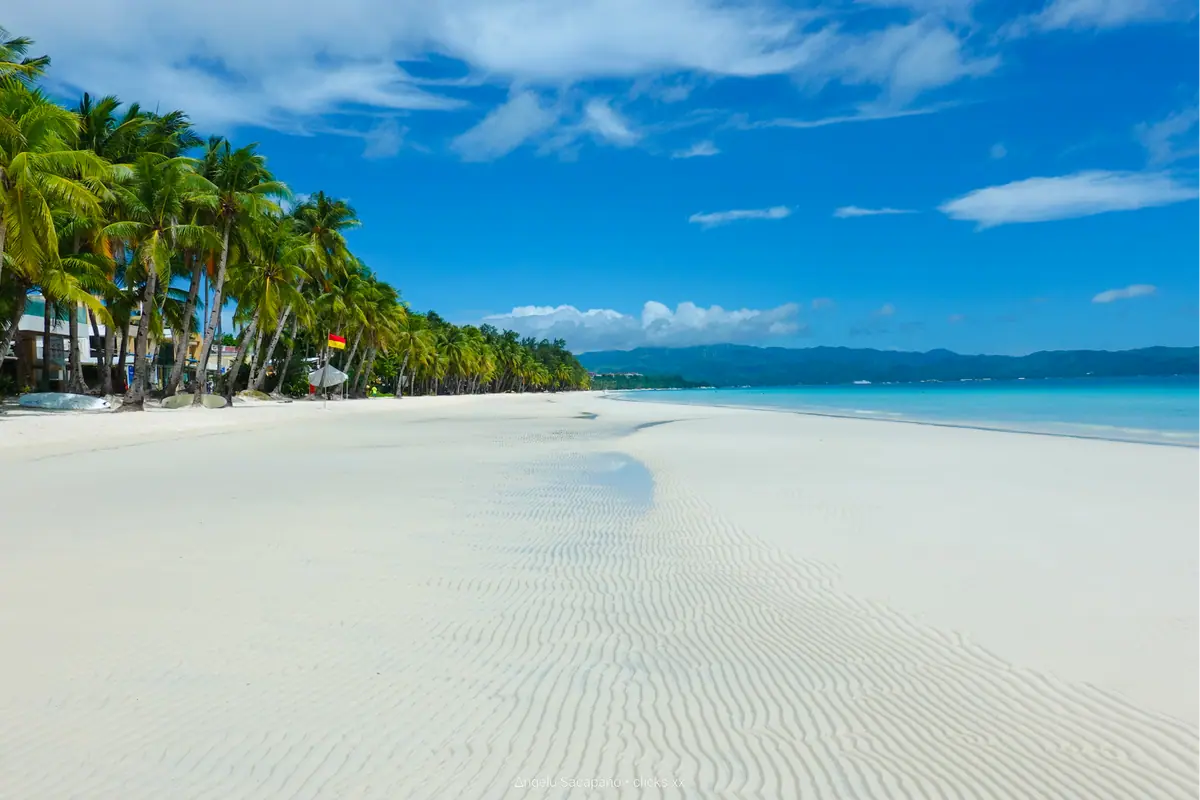
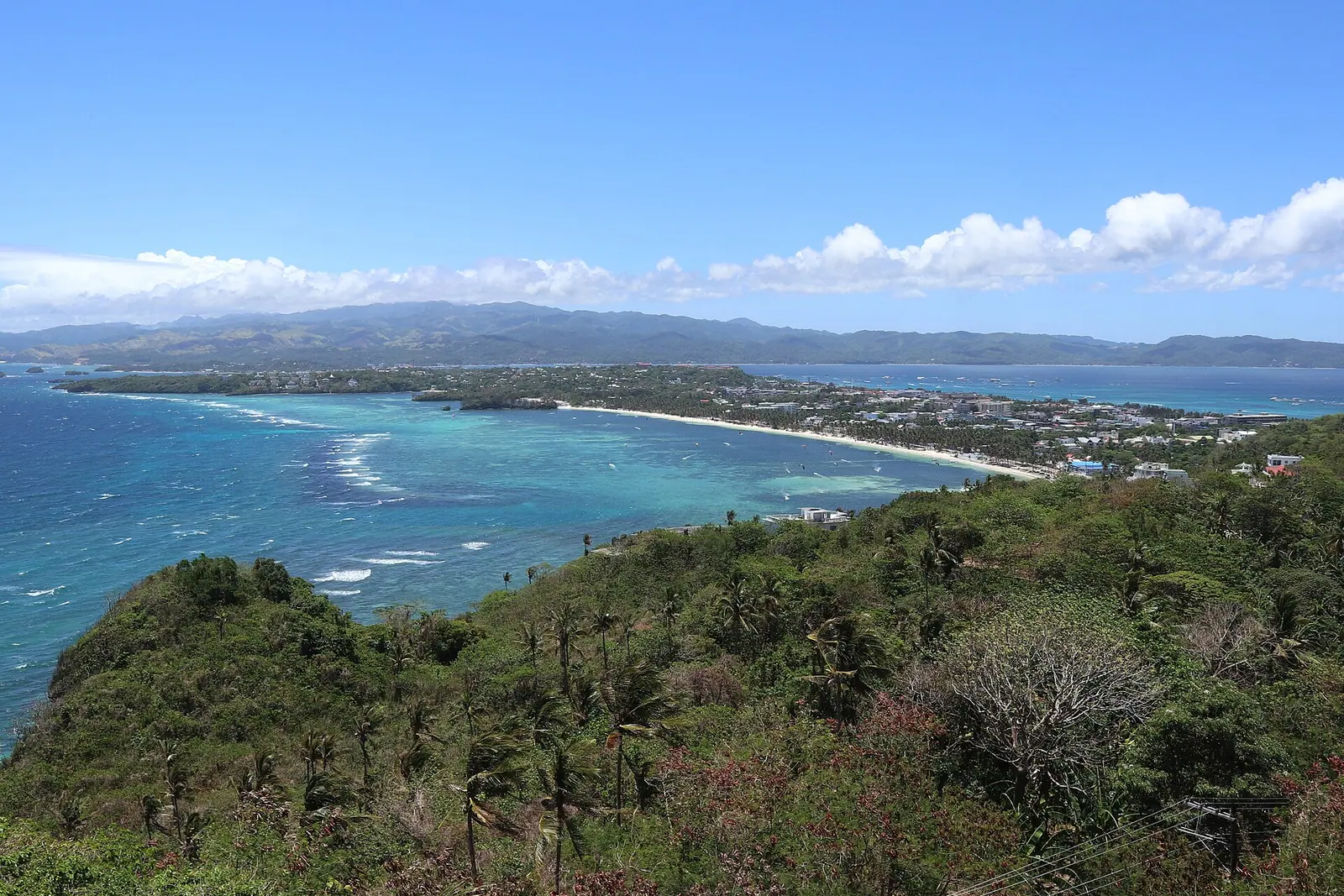
Boracay's White Beach is still the Philippines' great social beach: four kilometres of powder-fine sand divided into Stations 1, 2 and 3, with Willy's Rock rising out of the shallows at the northern end like a natural shrine. The island reinvented itself after a rehabilitation closure, and it's cleaner and calmer than its party-town reputation suggests. Sail a paraw outrigger at sunset, eat grilled seafood along the beach path, then escape to quiet Diniwid Beach or the shell-strewn Puka Beach on the north coast when the crowds get too much. Kitesurfers should head to Bulabog Beach on the east side from December to March, when the amihan trade winds blow.
From Cebu, the Central Visayas scatter into easy island hops. Moalboal offers a sardine run you can snorkel straight off the shore, and nearby Kawasan Falls runs a canyoneering route through jungle gorges and cold turquoise pools. Apo Island off Negros Oriental is a protected sanctuary where green sea turtles graze on coral gardens a few metres from the beach, and Malapascua is the place to see thresher sharks on an early dawn dive.
Ferries and short flights link these islands, but distances are deceptive — a two-hour crossing plus transfers can eat a whole day. Build in buffer time, and treat Holy Week and the Christmas period as peak season, when boats and rooms book out weeks ahead.
Bohol: Chocolate Hills, Tarsiers and the Loboc River
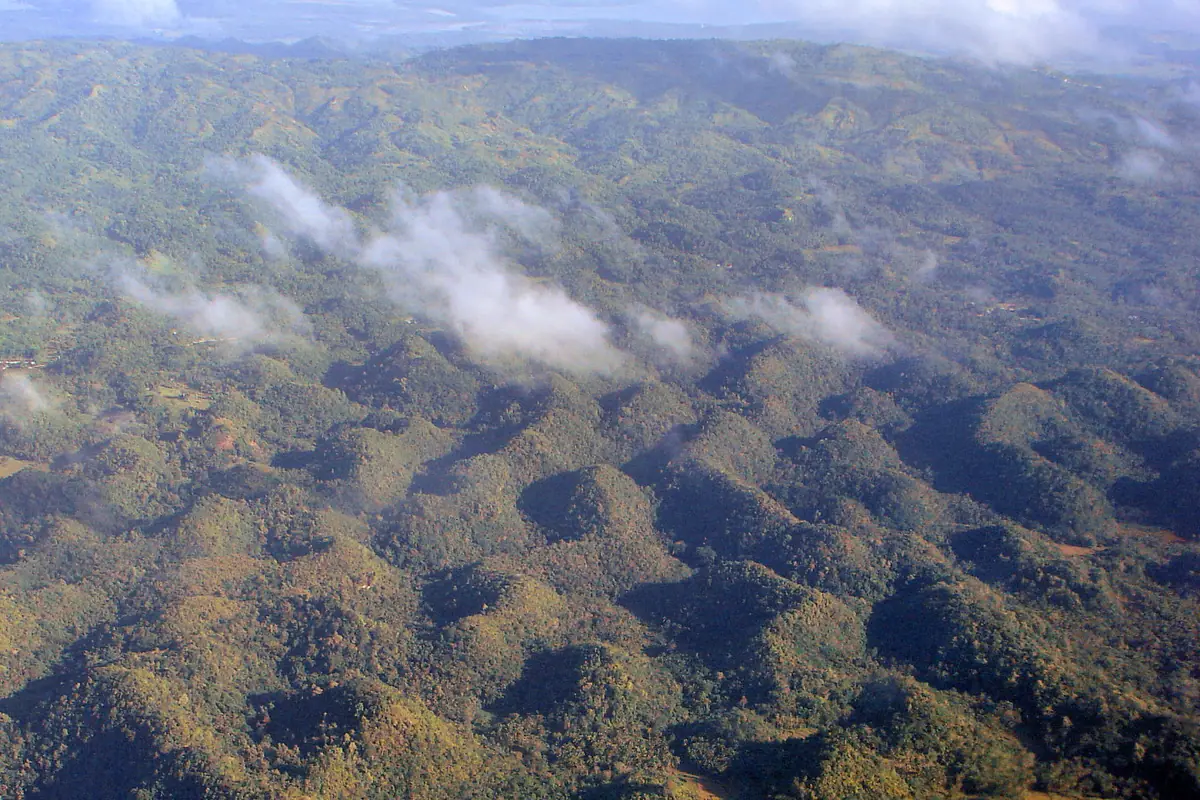
Bohol packs an improbable amount into one island. The Chocolate Hills, more than a thousand symmetrical green mounds that turn cocoa-brown in the dry season, are viewed from a viewing deck in Carmen that is worth the early start before the tour buses arrive. In Corella, a sanctuary lets you watch Philippine tarsiers — bug-eyed, palm-sized primates — from a respectful distance, and the Loboc River offers a slow lunch cruise through jungle while local musicians play on board.
History sits alongside the scenery. Baclayon Church is one of the country's oldest stone churches, and the island's Spanish-era watchtowers and ancestral houses give the inland towns a faded, gracious feel. On Panglao, Alona Beach is the dive hub, with trips out to Balicasag Island for turtles and jack fish schools, while quieter Anda on the southeast coast is where you go if you want the same water without the crowd.
Bohol is roughly two hours by fast ferry from Cebu, making it an easy add-on to a Visayas route. Oslob's whale sharks on Cebu's southern tip draw huge numbers, but the feeding practices are controversial — if wildlife ethics matter to you, Apo Island and Balicasag are the better choices.
Northern Luzon: Banaue Rice Terraces, Vigan and Mayon
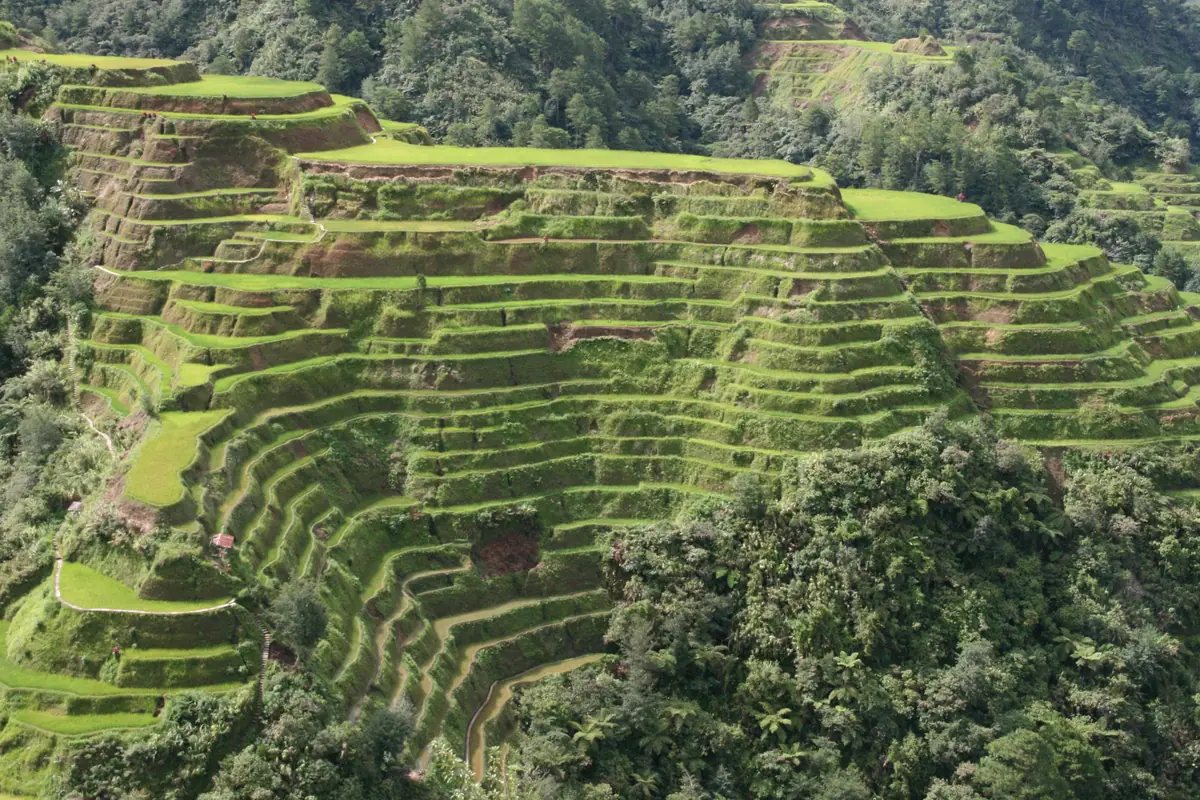
In the mountains of Ifugao, the Banaue Rice Terraces were carved into the slopes by hand more than two thousand years ago and are still farmed today. The Banaue Viewpoint gives you the classic panorama, but the real reward is the trek down to Batad, an amphitheatre of terraces so steep they look woven. From Batad you can walk to Tappiya Falls for a swim. Further north, Sagada adds hanging coffins on cliff faces and the cool, dripping chambers of Sumaguing Cave — bring shoes with grip, because the limestone is slick.
On the coast, Vigan's Calle Crisologo is a cobbled street of Spanish-colonial houses best explored at dusk by horse-drawn carriage, and nearby Paoay Church is a masterpiece of earthquake-baroque architecture. Further south in Bicol, Mayon Volcano rises in a near-perfect cone above Legazpi, with the Cagsawa Ruins — a bell tower half-buried by an eruption — framing the classic photograph. Closer to Manila, Tagaytay's ridge looks out over Taal Volcano sitting in the middle of a lake, one of the country's strangest and most photographed landscapes.
Time this region for December to May. The Cordillera rains hard from June, turning Batad's trails to mud and bringing out the leeches, and Mayon is often hidden in cloud during the wet months. Allow three days for Banaue and Batad, two for Sagada, and a night in Vigan.
Siargao, Siquijor and the Far-Flung Islands
Siargao has grown from a surfer's secret into one of the country's most loved islands, but it has kept its coconut-road, barefoot rhythm. Cloud 9 is the famous reef break, best from August to November when the swell builds, though beginners are better off on the gentler waves at Jacking Horse nearby. Away from the surf, Sugba Lagoon's emerald water and diving platform are the highlight of a boat day, while Magpupungko's rock pools appear only at low tide, and the trio of Guyam, Daku and Naked Island make for an easy island-hopping afternoon.
Siquijor, reached by ferry from Dumaguete, has a folkloric reputation that belies its gentle reality: Cambugahay Falls, where you can swing on a rope into tiered pools, the old balete tree with its tiny fish spa, and empty white-sand stretches along San Juan. Further north, Batanes is the Philippines at its most unexpected — rolling green hills, stone houses built to withstand typhoons, and the boulder-strewn shoreline at Valugan Beach. Flights are limited and weather-dependent, so give yourself slack days.
Camiguin off Mindanao's north coast rounds out the list with the White Island sandbar, Katibawasan Falls and the eerie Sunken Cemetery marker out in the sea. These islands reward slow travel: two nights minimum, cash in hand, and a willingness to go where the boat schedule takes you.
Manila and Planning the Whole Trip
Most itineraries start and end in Manila, so give the capital a day rather than dismissing it. Intramuros, the walled Spanish city, holds Fort Santiago, the Manila Cathedral and San Agustin Church, the oldest stone church in the country. Rizal Park and the National Museum complex are walkable from there, and a Binondo food crawl through the world's oldest Chinatown is the best-value meal you'll have all trip. Traffic is genuinely brutal — use the elevated rail lines or plan on long transfers between districts.
On timing: December to May is the dry season and the sweet spot for beaches and mountain treks. March to May is the hottest stretch, so schedule hikes early and save afternoons for water. June to November is typhoon season, with the highest risk from July to October and the eastern Visayas and Bicol most exposed — flexible bookings and travel insurance are worth every peso if you visit then.
For a two-week trip, choose three hubs rather than five: Manila, one Palawan or Visayas island group, and one mountain or surf destination. Domestic flights cover long hops cheaply, fast ferries handle shorter crossings, and tricycles and habal-habal motorbikes fill in the last mile. Carry cash — ATMs are scarce and unreliable on small islands — and remember that many beaches, lagoons and turtle sites are community-managed sanctuaries, so pay the local fees and keep your distance from the wildlife.
Frequently asked questions
What is the best time of year to visit the Philippines?
December to May is the dry season and the most reliable window for island hopping, diving and mountain trekking, with March to May the hottest and busiest for domestic travel. June to November brings typhoon season, peaking between July and October, when the eastern Visayas and Bicol are most exposed. November and May are good shoulder months with fewer crowds and lower room rates.
How many islands should I visit in one trip?
With two weeks, pick three bases rather than five — for example Manila, El Nido or Coron, and one Visayas island such as Bohol or Siargao. Inter-island travel in the Philippines is slower than the map suggests: a short flight plus transfers, or a ferry crossing plus tricycle rides, can consume most of a day. Fewer islands means more time in the water.
How do I get between the islands?
Budget airlines handle long hops such as Manila to Palawan or Cebu to Siargao, while fast ferries and outrigger bangka boats cover shorter crossings like Cebu to Bohol or Dumaguete to Siquijor. Book peak-season seats and boat tickets well ahead, especially around Holy Week and Christmas, and always keep a buffer day before an international departure.
Do I need cash in the Philippines?
Yes. Cash is essential outside major cities and resort areas — ATMs on small islands are few, often empty and sometimes out of order. Bring more pesos than you think you'll need for boat fees, environmental and sanctuary charges, tricycle rides and market meals. Larger hotels and restaurants in Manila, Boracay and Cebu accept cards, but don't rely on it elsewhere.
Which Philippine attractions should a first-timer not miss?
Prioritise the Big Lagoon and Small Lagoon in El Nido's Bacuit Bay, Coron's Kayangan Lake, Boracay's White Beach, the Chocolate Hills and tarsier sanctuary in Bohol, the Batad and Banaue rice terraces in Ifugao, Siargao's Cloud 9 and Sugba Lagoon, and Intramuros in Manila. If time allows, add the Puerto Princesa Underground River — permits are limited, so reserve several days in advance.
Plan it — experiences in Philippines
Live search, booked directly with trusted providers.
Sort the rest of your trip
Everything for Philippines, in one place
Stay in Philippines
Hotels, guesthouses and apartments — compared in one search.
Search hotels
Transfer in Philippines
Private driver waiting on arrival — no queues, no surprises.
Book a transfer
Stay online in Philippines
Travel eSIM — data the moment you land, no roaming bills.
Get an eSIMMore guides in Philippines

Where to Stay in the Philippines: Top Cities, Islands and Must-See Sights

Philippines Travel Guide: Food, Culture and Local Experiences
Where to Stay in Cebu: Hotels by Area, From City Towers to Island Bungalows
Boracay in 5 Days: Flights, Airports and the Island Itinerary That Works