Peru packs three worlds into one country: a desert coast washed by the Pacific, an Andean spine of glacier-capped peaks and Inca stonework, and an Amazon basin so vast it swallows whole rivers. Few places reward slow travel so richly — but few also punish a rushed itinerary so quickly, which is why knowing where to go first matters more here than almost anywhere.
Machu Picchu: The Citadel Above the Clouds
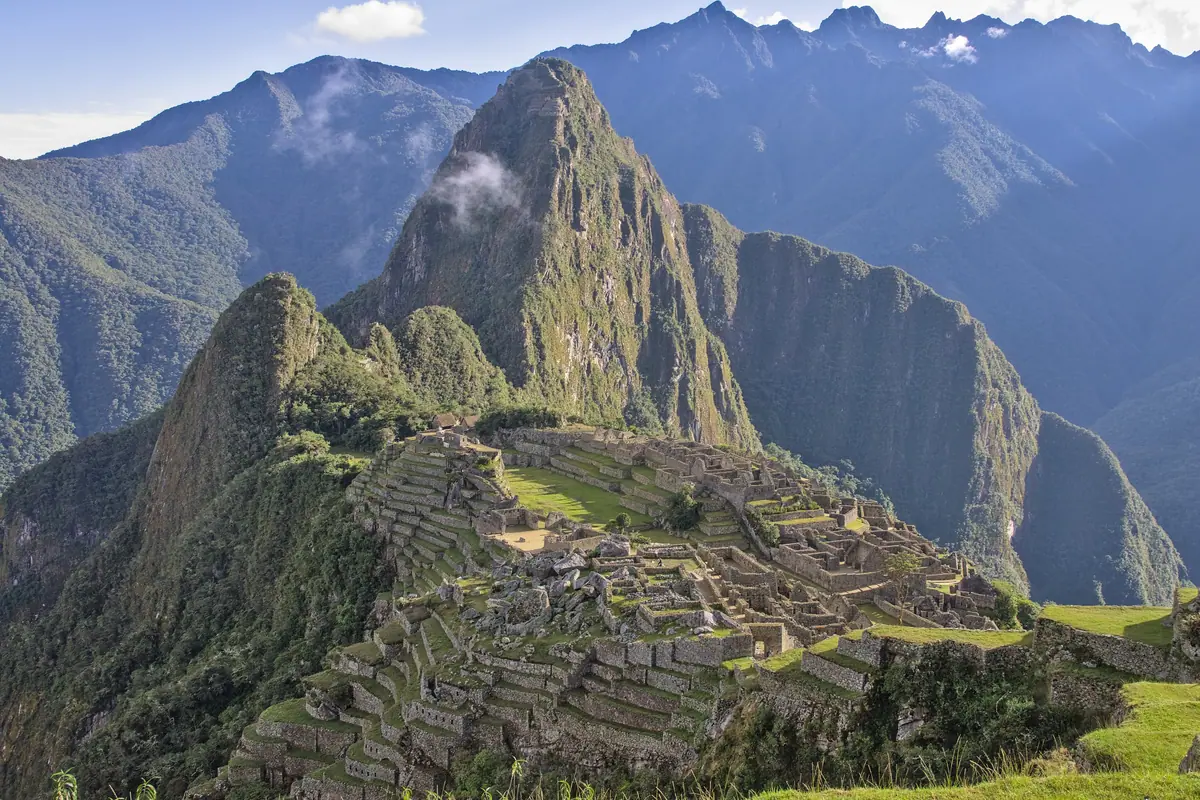
Nothing prepares you for the first sight of Machu Picchu, a 15th-century Inca city draped across a ridge at roughly 2,430 metres, with the green spike of Huayna Picchu rising behind it like a question mark. The ceremonial core holds the Temple of the Sun, the Intihuatana stone and a labyrinth of royal rooms and agricultural terraces, all built from granite blocks fitted so tightly that no mortar was needed. Morning mist usually lifts between 8am and 10am, and the earliest entry slots offer the quietest light.
Getting there is part of the ritual. Most visitors take a scenic train from Ollantaytambo or Poroy to Aguas Calientes, then a short shuttle ride up a switchback road; others arrive on foot via the classic four-day Inca Trail, which covers about 43 kilometres through cloud forest and mountain passes. Entry to the ruins is timed and daily numbers are capped, so reserve weeks — ideally two to three months — ahead for the busy May-to-September window. Climbing Huayna Picchu or Montaña Machu Picchu requires a separate, strictly limited permit.
The classic Inca Trail closes every February for maintenance and permits are snapped up months in advance, often four to six months for peak dates. If it's full, the Salkantay and Lares routes and the quieter Choquequirao trek all reach the same region with far fewer crowds. Whatever route you choose, build in at least two or three days in Cusco beforehand — altitude, not fitness, is what usually ruins the hike.
Cusco and the Sacred Valley: The Imperial Heartland
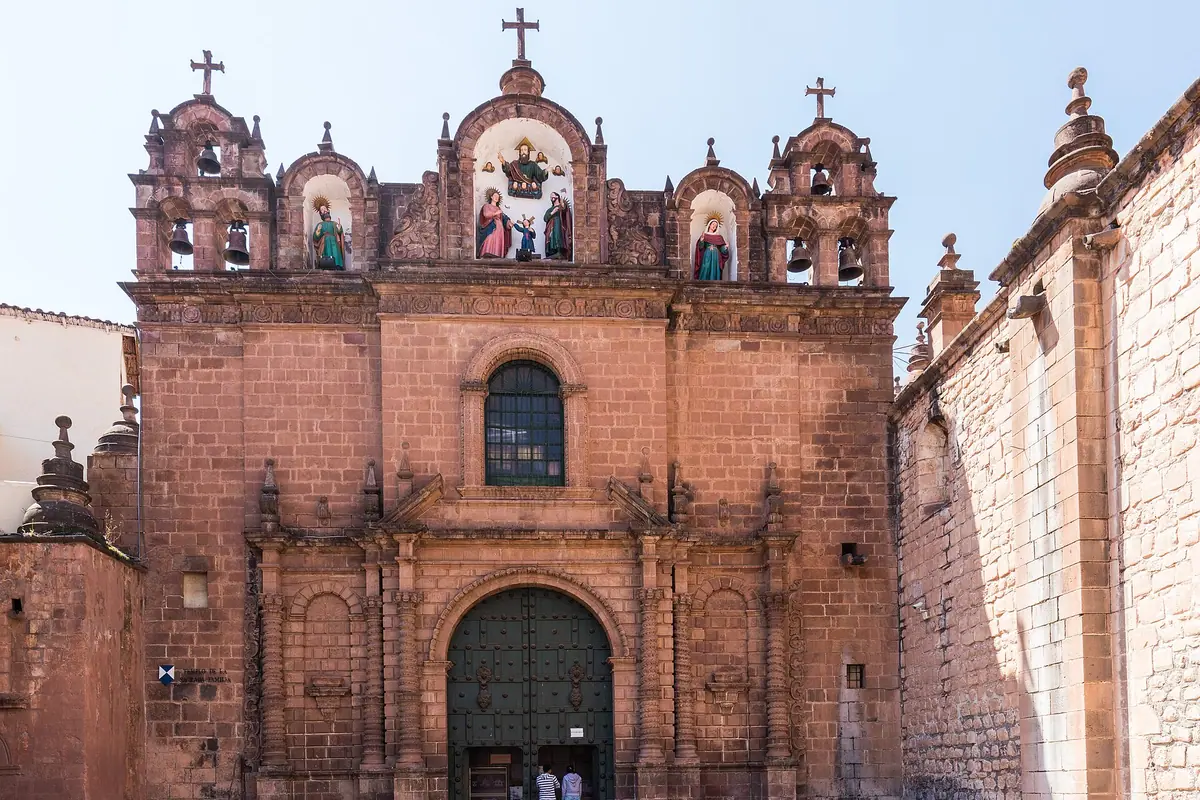
Cusco sits at around 3,400 metres and wears its history openly: Inca walls form the foundations of colonial churches, and the cobbled lanes of the San Blas quarter tumble downhill towards the Plaza de Armas. Must-sees include the Cathedral, the Qorikancha — once the empire's most sacred temple, now wrapped inside a convent — and the vast zigzag ramparts of Sacsayhuamán on the hill above town, best visited early before the tour buses arrive. Give yourself two or three unhurried days here to acclimatise and to browse the San Pedro market.
The Sacred Valley below unfolds along the Urubamba River and is easily the richest cluster of sights in the country. Pisac pairs hillside ruins with a famously colourful market; Ollantaytambo has both a monumental Inca fortress and a grid of original streets still lived in today; Chinchero is known for weaving demonstrations and a colonial church built on Inca masonry. Many travellers base themselves in Urubamba or Ollantaytambo for a night or two to break up the altitude gain.
Two smaller wonders sit nearby and are often skipped. The Maras salt pans form a blinding white patchwork of shallow evaporation pools worked by local families for centuries, while the circular terraces of Moray look like a giant amphitheatre sunk into the plateau — most likely an Inca agricultural laboratory. Time a visit for late June and you may catch Inti Raymi, the winter solstice festival that fills Cusco with processions and feathered dancers.
Rainbow Mountain and the Cordillera Blanca
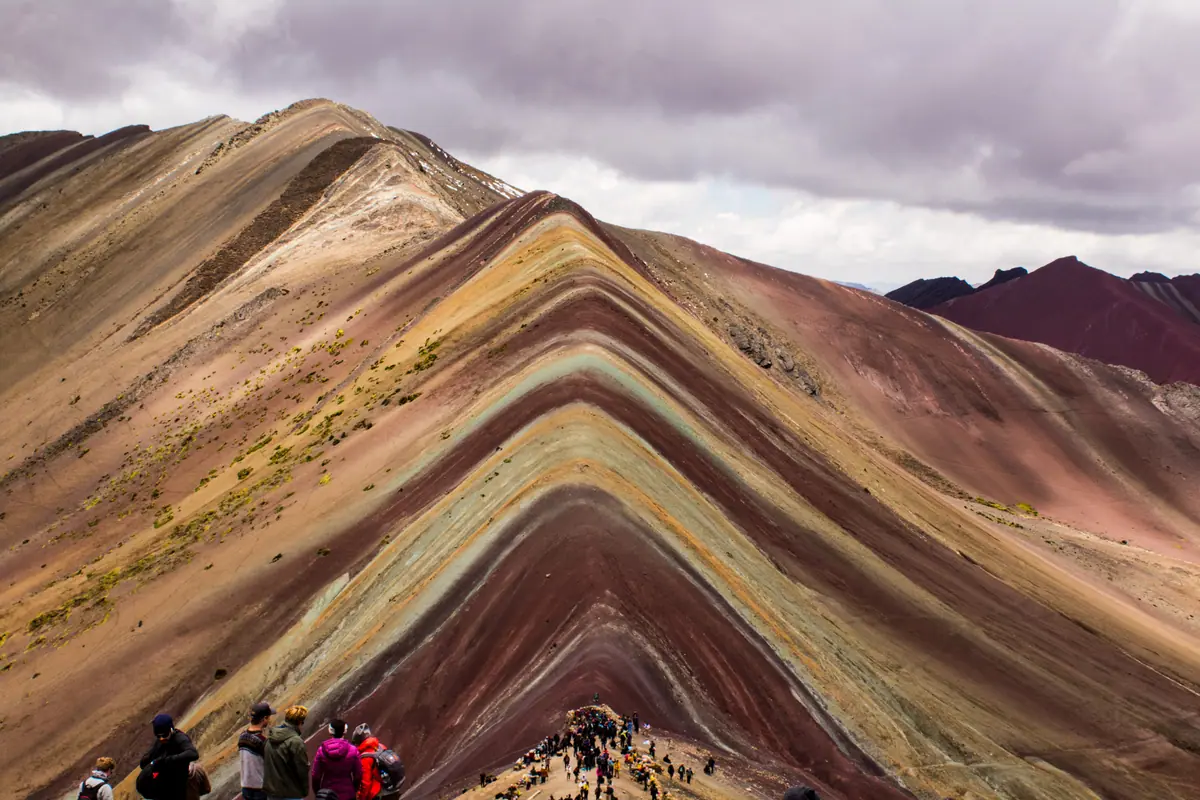
Vinicunca, better known as Rainbow Mountain, is a ridge of mineral-striped rock at a lung-straining 5,036 metres. Reaching it means leaving Cusco around 3am, driving three hours and then walking roughly 90 minutes uphill — an experience that only makes sense once you're fully acclimatised. The striped summit is the headline, but the neighbouring Red Valley is arguably more dramatic and far less crowded. If the altitude worries you, Palcoyo offers similar colours at a gentler altitude with a much shorter walk.
Far to the north, the Cordillera Blanca above Huaraz is Peru's trekking capital and the highest tropical mountain range on earth, crowned by Huascarán at 6,768 metres. Day hikers head for Laguna 69, a turquoise glacial lake sitting at about 4,600 metres, while the four-day Santa Cruz trek threads passes and ice flanks without requiring technical climbing. The season runs roughly May to September, when trails are dry and skies clearest.
Altitude is the real variable across all of these trips. Arrive in Cusco by land from lower towns if you can, keep the first day or two gentle, drink plenty of water, go easy on alcohol and heavy meals, and treat coca tea as a mild comfort rather than a cure. Anyone with heart or lung conditions should speak to a doctor before committing to high passes, and travel insurance that covers trekking above 4,000 metres is worth arranging in advance.
Lake Titicaca and the High Altiplano
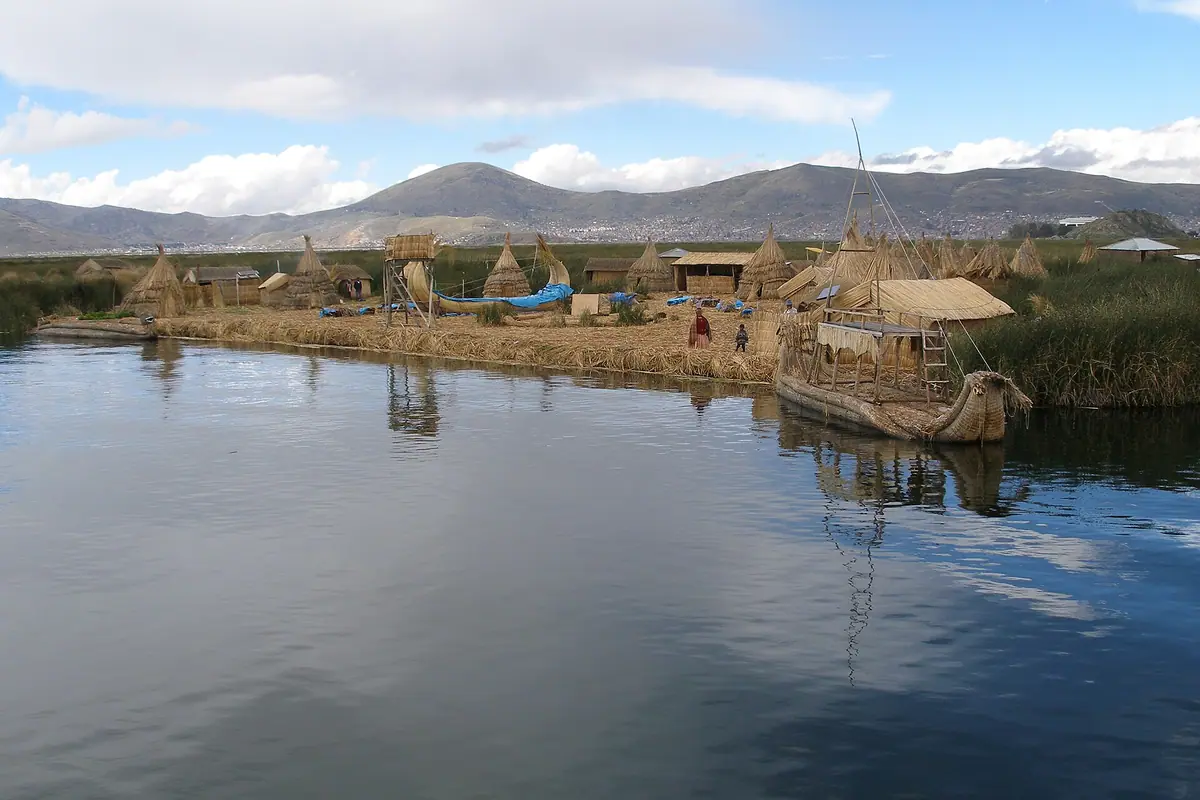
At 3,830 metres, Lake Titicaca is the world's highest navigable lake and the cradle of Andean mythology. The city of Puno is the launchpad: boat trips reach the Uros floating islands, woven entirely from totora reeds that are constantly replenished as the old layers rot beneath your feet, then continue to Taquile, where men knit and families still live by a strict communal code. Overnight homestays on Amantaní give a slower, warmer version of the same landscape.
Inland from the lake, the chullpas of Sillustani are round burial towers up to 12 metres tall, standing on a windswept peninsula above a lagoon — an easy half-day trip from Puno and one of the most atmospheric pre-Inca sites in the country. The journey between Cusco and Puno is an attraction in itself: a full-day rail crossing over the altiplano passes remote villages and herds of alpacas, while buses cover the same ground in six or seven hours.
Expect sharp sunlight by day and genuinely cold nights year-round, with frost common from June to August. The driest and most reliable months run May to September; January and February bring heavy afternoon rain. Because Puno sits higher than Cusco, many travellers arrive from Arequipa instead, a route that climbs more gradually and softens the shock.
Arequipa and the Colca Canyon
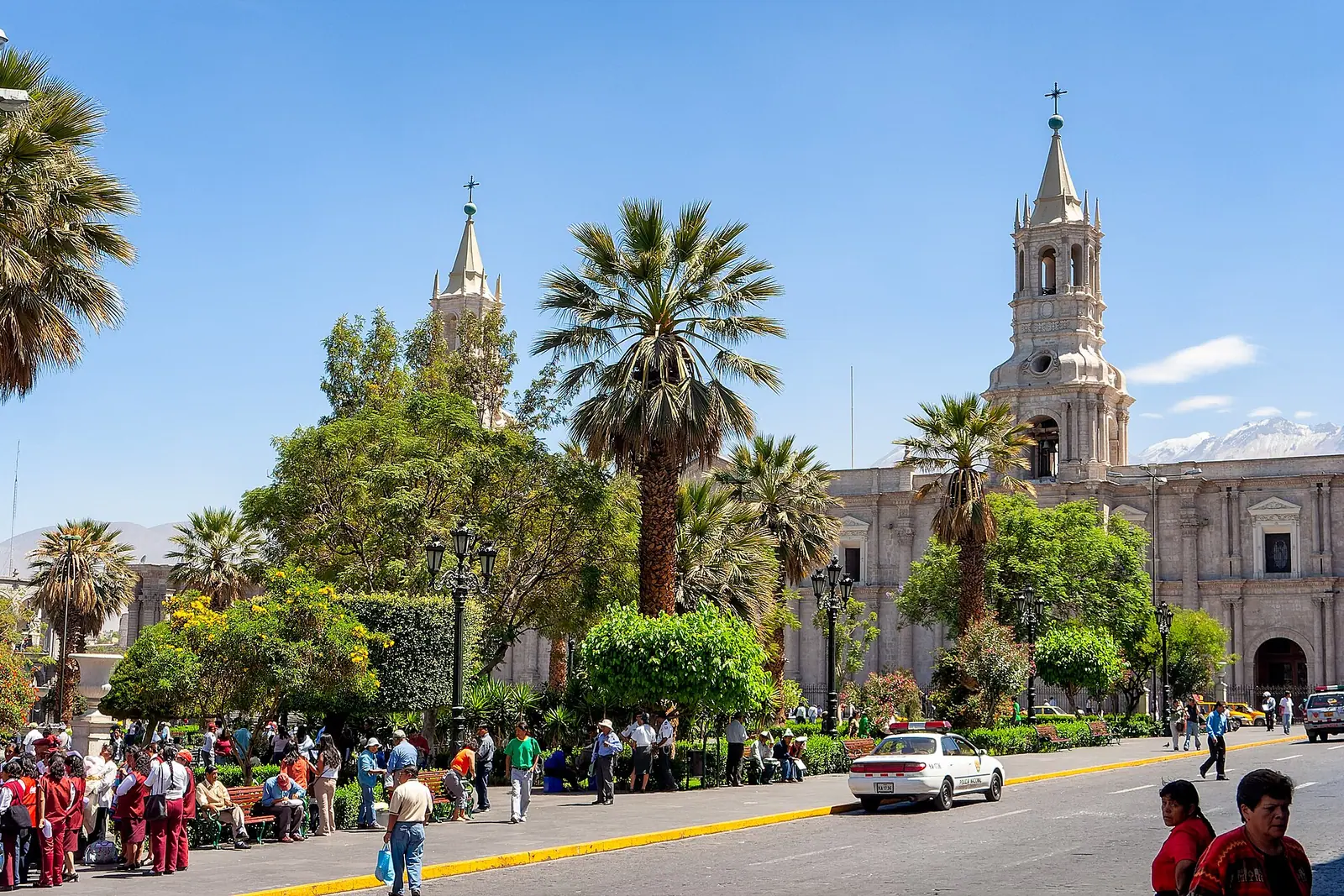
Arequipa is nicknamed the White City for the pale volcanic sillar stone used in its churches and mansions, and its Plaza de Armas is one of the most photogenic in South America. The highlight is the Santa Catalina Monastery, a walled colonial city-within-a-city of painted courtyards and narrow lanes that only opened to visitors in the 1970s. Don't miss the museum housing Juanita, the frozen Inca maiden found on a nearby peak, and the views of the Misti volcano framing almost every street.
Three hours away lies the Colca Canyon, more than twice as deep as the Grand Canyon. The draw is the Cruz del Condor, a viewpoint where Andean condors launch from the cliffs on morning thermals, most reliably between 8am and 10am. Most visitors come on a two-day trip from Arequipa, stopping at Chivay's hot springs and the traditional villages of Yanque and Maca on the way.
For something more active, trails descend to the oasis hamlet of Sangalle at the canyon floor, where a night between palm trees and a pre-dawn climb out is a rite of passage. The canyon is best from April to November; the wettest months from January to March can make roads and paths slippery. Because Arequipa sits at a moderate 2,335 metres, it is also a sensible first stop before heading higher.
Lima, the Desert Coast and the Amazon
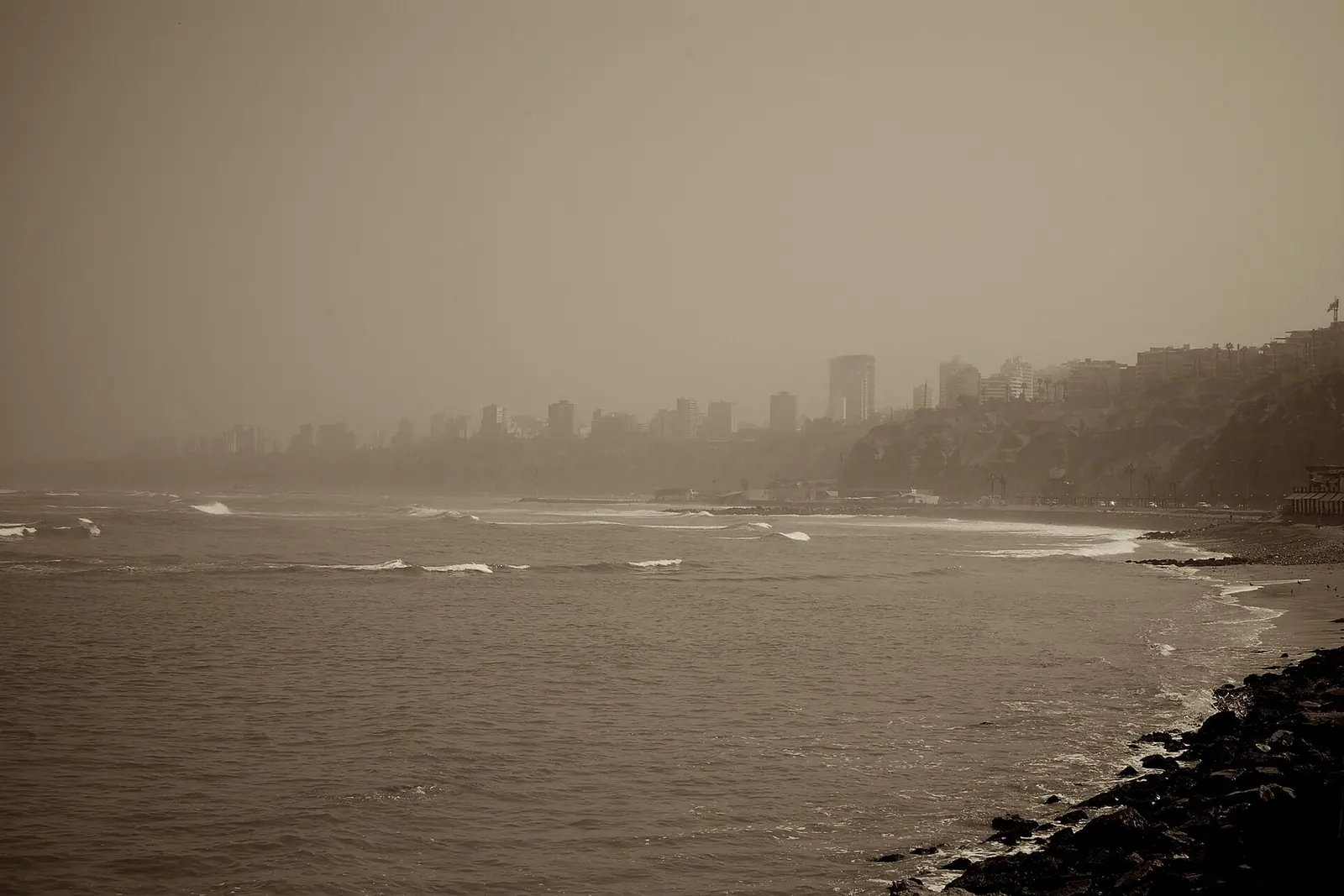
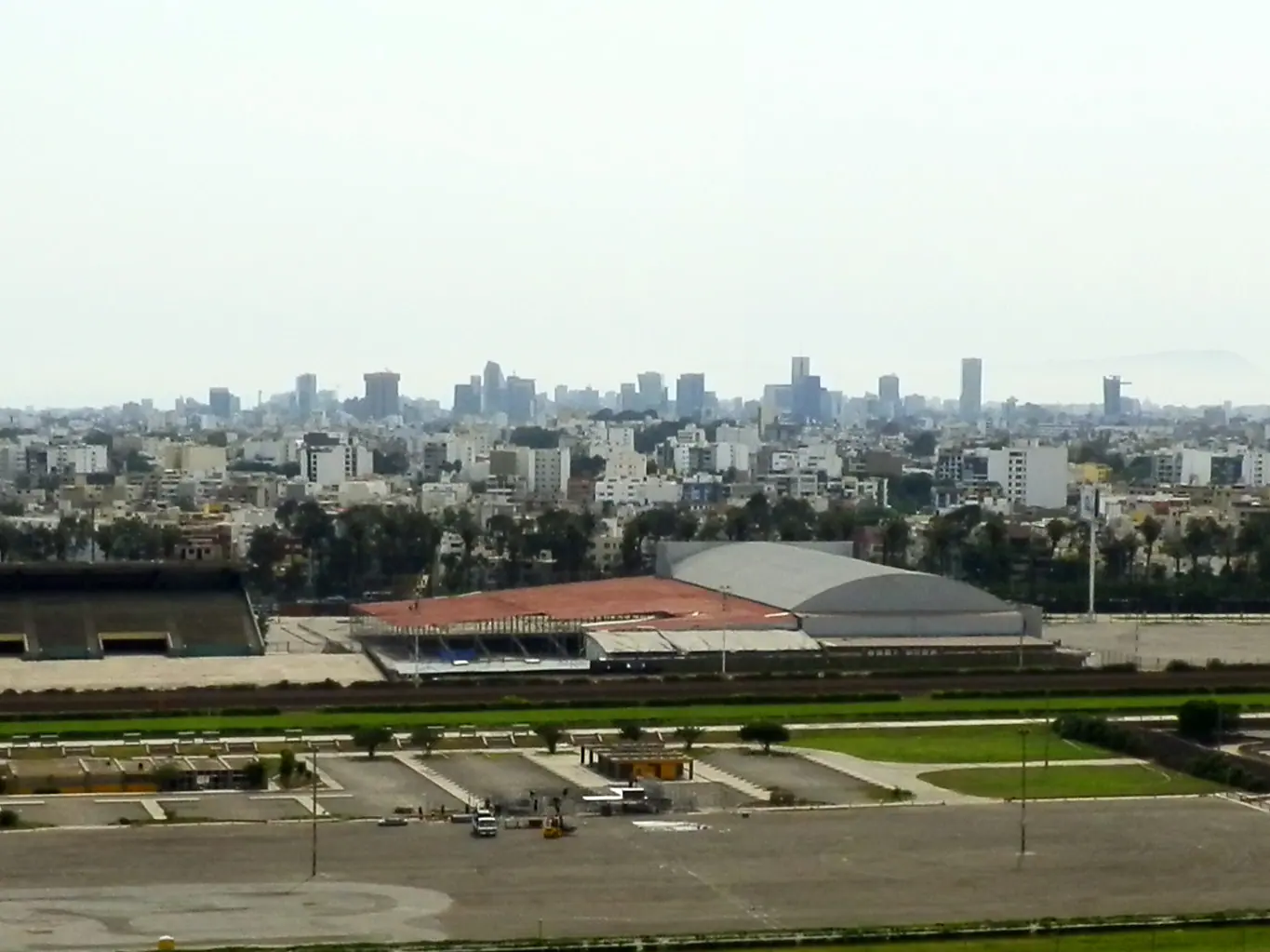
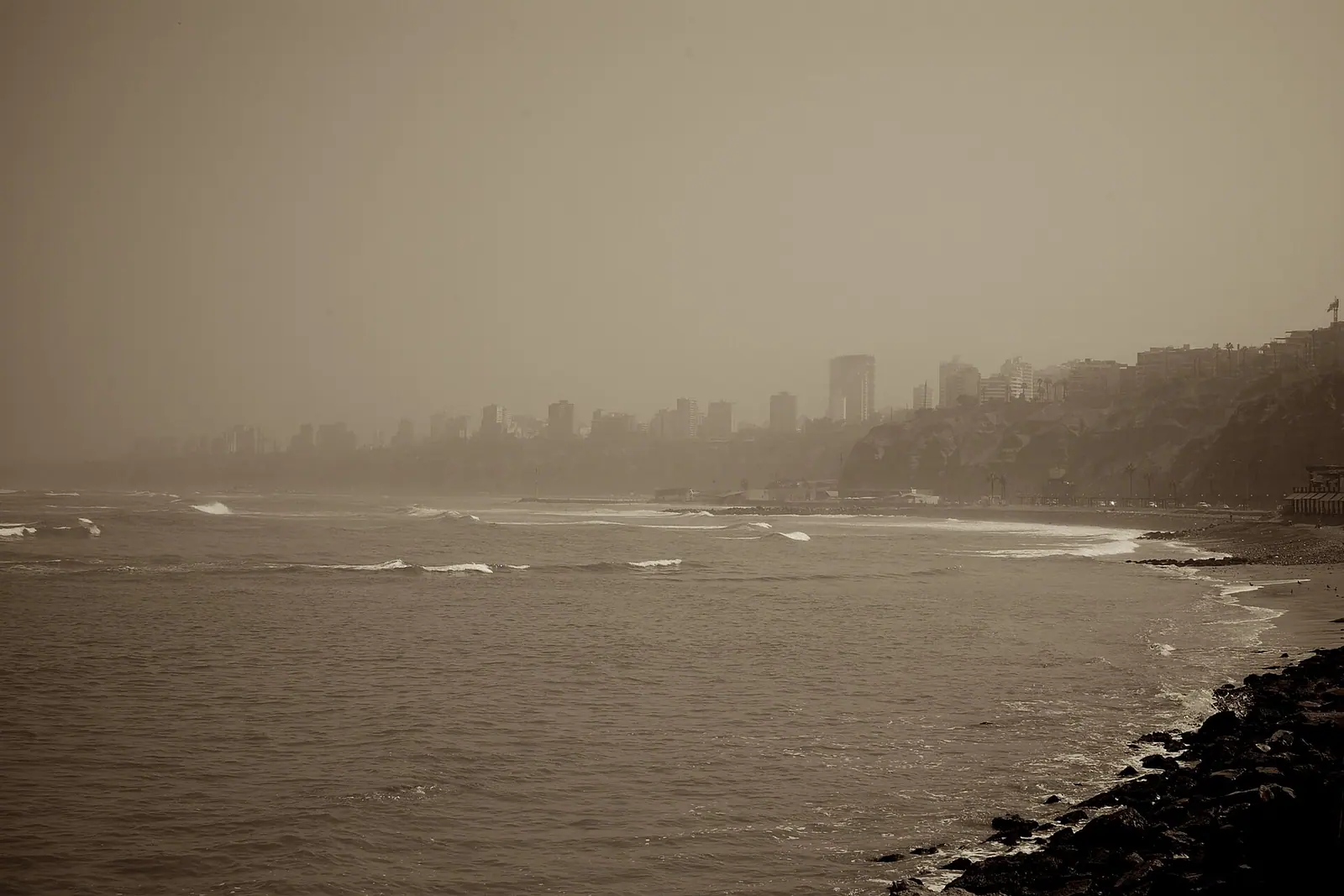
Most journeys begin in Lima, and the capital deserves more than an airport layover. Miraflores and Barranco sit on clifftops above the Pacific, linked by a seafront promenade and packed with galleries, cevicherías and bars pouring pisco sours. In the historic centre you'll find the Plaza Mayor, the catacombs beneath the San Francisco church, and the excellent Larco Museum with its pre-Columbian gold and ceramics; the adobe pyramid of Huaca Pucllana rises unexpectedly in the middle of a residential district. Two full days is a fair minimum.
South of Lima, the desert coast delivers a string of quick, high-impact stops. Boat trips from Paracas reach the Ballestas Islands, where sea lions, Humboldt penguins and guano birds crowd the rocks. Further south, Huacachina is a palm-fringed oasis ringed by towering dunes, popular for sandboarding and dune-buggy rides at sunset. The Nazca Lines — vast animal and geometric figures etched into the desert floor — are best seen on a 30-minute light-aircraft flight, and morning departures usually give the calmest air and clearest views.
East of the Andes lies a completely different Peru. Puerto Maldonado is the easiest gateway to the Amazon, with boat trips into the Tambopata reserve, night walks, canopy platforms and parrot clay licks; Manú National Park is wilder and more restricted, while Iquitos in the north is reachable only by air or river. The Amazon is a year-round destination: December to May brings high water and better canoe access, June to November drier trails and easier hiking. Northern Peru, with the cloud-forest fortress of Kuelap, the Gocta waterfalls and the vast adobe city of Chan Chan near Trujillo, rewards anyone with a third week to spare.
Frequently asked questions
What is the best time of year to visit Peru?
For the Andes and the classic Inca routes, the dry season from May to September is the most reliable, with clear skies, cold nights and the heaviest crowds in June, July and August. December to March is wetter in the mountains but a good time for the coast. The Amazon works year-round: December to May brings high water and easier boat travel, June to November drier trails. Note that the classic Inca Trail closes entirely in February.
How many days do you need in Peru?
Ten days is a realistic minimum for Lima, Cusco, the Sacred Valley and Machu Picchu, with a couple of days built in for acclimatisation. Two weeks lets you add Lake Titicaca, Arequipa or the Colca Canyon. Three weeks or more opens up the Amazon, the Cordillera Blanca trekking near Huaraz, and the archaeological sites of northern Peru.
How do you handle the altitude in Cusco?
Cusco sits at about 3,400 metres, so treat the first 24 to 48 hours as a rest period: walk slowly, drink plenty of water, eat lightly, skip alcohol and schedule nothing strenuous. Coca tea and coca leaves are the traditional local remedy and are widely available. If you're arriving from Lima, the flight is short but the altitude gain is sudden — some travellers prefer to break the journey in Arequipa or the Sacred Valley first. Anyone with heart or lung conditions should check with a doctor beforehand.
Do you need to book Machu Picchu in advance?
Yes. Entry is by timed slot with a daily cap, and peak-season tickets plus the extra permits for Huayna Picchu and Montaña Machu Picchu sell out well ahead — book one to three months in advance for May to September. The classic four-day Inca Trail is even tighter, often filling four to six months ahead. Bring your passport, as the name on the ticket must match.
How do you get around Peru?
Flying is the fastest way between Lima, Cusco, Arequipa, Puno and Iquitos, with domestic hops typically taking one to two hours. Long-distance overnight buses are comfortable and cheap on the main coastal and highland routes, and scenic trains link Cusco with the Sacred Valley and Puno. For shorter hops, shared colectivos and taxis fill the gaps, though it's worth agreeing on the fare before you set off.
Sort the rest of your trip
Everything for Peru, in one place

More guides in Peru
Tours in Peru: A Food, Culture and Local Experiences Guide
Top Things to Do in Peru: Machu Picchu, Cusco, Colca Canyon and Beyond
Peru in One Week: A Flight-Hopping Itinerary from Lima to Machu Picchu
Best Time to Visit Peru: Seasons, Hotel Rates and Must-See Sights
Where to Stay in Peru: The Best Bases for Lima, Cusco, Machu Picchu and Beyond