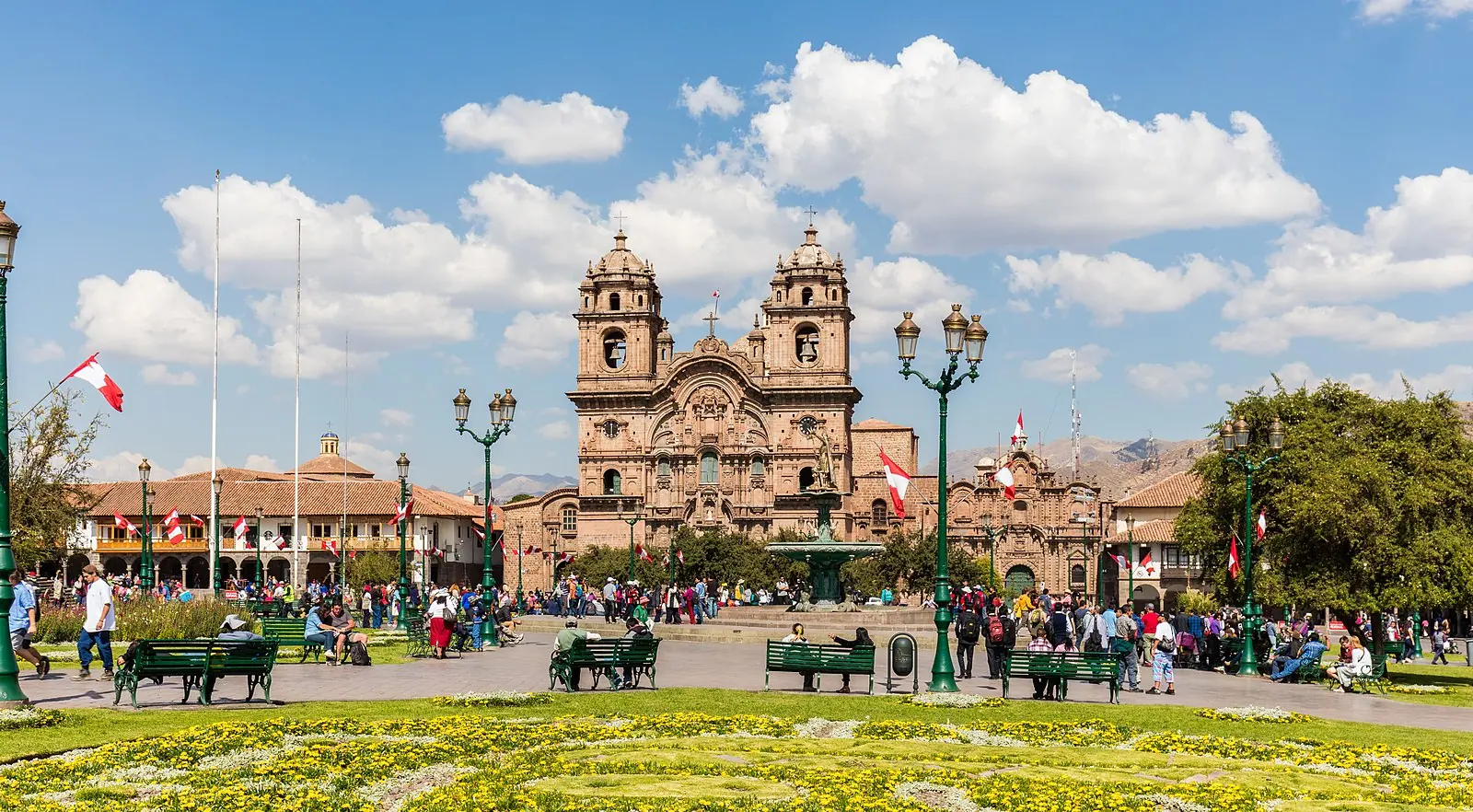
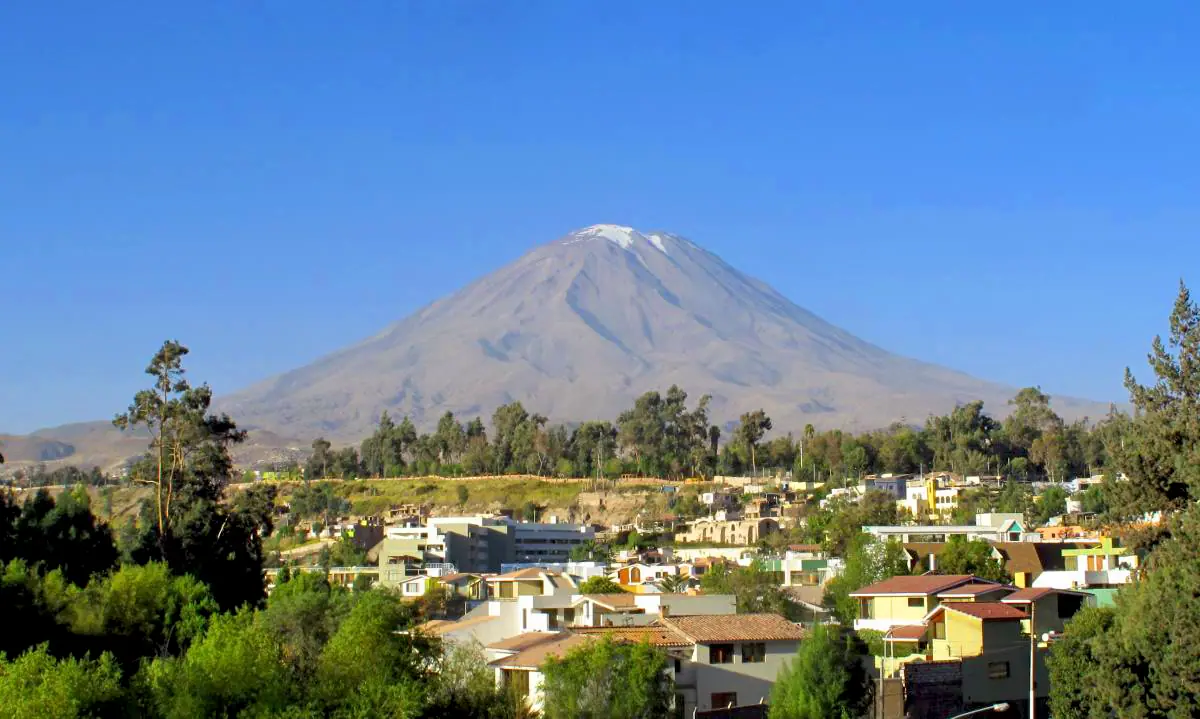
Arequipa rises at 2,335 metres in a bowl of dry, ridged desert, with the perfect cone of Misti watching over white volcanic-stone streets. Where you sleep here changes everything: a courtyard room off the Plaza de Armas, a quiet garden in Yanahuara, or a hacienda out past the fields — each gives you a different city. This guide walks you through the neighbourhoods, the room realities and the seasons so your first booking lands well.
Where to Stay in Arequipa: The Neighbourhoods That Shape Your Trip
Arequipa sits in a high, sunny valley in southern Peru's Andes, framed by three volcanoes — Misti, Chachani and Pichu Pichu — and cut by the Chili River. The river also splits your options in two: the UNESCO-listed historic centre on the south bank, and the older, quieter districts of Yanahuara, Cayma and Selva Alegre to the north. The distances are small. Almost everything a first-timer wants is within a 25-minute walk or a very short taxi ride, so the real question is not "how far" but "what do I want outside my window".
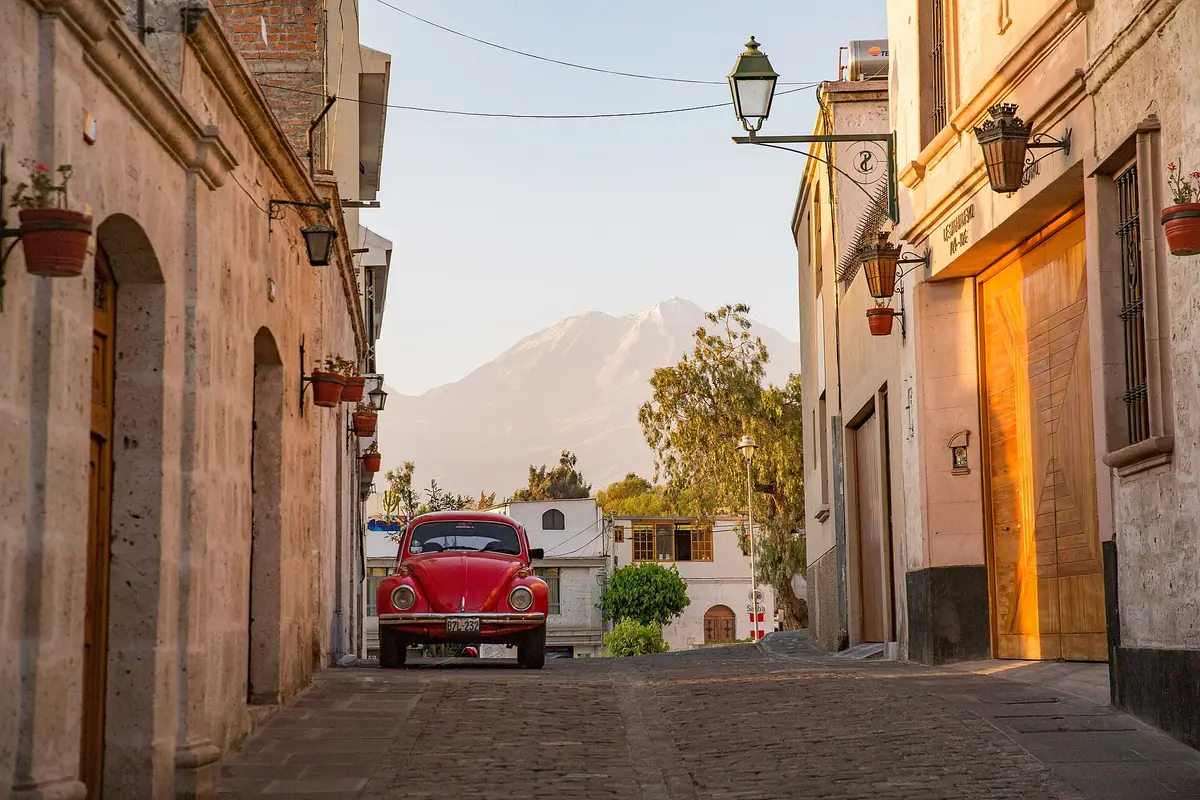
The historic centre is a compact grid of sillar-stone lanes around the Plaza de Armas and the Basilica Cathedral, with the Santa Catalina Monastery, the Plaza San Francisco and the small museum housing the frozen Inca maiden Juanita all inside a ten-minute radius. Cross the Puente Grau and you reach Yanahuara's arched mirador, a postcard view of the volcano framed by white stone, and then Cayma, a village absorbed by the city that still feels like its own place. Further out, Selva Alegre offers leafy avenues and a park, while Paucarpata and Sabandía point you toward fields, an old water mill and a slower rural rhythm.
Match the area to your trip. Two nights and a Colca Canyon add-on? Stay central and walk everywhere. A week of remote work, Spanish classes or travelling with children? Yanahuara, Cayma or Selva Alegre buy you space, gardens and calmer nights for a few minutes in a taxi. Long, slow stays or a car rental push you toward the countryside guesthouses beyond Sabandía, where mornings smell of eucalyptus and you can hear the city but not touch it.
Inside the White City: Hotels in the Historic Centre
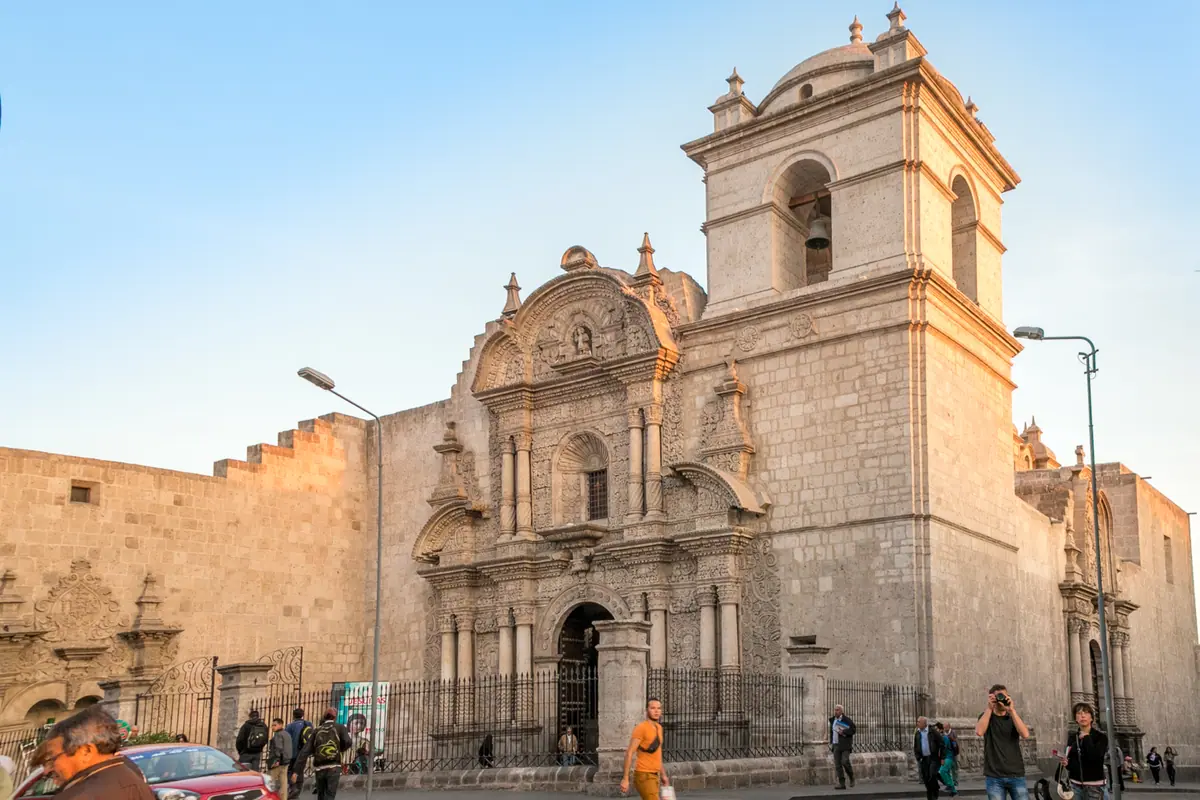
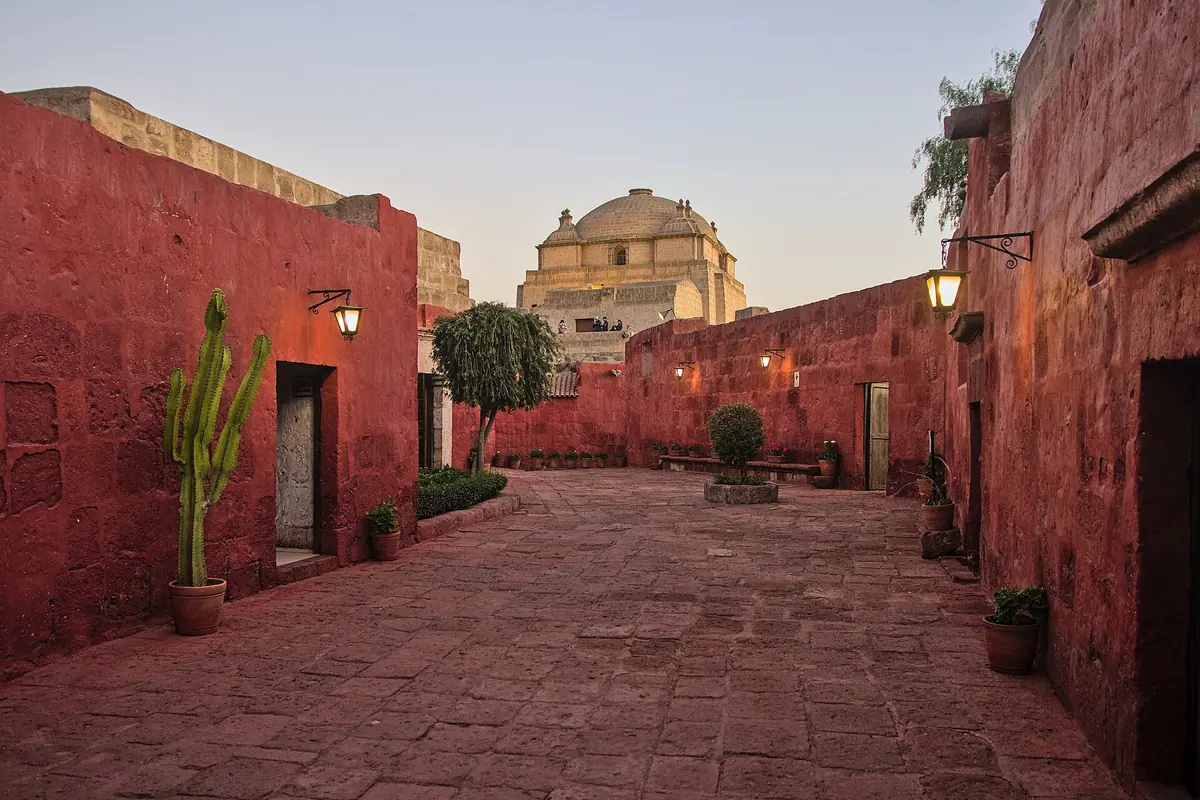
Most hotels in the centre are conversions of colonial and republican-era casonas — merchant houses built from sillar, the pale volcanic tuff that gives Arequipa its nickname, the White City. Expect a carved stone doorway, a courtyard with geraniums and a stone fountain, rooms arranged around open patios, and thick walls that shut out the traffic. The best rooftops look straight at the cathedral and the volcano, which is why they fill up first for the clear months of the year. Streets like Calle San Francisco, Calle Bolívar, Calle Sucre and the lanes around Plaza San Francisco hold the greatest concentration of these restored houses.
Sillar is beautiful and it has quirks. Those thick walls keep rooms cool during the fierce midday sun but hold the cold after dark, and heating is often an afterthought in heritage buildings. Ask specifically about a heater, an electric blanket or extra woollen blankets, and about hot water — some properties use solar systems that can run lukewarm on cloudy afternoons. Courtyard rooms are the quietest; street-facing rooms on Calle Mercaderes or around the plaza pick up horns, late conversation and cathedral bells.
Location pays off in small ways here. Being five minutes from the Plaza de Armas means you can join the evening paseo, eat a plate of rocoto relleno at a traditional picantería and walk home without arranging transport. It also means you can start early for the Santa Catalina Monastery before the tour groups arrive, and be back at your door within minutes when the afternoon sun gets serious. For a first visit of two to four nights, the centre is almost always the right call.
Yanahuara, Cayma and the North Bank: Views and Quiet
Yanahuara is the neighbourhood people photograph before they know its name: an arcaded viewpoint frames Misti above terracotta roofs, and the surrounding streets are low, leafy and slow. It's a 20 to 25-minute walk from the Plaza de Armas over the Puente Grau, slightly higher up the slope, and noticeably less hectic. Hotels here tend to be smaller, often with gardens or terraces, and the reward is a volcano view with your morning coffee rather than a view of the building opposite.
Neighbouring Cayma keeps more of a village feel, with a plaza, a church and a cluster of picanterías where families gather for long Sunday lunches of adobo and chicha. Selva Alegre, closer in, mixes residential calm with a large park and easy access to the centre. These areas suit travellers staying several nights, families who want room to breathe, and anyone sensitive to street noise. The trade-off is practical: fewer restaurants open late, fewer shops, and a taxi needed after dark — cheap and easy to find, but still a step you have to take.
Push further and the options turn rural. Around Sabandía, Paucarpata and the green edge of the Chili valley you'll find hacienda-style stays and country guesthouses near the old stone mill and terraced farmland. This is where you sleep with the windows open and wake to birds rather than buses. It only makes sense with a car, a driver on call, or a genuine desire to spend your days outdoors — cycling, walking the terraces and eating where the city's food actually comes from.
Casonas, Tambos and Room Realities: What You'll Actually Get
The accommodation mix is wider than the postcards suggest. You'll find restored casonas with a handful of rooms, boutique stays in republican townhouses with rooftop bars, sociable backpacker hostels with courtyards and shared kitchens, plain business hotels with parking along the main arteries, and serviced apartments in Vallecito and Selva Alegre that work well for longer visits. A few small properties trade on the old idea of the tambo — the lodging house where travellers and mule drivers once stopped — with simple rooms around a central patio.
Amenities vary more than the architecture. Reliable wi-fi exists almost everywhere, but sillar walls weaken the signal inside rooms, so ask about a router on your floor if you're working. Laundry is quick and inexpensive. Breakfast is usually bread, eggs, fruit, coffee and juice, sometimes served in the courtyard. What's often missing is warmth: ask for a portable heater, check whether hot water is available at the hour you actually shower, and don't assume air conditioning is unnecessary just because the days are mild — October and November afternoons can be strong.
One practical detail worth knowing before you book: foreign visitors to Peru are frequently exempt from the 18% local sales tax when they present a passport and the entry slip stamped at immigration. Not every property applies it, and some ask for the document at check-in, so it's worth asking directly when you enquire. Also pack earplugs. Church bells, dogs, fireworks during fiestas and early tour pickups are all part of the soundtrack of a city that wakes before dawn.
When to Go: Seasons, Weather and Booking Windows
Arequipa is one of the driest cities in the Andes and stays sunny most of the year, but the calendar still matters. The clearest skies for the volcanoes run from April through November, with the sharpest, coldest nights in June, July and August, when temperatures after dark can drop close to freezing and the wind picks up in August. The rainy season falls roughly from December to March, usually as afternoon showers rather than all-day rain, and it softens the light and greens the surrounding hills at the cost of clouded volcano views.
The sweet spots are April to May and September to October: warm days, cold but manageable nights, and a good chance of Misti standing out sharp against blue. Book two to four weeks ahead in those windows for midweek stays; weekends, national holidays in late July and the city's anniversary in mid-August fill the centre quickly. Easter week is Arequipa's biggest celebration, with processions and flower carpets laid through the streets, and hotels along the main routes sell out a month or more in advance.
Plan your nights around what you want to do. Two nights covers the Plaza de Armas, the cathedral, the Santa Catalina Monastery and the museum holding Juanita. Three or four give you time for a Colca Canyon trip to see condors riding the thermals at the Cruz del Cóndor, a half-day of rafting on the Chili River, a climb toward Misti's summit for the very fit and well-acclimatised, or a lazy day of hot springs and countryside. Add a night or two if you want the city at an unhurried pace.
Local Rhythms That Should Shape Your Booking
Arequipa's daily clock is specific, and it should influence where you sleep. Lunches are the main meal — traditional picanterías serve rocoto relleno, ocopa and pastel de papa from around 1pm until they run out, and many close in the evening. Dinners start late, from 8pm onward, and cluster around the plaza and Calle Mercaderes, which is also where the noise lives. If you're a light sleeper, request a room at the back of the building rather than one facing the street, and confirm whether the property has a rooftop bar.
Early starts are another Arequipa constant. Trips to the Colca Canyon typically leave between 3am and 4am, collecting passengers from central hotels, so ask before booking whether early breakfast, a packed breakfast or a late check-in after an overnight return is possible. Overnight buses to Puno and Cusco also leave in the evening from terminals a short ride from the centre. If you're arriving by air, the airport sits roughly 20 to 30 minutes out depending on traffic, and asking your hotel to arrange a pickup removes the guesswork after a long flight.
Finally, season your expectations about timing. Traffic in the centre is heaviest between about 7am and 9am and again in the late afternoon, and streets slow to a stroll on Sundays and public holidays. Tipping is appreciated but modest, tap water is best avoided in favour of bottled, and the altitude of 2,335 metres is gentle enough that most visitors feel only slightly breathless on stairs for the first day. Take it easy on arrival, drink water, sip coca tea, and let the White City set its own pace.
Frequently asked questions
Is the altitude in Arequipa a problem for first-time visitors?
At around 2,335 metres, Arequipa is noticeably lower than Cusco or Puno, and most visitors notice only mild breathlessness on stairs or hills during the first day. Drink plenty of water, go easy on alcohol, sip coca tea, and keep your first afternoon light. If you're heading on to Colca or Cusco afterwards, sleeping well here helps you adapt gradually.
Where should first-time visitors stay in Arequipa?
For a short first visit, the historic centre within a few blocks of the Plaza de Armas is the most convenient choice — you can walk to the cathedral, the Santa Catalina Monastery, the Juanita museum and most restaurants. For longer stays, families or quieter nights, look at Yanahuara, Cayma or Selva Alegre on the north bank of the Chili River.
When is the best time to visit Arequipa?
April to May and September to October offer the best balance of warm days, cold nights and clear volcano views. The dry, sunny season runs roughly May to November, with the coldest nights in June to August. December to March brings afternoon rain and more cloud, though the city rarely sees the heavy downpours of the high Andes.
Do Arequipa hotels have heating and reliable hot water?
Not always. Many heritage buildings made of sillar stone stay cool in the day but cold at night, and heating is often limited to a portable electric heater, which you should request in advance. Hot water is usually available but can be solar-dependent, so it's worth confirming the hours and asking for an extra blanket if you feel the cold.
How many days do you need in Arequipa?
Two nights is enough for the historic centre, the Santa Catalina Monastery and the museum holding Juanita. Give it three or four nights if you want to add a Colca Canyon trip to see the condors at the Cruz del Cóndor, a rafting session on the Chili River, or a slower day of countryside, hot springs and picantería lunches.
Sort the rest of your trip
Everything for Arequipa, in one place
Transfer in Arequipa
Private driver waiting on arrival — no queues, no surprises.
Book a transfer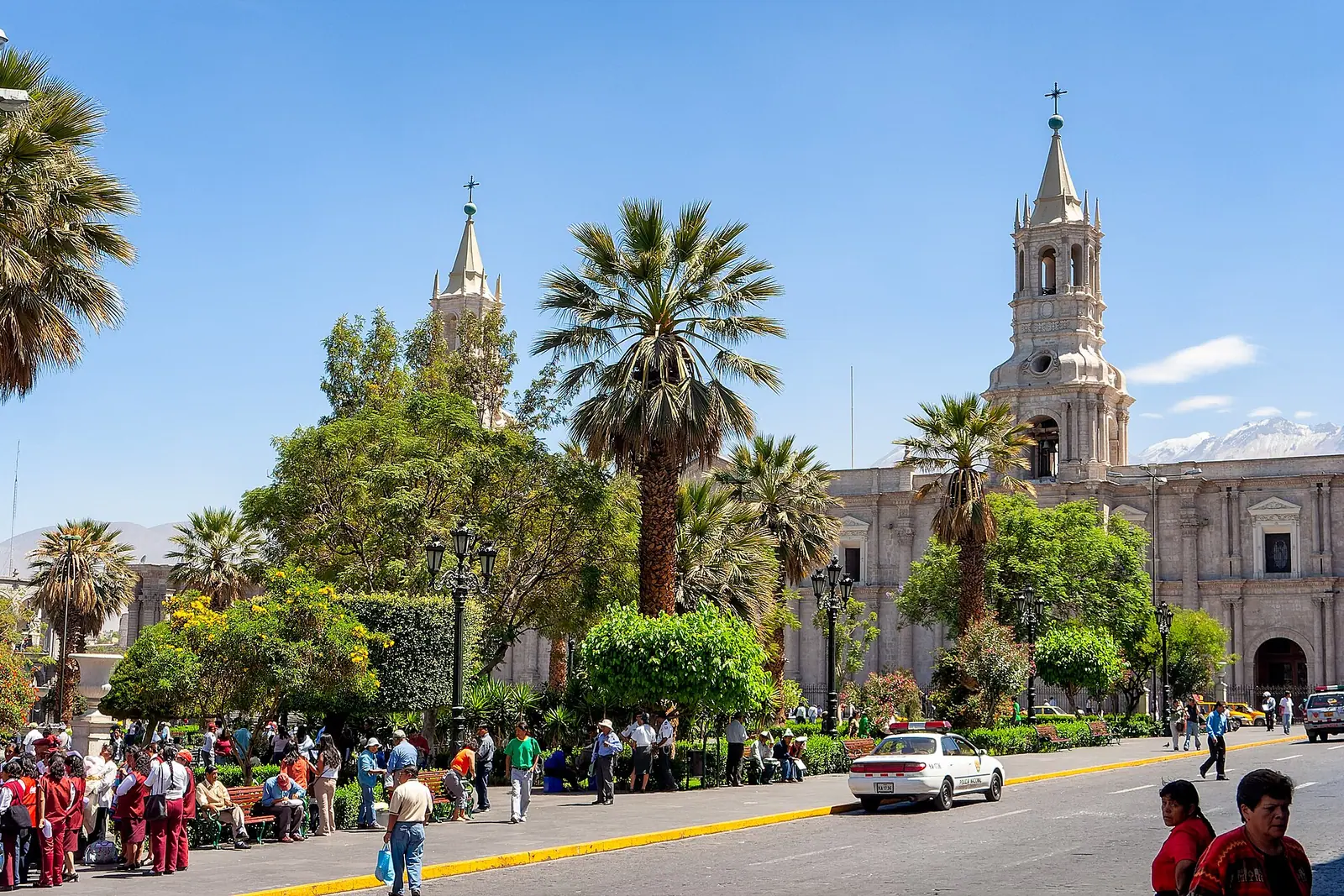
Things to do in Arequipa
Skip-the-line tickets, guided tours and standout experiences.
See experiences
Stay online in Peru
Travel eSIM — data the moment you land, no roaming bills.
Get an eSIM