France packs an entire continent of landscapes into one country: cathedral cities and lavender plateaus, chalk cliffs and glacier-carved peaks, vineyards that have been tended for a thousand years. The trick isn't seeing everything — it's choosing two or three regions and letting them unfold slowly. Here's where a first trip earns its best memories.
Paris: The Essential First Chapter
No itinerary in France escapes Paris for long, and it shouldn't. Start on the Trocadéro terrace at dawn, when the Eiffel Tower stands clear of crowds, then walk the Seine's stone quays toward the Île de la Cité. Notre-Dame has returned to full splendour after its restoration, and a few minutes away Sainte-Chapelle holds the most astonishing stained glass in Europe — 1,113 scenes compressed into a chapel barely wider than a townhouse. Cross to the Left Bank for the Musée d'Orsay, whose converted railway hall shelters the world's great Impressionist collection, and leave an evening for Montmartre, climbing past the artists' square to the white domes of Sacré-Cœur and the city unrolling below.
Two museums justify booking ahead and arriving at opening time: the Louvre, where the Mona Lisa and Venus de Milo anchor a collection so vast that three hours barely scratches it, and the Orsay, which closes on Mondays while the Louvre shuts on Tuesdays — a useful pairing when planning. Beyond the blockbusters, Le Marais rewards aimless wandering with medieval lanes and falafel shops, the Latin Quarter keeps its bookshops and student energy, and Canal Saint-Martin moves at the pace of a picnic.
Budget a full day for Versailles, 40 minutes out by suburban train: the Hall of Mirrors, the queen's hamlet and the endless formal gardens deserve more than a rushed morning. Between April and November, Monet's garden at Giverny makes a fine half-day, its lily pond still arranged exactly as he painted it. Four or five nights in Paris is the honest minimum; fewer and you'll spend the trip in transit.

The Loire Valley: Castles Without the Climb
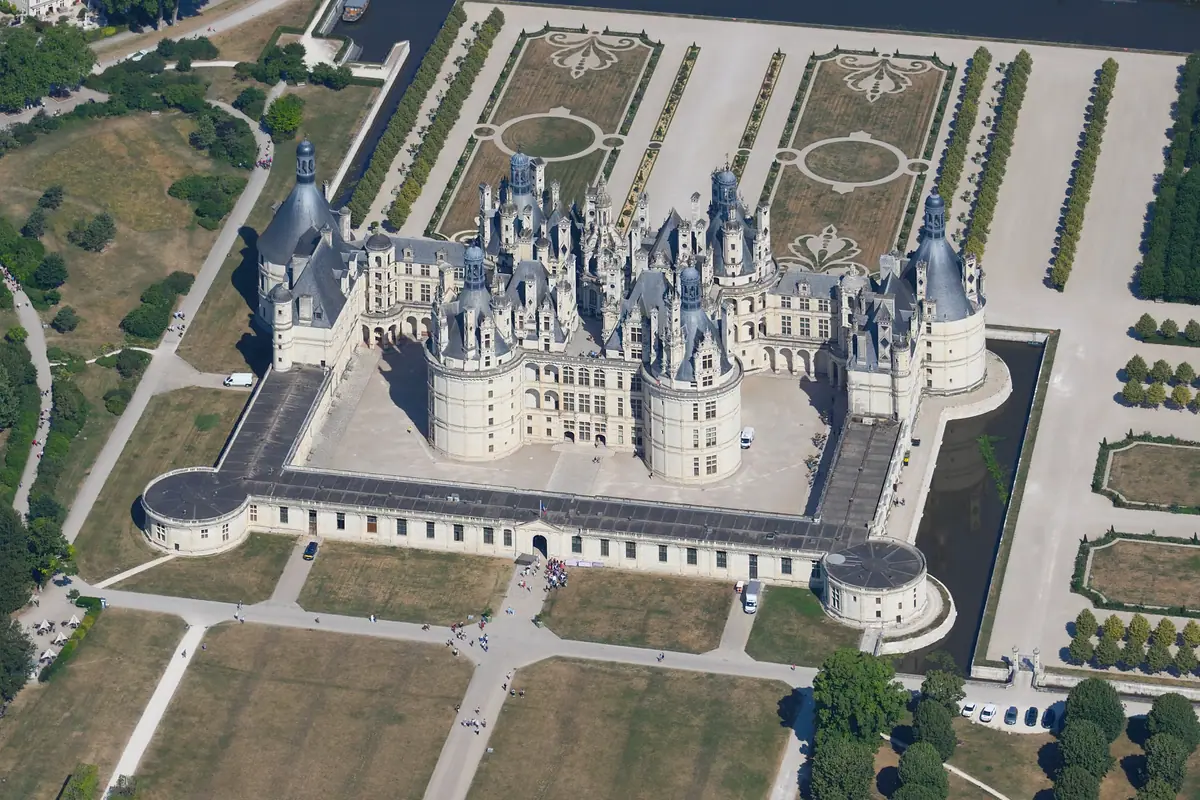
The Loire is France at its most storybook — a slow green river lined with châteaux that were built to impress rather than defend. Chambord is the giant of the collection, its roofline a carnival of chimneys and cupolas, with a double-helix staircase said to have been sketched by Leonardo da Vinci. Chenonceau is the romantic one, arching on five piers across the River Cher, its long gallery reflected in the water. Villandry offers something different again: geometric kitchen and ornamental gardens replanted every season, best seen from the belvedere above.
Base yourself in Tours or Blois and you can string together Amboise — where Leonardo spent his final years, his residence at Clos Lucé now a museum of his inventions — with smaller, quieter estates like Ussé, Azay-le-Rideau and Chaumont-sur-Loire. Cycling is the secret weapon here: the riverside velo route runs for hundreds of kilometres on flat, signposted paths, and renting a bike for a day between villages often beats fighting for château parking.
Late May and June bring long evenings and rose-heavy gardens; September adds vineyard colour and harvest activity in Vouvray and Chinon. Two to three days covers the headline châteaux comfortably, three to four lets you slow down. Note that many smaller estates close between November and March, so a winter visit concentrates on the big names.
Provence and the French Riviera: Light, Lavender and Roman Stone
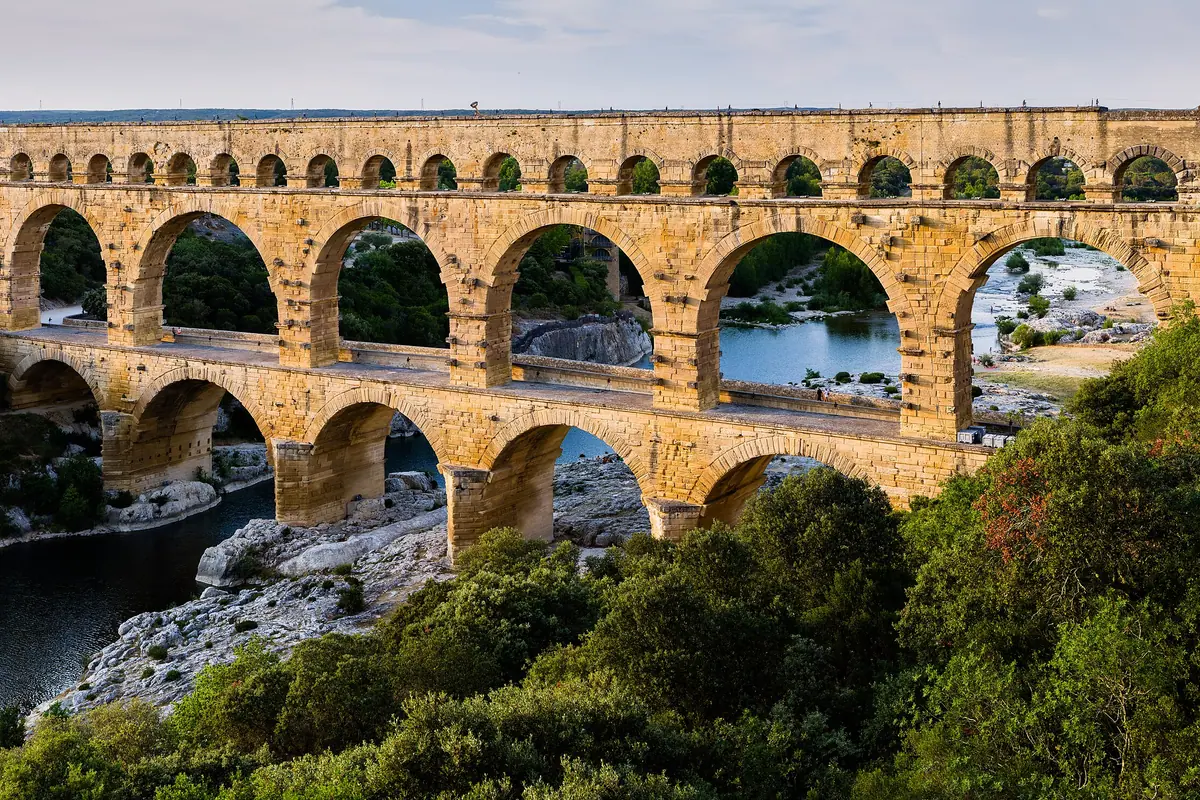
Provence begins in Avignon, where the Palais des Papes looms over a square still haunted by medieval schism, and the broken Pont Saint-Bénézet juts into the Rhône. An hour west, the Pont du Gard carries a Roman aqueduct across a gorge with three tiers of arches — swim beneath it in summer and you'll understand why it has survived 2,000 years. Arles holds a Roman amphitheatre still used for bullfights, and Les Baux-de-Provence perches its ruined citadel on a spur of white rock.
Lavender is the region's great seasonal event, and timing matters: the Valensole plateau and the rows below Sénanque Abbey typically peak in late June and the first half of July, with harvest following fast. Come in May or September instead and you get warm, uncrowded days for hill villages like Gordes, Roussillon's ochre cliffs and the antiques markets of L'Isle-sur-la-Sorgue. Marseille, France's salty second city, pairs the Vieux-Port with the basilica of Notre-Dame de la Garde, while the Calanques National Park — fjord-like limestone inlets — is best explored by boat from Cassis or on foot along marked trails.
East along the coast, Nice offers the Promenade des Anglais, the flower market on Cours Saleya and easy day trips to Èze's eagle-nest village, Antibes and Monaco. July and August are hot, expensive and jammed on the coast; mid-May to mid-June and September are the sweet spots. Give Provence four or five days if you're driving, and remember that a car transforms the region — village-to-village buses are sparse.
Normandy and Brittany: Tides, Cliffs and Memory
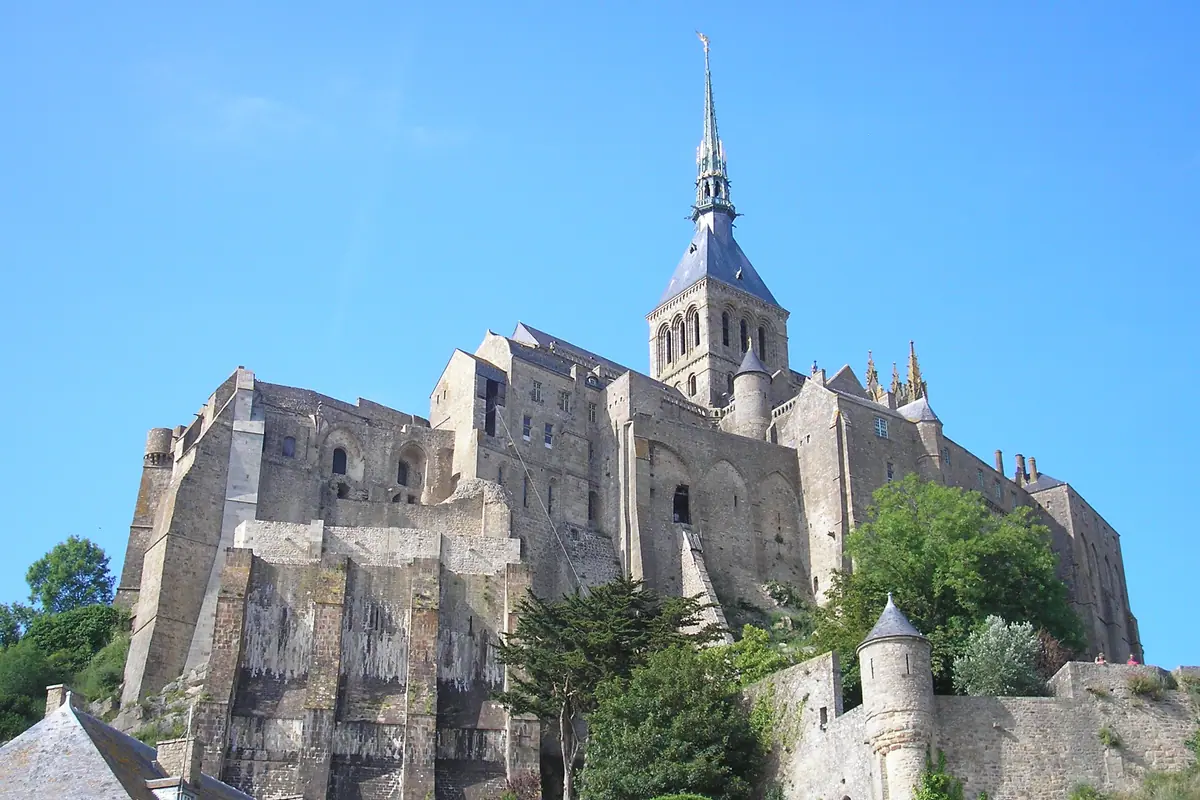
Mont Saint-Michel is the image most travellers carry home: a granite abbey rising from tidal flats, cut off twice a day by water that arrives, as the saying goes, at the speed of a galloping horse. Stay overnight on the island or in the nearby mainland village to see it floodlit after day-trippers leave, and check tide tables before walking the bay with a guide. Inland, Bayeux shelters the 70-metre embroidered narrative of the Norman conquest, and Rouen's cathedral — painted by Monet more than thirty times — anchors a handsome old town.
The D-Day landing beaches stretch west from Arromanches, where mulberry harbour remains still sit offshore, past Omaha Beach and the clifftop gun emplacements of Pointe du Hoc to the American cemetery above the sand at Colleville-sur-Mer. Allow a full day and a sombre, unhurried pace. Honfleur's slate-fronted harbour and the white chalk arches of Étretat, pierced by natural sea stacks, round out a Normandy loop of two to three days.
Brittany answers with a different accent entirely. Saint-Malo is a walled corsair city you can walk in its entirety, the Carnac megaliths set 3,000 standing stones in silent rows, and the Pink Granite Coast glows rose at sunset near Perros-Guirec. Weather here is Atlantic — mild, changeable, often damp — so pack layers and treat sunshine as a bonus. May through September gives the best odds, with July and August busiest along the coast.
The Alps, Annecy and Alpine Lakes
Chamonix sits beneath Mont Blanc, western Europe's highest summit at 4,807 metres, and the Aiguille du Midi cable car lifts visitors to 3,842 metres in about twenty minutes — a lung-tightening, jaw-dropping ride with a glass viewing box that seems to float over the glaciers. Below it, the Mer de Glace ice cave and the Lac Blanc hiking trail deliver the postcard Alps without technical climbing. Winter brings serious skiing; late June to September brings wildflower meadows, via ferrata routes and cool mountain air when the rest of France swelters.
Annecy is the region's gentlest introduction: a canal-laced old town nicknamed the Venice of the Alps, with the 12th-century Palais de l'Île marooned mid-stream and the Pont des Amours framing the lake. The water is famously clear, fed by mountain springs, and the surrounding peaks offer everything from an easy lakeside pedal to the steep climb of Semnoz for a panorama across the massif.
Add Grenoble for the cable-car bubbles up to the Bastille fort, or the Verdon Gorge in the south for kayaking between 700-metre limestone walls. Altitude dictates the season here more than the calendar: mountain passes may not open until June, and the first snow can shut high trails by mid-October. Two or three nights in Chamonix plus two in Annecy makes an excellent summer pairing.
Alsace, Burgundy and Lyon: Wine Roads and Half-Timbered Villages
Alsace looks like a fairy tale and tastes like a wine list. Strasbourg's pink sandstone cathedral, once the tallest building in the world, rises over a city of canals and covered bridges in the Petite France quarter, while Colmar's Little Venice district and the flower-draped lanes of Eguisheim and Kaysersberg line the Route des Vins. From late November through December the villages stage Christmas markets so atmospheric that they have become a season in themselves — book accommodation months ahead if that's your plan.
Burgundy trades postcard villages for vineyards. Beaune's Hospices, with its riotous polychrome roof, hosts a famous wine auction, and the Route des Grands Crus threads through names like Gevrey-Chambertin and Pommard. Dijon pairs the Palace of the Dukes with a mustard-scented old town. Cycling the back lanes between cellar doors, with a tasting booked for the afternoon, is one of the most civilised afternoons France offers.
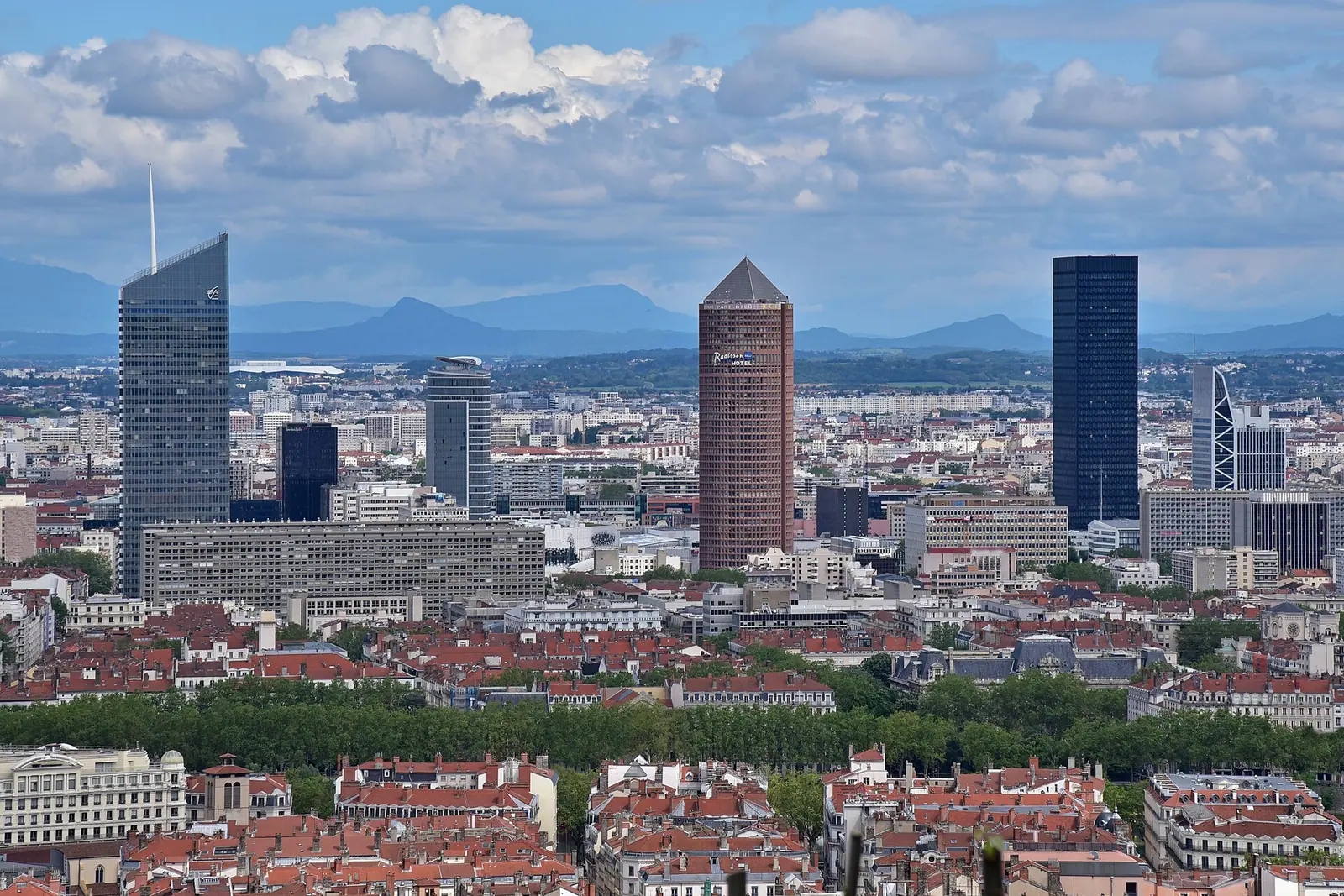
Lyon, two hours south, is the country's gastronomic capital — a city of bouchons serving pike quenelles and coq au vin in wood-panelled rooms, with hidden traboules passageways threading through Vieux Lyon and the basilica of Notre-Dame de Fourvière watching from its hill. Give Lyon two nights and use it as a rail springboard to Provence or the Alps.
Frequently asked questions
What is the best time of year to visit France?
May, June and September are the golden months almost everywhere: mild weather, open attractions and manageable crowds. July and August are hot and busy on the Riviera and in Provence, and many small city businesses close for holidays. Lavender peaks in late June and early July, Alpine hiking runs from late June to early October, and Alsace's Christmas markets light up from late November through December.
How many days do I need for a first trip to France?
Give Paris four or five nights on its own, then add one region — the Loire Valley in two to three days, Normandy in two to three, Provence in four to five, or Alsace in three. Trying to combine Paris, the Riviera and the Loire in one week means most of your trip happens through a train window.
Do I need a car to get around France?
Not for the cities. High-speed rail links Paris with Lyon, Marseille, Bordeaux, Strasbourg, Avignon and Nice in a few hours, and regional trains reach most large towns. A car is genuinely useful for the Loire châteaux, Provençal hill villages, the Normandy landing beaches and the Alsace wine route, where buses are infrequent and rural stations are far from the sights.
What are the absolute must-see sights for a first visit?
The Eiffel Tower, the Louvre and Versailles in Paris; Mont Saint-Michel in Normandy; Chambord and Chenonceau in the Loire; the Pont du Gard and Avignon's Palais des Papes in Provence; and Strasbourg's cathedral if you head east. These are the sights that define the country, and each deserves at least half a day rather than a quick photograph.
What should I know before I go?
Always open with "bonjour" before asking a question — it is expected, not optional. Many shops close on Sundays and between roughly noon and 2pm in smaller towns, dinner rarely starts before 7.30pm, and museums often shut one weekday (the Louvre on Tuesdays, the Orsay on Mondays). Learn a few polite phrases, carry a little cash for markets, and validate your train ticket before boarding.
Plan it — experiences in France
Live search, booked directly with trusted providers.
Sort the rest of your trip
Everything for France, in one place
Stay in France
Hotels, guesthouses and apartments — compared in one search.
Search hotels
Transfer in France
Private driver waiting on arrival — no queues, no surprises.
Book a transfer
Stay online in France
Travel eSIM — data the moment you land, no roaming bills.
Get an eSIMMore guides in France
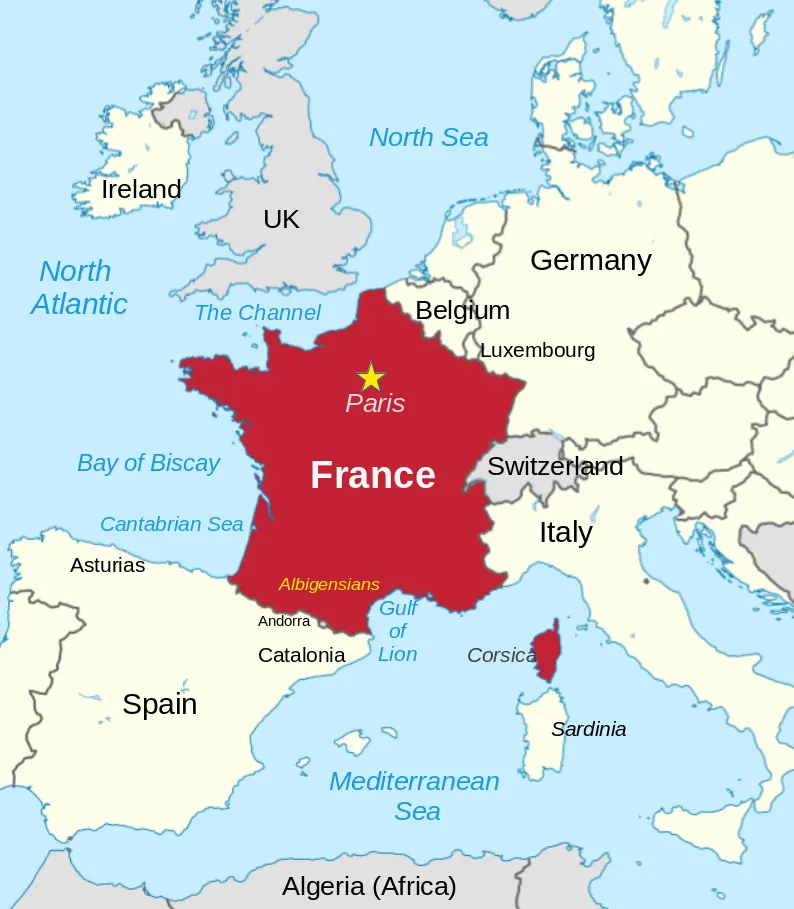
One Week in France by Air: A 7-Day Itinerary from Paris to the Riviera, Provence and the Atlantic
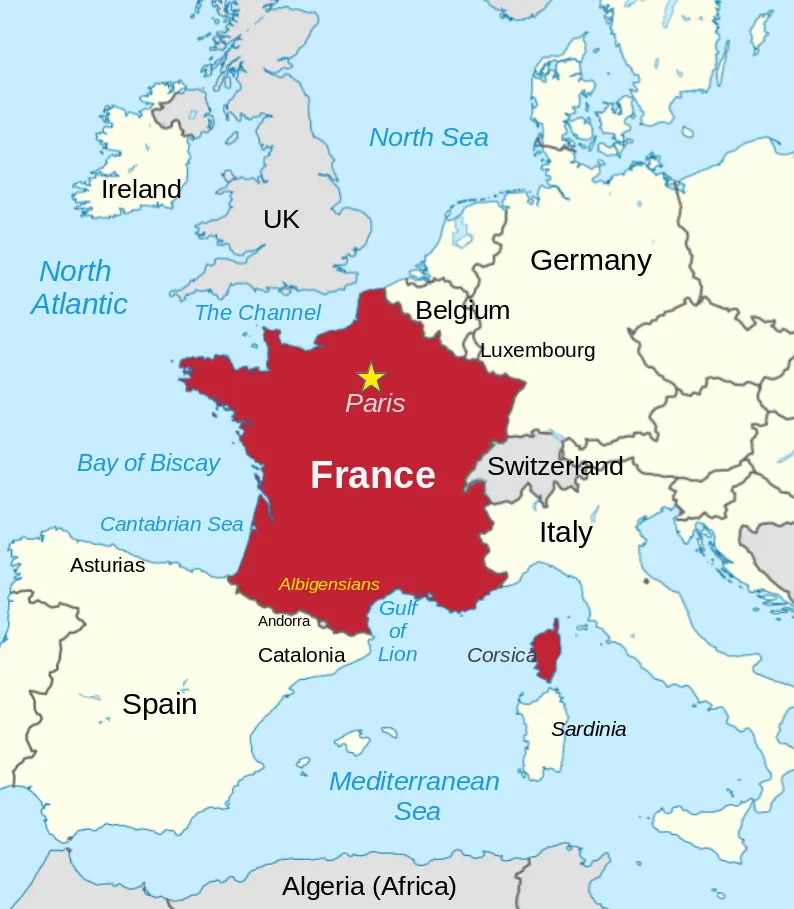
Top Things to Do in France: Landmarks and Experiences Worth Building a Trip Around
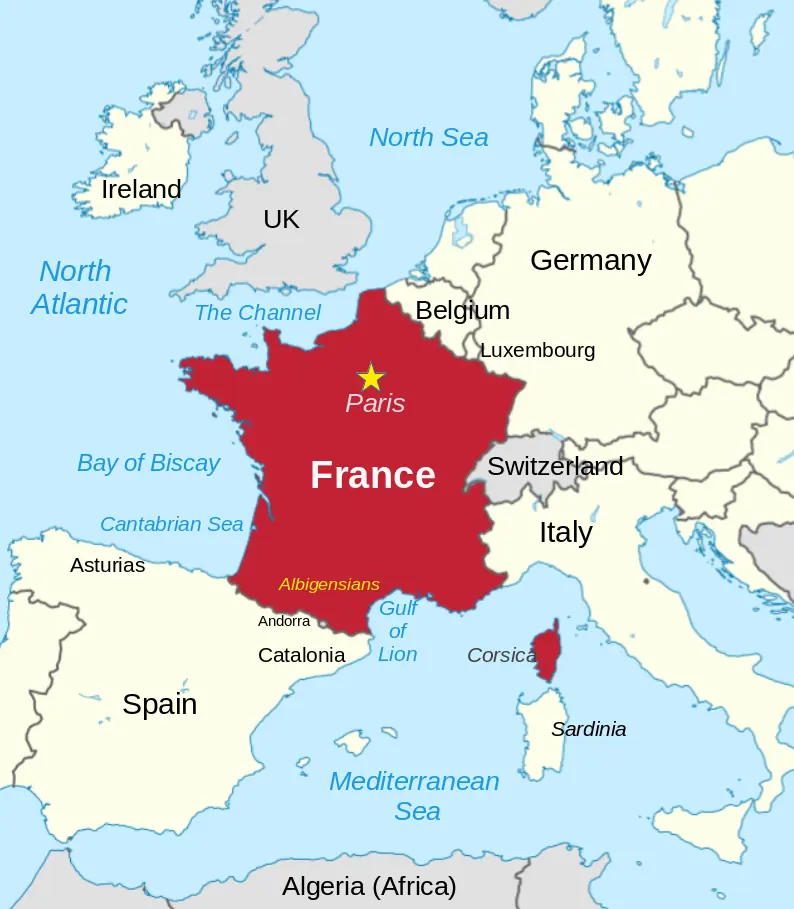
A Tour of France: Food, Culture and Local Experiences Worth Building a Trip Around
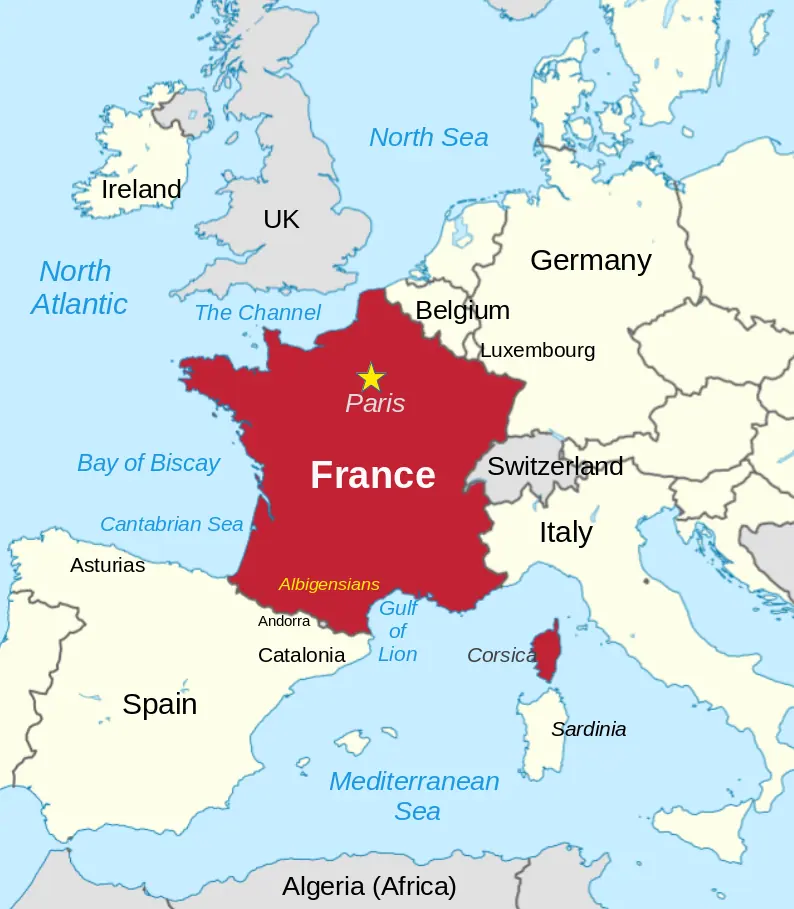
Where to Stay in France: Top Cities, Hotels and Must-See Sights
Where to Stay in Lyon: A First-Timer's Guide to Hotels by Neighbourhood
